



636 Results for "

biochemical study

" in MedChemExpress (MCE) Product Catalog:
Products (636)

636 Results for "biochemical study" in MCE Product Catalog:

9
9 Publications Verification
Cat. No.: HY-113046
CAS No.: 134-35-0
Purity:  99.77%
Synonyms: 5-Methyl THF; 5-MTHF
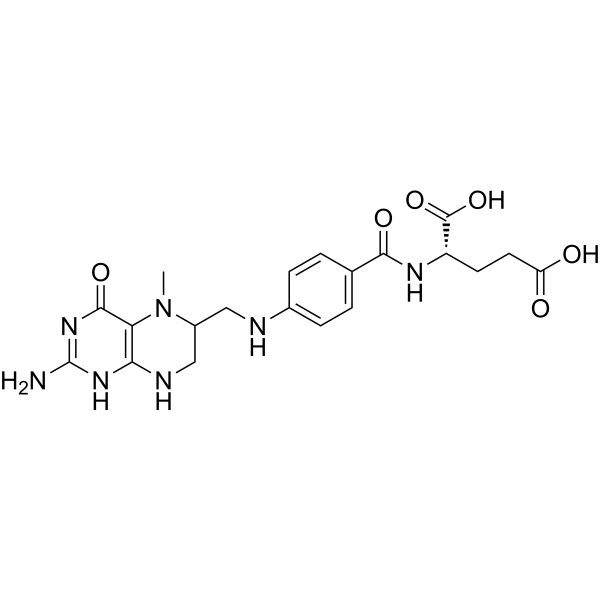
5-Methyltetrahydrofolic acid (5-Methyl THF) is the main circulating form of folic acid in the body and is involved in a variety of biochemical reactions. 5-Methyltetrahydrofolic acid regulates cardiovascular function by increasing the production of endothelin-1 (ET-1) in low-density lipoprotein-treated endothelial cells and can be used in the study of cardiovascular diseases .
loading...
    loading...
2
2 Cited Publications
Cat. No.: HY-P2910
CAS No.: 9028-79-9
Synonyms: GOase
Target:  

Endogenous Metabolite

Research Areas:  

Others

Galactose Oxidase, Dactylium dendroides (GOase) from fungus is often used in biochemical studies. Galactose oxidase is a type II copper metalloenzyme, and it containing a single polypeptide. Galactose oxidase catalyzes two-electron oxidation of primary alcohols to their corresponding aldehydes, coupling with the reduction of dioxygen to hydrogen peroxide .
loading...
    loading...
2
2 Cited Publications
Cat. No.: HY-15917A
CAS No.: 16096-97-2
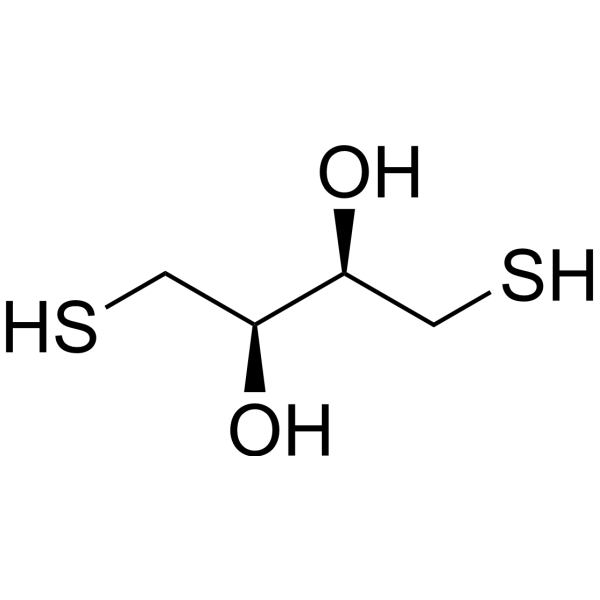
L-Dithiothreitol (DTT) is a reducing agent commonly used in various biochemical applications to break disulfide bonds in proteins, thereby denaturing proteins or preventing the formation of unwanted aggregates. DTT has a unique chemical property that cleaves the sulfur-sulfur bond in the disulfide bond to form a sulfhydryl group. This makes it a useful tool for protein purification, enzyme assays, and protein structure studies.
loading...
    loading...
2
2 Cited Publications
Cat. No.: HY-W034953
CAS No.: 52698-84-7
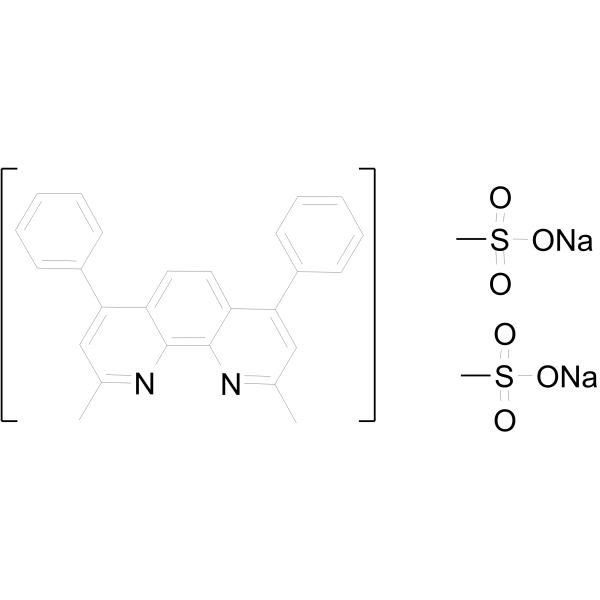
Bathocuproine disulfonate disodium (BCS) is an organic compound used as a highly sensitive colorimetric reagent for copper ions in biochemical and analytical applications. It has a bright yellow color and absorbs light at specific wavelengths, so it can be used to detect and quantify trace copper. In biochemical applications, BCS is commonly used to study the role of copper ions in various biological processes. Copper is an essential nutrient for many organisms, but it can also be toxic in high concentrations, so accurate measurement of copper levels is important to understand its impact on living systems. In terms of analysis, BCS is often used in environmental monitoring and water quality testing to detect copper pollution. It can detect copper even at very low concentrations, making it an invaluable tool for identifying potential sources of pollution and assessing the impact of industrial activities on aquatic ecosystems.
loading...
    loading...
2
2 Cited Publications
Cat. No.: HY-129084
CAS No.: 111755-76-1
Purity:  98.85%
Research Areas:  

Others

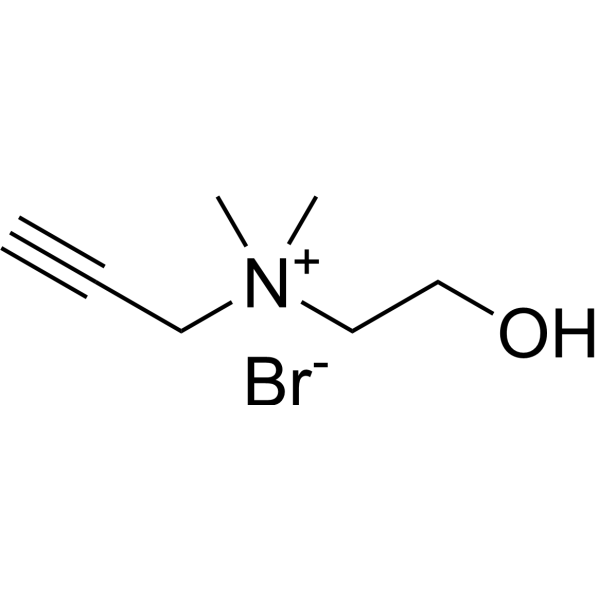
Propargylcholine bromide is a choline analogue containing terminal propargyl that can be incorporated into all classes of Choline-containing phospholipids such as phosphatidylcholine and sphingomyelin, labeling Choline-containing phospholipids. Propargylcholine bromide-labeled phospholipid molecules can be visualized in cells with high sensitivity and spatial resolution. Propargylcholine bromide can be used as a molecular tool to study the biochemical and metabolic processes of Choline-containing phospholipids in cells . Propargylcholine (bromide) is a click chemistry reagent, it contains an Alkyne group and can undergo copper-catalyzed azide-alkyne cycloaddition (CuAAc) with molecules containing Azide groups.
loading...
    loading...
1
1 Cited Publications
Cat. No.: HY-D0852A
CAS No.: 13718-26-8
Synonyms: Sodium vanadate(V), 99%
Sodium metavanadate, 99% (Sodium vanadate(V), 99%) is a biochemical reagent used as a vanadium source in microbial cultures to study vanadium reduction in mesophilic and thermophilic methanogens .
loading...
    loading...
1
1 Cited Publications
Cat. No.: HY-E70064
CAS No.: 37277-69-3
Target:  

Endogenous Metabolite

Research Areas:  

Others

alpha-1,3-Fucosyltransferase (α1,3FucT) catalyzes the transfer of L-fucose moiety from guanosine diphosphate-beta-L-fucose (GDP-Fuc) to acceptor sugars. alpha-1,3-Fucosyltransferase (α1,3FucT) is often used in biochemical studies, and it can be used to form fucoglycoconjugates .
loading...
    loading...
1
1 Cited Publications
Cat. No.: HY-P2988
CAS No.: 9001-67-6
Synonyms: Exo-α-sialidase
Target:  

Sialyltransferase

Research Areas:  

Infection

Neuraminidase, Microorganism (Exo-α-sialidase) is an exosialidase, is often used in biochemical studies. Neuraminidase cleaves α-ketosidic linkage between the sialic (N-acetylneuraminic) acid and an adjacent sugar residue. Neuraminidase, derived from mucosal pathogens, is a virulence factor that modifies the host's response to infection .
loading...
    loading...
1
1 Cited Publications
Cat. No.: HY-15943
CAS No.: 91809-67-5
Synonyms: 6-Carboxytetramethylrhodamine
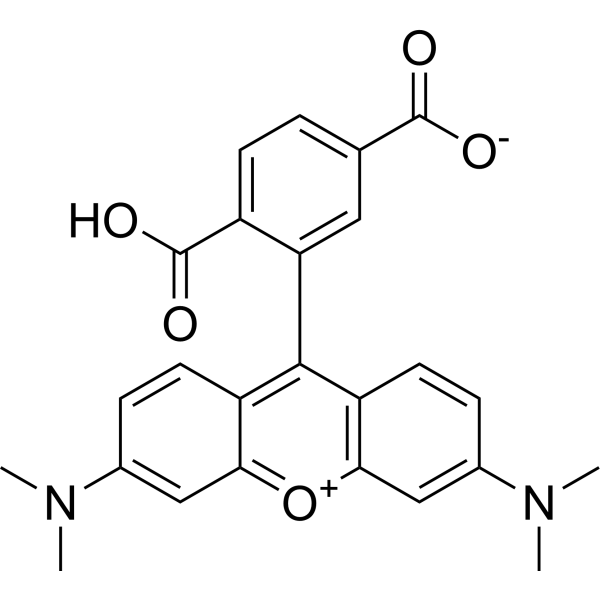
6-TAMRA (6-Carboxytetramethylrhodamine) is a fluorescent dye. 6-TAMRA is often used in combination with 6-FAM (HY-66021) as an acceptor or fluorescence quencher for fluorescence resonance energy transfer (FRET) in biochemical studies such as potassium ion detection and ribonuclease activity assays .
loading...
    loading...
1
1 Cited Publications
Cat. No.: HY-W854445
CAS No.: 80081-06-7
Lewis-b tetrasaccharide is a class of biochemical reagents used in glycobiology research. Glycobiology studies the structure, synthesis, biology, and evolution of sugars. It involves carbohydrate chemistry, enzymology of glycan formation and degradation, protein-glycan recognition, and the role of glycans in biological systems. This field is closely related to basic research, biomedicine, and biotechnology .
loading...
    loading...
1
1 Cited Publications
Cat. No.: HY-E70057
CAS No.: 67339-00-8
Synonyms: ST8Sia VI; GD3 synthase
Target:  

Endogenous Metabolite

Research Areas:  

Metabolic Disease

alpha-2,8-Sialyltransferase (CstII) (ST8Sia VI) is a member of alpha2,8-sialyltransferase (ST8Sia) family, is often used in biochemical studies. alpha-2,8-Sialyltransferase (CstII) catalyzes elongation of the α2,8-linked oligo/polysialic acid chain on the Sia residue transferred .
loading...
    loading...
1
1 Cited Publications
Cat. No.: HY-Y0532
CAS No.: 128-09-6
Synonyms: Succinchlorimide
N-Chlorosuccinimide (Succinchlorimide) is an oxidizing, hydrolyzable biochemical reagent with bactericidal and amoebicidal activities. N-Chlorosuccinimide can either form N-chloramines via concerted transfer of Cl + or hydrolyze in aqueous solution to produce hypochlorous acid/hypochlorite. N-Chlorosuccinimide is effective in killing Shigella dysenteriae, Escherichia typhi and cysts of Entamoeba histolytica. N-Chlorosuccinimide can be formulated into fast-dispersing, fully soluble water purification tablets. N-Chlorosuccinimide is used in studies related to bacterial infections and parasitic infections .
loading...
    loading...
Cat. No.: HY-128748
CAS No.: 56-82-6
Purity:  ≥90.0%
DL-Glyceraldehyde is a bioactive substance involved in cellular energy metabolism and a key intermediate in sugar metabolism pathways (such as glycolysis and gluconeogenesis). During glycolysis, DL-Glyceraldehyde is converted by enzymes into other metabolites to provide energy for cells; during gluconeogenesis, DL-Glyceraldehyde participates in the synthesis of glucose as a precursor. In the field of medical research, DL-Glyceraldehyde can be used to study diseases related to sugar metabolism, such as diabetes, tumors, etc[1][2].
loading...
    loading...
Cat. No.: HY-P2979
CAS No.: 9001-57-4
Synonyms: β-D-Fructofuranosidase
Target:  

Endogenous Metabolite

Research Areas:  

Others

Invertase, baker's yeast (S. cerevisiae) is a major enzyme present in plants and microorganisms, is often used in biochemical studies. Invertase catalyzes the hydrolysis of the disaccharide sucrose into glucose and fructose .
loading...
    loading...
Cat. No.: HY-150278
CAS No.: 91079-40-2
Peptone from casein is derived from casein hydrolysis, casein is hydrolyzed by pancreatic enzymes and refined into peptone.
loading...
    loading...
Cat. No.: HY-115243
CAS No.: 1010-60-2
Purity:  98.38%
Research Areas:  

Others

2-Chloro-1,4-naphthoquinone (chloro-K3) is a vitamin-K-dependent carboxylation antagonist with an IC50 value of 146 μM. 2-Chloro-1,4-naphthoquinone has cytotoxic activity .
loading...
    loading...
Cat. No.: HY-W016321
CAS No.: 103-32-2
Synonyms: N-Phenylbenzylamine; Benzylaniline
Target:  

Drug Derivative

Research Areas:  

Others

N-Benzylaniline (N-Phenylbenzylamine) is an N-alkyl­ated derivative of aniline .
loading...
    loading...
Cat. No.: HY-W012817
CAS No.: 95-71-6
Methylhydroquinone is an orally active COX inhibitor with IC50s of 480.7 μM and 52.2 μM for ovine COX-1 and human recombinant COX-2, respectively. Methylhydroquinone has potential DNA damaging effects: 1) inhibiting COX-1 to reduce prostaglandin synthesis and exert anti-inflammatory activity; 2) inducing DNA single-strand breaks. Methylhydroquinone exerts its effects by competitively binding to the active sites of COX-1 (such as Tyr385, Met522) and non-covalent interactions .
loading...
    loading...
Cat. No.: HY-P2762
CAS No.: 9001-19-8
Target:  

Amylases

Research Areas:  

Others

α-Amylase from Aspergillus oryzae is an amylase. α-Amylase from Aspergillus oryzae can be used for various biochemical studies .
loading...
    loading...
Cat. No.: HY-P2983
CAS No.: 9015-82-1
Synonyms: Kininase II; CD143
Target:  

Endogenous Metabolite

Research Areas:  

Cardiovascular Disease Cancer

Angiotensin-converting enzyme (Kininase II) is a dicarboxypeptidase, it converts inactive Angiotensin I (Ang I) to active Ang II and degrades active bradykinin (BK). Angiotensin-converting enzyme is a potent vasoconstrictor, is often used in biochemical studies .
loading...
    loading...

