







74 Results for "

bivalent

" in MedChemExpress (MCE) Product Catalog:
Products (74)

74 Results for "bivalent" in MCE Product Catalog:

44
44 Publications Verification
Cat. No.: HY-16591
CAS No.: 1260251-31-7
Synonyms: TL32711
Target:  

IAP Apoptosis HIV

Research Areas:  

Cancer

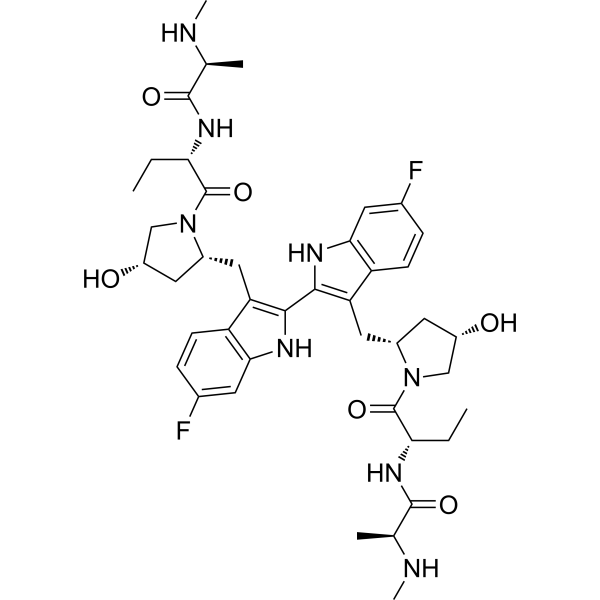
Birinapant (TL32711), a bivalent Smac mimetic, is a potent antagonist for XIAP and cIAP1 with Kds of 45 nM and less than 1 nM, respectively. Birinapant (TL32711) induces the autoubiquitylation and proteasomal degradation of cIAP1 and cIAP2 in intact cells, which results in formation of a RIPK1: caspase-8 complex, caspase-8 activation, and induction of tumor cell death. Birinapant (TL32711) targets TRAF2-associated cIAPs and abrogates TNF-induced NF-κB activation.
loading...
    loading...
32
32 Cited Publications
Cat. No.: HY-Y0682
CAS No.: 60-00-4
Synonyms: EDTA
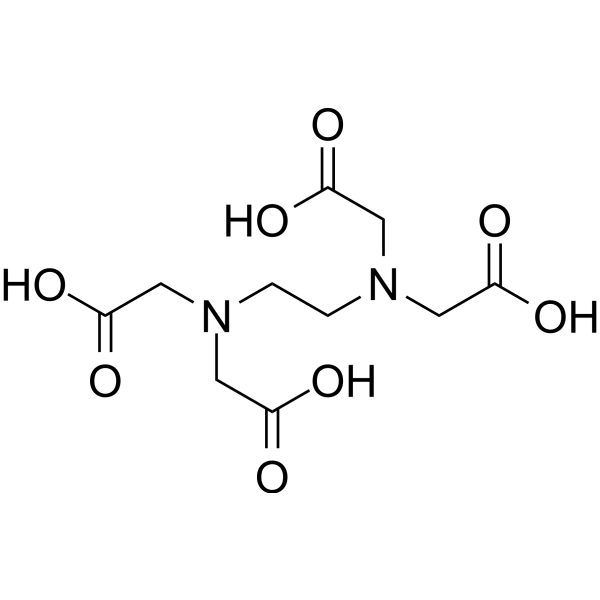
Ethylenediaminetetraacetic acid (EDTA) is a kind of metal chelating agent (binds to bivalent and trivalent metal cations, including calcium). Ethylenediaminetetraacetic acid has antibacterial, anti-inflammatory, antioxidant, anti-hypercalcemia and anticoagulant activities. Ethylenediaminetetraacetic acid decreases the metal ion-catalyzed oxidative damage to proteins, and allows maintenance of reducing environment during protein purification. Ethylenediaminetetraacetic acid can alleviate the liver fibrosis. Ethylenediaminetetraacetic acid can be used for coronary artery disease and neural system disease research .
loading...
    loading...
31
31 Cited Publications
Cat. No.: HY-B1009
CAS No.: 150-38-9
Synonyms: EDTA trisodium salt; Trisodium EDTA
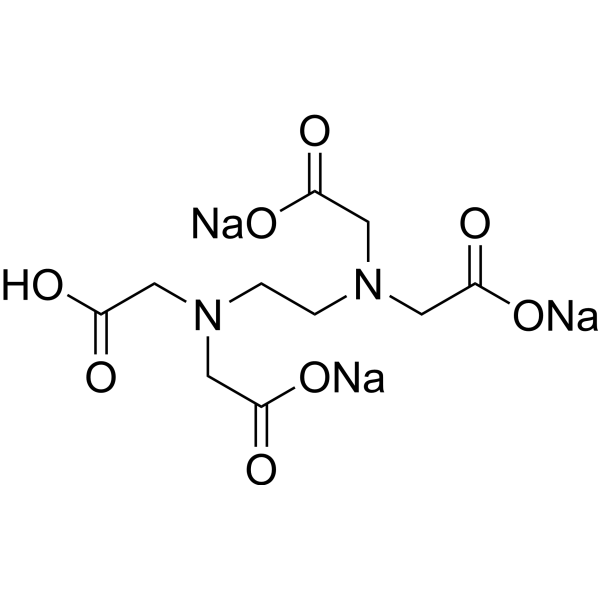
Ethylenediaminetetraacetic acid trisodium salt (EDTA trisodium salt; Trisodium EDTA) is a kind of metal chelating agent (binds to bivalent and trivalent metal cations, including calcium). Ethylenediaminetetraacetic acid trisodium salt has antibacterial, anti-inflammatory, antioxidant, anti-hypercalcemia and anticoagulant activities. Ethylenediaminetetraacetic acid trisodium salt decreases the metal ion-catalyzed oxidative damage to proteins, and allows maintenance of reducing environment during protein purification. Ethylenediaminetetraacetic acid trisodium salt can alleviate the liver fibrosis. Ethylenediaminetetraacetic acid can be used for coronary artery disease and neural system disease research .
loading...
    loading...
27
27 Cited Publications
Cat. No.: HY-Y0682A
CAS No.: 6381-92-6
Synonyms: EDTA disodium dihydrate
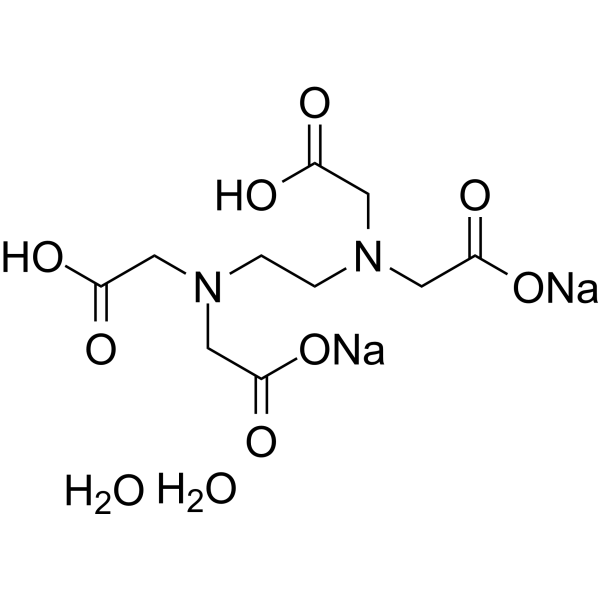
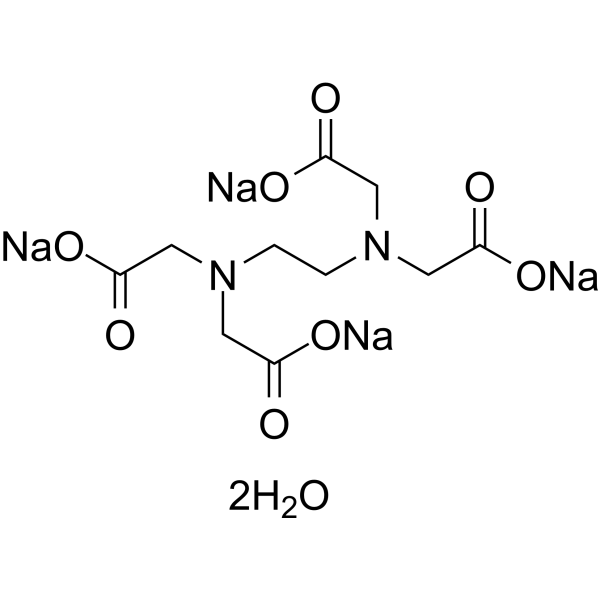
Ethylenediaminetetraacetic acid (EDTA) disodium dehydrate is a kind of metal chelating agent (binds to bivalent and trivalent metal cations, including calcium). Ethylenediaminetetraacetic acid disodium dehydrate has antibacterial, anti-inflammatory, antioxidant, anti-hypercalcemia and anticoagulant activities. Ethylenediaminetetraacetic acid disodium dehydrate decreases the metal ion-catalyzed oxidative damage to proteins, and allows maintenance of reducing environment during protein purification. Ethylenediaminetetraacetic acid disodium dehydrate can alleviate the liver fibrosis. Ethylenediaminetetraacetic acid disodium dehydrate can be used for coronary artery disease and neural system disease research .
loading...
    loading...
27
27 Cited Publications
Cat. No.: HY-W127774
CAS No.: 85715-60-2
Synonyms: Ethylenediaminetetraacetic acid hydrate sodium
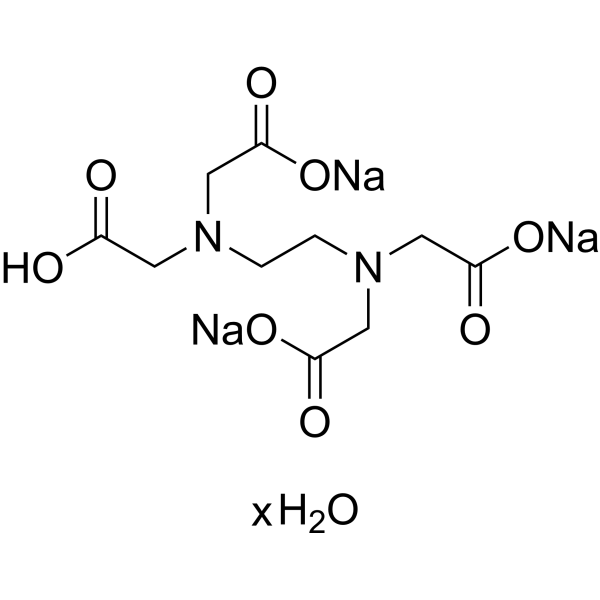
EDTA (Ethylenediaminetetraacetic acid) hydrate sodium is a kind of metal chelating agent (binds to bivalent and trivalent metal cations, including calcium). EDTA hydrate sodium has antibacterial, anti-inflammatory, antioxidant, anti-hypercalcemia and anticoagulant activities. EDTA hydrate sodium decreases the metal ion-catalyzed oxidative damage to proteins, and allows maintenance of reducing environment during protein purification. EDTA hydrate sodium can alleviate the liver fibrosis. Ethylenediaminetetraacetic acid can be used for coronary artery disease and neural system disease research .
loading...
    loading...
27
27 Cited Publications
Cat. No.: HY-Y0682B
CAS No.: 64-02-8
Synonyms: EDTA tetrasodium
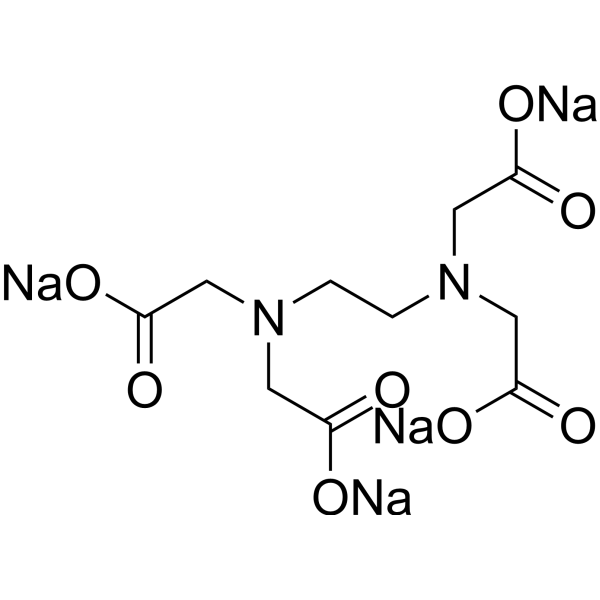
Ethylenediaminetetraacetic acid (EDTA) tetrasodium is a kind of metal chelating agent (binds to bivalent and trivalent metal cations, including calcium). Ethylenediaminetetraacetic acid tetrasodium has antibacterial, anti-inflammatory, antioxidant, anti-hypercalcemia and anticoagulant activities. Ethylenediaminetetraacetic acid tetrasodium decreases the metal ion-catalyzed oxidative damage to proteins, and allows maintenance of reducing environment during protein purification. Ethylenediaminetetraacetic acid tetrasodium can alleviate the liver fibrosis. Ethylenediaminetetraacetic acid tetrasodium can be used for coronary artery disease and neural system disease research .
loading...
    loading...
27
27 Cited Publications
Cat. No.: HY-W105700
CAS No.: 10378-23-1
Synonyms: EDTA sodium hydrate
Ethylenediaminetetraacetic acid (EDTA) sodium hydrate is a kind of metal chelating agent (binds to bivalent and trivalent metal cations, including calcium). Ethylenediaminetetraacetic acid sodium hydrate has antibacterial, anti-inflammatory, antioxidant, anti-hypercalcemia and anticoagulant activities. Ethylenediaminetetraacetic acid sodium hydrate decreases the metal ion-catalyzed oxidative damage to proteins, and allows maintenance of reducing environment during protein purification. Ethylenediaminetetraacetic acid sodium hydrate can alleviate the liver fibrosis. Ethylenediaminetetraacetic acid sodium hydrate can be used for coronary artery disease and neural system disease research .
loading...
    loading...
27
27 Cited Publications
Cat. No.: HY-W087947
CAS No.: 65501-24-8
Synonyms: Ethylenediaminetetraacetic acid dihydrate tripotassium
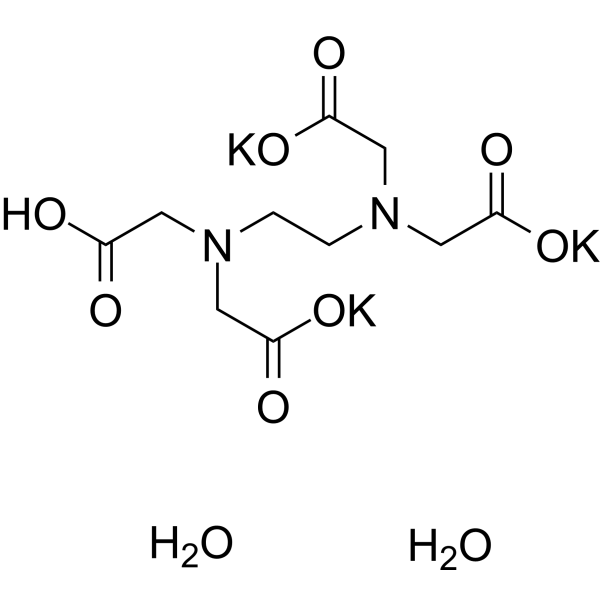
EDTA dihydrate tripotassium (Ethylenediaminetetraacetic acid dihydrate tripotassium) is a kind of metal chelating agent (binds to bivalent and trivalent metal cations, including calcium). EDTA dihydrate tripotassium has antibacterial, anti-inflammatory, antioxidant, anti-hypercalcemia and anticoagulant activities. EDTA dihydrate tripotassium decreases the metal ion-catalyzed oxidative damage to proteins, and allows maintenance of reducing environment during protein purification. EDTA dihydrate tripotassium can alleviate the liver fibrosis. EDTA dihydrate tripotassium can be used for coronary artery disease and neural system disease research .
loading...
    loading...
14
14 Cited Publications
Cat. No.: HY-111373
CAS No.: 1887095-82-0
Purity:  99.92%
Target:  

mTOR Autophagy

Research Areas:  

Cancer

RapaLink-1, the third-generation bivalent mTOR inhibitor, combines Rapamycin (HY-10219) with MLN0128 (HY-13328, a second-generation mTOR kinase inhibitor) by an inert chemical linker. RapaLink-1 shows better efficacy than Rapamycin or mTOR kinase inhibitors (TORKi), potently blocking cancer-derived, activating mutants of mTOR. RapaLink-1 can cross the blood-brain barrier. RapaLink-1 binding to FKBP12 results in targeted and durable inhibition of mTORC1. RapaLink-1 plays an antithrombotic role in antiphospholipid syndrome by improving autophagy. Anticancer activity .
loading...
    loading...
5
5 Cited Publications
Cat. No.: HY-100653
CAS No.: 1869912-39-9
Purity:  99.20%
Research Areas:  

Cancer

AZD5153 is a bivalent, selective, and orally active BET/BRD4 bromodomain inhibitor with an IC50 of value of 5 nM for full-length BRD4 (FL-BRD4). AZD5153 ligates two bromodomains in BRD4 simultaneously. AZD5153 can be used for the study of cancer, such as acute myeloid leukemia, multiple myeloma, and diffuse large B-cell lymphoma .
loading...
    loading...
1
1 Cited Publications
Cat. No.: HY-108350
CAS No.: 1454920-20-7
Purity:  99.92%
Research Areas:  

Cancer

MI-2-2 is a potent menin-MLL inhibitor. MI-2-2 binds to menin with low nanomolar affinity (Kd=22nM) and very effectively disrupts the bivalent protein-protein interaction between menin and MLL. MI-2-2 has specific and very pronounced activity in MLL leukemia cells, including inhibition of cell proliferation, down-regulation of Hoxa9 expression, and differentiation .
loading...
    loading...
1
1 Cited Publications
Cat. No.: HY-125232
CAS No.: 2250091-96-2
Purity:  ≥98.0%
Research Areas:  

Cancer

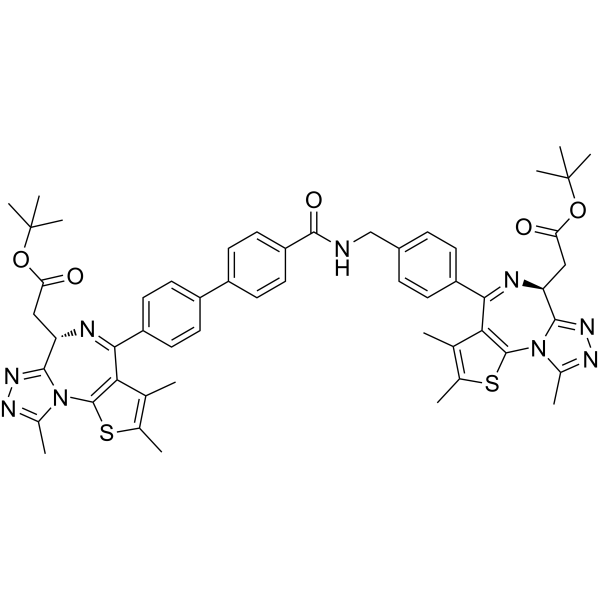
MS645 is a bivalent BET bromodomains (BrD) inhibitor with a Ki of 18.4 nM for BRD4-BD1/BD2. MS645 spatially constrains bivalent inhibition of BRD4 BrDs resulting in a sustained repression of BRD4 transcriptional activity in solid-tumor cells .
loading...
    loading...
Cat. No.: HY-P99391
CAS No.: 1781223-80-0
Synonyms: ABT-700; ABBV-400 Antibody

Target:  

c-Met/HGFR Apoptosis

Research Areas:  

Cancer

Telisotuzumab (ABT-700) is a bivalent humanized IgG1 anti-c-Met monoclonal antibody. Telisotuzumab binds cellular c-Met and disrupts its productive dimerization and activation induced by HGF or by the high density of c-Met on the cell surface independent of ligand. Telisotuzumab induces apoptosis. Telisotuzumab can be used for the study of cancers harboring amplified MET, such as gastric and lung cancers .
loading...
    loading...
Cat. No.: HY-P99192
CAS No.: 1365287-97-3
Synonyms: LY2875358

Target:  

c-Met/HGFR

Research Areas:  

Cancer

Emibetuzumab (LY2875358) is a humanized bivalent MET antibody (IgG4 type). Emibetuzumab shows high neutralization and internalization activities, resulting in inhibition of both HGF-dependent and HGF-independent MET pathway activation and tumor growth. Emibetuzumab can be used in study of cancer .
loading...
    loading...
Cat. No.: HY-125593
CAS No.: 1570231-89-8
Purity:  99.36%
Synonyms: APG-1387
Target:  

IAP Apoptosis

Research Areas:  

Cancer

Dasminapant (APG-1387), a bivalent SMAC mimetic and an IAP antagonist, blocks the activity of IAPs family proteins (XIAP, cIAP-1, cIAP-2, and ML-IAP). Dasminapant induces degradation of cIAP-1 and XIAP proteins, as well as caspase-3 activation and PARP cleavage, which leads to apoptosis. Dasminapant can be used for the research of hepatocellular carcinoma, ovarian cancer, and nasopharyngeal carcinoma .
loading...
    loading...
Cat. No.: HY-P99947
CAS No.: 2540797-21-3
Synonyms: XVR011

Target:  

SARS-CoV

Research Areas:  

Infection

Rimteravimab (XVR011) is a bivalent VHH-Fc antibody with potent neutralizing activity with high stability, broad coverage and silenced Fc effector functions against the disease caused by SARS-CoV-2 .
loading...
    loading...
Cat. No.: HY-169244
CAS No.: 3008612-35-6
Target:  

CDK Bcl-2 Family

Research Areas:  

Cancer

CDK-TCIP1 is a bivalent molecule linking CDK9 inhibitor SNS-032 (HY-10008) to BCL6 ligand BI3812 (HY-111381). CDK-TCIP1 potently and specifically kills BCL6-overexpressing cells with EC50 of 7.7 nM for SUDHL5 cells .
loading...
    loading...
Cat. No.: HY-P99728
CAS No.: 2056881-92-4
Synonyms: RG7835; RO7049665
Melredableukin alfa (RG7835) is a bivalent conjugate composed of a human IL-2 mutant (T3A, N88D, C125A) and human IgG1. Melredableukin alfa exhibits enhanced Treg cell selectivity in cynomolgus monkey and humanized mouse models. Melredableukin alfa can be used in research related to ulcerative colitis and autoimmune hepatitis .
loading...
    loading...
Cat. No.: HY-111976
CAS No.: 2060573-82-0
Purity:  99.78%
Research Areas:  

Cancer

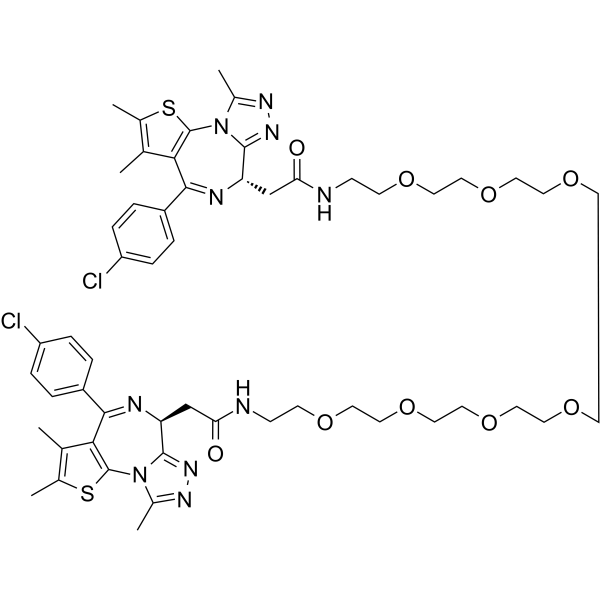
MT1 is a bivalent chemical probe of BET bromodomains, with an IC50 of 0.789 nM for BRD4(1) .
loading...
    loading...
Cat. No.: HY-173552
CAS No.: 3067681-36-8
Research Areas:  

Cancer

TCIP3 is a bivalent molecular glue with with dual binding to p300/CBP and BCL6. TCIP3 redirects p300 and CBP to activate programmed cell death genes normally repressed by the oncogenic driver, BCL6. TCIP3 can be used for the study of diffuse large B cell lymphomas (DLBCLs). TCIP3 exhibits no toxicity in non-transformed tonsillar lymphocytes or fibroblasts .
loading...
    loading...

