32 Results for "

branched-chain amino acids

" in MedChemExpress (MCE) Product Catalog:
Products (32)

32 Results for "branched-chain amino acids" in MCE Product Catalog:

5
5 Cited Publications
Cat. No.: HY-W193545A
CAS No.: 1415683-79-2
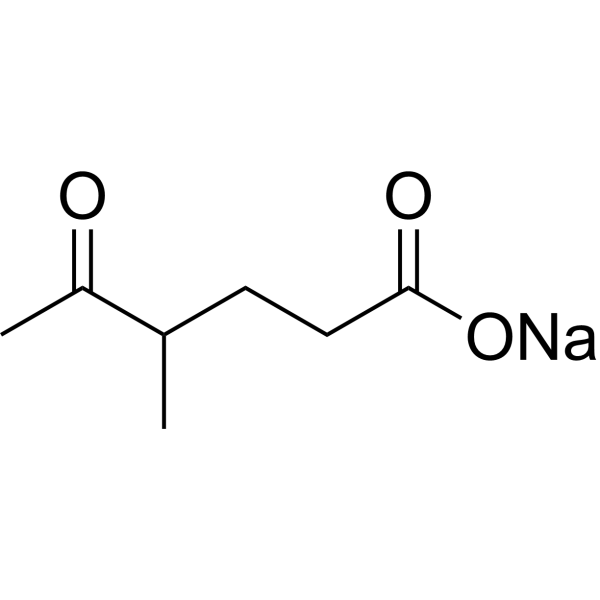
ERG240 is an oral active branched-chain amino acid aminotransferase 1 (BCAT1) inhibitor. ERG240 can be used for the research of cancer, rheumatoid arthritis, and bone disease .
loading...
    loading...
4
4 Cited Publications
Cat. No.: HY-112173
CAS No.: 61596-47-2
Purity:  99.85%
Synonyms: Z-Pro-D-Leu-OH
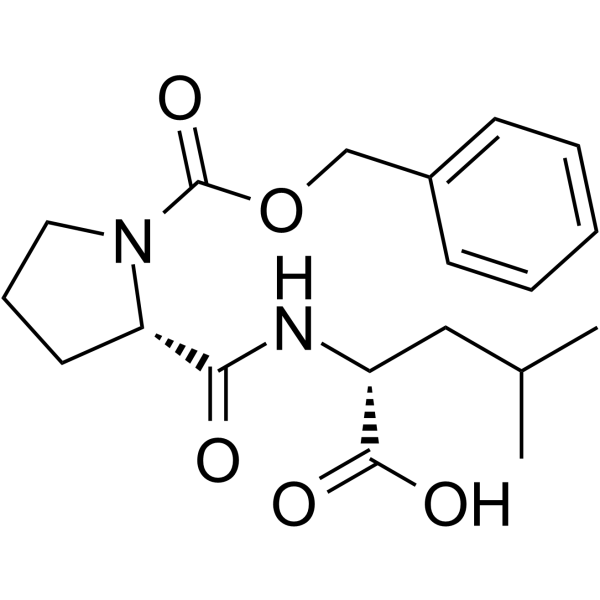
Prolylleucine (Z-Pro-D-Leu) is a dipeptide containing branched-chain amino acids. Prolylleucine (Z-Pro-D-Leu) can affect the circadian rhythms and behaviour of animals .
loading...
    loading...
1
1 Cited Publications
Cat. No.: HY-119737
CAS No.: 64902-72-3
Purity:  99.95%
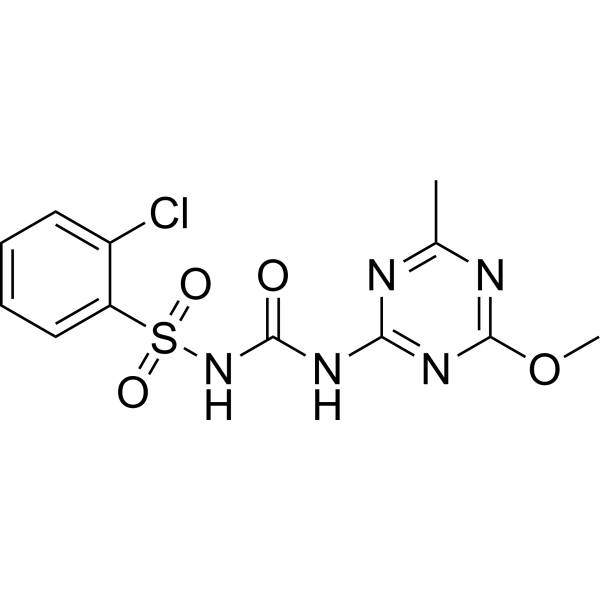
Chlorsulfuron is an acetolactate synthase inhibitor and selective systemic herbicide. Chlorsulfuron blocks the synthesis of branched-chain amino acids (valine and isoleucine), thereby inhibiting protein synthesis, cell growth, and cell division. Chlorsulfuron blocks G1 and G2 phase cell cycle progression in plant root tip cells without directly interfering with mitosis or DNA synthesis. Chlorsulfuron completely inhibits germination of non-target terrestrial plants and is highly toxic to aquatic macrophytes. Chlorsulfuron has low toxicity to mammals, birds and bees, and moderate toxicity to fish and aquatic invertebrates. Chlorsulfuron can be used in studies related to herbicides, plant cell cycles and ecotoxicology .
loading...
    loading...
1
1 Cited Publications
Cat. No.: HY-113165A
CAS No.: 6920-31-6
Purity:  ≥98.0%
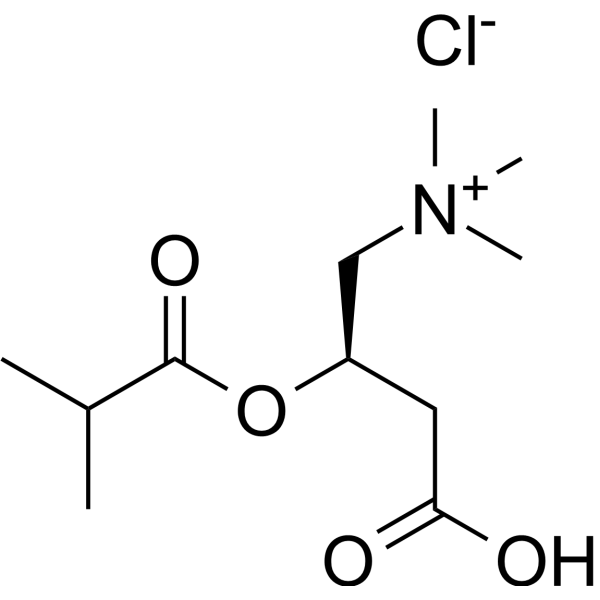
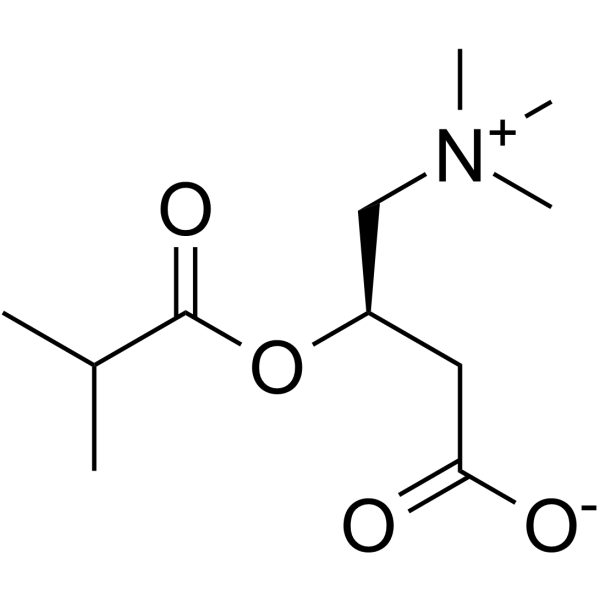
Isobutyryl-L-carnitine chloride is a biomarker. Isobutyryl-L-carnitine chloride is a product of acyl-CoA dehydrogenases involved in fatty acid β-oxidation, and it buffers the mitochondrial acyl-CoA/CoA ratio, oxidizes branched-chain amino acids, and supports the endogenous antioxidant defense system. Isobutyryl-L-carnitine chloride is a plasma biomarker of hepatic OCT1 transporter inhibition. Isobutyryl-L-carnitine chloride is a urinary biomarker of renal cell carcinoma, and its levels are elevated one year after nephrectomy compared with before nephrectomy. Isobutyryl-L-carnitine chloride can be used in research on renal cell carcinoma .
loading...
    loading...
1
1 Cited Publications
Cat. No.: HY-113165
CAS No.: 25518-49-4
Isobutyryl-L-carnitine is a biomarker. Isobutyryl-L-carnitine is a product of acyl-CoA dehydrogenases involved in fatty acid β-oxidation, and it buffers the mitochondrial acyl-CoA/CoA ratio, oxidizes branched-chain amino acids, and supports the endogenous antioxidant defense system. Isobutyryl-L-carnitine is a plasma biomarker of hepatic OCT1 transporter inhibition. Isobutyryl-L-carnitine is a urinary biomarker of renal cell carcinoma, and its levels are elevated one year after nephrectomy compared with before nephrectomy. Isobutyryl-L-carnitine can be used in research on renal cell carcinoma .
loading...
    loading...
Cat. No.: HY-NP008
CAS No.: 9045-23-2
β-Lactoglobulin, a major whey protein, is a small globular protein from the lipocalin family. β-Lactoglobulin is an important source of the essential and branched-chain amino acids (leucine, isoleucine, and valine). β-Lactoglobulin shows antioxidant properties, because it contains two disulfide bonds and one free thiol group. β-Lactoglobulin is a ligand transport agent. β-Lactoglobulin is one of the major allergens in milk and can be utilized in the research for developing safe hypoallergenic dairy products .
loading...
    loading...
Cat. No.: HY-P11285A
Synonyms: Long acting GIPRA-1 TFA
Target:  

Insulin Receptor

Research Areas:  

Metabolic Disease

LAGIPRA peptide TFA is a long-acting GIP1R agonist. LAGIPRA peptide TFA enhances insulin sensitivity by augmenting glucose disposal and reduces branched-chain amino acids (BCAAs) and ketoacids. LAGIPRA peptide TFA has the potential for the research of type 2 diabetes .
loading...
    loading...
Cat. No.: HY-B1876
CAS No.: 111991-09-4
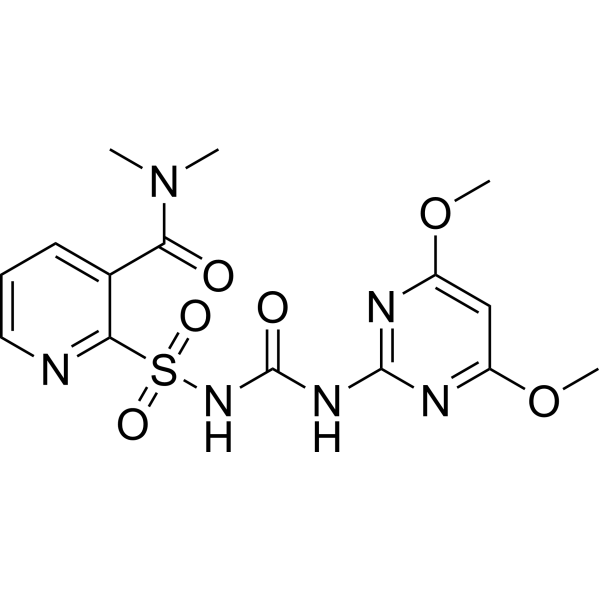
Nicosulfuron is efficient, harmless, antifungal and selective herbicide belonging to the sulfonylurea family. Nicosulfuron is also a photosynthetic system inhibitor and inhibits acetolactate synthase (ALS) enzyme activity. Nicosulfuron degradation by Plectosphaerella cucumerina AR1 is glucose concentration dependent in planktonic lifestyle. Nicosulfuron enhances the glycolysis pathway and tricarboxylic acid cycle to improve the adaptability of sweet maize. Nicosulfuron reduces the synthesis of branched-chain amino acids (BCAAs), which is proming for maize cultivation .
loading...
    loading...
Cat. No.: HY-B0869A
CAS No.: 125401-92-5
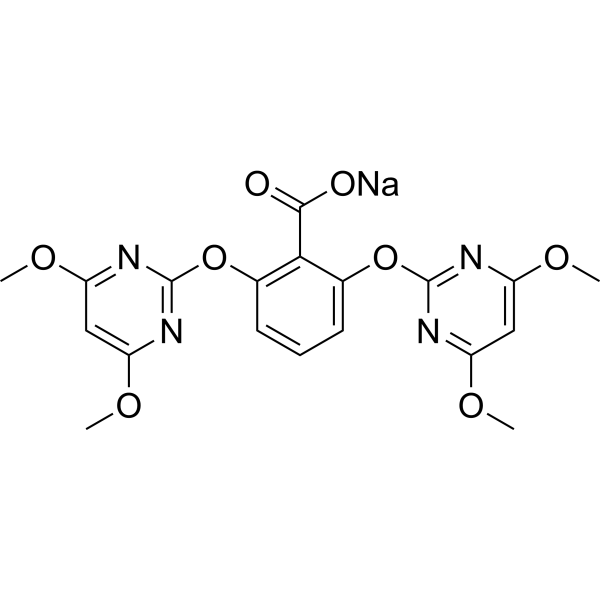
Bispyribac sodium is a selective, orally active, systemic and post-emergence herbicide. Bispyribac sodium reduces SOD levels and inhibits ALS activity. Bispyribac sodium blocks the biosynthesis of branched-chain amino acids, resulting in growth retardation, chlorosis and necrosis of weeds. Bispyribac sodium exerts herbicidal activity against grass, sedge and broadleaf weeds in rice fields. Bispyribac sodium is hepatotoxic and genotoxic .
loading...
    loading...
Cat. No.: HY-W010516
CAS No.: 97-61-0
Synonyms: 2-Methylpentanoic acid
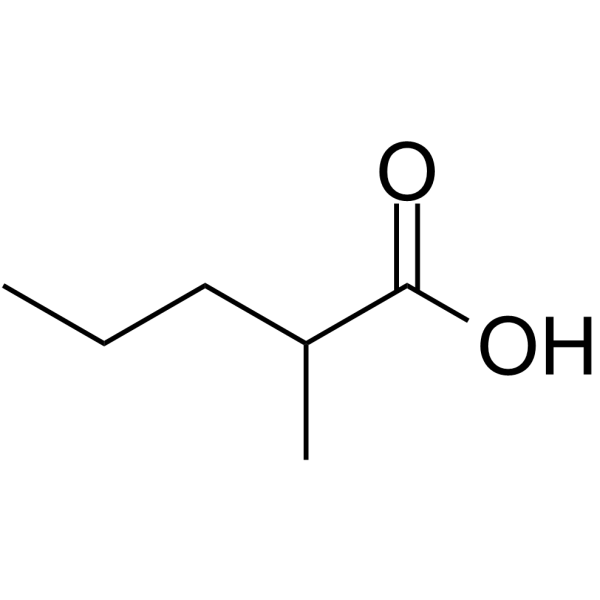
2-Methylvaleric acid is a branched short-chain fatty acid (SCFA) produced by the metabolism of branched-chain amino acids by gut microbes. 2-Methylvaleric acid can be used as a potential biomarker for metabolic diseases such as type 2 diabetes, and its content is significantly reduced in the feces of diabetic mice. 2-Methylvaleric acid may regulate host energy metabolism and inflammatory response through G protein-coupled receptors (GPCRs) or histone deacetylase (HDAC) inhibition. 2-Methylvaleric acid can be used to study gut microbe-host interactions and metabolic diseases as a fecal biomarker[1][2].
loading...
    loading...
Cat. No.: HY-148242A
CAS No.: 2639638-67-6
Purity:  98.95%
Target:  

Fluorescent Dye

Research Areas:  

Cancer

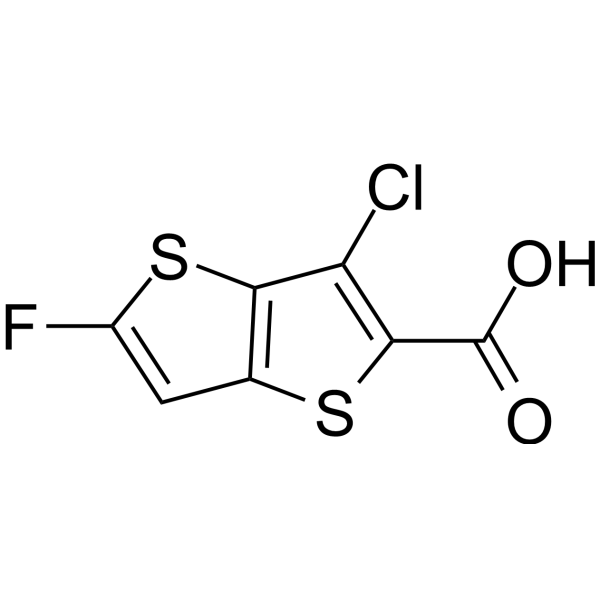
BAY-252 is a potent branched-chain amino acid transaminases 1 (BCAT1) and BCAT2 inhibitor with IC50s of 2 μM and 2 μM, respectively. BAY-069 also can be used as a chemical probe. BAY-069 can be used for the research of cancer .
loading...
    loading...
Cat. No.: HY-156193
CAS No.: 2573122-40-2
Purity:  99.69%
PF-07208254 is a selective, orally active allosteric inhibitor of branched-chain ketoacid dehydrogenase kinase (BDK) (IC50=110 nM, Ki=54 nM, KD=84 nM). PF-07208254 inhibits BDK-mediated BCKDH phosphorylation and enhances the catabolism of branched-chain amino acids (BCAAs) and branched-chain keto acids (BCKAs) by binding to the allosteric pocket of BDK, reducing BDK binding to BCKDH-E2 and promoting BDK degradation. PF-07208254 inhibits BDK activity in human skeletal muscle cells (IC50=540 nM) and has activity to improve cardiac function and metabolism. PF-07208254 can be used in the study of cardiometabolic diseases (e.g., heart failure, type 2 diabetes) .
loading...
    loading...
Cat. No.: HY-P11285
Synonyms: Long acting GIPRA-1
Target:  

Insulin Receptor

Research Areas:  

Metabolic Disease

LAGIPRA peptide is a long-acting GIP1R agonist. LAGIPRA peptide enhances insulin sensitivity by augmenting glucose disposal and reduces branched-chain amino acids (BCAAs) and ketoacids. LAGIPRA peptide has the potential for the research of type 2 diabetes .
loading...
    loading...
Cat. No.: HY-113165AS
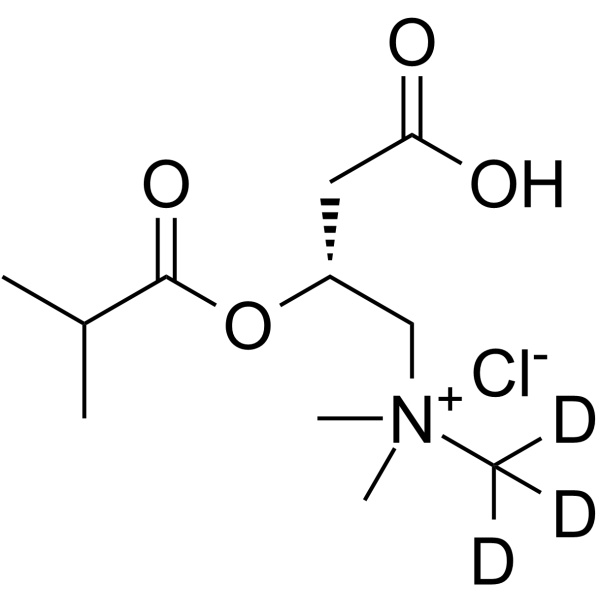
Isobutyryl-L-carnitine-d3 chloride is the d3-labeled Isobutyryl-L-carnitine chloride (HY-113165A). Isobutyryl-L-carnitine chloride is a biomarker. Isobutyryl-L-carnitine chloride is a product of acyl-CoA dehydrogenases involved in fatty acid β-oxidation, and it buffers the mitochondrial acyl-CoA/CoA ratio, oxidizes branched-chain amino acids, and supports the endogenous antioxidant defense system. Isobutyryl-L-carnitine chloride is a plasma biomarker of hepatic OCT1 transporter inhibition. Isobutyryl-L-carnitine chloride is a urinary biomarker of renal cell carcinoma, and its levels are elevated one year after nephrectomy compared with before nephrectomy. Isobutyryl-L-carnitine chloride can be used in research on renal cell carcinoma .
loading...
    loading...
Cat. No.: HY-121727
CAS No.: 874195-61-6
Synonyms: AE 1887196; BCS-BX60309
Research Areas:  

Others

Triafamone (AE 1887196) is a paddy field pre-emergence and post-emergence sulfonamide herbicide. Triafamone weeds by inhibiting the acetolactate synthase (ALS) enzyme, thereby blocking the biosynthesis of branched-chain amino acids .
loading...
    loading...
Cat. No.: HY-169061
WQQ-345 is an orally active BCAT1 inhibitor with an IC50 values of 10.8 mM. WQQ-345 reduces cellular α-KG levels, upregulating H3K27me3 expression, decreasing glycolytic enzyme expression, and impairing glycolysis activity. WQQ-345 reduces colony formation, suppresses growth of BCAT1-high TKI-resistant lung cancer cells. WQQ-345 exerts in vitro and in vivo antitumor activity. WQQ-345 can be used for the research of TKI-resistant non-small cell lung cancer and TKI-resistant lung cancer .
loading...
    loading...
Cat. No.: HY-B1845
CAS No.: 145701-23-1
Research Areas:  

Others

Florasulam is a targeted post-emergent herbicide belonging to the triazolopyrimidine sulfonanilide class, which functions by inhibiting acetolactate synthase (ALS) in plants. Located in the chloroplasts, ALS plays a crucial role in the biosynthesis of branched-chain amino acids. When Florasulam inhibits ALS, it disrupts plant cell division, reduces growth, and ultimately leads to plant death.
loading...
    loading...
Cat. No.: HY-W422402
CAS No.: 173159-57-4
Research Areas:  

Others

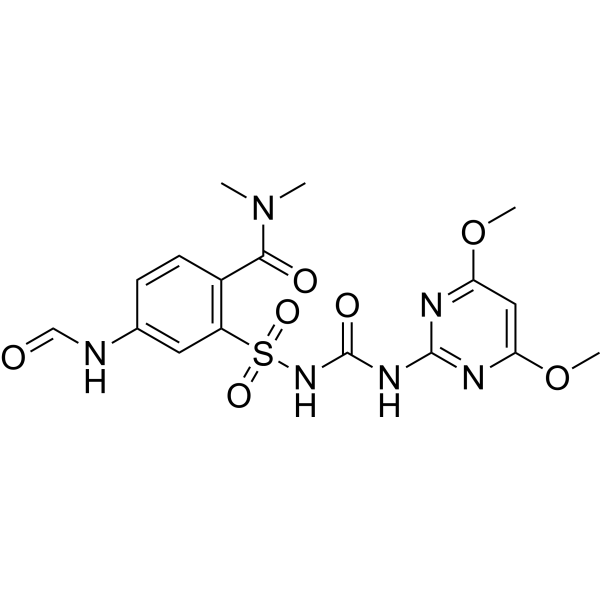
Foramsulfuron is a postemergence herbicide used for selective control of grass and some broadleaved weeds in maize (Zea mays L.). Foramsulfuron is a sulfonylurea herbicide that exerts its herbicidal activity by inhibiting acetolactate synthase (ALS), a key enzyme in the biosynthesis of branched chain amino acids .
loading...
    loading...
Cat. No.: HY-156965
CAS No.: 2771756-82-0
Target:  

Fluorescent Dye

Research Areas:  

Metabolic Disease Cancer

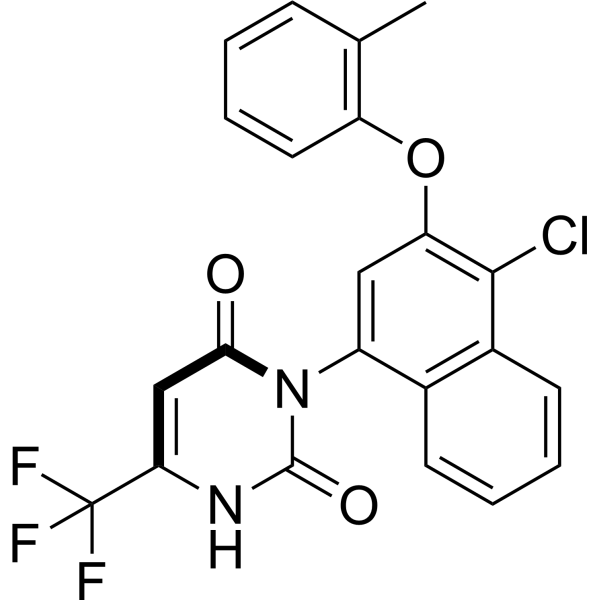
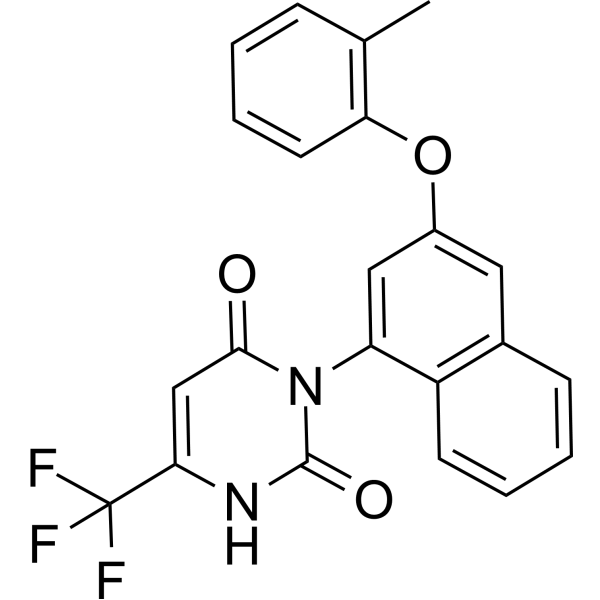
BAY-771, a structurally close pyrimidinedione, is a chemical probe with good lead-like properties and high permeability in Caco-2 cells (no hint of efflux). BAY-771 shows very weak inhibitory activity in the BCAT1 biochemical assay and no activity in BCAT2. BAY-771 can be used as a negative control of HY-148242 BAY-069. BAY-771 can be used for the research of tumor metabolism .
loading...
    loading...
Cat. No.: HY-B1845R
CAS No.: 145701-23-1
Research Areas:  

Others

Florasulam (Standard) is the analytical standard of Florasulam. This product is intended for research and analytical applications. Florasulam is a targeted post-emergent herbicide belonging to the triazolopyrimidine sulfonanilide class, which functions by inhibiting acetolactate synthase (ALS) in plants. Located in the chloroplasts, ALS plays a crucial role in the biosynthesis of branched-chain amino acids. When Florasulam inhibits ALS, it disrupts plant cell division, reduces growth, and ultimately leads to plant death.
loading...
    loading...

