
127 Results for "

catalytically active

" in MedChemExpress (MCE) Product Catalog:
Products (127)

127 Results for "catalytically active" in MCE Product Catalog:

14
14 Publications Verification
Cat. No.: HY-11107
CAS No.: 477575-56-7
Purity:  99.86%
Research Areas:  

Cancer

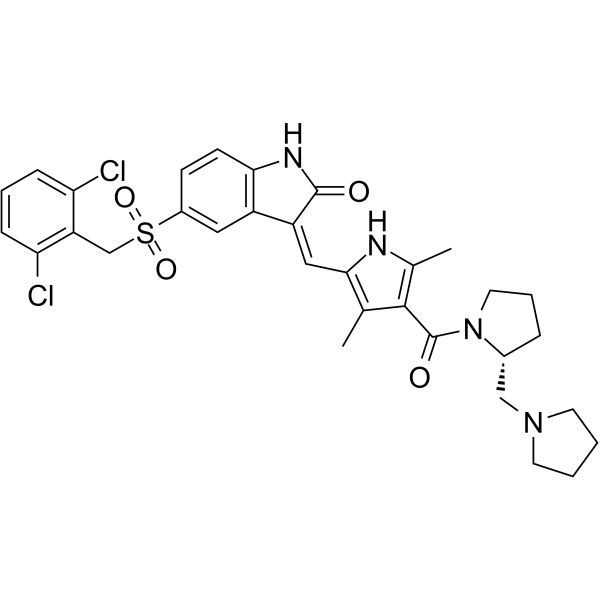
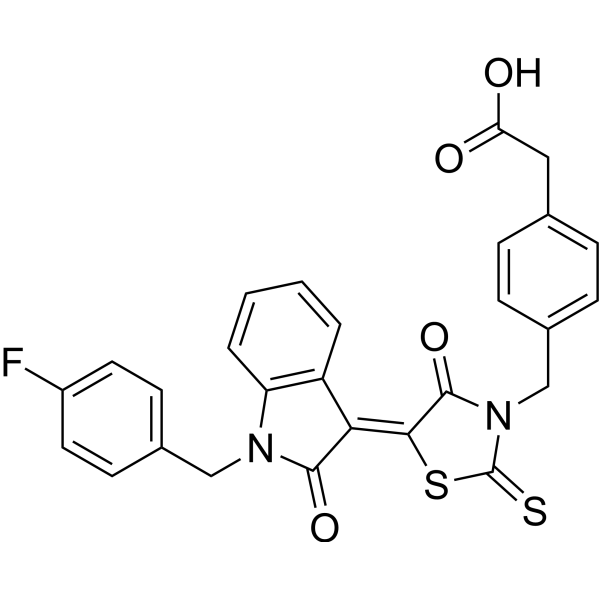
PHA-665752 is a selective, ATP-competitive, and active-site inhibitor of the catalytic activity of c-Met kinase (Ki=4 nM; IC50=9 nM). PHA-665752 exhibits >50-fold selectivity for c-Met compared with a panel of diverse tyrosine and serine-threonine kinases. PHA-665752 induces apoptosis and cell cycle arrest, and exhibits cytoreductive antitumor activity .
loading...
    loading...
3
3 Cited Publications
Cat. No.: HY-102020
CAS No.: 1005504-62-0
Purity:  99.62%
Synonyms: PF-06687859
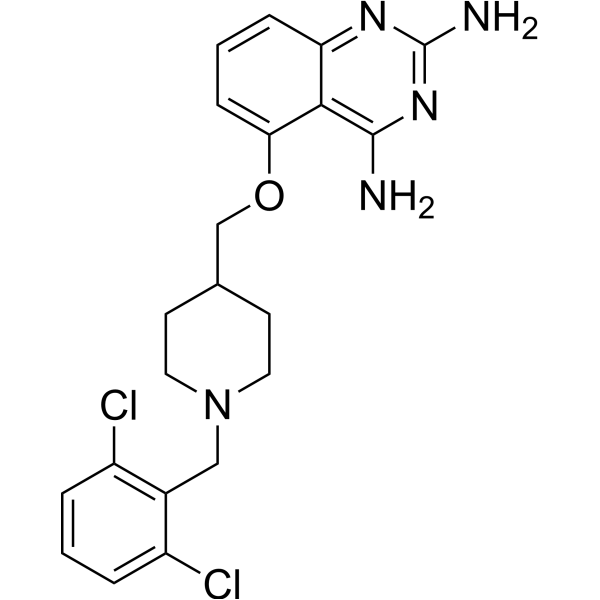
RG3039 (PF-06687859) is an orally active, blood-brain barrier-permeable DcpS inhibitor with an IC50 of 4.2 nM against hDcpS. RG3039 inhibits the decapping activity of DcpS and maintains DcpS in a catalytically inactive conformation in the central nervous system and other tissues. RG3039 extends survival and improves function in spinal muscular atrophy mice. RG3039 is applicable to research related to spinal muscular atrophy .
loading...
    loading...
3
3 Cited Publications
Cat. No.: HY-153967
CAS No.: 2810747-78-3
Purity:  95.92%
Target:  

PKA

Research Areas:  

Cancer

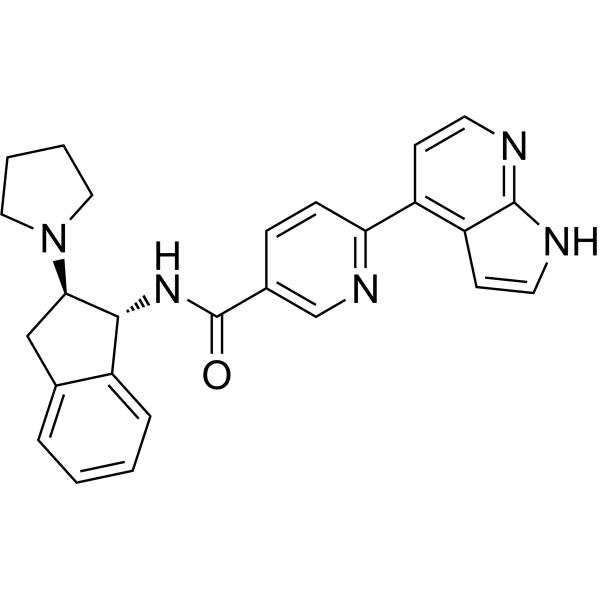
BLU0588 is an orally active, potent and selective PRKACA (protein kinase cAMP-activated catalytic subunit alpha) kinase inhibitor, with an IC50 of 1 nM and dissociation constant (Kd) of 4 nM. BLU0588 can be used for fibrolamellar carcinoma (FLC) research .
loading...
    loading...
2
2 Cited Publications
Cat. No.: HY-109143
CAS No.: 1643570-24-4
Purity:  ≥98.0%
Synonyms: ABBV-105
Target:  

Btk

Research Areas:  

Inflammation/Immunology

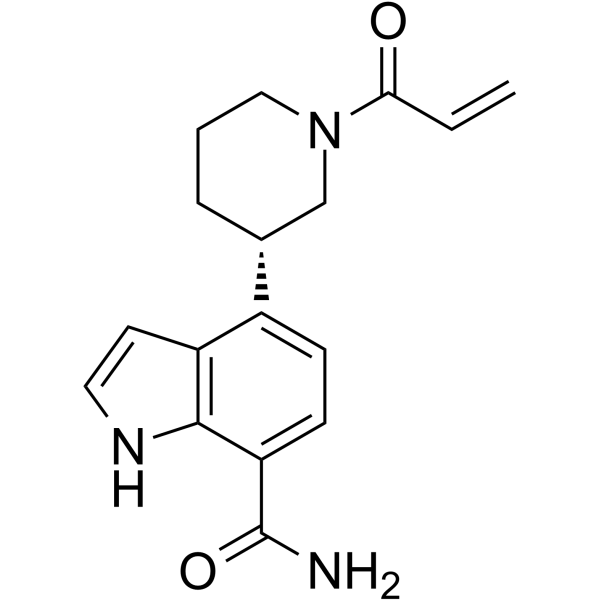
Elsubrutinib (ABBV-105) is an orally active, potent, selective and irreversible Bruton's tyrosine kinase (BTK) inhibitor. The IC50 of Elsubrutinib for BTK catalytic domain is 0.18 μM. Elsubrutinib can be used for the research of inflammatory disease .
loading...
    loading...
1
1 Cited Publications
Cat. No.: HY-115383
CAS No.: 1093412-18-0
Purity:  99.45%
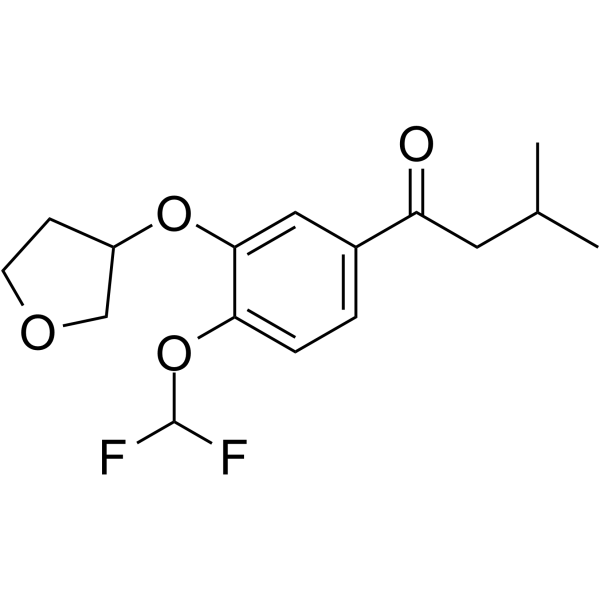
Roflupram is a selective, orally active and brain-penetrant PDE4 inhibitor, with an IC50 of 26.2 nM for core catalytic domains of human PDE4. Roflupram can reverse cognitive deficits and reduce the production of pro-inflammatory factors .
loading...
    loading...
1
1 Cited Publications
Cat. No.: HY-G0017
CAS No.: 404844-02-6
Synonyms: Norimatinib; Imatinib metabolite N-Desmethyl imatinib; CGP 74588
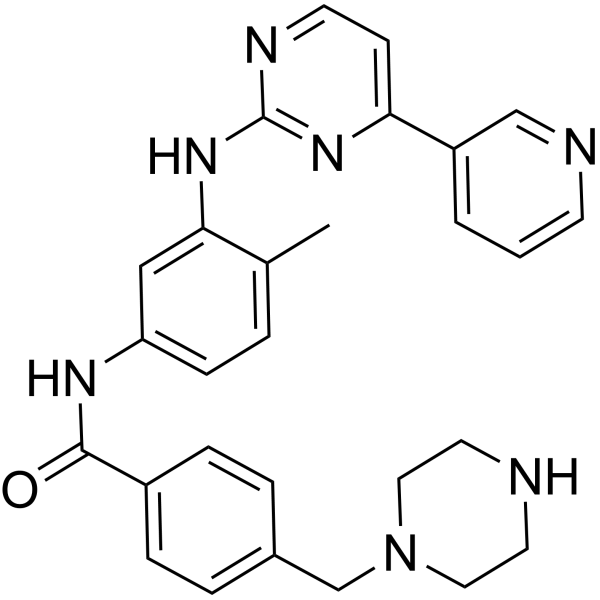
N‑Desmethyl imatinib (Norimatinib) is an active metabolite of Imatinib (HY-15463), a selective c‑Abl inhibitor, and a substrate of P‑glycoprotein. N-Desmethyl imatinib binds to the c-Abl catalytic domain to prevent substrate phosphorylation, inhibits c-Abl-mediated α-synuclein activation and downstream inflammatory signaling pathways. N-Desmethyl imatinib induces apoptosis in K562 human leukemia cells. N-Desmethyl imatinib shows significantly elevated plasma levels in gastrointestinal stromal tumor (GIST) models with mild SARS-CoV-2 infection. N-Desmethyl imatinib can be used for the research of Parkinson’s disease, gastrointestinal stromal tumor, and chronic myeloid leukemia .
loading...
    loading...
Cat. No.: HY-E70069
CAS No.: 37278-88-9
Target:  

Glycosidase

Research Areas:  

Others

Endo-β-N-acetylglucosaminidase (Endo S2) is a key enzyme involved in the processing of free oligosaccharides in the cytosol. Endo-β-N-acetylglucosaminidase catalyzes hydrolysis of N-linked oligosaccharides .
loading...
    loading...
Cat. No.: HY-P11307
CAS No.: 1334608-28-4
Target:  

Proteasome

Research Areas:  

Cancer

Biotin-epoxomicin is a Proteasome subunit binder. Biotin-epoxomicin serves as an affinity reagent for identifying proteasomal catalytic subunits, and facilitates affinity purification of active proteasomal subunits for LC-MS identification. Biotin-epoxomicin can be used to study solid tumors derived from B16 melanoma .
loading...
    loading...
Cat. No.: HY-134136A
CAS No.: 324518-20-9
Octanoyl coenzyme A lithium is an enoyl-CoA hydratase binder. Octanoyl coenzyme A lithium binds to the active site of enoyl-CoA hydratase, occupies the binding pocket for the fatty acid tail of the enzyme's substrate, and induces a conformational shift in a flexible protein loop via its longer octanoyl chain, forming an open channel leading to the inter-trimer gap .
loading...
    loading...
Cat. No.: HY-Y0262B
CAS No.: 62-76-0
Synonyms: Ethanedioic acid sodium,ACS, 99.5%
Sodium oxalate is an orally active dispersant and coordination agent. Sodium oxalate causes mitochondrial dysfunction. Sodium oxalate has catalytic enhancing activity. Sodium oxalate induces stable chronic kidney disease. Sodium oxalate induces highly malignant and undifferentiated breast tumors .
loading...
    loading...
Cat. No.: HY-E70004
CAS No.: 9068-59-1
Research Areas:  

Others

Microbial neutral proteinase is a zinc-containing metalloproteinase mainly produced by Bacillus and fungi. Its catalytic activity is highly dependent on divalent cations, and it remains active within the pH range of 5-8. Microbial neutral proteinase can specifically cleave peptide bonds within polypeptide chains, thereby degrading macromolecular proteins into small peptides or amino acids. It can be applied in various industrial fields including food processing, brewing, detergents, and light industry .
loading...
    loading...
Cat. No.: HY-157521
CAS No.: 3055162-52-9
Target:  

Acyltransferase

AANAT-IN-1 is an arylalkylamine N-acetyltransferase (AANAT) inhibitor with a sheep AANAT IC50 of 9.9 μM. AANAT-IN-1 binds to the active site of sheep AANAT, interacting with amino acid residues via hydrogen bonds, hydrophobic interactions, ionic interactions, and water bridges, inhibiting the enzyme's catalytic activity. AANAT-IN-1 can be used for the researches of circadian rhythm-associated neuropsychiatric conditions, seasonal affective disorder, and other diseases associated with abnormally elevated melatonin levels .
loading...
    loading...
Cat. No.: HY-171036
CAS No.: 252212-58-1
Research Areas:  

Metabolic Disease

GAPDH-IN-1 (Compound F8) is a GAPDH inhibitor (IC50 of 39.31 μM for GAPDH enzymatic activity). GAPDH-IN-1 forms a covalent adduct with an aspartic acid in the active site to displace NAD +, a cofactor of the enzyme, with concomitant enhancement of the cysteine-reactive probe reaction with the catalytic cysteine .
loading...
    loading...
Cat. No.: HY-P5489
CAS No.: 849069-99-4
Target:  

IFNAR

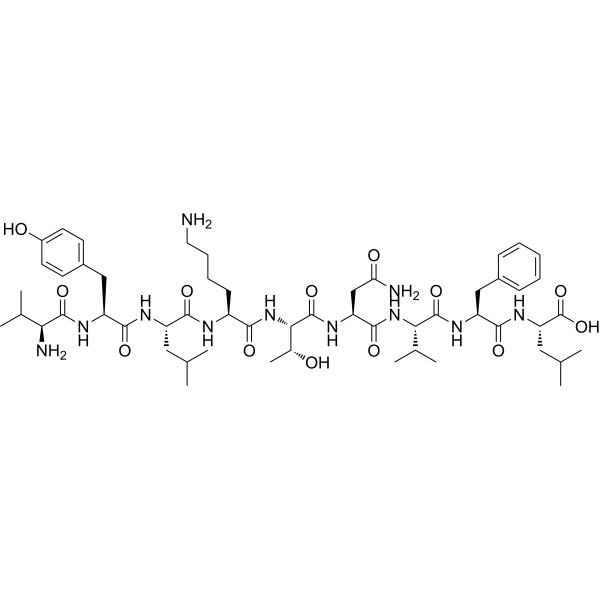
IGRP(206-214) is a biological active peptide. IGRP(206-214) corresponds to residues 206-214 of murine islet-specific glucose-6-phosphatase catalytic subunit-related protein (IGRP). IGRP(206-214) is T cells specific for proinsulin and IGRP induces diabetes in non-obese diabetic (NOD) mice .
loading...
    loading...
Cat. No.: HY-P10422A
Synonyms: ML-peptide, Multi-Leucine (ML)-peptide triacetate
Target:  

Autophagy

Research Areas:  

Cancer

Multi-Leu peptide (ML-peptide) triacetate is a potent inhibitor of PACE4 (Ki=22 nM). Multi-Leu peptide triacetate can competitively bind to the active site of PACE4 by simulating the substrate sequence of PACE4, thereby inhibiting its catalytic activity. Multi-Leu peptide triacetate can be used to study the specific mechanism of PACE4 in the development of prostate cancer .
loading...
    loading...
Cat. No.: HY-24312
CAS No.: 153130-59-7
AD-mix-α is a mixture of organic compounds, commonly used to distinguish and identify asymmetric carbon atoms in chiral compounds. It consists of compounds containing catalytically active metals and chiral ligands. AD-mix-α is widely used in various organic synthesis reactions, such as hydrogenation, addition, and carbonylation reactions, to increase yield and reduce the formation of side reaction products. Although it has no direct application in the medical field, it plays an important role in the pharmaceutical industry and chemical research.
loading...
    loading...
Cat. No.: HY-N10686
CAS No.: 61077-78-9
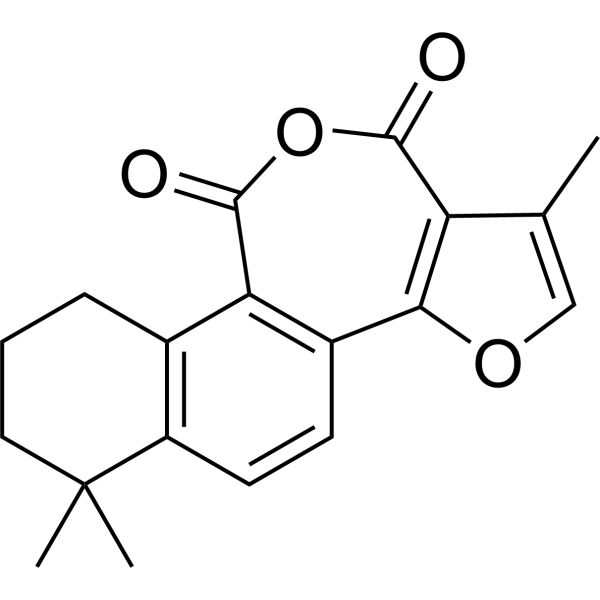
Tanshinone IIA anhydride, present in root extracts of Salvia miltiorrhiza, acts as an inhibitor of human carboxylesterase (CE). Tanshinone IIA anhydride has a Ki value of 1.9 nM against hCE1 and a Ki value of 1.4 nM against hiCE. Tanshinone IIA anhydride forms a stable covalent complex with serine Ser221 at the active site of hCE1, blocking the catalytic cycle of carboxylesterase, and the activity of the inactivated enzyme cannot recover spontaneously. Tanshinone IIA anhydride is applicable in metabolism-related studies .
loading...
    loading...
Cat. No.: HY-137129
CAS No.: 28459-40-7
Purity:  97.70%
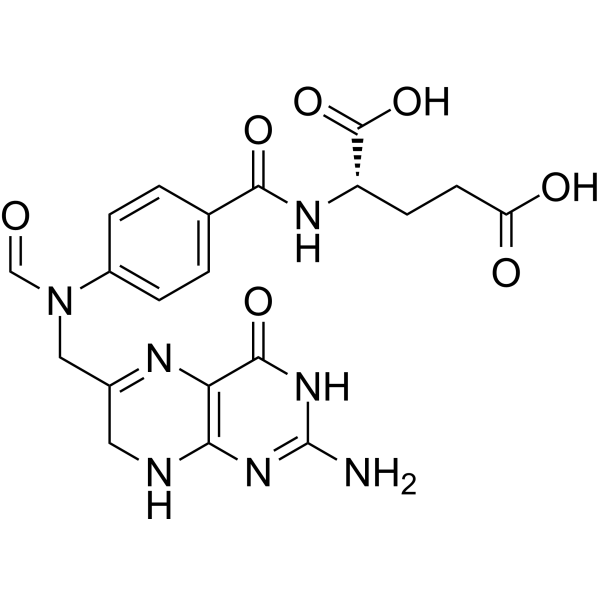
10-Formyl-7,8-dihydrofolic acid is a biologically active folic acid and growth promoter. 10-Formyl-7,8-dihydrofolic acid serves as a substrate for aminoimidazolecarboxamide ribonucleotide transformylase and dihydrofolate reductase (DHFR) to support catalytic reactions (with detection wavelengths of 552 nm and 340 nm, respectively). 10-Formyl-7,8-dihydrofolic acid not only promotes the growth of leukemia cells, but also effectively reverses the growth inhibition induced by antifolate drugs under folate-deficient conditions. 10-Formyl-7,8-dihydrofolic acid can be used in the research of leukemia .
loading...
    loading...
Cat. No.: HY-122142A
CAS No.: 127428-47-1
Synonyms: S-2366 (hydrochloride)
Research Areas:  

Others

Pyr-​Pro-​Arg-​pNA (S-2366) hydrochloride is a chromogenic peptidyl substrate, and a noncompetitive inhibitor that occupies the active sites of FXIa and FXIa-LC to block factor IX activation. Pyr-​Pro-​Arg-​pNA hydrochloride functions as a hydrolyzable substrate for FXIa’s catalytic domain, human APC, murine APC, and purified plasma kallikrein .
loading...
    loading...
Cat. No.: HY-167920
CAS No.: 1637-70-3
Synonyms: S-Sulfoglutathione
Target:  

Endogenous Metabolite

Research Areas:  

Cancer

Glutathione sulfonate (S-Sulfoglutathione) is a multifunctional bioactive compound that inhibits angiogenesis and tumor growth. Glutathione sulfonate is a competitive inhibitor of glutathione S-transferase and is involved in the detoxification process and the binding of a variety of exogenous and endogenous compounds. Glutathione sulfonate acts in the substrate binding site of Escherichia coli glutathione S-transferase, affecting the catalytic mechanism. The structural characteristics of Glutathione sulfonate contribute to its inhibitory effect by hydrogen bonding in the active center of the enzyme .
loading...
    loading...

