


1. Search Result
Search Result
Results for "

cellular adhesion

" in MedChemExpress (MCE) Product Catalog:

27

Inhibitors & Agonists

2

Fluorescent Dyes

1

Biochemical Assay Reagents

3

Peptides

3

Inhibitory Antibodies

8

Natural
Products

1

Recombinant Proteins

2

Isotope-Labeled Compounds

1

Oligonucleotides

Cat. No. Product Name Target Research Areas Chemical Structure
  • HY-P99016B
    Enfortumab vedotin-ejfv (solution)
    1 Publications Verification

    Antibody-Drug Conjugates (ADCs) Nectin-4 Cancer
    Enfortumab vedotin-ejfv (solution) is an anti-Nectin-4 antibody-drug conjugate (ADC). Enfortumab vedotin-ejfv (solution) is a fully humanized IgG1 antibody conjugated to the microtubule disrupting agent MMAE (HY-15162) via a protease-cleavable Val-Cit linker. The antibody portion is Enfortumab (HY-P99016), and the drug-linker conjugate for ADC is VcMMAE (HY-15575). Nectin-4 is an adhesion protein involved in cellular processes and tumorigenesis, and Enfortumab vedotin-ejfv (solution) is indicated for the inhibition of locally advanced or metastatic urothelial carcinoma .
    Enfortumab vedotin-ejfv (solution)
  • HY-P99016A
    Enfortumab vedotin-ejfv
    1 Publications Verification

    Antibody-Drug Conjugates (ADCs) Nectin-4 Cancer
    Enfortumab vedotin-ejfv is an anti-Nectin-4 antibody-drug conjugate. Enfortumab vedotin-ejfv is a fully humanized IgG1 antibody conjugated to the microtubule disrupting agent MMAE (HY-15162) via a protease-cleavable Val-Cit linker. The antibody portion is Enfortumab (HY-P99016), and the drug-linker conjugate for ADC is VcMMAE (HY-15575). Nectin-4 is an adhesion protein involved in cellular processes and tumorigenesis, and Enfortumab vedotin-ejfv is indicated for the inhibition of locally advanced or metastatic urothelial carcinoma .
    Enfortumab vedotin-ejfv
  • HY-145652
    Narmafotinib
    1 Publications Verification

    AMP-945

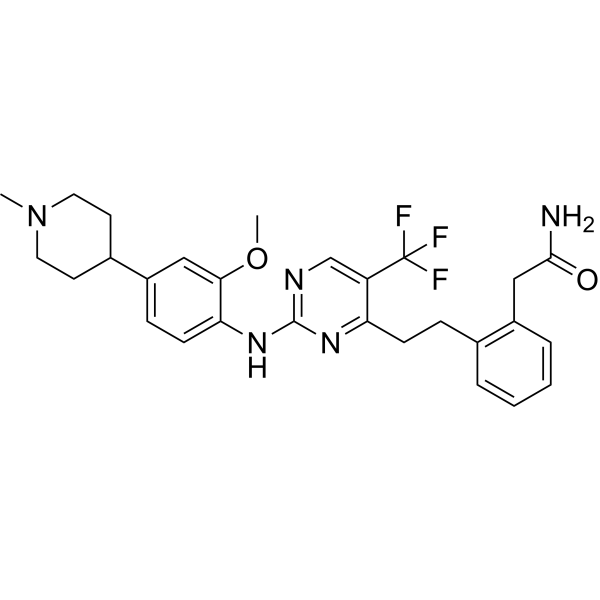
    Narmafotinib (AMP-945) is an orally active inhibitor of the enzyme focal adhesion kinase (FAK, KD=0.21 nM). Narmafotinib inhibits autophosphorylation of 397Y-FAK in MDA-MB-231 cells with an IC50=7 nM and exhibits low general cellular toxicity (IC50=2.7 μM, MDA-MB-231 cells). Narmafotinib can be used for anti-cancer study .
    Narmafotinib
  • HY-113469
    Cyclic GMP
    1 Publications Verification

    Endogenous Metabolite Infection Cardiovascular Disease Inflammation/Immunology
    Cyclic GMP (cGMP), an important second messenger, is a major intracellular mediator of extracellular signals such as nitric oxide (NO) and natriuretic peptides (NPs). Effects of Cyclic GMP occur through three main groups of cellular targets: cGMP-dependent protein kinases (PKGs), cGMP-gated cation channels, and PDEs. Cyclic GMP can inhibit both platelet adhesion and aggregation. cGAMP (Cyclic-GMP-AMP) (HY-12512), a conjugate of Cyclic GMP and AMP, can induce IRF3 phosphorylation and nuclear translocation, enhancing antiviral immune responses .
    Cyclic GMP
  • HY-107587
    A-286982
    3 Publications Verification

    Integrin Inflammation/Immunology
    A-286982 is a potent and allosteric LFA-1/ICAM-1 interaction inhibitor with IC50s of 44 nM and 35 nM in an LFA-1/ICAM-1 binding and LFA-1-mediated cellular adhesion assay, respectively .
    A-286982
  • HY-NP132

    Biochemical Assay Reagents Integrin Autophagy Apoptosis Discoidin Domain Receptor Cancer
    Recombinant Humanized Type III Collagen 28.6kDa is a 28.6 kDa recombinant humanized type III collagen. Recombinant Humanized Type III Collagen possesses a variety of biological functions, such as promoting the regeneration of the skin extracellular matrix and improving the cellular microenvironment. Recombinant Humanized Type III Collagen can also inhibit the proliferation, migration and invasion of breast cancer cells. Recombinant Humanized Type III Collagen plays a role in cell adhesion, migration, proliferation and differentiation by interacting with Integrin .
    Recombinant Humanized Type III Collagen 28.6kDa
  • HY-117133

    SF0166

    Integrin Metabolic Disease
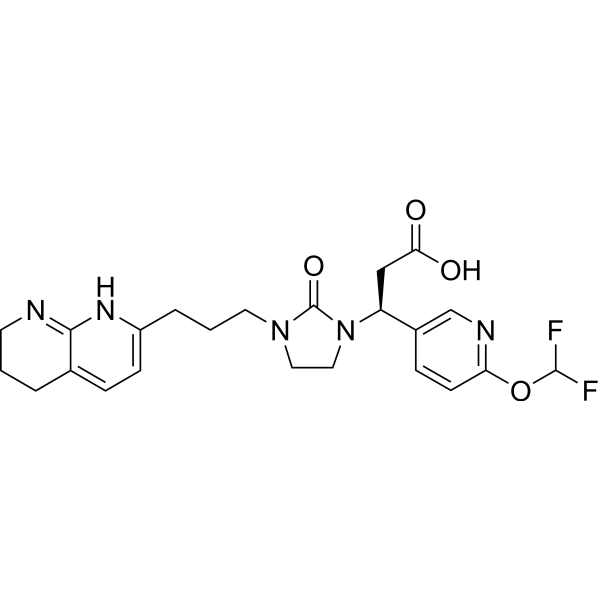
    Nesvategrast (SF0166) is a potent and selective αvβ3 antagonist with IC50 values of 0.6 nM, 8 nM, and 13 nM for αvβ3, αvβ6, and αvβ8, respectively. Nesvategrast inhibits cellular adhesion to vitronectin across human, rat, rabbit, and dog cell lines with IC50 values of 7.6 pM to 76 nM. Nesvategrast decreases neovascularization in the oxygen-induced retinopathy mouse model .
    Nesvategrast
  • HY-107802
    Breviscapine
    2 Publications Verification

    Breviscapinun

    NF-κB Interleukin Related TGF-beta/Smad Calcium Channel Cardiovascular Disease Neurological Disease Inflammation/Immunology
    Breviscapine (Breviscapinun) is a flavonoid compound with antioxidant, anti-inflammatory, anti-fibrotic, and neuroprotective activities. Breviscapine ameliorates cerebral ischemia/reperfusion injury and vascular dementia, and inhibits the formation of postoperative abdominal adhesions. The mechanism of action of Breviscapine involves the regulation of oxidative stress, inflammatory cytokines, signaling pathways such as TGF-β/Smad, and cellular calcium overload. Breviscapine is used for research on diseases including cardiovascular and cerebrovascular diseases .
    Breviscapine
  • HY-113469A
    Cyclic GMP sodium
    1 Publications Verification

    Endogenous Metabolite Infection Cardiovascular Disease Inflammation/Immunology
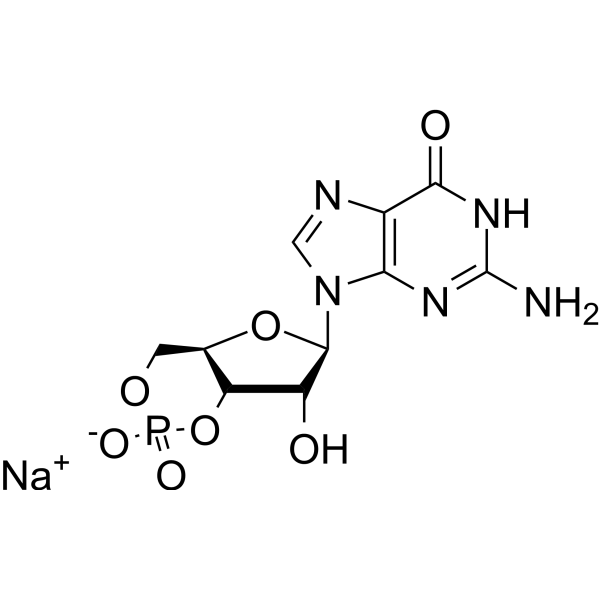
    Cyclic GMP (cGMP) sodium, an important second messenger, is a major intracellular mediator of extracellular signals such as nitric oxide (NO) and natriuretic peptides (NPs). Effects of Cyclic GMP sodium occur through three main groups of cellular targets: cGMP-dependent protein kinases (PKGs), cGMP-gated cation channels, and PDEs. Cyclic GMP can inhibit both platelet adhesion and aggregation. cGAMP (Cyclic-GMP-AMP) (HY-12512), a conjugate of Cyclic GMP and AMP, can induce IRF3 phosphorylation and nuclear translocation, enhancing antiviral immune responses .
    Cyclic GMP sodium
  • HY-N3844

    Others Toll-like Receptor (TLR) Others
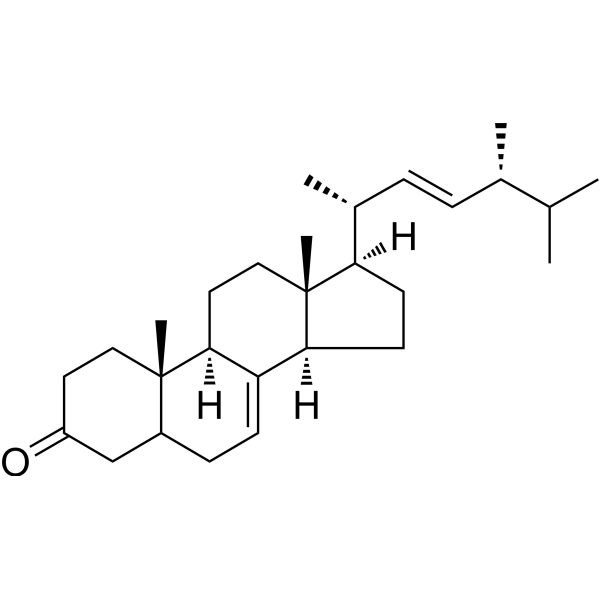
    Ergosta-7,22-dien-3-on is a lanosterane isolated from the fruiting bodies of Ganoderma lucidum. ent-16-Kaurene-3b,15b,18-triol inhibits platelet aggregation . Ergosta-7,22-dien-3-on is able to stimulate nitric oxide production, induce the expression of genes, and induce the production of TLRs, cytokines, chemokines, and cellular adhesion molecules in vitro .
    Ergosta-7,22-dien-3-one
  • HY-113469B

    Endogenous Metabolite Infection Cardiovascular Disease Inflammation/Immunology
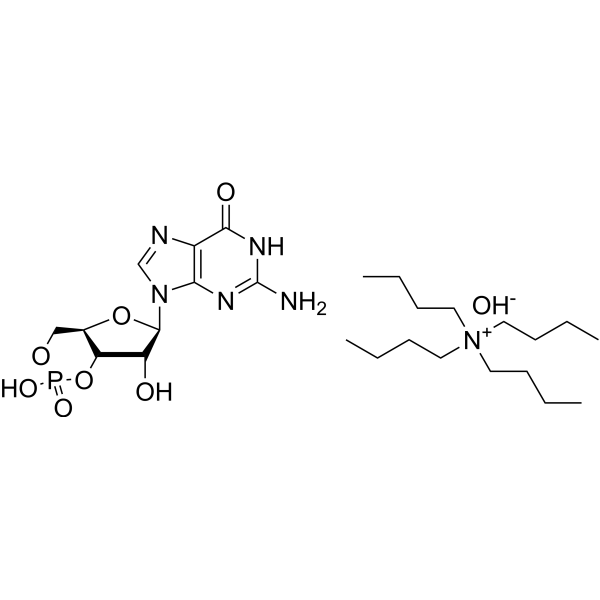
    Cyclic GMP (cGMP) TBAOH, an important second messenger, is a major intracellular mediator of extracellular signals such as nitric oxide (NO) and natriuretic peptides (NPs). Effects of Cyclic GMP TBAOH occur through three main groups of cellular targets: cGMP-dependent protein kinases (PKGs), cGMP-gated cation channels, and PDEs. Cyclic GMP can inhibit both platelet adhesion and aggregation. cGAMP (Cyclic-GMP-AMP) (HY-12512), a conjugate of Cyclic GMP and AMP, can induce IRF3 phosphorylation and nuclear translocation, enhancing antiviral immune responses .
    Cyclic GMP (TBAOH)
  • HY-113469R

    Endogenous Metabolite Reference Standards Infection Cardiovascular Disease Inflammation/Immunology
    Cyclic GMP (Standard) is the analytical standard of Cyclic GMP (HY-113469). This product is intended for research and analytical applications. Cyclic GMP (cGMP), an important second messenger, is a major intracellular mediator of extracellular signals such as nitric oxide (NO) and natriuretic peptides (NPs). Effects of Cyclic GMP occur through three main groups of cellular targets: cGMP-dependent protein kinases (PKGs), cGMP-gated cation channels, and PDEs. Cyclic GMP can inhibit both platelet adhesion and aggregation. cGAMP (Cyclic-GMP-AMP) (HY-12512), a conjugate of Cyclic GMP and AMP, can induce IRF3 phosphorylation and nuclear translocation, enhancing antiviral immune responses .
    Cyclic GMP (Standard)
  • HY-W767865

    Isotope-Labeled Compounds Endogenous Metabolite Infection Cardiovascular Disease Inflammation/Immunology
    Cyclic GMP sodium- 13C5 is the 13C-labeled Cyclic GMP sodium (HY-113469A). Cyclic GMP (cGMP) sodium, an important second messenger, is a major intracellular mediator of extracellular signals such as nitric oxide (NO) and natriuretic peptides (NPs). Effects of Cyclic GMP sodium occur through three main groups of cellular targets: cGMP-dependent protein kinases (PKGs), cGMP-gated cation channels, and PDEs. Cyclic GMP can inhibit both platelet adhesion and aggregation. cGAMP (Cyclic-GMP-AMP) (HY-12512), a conjugate of Cyclic GMP and AMP, can induce IRF3 phosphorylation and nuclear translocation, enhancing antiviral immune responses .
    Cyclic GMP sodium-13C5
  • HY-P3530

    Integrin Others
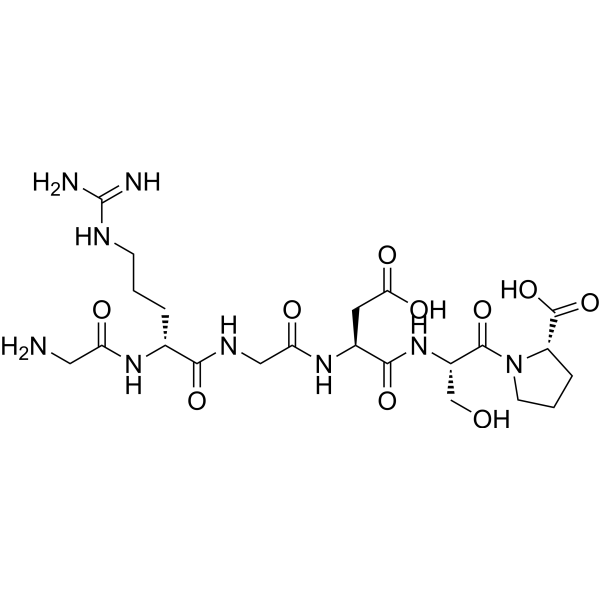
    G-{d-Arg}-GDSP is an RGD peptide analogue that binds to the adhesion receptor of integrins and inhibits cellular fibronectin attachment as well as osteoclast resorption .
    G-{d-Arg}-GDSP
  • HY-127113

    Leukotriene Receptor Cardiovascular Disease
    Q8, an effective antiangiogenic drug, is a CysLt1 antagonist (IC50 of 4.9 μM). Q8 is sufficient to reduce cellular levels of NF-κB and calpain-2 and secreted levels of the proangiogenic proteins intercellular adhesion molecule-1, vascular cell adhesion protein-1, and VEGF .
    Q8
  • HY-P3766

    PKC Others
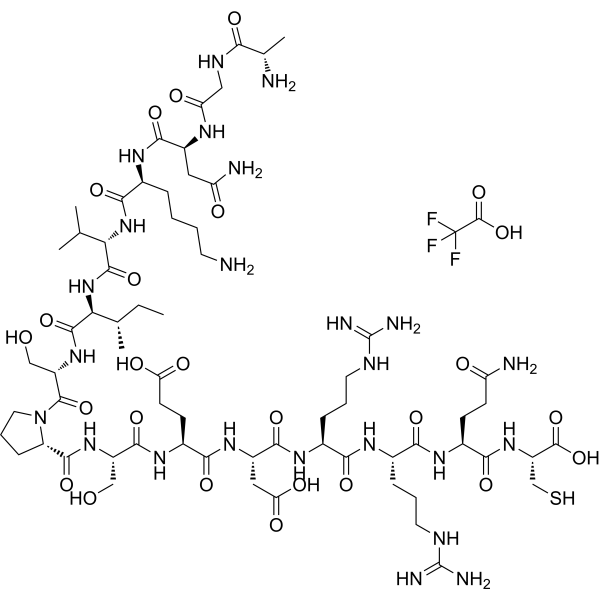
    Protein kinase C α peptide (TFA) is a peptide of PKC-α. PKC-α acts as a lipid-dependent ser/thr protein kinase, can modulate various cellular processes, including cell survival, proliferation, differentiation, migration, adhesion and so on .
    Protein kinase C α peptide TFA
  • HY-N16010

    Biochemical Assay Reagents Others
    4-HNE-Dimethylacetal is an α,β-unsaturated hydroxyalkenal that can be produced by lipid peroxidation in cells. 4-HNE-Dimethylacetal can be studied in research on cell signal transduction including pathways from cell cycle events to cellular adhesion .
    4-HNE-Dimethylacetal
  • HY-174543

    mRNA Cancer
    Human PRKCA mRNA encodes the human protein kinase C alpha (PRKCA) protein, a member of Protein kinase C (PKC) family. PRKCA has been reported to play roles in many different cellular processes, such as cell adhesion, cell transformation, cell cycle checkpoint, and cell volume control.
    Human PRKCA mRNA
  • HY-100355R

    Endogenous Metabolite Reference Standards Neurological Disease Cancer
    C18-Ceramide (Standard) is the analytical standard of C18-Ceramide. This product is intended for research and analytical applications. C18-Ceramide can promote exocytosis of glutamate from damaged neurons. C18-Ceramide promotes cell death in glioma cells. Ceramides is involved in diverse cellular functions, such as differentiation, cell cycle progression, cell-cell adhesion, senescence, and apoptosis .
    C18-Ceramide (Standard)
  • HY-118792

    Endogenous Metabolite Cancer
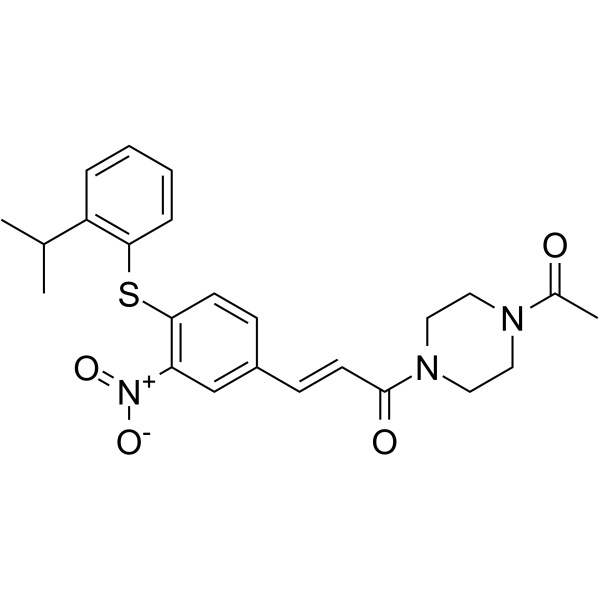
    AHR activator 1 is an aryl hydrocarbon receptor activator with activity regulating fibroblast growth factor-2 (FGF2)-induced branching morphogenesis. AHR activator 1 prevents the formation of cellular branches by inhibiting AHR signaling. AHR activator 1 also associates with adhesion of dissociated linkers, suggesting the importance of dissociated linkers in the inhibition of branching by AHR agonists. Studies of AHR activator 1 reveal its functional role in mammary gland morphogenesis and play a role in inhibiting FGF-induced invasion .
    AHR activator 1
  • HY-W654000

    Guanosine 3',5'-cyclic-13C,15N2 monophosphate

    Isotope-Labeled Compounds Endogenous Metabolite Infection Cardiovascular Disease Inflammation/Immunology
    Cyclic GMP- 13C, 15N2 is 13C and 15N labeled Cyclic GMP (HY-113469). Cyclic GMP (cGMP), an important second messenger, is a major intracellular mediator of extracellular signals such as nitric oxide (NO) and natriuretic peptides (NPs). Effects of Cyclic GMP occur through three main groups of cellular targets: cGMP-dependent protein kinases (PKGs), cGMP-gated cation channels, and PDEs. Cyclic GMP can inhibit both platelet adhesion and aggregation. cGAMP (Cyclic-GMP-AMP) (HY-12512), a conjugate of Cyclic GMP and AMP, can induce IRF3 phosphorylation and nuclear translocation, enhancing antiviral immune responses .
    Cyclic GMP-13C,15N2
  • HY-113469AR

    Reference Standards Endogenous Metabolite Infection Cardiovascular Disease Inflammation/Immunology
    Cyclic GMP sodium (Standard) is the analytical standard of Cyclic GMP sodium (HY-113469A). This product is intended for research and analytical applications. Cyclic GMP (cGMP) sodium, an important second messenger, is a major intracellular mediator of extracellular signals such as nitric oxide (NO) and natriuretic peptides (NPs). Effects of Cyclic GMP sodium occur through three main groups of cellular targets: cGMP-dependent protein kinases (PKGs), cGMP-gated cation channels, and PDEs. Cyclic GMP can inhibit both platelet adhesion and aggregation. cGAMP (Cyclic-GMP-AMP) (HY-12512), a conjugate of Cyclic GMP and AMP, can induce IRF3 phosphorylation and nuclear translocation, enhancing antiviral immune responses .
    Cyclic GMP sodium (Standard)
  • HY-P991812

    Integrin Inflammation/Immunology
    Anti-Mouse CD11a Antibody (I21/7) reacts with the mouse CD11a. CD11a functions in the immune system. CD11a is involved in cellular adhesion and costimulatory signaling. Recommend Isotype Controls: Rat IgG2a kappa, Isotype Control (HY-P990679) .
    Anti-Mouse CD11a Antibody (I21/7)
  • HY-E71026

    Endogenous Metabolite Metabolic Disease
    β-1,4-Galactosyl Transferase, Bovine (EC 2.4.1.22) catalyzes the transfer of galactose from UDP-galactose to the terminal N-acetylglucosamine residues on elongating oligosaccharide chains. β-1,4-Galactosyl Transferase, Bovine (EC 2.4.1.22) can also be found on the cell surface functioning as a cell-adhesion molecule during various cellular interactions by binding to N-acetylglucosamine containing oligosaccharide substrates or ligands in the extracellular matrix.
    β-1,4-Galactosyl Transferase, Bovine
  • HY-P991896

    AT14-012

    Transmembrane Glycoprotein Inflammation/Immunology Cancer
    AT1412 is a CD9-binding antibody. AT1412 binds to the tetraspanin protein CD9 and modulates CD9 function by enhancing T cell adhesion to endothelial cells (HUVECs) and transendothelial migration. AT1412 binds to B-ALL cell lines but not to T-ALL. AT1412 induces antibody-dependent cellular cytotoxicity in B-ALL cell lines. AT1412 binds to melanoma cells, B-ALL, gastric cancer, colorectal cancer, and pancreatic cancer cells [1] .
    AT1412
  • HY-P11399

    Bacterial Fungal Infection
    Tachyplesin-3 is a broad-spectrum cationic antimicrobial peptide. Tachyplesin-3 has inhibitory activity against Gram-positive bacteria, Gram-negative bacteria, fungi and enveloped viruses. Tachyplesin-3 binds to bacterial membrane lipopolysaccharides through positive charges, disrupting membrane integrity and causing leakage of cellular contents. Tachyplesin-3 interferes with bacterial adhesion and aggregation, prevents biofilm formation, and has a synergistic effect when used in combination with Piperacillin (HY-B1923) - Tazobactam (HY-B1418) (TZP) .
    Tachyplesin-3
  • HY-184250

    FGFR p38 MAPK Akt Bcl-2 Family PARP Apoptosis Ferroptosis Cancer
    FGFR-IN-28 is a FGFR inhibitor with inhibitory activity against multiple subtypes of the FGFR family, with an IC50 of 4.4 nM against FGFR4. FGFR-IN-28 inhibits kinase activity and phosphorylation processes, and blocks the downstream MAPK and AKT signaling pathways. FGFR-IN-28 induces cellular DNA damage, cell cycle arrest, apoptosis and ferroptosis, and reduces the adhesion, invasion and metastasis abilities of cancer cells. FGFR-IN-28 exhibits anti-tumor activity in in vitro experiments on colon cancer cells, and inhibits tumor growth in colon cancer xenograft models. FGFR-IN-28 can be used in colon cancer-related research .
    FGFR-IN-28

Inquiry Online

Your information is safe with us. * Required Fields.

Salutation


Country or Region *

Applicant Name *


Organization Name *

Department *


Email Address *


Product Name *

Cat. No.


Requested quantity *

Phone Number *


Remarks

Inquiry Online

Inquiry Information

Product Name:
Cat. No.:
Quantity:
MCE Japan Authorized Agent:

