85 Results for "

electron-blocking layers

" in MedChemExpress (MCE) Product Catalog:
Products (85)

85 Results for "electron-blocking layers" in MCE Product Catalog:

4
4 Cited Publications
Cat. No.: HY-D0155
CAS No.: 288574-78-7
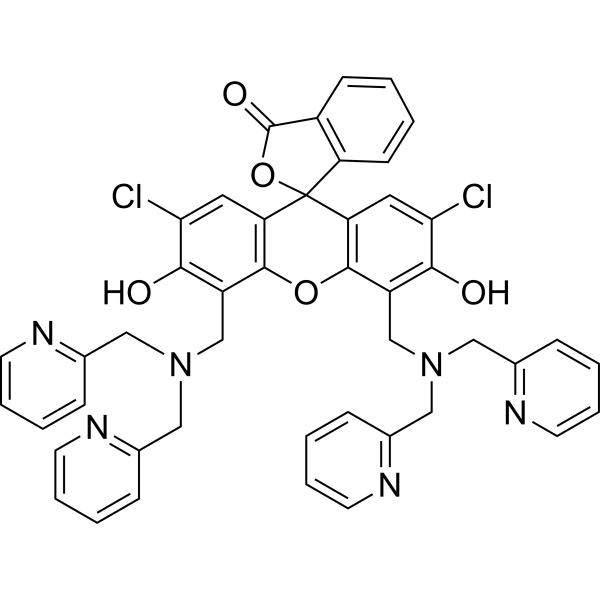
Zinpyr-1 is a zinc-responsive fluorescent indicator and a membrane-permeable metal-binding probe. Zinpyr-1 forms a complex with Mn 2+ ions and generates a fluorescence turn-on signal. Zinpyr-1 binds to free zinc ions in serum, enabling quantitative detection of free zinc concentration. Zinpyr-1 produces fluorescence signals reflecting the relative zinc concentration in plant root cells, localizes to specific layers of plant root cells, and can be used to support analyses related to plant zinc transporter mutations and homeostasis .
loading...
    loading...
2
2 Cited Publications
Cat. No.: HY-113008
CAS No.: 104-98-3
Purity:  99.96%
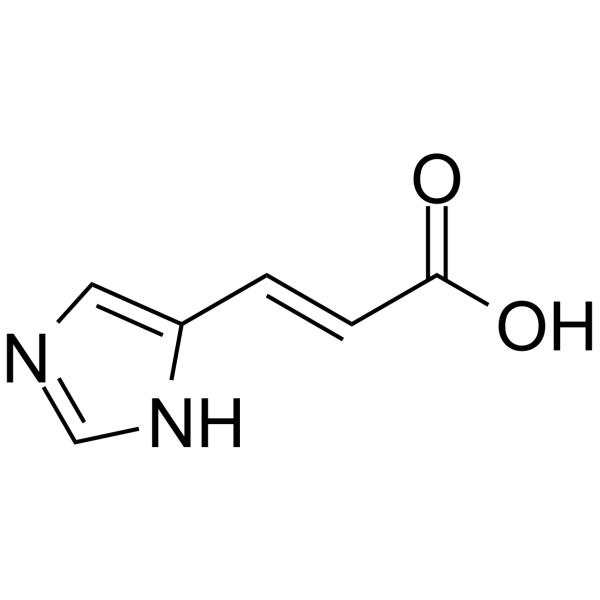
Urocanic acid, produced in the upper layers of mammalian skin, is a major absorber of ultraviolet radiation (UVR).
loading...
    loading...
1
1 Cited Publications
Cat. No.: HY-W591424
CAS No.: 92451-01-9
Synonyms: mPEG2000-SC; mPEG2000-Succinimidyl ester
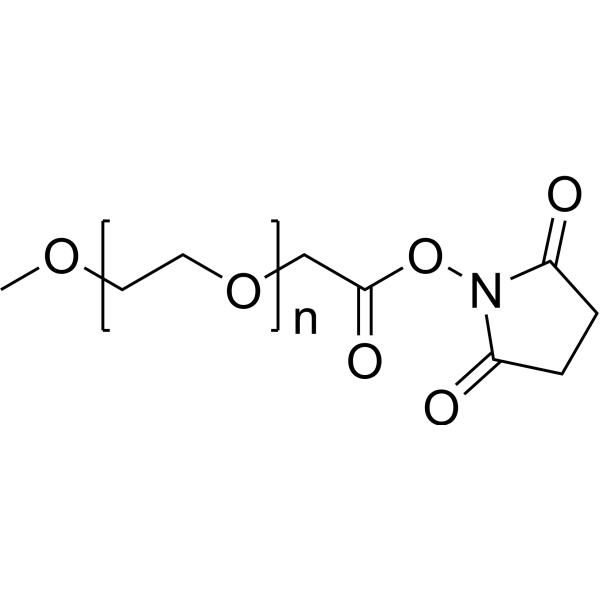
m-PEG2000-NHS ester (mPEG2000-SC) is a reagent with both cell adhesion inhibition and peptide conjugation functions. The NHS ester group of m-PEG2000-NHS ester forms stable amide bonds with primary amine-containing molecules (e.g., the N-terminus of MMP-2-cleavable octapeptide) to generate mPEG-peptide intermediates for liposome surface modification. When m-PEG2000-NHS ester is immobilized on a cystamine-modified gold surface, it can construct an in vitro model for cell adhesion kinetic studies, and higher PEG density and thicker layers correlate with lower cell adhesion rates. m-PEG2000-NHS ester can synthesize MMP-2-responsive PEGylated lipid conjugates to achieve MMP-triggered dePEGylation in the tumor microenvironment. m-PEG2000-NHS ester can be used in studies related to colon cancer and other conditions .
loading...
    loading...
Cat. No.: HY-141613
CAS No.: 90693-88-2
Purity:  ≥98.0%
Synonyms: DOPS-NA
Target:  

Liposome

Research Areas:  

Others

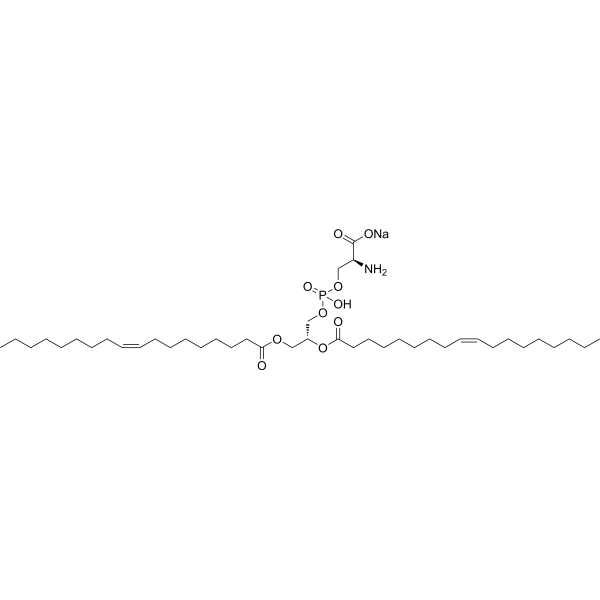
1,2-Dioleoyl-sn-glycero-3-phospho-L-serine sodium (DOPS-NA) is a ubstitute for Phosphoserine/phosphatidylserine. 1,2-Dioleoyl-sn-glycero-3-phospho-L-serine sodium can be used together with DOPC and DOPE in lipid mixtures for the synthesis of liposomes. 1,2-Dioleoyl-sn-glycero-3-phospho-L-serine sodium can self-assemble into single-layer or double-layer membrane structures, similar to cell membranes, and possesses high membrane fluidity and flexibility. 1,2-Dioleoyl-sn-glycero-3-phospho-L-serine is widely applied in membrane biology, cell membrane research, lipid preparation, and drug delivery systems .
loading...
    loading...
Cat. No.: HY-107784
CAS No.: 96702-03-3
Purity:  99.34%
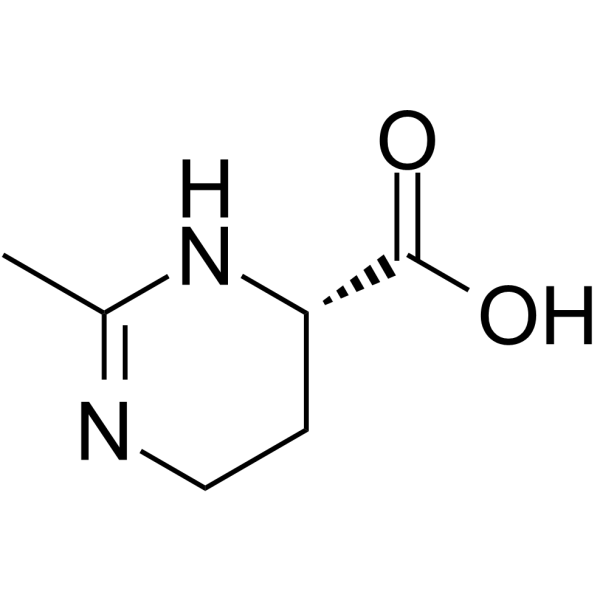
Ectoine is a natural cell protectant, an amino acid derivate produced by bacteria living under extremely harsh environmental conditions. Ectoine serves as an osmoregulatory compatible solute, increasing the hydration of the skin surface and stabilizing lipid layers, which is useful in skincare. Ectoine demonstrates a good safety profile for the treatment of allergic rhinitis .
loading...
    loading...
Cat. No.: HY-W105135
CAS No.: 101-38-2
Research Areas:  

Others

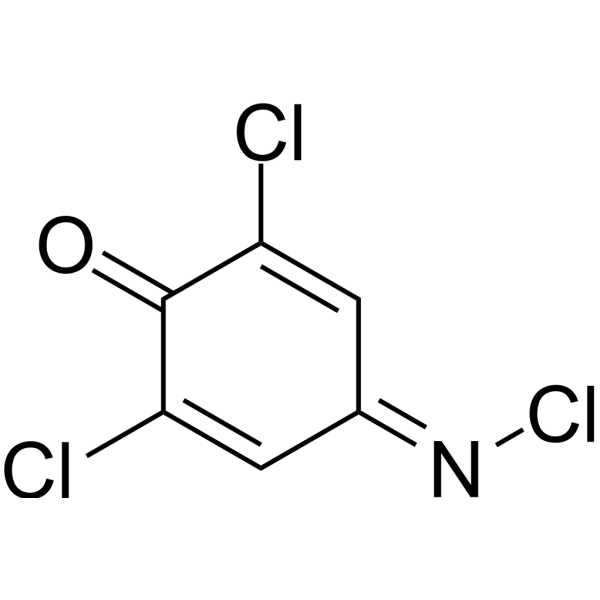
2,6-Dichloroquinone-4-chloroimide is a spray reagent for organic compounds. 2,6-Dichloroquinone-4-chloroimide can be used in thin-layer chromatograms and detecting phenol and its derivatives. 2,6-Dichloroquinone-4-chloroimide can be used as an optical sensor for rapid detection of permethrin in treated wood .
loading...
    loading...
Cat. No.: HY-Y1353
CAS No.: 24424-99-5
Research Areas:  

Others Metabolic Disease

Di-tert-butyl dicarbonate (tBOC) is a covalent modification agent for hydroxyl groups (-OH) on the chitosan molecular chain. Di-tert-butyl dicarbonate selectively modifies chitosan and stabilizes the material structure through hydrophobic encapsulation. Di-tert-butyl dicarbonate reacts with the -OH groups of chitosan to form a hydrophobic layer, and in conjunction with triethylamine (TEA), removes trifluoroacetic acid (TFA) salts produced during the electrospinning process, preserving the nanofiber structure and high porosity of the membrane, and improving the material's cytocompatibility and mineralization-promoting ability. Di-tert-butyl dicarbonate can be used in research in the field of guided bone regeneration (GBR) .
loading...
    loading...
Cat. No.: HY-W099535
CAS No.: 2044-56-6
Research Areas:  

Others

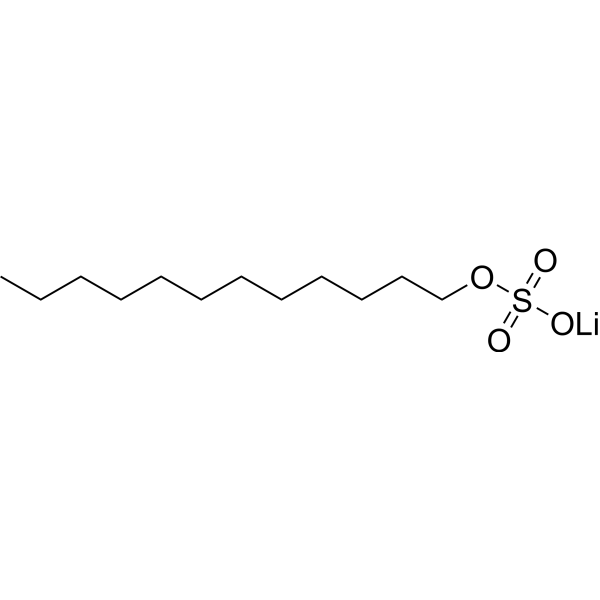
Lithium dodecyl sulfate is an anionic hydrocarbon surfactant with both surface tension reduction and interfacial adsorption capabilities. Lithium dodecyl sulfate forms micelles in aqueous solutions via entropy-driven (low temperature) and enthalpy-driven (high temperature) mechanisms, and can also form an adsorption layer at the air-water interface with quantifiable surface excess and minimum area per molecule. Lithium dodecyl sulfate exhibits favorable equilibrium surface tension and foamability, but shows low foam stability above its critical micelle concentration. When acting synergistically with tetrabutylammonium bromide, Lithium dodecyl sulfate also exhibits unique cloud point behavior due to micelle aggregation and phase separation .
loading...
    loading...
Cat. No.: HY-B1620B
CAS No.: 9003-39-8
Synonyms: PVP K15; Polyvidone K15; Povidone K15
Polyvinylpyrrolidone K15 is a linear non-ionic polymer devises vigorous bright crystalline layers and has adhesive, cohesive and dispersive properties .
loading...
    loading...
Cat. No.: HY-B0644
CAS No.: 54182-58-0
Synonyms: Sucrose octasulfate-aluminum complex
Target:  

Bacterial

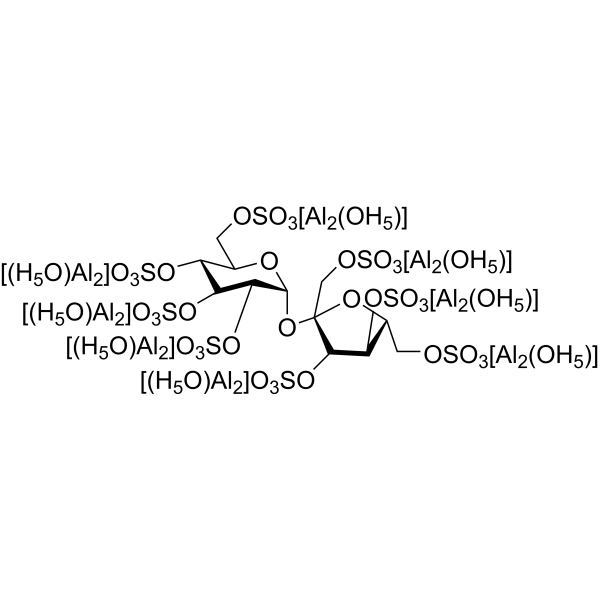
Sucralfate (Sucrose octasulfate-aluminum complex) is a potent and orally active gastroprotectant with no systemic effects. Sucralfate inhibits peptic activity and binds to negatively charged subepithelial proteins exposed during mucosal injury, forming a viscous layer that protects the vascular bed and proliferative zone. Sucralfate is used for prevention and research of several gastrointestinal diseases in vivo .
loading...
    loading...
Cat. No.: HY-E70306
Target:  

Parasite

Research Areas:  

Infection

Zymolyase, Arthrobacter luteus, is a zymolyase mainly found in Arthrobacter luteus. Enzyme, an enzyme with beta-1,3 glucanase activity, removes the electron-dense outer layer of the Plasmodium karinii cell wall, exposing an electron-lucent layer .
loading...
    loading...
Cat. No.: HY-144007
CAS No.: 27321-96-6
Target:  

Liposome

Research Areas:  

Others

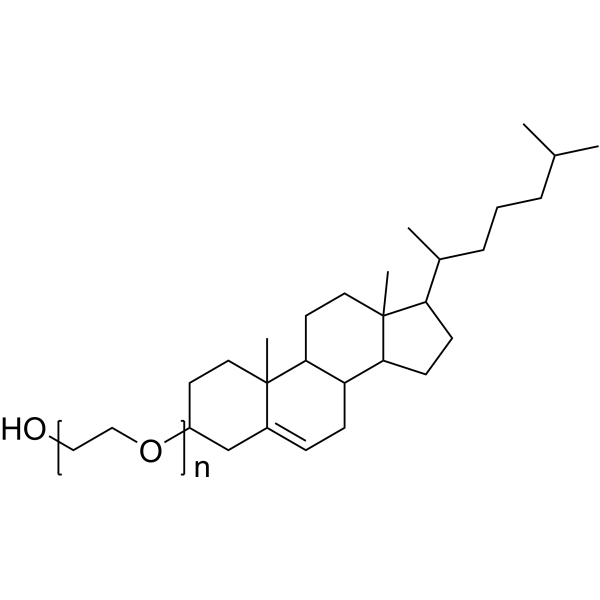
Chol-PEG is an amphiphilic cholesterol-polyethylene glycol conjugate and also a liposomelike surface modifier. After Chol-PEG is incorporated into liposomelike vesicles, it forms a hydrophilic barrier on their surface, increases the thickness of the bound water layer around the liposomelike vesicles, and enhances the release rate of encapsulated compounds. Chol-PEG can be used as a modifier to prepare nonionic surfactant vesicles (liposomelike vesicles) for drug delivery applications .
loading...
    loading...
Cat. No.: HY-E70562
Target:  

Bacterial

Research Areas:  

Infection Cancer

Mucinase StcE is a zinc metalloproteinase belonging to the M66 family, which is secreted by enterohemorrhagic Escherichia coli via the type II general secretion pathway. Mucinase StcE specifically recognizes and cleaves the 'T*XT' motif in mucin-type glycoproteins with α-O-glycans (such as MUC2, Mucin 7, Glycoprotein 340, CD45, CD43, C1 Esterase Inhibitor (HY-P991629), etc.). By degrading the mucus layer to reduce its viscosity, inhibiting complement cascade activation, and localizing complement regulatory factors to the cell membrane, Mucinase StcE helps bacteria penetrate the mucosal barrier, adhere to host cells, and evade immune clearance. Mucinase StcE can serve as a mucin-specific proteolytic tool for research on mucinous carcinomas derived from the colon, esophagus, and salivary glands .
loading...
    loading...
Cat. No.: HY-B1073
CAS No.: 26155-31-7
Target:  

Parasite

Research Areas:  

Infection

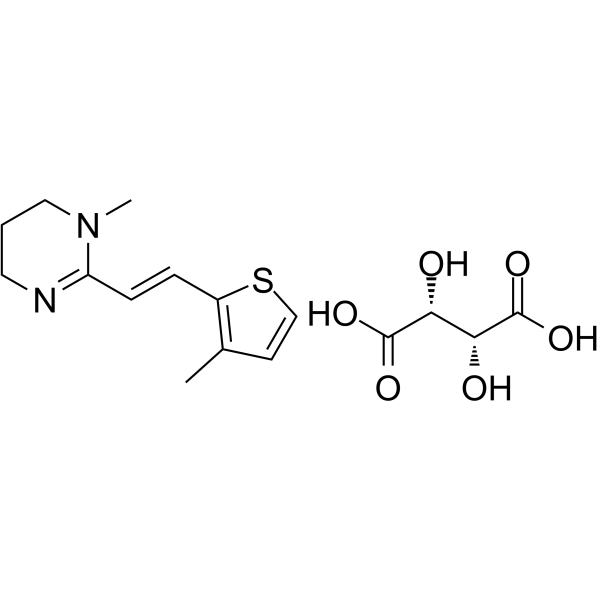
Morantel tartrate is an anthelmintic agent. Sustained-release three-layer composite tablets of Morantel tartrate are administered orally and release after exposure to rumen fluid. Morantel tartrate reduces the fecal egg output and worm burden of gastrointestinal nematodes in Hereford calves. Morantel tartrate is used in research related to gastrointestinal nematode infections .
loading...
    loading...
Cat. No.: HY-172445
CAS No.: 438545-06-3
Synonyms: SS-DNA
Deoxyribonucleic acid sodium salt from salmon testes (SS-DNA) is a double-stranded deoxyribonucleic acid sodium salt extracted from salmon testes, which serves as an anti-adhesion agent and surface passivating agent for the surface of gold plasmonic sensors. Deoxyribonucleic acid sodium salt from salmon testes forms a nanoscale-thick film on the surface of gold plasmonic sensors, preventing non-specific adsorption of subsequent DNA analyte layers .
loading...
    loading...
Cat. No.: HY-59137
CAS No.: 616-47-7
Target:  

Drug Intermediate

Research Areas:  

Cancer

1-Methylimidazole acts as a membrane performance regulator that promotes the formation of reverse osmosis membranes with a dense ultra-thin polyamide layer. Such membranes exhibit higher flux and salt rejection rate, while also conferring excellent pH stability to the membrane. 1-Methylimidazole can serve as a ligand for ruthenium (II) complexes to construct metal-based anticancer agents .
loading...
    loading...
Cat. No.: HY-40136
CAS No.: 618-27-9
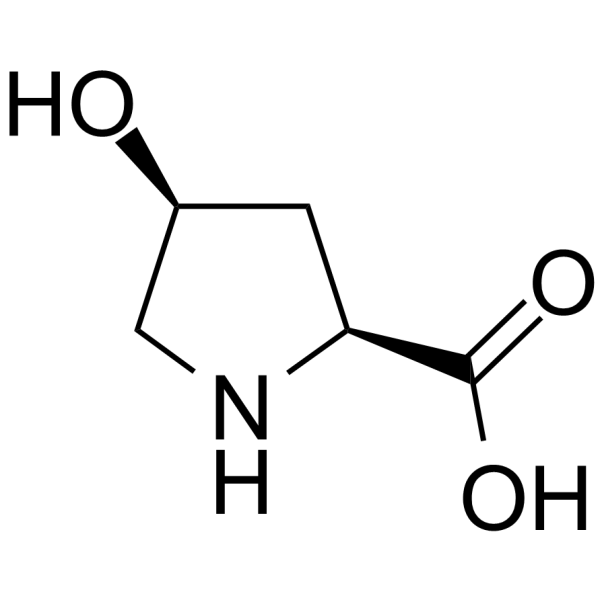
cis-4-Hydroxy-L-proline is an orally active proline analog and collagen production inhibitor. cis-4-Hydroxy-L-proline inhibits cell growth by preventing the deposition of triple helical collagen on the cell layer. cis-4-Hydroxy-L-proline inhibits N-nitrosomethylurea-induced breast tumor growth. cis-4-Hydroxy-L-proline improves lung compliance and reduces prostate weight. cis-4-Hydroxy-L-proline can be used in the study of hypoxic pulmonary hypertension .
loading...
    loading...
Cat. No.: HY-112768
Purity:  ≥95.0%
Research Areas:  

Others

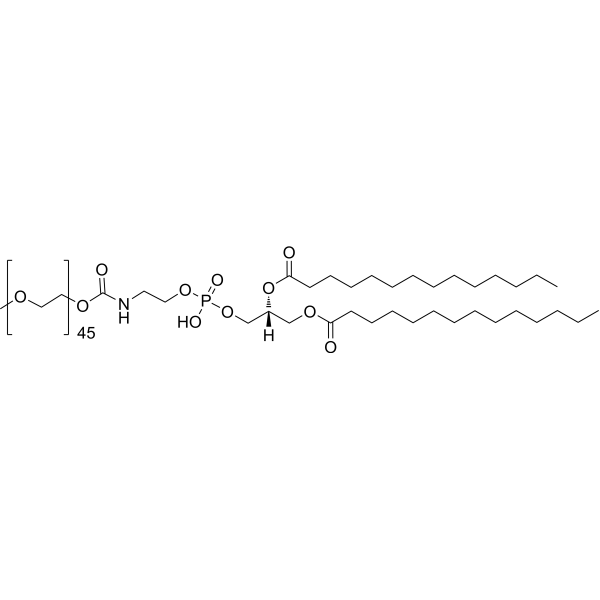
PEG2000-DMPE is a polyethylene glycol-lipid conjugate combined with phosphatidylethanolamine. PEG2000-DMPE undergoes a conformational transition from mushroom-like to brush-like at a concentration of 7 mol%, thereby exerting multiple functions such as inhibitor, stabilizer and surface defect modifier. PEG2000-DMPE can form a steric hindrance barrier on the vesicle surface to block calcium ion-induced liposome fusion, and dynamically regulate the fusion process through spontaneous transfer rate. PEG2000-DMPE can delay the thinning of foam thin liquid films and smoothly seal surface defects of solid support layers. PEG2000-DMPE can be used in the design and related research of stealth liposomes and micelles .
loading...
    loading...
Cat. No.: HY-Y0286
CAS No.: 506-87-6
Synonyms: Hartshorn salt, 99%
Ammonium carbonate (Ammonium carbonate), 99% is a solid amino compound that functions as a buffer, pH regulator, pore-forming agent, and electrocatalytic oxidation substrate. Ammonium carbonate, 99% is a GRAS-grade direct food additive with no restricted daily intake specified by FAO/WHO, and it shows no acute skin toxicity, clinical signs of toxicity, or effects on body weight in rats. Ammonium carbonate, 99% undergoes electrocatalytic oxidation in alkaline solutions with a Pt/C catalyst (carbonate adsorption interferes with activity). Ammonium carbonate, 99% can serve as a fuel for low-temperature polymer fuel cells and anion exchange membrane fuel cells (with performance superior to pure ammonia), and can also form pores in the carrier-free Pt cathode catalyst layer after low-temperature decomposition, thereby enhancing catalyst activity under low-humidity conditions and the performance of proton exchange membrane fuel cells .
loading...
    loading...
Cat. No.: HY-158082B
Synonyms: Tetramethyl rhodamine isothiocyanate glucan, MW 40000
Target:  

Fluorescent Dye

Research Areas:  

Others

TRITC-dextran (Tetramethyl rhodamine isothiocyanate glucan), MW 40000 is a TRITC (HY-D0791)-labeled neutral 40 kDa fluorescent polysaccharide probe. TRITC-dextran, MW 40000 forms a membrane layer on the surface of protocells composed of protamine/folate condensates, and is used to assess membrane fluidity via fluorescence recovery after photobleaching. TRITC-dextran, MW 40000 can also be used to evaluate the anti-bacterial invasion ability and colloidal stability of coated condensates, as well as analyze the permeability of vascular and lymphatic endothelial cell layers .
loading...
    loading...

