
29 Results for "

ester bond hydrolysis

" in MedChemExpress (MCE) Product Catalog:
Products (29)

29 Results for "ester bond hydrolysis" in MCE Product Catalog:

5
5 Cited Publications
Cat. No.: HY-K1054

MCE Blasticidin S, Sterile (10 mg/mL) is a filtered and sterilized antibiotic solution that can be used directly in cell culture. Blasticidin S is a peptidyl nucleoside antibiotic isolated from Streptomyces griseochromogenes. It acts by blocking hydrolysis of peptidyl-tRNA induced by release factors and inhibits peptide bond formation.

loading...
    loading...
1
1 Cited Publications
Cat. No.: HY-P2878
CAS No.: 9025-82-5
Synonyms: PDE
Research Areas:  

Neurological Disease Cancer

Phosphodiesterase I (PDE) is an enzyme that can catalyze the hydrolysis of the 3' ring phosphate bond of cyclic nucleotides, and is often used in biochemical research. Phosphodiesterase I acts as an important regulator of signal transduction mediated by the second messenger molecules cAMP and cGMP. According to their specificity to cyclic nucleotides, they can also be divided into different types, such as PDE1-PDE11, which also have certain potential in various diseases .
loading...
    loading...
Cat. No.: HY-W723152
CAS No.: 26780-50-7
Target:  

Drug Intermediate

Research Areas:  

Inflammation/Immunology

Poly(D,L-lactide-co-glycolide) is a biodegradable polymer copolymer. Poly(D,L-lactide-co-glycolide) undergoes degradation through ester bond hydrolysis into lactic acid and glycolic acid. These two products can be naturally eliminated through metabolism in the body (such as the tricarboxylic acid cycle), without the risk of long-term accumulation. Poly(D,L-lactide-co-glycolide) can be used in medical sutures, implants, and drug delivery systems .
loading...
    loading...
Cat. No.: HY-P2661
CAS No.: 78832-65-2
Research Areas:  

Infection

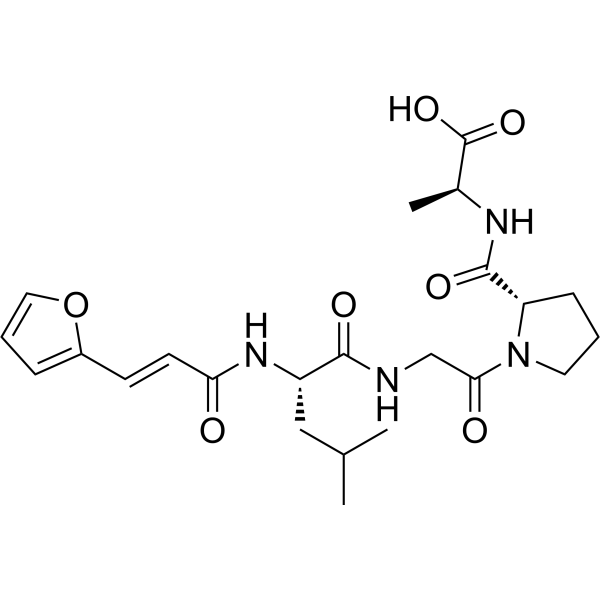
FA-Leu-Gly-Pro-Ala-OH is a furylacryloyl-terminal tetrapeptide that serves as a substrate for bacterial collagenase and spirochete metalloendopeptidase. FA-Leu-Gly-Pro-Ala-OH is specifically hydrolyzed by spirochete collagenase only at the Leu-Gly bond. FA-Leu-Gly-Pro-Ala-OH can be used to determine the equilibrium constant of peptide bond hydrolysis, and also to detect collagenase-mediated cleavage reactions via turbidimetry based on absorbance reduction .
loading...
    loading...
Cat. No.: HY-130086
CAS No.: 1314378-11-4
Purity:  99.29%
Target:  

ADC Linkers

Research Areas:  

Cancer

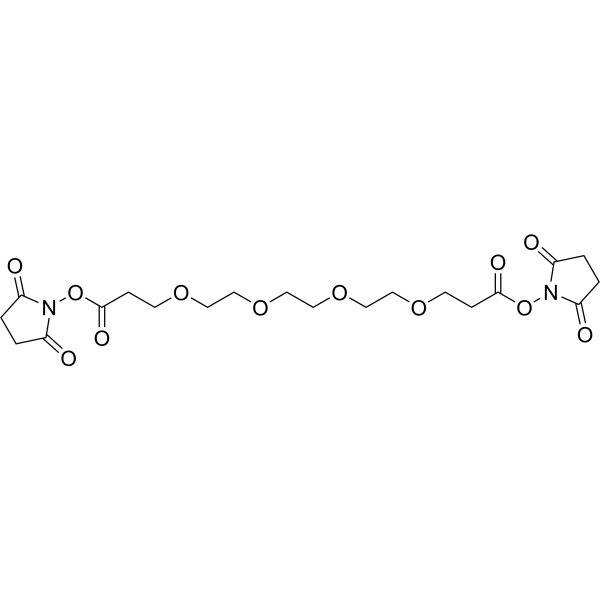
Bis-PEG4-NHS ester is a crosslinking reagent and amine-reactive modulator .Bis-PEG4-NHS ester reacts with primary amine groups on liposome surfaces via amide bond formation to covalently attach dibenzylcyclooctyne groups, with a hydrophilic PEG4 spacer reducing steric hindrance for subsequent click chemistry .Bis-PEG4-NHS ester enables site-specific antibody coupling to liposome surfaces via copper-free strain-promoted alkyne-azide cycloaddition click chemistry without disrupting liposome structure in minimal organic solvent volumes .Bis-PEG4-NHS ester undergoes hydrolysis during annealing to form -COOH groups that interact with PbI and FAI to enhance perovskite structural integrity, passivate defects, and modulate nucleation kinetics to regulate crystal growth .Bis-PEG4-NHS ester enhances device efficiency and long-term stability when used as an antisolvent additive for p-i-n perovskite solar cells .
loading...
    loading...
Cat. No.: HY-112624H
CAS No.: 9004-54-0
Synonyms: Dextran 2; Dextran D2; Dextran T2(MW 1600-2400)
Dextran T2 (Dextran 2; Dextran T2(MW 1600-2400)) is a natural high molecular weight polysaccharide, the glycosidic bonds in its structure can be recognized by endo-dextranase and exo-dextranase. Dextran T2 (MW 2,000) breaks the glycosidic bonds in the enzymatic hydrolysis mechanism, releasing products such as D-glucose, Isomaltose (IM2), and Isomaltotriose (IM3). Dextran T2 (MW 2,000) can be used as a model substrate to characterize the catalytic properties of dextranase (such as optimal pH, temperature and product specificity), and to study enzymatic mechanism research and polysaccharide degradation pathways in glycobiology. The Dextran series of compounds are also a natural polysaccharide drug carrier, which can be connected to drugs through covalent bonding methods such as ester bonds, amide bonds or click chemistry, or self-assembled to form carriers such as nanoparticles and hydrogels. Dextran is biodegradable and biocompatible, and can achieve targeted delivery and controlled release of drugs. Dextran derivatives can prolong drug half-life, increase local concentration and reduce immune clearance activity .
loading...
    loading...
Cat. No.: HY-E70574
Research Areas:  

Others

Trypsin/Lys-C complex protease (MS grade) combines Trypsin and Lys-C, two recombinant proteases, to achieve efficient peptide bond hydrolysis. Trypsin specifically cleaves the C-terminal peptide bonds of arginine (R) and lysine (K), while Lys-C specifically cleaves the C-terminal peptide bonds of lysine (K). This combination overcomes issues such as the slower digestion rate of lysine and arginine by rTrypsin, PTM changes on lysine, or hydrophobic C-termini (such as proline) that can lead to missed cleavage. Trypsin/Lys-C complex protease (MS grade) can be used to process complex protein samples that are difficult to enzymatically digest. Trypsin/Lys-C complex protease (MS grade) can be used for protein characterization, single-cell proteomics and large cohort proteomics studies.
loading...
    loading...
Cat. No.: HY-P2936
CAS No.: 9031-54-3
Target:  

Phospholipase

Research Areas:  

Cardiovascular Disease Infection

Sphingomyelin phosphodiesterase, Streptomyces sp. is a sphingomyelin phosphodiesterase derived from the genus Streptomyces, which cleaves the phosphodiester bond of sphingomyelin. Sphingomyelin phosphodiesterase, Streptomyces sp. catalyzes the hydrolysis of sphingomyelin in micelles, synthetic substrates, erythrocyte ghost membranes and liposomes, as well as the hydrolysis of the substrate HNP. In the presence of Mg 2+ or Mn 2+ , Sphingomyelin phosphodiesterase, Streptomyces sp. induces hemolysis of bovine erythrocytes through the hydrolysis of membrane sphingomyelin .
loading...
    loading...
Cat. No.: HY-W013741
CAS No.: 2491-17-0
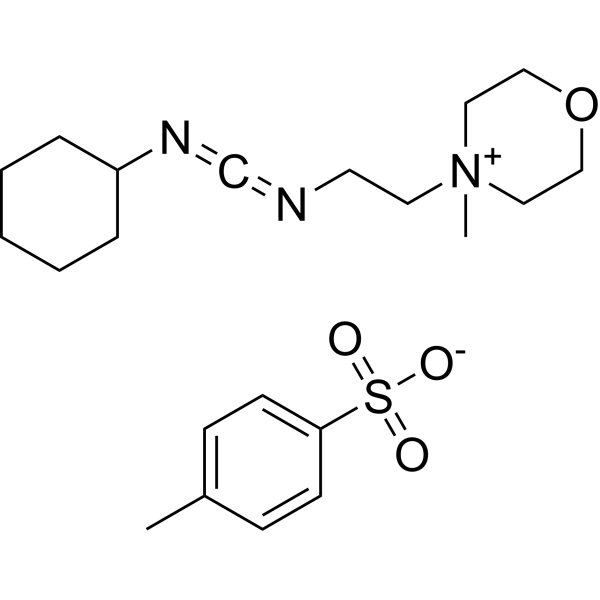
CME-carbodiimide is a nucleic acid modification reagent. CME-carbodiimide reacts specifically with uracil and guanine residues of RNA, as well as guanine and thymine residues of denatured DNA; it does not react with native DNA. Modification of DNA by CME-carbodiimide inhibits phosphodiester bond cleavage or DNA hydrolysis mediated by pancreatic ribonuclease, snake venom phosphodiesterase and deoxyribonuclease .
loading...
    loading...
Cat. No.: HY-P10053
CAS No.: 236394-37-9
Target:  

Phospholipase

Research Areas:  

Metabolic Disease

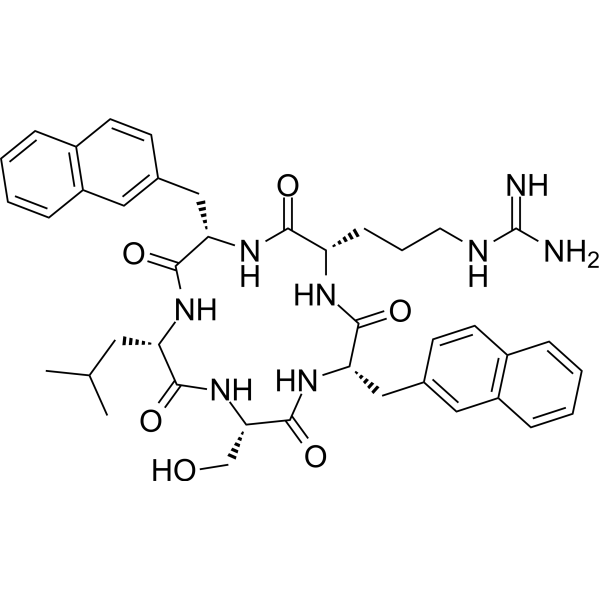
sPLA2-IIA Inhibitor is a cyclic pentapeptide analog of FLSYK (cyclic 2-Nal-Leu-Ser-2-Nal-Arg (c2)), that binds to hGIIA (human IIA phospholipase A2) and inhibits its hydrolytic ability. sPLA2 is a member of the esterase superfamily that catalyzes the hydrolysis of the ester bond at the sn-2 position of glycerophospholipids, releasing free fatty acids such as arachidonic acid and lysophospholipids .
loading...
    loading...
Cat. No.: HY-W800839
CAS No.: 2268817-73-6
Research Areas:  

Others

TCO-PEG4-TFP Ester is an amine-reactive labeling reagent used to modify proteins, antibodies, and other amine-containing biopolymers. A 2,3,5,6-tetrafluorophenol (TFP) is a reactive ester that displays much better stability toward hydrolysis in aqueous media resulting in more efficiency and better reproducible labeling of biopolymers. TFP ester of carboxylic acids react with primary amines at the same rate as NHS ester forming covalent amide bond that is identical to one formed by the reaction between primary amines and NHS esters or sulfo-NHS esters.
loading...
    loading...
Cat. No.: HY-P2878A
CAS No.: 9025-82-5
Synonyms: PDE, Rattlesnake venom
Research Areas:  

Metabolic Disease

Phosphodiesterase l, Rattlesnake venom (PDE, Rattlesnake venom) is a non-selective phosphodiester bond hydrolase targeting phosphodiester bonds in oligonucleotides, catalyzing their hydrolysis into mononucleotides. Phosphodiesterase l, Rattlesnake venom cleaves phosphodiester linkages in DNA fragments digested by DNase I. Phosphodiesterase l, Rattlesnake venom is promising for research of nucleic acid structure and metabolism .
loading...
    loading...
Cat. No.: HY-E70217
CAS No.: 59088-21-0
Synonyms: Heat-sensitive UDG
Target:  

DNA/RNA Synthesis

Research Areas:  

Cancer

Uracil DNA Glycosylase (UDG/UNG), heat-sensitive (Heat-sensitive UDG) can catalyze the hydrolysis of the N-glycosidic bond between the uracil base and the sugar phosphate backbone in the DNA chain containing uracil, releasing free uracil. Uracil DNA Glycosylase (UDG/UNG), heat-sensitive eliminates the carryover contamination dUTP-incorporated amplification products .
loading...
    loading...
Cat. No.: HY-P5377
CAS No.: 221055-89-6
Synonyms: Cathepsin K substrate
Target:  

Ser/Thr Protease

Research Areas:  

Others

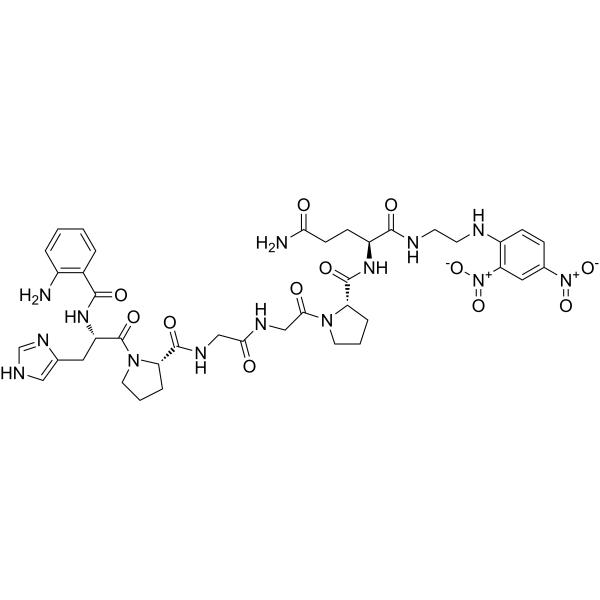
Abz-HPGGPQ-EDDnp (Cathepsin K substrate) is a biological active peptide. (Cathepsins are a class of globular lysosomal proteases, playing a vital role in mammalian cellular turnover. They degrade polypeptides and are distinguished by their substrate specificities. Cathepsin K is the lysosomal cysteine protease involved in bone remodeling and resorption. It has potential as a drug target in autoimmune diseases and osteoporosis.This FRET peptide can be used to monitor selectively cathepsin K activity in physiological fluids and cell lysates. Abz-HPGGPQ-EDDnp [where Abz represents o-aminobenzoic acid and EDDnp represents N -(2, 4-dinitrophenyl)-ethylenediamine], a substrate initially developed for trypanosomal enzymes, is efficiently cleaved at the Gly-Gly bond by cathepsin K. This peptide is resistant to hydrolysis by cathepsins B, F, H, L, S and V, Ex/Em=340 nm/420 nm.)
loading...
    loading...
Cat. No.: HY-137158
CAS No.: 54382-74-0
Synonyms: 16-Phenoxy tetranor PGE2
Research Areas:  

Metabolic Disease

16-phenoxy tetranor PGE2 is the free acid form of sulprostone formed by the hydrolysis of the methylsulfonamide bond.1 16-phenoxy tetranor PGE2 is a minor metabolite of sulprostone found in human plasma after parenteral administration of the drug.
loading...
    loading...
Cat. No.: HY-116833
CAS No.: 19545-95-0
Purity:  ≥95.0%
Target:  

Drug Derivative

Research Areas:  

Metabolic Disease

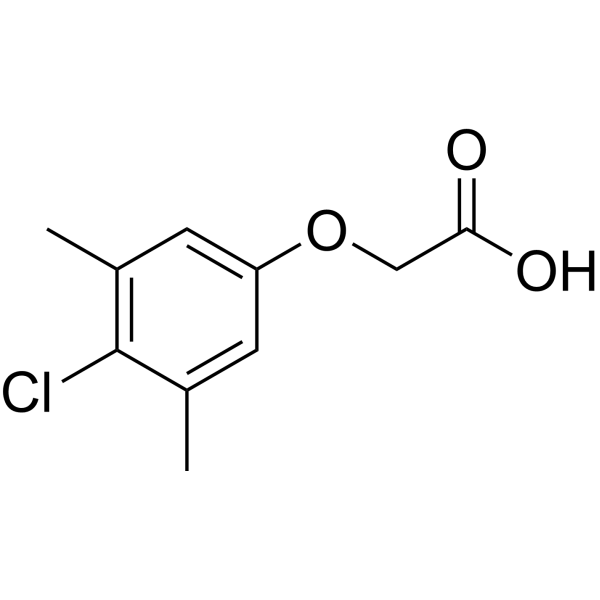
4-Chloro-3,5-dimethylphenoxyacetic acid (compound 602 UC) is a product of masked amide bond hydrolysis of auxin analog 602 (compound 602). Auxin can effectively stimulate hypocotyl growth in wild-type seedlings .
loading...
    loading...
Cat. No.: HY-134110
CAS No.: 156910-29-1
Target:  

Endogenous Metabolite

Research Areas:  

Metabolic Disease

Anandamide (AEA) is an endogenous cannabinoid that binds to both central cannabinoid (CB1) and peripheral cannabinoid (CB2) receptors. The biological actions of AEA are terminated by cellular uptake and hydrolysis of the amide bond by the enzyme fatty acid amide hydrolase. Arachidonoyl-N-methyl amide is an analog of anandamide that binds to the human central cannabinoid (CB1) receptor with a Ki of 60 nM. It inhibits rat glial gap junction cell-cell communication 100% at a concentration of 50 μM.
loading...
    loading...
Cat. No.: HY-134055
CAS No.: 45280-17-9
Synonyms: Arachidonic acid-N,N-dimethyl amide
Target:  

Cannabinoid Receptor

Research Areas:  

Metabolic Disease

Anandamide (AEA) is an endogenous cannabinoid that binds to both central cannabinoid (CB1) and peripheral cannabinoid (CB2) receptors. The biological actions of AEA are terminated by cellular uptake and hydrolysis of the amide bond by the enzyme fatty acid amide hydrolase. Arachidonoyl-N,N-dimethyl amide is an analog of anandamide that exhibits weak or no binding to the human central cannabinoid (CB1) receptor (Ki >1 μM). It inhibits rat glial gap junction cell-cell communication 100% at a concentration of 50 μM.
loading...
    loading...
Cat. No.: HY-105572
CAS No.: 85921-53-5
Synonyms: MC-838 calcium
Moveltipril calcium (MC-838 calcium) is an orally active angiotensin converting enzyme (ACE) inhibitor with antihypertensive activity. Moveltipril calcium binds via a stable thioester bond and exhibits relative resistance to enzymatic hydrolysis in rat liver homogenate. Moveltipril calcium effectively inhibits ACE extracted from rabbit lung in a concentration-dependent manner. Moveltipril calcium is able to highly specifically inhibit the contractile response to angiotensin-I (AI) in free rat aortic rings and guinea pig ileum preparations, while enhancing the contractile response to calcitonin .
loading...
    loading...
Cat. No.: HY-P5415
CAS No.: 127134-13-8
Target:  

HIV

Research Areas:  

Others

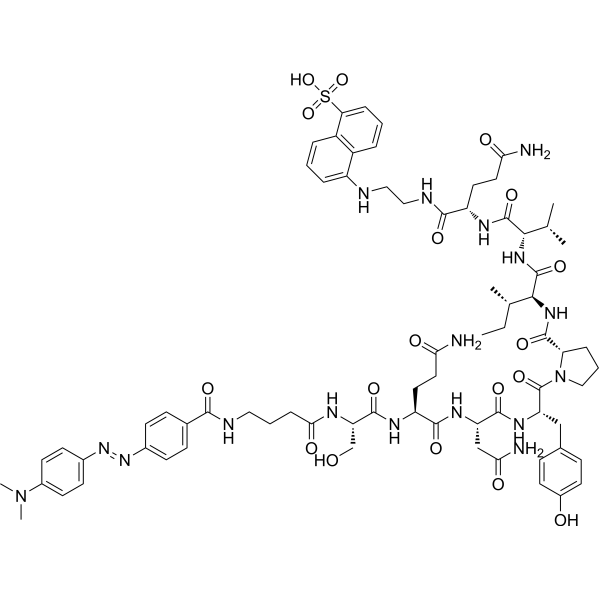
DABCYL-GABA-Ser-Gln-Asn-Tyr-Pro-Ile-Val-Gln-EDANS is a biological active peptide. (DABCYL-GABA-Ser-Gln-Asn-Tyr-Pro-Ile-Val-Gln-EDANS is also called HIV protease substrate I in some literature. It is widely used for the continuous assay for HIV protease activity. The 11-Kd protease (PR) encoded by the human immunodeficiency virus 1 (HIV-1) is essential for the correct processing of viral polyproteins and the maturation of infectious virus, and is therefore a target for the design of selective acquired immunodeficiency syndrome (AIDS) therapeutics. The FRET-based fluorogenic substrate is derived from a natural processing site for HIV-1 PR. Incubation of recombinant HIV-1 PR with the fluorogenic substrate resulted in specific cleavage at the Tyr-Pro bond and a time-dependent increase in fluorescence intensity that is linearly related to the extent of substrate hydrolysis. The fluorescence quantum yields of the HIV-1 PR substrate in the FRET assay increased by 40.0- and 34.4-fold, respectively, per mole of substrate cleaved. Because of its simplicity and precision in the determination of reaction rates required for kinetic analysis, this substrate offers many advantages over the commonly used HPLC or electrophoresis-based assays for peptide substrate hydrolysis by retroviral PRs. Abs/Em = 340nm/490nm.)
loading...
    loading...

