37 Results for "

liver injuries model

" in MedChemExpress (MCE) Product Catalog:
Products (37)

37 Results for "liver injuries model" in MCE Product Catalog:

  • Categories Recommended:
    More
76
76 Publications Verification
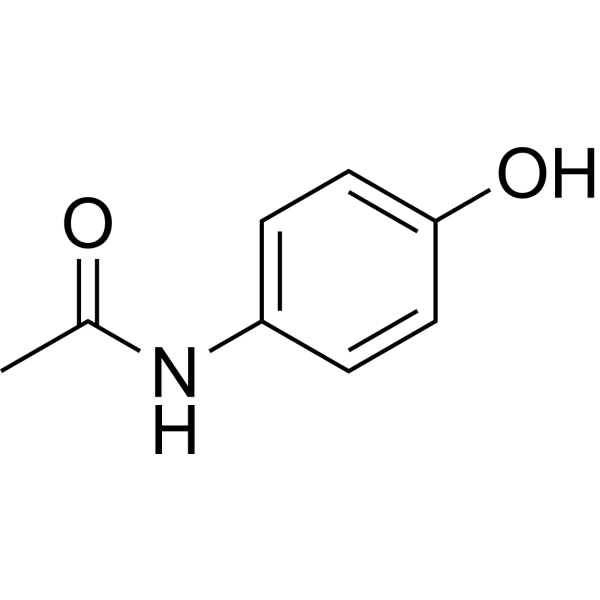
Cat. No.: HY-66005
CAS No.: 103-90-2
Synonyms: Paracetamol; 4-Acetamidophenol; 4'-Hydroxyacetanilide
Acetaminophen (Paracetamol) is a selective cyclooxygenase-2 (COX-2) inhibitor with an IC50 of 25.8 μM; is a widely used antipyretic and analgesic agent. . Acetaminophen is a potent hepatic N-acetyltransferase 2 (NAT2) inhibitor . Acetaminophen induces ferroptosis and leads to acute liver injury in mice model .
loading...
    loading...
13
13 Cited Publications
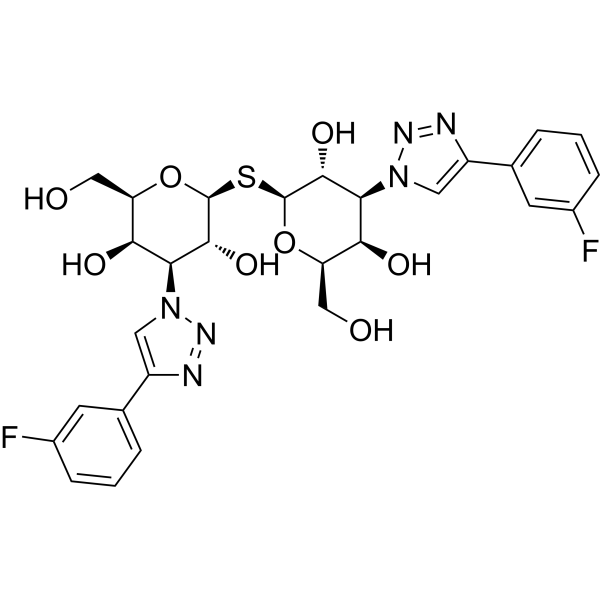
Cat. No.: HY-19940
CAS No.: 1450824-22-2
Synonyms: TD139; GB0139
Olitigaltin (TD139) is a high-affinity Galectin-3 inhibitor with a Kd value of 14 nM. Olitigaltin inhibits the activity of the AKT/β-catenin pathway, induces Apoptosis, and downregulates SREBP1 expression. Olitigaltin enhances the phosphorylation level of ERK. Olitigaltin alleviates bleomycin (HY-17565A)-induced advanced pulmonary fibrosis in mice. Olitigaltin delays the onset of diabetes, and improves glucose tolerance and serum insulin levels. Olitigaltin alleviates liver injury. Olitigaltin maintains the structure of hippocampal excitatory synapses, restores γ-wave power in the hippocampal CA1 region, inhibits hippocampal neuroinflammation, and improves cognitive function in neuroinflammation models. Olitigaltin can be used in research related to thyroid cancer, idiopathic pulmonary fibrosis, type 1 diabetes, hepatitis, and cognitive dysfunction induced by neuroinflammation .
loading...
    loading...
4
4 Cited Publications
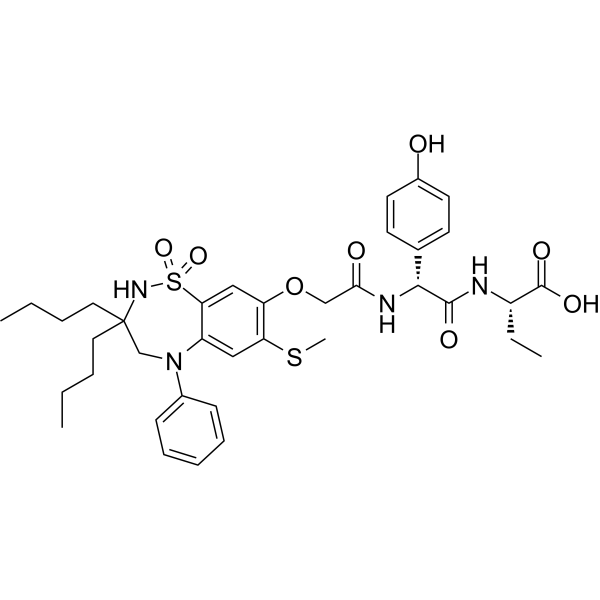
Cat. No.: HY-109120
CAS No.: 501692-44-0
Purity:  99.92%
Synonyms: A4250
Odevixibat (A4250) is a selective and orally active ileal apical sodium-dependent bile acid transporter (ASBT) inhibitor. Odevixibat decreases cholestatic liver and bile duct injury in mice model. Odevixibat has the potential for the treatment of primary biliary cirrhosis .
loading...
    loading...
3
3 Cited Publications
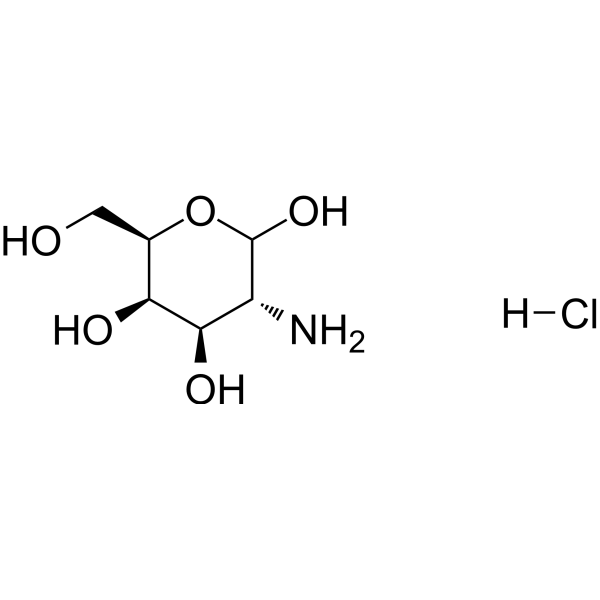
Cat. No.: HY-42682
CAS No.: 1772-03-8
Synonyms: D-Galactosamine HCl
D(+)-Galactosamine (D-Galactosamine) hydrochloride, which is an established experimental toxin, primarily causes liver injury by the generation of free radicals and depletion of UTP nucleotides. D(+)-Galactosamine hydrochloride intoxication also induces renal dysfunction thus, renal failure is often associated with the end-stage of the liver damage. Lipopolysaccharide/D(+)-Galactosamine-induced acute liver injury is a known animal model of fulminant hepatic failure .
loading...
    loading...
3
3 Cited Publications
Cat. No.: HY-N6871
CAS No.: 514-10-3
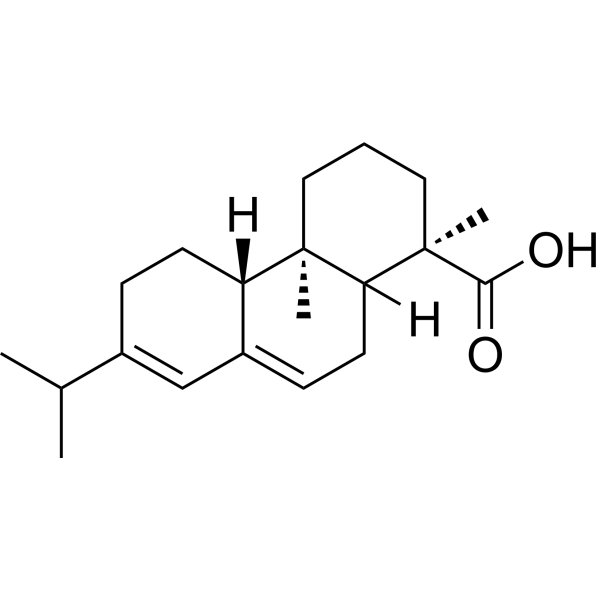
Abietic acid, an orally active diterpene isolated from Colophony, displays significant anti-proliferative, anti-inflammatory, anti-obesity effect, bacteriostatic, cell cycle arresting and pro-apoptotic activities. Abietic acid inhibits lipoxygenase activity for allergy. Abietic acid enhances cell migration and tube formation in HUVECs. Abietic acid induces significant angiogenic potential, which is associated with upregulation of extracellular signal-regulated kinase (ERK) and p38 expression. Abietic acid attenuates sepsis-induced lung injury by inhibiting nuclear factor kappa-light-chain-enhancer of activated B cells (NF-κB) pathway to inhibit M1 macrophage polarization. Abietic acid exhibits a positive effect against liver injury by attenuating inflammation and ferroptosis. Abietic acid shows accelerated wound closure in a mouse model of cutaneous wounds. Abietic acid significantly reduces the proliferation and growth of NSCLC cells by IKKβ inhibition.Additionally, Abietic acid ameliorates psoriasis-like inflammation and modulates gut microbiota in mice. Abietic acid is promising for research in non-small-cell lung cancer (NSCLC), liver injury-related deseases and psoriasis .
loading...
    loading...
2
2 Cited Publications
Cat. No.: HY-P10102
CAS No.: 629628-53-1
Research Areas:  

Inflammation/Immunology Cancer

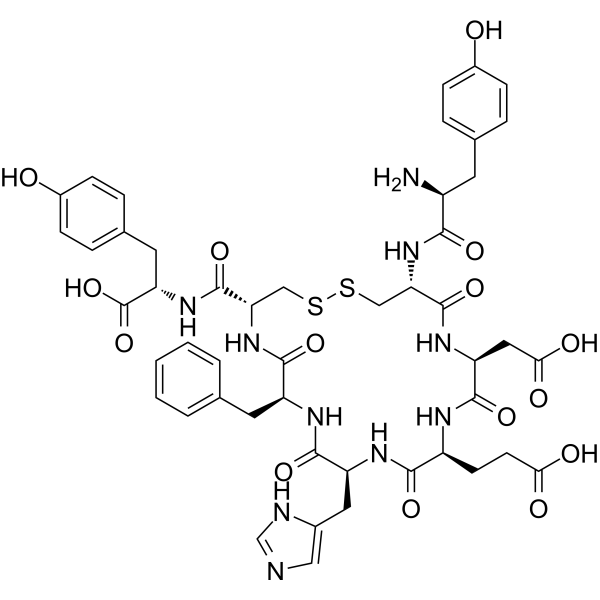
Kp7-6 is a Fas mimetic peptide and also a Fas/FasL antagonist. Kp7-6 specifically binds to Fas and FasL, disrupts receptor complexes, and blocks downstream apoptosis signaling pathways. Kp7-6 inhibits the phosphorylation of ERK1-2, induces the phosphorylation of IκBα, and activates NF-κB. Kp7-6 inhibits the activation of caspase-8, caspase-3 and JNK, and suppresses human amylin-induced β-cell apoptosis. Kp7-6 inhibits FasL-induced lymphoid cytotoxicity and apoptosis. Kp7-6 reduces local tumor FasL expression, increases CD8 +Fas + T cell infiltration, and decreases tumor volume in pancreatic neuroendocrine tumor models. Kp7-6 prevents concanavalin A-induced liver injury in mice. Kp7-6 is applicable to research related to type 2 diabetes, concanavalin A-induced hepatitis and pancreatic neuroendocrine tumors .
loading...
    loading...
1
1 Cited Publications
Cat. No.: HY-N2830
CAS No.: 21499-24-1
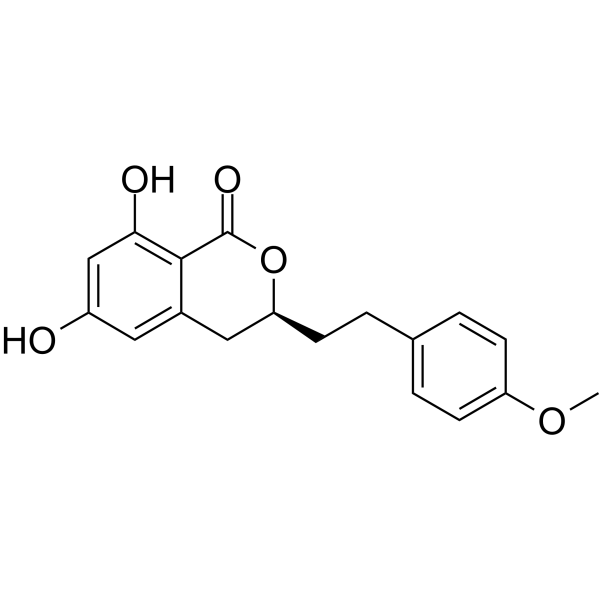
Agrimonolide is a phenethyl isocoumarin compound discovered from Agrimonia pilosa, exhibiting anti-inflammatory, antioxidant, and anticancer activities. Agrimonolide inhibits NF-κB, MAPK, and TLR4-mediated neuroinflammatory signaling, suppresses Notch and JAK2/STAT3 signaling to modulate Th17/Treg balance and maintain the intestinal barrier. Agrimonolide decreases HIF1A expression, inhibits glycolysis, and induces ferroptosis and cell cycle arrest via the mTOR pathway in tumor models, thereby suppressing cancer cell viability, proliferation, and metastasis. Agrimonolide exerts hepatoprotective and anti-fibrotic effects by regulating bile acid transporter expression and reducing hepatic bile acid accumulation. Agrimonolide is used for research on ulcerative colitis, ovarian cancer, non-small cell lung cancer, cholestatic liver injury, and neuroinflammation .
loading...
    loading...
Cat. No.: HY-P990116

Target:  

Osteopontin

Research Areas:  

Inflammation/Immunology

Anti-Mouse osteopontin/SPP1 Antibody (103D6) is a mouse-derived anti-mouse osteopontin/SPP1 IgG2c κ type antibody inhibitor. Anti-Mouse osteopontin/SPP1 Antibody (103D6) increases cytotoxic T lymphocyte lytic activity and suppresses colon tumor growth. Anti-Mouse osteopontin/SPP1 Antibody (103D6) ameliorates liver injury in common bile duct ligation (CBDL)-induced primary sclerosing cholangitis mice models .
loading...
    loading...
Cat. No.: HY-163897
CAS No.: 3098187-24-4
PROTAC NCOA4 degrader-1 is a VHL-based PROTAC NCOA4 degrader. PROTAC NCOA4 degrader-1 is a ferroptosis inhibitor. PROTAC NCOA4 degrader-1 reduces Fe 2+ elevation, ROS production, MDA content and PTGS2 mRNA expression. PROTAC NCOA4 degrader-1 ameliorates liver damage in a CCl4-induced acute liver injury model. PROTAC NCOA4 degrader-1 can be used for the researches of inflammation and immunology .
loading...
    loading...
Cat. No.: HY-108292
CAS No.: 66532-86-3
Purity:  99.89%
Target:  

NF-κB

Research Areas:  

Neurological Disease Cancer

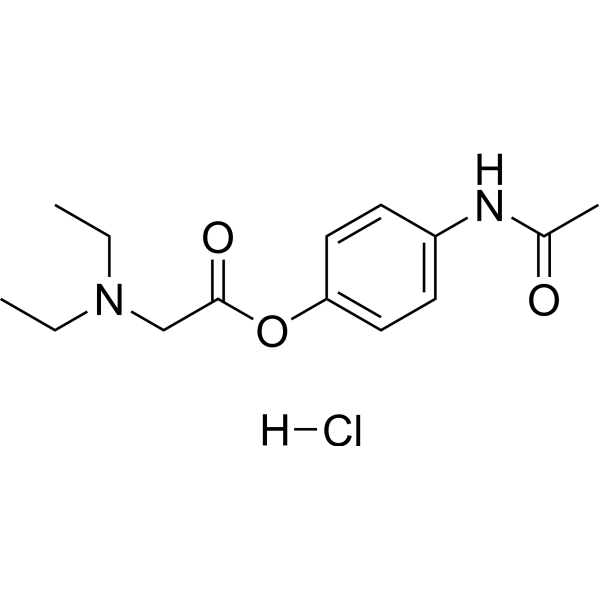
Propacetamol hydrochloride is an orally active prodrug of paracetamol and an inducer of acute liver injury models, with multiple properties including antinociception, antioxidation and gastroprotection. Propacetamol hydrochloride potentiates Tramadol and attenuates Aspirin (HY-14654)-induced gastric mucosal damage and lipid peroxidation. Under specific conditions, Propacetamol hydrochloride also acts as a hepatotoxic inducer, triggering acute liver injury, oxidative stress and apoptosis, with strain differences in toxicity sensitivity. Propacetamol hydrochloride can be used in the research of acute liver injury, drug-induced hepatotoxicity and gastric mucosal damage .
loading...
    loading...
Cat. No.: HY-170495
CAS No.: 3099659-64-7
Research Areas:  

Inflammation/Immunology

HDAC6 degrader-5 (Compound 6) exhibits inhibitory and degradation activity against HDAC6, with an IC50 of 4.95 nM and a DC50 of 0.96 nM. HDAC6 degrader-5 inhibits the release of TNF-α, IL-1β and IL-6, blocks the hepatocyte apoptosis. HDAC6 degrader-5 exhibits anti-inflammatory activity in mouse APAP (HY-66005)-induced liver injury models .
loading...
    loading...
Cat. No.: HY-170362
CAS No.: 2987886-49-5
Research Areas:  

Inflammation/Immunology

cGAS-IN-4 (Compound 36) is an orally active inhibitor for cyclic GMP-AMP synthase (cGAS) with IC50 of 32 nM and 5.8 nM for h-cGAS and m-cGAS. cGAS-IN-4 inhibits the cGAMP in THP-1 cell with an IC50 of 60 nM, which improves the cellular potency. cGAS-IN-4 exhibits anti-inflammatory efficacy in Concanavalin A (HY-P2149)-induced acute liver injury in mouse models . orally active, THP-1, C57Bl/6 mouse, orally active
loading...
    loading...
Cat. No.: HY-42682R
CAS No.: 1772-03-8
Synonyms: D-Galactosamine HCl (Standard)
D(+)-Galactosamine (hydrochloride) (Standard) is the analytical standard of D(+)-Galactosamine (hydrochloride). This product is intended for research and analytical applications. D(+)-Galactosamine (D-Galactosamine) hydrochloride, which is an established experimental toxin, primarily causes liver injury by the generation of free radicals and depletion of UTP nucleotides. D(+)-Galactosamine hydrochloride intoxication also induces renal dysfunction thus, renal failure is often associated with the end-stage of the liver damage. Lipopolysaccharide/D(+)-Galactosamine-induced acute liver injury is a known animal model of fulminant hepatic failure .
loading...
    loading...
Cat. No.: HY-173235
CAS No.: 2604662-64-6
Galectin-3-IN-6 is a human and murine galectin-3 (Gal-3) inhibitor, with an IC50 of 12 nM against human galectin-3, an IC50 of 12.6 nM against mutant murine galectin-3 (V160A), and a Kd of 13 nM for human galectin-3, as well as oral bioavailability. Galectin-3-IN-6 reduces the levels of liver fibrosis markers type I collagen and α-smooth muscle actin in mouse models of acute liver injury and fibrosis. Galectin-3-IN-6 can be used for the research of acute liver injury and fibrosis .
loading...
    loading...
Cat. No.: HY-176274
CAS No.: 3063509-61-2
FASN/SCD-IN-1 is a Silybin (HY-N0779A) derivative, an orally active inhibitor of Fatty Acid Synthase (FASN)/Stearoyl-CoA Desaturase (SCD). FASN/SCD-IN-1 has shown in vitro activity in inhibiting lipid deposition, reducing FASN and SCD transcriptional levels, and exhibiting antioxidant, anti-inflammatory, and anti-fibrotic activities. FASN/SCD-IN-1 has demonstrated significant hepatoprotective effects in a rat model of acute liver injury. FASN/SCD-IN-1 ameliorates the pathological features of MASH liver, including steatosis, inflammation, and fibrosis in a mouse model of myeloproliferative steatohepatitis (MASH). FASN/SCD-IN-1 can be used to study MASH .
loading...
    loading...
Cat. No.: HY-D3000
NIR-RED ROS-H2O2 Probe is a near-infrared fluorescent probe used for detecting hydrogen peroxide (H₂O₂) and featuring dual-modal fluorescence/photoacoustic imaging capabilities. NIR-RED ROS-H2O2 Probe successfully detects the upregulated fluorescence signal of H₂O₂ in HepG2 cells and a mouse liver injury model. NIR-RED ROS-H2O2 Probe can be used as a biomarker detection tool for drug-induced liver injury (DILI) .
loading...
    loading...
Cat. No.: HY-175026
CAS No.: 3036254-29-9
RIPK2-IN-8 is an orally active and highly selective RIPK2 inhibitor (IC50 = 11 nM). RIPK2-IN-8 is highly selective for RIPK2 over RIPK1 (IC50 > 30,000 nM) and has a moderate inhibitory effect on RIPK3 (IC50 = 44.61 nM). RIPK2-IN-8 inhibits the NOD2-RIPK2 signaling pathway and the expression of the inflammatory cytokines IL-6 and TNFα, thereby exerting anti-inflammatory effects. RIPK2-IN-8 has demonstrated anti-inflammatory and hepatoprotective effects in an acute liver injury (ALI) model and can be used in ALI research .
loading...
    loading...
Cat. No.: HY-177809
Target:  

TNF Receptor

Research Areas:  

Inflammation/Immunology

aptTNF-α sodium is a TNF-α-targeting aptamer that has tissue protective effect and systemic anti-inflammatory effect upon acute tissue injury using the mouse acute lung injury (ALI) and acute liver failure (ALF) models.
loading...
    loading...
Cat. No.: HY-168327
Target:  

FXR

Research Areas:  

Inflammation/Immunology

LH10 is a fexaramine-based agonist for FXR with an EC50 of 0.14 μM. LH10 exhibits liver protection efficacy, ameliorates the alpha naphthylisothiocyanate (ANIT)-induced cholestasis, APAP (HY-66005)-induced acute liver injury and non-alcoholic steatohepatitis (NASH) in mouse models .
loading...
    loading...
Cat. No.: HY-169927
Target:  

Ferroptosis

Research Areas:  

Inflammation/Immunology

Ferroptosis-IN-16 (Compound 13l) is a specific inhibitor for ferroptosis with an EC50 of 0.7 nM and 0.9 nM in ES-2 cell and LX-2 cell. Ferroptosis-IN-16 ameliorates Acetaminophen (HY-66005)-induced acute liver injury in mouse model, and exhibits good metabolic stability in mouse liver microsomes .
loading...
    loading...

