
1. Search Result
Search Result
Results for "

metastatic colon cancers

" in MedChemExpress (MCE) Product Catalog:

14

阻害剤およびアゴニスト

2

ペプチド

5

阻害性抗体

製品番号 製品名 Target 研究分野 構造式
  • HY-15319
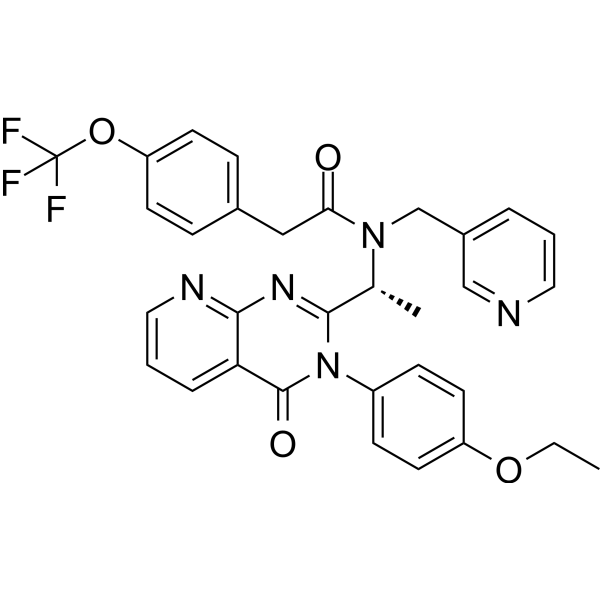
    AMG 487
    35+ Cited Publications

    CXCR Inflammation/Immunology Endocrinology Cancer
    AMG 487 is an orally active and selective antagonist of CXC chemokine receptor 3 (CXCR3) which inhibits the binding of CXCL10 and CXCL11 to CXCR3 with IC50s of 8.0 and 8.2 nM, respectively .
    AMG 487
  • HY-P99708

    ABBV-151; ARGX-115

    TGF-beta/Smad Cancer
    Livmoniplimab (ABBV-151) is a monoclonal antibody against GARP/TGF-β1 that can inhibit the release of active TGF-β1. Livmoniplimab has anti-tumor activity in colon cancer mice. Livmoniplimab can be used for the study of locally advanced or metastatic solid tumors .
    Livmoniplimab
  • HY-170859

    PROTACs Casein Kinase Cancer
    AH078 is a PROTAC-based CK1δ/ε degrader (DC50=0.55 μM, Dmax=70%) that lacks subtype selectivity between CK1δ and CK1ε. AH078 induces target protein degradation either by recruiting the CUL4-CRBN E3 ligase complex and proteasome, or via the VHL- and ubiquitin-dependent pathway. AH078 also exhibits selectivity for CK1α, and is widely applicable to research related to colon cancer, pancreatic cancer, breast cancer, ovarian cancer, chronic lymphocytic leukemia, acute myeloid leukemia, glioma, and metastatic breast adenocarcinoma .
    AH078
  • HY-P3099

    Guanylate Cyclase Cancer
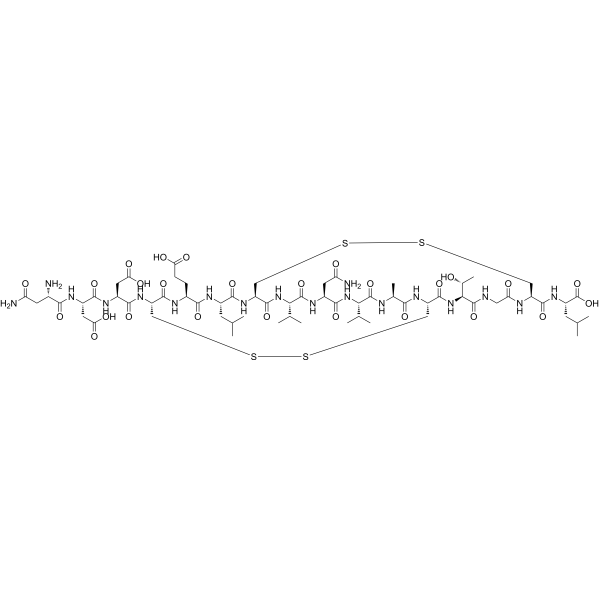
    Uroguanylin (human) is a natural ligand for the Guanylyl Cyclase (GCC) receptor expressed in metastatic colorectal cancer tumors. Uroguanylin (human) has anti-tumor actions in an animal model for human colon cancer .
    Uroguanylin (human)
  • HY-P990730

    ARB202

    CD3 Cadherin Cancer
    Cabotamig is a humanized bispecific T-cell engager antibody targeting CDH17/CD3. Cabotamig is generated from anti-CDH17 monoclonal ARB102 by linking a CD3-binding scFv in the format of IgG4-scFv. Cabotamig can be used for the research of cancer, such as gastric cancer and colon cancers .
    Cabotamig
  • HY-164429

    Integrin Elastase Cancer
    VIP236 is a small-molecule drug conjugate targeting αvβ3 integrin. VIP236 achieves tumor homing via specific binding to αvβ3 integrin and delivers its payload to the tumor microenvironment. The linker of VIP236 is cleavable by neutrophil elastase, which is highly expressed in the tumor microenvironment, to release the payload 7-ethylcamptothecin. This payload induces DNA damage by inhibiting topoisomerase 1, thereby exerting anti-tumor effects. VIP236 exhibits excellent plasma stability and tumor targeting property, with a tumor/plasma payload ratio 10-fold higher than that of the single administration. It effectively induces tumor regression, reduces metastasis formation, and shows good tolerance in mouse models. VIP236 has been used in studies related to non-small cell lung cancer, clear cell renal cell carcinoma, colon cancer, triple-negative breast cancer, small cell lung cancer, and metastatic solid tumors .
    VIP236
  • HY-P3099A

    Guanylate Cyclase Cancer
    Uroguanylin (human) (TFA) is a natural ligand for the Guanylyl Cyclase (GCC) receptor expressed in metastatic colorectal cancer tumors. Uroguanylin (human) (TFA) has anti-tumor actions in an animal model for human colon cancer .
    Uroguanylin (human) TFA
  • HY-N8398

    Apoptosis Cancer
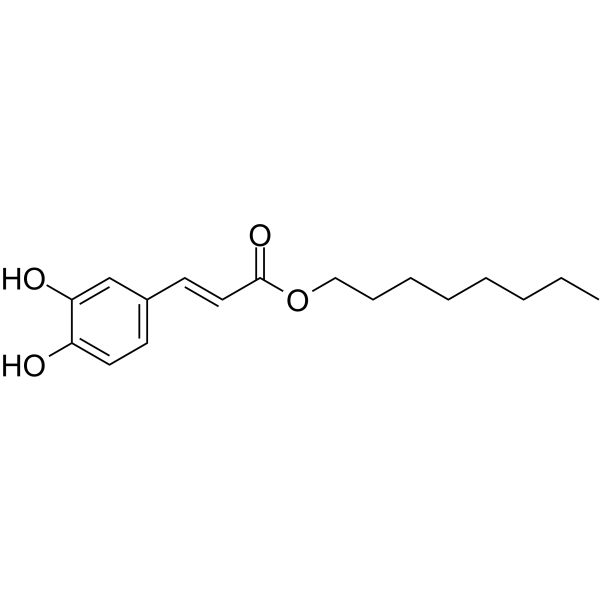
    n-Octyl caffeate shows anti-cancer and apoptosis inducing activity in highly liver-metastatic murine colon 26-L5 carcinoma cell lines .
    n-Octyl caffeate
  • HY-15319A

    CXCR Cancer
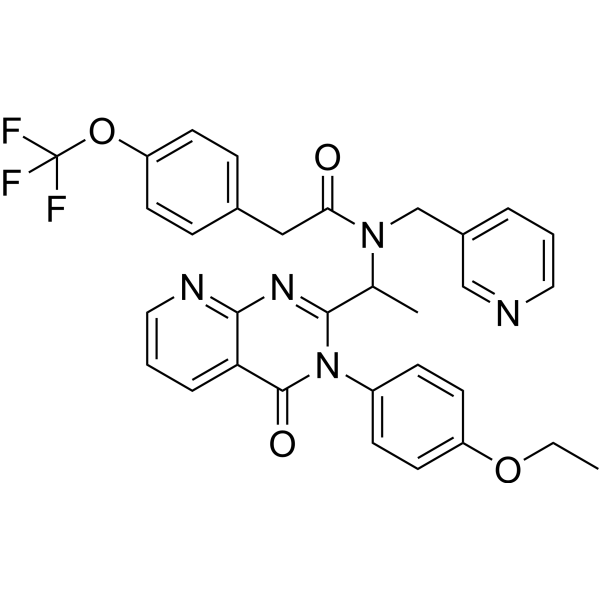
    (±)-AMG 487 is a racemate of AMG 487. AMG 487 is an orally active and selective antagonist of CXC chemokine receptor 3 (CXCR3) which inhibits the binding of CXCL10 and CXCL11 to CXCR3 with IC50s of 8.0 and 8.2 nM, respectively .
    (±)-AMG 487
  • HY-175039

    FAK Apoptosis Reactive Oxygen Species (ROS) Caspase Cancer
    FAK-IN-28 is an orally active FAK inhibitor (IC50 = 0.4 nM). FAK-IN-28 exhibits dual antiproliferative and anti-metastatic properties. FAK-IN-28 triggers caspase-3-dependent apoptosis via ROS elevation. FAK-IN-28 inhibits tumor growth without causing weight loss or hepatotoxicity. FAK-IN-28 is useful in the study of FAK-driven malignancies, such as colon cancer, cervical cancer, triple-negative breast cancer, and melanoma .
    FAK-IN-28
  • HY-179052

    Apoptosis Autophagy Bcl-2 Family Caspase Atg8/LC3 Atg7 CDK Reactive Oxygen Species (ROS) Cancer
    Apoptosis inducer 50 (Compound 5e) is an apoptosis inducer as well as an autophagy inducer agent. Apoptosis inducer 50 exhibits potent and selective anti-cancer activity against triple-negative breast cancer cells and metastatic colon cancer cells. Apoptosis inducer 50 upregulates the expression of pro-apoptotic proteins (Bax, Bim, cleaved Caspase-9) and downregulates the expression of the anti-apoptotic protein (BCL-XL). Apoptosis inducer 50 upregulates key autophagy markers such as Beclin-1 and ATG5, and enhances the conversion of LC3-I to LC3-II., Apoptosis inducer 50 arrests cancer cells in the G1/S phase by upregulating the expression of p21 and p27 while downregulating Cyclin D1. Apoptosis inducer 50 increases the level of ROS .
    Apoptosis inducer 50
  • HY-P992459

    ADC Antibody Transmembrane Glycoprotein Cancer
    SGM-101 Antibody is a chimeric monoclonal antibody targeting carcinoembryonic antigen (CEA). SGM-101 Antibody can serve as a tumor-specific fluorescent imaging probe after being covalently conjugated with the near-infrared fluorescent dye BM104 . SGM-101 Antibody accumulates in CEA-positive tumor tissues via antigen-antibody specific binding, and emits near-infrared fluorescence to enable imaging of tumor lesions. SGM-101 Antibody can be used in research related to gastric cancer, colorectal cancer, pancreatic cancer, non-small cell lung cancer, breast cancer, peritoneal carcinomatosis, and liver metastases .
    SGM-101 Antibody
  • HY-P992339

    Radionuclide-Drug Conjugates (RDCs) Cancer
    cT84.66 is a highly efficient tumor-targeting agent against carcinoembryonic antigen (CEA). cT84.66 engages in bivalent binding with CEA via variable region antigen-binding sites, enabling precise targeting of CEA-producing tumor cells for delivery of therapeutic radiation. cT84.66 exhibits high tumor uptake rate, rapid clearance rate, and excellent tumor-to-blood ratio. With dual functions as an imaging agent and an antibody-directed radiotherapy agent, cT84.66 is widely used in studies of colorectal cancer and metastatic CEA-positive malignancies .
    cT84.66
  • HY-P991896

    AT14-012

    Transmembrane Glycoprotein Inflammation/Immunology Cancer
    AT1412 is a CD9-binding antibody. AT1412 binds to the tetraspanin protein CD9 and modulates CD9 function by enhancing T cell adhesion to endothelial cells (HUVECs) and transendothelial migration. AT1412 binds to B-ALL cell lines but not to T-ALL. AT1412 induces antibody-dependent cellular cytotoxicity in B-ALL cell lines. AT1412 binds to melanoma cells, B-ALL, gastric cancer, colorectal cancer, and pancreatic cancer cells [1] .
    AT1412

オンラインお問い合わせ

入力情報は安全に管理されます. 必須入力項目.

タイトル


国或いは地域 *

お名前 *


組纖名 *

デパートメント *


メールアドレス *


製品名 *

製品番号


カスタマ需要量 *

電話番号 *


必ず会社名を記載ください。個人への返信は行いません。

備考

バルクお問い合わせ

Inquiry Information

製品名:
製品番号:
数量:
MCE 日本正規代理店:

