
1. Search Result
Search Result
Results for "

minimal

" in MedChemExpress (MCE) Product Catalog:

208

Inhibitors & Agonists

1

Screening Libraries

14

Fluorescent Dyes

3

Biochemical Assay Reagents

10

Peptides

3

MCE Kits

3

Inhibitory Antibodies

7

Natural
Products

8

Isotope-Labeled Compounds

5

Click Chemistry

13

Oligonucleotides

Cat. No. Product Name Target Research Areas Chemical Structure
  • HY-B0389A
    D-Glucose-13C6
    15+ Cited Publications

    Glucose-13C6; D-(+)-Glucose-13C6; Dextrose-13C6

    Endogenous Metabolite Metabolic Disease
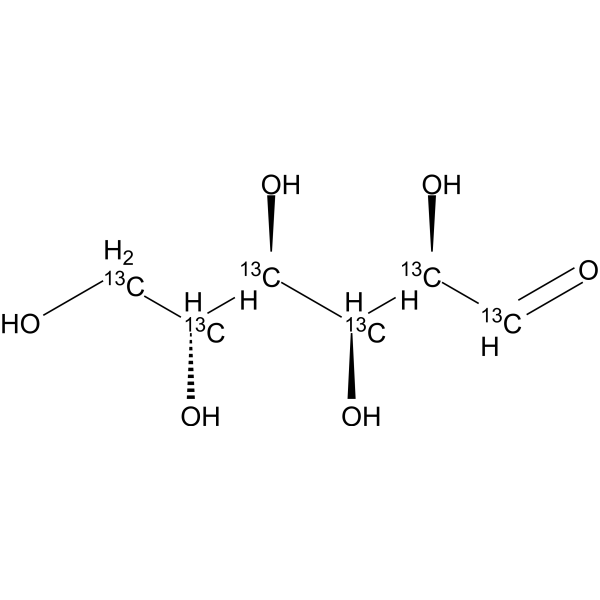
    D-Glucose- 13C6 is a stable isotope-labeled counterpart of D-glucose (HY-B0389). D-Glucose- 13C6 can be used as a metabolic tracer to trace glucose-related synthetic catabolism or as synthesis ingredient, minimal media reagent, and internal standard .
    D-Glucose-13C6
  • HY-135146
    GSK-3484862
    20+ Cited Publications

    DNA Methyltransferase Cancer
    GSK-3484862 is a non-covalent inhibitor for DNA methyltransferase (Dnmt1). GSK-3484862 induces DNA hypomethylation to against cancer. GSK-3484862 mediates dramatic demethylation in murine embryonic stem cells with minimal non-specific toxicity .
    GSK-3484862
  • HY-131045
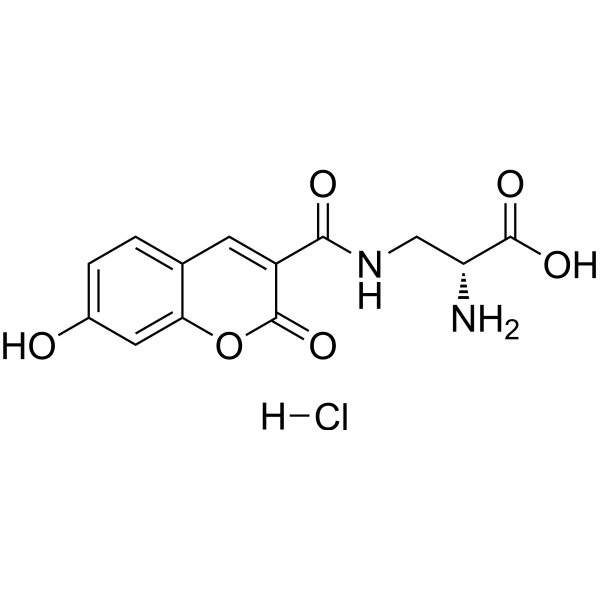
    HADA hydrochloride
    5+ Cited Publications

    HCC-Amino-D-alanine hydrochloride

    Bacterial Infection
    HADA hydrochloride (HCC-Amino-D-alanine hydrochloride) is a blue (λem~450 nm) fluorescent D-amino acid (FDAA). FDAAs are efficiently incorporated into the peptidoglycans (PGs) of diverse bacterial species at the sites of PG biosynthesis, allowing specific and covalent probing of bacterial growth with minimal perturbation .
    HADA hydrochloride
  • HY-R04602
    MicroRNA Mimic Negative Control
    Maximum Cited Publications
    15 Publications Verification

    MicroRNA Cancer
    MicroRNA Mimic Negative Control is a miRNA mimic of 21-nucleotides, and can be used as a negative control. The sequence of MicroRNA Mimic Negative Control is derived from cel-mir-239b. It has minimal sequence identity with miRNAs in human, mouse, and rat.
    MicroRNA Mimic Negative Control
    MicroRNA Mimic Negative Control
  • HY-153306
    Zovegalisib
    1 Publications Verification

    RLY-2608

    PI3K Cancer
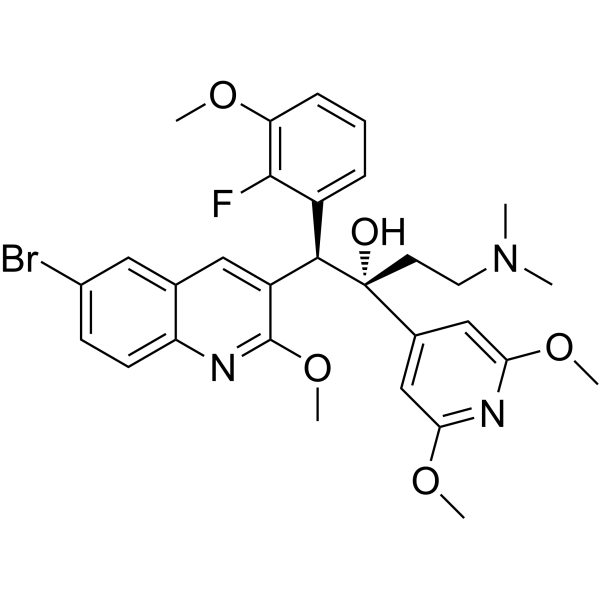
    Zovegalisib (RLY-2608) is an orally active first-in-class allosteric mutant-selective inhibitor of PI3Ka with anti-tumor activity. Zovegalisib inhibits tumor growth in PIK3CA-mutant xenograft mice models with minimal impact on insulin .
    Zovegalisib
  • HY-17040
    Darunavir
    15+ Cited Publications

    TMC114; UIC-94017

    HIV HIV Protease Infection Inflammation/Immunology
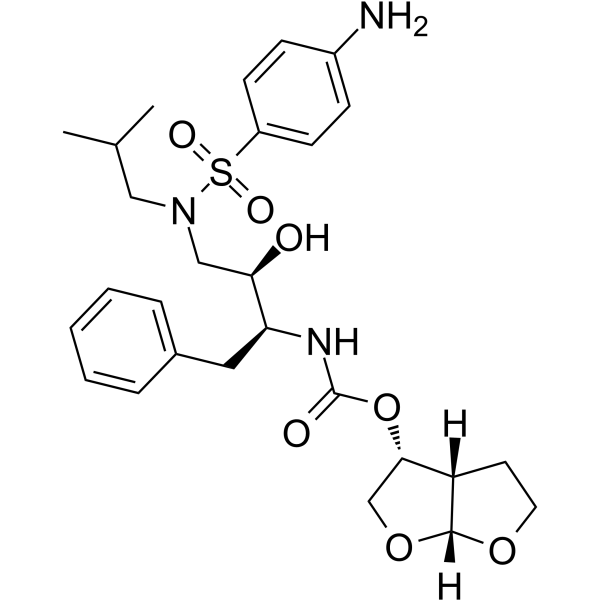
    Darunavir (TMC114), an orally active next generation HIV protease inhibitor, has a similar antiviral activity against the mutant and the wild-type viruses. Darunavir (TMC114) is potent against laboratory HIV-1 strains and primary clinical isolates (IC50 = 0.003 μM; IC90 = 0.009 μM) with minimal cytotoxicity .
    Darunavir
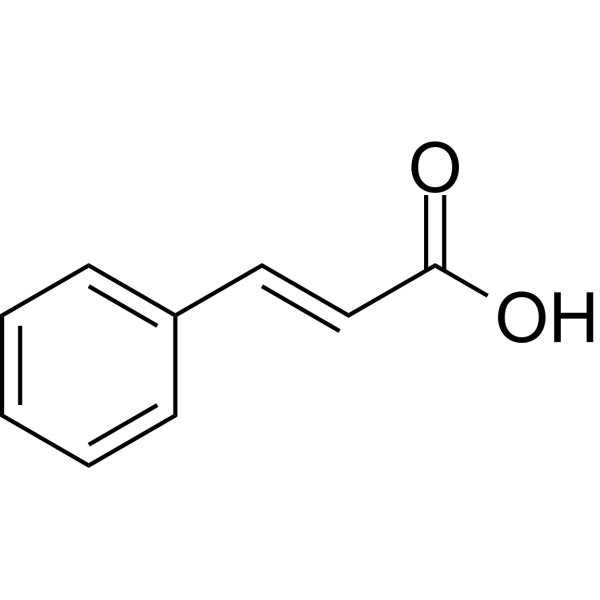
  • HY-N0610
    Trans-Cinnamic acid
    2 Publications Verification

    Trans-3-Phenylacrylic acid

    Environmental Pollutants Endogenous Metabolite Bacterial Infection Cancer
    trans-Cinnamic acid is a natural antimicrobial, with minimal inhibitory concentration (MIC) of 250 μg/mL against fish pathogen A. sobria, SY-AS1 .
    Trans-Cinnamic acid
  • HY-124489
    2-Hydroxyestradiol
    2 Publications Verification

    Endogenous Metabolite Metabolic Disease
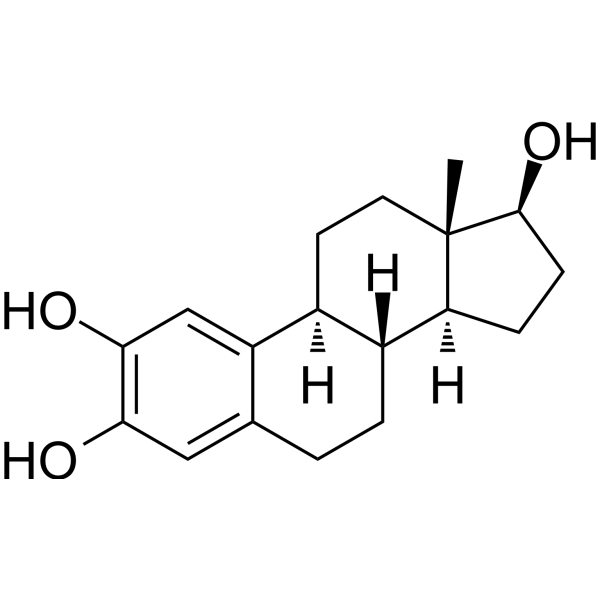
    2-Hydroxyestradiol, a metabolite of 17β-estradiol with minimal estrogenic activity, possesses antioxidant effects and reacts with DNA to form stable adducts and exerts genotoxicity .
    2-Hydroxyestradiol
  • HY-102023
    GNF351
    5+ Cited Publications

    Aryl Hydrocarbon Receptor Others
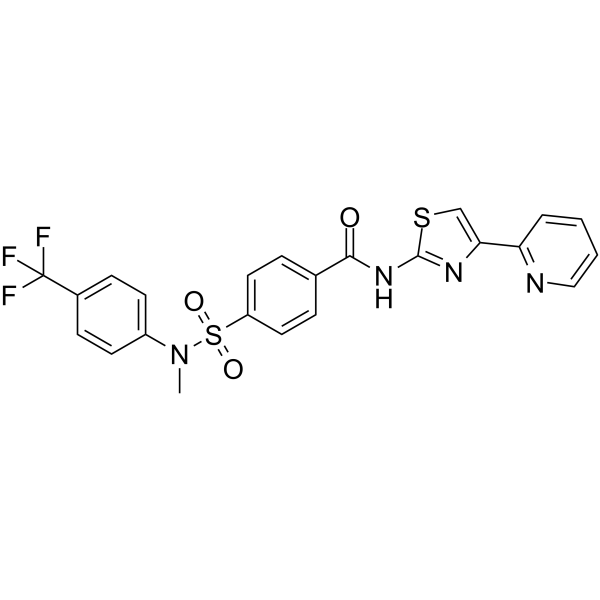
    GNF351 is a full aryl hydrocarbon receptor (AHR) antagonist. GNF351 competes with a photoaffinity AHR ligand for binding to the AHR with an IC50 of 62 nM. GNF351 is minimal toxicity in mouse or human keratinocytes .
    GNF351
  • HY-B0478A
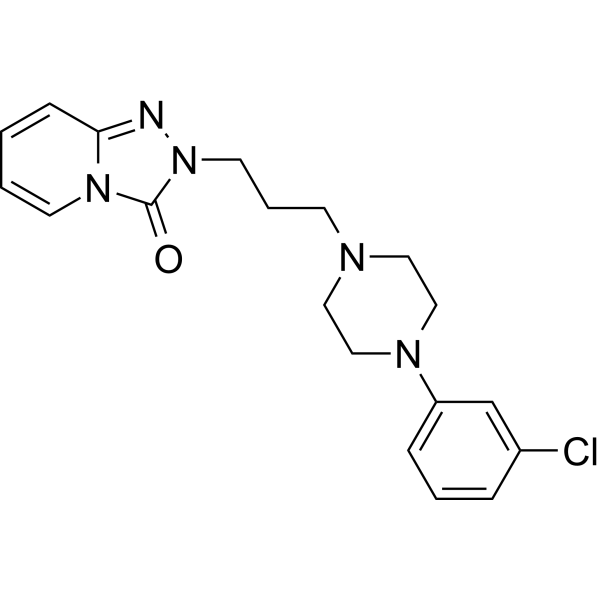
    Trazodone
    5+ Cited Publications

    AF-1161 free base

    5-HT Receptor Serotonin Transporter Histamine Receptor Adrenergic Receptor Neurological Disease
    Trazodone (AF-1161 free base) is a triazolopyridine derivative that belongs to the class of serotonin receptor antagonists and reuptake inhibitors (SARIs). Trazodone has anti-depressant and anti-insomnious activity. Trazodone exerts antagonistic properties against a1- and a2-adrenergic receptors and histamine H1 receptors, with minimal anticholinergic effects .
    Trazodone
  • HY-RI04602

    MicroRNA Others
    MicroRNA Inhibitor Negative Control is a full-length nucleotide 2'-methoxy modified oligonucleotide, and can be used as a negative control. The sequence of MicroRNA Inhibitor Negative Control is derived from cel-mir-239b. It has minimal sequence identity with miRNAs in human, mouse, and rat.
    MicroRNA Inhibitor Negative Control
    MicroRNA Inhibitor Negative Control
  • HY-W145519

    Environmental Pollutants Biochemical Assay Reagents Cardiovascular Disease
    Hydroxyethyl starch (MW170-230 kDa) is a type of hydroxyethyl starch with a molecular weight of 170-230 kDa. A medium-molecular-weight hydroxyethyl starch (HES 200/0.62) exhibits minimal intravascular hydrolysis. The rapidly degradable medium-molecular-weight Hydroxyethyl starch 200/0.5 causes almost no coagulation disorders and improves hemorheological parameters .
    Hydroxyethyl starch (MW170-230 kDa)
  • HY-128770
    LY3154207
    2 Publications Verification

    Dopamine Receptor Neurological Disease
    LY3154207 is a potent, subtype selective, and orally available human dopamine D1 receptor positive allosteric modulator (PAM) with minimal allosteric agonist activity (EC50=3 nM) .
    LY3154207
  • HY-172431

    BHV-7000

    Potassium Channel Neurological Disease
    Opakalim (BHV-7000) is a selective Kv7.2/7.3 potassium channels activator with an EC50 of 0.6 μM. Opakalim shows minimal GABAA receptor activation and exhibits potent anti-seizure efficacy in the maximal electroshock seizure (MES) model. Opakalim can be used for the study of seizures .
    Opakalim
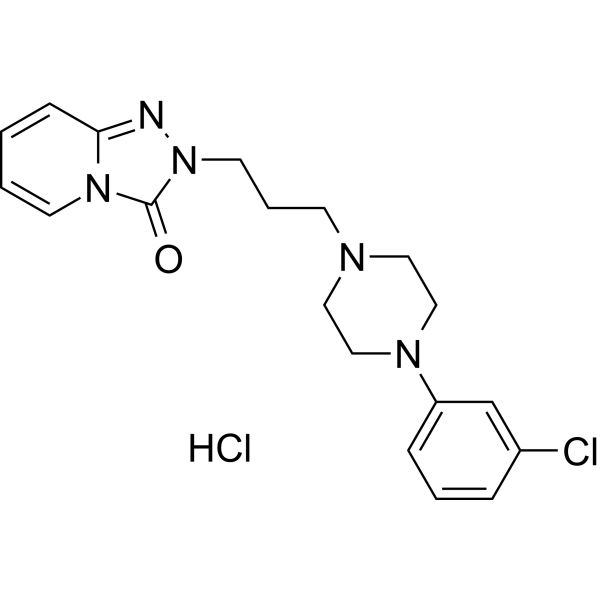
  • HY-B0478
    Trazodone hydrochloride
    5+ Cited Publications

    AF-1161

    5-HT Receptor Serotonin Transporter Histamine Receptor Adrenergic Receptor Neurological Disease
    Trazodone hydrochloride (AF-1161) is a triazolopyridine derivative that belongs to the class of serotonin receptor antagonists and reuptake inhibitors (SARIs). Trazodone hydrochloride has anti-depressant and anti-insomnious activity. Trazodone hydrochloride exerts antagonistic properties against a1- and a2-adrenergic receptors and histamine H1 receptors, with minimal anticholinergic effects .
    Trazodone hydrochloride
  • HY-150505
    DC-U4106
    1 Publications Verification

    Deubiquitinase Apoptosis Cancer
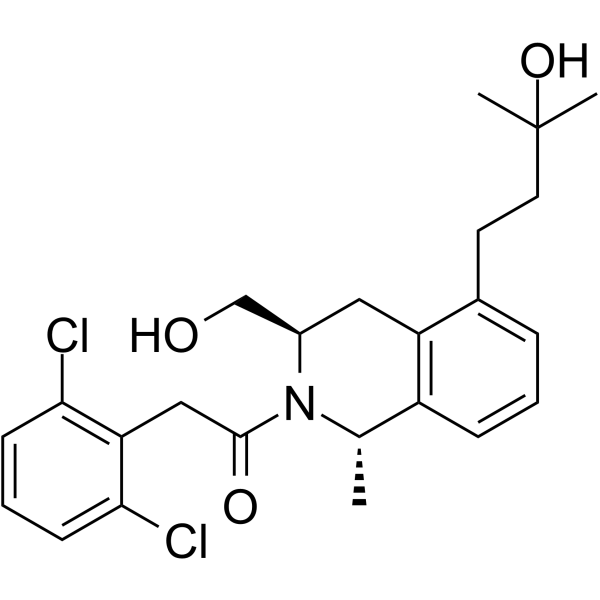
    DC-U4106 is a USP8 targeting inhibitor with the Kdvalue of 4.7 μM and the IC50 value of 1.2 μM. DC-U4106 can target the ubiquitin pathway and facilitate the degradation of Erα. DC-U4106 inhibits tumor growth with minimal toxicity and has the potential for the research of breast cancer .
    DC-U4106
  • HY-134669

    N-Cyclopropene-L-Lysine

    Amino Acid Derivatives Cancer
    CypK (N-Cyclopropene-L-Lysine), a cyclopropene derivative of lysine, is efficiently incorporated into antibodies through genetic-code expansion. CypK is a minimal bioorthogonal handle for the creation of stable therapeutic protein conjugates .
    CypK
  • HY-13649
    Indibulin
    1 Publications Verification

    ZIO 301; D 24851

    Apoptosis Microtubule/Tubulin Checkpoint Kinase (Chk) Neurological Disease Cancer
    Indibulin (ZIO 301), an orally applicable inhibitor of tubulin assembly, shows potent anticancer activity with a minimal neurotoxicity. Indibulin reduces inter-kinetochoric tension, produces aberrant spindles, activates mitotic checkpoint proteins Mad2 and BubR1, and induces mitotic arrest and apoptosis .
    Indibulin
  • HY-112531B

    Biochemical Assay Reagents Others
    Poly(2-hydroxyethyl methacrylate) (Mv 300000) is a biocompatible, optically transparent, hydrophilic, and non-degradable polymer with excellent cytocompatibility, eliciting a minimal immunological response from host tissue. Poly(2-hydroxyethyl methacrylate) (Mv 300000) can be used for different biomedical applications, such as bone tissue regeneration, wound dressings and drug delivery .
    Poly(2-hydroxyethyl methacrylate) (Mv 300000)
  • HY-W013172

    Progesterone Receptor Endocrinology
    Norgestimate, a synthetic progesterone analog, is an orally active progestin with highly selective progestational activity and minimal androgenicity. Norgestimate is used for an oral contraceptive . Norgestimate is a click chemistry reagent, it contains an Alkyne group and can undergo copper-catalyzed azide-alkyne cycloaddition (CuAAc) with molecules containing Azide groups.
    Norgestimate
  • HY-108293

    Estrogen Receptor/ERR Endocrinology Cancer
    Promestriene is a synthetic diethyl-ether of estradiol and a locally effective estrogen. Promestriene has an efficient action on vaginal atrophy while it is minimally absorbed .
    Promestriene
  • HY-111594
    Homo-PROTAC cereblon degrader 1
    1 Publications Verification

    PROTACs Cancer
    Homo-PROTAC cereblon degrader 1 (compound 15a) is a highly potent and efficient Cereblon (CRBN) degrader with only minimal effects on IKZF1 and IKZF3 .
    Homo-PROTAC cereblon degrader 1
  • HY-101190

    SHP626; LUM002

    Apical Sodium-Dependent Bile Acid Transporter Metabolic Disease
    Volixibat (SHP626) is a highly selective, minimally absorbed, and competitive apical sodium-dependent bile acid transporter (ASBT) inhibitor. Volixibat has potential for treatment for non-alcoholic steatohepatitis (NASH) .
    Volixibat
  • HY-120675
    SSTC3
    2 Publications Verification

    Casein Kinase Wnt Cancer
    SSTC3 is a casein kinase 1α (CK1α) activator (Kd = 32 nM) that inhibits WNT signaling (EC50 = 30 nM). SSTC3 exhibits minimal gastrointestinal toxicity compared to other classes of WNT inhibitors .
    SSTC3
  • HY-152839

    BLU-263

    c-Kit Cancer
    Elenestinib (BLU-263) is an orally active inhibitor of Tyrosine kinase with an IC50 value of 6 nM for KIT D816V. Elenestinib minimally penetrates the blood-brain barrier. Elenestinib can be used in the study of systemic mastocytosis .
    Elenestinib
  • HY-DY1044

    Bacterial Infection
    HADA hydrochloride (HCC-Amino-D-alanine hydrochloride) is a blue (λem~450 nm) fluorescent D-amino acid (FDAA). FDAAs are efficiently incorporated into the peptidoglycans (PGs) of diverse bacterial species at the sites of PG biosynthesis, allowing specific and covalent probing of bacterial growth with minimal perturbation .
    Solvent and concentration: DMSO: 50 mM
    HADA hydrochloride (solution)
  • HY-18977
    KML29
    3 Publications Verification

    MAGL Metabolic Disease Inflammation/Immunology
    KML29 is an extremely selective, orally active and irreversible MAGL inhibitor, with IC50 values of 15 nM, 43 nM and 5.9 nM for mouse, rat and human MAGL, respectively. KML29 exhibits minimal cross-reactivity toward other central and peripheral serine hydrolases, including no detectable activity against FAAH .
    KML29
  • HY-111747
    TBAJ-587
    3 Publications Verification

    Bacterial Infection Cardiovascular Disease
    TBAJ-587, a potent anti-tuberculosis agent, inhibits M.tb strain H37Rv growth with MIC90s of 0.006 and <0.02 μg/mL in MABA and LORA assay, respectively. TBAJ-587 inhibits hERG channel minimally, attenuates inhibition of the cardiac potassium channel protein coded by the hERG, which is important for cardiac repolarization .
    TBAJ-587
  • HY-139297
    SCR130
    1 Publications Verification

    DNA/RNA Synthesis Apoptosis Cancer
    SCR130 is a SCR7-based DNA nonhomologous end-joining (NHEJ) inhibitor. SCR130 inhibits the end-joining of DNA in a Ligase IV-dependent manner. SCR130 is specific to Ligase IV, and shows minimal or no effect on Ligase III and Ligase I mediated joining. SCR130 induces cell apoptosis and has anticancer activity .
    SCR130
  • HY-D1117

    NADA hydrochloride

    Fluorescent Dye Infection
    NADA-green is a fluorescent D-amino acid probe. NADA-green is efficiently incorporated into the peptidoglycan of diverse bacterial species peptidoglycan biosynthesis. NADA-green allows probing of bacterial growth with minimal perturbation .
    NADA-green
  • HY-N0610R

    Trans-3-Phenylacrylic acid (Standard)

    Reference Standards Bacterial Endogenous Metabolite Infection Cancer
    trans-Cinnamic acid (Standard) is the analytical standard of trans-Cinnamic acid. This product is intended for research and analytical applications. trans-Cinnamic acid is a natural antimicrobial, with minimal inhibitory concentration (MIC) of 250 μg/mL against fish pathogen A. sobria, SY-AS1 .
    trans-Cinnamic acid (Standard)
  • HY-R04602A
    MicroRNA Agomir Negative Control
    1 Publications Verification

    MicroRNA Others
    MicroRNA Agomir Negative Control is a chemically-modified double-strand miRNA mimic, and can be used as a negative control. The sequence of MicroRNA Agomir Negative Control is derived from cel-mir-239b. It has minimal sequence identity with miRNAs in human, mouse, and rat.
    MicroRNA Agomir Negative Control
    MicroRNA Agomir Negative Control
  • HY-D1815
    Allophycocyanin
    1 Publications Verification

    APC Dye

    Fluorescent Dye Others
    Allophycocyanin (APC Dye) is a light-harvesting protein, containing strongly coupled dimers of chromophores. Allophycocyanin serve as a minimal system to examine photosynthetic energy transfer. Allophycocyanin strongly absorbs far-red light (FRL), and expresses during acclimation to low light, likely associates with chlorophyll a-containing photosystem I .
    Allophycocyanin
  • HY-17580S

    Isotope-Labeled Compounds DNA/RNA Synthesis Bacterial Apoptosis Antibiotic Infection
    Fidaxomicin-d7 (OPT-80-D7) is the deuterium labeled Fidaxomicin. Fidaxomicin (OPT-80), a macrocyclic RNA polymerase inhibitor, has a narrow spectrum of activity. Fidaxomicin selectively eradicates pathogenic Clostridium difficile with minimal disruption to the multiple species of bacteria that make up the normal, healthy intestinal flora .
    Fidaxomicin-d7
  • HY-115930

    Bcl-2 Family Cardiovascular Disease
    Bim-IN-1 is a potent Bim expression inhibitor. Bim-IN-1 reduces Bim expression levels and has little inhibitory effect upon protein kinase A activity and minimal toxicity .
    Bim-IN-1
  • HY-141716

    Histone Methyltransferase Cancer
    SW2_110A is a selective chromobox 8 chromodomain (CBX8 ChD) inhibitor with a Kd of 800 nM. SW2_110A shows minimal 5-fold selectivity for CBX8 ChD over all other CBX paralogs in vitro .
    SW2_110A
  • HY-128153
    Thienopyridone
    1 Publications Verification

    Phosphatase Apoptosis Cancer
    Thienopyridone is a potent and selective phosphatase of regenerating liver (PRL) phosphatase inhibitor with IC50s of 173 nM, 277 nM and 128 nM for PRL-1, PRL-2, and PRL-3, respectively. Thienopyridone shows minimal effects on other phosphatases. Thienopyridone induces p130Cas cleavage and apoptosis and has anticancer effects .
    Thienopyridone
  • HY-A0273

    4-Isopropylantipyrine; Isopropylphenazone

    COX Inflammation/Immunology
    Propyphenazone (4-Isopropylantipyrine) is an orally active nonacidic pyrazole nonsteroidal anti-inflammatory drug (NSAID). Propyphenazone is a weak nonselective COX inhibitor. Propyphenazone has the effect of reducing pain and antipyretic activity with minimal anti-inflammatory activity .
    Propyphenazone
  • HY-134911

    IRAK CDK Inflammation/Immunology Cancer
    HS-243 is a potent and selective IRAK-4 and IRAK-1 inhibitor, with IC50 values of 20 and 24 nM. HS-243 shows minimal TAK1 (transforming growth factor β-activated kinase 1) inhibition activity, with a IC50 of 0.5 μM. HS-243 shows anti-inflammatory and anticancer activity .
    HS-243
  • HY-179505

    YAP Cancer
    OPN-9652 is a potent, orally active, and covalent TEAD inhibitor (MSTO-211H TEAD IC50 = 0.005 µM) targeting the central palmitate binding pocket of TEADs. OPN-9652 reduces TEAD-dependent reporter activity and expression of TEAD targets (CTGF and CYR61). OPN-9652 resensitizes drug-tolerant SOX10 KO cells to BRAFi + MAPKi. OPN-9652 delays the onset of tumor resistance to BRAFi + MEKi from minimal residual disease (MRD) in a BRAF mutant A375 xenograft mouse model. OPN-9652 can be used for melanoma research .
    OPN-9652
  • HY-Z8033

    Cytochrome P450 Metabolic Disease
    N-Desmethyl diltiazem hydrochloride is a substrate for CYP3A7 metabolism, which is the predominant fetal form and is minimally expressed in adults .
    N-Desmethyl diltiazem hydrochloride
  • HY-N0610S1

    trans-3-Phenylacrylic acid-d7

    Bacterial Endogenous Metabolite Infection
    trans-Cinnamic acid-d7 is the deuterium labeled trans-Cinnamic acid . trans-Cinnamic acid is a natural antimicrobial, with minimal inhibitory concentration (MIC) of 250 μg/mL against fish pathogen A. sobria, SY-AS1 .
    trans-Cinnamic acid-d7
  • HY-13556

    LY353381; SERM III

    Estrogen Receptor/ERR Metabolic Disease Cancer
    Arzoxifene (LY353381) is an orally active selective estrogen receptor modulator with a fixed ring structure similar to raloxifene. Arzoxifene has minimal side effects with powerful antiestrogenic effects on breast cancer and endometrium, with equally strong favorable estrogenic effects on bone and lipid profile .
    Arzoxifene
  • HY-136607

    Biochemical Assay Reagents Others
    DiAzK is a bifunctional amino acid. DiAzK can be inserted into almost any protein interface with minimal structural perturbation using genetic code expansion .
    DiAzK
  • HY-B1754

    Org 6216; Rimexel

    Glucocorticoid Receptor Inflammation/Immunology
    Rimexolone (Org 6216) is a glucocorticoid steroid with anti-inflammatory activity. Rimexolone can be used as a 1% ophthalmic suspension for the management of ocular inflammation .
    Rimexolone
  • HY-W086630

    2,3-Bornanedione

    Biochemical Assay Reagents Others
    Camphorquinone (2,3-Bornanedione) is a photoinitiator. Camphorquinone enhances free radical production under visible light (VL) irradiation and exhibits minimal cytotoxicity to HPF cells. Camphorquinone is used in the research of dental resin polymers .
    Camphorquinone
  • HY-152839A

    BLU-263 phosphate

    c-Kit Cancer
    Elenestinib (BLU-263) phosphate is an orally active inhibitor of Tyrosine kinase with an IC50 of 0.2 nM for KIT D816V. Elenestinib phosphate minimally penetrates the blood-brain barrier. Elenestinib phosphate can be used in the study of systemic mastocytosis .
    Elenestinib phosphate
  • HY-120004

    mAChR Infection
    PF-06827443 is a potent, low-clearance, orally bioavailable, and CNS-penetrant M1-selective positive allosteric modulator (PAM) with minimal agonist activity. PF-06827443 induce cholinergic AEs and convulsion .
    PF-06827443
  • HY-125300

    Fungal Antibiotic Cancer
    Oligomycin E is a antitumor antibiotic that can be isolated from Streptomyces. Oligomycin E has significant antifungal activity, showing minimal inhibitory concentrations (MICs) values between 2 and 75μg/mL. Oligomycin E has strong antitumor activity against HeLa cells, with an IC50 of 0.014 μg/mL .
    Oligomycin E
  • HY-171130

    MicroRNA Others
    Cy3 MicroRNA Antagomir Negative Control is a Cy3-labeled MicroRNA Antagomir Negative Control (HY-RI04602A). The sequence of MicroRNA Antagomir Negative Control is derived from cel-mir-239b. It has minimal sequence identity with miRNAs in human, mouse, and rat .
    Cy3 MicroRNA Antagomir Negative Control

Inquiry Online

Your information is safe with us. * Required Fields.

Salutation


Country or Region *

Applicant Name *


Organization Name *

Department *


Email Address *


Product Name *

Cat. No.


Requested quantity *

Phone Number *


Remarks

Inquiry Online

Inquiry Information

Product Name:
Cat. No.:
Quantity:
MCE Japan Authorized Agent:

