





1. Search Result
Search Result
Results for "

pathogenic

" in MedChemExpress (MCE) Product Catalog:

277

Inhibitors & Agonists

7

Screening Libraries

2

Fluorescent Dye

15

Biochemical Assay Reagents

15

Peptides

7

Inhibitory Antibodies

96

Natural
Products

14

Isotope-Labeled Compounds

2

Click Chemistry

8

Oligonucleotides

1

GMP Molecules

Cat. No. Product Name Target Research Areas Chemical Structure
  • HY-107193
    Bacitracin
    3 Publications Verification

    Environmental Pollutants Antibiotic Bacterial PDI Infection Cancer
    Bacitracin is a polypeptide antibiotic against staphylococcal and pathogenic protozoa infections. Bacitracin inhibits cell wall biosynthesis and permeability through binding to the undecaprenyl pyrophosphate. Bacitracin inhibits macromolecular synthesis. Bacitracin is also a protein disulfide isomerase (PDI) inhibitor .
    Bacitracin
  • HY-B2233B
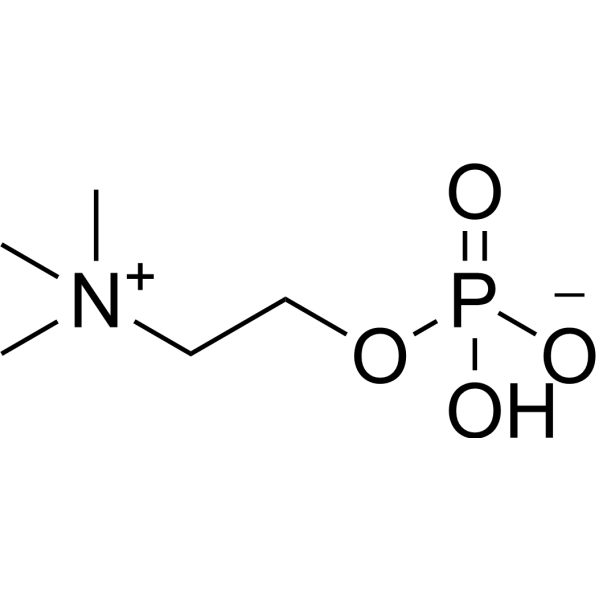
    Phosphorylcholine
    Maximum Cited Publications
    12 Publications Verification

    Phosphocholine

    Endogenous Metabolite Adrenergic Receptor Cardiovascular Disease Neurological Disease Inflammation/Immunology
    Phosphatidylcholine is the main phospholipid component in eukaryotic biofilms. Phosphatidylcholine exists in commensal or pathogenic bacteria associated with eukaryotes in prokaryotes. Phosphorylcholine exhibits a surprising range of immunomodulatory properties .
    Phosphorylcholine
  • HY-B0396

    L084

    Penicillin-binding protein (PBP) Bacterial Antibiotic Infection
    Tebipenem pivoxil (L084) is an orally active antibiotic against a variety of pathogenic bacteria. Tebipenem pivoxil binds penicillin-binding protein (PBP), thereby inhibiting cell wall synthesis .
    Tebipenem pivoxil
  • HY-P9979
    Rozanolixizumab
    1 Publications Verification

    UCB7665

    TNF Receptor Inflammation/Immunology
    Rozanolixizumab (UCB7665), a humanized high-affinity anti-human neonatal Fc receptor (FcRn) monoclonal antibody (IgG4P), is used to the research of reducing pathogenic IgG in autoimmune and alloimmune diseases .
    Rozanolixizumab
  • HY-A0241
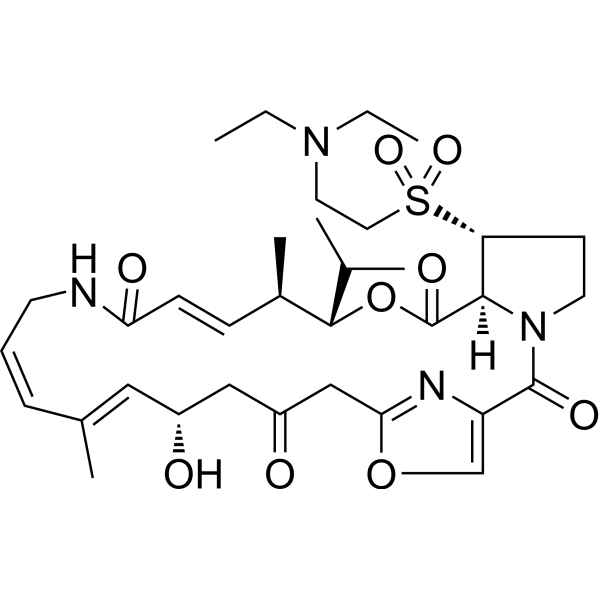
    Dalfopristin
    2 Publications Verification

    RP54476

    Antibiotic Bacterial Infection
    Dalfopristin (RP54476) is a semisynthetic sulfone antibiotic. Dalfopristin alone has limited antibacterial activity, but synergistically with Quinupristin it has significant bactericidal activity against many pathogenic Gram-positive cocci .
    Dalfopristin
  • HY-B2233
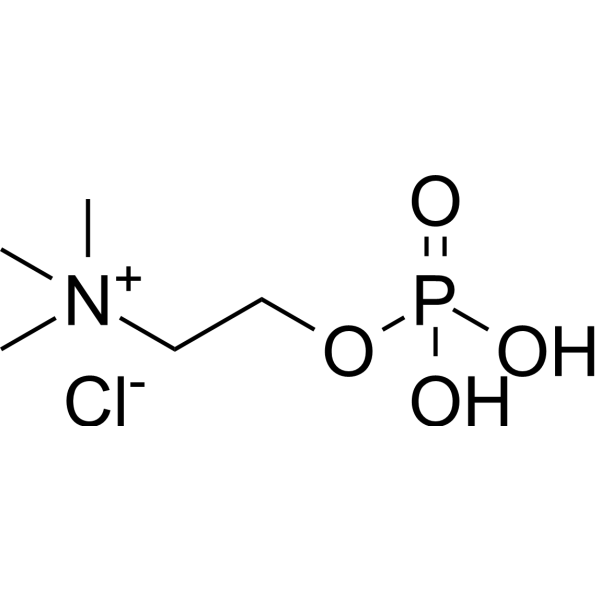
    Phosphorylcholine chloride
    Maximum Cited Publications
    12 Publications Verification

    Phosphocholine chloride

    Endogenous Metabolite Adrenergic Receptor Cardiovascular Disease Neurological Disease Inflammation/Immunology
    Phosphorylcholine chloride (Phosphocholine chloride) is the main phospholipid component in eukaryotic biofilms. Phosphorylcholine chloride exists in commensal or pathogenic bacteria associated with eukaryotes in prokaryotes. Phosphorylcholine chloride exhibits a surprising range of immunomodulatory properties .
    Phosphorylcholine chloride
  • HY-148826

    ARC 183; BC 007

    G Protein-coupled Receptor Kinase (GRK) Cardiovascular Disease
    Rovunaptabin (ARC 183) is an aptamer, a single-stranded DNA molecule composed of 15 deoxynucleotides. It acts as a broad-spectrum neutralizer of pathogenic G-protein-coupled receptor autoantibodies. Rovunaptabin can be used in research related to cardiomyopathy and pulmonary hypertension .
    Rovunaptabin
  • HY-18649
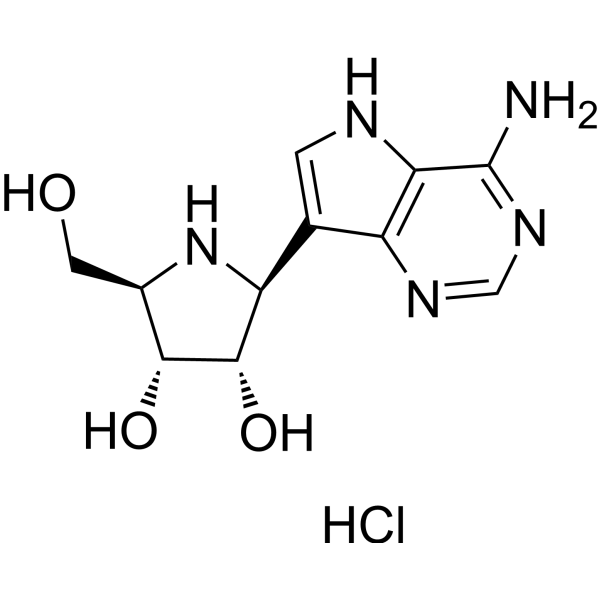
    Galidesivir hydrochloride
    Maximum Cited Publications
    12 Publications Verification

    BCX4430 hydrochloride; Immucillin-A hydrochloride

    DNA/RNA Synthesis SARS-CoV Filovirus Infection
    Galidesivir (BCX4430) hydrochloride, an adenosine analog and a direct-acting antiviral agent, disrupts viral RNA-dependent RNA polymerase (RdRp) activity. Galidesivir hydrochloride is active in vitro against many RNA viral pathogens, including the filoviruses and emerging infectious agents such as MERS-CoV, SARS-CoV, and SARS-CoV-2. Galidesivir hydrochloride inhibits some negative-sense RNA viruses with EC50s ranging from ~3 to ~68 μM .
    Galidesivir hydrochloride
  • HY-18649A
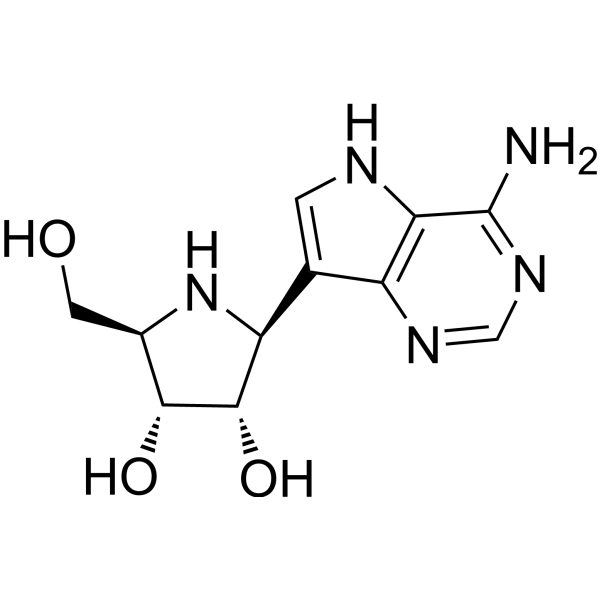
    Galidesivir
    Maximum Cited Publications
    12 Publications Verification

    BCX4430; Immucillin-A

    DNA/RNA Synthesis SARS-CoV Filovirus Infection
    Galidesivir (BCX4430), an adenosine analog and a direct-acting antiviral agent, disrupts viral RNA-dependent RNA polymerase (RdRp) activity. Galidesivir is active in vitro against many RNA viral pathogens, including the filoviruses and emerging infectious agents such as MERS-CoV, SARS-CoV, and SARS-CoV-2. Galidesivir inhibits some negative-sense RNA viruses with EC50s ranging from ~3 to ~68 μM .
    Galidesivir
  • HY-138650

    Glyceryl monocaprylate; Sefsol 318

    Environmental Pollutants Bacterial Inflammation/Immunology
    Monocaprylin (Glyceryl monocaprylate), a monoglyceride of caprylic acid, exhibits an excellent antibacterial activity. Monocaprylin inhibits a variety of foodborne pathogenic and spoilage microorganisms and has the potential for an alternative food preservative research .
    Monocaprylin
  • HY-B1344

    Oxantel embonate

    Parasite Infection
    Oxantel pamoate (Oxantel embonate) is an anthelmintic agent that potently against Trichuris muris. Oxantel pamoate inhibits fumarate reductase (Frd) activity in some pathogenic bacteria and inhibits P. gingivalis homotypic biofilm formation (IC50 of 2.2 μM) .
    Oxantel pamoate
  • HY-W012444

    Antibiotic Fungal Infection
    Glyceryl 1-monooctanoate is a glycerol monolaurate derivative. Glyceryl 1-monooctanoate is a broad-spectrum antimicrobial, suppresses the growth of pathogenic yeast (Candida albicans and Candida parapsilosis), as well as Gram-positive (Staphylococcus aureus) and Gram-negative (Escherichia coli, Klebsiella pneumoniae) bacteria .
    Glyceryl 1-monooctanoate
  • HY-B0848
    Tricyclazole
    2 Publications Verification

    Environmental Pollutants Bacterial Infection Metabolic Disease
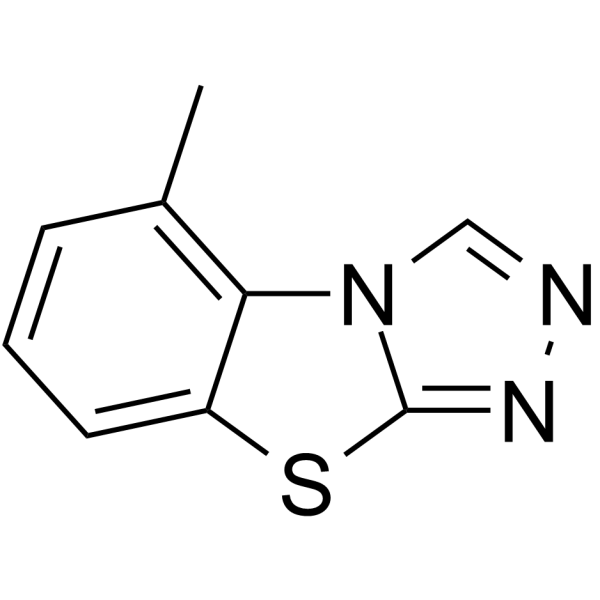
    Tricyclazole is a pentaketone melanin biosynthesis inhibitor and a unique fungicide for controlling rice blast. Tricyclazole alters the structure and function of fungal cell walls, reduces fungal pathogenicity and penetration, and causes dose-dependent liver damage in animals .
    Tricyclazole
  • HY-118065

    KBR 2738

    Environmental Pollutants Estrogen Receptor/ERR PI3K Fungal Infection Cancer
    Fenhexamid, a botryticide, is a sterol biosynthesis inhibitor. Fenhexamid shows fungicide efficient against the plant pathogenic fungus Botryotinia fuckeliana (Botrytis cinerea) .
    Fenhexamid
  • HY-122280

    Endogenous Metabolite Infection
    Aerobactin is a siderophore produced by bacteria. Aerobactin is a highly potent pathogenic factor .
    Aerobactin
  • HY-136436

    Drug Metabolite Antibiotic Bacterial Fungal Infection Inflammation/Immunology
    Ternidazole hydrochloride is a nitroimidazole Antibiotic with anti-pathogenic microbial activity. Ternidazole hydrochloride kills and inhibits the visible growth of Clostridium perfringens type A in vitro. Ternidazole hydrochloride helps improve the therapeutic efficacy against bacterial vaginosis, candidal vaginitis and mixed vaginitis. Ternidazole hydrochloride effectively alleviates chronic alcoholism. Ternidazole hydrochloride can be used in research related to vaginitis, pathogenic microbial infections and chronic alcoholism .
    Ternidazole hydrochloride
  • HY-W020043

    Fungal Infection
    Pyribencarb is a benzylcarbamate-type fungicide, which is active against a wide range of plant pathogenic fungi. Pyribencarb is a potent Qo inhibitor of cytochrome b. Pyribencarb is especially active against Botrytis cinerea and Sclerotinia sclerotirum .
    Pyribencarb
  • HY-112176
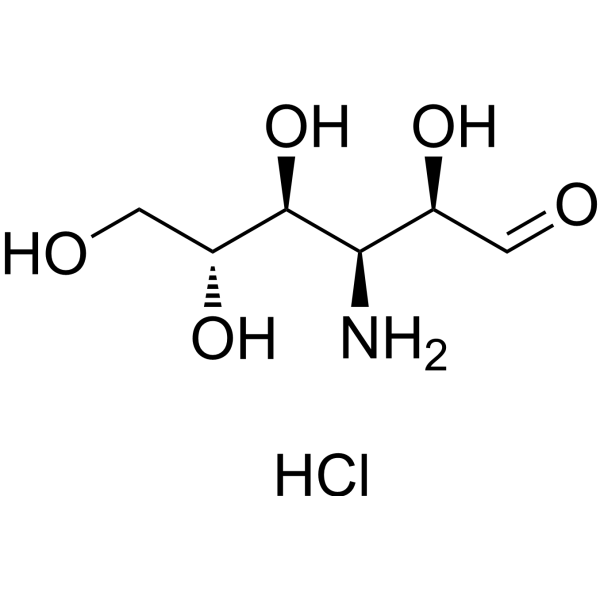
    Kanosamine hydrochloride
    2 Publications Verification

    Fungal Bacterial Antibiotic Infection
    Kanosamine hydrochloride is an antibiotic which inhibits the growth of plant-pathogenic oomycetes, certain fungi and a few bacterial species. Kanosamine inhibits Phytophthora medicaginis M2913 and Aphanomyces euteiches WI-98 with MICs of 25 and 60 μg/mL, respectively.
    Kanosamine hydrochloride
  • HY-126200

    Environmental Pollutants Fungal Infection
    Fenpropidin, a piperidine, is a fungicide used to control a range of diseases in cereals. Fenpropidin shows antifungal activity against different human pathogenic yeasts and filamentous fungi .
    Fenpropidin
  • HY-100978

    DL-Hexanoylcarnitine chloride

    Endogenous Metabolite Metabolic Disease
    (±)-Hexanoylcarnitine chloride is a fatty acid metabolite that breaks down fatty acids into energy that can be used by the body. (±)-Hexanoylcarnitine chloride also serves as a specific and easily detectable biomarker for rat skeletal muscle toxicity. Cerivastatin (HY-129458) and TMPD (HY-W012145) induce an increase in Hexanoylcarnitine in rats in a metabolomic analysis of the rectus femoris muscle. In type 2 diabetes, Hexanoylcarnitine is also significantly associated with and improves prediction of all-cause mortality. Hexanoylcarnitine is a biomarker for the identification of novel pathogenic pathways .
    (±)-Hexanoylcarnitine chloride
  • HY-123779

    Bacterial Fungal Infection
    RWJ-49815 is a histidine kinase inhibitor. RWJ-49815 inhibits the autokinase activity of purified GST-Sln1 and the autophosphorylation of KinA in vitro. RWJ-49815 acts as a fungal growth inhibitor . RWJ-49815 serves as a bactericide against Gram-positive pathogenic bacteria. RWJ-49815 is applicable to research related to fungal infections and Gram-positive bacterial infections .
    RWJ-49815
  • HY-B2233A
    Calcium phosphorylcholine chloride, 98%
    Maximum Cited Publications
    12 Publications Verification

    Biochemical Assay Reagents Adrenergic Receptor Cardiovascular Disease Neurological Disease Inflammation/Immunology
    Calcium phosphorylcholine chloride, 98% is the main phospholipid component in eukaryotic biofilms. Calcium phosphorylcholine chloride, 98% exists in commensal or pathogenic bacteria associated with eukaryotes in prokaryotes. Calcium phosphorylcholine chloride, 98% exhibits a surprising range of immunomodulatory properties .
    Calcium phosphorylcholine chloride, 98%
  • HY-N10311

    Fungal Infection
    Neosartoricin B is the secondary metabolite, which can be produced by Aspergillus nidulans. Neosartoricin B may regulate immunomodulatory effects with the host during infection and colonization by pathogenic fungi .
    Neosartoricin B
  • HY-W774934

    Fungal
    Isopyrazam is a plant protection product with fungal activity. Isopyrazam exhibits excellent disease resistance on crops and effectively inhibits the growth of multiple plant pathogenic fungi. The application of Isopyrazam can significantly improve the yield and quality of crops.
    Isopyrazam
  • HY-W054064

    Fungal Infection
    6-Chloro-7-deazapurine-β-D-riboside, a nucleoside derivative, exerts antifungal effects. 6-Chloro-7-deazapurine-β-D-riboside shows activity against plant pathogenic fungi .
    6-Chloro-7-deazapurine-β-D-riboside
  • HY-136436A

    Drug Metabolite Parasite Infection Inflammation/Immunology
    Ternidazole is a nitroimidazole Antibiotic with anti-pathogenic microbial activity. Ternidazole kills and inhibits the visible growth of Clostridium perfringens type A in vitro. Ternidazole helps improve the therapeutic efficacy against bacterial vaginosis, candidal vaginitis and mixed vaginitis. Ternidazole effectively alleviates chronic alcoholism. Ternidazole can be used in research related to vaginitis, pathogenic microbial infections and chronic alcoholism .
    Ternidazole
  • HY-113640

    Bacterial Infection
    BC-7013 is a novel semi-synthetic pleuromutilin derivative. BC-7013 has excellent activity against Gram-positive pathogenic bacteria. BC-7013 exhibits potent antibacterial properties against both Staphylococcus, Streptococcus and penicillin-resistant Streptococcus pneumoniae. BC-7013 has activity against Gram-positive pathogenic bacteria, BC-7013 is useful in the research of acute bacterial skin and skin structure infection (ABSSSI) .
    BC-7013
  • HY-N12201

    Antibiotic Fungal Infection
    Funiculosin is a neutral lipophilic antibiotic that inhibits DNA and RNA viruses. Funiculosin also has antifungal activity. Funiculosin inhibits infections caused by pathogenic fungi in primary chicken embryo fibroblasts .
    Funiculosin
  • HY-124498

    CP-14445

    Parasite Infection
    Oxantel (CP-14445) is an anthelmintic agent that potently against Trichuris muris. Oxantel inhibits fumarate reductase (Frd) activity in some pathogenic bacteria and inhibits P. gingivalis homotypic biofilm formation (IC50 of 2.2 μM) .
    Oxantel
  • HY-171796

    Fungal Infection
    Bromomonilicin is a selective fungal cell membrane inhibitor. Bromomonilicin exerts antifungal activity by disrupting fungal cell membrane integrity. Bromomonilicin is promising for research of plant pathogenic fungal infections (e.g., Monilinia fructicola-induced brown rot) and superficial mycoses (e.g., dermatophyte infections) .
    Bromomonilicin
  • HY-179252

    p38 MAPK Others
    PMK1-IN-1 (compound H17) is a potent PMK1 inhibitor. PMK1-IN-1 shows superior inhibitory effects against M. oryzae by targeting the pathogenicity MAPK MoPMk1, with an IC50 of 0.42 μM. PMK1-IN-1 exhibits effects in vivo similar to those of Carbendazim (HY-13582). PMK1-IN-1 can be used for rice blast disease research .
    PMK1-IN-1
  • HY-106371

    Antibiotic Fungal Infection
    Siccanin is a succinate dehydrogenase (SDH) inhibitor (IC50=0.9 μM) with species-selective activity. Siccanin also is a antibiotic against pathogenic fungi .
    Siccanin
  • HY-P5600

    Bacterial Infection
    The K4 peptide is an antimicrobial peptide with strong activity against Gram-positive and Gram-negative bacteria, including human pathogenic bacteria, such as Staphylococcus aureus and Marine Vibrio bacteria .
    The K4 peptide
  • HY-B0396A

    L084 hydrochloride

    Penicillin-binding protein (PBP) Bacterial Antibiotic Infection
    Tebipenem pivoxil (L084) hydrochloride is an orally active antibiotic against a variety of pathogenic bacteria. Tebipenem pivoxil hydrochloride binds penicillin-binding protein (PBP), thereby inhibiting cell wall synthesis .
    Tebipenem pivoxil hydrochloride
  • HY-179212

    Drug Derivative Fungal Infection
    (±)-Coladonin (Compound (±)-12), Coumarin (HY-N0709) derivative, is an antifungal agent. (±)-Coladonin exhibits potent inhibitory effect on the plant pathogenic fungus Botrytis cinerea. (±)-Coladonin is mainly used for the research on the prevention and control of gray mold disease in crops .
    (±)-Coladonin
  • HY-N8474

    Others Others
    Pyrenocine A is an acyl phytotoxin isolated from plant pathogenic fungi .
    Pyrenocine A
  • HY-N12560

    Mitochondrial Metabolism Infection
    Fusaramin is a mitochondrial inhibitor, has antiplant pathogenic fungal activity .
    Fusaramin
  • HY-120315

    Bacterial Infection
    Nyssoside, a ellagic acid derivative, has significant antioxidant activity and shows antibacterial activity against different pathogenic bacteria .
    Nyssoside
  • HY-N10256

    Endogenous Metabolite Infection
    Varioxepine A is a 3H-oxepine-containing alkaloid with a new oxa-cage found in the marine algal-derived endophytic fungus Paecilomyces variotii. Varioxepine A inhibits plant pathogenic fungus Fusarium graminearum .
    Varioxepine A
  • HY-N10292

    Fungal Endogenous Metabolite Infection
    Chaetosemin J, an antifungal metabolite, exhibits inhibitory activity against plant pathogenic fungi Botrytis cinerea, Alternaria solani, Magnaporthe oryzae, and Gibberella saubinettii, with MIC values ranging from 12.5-25 μM .
    Chaetosemin J
  • HY-162256

    Fungal Infection
    Antibacterial agent 184 (compound 4j) is a fungal inhibitor that is toxic to the plant pathogenic fungus Sclerotinia sclerotiorum. Antibacterial agent 184 can effectively inhibit Sclerotinia sclerotiorum (IR>97%) .
    Antibacterial agent 184
  • HY-145265

    Bacterial Infection
    Antimicrobial photosensitizer-1 is a promising candidate as the antimicrobial photosensitizer for combating pathogenic microorganism infections. Antimicrobial photosensitizer-1 exhibits an impressive antimicrobial efficacy in S. aureus-infected mice wounds .
    Antimicrobial photosensitizer-1
  • HY-N6310

    Bacterial Infection
    Talaromycesone A is an oxaphenalenone dimer compound. Talaromycesone A exhibits potent antibacterial activities with an IC50 of 3.70 μM, against human pathogenic Staphylococcus strains. Talaromycesone A displays potent acetylcholinesterase inhibitory activities with an IC50 of 7.49 μM .
    Talaromycesone A
  • HY-149581

    Bacterial Infection
    DprE1-IN-9 (compound B18) is an effective reversible DprE1 inhibitor and can bind to the receptor cavity of DprE1. DprE1-IN-9 shows strong antimycobacterial activity not only against non-pathogenic strain H37Ra (MIC=0.18 µg/mL) but also against pathogenic H37Rv and the clinical MDR and XDR isolates .
    DprE1-IN-9
  • HY-118481

    Lipase Infection
    H-Pro-Glu-OH is a protein secreted by pathogenic mycobacteria through the Type VII secretion system. H-Pro-Glu-OH targets LipY lipases to the cell Surface via the ESX-5 Pathway .
    H-Pro-Glu-OH
  • HY-118065R

    KBR 2738 (Standard)

    Reference Standards Fungal Estrogen Receptor/ERR PI3K Infection Cancer
    Fenhexamid (Standard) is the analytical standard of Fenhexamid. This product is intended for research and analytical applications. Fenhexamid, a botryticide, is a sterol biosynthesis inhibitor. Fenhexamid shows fungicide efficient against the plant pathogenic fungus Botryotinia fuckeliana (Botrytis cinerea) .
    Fenhexamid (Standard)
  • HY-155279

    Fungal Infection
    Antifungal agent 73 (compound A32) is an antifungal agent for azole-resistant candidiasis. Antifungal agent 73 disrupts the fungal cell wall and cell membrane. Antifungal agent 73 shows potent in vivo antifungal activity against pathogenic fungi and fluconazole-resistant strains .
    Antifungal agent 73
  • HY-N2573A

    L-Corydalmine hydrochloride; TLZ-16-CL

    Fungal CXCR Infection Neurological Disease
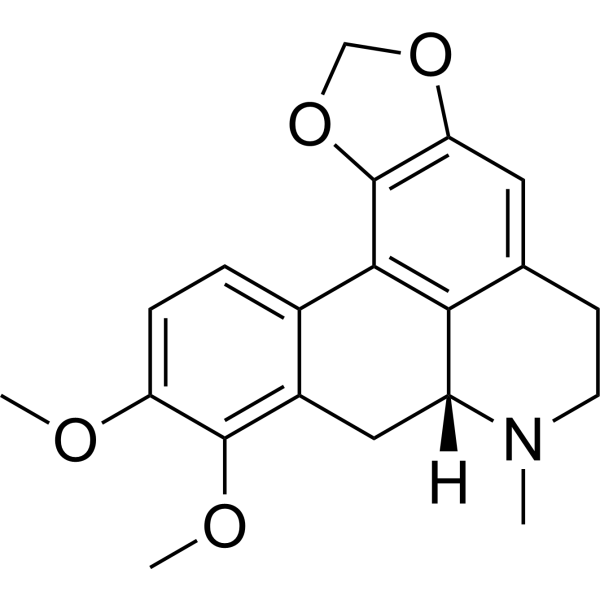
    Corydalmine hydrochloride inhibits spore germination of some plant pathogenic as well as saprophytic fungi . Corydalmine hydrochloride acts as an oral analgesic agent, exhibiting potent analgesic activity . Corydalmine hydrochloride alleviates Vincristine-induced neuropathic pain in mice by inhibiting an NF-κB-dependent CXCL1/CXCR2 signaling pathway .
    Corydalmine hydrochloride
  • HY-121571

    Insecticide Infection Cancer
    Prallethrin, a spatial mosquito repellent, is a non-fluorinated pyrethroid targeting lung surfactant proteins (SPs). prallethrin has vapor toxicity and can bind with the lung SPs by hydrogen and hydrophobic interactions, impairing functions of SPs. Prallethrin can be used for respiratory illness, pathogenic infections and malignancy research .
    Prallethrin
  • HY-P11343

    Fungal Infection
    Verlamelin B (Compound 147) is effective against plant pathogenic fungal and is a derivative of Verlamelin (HY-N14856).Verlamelin B exhibits potent plant protective activity in vivo, particularly against rice blast and barley powdery mildew. Verlamelin B causes morphological changes in fungal cells, such as swelling or expansion. Verlamelin B exhibits weaker antifungal activity in vitro against plant pathogens such as rice blast, Dipolaris zeae, and Botrytis cinerea. Verlamelin B is useful for research on antifungal activities against plant pathogens .
    Verlamelin B

Inquiry Online

Your information is safe with us. * Required Fields.

Salutation


Country or Region *

Applicant Name *


Organization Name *

Department *


Email Address *


Product Name *

Cat. No.


Requested quantity *

Phone Number *


Remarks

Inquiry Online

Inquiry Information

Product Name:
Cat. No.:
Quantity:
MCE Japan Authorized Agent:

