
1. Search Result
Search Result
Results for "

pharmaceutical

" in MedChemExpress (MCE) Product Catalog:

748

Inhibitors & Agonists

19

Screening Libraries

20

Fluorescent Dye

221

Biochemical Assay Reagents

8

Peptides

1

Inhibitory Antibodies

101

Natural
Products

73

Isotope-Labeled Compounds

2

Click Chemistry

82

Oligonucleotides

12

GMP Molecules

Cat. No. Product Name Target Research Areas Chemical Structure
  • HY-Y0873B

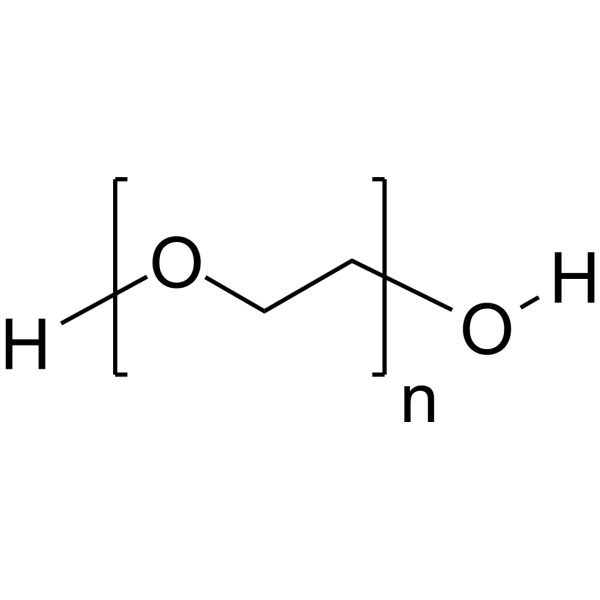
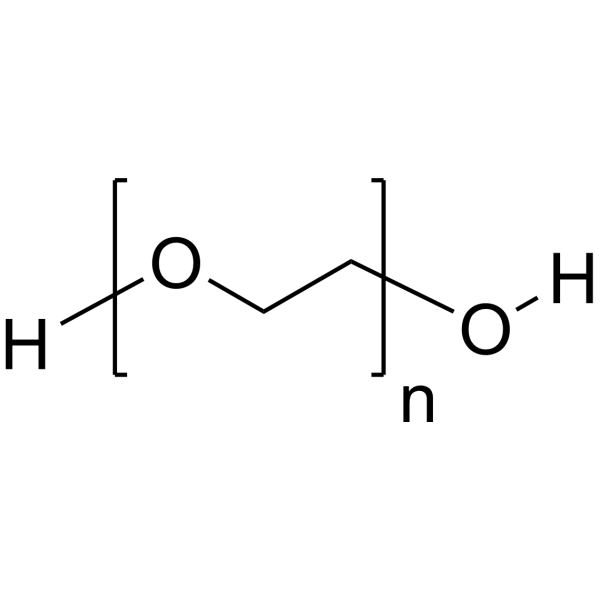
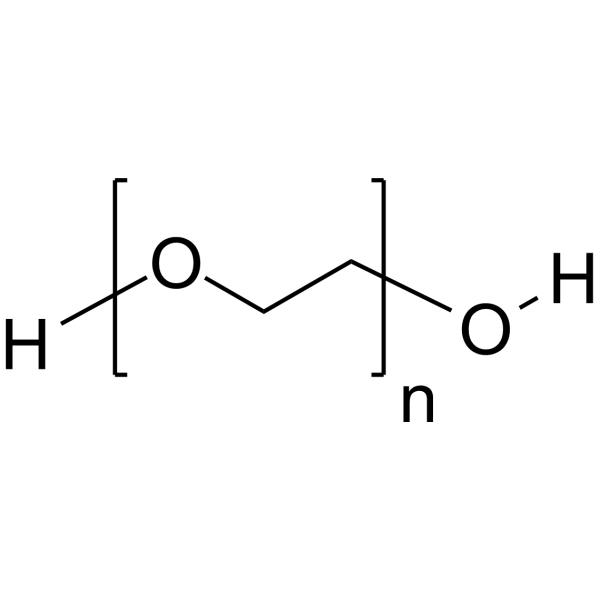
    Polyethylene glycol 2000

    Environmental Pollutants Biochemical Assay Reagents Others
    PEG2000 (Polyethylene glycol 2000) is a solvent for a large number of substances. PEG2000 can be used as a carrier material and modifying agent. PEG2000 is widely used in a variety of pharmaceutical formulations .
    PEG2000
  • HY-B2243
    Anhydrous sodium dihydrogen phosphate
    1 Publications Verification

    Sodium phosphate monobasic; Monosodium dihydrogen orthophosphate; Monosodium phosphate

    Environmental Pollutants Biochemical Assay Reagents Others
    Dihydrogen monosodium phosphate (Monosodium phosphate) is an inorganic salt compound commonly used in industry and laboratories. It can be used as a buffer, nutritional supplement, cleaning agent, etc., and plays a role in certain metal processing, pharmaceutical and chemical industries. In addition, Dihydrogen monosodium phosphate can also be used in the field of water treatment and environmental protection, for example as a purifying agent or precipitating agent for solutions.
    Anhydrous sodium dihydrogen phosphate
  • HY-Y1316
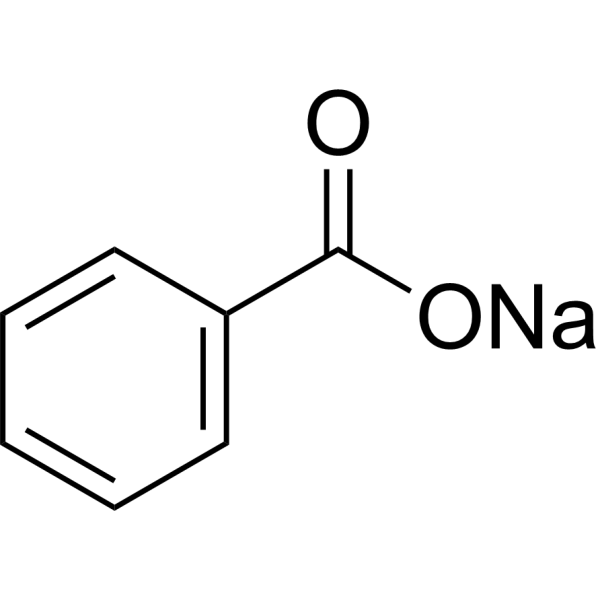
    Sodium benzoate
    2 Publications Verification

    Environmental Pollutants Biochemical Assay Reagents Apoptosis NF-κB Inflammation/Immunology Cancer
    Sodium benzoate is an orally active pharmaceutical excipient, such as an antibacterial agent, preservative, lubricant, etc. Pharmaceutical excipients, or pharmaceutical auxiliaries, refer to other chemical substances used in the pharmaceutical process other than pharmaceutical ingredients. Pharmaceutical excipients generally refer to inactive ingredients in pharmaceutical preparations, which can improve the stability, solubility and processability of pharmaceutical preparations. Pharmaceutical excipients also affect the absorption, distribution, metabolism, and elimination (ADME) processes of co-administered drugs.Sodium benzoate activates NF-κB and induces Apoptosis. Sodium benzoate induces immune suppression and produces reproductively toxic. Sodium benzoate can be used for colon cancer and immune disease research .
    Sodium benzoate
  • HY-N1446C

    Environmental Pollutants Biochemical Assay Reagents Others
    Sorbitan monooleate is a food emulsifier and can also be used as a pharmaceutical excipient. Sorbitan monooleate has good safety .
    Sorbitan monooleate
  • HY-Y0873N
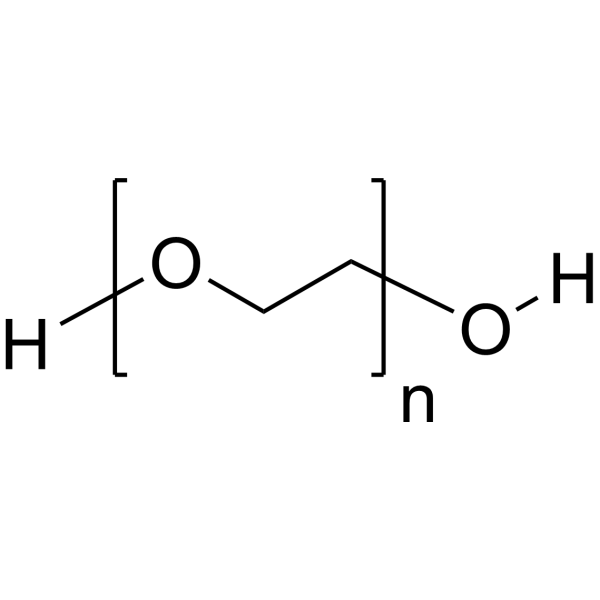
    PEG3000
    2 Publications Verification

    Polyethylene glycol 3000

    Environmental Pollutants Biochemical Assay Reagents Others
    PEG3000 (Polyethylene glycol 3000) is a solvent for a large number of substances. PEG3000 can be used as a carrier material and modifying agent. PEG3000 is widely used in a variety of pharmaceutical formulations .
    PEG3000
  • HY-B1620E

    PVP K60; Polyvidone K60; Povidone K60

    Biochemical Assay Reagents Others
    Polyvinylpyrrolidone K60 is one of the polymers in pharmaceutical preparations. Polyvinylpyrrolidone K60 promotes amorphous dispersion and inhibits crystallization of the drug .
    Polyvinylpyrrolidone K60
  • HY-Y0873F

    Polyethylene glycol 600

    Environmental Pollutants Biochemical Assay Reagents Others
    PEG600 can be used as an excipient, such as ointment base, lubricant. Pharmaceutical excipients, or pharmaceutical auxiliaries, refer to other chemical substances used in the pharmaceutical process other than pharmaceutical ingredients. Pharmaceutical excipients generally refer to inactive ingredients in pharmaceutical preparations, which can improve the stability, solubility and processability of pharmaceutical preparations. Pharmaceutical excipients also affect the absorption, distribution, metabolism, and elimination (ADME) processes of co-administered drugs .
    PEG600
  • HY-W250795

    Maltodextrin; Dextrin maize starch

    Environmental Pollutants Biochemical Assay Reagents Others
    Maltodextrin, dextrose equivalent 16.5-19.5 can be used as an excipient. Pharmaceutical excipients, or pharmaceutical auxiliaries, refer to other chemical substances used in the pharmaceutical process other than pharmaceutical ingredients. Pharmaceutical excipients generally refer to inactive ingredients in pharmaceutical preparations, which can improve the stability, solubility and processability of pharmaceutical preparations. Pharmaceutical excipients also affect the absorption, distribution, metabolism, and elimination (ADME) processes of co-administered drugs .
    Maltodextrin, dextrose equivalent 16.5-19.5
  • HY-W051271

    Titanium dioxide

    Environmental Pollutants Reactive Oxygen Species (ROS) Photosensitizer Others
    Titanium(IV) oxide is a photosensitizer and photocatalyst. Titanium(IV) oxide can be used as a pharmaceutical excipient such as a flow aid, coating agent, sunscreen, colorant, etc. Pharmaceutical excipients or pharmaceutical excipients refer to other chemical substances used in the pharmaceutical process other than the drug ingredients. Pharmaceutical excipients generally refer to inactive ingredients in pharmaceutical preparations that can improve the stability, solubility and processability of pharmaceutical preparations. Pharmaceutical excipients also affect the absorption, distribution, metabolism and elimination (ADME) process of co-administered drugs. Titanium(IV) oxide can use light energy to generate electron-hole pairs to degrade pollutants. Photons excite electrons in TiO2 to generate active oxygen species (such as ·OH and ·O2 -), thereby oxidizing and mineralizing pollutants such as organic compounds and heavy metals. TiO2 can be used in the research of environmental remediation fields such as water treatment, air purification and self-cleaning materials .
    Titanium(IV) oxide
  • HY-Y0873E

    Polyethylene glycol 1500

    Environmental Pollutants Biochemical Assay Reagents Others
    PEG1500 can be used as an excipient, such as ointment base, lubricant. Pharmaceutical excipients, or pharmaceutical auxiliaries, refer to other chemical substances used in the pharmaceutical process other than pharmaceutical ingredients. Pharmaceutical excipients generally refer to inactive ingredients in pharmaceutical preparations, which can improve the stability, solubility and processability of pharmaceutical preparations. Pharmaceutical excipients also affect the absorption, distribution, metabolism, and elimination (ADME) processes of co-administered drugs .
    PEG1500
  • HY-Y1054

    Stearic Acid Magnesium(II) Salt

    Environmental Pollutants Biochemical Assay Reagents Others
    Magnesium stearate is a commonly used pharmaceutical lubricant. But Magnesium stearate leads to an adverse effect on bonding between particles. Magnesium stearate can be used as an excipient, such as lubricant. Pharmaceutical excipients, or pharmaceutical auxiliaries, refer to other chemical substances used in the pharmaceutical process other than pharmaceutical ingredients. Pharmaceutical excipients generally refer to inactive ingredients in pharmaceutical preparations, which can improve the stability, solubility and processability of pharmaceutical preparations. Pharmaceutical excipients also affect the absorption, distribution, metabolism, and elimination (ADME) processes of co-administered drugs .
    Magnesium stearate
  • HY-W129988

    Environmental Pollutants Biochemical Assay Reagents Others
    Sorbitan monododecanoate is a non-ionic surfactant, often used as an emulsifier in food, feed and topical preparations. Sorbitan monododecanoate can also be employed as a pharmaceutical excipient .
    Sorbitan monododecanoate
  • HY-W019883
    Dipotassium hydrogen phosphate
    1 Publications Verification

    Environmental Pollutants Biochemical Assay Reagents Lipase Fungal Infection Metabolic Disease
    Dipotassium hydrogen phosphate is a salt. Dipotassium hydrogen phosphate can enhance the lipase production of Rhizopous oligosporous in neutral pH phosphate buffer. Dipotassium hydrogen phosphate can be used as a pharmaceutical excipient, such as a pH adjuster, a buffer .
    Dipotassium hydrogen phosphate
  • HY-Y1213

    Biochemical Assay Reagents Drug Intermediate Others
    Carbon possesses unique physicochemical properties such as electrical and structural characteristics, making it a core material in the field of fuel cells. Carbon also serves as a pharmaceutical excipient and can be used in the synthesis of other compounds .
    Carbon
  • HY-100557

    Environmental Pollutants Biochemical Assay Reagents Interleukin Related Metabolic Disease Inflammation/Immunology
    Hydroxypropyl Cellulose is an orally active cellulose ether and surfactant. Hydroxypropyl cellulose is divided into high-substituted HPC (HHPC) and low-substituted HPC (LHPC). Hydroxypropyl Cellulose reduces inflammatory mediators (IL-6, IL-1β). Hydroxypropyl Cellulose improves colitis and obesity. Hydroxypropyl Cellulose can be used as a pharmaceutical excipient, such as coating agent, emulsifier, suspension, tablet, thickener, viscosifier .
    Hydroxypropyl Cellulose
  • HY-B1620C

    PVP K17; Polyvidone K17; Povidone K17

    Biochemical Assay Reagents Others
    Polyvinylpyrrolidone K17 is one of the polymers in pharmaceutical preparations. Polyvinylpyrrolidone K17 is a versatile excipient for both conventional formulations and novel controlled or targeted delivery systems, serving as a binder, coating agent, suspending agent, pore-former, solubilizer, stabilizer, etc .
    Polyvinylpyrrolidone K17
  • HY-N11684

    Biochemical Assay Reagents Others
    Cocoa butter can be used as an excipient, such as lubricants, suppository bases. Pharmaceutical excipients, or pharmaceutical auxiliaries, refer to other chemical substances used in the pharmaceutical process other than pharmaceutical ingredients. Pharmaceutical excipients generally refer to inactive ingredients in pharmaceutical preparations, which can improve the stability, solubility and processability of pharmaceutical preparations. Pharmaceutical excipients also affect the absorption, distribution, metabolism, and elimination (ADME) processes of co-administered drugs .
    Cocoa butter
  • HY-W011426

    Propan-2-yl hexadecanoate

    Environmental Pollutants Biochemical Assay Reagents Liposome Others
    Isopropyl palmitate is an fatty acid ester. Isopropyl palmitate can be used for design and characterization of bioactive bilayer films. The bilayer membrane not only has the ability to scavenge free radicals and inhibit lipid peroxidation, but also can inhibit the growth of known foodborne pathogens. Isopropyl palmitate can be used as an excipient, such as lubricant, oily carrier, solvent, controlled-release transdermal film. Pharmaceutical excipients, or pharmaceutical auxiliaries, refer to other chemical substances used in the pharmaceutical process other than pharmaceutical ingredients. Pharmaceutical excipients generally refer to inactive ingredients in pharmaceutical preparations, which can improve the stability, solubility and processability of pharmaceutical preparations. Pharmaceutical excipients also affect the absorption, distribution, metabolism, and elimination (ADME) processes of co-administered drugs .
    Isopropyl palmitate
  • HY-45072

    Environmental Pollutants Biochemical Assay Reagents Others
    Croscarmellose sodium is a commonly used pharmaceutical additive approved by the US Food and Drug Administration (FDA). Croscarmellose sodium is used as excipients, such as the suspending agent, binder, glidant, antiadherent, and disintegrants .
    Croscarmellose sodium
  • HY-W127433

    Apoptosis Interleukin Related Inflammation/Immunology
    Isostearic acid is a unique fatty acid. Isostearic acid promotes IL-1 release and Apoptosis. Isostearic acid has potent inflammatory properties. Isostearic acid can be used in pharmaceutical, personal care, and cosmetic applications .
    Isostearic acid
  • HY-W115746

    Ethyl cellulose N-200

    Environmental Pollutants Biochemical Assay Reagents Infection Cancer
    Ethyl cellulose is a derivative of cellulose. Ethyl cellulose is a non-toxic, biodegradable polymer. Ethyl cellulose has unique properties such as oil gel formation, active ingredient delivery and film formation. Ethyl cellulose can be used as a pharmaceutical excipient, such as a coating agent, flavoring agent, tablet filler, etc. Ethyl cellulose can be used to prepare nanoparticles for active compound delivery .
    Ethyl cellulose
  • HY-W015591
    Mandelic acid
    1 Publications Verification

    (±)-Mandelic acid; DL-Mandelic acid

    Bacterial Endogenous Metabolite Infection
    Mandelic acid ((±)-Mandelic acid), an alpha-hydroxycarboxylic acid, has been widely used as an intermediate of pharmaceutical and fine chemicals. Mandelic acid shows antimicrobial activity and has been used for the research of urinary tract infections and vaginal trichomoniasis. Mandelic acid exhibits high sperm-immobilizing activity and low vaginal irritation .
    Mandelic acid
  • HY-W422419

    Cetostearyl alcohol

    Biochemical Assay Reagents Others
    Cetearyl alcohol can be used as an excipient. Pharmaceutical excipients, or pharmaceutical auxiliaries, refer to other chemical substances used in the pharmaceutical process other than pharmaceutical ingredients. Pharmaceutical excipients generally refer to inactive ingredients in pharmaceutical preparations, which can improve the stability, solubility and processability of pharmaceutical preparations. Pharmaceutical excipients also affect the absorption, distribution, metabolism, and elimination (ADME) processes of co-administered drugs .
    Cetearyl alcohol
  • HY-W590989

    GPhos Pd G6 TES

    Drug Intermediate Others
    GPhos Pd G6 (GPhos Pd G6 TES) is a palladium catalyst. GPhos Pd G6 catalyzes the Buchwald-Hartwig amination reaction and promotes C-N bond formation between aryl chlorides and amines. GPhos Pd G6 is a pharmaceutical intermediate used for the synthesis of various active compounds .
    GPhos Pd G6
  • HY-154696

    Biochemical Assay Reagents Others
    Ferric oxide, yellow can be used as an excipient, such as colorant. Pharmaceutical excipients, or pharmaceutical auxiliaries, refer to other chemical substances used in the pharmaceutical process other than pharmaceutical ingredients. Pharmaceutical excipients generally refer to inactive ingredients in pharmaceutical preparations, which can improve the stability, solubility and processability of pharmaceutical preparations. Pharmaceutical excipients also affect the absorption, distribution, metabolism, and elimination (ADME) processes of co-administered drugs .
    Ferric oxide, yellow
  • HY-Y0708

    Calcium phosphate dihydrate

    Biochemical Assay Reagents Others
    Calcium hydrogen phosphate dihydrate (Calcium phosphate dihydrate) can be found quite frequently in urinary calculi stones. Calcium hydrogen phosphate dihydrate can be used as an excipient, such as diluent, adsorbent. Pharmaceutical excipients, or pharmaceutical auxiliaries, refer to other chemical substances used in the pharmaceutical process other than pharmaceutical ingredients. Pharmaceutical excipients generally refer to inactive ingredients in pharmaceutical preparations, which can improve the stability, solubility and processability of pharmaceutical preparations. Pharmaceutical excipients also affect the absorption, distribution, metabolism, and elimination (ADME) processes of co-administered drugs .
    Calcium hydrogen phosphate dihydrate
  • HY-76366

    Drug Intermediate Others
    (S)-N-Boc-3-hydroxypyrrolidine is a pharmaceutical intermediate that can be used for the synthesis of other compounds .
    (S)-N-Boc-3-hydroxypyrrolidine
  • HY-W088069

    Biochemical Assay Reagents Others
    Dipotassium hydrogen phosphate trihydrate, which is commonly used as a buffer and source of phosphorus and potassium in various applications, such as fertilizers, food processing, and pharmaceuticals, in biochemistry and molecular biology, Dipotassium hydrogen phosphate trihydrate is used in the preparation of cell culture media And reagent buffer system, in addition, it has been used in analytical chemistry as a reagent for the determination of calcium and magnesium ions in water samples.
    Dipotassium hydrogen phosphate trihydrate
  • HY-154696A

    Biochemical Assay Reagents Others
    Ferric oxide, red can be used as an excipient, such as colorant. Pharmaceutical excipients, or pharmaceutical auxiliaries, refer to other chemical substances used in the pharmaceutical process other than pharmaceutical ingredients. Pharmaceutical excipients generally refer to inactive ingredients in pharmaceutical preparations, which can improve the stability, solubility and processability of pharmaceutical preparations. Pharmaceutical excipients also affect the absorption, distribution, metabolism, and elimination (ADME) processes of co-administered drugs .
    Ferric oxide, red
  • HY-154630

    Biochemical Assay Reagents Others
    Polyoxypropylene stearyl ether can be used as an excipient, such as surfactant, softener, lubricating, wetting, plasticizing, solubilizing and dispersing properties. Pharmaceutical excipients, or pharmaceutical auxiliaries, refer to other chemical substances used in the pharmaceutical process other than pharmaceutical ingredients. Pharmaceutical excipients generally refer to inactive ingredients in pharmaceutical preparations, which can improve the stability, solubility and processability of pharmaceutical preparations. Pharmaceutical excipients also affect the absorption, distribution, metabolism, and elimination (ADME) processes of co-administered drugs .
    Polyoxypropylene stearyl ether
  • HY-W115716

    Span 85

    Environmental Pollutants Biochemical Assay Reagents Others
    Sorbitan trioleate is an orally active nonionic surfactant with low toxicity (LD≥200 mg/kg). Sorbitan trioleate can be used as an excipient, such as surfactant, emulsifier, lubricant, wetting agent, dispersant, thickener, defoamer. Pharmaceutical excipients, or pharmaceutical auxiliaries, refer to other chemical substances used in the pharmaceutical process other than pharmaceutical ingredients. Pharmaceutical excipients generally refer to inactive ingredients in pharmaceutical preparations, which can improve the stability, solubility and processability of pharmaceutical preparations. Pharmaceutical excipients also affect the absorption, distribution, metabolism, and elimination (ADME) processes of co-administered drugs .
    Sorbitan trioleate
  • HY-134098

    Adipic acid diisopropyl ester

    Environmental Pollutants TRP Channel Others
    Diisopropyl adipate is an alternative plasticizer and a TRPA1 activator. Diisopropyl adipate activates TRPA1 and enhances FITC-induced contact hypersensitivity (CHS).Diisopropyl adipate also serves as an ingredient in cosmetics and drug formulations topically applied to the skin. Diisopropyl adipate can be used as an excipient, such as emollients, plasticizers. Pharmaceutical excipients, or pharmaceutical auxiliaries, refer to other chemical substances used in the pharmaceutical process other than pharmaceutical ingredients. Pharmaceutical excipients generally refer to inactive ingredients in pharmaceutical preparations, which can improve the stability, solubility and processability of pharmaceutical preparations. Pharmaceutical excipients also affect the absorption, distribution, metabolism, and elimination (ADME) processes of co-administered drugs .
    Diisopropyl adipate
  • HY-W013482

    Benzyl Paraben

    Biochemical Assay Reagents Others
    Benzyl 4-hydroxybenzoate is a prominent material. Benzyl 4-hydroxybenzoate can be used as an excipient, such as bacteriostatic agent, preservative. Pharmaceutical excipients, or pharmaceutical auxiliaries, refer to other chemical substances used in the pharmaceutical process other than pharmaceutical ingredients. Pharmaceutical excipients generally refer to inactive ingredients in pharmaceutical preparations, which can improve the stability, solubility and processability of pharmaceutical preparations. Pharmaceutical excipients also affect the absorption, distribution, metabolism, and elimination (ADME) processes of co-administered drugs .
    Benzyl 4-hydroxybenzoate
  • HY-154739A

    Biochemical Assay Reagents Others
    Amorphous silica can be used as an excipient, such as viscosifier, suspending agent, tablet disintegrating agent, adsorbent dispersing agent as liquid in powders. Pharmaceutical excipients, or pharmaceutical auxiliaries, refer to other chemical substances used in the pharmaceutical process other than pharmaceutical ingredients. Pharmaceutical excipients generally refer to inactive ingredients in pharmaceutical preparations, which can improve the stability, solubility and processability of pharmaceutical preparations. Pharmaceutical excipients also affect the absorption, distribution, metabolism, and elimination (ADME) processes of co-administered drugs .
    Amorphous silica
  • HY-W094497B

    Sodium phosphate monobasic monohydrate, for molecular biology

    Biochemical Assay Reagents Others
    Sodium dihydrogen phosphate monohydrate, for molecular biology is an inorganic salt compound commonly used in industry and laboratories. It can be used as a buffer, and plays a role in certain metal processing, pharmaceutical and chemical industries.
    Sodium dihydrogen phosphate monohydrate, for molecular biology
  • HY-78509

    Biochemical Assay Reagents Drug Intermediate Neurological Disease
    Dibenzosuberone belongs to the family of tricyclic antidepressant drugs, commonly referred to as Tricyclic antidepressants (TCAs), and is widely used in research on migraine, tension headaches, anxiety disorders, and schizophrenia. Dibenzosuberone is also a key intermediate in the synthesis of various active pharmaceutical ingredients (APIs), such as Amitriptyline (HY-B0527), Nortriptyline (HY-118620), Noxiptiline or Cyproheptadine (HY-B1622) .
    Dibenzosuberone
  • HY-W020027

    2-Methylacrylamide

    Environmental Pollutants Biochemical Assay Reagents Others
    Methacrylamide can be used as an excipient. Pharmaceutical excipients, or pharmaceutical auxiliaries, refer to other chemical substances used in the pharmaceutical process other than pharmaceutical ingredients. Pharmaceutical excipients generally refer to inactive ingredients in pharmaceutical preparations, which can improve the stability, solubility and processability of pharmaceutical preparations. Pharmaceutical excipients also affect the absorption, distribution, metabolism, and elimination (ADME) processes of co-administered drugs .
    Methacrylamide
  • HY-154636A

    Biochemical Assay Reagents Others
    Light Liquid Paraffin can be used as an excipient, such as excipient, lubricant. Pharmaceutical excipients, or pharmaceutical auxiliaries, refer to other chemical substances used in the pharmaceutical process other than pharmaceutical ingredients. Pharmaceutical excipients generally refer to inactive ingredients in pharmaceutical preparations, which can improve the stability, solubility and processability of pharmaceutical preparations. Pharmaceutical excipients also affect the absorption, distribution, metabolism, and elimination (ADME) processes of co-administered drugs .
    Light Liquid Paraffin
  • HY-45200

    Drug Intermediate Others
    (S)-5-(tert-Butoxy)-4-(18-(tert-butoxy)-18-oxooctadecanamido)-5-oxopentanoic acid is a pharmaceutical intermediate that can be used to synthesize the key intermediate of the smegglutinin side chain .
    (S)-5-(tert-Butoxy)-4-(18-(tert-butoxy)-18-oxooctadecanamido)-5-oxopentanoic acid
  • HY-W099583

    Myristic acid amide

    Drug Intermediate Metabolic Disease
    Myristic amide (Myristic acid amide) is an ester product. Myristic amide can be used as a chemical additive, lubricant and pharmaceutical intermediate.
    Myristic amide
  • HY-41268

    Cytochrome P450 Neurological Disease
    3-Methoxyphenylethylamine is an organic compound that is used as an intermediate for pharmaceuticals, dyestuffs, and liquid crystal materials .
    3-Methoxyphenylethylamine
  • HY-W015591R

    (±)-Mandelic acid (Standard); DL-Mandelic acid (Standard)

    Reference Standards Bacterial Endogenous Metabolite Infection
    Mandelic acid (Standard) is the analytical standard of Mandelic acid. This product is intended for research and analytical applications. Mandelic acid ((±)-Mandelic acid), an alpha-hydroxycarboxylic acid, has been widely used as an intermediate of pharmaceutical and fine chemicals. Mandelic acid shows antimicrobial activity and has been used for the research of urinary tract infections and vaginal trichomoniasis. Mandelic acid exhibits high sperm-immobilizing activity and low vaginal irritation .
    Mandelic acid (Standard)
  • HY-Y0344H

    Halite (pharmaceutical primary standard, USP)

    Biochemical Assay Reagents Na+/K+ ATPase Interleukin Related Inflammation/Immunology Cancer
    Sodium chloride, United States Pharmacopeia (USP) Reference Standard is an orally active salt. Sodium chloride, United States Pharmacopeia (USP) Reference Standard induces the expression of ATP1A1. Sodium chloride, for cell culture induces the pro-inflammatory cytokines IL-2, TNFα, IL-9 and several chemokines. Sodium chloride, United States Pharmacopeia (USP) Reference Standard enhances the anti-tumor activities of Digoxin (HY-B1049) against small cell lung cancer. Sodium chloride, United States Pharmacopeia (USP) Reference Standard drives autoimmune disease by the induction of pathogenic Th17 cells .
    Sodium chloride, United States Pharmacopeia (USP) Reference Standard
  • HY-101530A

    PEG 8 stearate

    Biochemical Assay Reagents Others
    Polyoxyl 8 stearate can be used as an excipient. Pharmaceutical excipients, or pharmaceutical auxiliaries, refer to other chemical substances used in the pharmaceutical process other than pharmaceutical ingredients. Pharmaceutical excipients generally refer to inactive ingredients in pharmaceutical preparations, which can improve the stability, solubility and processability of pharmaceutical preparations. Pharmaceutical excipients also affect the absorption, distribution, metabolism, and elimination (ADME) processes of co-administered drugs .
    Polyoxyl 8 stearate
  • HY-W127624A

    Biochemical Assay Reagents Others
    PEG 18 cetostearyl ether can be used as an excipient. Pharmaceutical excipients, or pharmaceutical auxiliaries, refer to other chemical substances used in the pharmaceutical process other than pharmaceutical ingredients. Pharmaceutical excipients generally refer to inactive ingredients in pharmaceutical preparations, which can improve the stability, solubility and processability of pharmaceutical preparations. Pharmaceutical excipients also affect the absorption, distribution, metabolism, and elimination (ADME) processes of co-administered drugs .
    PEG 18 cetostearyl ether
  • HY-154634

    Biochemical Assay Reagents Others
    Cyclomethicone can be used as an excipient, such as emollients, humectants, thickeners. Pharmaceutical excipients, or pharmaceutical auxiliaries, refer to other chemical substances used in the pharmaceutical process other than pharmaceutical ingredients. Pharmaceutical excipients generally refer to inactive ingredients in pharmaceutical preparations, which can improve the stability, solubility and processability of pharmaceutical preparations. Pharmaceutical excipients also affect the absorption, distribution, metabolism, and elimination (ADME) processes of co-administered drugs .
    Cyclomethicone
  • HY-154635

    Biochemical Assay Reagents Others
    Oxidized paraffin (calcium) can be used as an excipient, such as ointment base, hardening agent. Pharmaceutical excipients, or pharmaceutical auxiliaries, refer to other chemical substances used in the pharmaceutical process other than pharmaceutical ingredients. Pharmaceutical excipients generally refer to inactive ingredients in pharmaceutical preparations, which can improve the stability, solubility and processability of pharmaceutical preparations. Pharmaceutical excipients also affect the absorption, distribution, metabolism, and elimination (ADME) processes of co-administered drugs .
    Oxidized paraffin calcium
  • HY-154739

    Biochemical Assay Reagents Others
    Cristobalite can be used as an excipient, such as disintegrants, anti-adhesives, glidants, suspending agents, thickeners, defoamers. Pharmaceutical excipients, or pharmaceutical auxiliaries, refer to other chemical substances used in the pharmaceutical process other than pharmaceutical ingredients. Pharmaceutical excipients generally refer to inactive ingredients in pharmaceutical preparations, which can improve the stability, solubility and processability of pharmaceutical preparations. Pharmaceutical excipients also affect the absorption, distribution, metabolism, and elimination (ADME) processes of co-administered drugs .
    Cristobalite
  • HY-Y1316R

    Biochemical Assay Reagents Reference Standards Others
    Sodium benzoate (Standard) is the analytical standard of Sodium benzoate. This product is intended for research and analytical applications. Sodium benzoate can be used as an excipient, such as antimicrobial agent, preservative, lubricant. Pharmaceutical excipients, or pharmaceutical auxiliaries, refer to other chemical substances used in the pharmaceutical process other than pharmaceutical ingredients. Pharmaceutical excipients generally refer to inactive ingredients in pharmaceutical preparations, which can improve the stability, solubility and processability of pharmaceutical preparations. Pharmaceutical excipients also affect the absorption, distribution, metabolism, and elimination (ADME) processes of co-administered drugs .
    Sodium benzoate (Standard)
  • HY-W115818

    Environmental Pollutants Biochemical Assay Reagents Others
    Polyoxyethylene Sorbitan Monostearate is an ester of the saturated fatty acid stearic acid (C18:0). Polyoxyethylene Sorbitan Monostearate can be used as an excipient, such as surfactant, emulsifier, solubilizer, wetting agent. Pharmaceutical excipients, or pharmaceutical auxiliaries, refer to other chemical substances used in the pharmaceutical process other than pharmaceutical ingredients. Pharmaceutical excipients generally refer to inactive ingredients in pharmaceutical preparations, which can improve the stability, solubility and processability of pharmaceutical preparations. Pharmaceutical excipients also affect the absorption, distribution, metabolism, and elimination (ADME) processes of co-administered drugs .
    Polyoxyethylene Sorbitan Monostearate

Inquiry Online

Your information is safe with us. * Required Fields.

Salutation


Country or Region *

Applicant Name *


Organization Name *

Department *


Email Address *


Product Name *

Cat. No.


Requested quantity *

Phone Number *


Remarks

Inquiry Online

Inquiry Information

Product Name:
Cat. No.:
Quantity:
MCE Japan Authorized Agent:

