1. Search Result
Search Result
Results for "

procaspases 7

" in MedChemExpress (MCE) Product Catalog:

24

Inhibitors & Agonists

5

Peptides

1

Natural
Products

1

Isotope-Labeled Compounds

Cat. No. Product Name Target Research Areas Chemical Structure
  • HY-12290
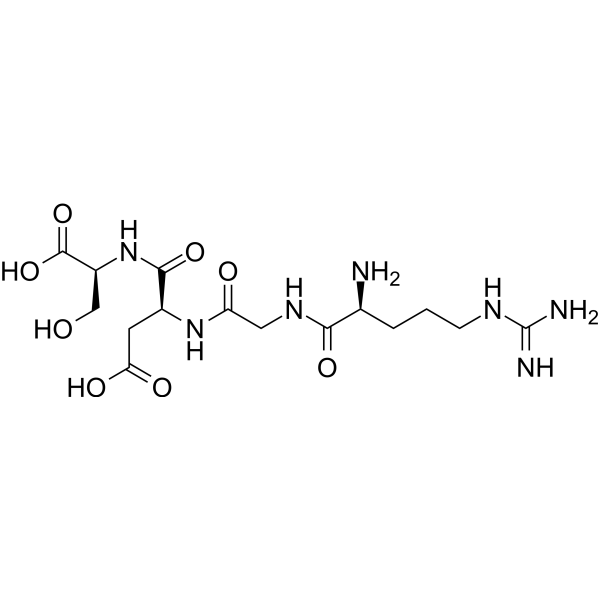
    Arg-Gly-Asp-Ser
    Maximum Cited Publications
    9 Publications Verification

    RGDS peptide; Fibronectin tetrapeptide

    Integrin Inflammation/Immunology
    Arg-Gly-Asp-Ser is an integrin binding sequence that inhibits integrin receptor function. Arg-Gly-Asp-Ser directly and specifically bind pro-caspase-8, pro-caspase-9 and pro-caspase-3, while it does not bind pro-caspase-1.
    Arg-Gly-Asp-Ser
  • HY-P1740
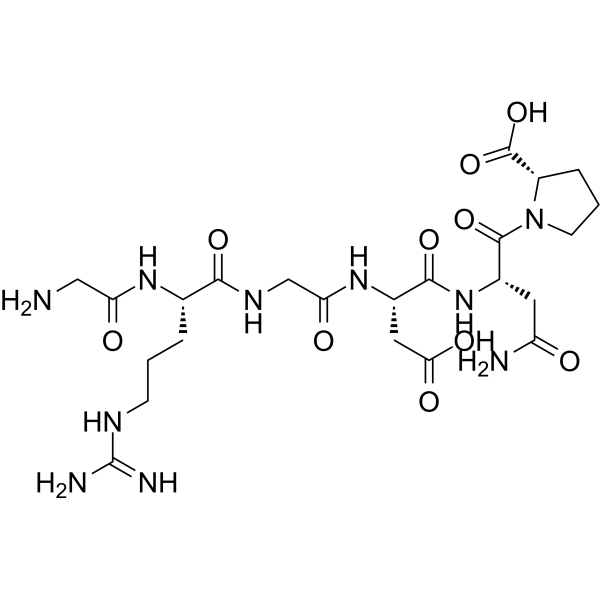
    RGD peptide (GRGDNP)
    5+ Cited Publications

    Integrin Apoptosis Caspase Inflammation/Immunology
    RGD peptide (GRGDNP) is an inhibitor of integrin-ligand interactions. RGD peptide (GRGDNP) competitively inhibits α5β1 binding with extracellular matrice (ECM). RGD peptide (GRGDNP) promotes apoptosis through activation of conformation changes that enhance pro-caspase-3 activation and autoprocessing. RGD peptide (GRGDNP) plays an important role in cell adhesion, migration, growth, and differentiation .
    RGD peptide (GRGDNP)
  • HY-100472

    Caspase Cancer
    ZYZ-488 is a competitive apoptotic protease activating factor-1 (Apaf-1) inhibitor. ZYZ-488 inhibits the activation of binding protein procaspase-9 and procaspase-3 .
    ZYZ-488
  • HY-13523
    PAC-1
    5+ Cited Publications

    Procaspase activating compound 1

    Caspase Autophagy Apoptosis Cancer
    PAC-1 is a procaspase-3 activator that induces apoptosis in cancer cells with an EC50 of 2.08 μM.
    PAC-1
  • HY-18633

    Apoptosis Cancer
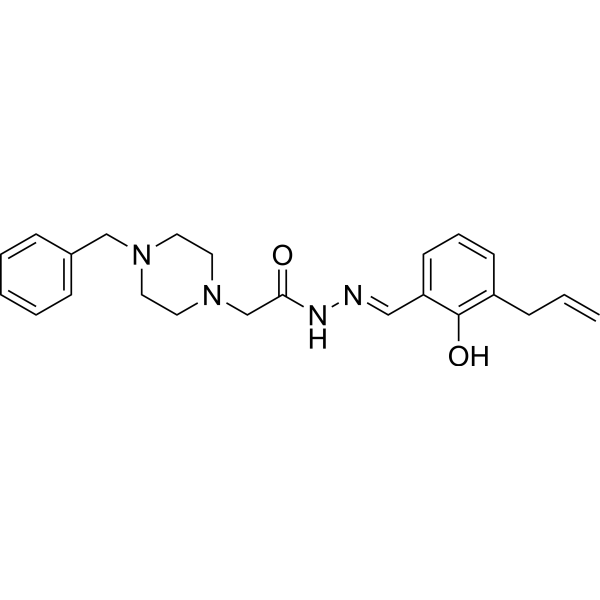
    MDK83190 is a potent apoptosis activator, induces Apaf-1 oligomerization, increases procaspase-9 processing and subsequent caspase-3 activation in a cyto c-dependent Manner .
    MDK83190
  • HY-P1740A
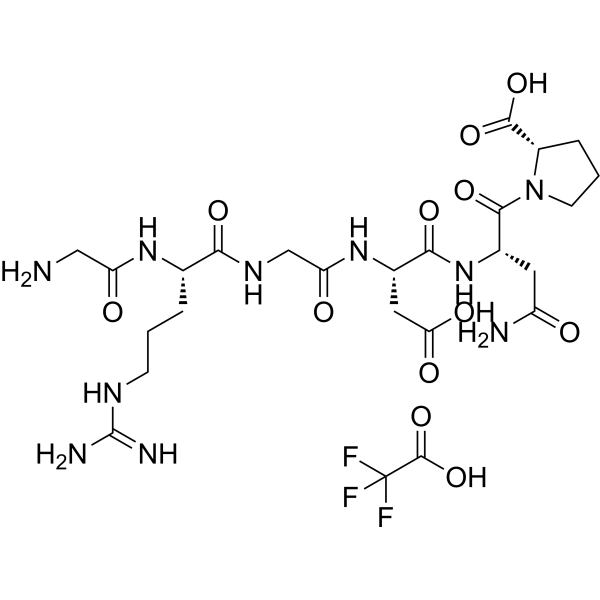
    RGD peptide (GRGDNP) TFA
    5+ Cited Publications

    Integrin Apoptosis Inflammation/Immunology Cancer
    RGD peptide (GRGDNP) TFA is an inhibitor of integrin-ligand interactions. RGD peptide (GRGDNP) TFA competitively inhibits α5β1 binding with extracellular matrice (ECM). RGD peptide (GRGDNP) TFA promotes apoptosis through activation of conformation changes that enhance pro-caspase-3 activation and autoprocessing. RGD peptide (GRGDNP) TFA plays an important role in cell adhesion, migration, growth, and differentiation .
    RGD peptide (GRGDNP) TFA
  • HY-12455

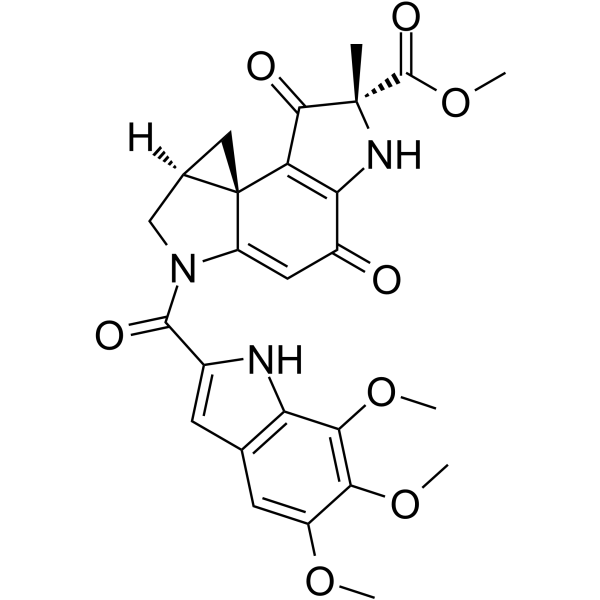
    ADC Payload Antibiotic DNA Alkylator/Crosslinker Apoptosis Caspase Cancer
    Duocarmycin A is an antitumor antibiotic and DNA alkylating agent with broad-spectrum antibacterial activity, which can serve as a payload for synthesizing antibody-drug conjugates (ADCs). Duocarmycin A selectively binds to the AT-rich minor groove of DNA, forms covalent adducts by alkylating the adenine N3 residue, thereby disrupting DNA structure and inhibiting its replication and transcription. Duocarmycin A induces apoptosis, sub-G1 phase accumulation and chromatin condensation, reduces the levels of pro-caspase-3/9, and induces p53-independent p21 expression. Duocarmycin A is widely used in the research of various malignancies, including leukemia, sarcoma, glioblastoma, as well as multiple solid tumor models such as lung cancer, breast cancer, and colorectal cancer .
    Duocarmycin A
  • HY-10131

    Caspase Others
    Procaspase-3/6 activator 1 (compound 1541) is a highly specific and robust activator of executioner procaspases-3 and -6, with EC50 values of 2.4 ± 0.2 and 2.8 ± 0.3 μM, respectively. Procaspase-3/6 activator 1 does not activate procaspases-1 or -7 .
    Procaspase-3/6 activator 1
  • HY-W748509

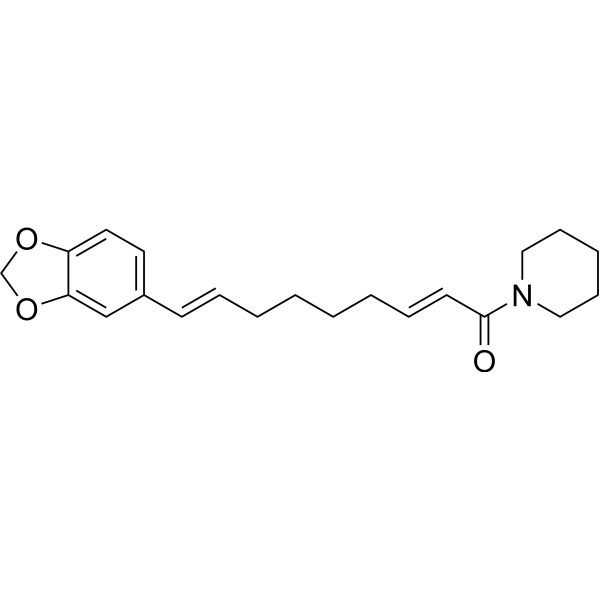
    Caspase Apoptosis Cancer
    Pipernonaline is a piperine derivative with antiprostate cancer activity. Pipernonaline inhibits the proliferation of androgen-dependent/independent LNCaP/PC-3 prostate cells. Pipernonaline activates caspase-3 and promotes procaspase-3/PARP cleavage. Pipernonaline also mediates reactive oxygen species (ROS) production, increased intracellular Ca(2+), and mitochondrial membrane depolarization .
    Pipernonaline
  • HY-131688

    PARP Caspase Inflammation/Immunology
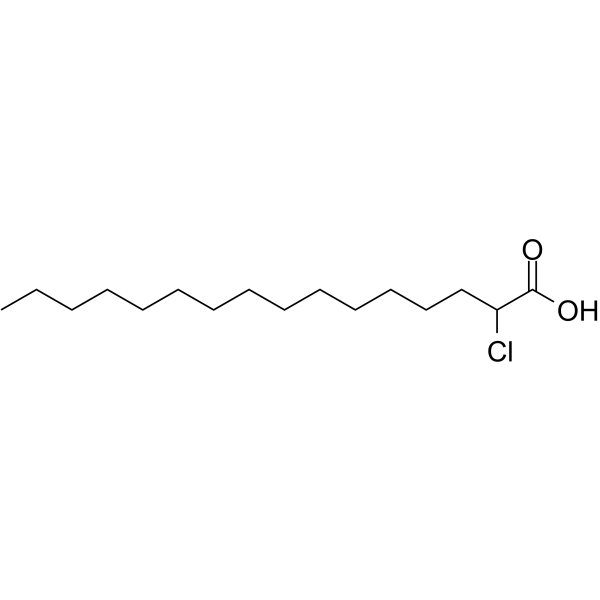
    2-Chlorohexadecanoic acid, an inflammatory lipid mediator, interferes with protein palmitoylation,induces ER-stress markers, reduced the ER ATP content, and activates transcription and secretion of IL-6 as well as IL-8.2-Chlorohexadecanoic acid disrupts the mitochondrial membrane potential and induces procaspase-3 and PARP cleavage.2-Chlorohexadecanoic acid can across blood-brain barrier (BBB) and compromises ER- and mitochondrial functions in the human brain endothelial cell line hCMEC/D3 .
    2-Chlorohexadecanoic acid
  • HY-13523S

    Procaspase activating compound 1-d8

    Isotope-Labeled Compounds Apoptosis Caspase Autophagy Cancer
    PAC-1-d8 (Procaspase activating compound 1-d8) is the deuterium labeled PAC-1 (HY-13523). PAC-1 is a procaspase-3 activator that induces apoptosis in cancer cells with an EC50 of 2.08 μM.
    PAC-1-d8
  • HY-117614

    Caspase Apoptosis Cancer
    WF-210 is a potent procaspase-3 activator with an EC50 value of 0.95 μM. WF-210 induces Apoptosis. WF-210 has anti-tumor activity .
    WF-210
  • HY-119420

    Antibiotic Apoptosis Caspase JNK p38 MAPK TNF Receptor ERK NF-κB Mitochondrial Metabolism Inflammation/Immunology Cancer
    Acetoxycycloheximide is an antibiotic with antitumor activity. Acetoxycycloheximide a protein synthesis inhibitor. Acetoxycycloheximide significantly induces activation of procaspase-3 and subsequent apoptosis mediated by the Cytochrome c from mitochondria via activation of JNK pathway. Acetoxycycloheximide triggers the downregulation of cell surface TNF-R1 via the activation of ERK and p38 MAPK, thereby preventing activation of the NF-κB signaling pathway by TNF-α. Acetoxycycloheximide is much more toxic to female rats than to males. Acetoxycycloheximide can be used for inflammatory and immune diseases and cancers research .
    Acetoxycycloheximide
  • HY-N5033

    Bcl-2 Family Caspase Cancer
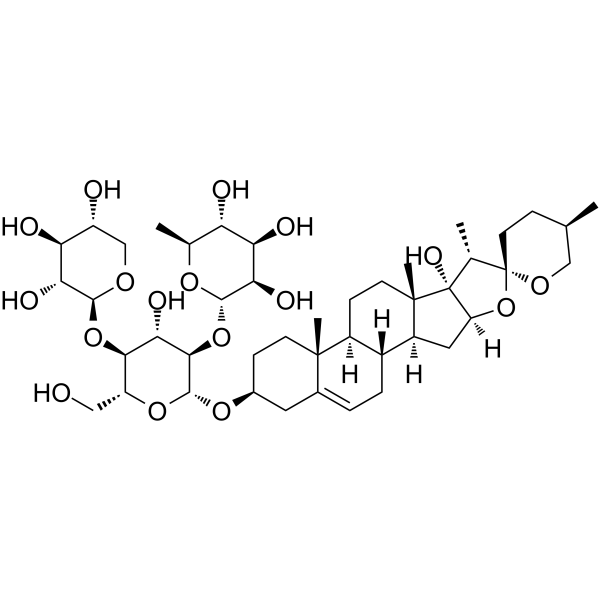
    17-Hydroxy sprengerinin C (compound 10) is a glycoside compound isolated from rhizomes of Polygonatum sibiricum. 17-Hydroxy sprengerinin C possesses stronger anticancer activities. 17-Hydroxy sprengerinin C reduces the expression of Blc-2 and pro-caspase3 and increases the production of Bax .
    17-Hydroxy sprengerinin C
  • HY-12290A

    RGDS peptide TFA; Fibronectin tetrapeptide TFA

    Integrin Inflammation/Immunology
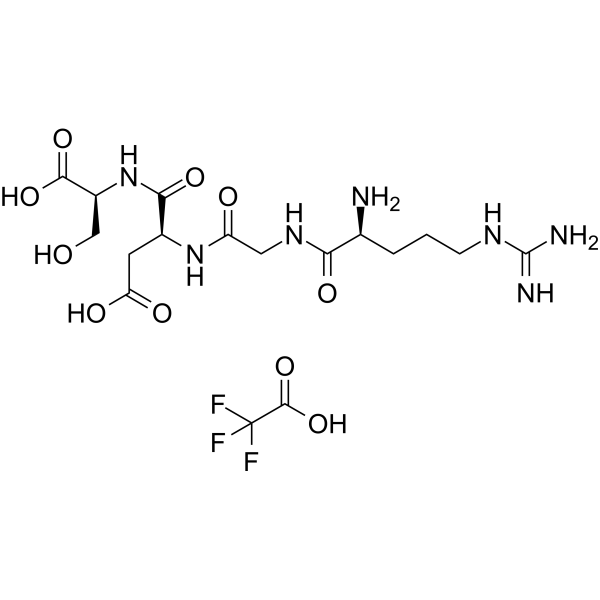
    Arg-Gly-Asp-Ser (TFA) is an integrin binding sequence that inhibits integrin receptor function. Arg-Gly-Asp-Ser (TFA) directly and specifically bind pro-caspase-8, pro-caspase-9 and pro-caspase-3, while it does not bind pro-caspase-1 .
    Arg-Gly-Asp-Ser TFA
  • HY-110139

    DNA/RNA Synthesis Cancer
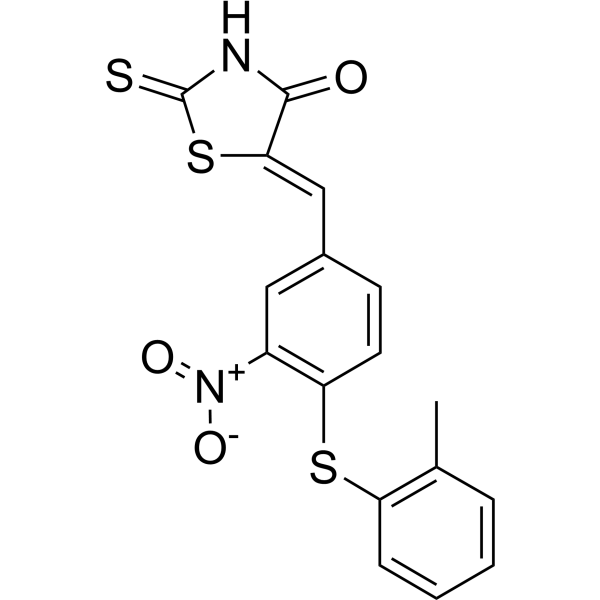
    Procaspase-IN-5 is a human DNA polymerase λ inhibitor. Procaspase-IN-5 has DNA polymerization function and TdT function with an IC50 value of 5.9 μM and 4.5 μM, respectively. Procaspase-IN-5 can be used for the research of cancer .
    Procaspase-IN-5
  • HY-12290R

    RGDS peptide (Standard); Fibronectin tetrapeptide (Standard)

    Integrin Reference Standards Inflammation/Immunology
    Arg-Gly-Asp-Ser (Standard) is the analytical standard of Arg-Gly-Asp-Ser. This product is intended for research and analytical applications. Arg-Gly-Asp-Ser is an integrin binding sequence that inhibits integrin receptor function. Arg-Gly-Asp-Ser directly and specifically bind pro-caspase-8, pro-caspase-9 and pro-caspase-3, while it does not bind pro-caspase-1.
    Arg-Gly-Asp-Ser (Standard)
  • HY-171447

    Caspase Apoptosis Others
    LPT-99 is an antagonist of apoptotic protease activating factor 1 (APAF-1). LPT-99 suppresses the activation of procaspase-9. LPT99 suppresses Cisplatin (HY-17394)-induced apoptosis. LPT99 can effectively mitigate cisplatin-induced hearing loss in rats.
    LPT99
  • HY-178950

    Src TNF Receptor Interleukin Related NOD-like Receptor (NLR) Caspase Inflammation/Immunology
    Hck-IN-3 (compound 2D) is an orally effective inhibitor targeting HCK (KD = 3.92 μM). Hck-IN-3 can inhibit the release of NO. Hck-IN-3 has an IC50 of 6.52 μM in RAW264.7 cells. Hck-IN-3 can inhibit the release of TNF-α, IL-6, and IL-1β in a concentration dependent manner. Hck-IN-3 downregulates the protein expression of NLRP3, ASC, pro-caspase-1, and pro-IL-1β in a concentration dependent manner. Hck-IN-3 can be used for research on acute non traumatic inflammatory conditions .
    Hck-IN-3
  • HY-10132

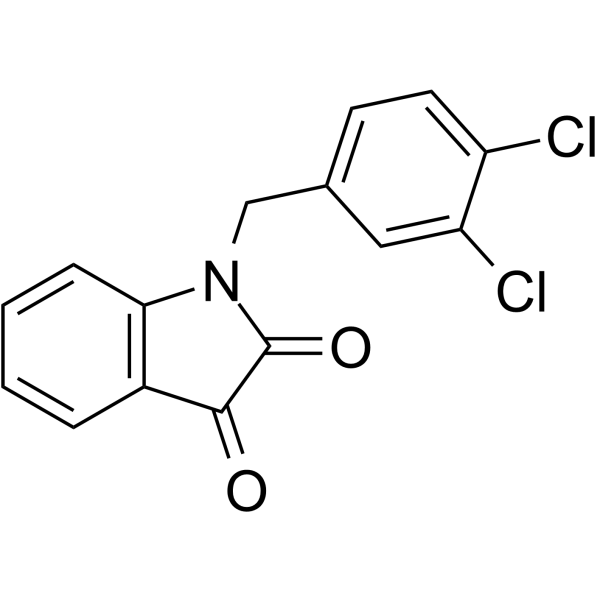
    Caspase Cancer
    CASP3 activator 1 (compound 1541) Ais an activator of executioner procaspases 3, 6 and 7. CASP3 activator 1 can be used for the research of cancer, neoplastic diseases .
    CASP3 activator 1
  • HY-179699

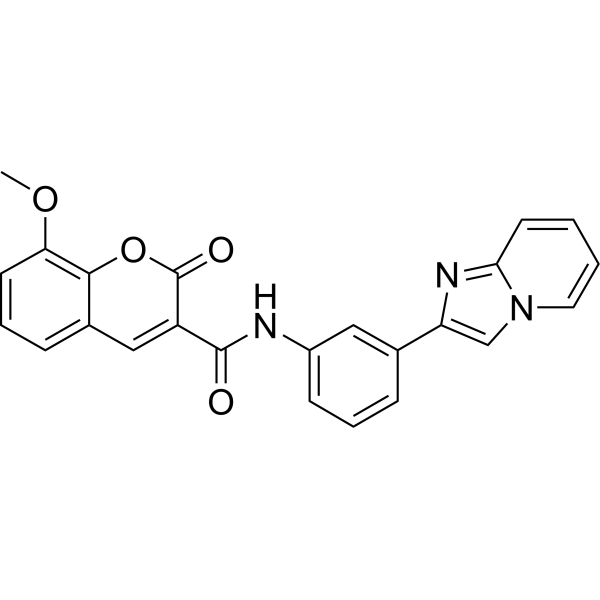
    Caspase Apoptosis Cancer
    Procaspase-3 activator 1 is a potent procaspase-3 activator. Procaspase-3 activator directly activates procaspase-3 through zinc chelation, thereby inducing apoptosis and inhibiting cancer cell proliferation. Procaspase-3 activator 1 can be used for the research of non-small cell lung cancer (NSCLC) and melanoma .
    Procaspase-3 activator 1
  • HY-100472R

    Caspase Reference Standards Cancer
    ZYZ-488 (Standard) is the analytical standard of ZYZ-488 (HY-100472). This product is intended for research and analytical applications. ZYZ-488 is a competitive apoptotic protease activating factor-1 (Apaf-1) inhibitor. ZYZ-488 inhibits the activation of binding protein procaspase-9 and procaspase-3 .
    ZYZ-488 (Standard)
  • HY-182307

    Apoptosis Caspase TNF Receptor Cancer
    OH14 is a cellular FLICE-like inhibitory protein (cFLIP) inhibitor and TNF-related apoptosis-inducing ligand (TRAIL) sensitizer. OH14 selectively binds to the DED1 pocket of cFLIP, disrupting its recruitment to the TRAIL-death inducing signalling complex without affecting procaspase-8 recruitment to FADD, allowing procaspase-8 activation. OH14 promotes TRAIL-mediated apoptosis and impairs cell viability in breast cancer systems when combined with TRAIL. OH14 can be used for the research of breast cancer .
    OH14
  • HY-181168

    Caspase Pyroptosis Inflammation/Immunology
    Lb54 is a caspase-3 and caspase-7 activator with an EC50 of 660.9 nM for human procaspase-3. Lb54 activates caspase-3/7, which cleaves Gasdermin D (GSDMD) at aspartic acid residue 87 to generate a p10 fragment, preventing formation of the pore-forming p30 fragment of GSDMD. Lb54 suppresses GSDMD-mediated pyroptosis through caspase-3/7 activation, thereby attenuating inflammatory responses and conferring protection against sepsis. Lb54 alleviates acute lung injury, and inhibited systemic inflammation by restraining the maturation of monocyte-derived dendritic cells. Lb54 can be used for the research of sepsis .
    Lb54

Inquiry Online

Your information is safe with us. * Required Fields.

Salutation


Country or Region *

Applicant Name *


Organization Name *

Department *


Email Address *


Product Name *

Cat. No.


Requested quantity *

Phone Number *


Remarks

Inquiry Online

Inquiry Information

Product Name:
Cat. No.:
Quantity:
MCE Japan Authorized Agent:

