1. Search Result
Search Result
Results for "

reader

" in MedChemExpress (MCE) Product Catalog:

24

Inhibitors & Agonists

3

Screening Libraries

2

Fluorescent Dye

4

Peptides

Targets Recommended:
Cat. No. Product Name Target Research Areas Chemical Structure
  • HY-111330
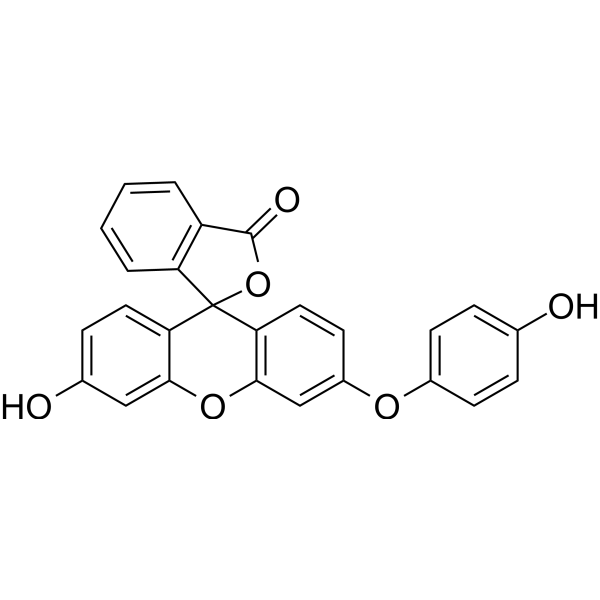
    Hydroxyphenyl Fluorescein
    10+ Cited Publications

    HPF; 3'-p-(Hydroxyphenyl) fluorescein

    Fluorescent Dye Reactive Oxygen Species (ROS) Others
    Hydroxyphenyl Fluorescein (HPF) is a stable ROS fluorescent probe dye. Hydroxyphenyl Fluorescein has stronger specificity and stability than H2DCFDA (HY-D0940). Hydroxyphenyl Fluorescein can produce strong green fluorescence through hydroxyl radical reaction with intracellular peroxynitroso. Hydroxyphenyl Fluorescein can be applied for fluorescence microscopy, high-throughput imager, luciferase microplate reader or flow cytometry. Ex/Em=490/515 nm .
    Hydroxyphenyl Fluorescein
  • HY-120166
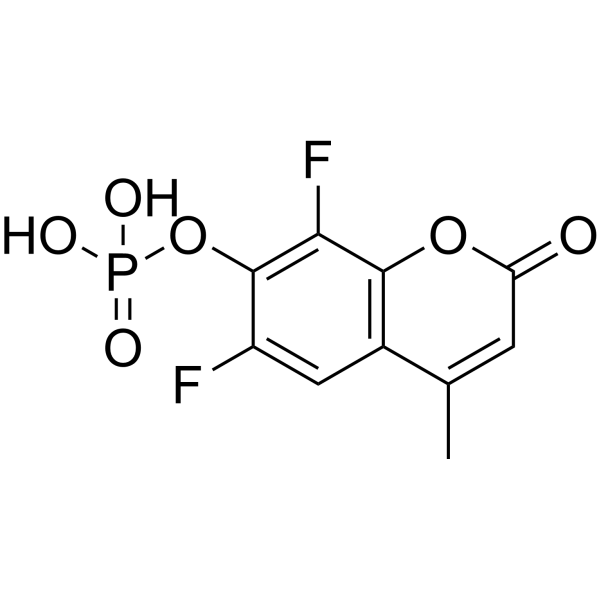
    DiFMUP
    1 Publications Verification

    6,8-Difluoro-4-methylumbelliferyl phosphate

    Phosphatase Others
    DiFMUP is a fluorogenic substrate, and has been widely used for the continuous detection of phosphatase activities. DiFMUP is hydrolysis by a phosphatase results in the release of Xuorescent DIFMU, which can be easily followed in continuous mode by a Xuorescence reader .
    DiFMUP
  • HY-101519
    BETd-260
    4 Publications Verification

    ZBC 260

    PROTACs Epigenetic Reader Domain Apoptosis Cancer
    BETd-260 (ZBC 260) is a PROTAC connected by ligands for Cereblon and BET, with as low as 30 pM against BRD4 protein in RS4;11 leukemia cell line . BETd-260 potently suppresses cell viability and robustly induces apoptosis in hepatocellular carcinoma (HCC) cells .
    BETd-260
  • HY-10898
    SB-674042
    2 Publications Verification

    Orexin Receptor (OX Receptor) Neurological Disease Endocrinology
    SB-674042 is a potent and selective non-peptide orexin OX1 receptor antagonist (Kd=5.03 nM), exhibits 100-fold selectivity for OX1 over OX2 receptors with IC50 values of 3.76 nM and 531 nM, respectively .
    SB-674042
  • HY-100832
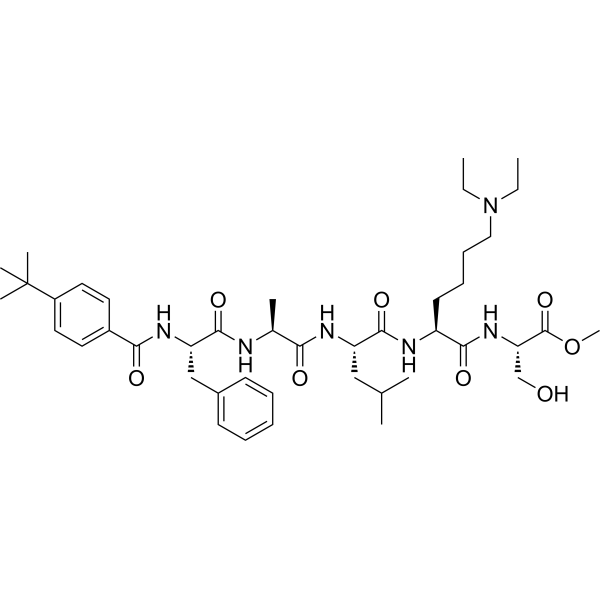
    UNC3866
    3 Publications Verification

    Histone Methyltransferase Cancer
    UNC3866 is a potent antagonist of the CBX7-H3 interaction as determined by AlphaScreen (IC50=66±1.2 nM) and is more than 100-fold selective for CBX7 over the other nine members of this methyl-lysine (Kme) reader panel.
    UNC3866
  • HY-16510

    Epigenetic Reader Domain Cancer
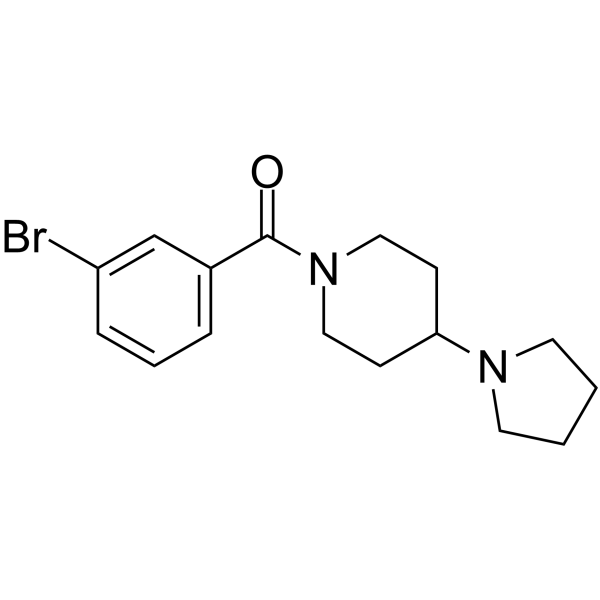
    UNC926 is a methyl-lysine (Kme) reader domain inhibitor that inhibits L3MBTL1 with an IC50 of 3.9 μM .
    UNC926
  • HY-115531

    DNA/RNA Synthesis Cancer
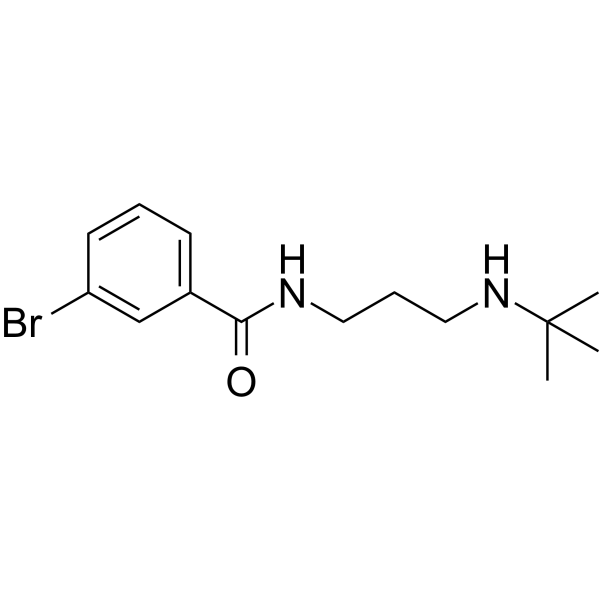
    UNC-2170 is a functionally active, fragment-like ligand for 53BP1 (IC50=29 µM; Kd=22 µM). UNC-2170 shows at least 17-fold selectivity for 53BP1 as compared to nine other methyl-lysine (Kme) reader proteins. 53BP1 is a Kme binding protein that plays a central role in DNA Damage Repair (DDR) pathways and is recruited to sites of double-strand breaks (DSB) .
    UNC-2170
  • HY-125837A
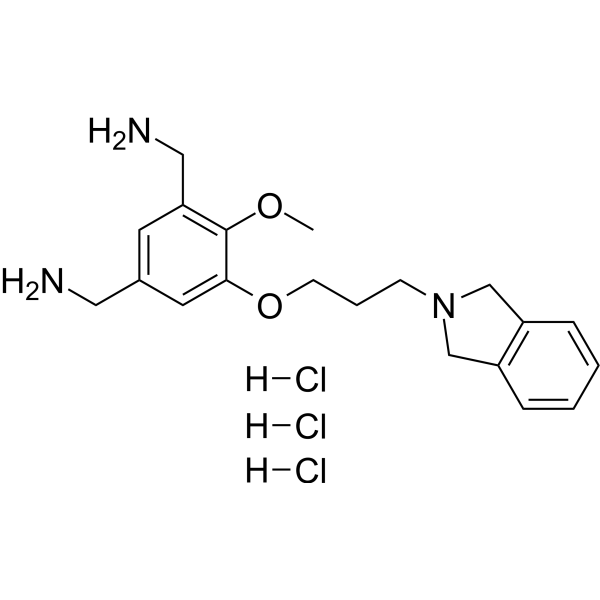
    MS31 trihydrochloride
    3 Publications Verification

    Epigenetic Reader Domain Cancer
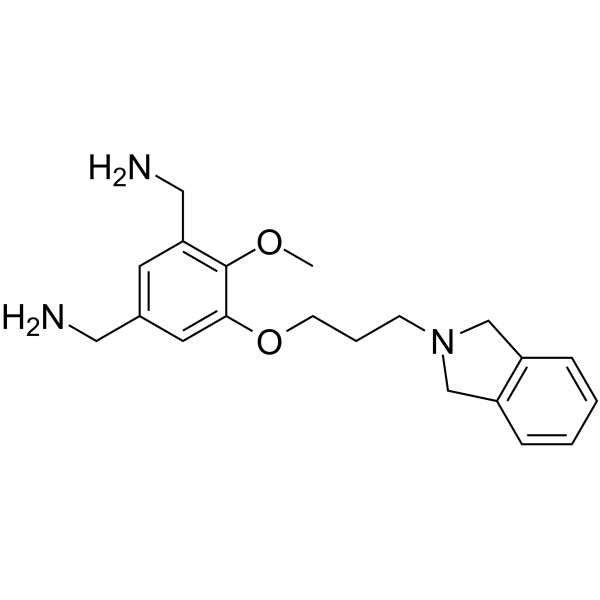
    MS31 trihydrochloride is a potent, highly affinity and selective fragment-like methyllysine reader protein spindlin 1 (SPIN1) inhibitor. MS31 trihydrochloride potently inhibits the interactions between SPIN1 and H3K4me3 (IC50=77 nM, AlphaLISA; 243 nM, FP). MS31 trihydrochloride selectively binds Tudor domain II of SPIN1 (Kd=91 nM). MS31 trihydrochloride potently inhibits binding of trimethyllysine-containing peptides to SPIN1, and is not toxic to nontumorigenic cells .
    MS31 trihydrochloride
  • HY-143328

    PROTACs Epigenetic Reader Domain Apoptosis Cancer
    PROTAC BRD4 Degrader-17 (compound 13i) is a potent PROTAC BRD4 Degrader, with IC50 values of 29.54 nM (BRD4 (BD1)) and 3.82 nM (BRD4 (BD2)). PROTAC BRD4 Degrader-17 significantly attenuates G2/M progression associated Cyclin B1 expression. PROTAC BRD4 Degrader-17 significantly induces apoptosis in MV-4-11 cells .
    PROTAC BRD4 Degrader-17
  • HY-DY1035

    Reactive Oxygen Species (ROS) Fluorescent Dye Others
    Hydroxyphenyl Fluorescein (HPF) (solution) is a stable ROS fluorescent probe dye. Hydroxyphenyl Fluorescein has stronger specificity and stability than H2DCFDA (HY-D0940). Hydroxyphenyl Fluorescein can produce strong green fluorescence through hydroxyl radical reaction with intracellular peroxynitroso. Hydroxyphenyl Fluorescein can be applied for fluorescence microscopy, high-throughput imager, luciferase microplate reader or flow cytometry. Ex/Em=490/515 nm .
    Solvent and concentration: DMSO: 10 mM
    Hydroxyphenyl Fluorescein (solution)
  • HY-173450

    Epigenetic Reader Domain Inflammation/Immunology
    ZL0516 is a potent, selective, and orally active BRD4 BD1 inhibitor. ZL0516 suppresses inflammatory bowel disease (IBD) by inhibiting BRD4/NF-κB signaling .
    ZL0516
  • HY-125837

    Epigenetic Reader Domain Cancer
    MS31 is a potent, highly affinity and selective fragment-like methyllysine reader protein spindlin 1 (SPIN1) inhibitor. MS31 potently inhibits the interactions between SPIN1 and H3K4me3 (IC50=77 nM, AlphaLISA; 243 nM, FP). MS31 selectively binds Tudor domain II of SPIN1 (Kd=91 nM). MS31 potently inhibits binding of trimethyllysine-containing peptides to SPIN1. MS31 is not toxic to nontumorigenic cells .
    MS31
  • HY-16510A

    Epigenetic Reader Domain Cancer
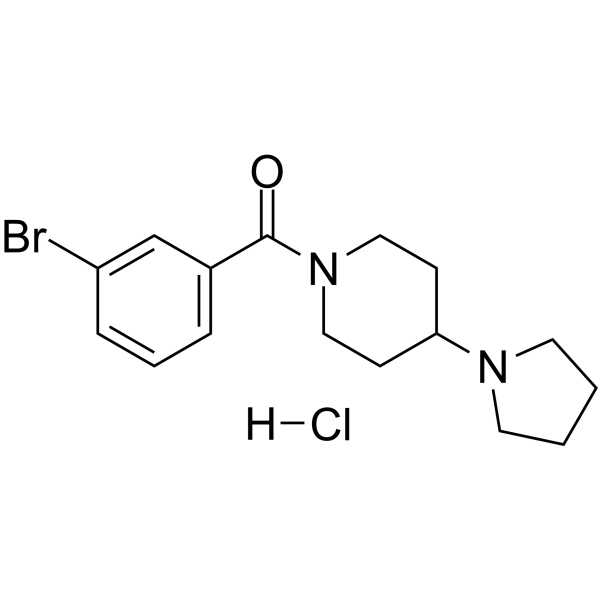
    UNC926 hydrochloride is a methyl-lysine (Kme) reader domain inhibitor that inhibits L3MBTL1 with an IC50 of 3.9 μM .
    UNC926 hydrochloride
  • HY-143327

    PROTACs Epigenetic Reader Domain Apoptosis Cancer
    PROTAC BRD4 Degrader-16 is a potent PROTAC BRD4 Degrader, with IC50 values of 34.58 nM (BRD4 (BD1)) and 40.23 nM (BRD4 (BD2)). PROTAC BRD4 Degrader-16 ignificantly attenuates G2/M progression associated Cyclin B1 expression. PROTAC BRD4 Degrader-16 significantly induces apoptosis in MV-4-11 cells .
    PROTAC BRD4 Degrader-16
  • HY-118897

    DNA/RNA Synthesis Cancer
    UNC-2170 maleate is the maleate salt form of UNC-2170 (HY-115531). UNC-2170 maleate is a selective inhibitor for the methyl-lysine binding protein 53BP1, with IC50 of 29 µM and Kd of 22 µM. UNC-2170 maleate shows at least 17-fold selectivity for 53BP1 as compared to nine other methyl-lysine (Kme) reader proteins. 53BP1 is a Kme binding protein that plays a central role in DNA Damage Repair (DDR) pathways and is recruited to sites of double-strand breaks (DSB) .
    UNC-2170 maleate
  • HY-167871

    Epigenetic Reader Domain Cancer
    BRD4 Inhibitor-36 (Compound 185) is a BRD4 inhibitor. BRD4 Inhibitor-36 can be used for the research of cancer .
    BRD4 Inhibitor-36
  • HY-100832A

    Histone Methyltransferase Cancer
    UNC3866 TFA is a potent antagonist of the CBX7-H3 interaction as determined by AlphaScreen (IC50=66±1.2 nM) and is more than 100-fold selective for CBX7 over the other nine members of this methyl-lysine (Kme) reader panel.
    UNC3866 TFA
  • HY-P4900

    Caspase Others
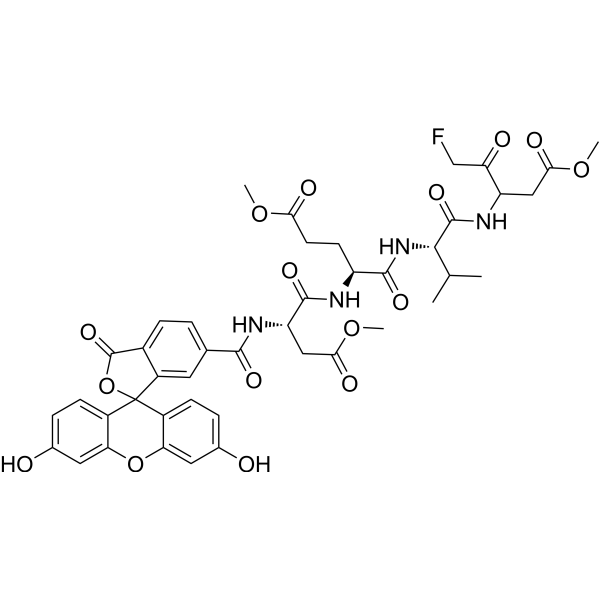
    Fluorescein-6-carbonyl-Asp(OMe)-Glu(OMe)-Val-DL-Asp(OMe)-fluoromethylketone is a cell-permeable, non-toxic inhibitor that binds irreversibly to activated caspase-3 in apoptotic cells. The fluorescence intensity can be measured by flow cytometry, microwell plate reader, or fluorescence microscopy .
    Fluorescein-6-carbonyl-Asp(OMe)-Glu(OMe)-Val-DL-Asp(OMe)-fluoromethylketone
  • HY-142952

    Epigenetic Reader Domain Cancer
    UNC6864 (Kei), an ethylisopropyllysine (Kei)-containing ligand, binds to wild-type CBX5, with a KD of 3.3 μM .
    UNC6864 (Kei)
  • HY-142954

    Epigenetic Reader Domain Cancer
    UNC6212 (Kme2), a dimethyllysine (Kme2)-containing ligand, has a KD for CBX5 of 5.7 μM .
    UNC6212 (Kme2)
  • HY-142953

    Epigenetic Reader Domain Cancer
    UNC6349 (Ket2), a diethyllysine (Ket2)-containing ligand, binds to wild-type CBX5, with a KD of 3.2 μM .
    UNC6349 (Ket2)
  • HY-161670

    Histone Methyltransferase Cancer
    NSD2-PWWP1 ligand 1 (compound 34) is a small molecule ligand targeting the NSD2-PWWP1 domain (pIC50: 8.2). NSD2 is a large multidomain protein with histone writer and histone reader functions. Dysregulation of the levels of histone methyltransferase nuclear receptor binding SET domain 2 (NSD2) may lead to a variety of hematological and solid malignancies. NSD2-PWWP1 ligand 1 binds to NSD2, reducing its enzymatic activity and inhibiting tumorigenesis .
    NSD2-PWWP1 ligand 1
  • HY-181065

    Epigenetic Reader Domain Cancer
    LS-170 is a YEATS2 YEATS domain inhibitor with an IC50 of 0.14 μM. LS-170 displays selectivity for the YEATS2 YEATS domain over other YEATS domain family members and other epigenetic 'reader' and 'eraser' proteins. LS-170 reduces chromatin occupancy of the Ada-two-A-containing (ATAC) complex, decreases ATAC-dependent histone acetylation levels, and downregulates expression of ATAC-governed genes. LS-170 suppresses tumor growth in a lung cancer mouse model. LS-170 can be used for the research of non-small cell lung cancer .
    LS-170
  • HY-10898R

    Reference Standards Orexin Receptor (OX Receptor) Neurological Disease Endocrinology
    SB-674042 (Standard) is the analytical standard of SB-674042 (HY-10898). This product is intended for research and analytical applications. SB-674042 is a potent and selective non-peptide orexin OX1 receptor antagonist (Kd=5.03 nM), exhibits 100-fold selectivity for OX1 over OX2 receptors with IC50 values of 3.76 nM and 531 nM, respectively .
    SB-674042 (Standard)

Inquiry Online

Your information is safe with us. * Required Fields.

Salutation


Country or Region *

Applicant Name *


Organization Name *

Department *


Email Address *


Product Name *

Cat. No.


Requested quantity *

Phone Number *


Remarks

Inquiry Online

Inquiry Information

Product Name:
Cat. No.:
Quantity:
MCE Japan Authorized Agent:

