
1. Search Result
Search Result
Results for "

standard reference

" in MedChemExpress (MCE) Product Catalog:

61

Inhibitors & Agonists

1

Fluorescent Dyes

21

Biochemical Assay Reagents

2

Peptides

9

Natural
Products

1

Oligonucleotides

Targets Recommended:
Cat. No. Product Name Target Research Areas Chemical Structure
  • HY-150150
    SiRNA Negative Control
    20+ Cited Publications

    Small Interfering RNA (siRNA) Inflammation/Immunology
    SiRNA Negative Control is a siRNA of 21 nucleotides, and can be used as a negative control. SiRNA Negative Control has no homology to most known gene sequence. SiRNA Negative Control can be used in human, mouse and rat cells in vitro. SiRNA Negative Control can be used as experimental control benchmark, verification of experimental reliability and standardization reference. SiRNA Negative Control is a common negative control used in most research articles.
    SiRNA Negative Control
  • HY-W116335A

    Environmental Pollutants Biochemical Assay Reagents Inflammation/Immunology
    Dried aluminum hydroxide gel, United States Pharmacopeia (USP) Reference Standard is a commonly used antacid with remarkable compound adhesion and release activity. Dried aluminum hydroxide gel, United States Pharmacopeia (USP) Reference Standard can effectively neutralize gastric acid and relieve stomach discomfort. Dried aluminum hydroxide gel, United States Pharmacopeia (USP) Reference Standard is also often used as an adjuvant in vaccines to enhance immune responses. Dried aluminum hydroxide gel, United States Pharmacopeia (USP) Reference Standard can improve the stability and bioavailability of compounds in preparations .
    Dried aluminum hydroxide gel,United States Pharmacopeia (USP) Reference Standard
  • HY-B2167R

    DHA (standard); Cervonic acid (standard)

    Reference Standards Endogenous Metabolite Neurological Disease Cancer
    Docosahexaenoic acid (Standard) is the analytical standard of Docosahexaenoic acid. This product is intended for research and analytical applications. Docosahexaenoic Acid (DHA) is an omega-3 fatty acid abundantly present brain and retina. It can be obtained directly from fish oil and maternal milk. In Vitro: Docosahexaenoic acid (DHA) is essential for the growth and functional development of the brain in infants. DHA is also required for maintenance of normal brain function in adults. The inclusion of plentiful DHA in the diet improves learning ability and memory . DHA is an essential requirement in every step of brain development like neural cell proliferation, migration, differentiation, synaptogenesis. The multiple double bonds and unique structure allow DHA to impart special membrane characteristics for effective cell signaling. Many development disorders like dyslexia, autism spectrum disorder, attention deficit hyperactivity disorder, schizophrenia etc. are causally related to decreased level of DHA . DHA is a potent RXR ligand inducing robust RXR activation already at low micro molar concentrations. The EC50 for RXRα activation by DHA is about 5-10 μM fatty acid . In Vivo: Docosahexaenoic acid administration over 10 weeks significantly reduces the number of reference memory errors, without affecting the number of working memory errors, and significantly increases the docosahexaenoic acid content and the docosahexaenoic acid/arachidonic acid ratio in both the hippocampus and the cerebral cortex . DHA treatment exerts neuroprotective actions on an experimental mouse model of PD. There is a decrease tendency in brain lipid oxidation of MPTP mice but it does not significantly .
    Docosahexaenoic acid (Standard)
  • HY-W073080

    MOFs Others
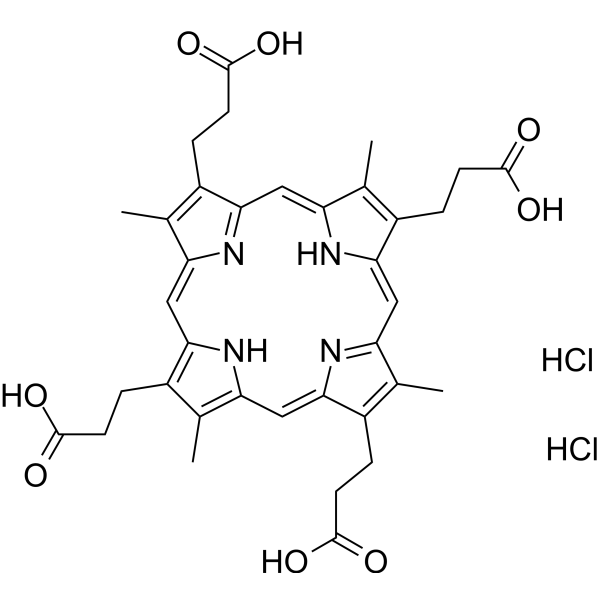
    Coproporphyrin I dihydrochlorideIt is an organic compound belonging to the class of porphyrins. It is a derivative of heme, an iron-containing molecule found in hemoglobin and other proteins. Coproporphyrin I dihydrochlorideOften used as a biomarker in the assessment of certain liver and metabolic diseases, especially those related to bile synthesis and transport. It can also be used as a reference standard for analytical chemistry and pharmacological research.
    Coproporphyrin I dihydrochloride
  • HY-W098756

    Demethylsulazepam

    Biochemical Assay Reagents Neurological Disease
    Thionordiazepam is a benzodiazepine compound and serves as an analytical reference standard for benzodiazepine-related psychoactive substances .
    Thionordiazepam
  • HY-W030562

    Others Inflammation/Immunology
    Bemethyl is a synthetic adaptogen that exhibits actoprotector and antihypoxant activities. Bemethyl has the ability to increase the body's resistance to stress and improve physical endurance. Bemethyl regulatory mechanisms include vasodilation and lowering blood sugar and lactate levels. Bemethyl is an analytical reference standard for adaptogen .

    Bemethyl
  • HY-141749B

    CLPM hydrochloride; SR 26334 hydrochloride

    Drug Metabolite Cardiovascular Disease
    Clopidogrel carboxylic acid (CLPM) hydrochloride is an inactive metabolite of the widely used antiplatelet medication clopidogrel, which serves as a reference standard for quantitative analysis of clopidogrel metabolism. Clopidogrel carboxylic acid hydrochloride has been shown to represent approximately 85% of circulating clopidogrel, hydrolyzed from the active form by esterases. Clopidogrel carboxylic acid hydrochloride plays a crucial role in assessing the pharmacokinetics and bioavailability of clopidogrel in various clinical and research settings.
    Clopidogrel carboxylic acid hydrochloride
  • HY-W127680

    Tetra-n-butylammonium perchlorate

    Biochemical Assay Reagents Others
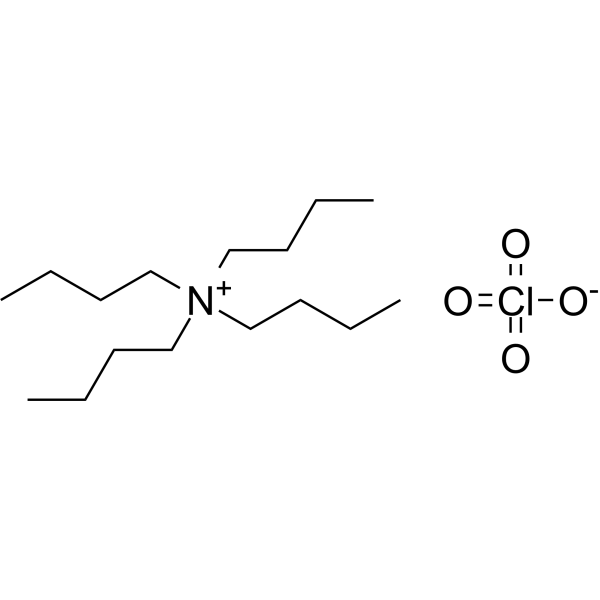
    Tetrabutylammonium perchlorate is an organic compound containing ammonium ions and perchlorate ions. It is commonly used as an electrolyte in electrochemistry and as a source of perchlorate anion in analytical chemistry. Tetrabutylammonium perchlorate has a variety of applications in the production of batteries, fuel cells and electronic components due to its high ionic conductivity and stability under extreme conditions. In addition, it can be used as a reference standard in analytical methods such as ion chromatography.
    Tetrabutylammonium perchlorate
  • HY-W088875

    Biochemical Assay Reagents Others
    Deschlorodiazepam is an analytical reference standard categorized as a benzodiazepine .
    Deschlorodiazepam
  • HY-W127676

    N,N,N-Triethylethanaminium perchlorate

    Biochemical Assay Reagents Others
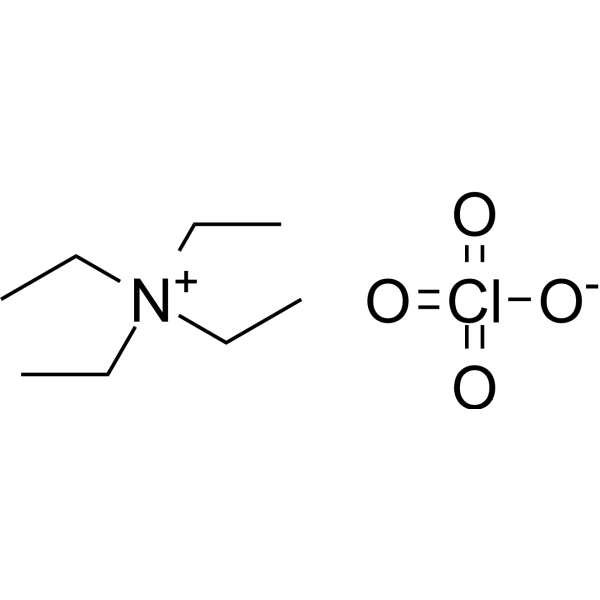
    Tetraethylammonium perchlorate is an organic compound containing ammonium ions and perchlorate ions. It is commonly used as an electrolyte in electrochemistry and as a source of perchlorate anion in analytical chemistry. Due to its high ionic conductivity and stability under extreme conditions, tetraethylammonium perchlorate has a variety of applications in the production of batteries, fuel cells and electronic components. In addition, it can be used as a reference standard in analytical methods such as ion chromatography.
    Tetraethylammonium perchlorate
  • HY-Y0344H

    Halite (Pharmaceutical primary standard, USP)

    Biochemical Assay Reagents Na+/K+ ATPase Interleukin Related Inflammation/Immunology Cancer
    Sodium chloride, United States Pharmacopeia (USP) Reference Standard is an orally active salt. Sodium chloride, United States Pharmacopeia (USP) Reference Standard induces the expression of ATP1A1. Sodium chloride, for cell culture induces the pro-inflammatory cytokines IL-2, TNFα, IL-9 and several chemokines. Sodium chloride, United States Pharmacopeia (USP) Reference Standard enhances the anti-tumor activities of Digoxin (HY-B1049) against small cell lung cancer. Sodium chloride, United States Pharmacopeia (USP) Reference Standard drives autoimmune disease by the induction of pathogenic Th17 cells .
    Sodium chloride, United States Pharmacopeia (USP) Reference Standard
  • HY-W008813

    Biochemical Assay Reagents Others
    1-(3-Methoxyphenyl)piperazine (Compound 4) is an analytical reference standard categorized as a piperazine .
    1-(3-Methoxyphenyl)piperazine
  • HY-W015495R

    Reference Standards Endogenous Metabolite Dihydroorotate Dehydrogenase Others
    L-Dihydroorotic acid (Standard) is an analytical reference standard for L-Dihydroorotic acid. This product is used for research and analytical applications. L-Dihydroorotic acid is an important intermediate in the metabolism of orotic acid and a substrate of dihydroorotate dehydrogenase (DHODH). L-Dihydroorotic acid can reversibly hydrolyze to yield the acyclic L-ureidosuccinic acid by dihydrowhey enzyme .
    L-Dihydroorotic acid (Standard)
  • HY-160849

    GABA Receptor Others Metabolic Disease
    N-desmethyl Rilmazolam, a triazolobenzodiazepine, serves as an analytical reference standard. N-desmethyl Rilmazolam is an active metabolite derived from rilmazafone (HY-106547). N-desmethyl Rilmazolam is designed for use in research and forensic settings .
    N-Desmethyl Rilmazolam
  • HY-B0594R

    Reference Standards Autophagy Mitophagy Cancer
    Iohexol (Standard) is the analytical standard of Iohexol. This product is intended for research and analytical applications. Iohexol is a non-ionic, water-soluble contrast agent used as a reference marker for the determination of glomerular filtration rate (GFR) at the level of renal function. Iohexol can be used for contrast in myelography, computerized tomography (cisternography, ventriculography) and MicroCT imaging .
    Iohexol (Standard)
  • HY-W127391

    (Rac)-1,2-Didodecanoylglycerol

    Biochemical Assay Reagents Others
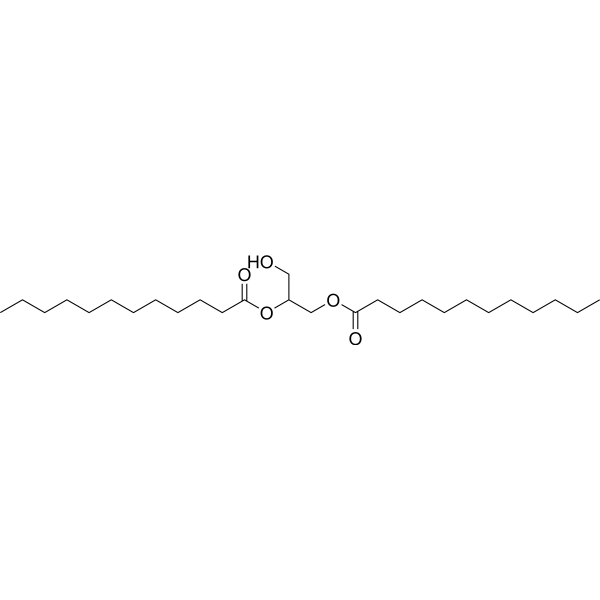
    1,2-Dilaurin is a diacylglycerol containing lauric acid at the sn-1 and sn-2 positions. It has been used as an internal standard for the quantification of diglycerides in rat desheathed sciatic nerves. [1] Monomolecular films containing 1,2-dilauroyl-rac-glycerol have been used as substrates to measure surface pressure and the effect of pancreatic procolipase and colipase on porcine pancreatic lipase activity. [2] References: [1]. Zhu, X. and Eichberg, J. 1,2-Diacylglycerol content and its arachidonyl-containing molecular species are reduced in the sciatic nerve of streptozotocin-induced diabetic rats. J. Neurochemistry. 55(3), 1087-1090 (1990).[2]. Wieloch, T., Borgstr m, B., Piéroni, G. et al. Porcine trypsinogen and its trypsin-activated form: lipid binding and lipase activation on monomolecular membranes. FEBS Express. 128(2), 217-220 (1981).
    1,2-Dilaurin
  • HY-P3363

    Caspase Cancer
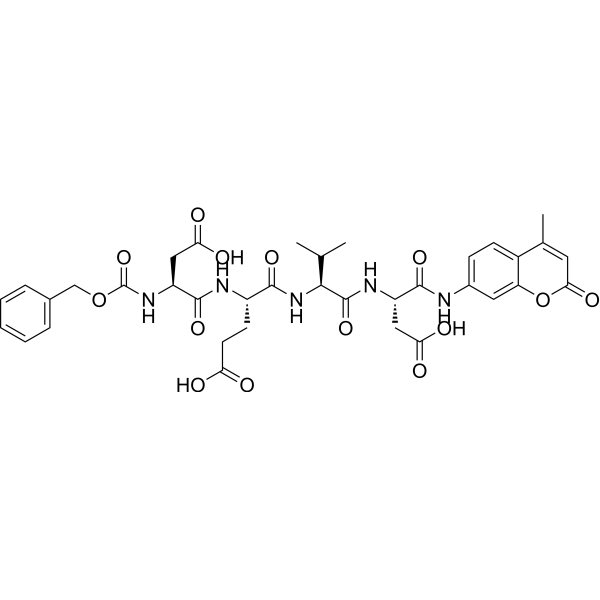
    Z-DEVD-AMC is a selective caspase-3 substrate that can be measured by fluorescence spectrometry. AMC can be used as a fluorescence reference standard for AMC-based enzyme substrates including AMC-based caspase substrates .
    Z-DEVD-AMC
  • HY-W725213

    BL-3912; alpha-EH DOM

    Biochemical Assay Reagents Others
    α-ethyl 2C-D (BL-3912) hydrochloride is a phenethylamine and amphetamine compound. In drug discrimination studies, α-ethyl 2C-D hydrochloride can serve as a reference standard for MDMA .
    α-ethyl 2C-D hydrochloride
  • HY-W152363

    1,2,3,4-Tetra-O-acetyl-α-L-fucopyranose

    Biochemical Assay Reagents Others
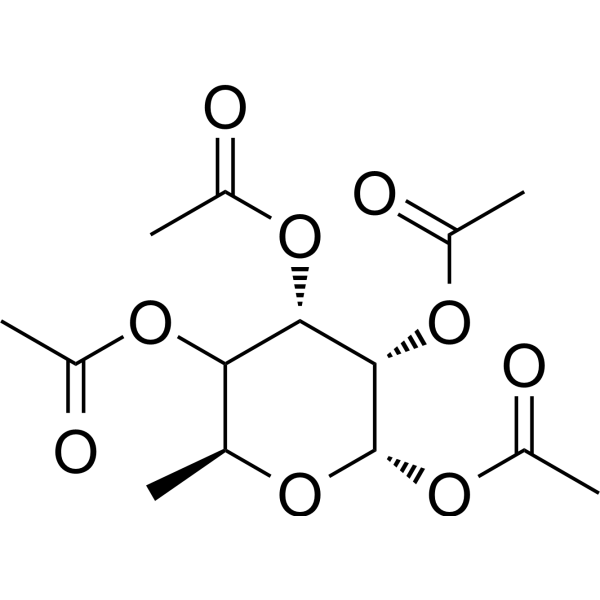
    1,2,3,4-Tetra-O-acetyl-alpha-L-fucopyranoseIt is an organic compound commonly used as a substrate or reference standard in enzymology and sugar chemistry research. It can be used in the synthesis of polysaccharide analogs, drug development and biotechnology, and is widely used in the research of glycosyl chemistry and sugar metabolism pathways. In addition, this compound is used as a catalyst or buffer in certain biochemical reactions.
    1,2,3,4-Tetra-O-acetyl-alpha-L-fucopyranose
  • HY-Y0319C1

    Calcium acetate (Pharmaceutical primary standard, USP)

    Biochemical Assay Reagents Metabolic Disease
    Calcium acetate, United States Pharmacopeia (USP) Reference Standard (Calcium acetate (Pharmaceutical primary standard, USP)), a phosphate binder that can reduce phosphorus content, United States Pharmacopeia (USP) reference standard .
    Calcium acetate, United States Pharmacopeia (USP) Reference Standard
  • HY-Y0332J

    Potassium phosphate monobasic (Pharmaceutical primary standard, USP)

    Biochemical Assay Reagents Cancer
    Potassium dihydrogen phosphate, United States Pharmacopeia (USP) Reference Standard is a inorganic compound.
    Potassium dihydrogen phosphate, United States Pharmacopeia (USP) Reference Standard
  • HY-B1610H

    Trisodium citrate dihydrate (Pharmaceutical primary standard, USP)

    Biochemical Assay Reagents Others
    Sodium citrate dihydrate, United States Pharmacopeia (USP) Reference Standard is an antacid used in studies to neutralize gastric acid. Sodium citrate dehydrate can also be used to prepare biological buffers. Sodium citrate dehydrate is a reference standard grade of the United States Pharmacopeia (USP) and a first-class pharmaceutical standard .
    Sodium citrate dihydrate, United States Pharmacopeia (USP) Reference Standard
  • HY-Y1325E

    Sodium acetate trihydrate (Pharmaceutical primary standard, USP)

    Biochemical Assay Reagents Others
    Sodium acetate trihydrate, United States Pharmacopeia (USP) Reference Standard is an inorganic salt that can be used for life science related research .
    Sodium acetate trihydrate, United States Pharmacopeia (USP) Reference Standard
  • HY-W251598J

    Sodium hydrogen carbonate (Pharmaceutical primary standard, USP); Soda bicarbonate (Pharmaceutical primary standard, USP)

    Bacterial NO Synthase Inflammation/Immunology Cancer
    Sodium bicarbonate, United States Pharmacopeia (USP) Reference Standard is an inorganic salt. Sodium bicarbonate, United States Pharmacopeia (USP) Reference Standard can maintain the pH of the culture medium, thereby affecting the expression of inducible nitric oxide synthase (iNOS) and nitric oxide (NO) production in macrophages and reversing the acidosis of the tumor microenvironment. Sodium bicarbonate, United States Pharmacopeia (USP) Reference Standard is widely used in the fields of food, cosmetics, etc. Its main uses include buffers, flavoring agents, disinfectants, pharmaceuticals, and proton gradient regulators. Sodium bicarbonate, United States Pharmacopeia (USP) Reference Standard is also commonly used as an antacid to inhibit gastrointestinal diseases, neutralize gastric acid, and reduce gastric discomfort .
    Sodium bicarbonate, United States Pharmacopeia (USP) Reference Standard
  • HY-W094475E

    Epsom salts (Pharmaceutical primary standard, USP)

    Drug Derivative Neurological Disease Metabolic Disease
    Magnesium sulfate heptahydrate, United States Pharmacopeia (USP) Reference Standard (Epsom salts (Pharmaceutical primary standard, USP)) is currently the anticonvulsant of choice for the prevention and control of eclamptic fits and is also widely used as a tocolytic agent .
    Magnesium sulfate heptahydrate, United States Pharmacopeia (USP) Reference Standard
  • HY-169443

    Biochemical Assay Reagents Neurological Disease
    Nitromethaqualone is a quinazolinone compound that can be used as an analytical reference standard for quinazolinones .
    Nitromethaqualone
  • HY-169442

    Biochemical Assay Reagents Neurological Disease
    Methylmethaqualone is a quinazolinone psychoactive substance that can be used as an analytical reference standard for quinazolinone compounds. Methylmethaqualone has acute neurotoxicity and can cause psychomotor stimulation .
    Methylmethaqualone
  • HY-172637

    Opioid Receptor Neurological Disease
    Phenethyl 4-ANPP is a MOR (μ-opioid receptor) agonist. Phenethyl 4-ANPP is an analytical reference standard that is structurally similar to known opioids .
    Phenethyl 4-ANPP
  • HY-124265R

    Reference Standards Endogenous Metabolite Metabolic Disease
    4β-hydroxy Cholesterol (Standard) is the analytical reference standard of 4β-hydroxy Cholesterol (HY-124265). This product is used for research and analytical applications. 4β-Hydroxycholesterol is a major Cholesterol (HY-N0322) metabolite and a precursor in the synthesis of bile acids that is found in human circulation .
    4β-Hydroxycholesterol (Standard)
  • HY-W003607R

    Reference Standards Tyrosinase Inflammation/Immunology
    3-O-Ethyl-L-ascorbic acid (Standard) is the analytical reference standard for 3-O-Ethyl-L-ascorbic acid. 3-O-Ethyl-L-ascorbic acid is a stable derivative of vitamin C and a cosmetic tyrosinase inhibitor. 3-O-Ethyl-L-ascorbic acid has antioxidant, anti-aging, and skin-whitening activities. 3-O-Ethyl-L-ascorbic acid is often used in the study of cosmetic .
    3-O-Ethyl-L-ascorbic acid (Standard)
  • HY-170477

    Δ8-Tetrahydrocannabiphorol; n-Heptyl ∆8-THC

    Cannabinoid Receptor Others
    Δ8-THCP (Δ8-Tetrahydrocannabiphorol; n-Heptyl Δ8-THC) (Compound 1a) is a semisynthetic cannabinoid that serves as an analytical reference standard and exhibits affinity for the CB1 receptor .
    Δ8-THCP
  • HY-169785

    7-TMT

    5-HT Receptor Neurological Disease
    7-Methyl DMT (7-TMT) is a 5-HT2 receptor agonist. Structurally, 7-Methyl DMT is a tryptamine derivative. It can be used as an analytical reference standard for the psychoactive substance DOM. 7-Methyl DMT is also used in research in the field of neurological diseases .
    7-Methyl DMT
  • HY-W027553R

    NIK-247 free base (standard); Amiridine free base (standard)

    Reference Standards Cholinesterase (ChE) Potassium Channel Sodium Channel Neurological Disease Metabolic Disease
    Ipidacrine (Standard) is the analytical reference standard of Ipidacrine. This product is used for research and analytical applications. Ipidacrine is orally active and blood-brain-barrier-penetrant AChE and BuChE inhibitors with IC50 values of 1 μM and 1.9 μM, respectively, which is also a partial agonist of M2-cholinergic receptors and a reversible cholinesterase inhibitor. Ipidacrine has a stimulating effect on neuromuscular transmission and excitation along the nerve fibres with a moderately anti-pain effect. Ipidacrine is an aminopyridines and is structurally similar to Tacrine (HY-111338). Ipidacrine is effective in various amnesia models, improves erectile function and inhibits K + and Na +-channels in the neuronal membrane in diabetic rats. Ipidacrine is promising for research of Alzheimer’s disease, ischaemic stroke, idiopathic neuropathy of the facial nerve, diabetes mellitus-induced erectile dysfunction and other deficits in central or peripheral cholinergic deseases .
    Ipidacrine (Standard)
  • HY-Y0537I

    Potassium chloride (Pharmaceutical primary standard, USP)

    Biochemical Assay Reagents Others
    Potassium chloride, United States Pharmacopeia (USP) Reference Standard is an inorganic salt, which can be used for the buffer preparation .
    Potassium chloride, United States Pharmacopeia (USP) Reference Standard
  • HY-B1580B

    Bioban-C (Pharmaceutical primary standard, USP)

    Biochemical Assay Reagents Metabolic Disease
    Calcium propionate, United States Pharmacopeia (USP) Reference Standard is an orally active auxiliary agent for preventing milk fever and improving the health of dairy cows. Calcium propionate can be used for research on dairy cow milk fever and subclinical hypocalcemia. Calcium propionate is a reference standard grade of the United States Pharmacopeia (USP) and a primary pharmaceutical standard .
    Calcium propionate, United States Pharmacopeia (USP) Reference Standard
  • HY-Y0317E

    Disodium sulfate (Pharmaceutical primary standard, USP)

    Biochemical Assay Reagents Others
    Sodium sulfate anhydrous (Disodium sulfate), can be widely used as a desiccant, pH regulator, etc. in biochemical experiments. It is a reference standard grade of the United States Pharmacopeia (USP), pharmaceutical primary standard.
    Sodium sulfate anhydrous, United States Pharmacopeia (USP) Reference Standard
  • HY-Y1269I

    Salmiac (Pharmaceutical primary standard, USP)

    Biochemical Assay Reagents Autophagy Cancer
    Ammonium chloride United States Pharmacopeia (USP) Reference Standard (Salmiac, Pharmaceutical primary standard, USP) is a reagent that can be used in cell culture to provide a source of nitrogen. Ammonium chloride can be used as a heteropolar compound to regulate pH value, which can cause intracellular alkalination and metabolic acidosis, thus affecting the activity of enzymes and affecting the process of biological systems. Ammonium chloride is also a lysosome inhibitor .
    Ammonium chloride, United States Pharmacopeia (USP) Reference Standard
  • HY-172857

    Reference Standards Others
    MMB-5Br-INACA is an analytical reference standard categorized as a precursor for the synthesis of synthetic cannabinoids.
    MMB-5Br-INACA
  • HY-W009686F

    Fluorescent Dye Others
    5-FAM-Pro-Leu-OH is a biological active peptide. (Used as MMP fluorescent reference standard)
    5-FAM-Pro-Leu-OH
  • HY-W354693

    Environmental Pollutants Others
    2,4-Diaminoanisole is a carcinogenic aromatic primary amine compound that can be used in the analysis of reference standards .
    2,4-Diaminoanisole
  • HY-172547

    3b-FBT hydrochloride; Fluorotropacocaine hydrochloride

    Biochemical Assay Reagents Neurological Disease
    3-p-FBT (hydrochloride) (3b-FBT (hydrochloride); Fluorotropacocaine (hydrochloride)) is an analytical reference standard that is structurally categorized as a tropane alkaloid .
    3-p-FBT hydrochloride
  • HY-W087988R

    Reference Standards Bacterial Sex Pheromone Phytohormone Infection Inflammation/Immunology
    3-Pentanol (Standard) is an analytical reference standard of 3-Pentanol. 3-Pentanol is an active organic compound produced by plants and is a component of insect-released pheromones. 3-Pentanol can trigger plant immunity against microbial pathogens and pests in crops by activating the SA and JA signaling pathways.
    3-Pentanol (Standard)
  • HY-118896R

    AKD-2023 (standard); DPX-3792 (standard)

    Parasite Reference Standards Infection
    Acequinocyl (Standard) is the analytical standard of Acequinocyl. This product is intended for research and analytical applications. Acequinocyl (CRM) is a certified reference material categorized as a naphthoquinone acaricide.1 Acequinocyl has been found in Cannabis. Formulations containing acequinocyl have been used to control mite populations in agriculture. This product is intended for research and forensic applications.
    Acequinocyl (Standard)
  • HY-13231R

    CDK HIV Infection
    CDK9-IN-1 (Standard) is the analytical standard of CDK9-IN-1. This product is intended for research and analytical applications. CDK9-IN-1 is a novel, selective CDK9 inhibitor for the treatment of HIV infection, with an IC50 of 39 nM for CDK9/CycT1, extracted from reference, compound 87.
    CDK9-IN-1 (Standard)
  • HY-W004292R

    Undecyl alcohol (standard)

    Drug Derivative Reference Standards Insecticide Infection
    1-Undecanol (Standard) (Undecyl alcohol (Standard)) is an analytical reference standard for 1-Undecanol (HY-W004292). This product is used for research and analytical applications. 1-Undecanol (Undecyl alcohol) is the main product generated from the degradation of 2-tridecanone by Pseudomonas bacteria isolated from the soil. 1-Undecanol can enhance the attraction of Grapholita molesta to sex pheromone traps .
    1-Undecanol (Standard)
  • HY-W716866

    10α-Hydroxy-Δ9'11-hexahydrocannabinol

    Cannabinoid Receptor Drug Metabolite Neurological Disease
    10α-hydroxy-exo-THC is a cannabinoid compound, a metabolite of Δ9-THC, and can be found in cannabis. 10α-hydroxy-exo-THC can serve as an analytical reference standard for cannabinoid compounds .
    10α-Hydroxy-exo-THC
  • HY-W004078R

    Reference Standards Endogenous Metabolite Metabolic Disease
    4-Hydroxybenzylamine (Standard) is the analytical reference standard of 4-Hydroxybenzylamine (HY-W004078). This product is used for research and analytical applications. 4-Hydroxybenzylamine is a natural biogenic amine. 4-Hydroxybenzylamine can be produced through the breakdown metabolism of glucosinolates, with glutamine serving as the non-classical ammonia donor. 4-Hydroxybenzylamine can be used for studying the biosynthesis of plant amines.
    4-Hydroxybenzylamine (Standard)
  • HY-N13166

    Others Others
    Lycibarbarphenylpropanoid B is a phenylpropanoid compound derived from wolfberry with antioxidant activity. It exhibits significant oxygen radical absorbance capacity, with an ORAC value of 3.18 μmol Trolox/μmol (Trolox is a standard reference antioxidant, indicating that each μM of Lycibarbarphenylpropanoid B has antioxidant activity equivalent to 3.18 μM Trolox) .
    Lycibarbarphenylpropanoid B
  • HY-N8045R

    Ricinolic acid methyl ester (standard)

    Biochemical Assay Reagents Reference Standards Others
    Methyl ricinoleate (Standard) is the analytical standard of Methyl ricinoleate. This product is intended for research and analytical applications. Methyl ricinoleate is a compound belonging to the group of fatty acid methyl esters. It is derived from ricinoleic acid, a monounsaturated omega-9 fatty acid found in castor oil. Methyl ricinoleate is often used as a reference compound for the analysis of fatty acid methyl esters by gas chromatography. It has also been investigated for its potential use as a biofuel and as an ingredient in the production of biodegradable plastics and surfactants.
    Methyl ricinoleate (Standard)
  • HY-W010410R

    Reference Standards Others Neurological Disease Metabolic Disease
    Methyl ricinoleate (Standard) is the analytical standard of Methyl ricinoleate. This product is intended for research and analytical applications. Methyl ricinoleate is a compound belonging to the group of fatty acid methyl esters. It is derived from ricinoleic acid, a monounsaturated omega-9 fatty acid found in castor oil. Methyl ricinoleate is often used as a reference compound for the analysis of fatty acid methyl esters by gas chromatography. It has also been investigated for its potential use as a biofuel and as an ingredient in the production of biodegradable plastics and surfactants.
    Oct-1-en-3-ol (Standard)

Inquiry Online

Your information is safe with us. * Required Fields.

Salutation


Country or Region *

Applicant Name *


Organization Name *

Department *


Email Address *


Product Name *

Cat. No.


Requested quantity *

Phone Number *


Remarks

Inquiry Online

Inquiry Information

Product Name:
Cat. No.:
Quantity:
MCE Japan Authorized Agent:

