



53 Results for "

synapse

" in MedChemExpress (MCE) Product Catalog:
Products (53)

53 Results for "synapse" in MCE Product Catalog:

2
2 Cited Publications
Art. -Nr.: HY-100808
CAS. Nr.: 312-84-5
Reinheit:  ≥98.0%
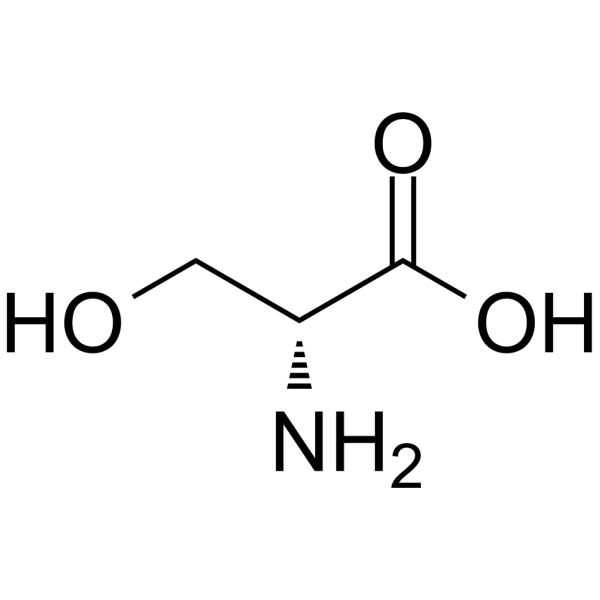
Synonyms: (R)-Serine
D-Serine ((R)-Serine), an endogenous amino acid involved in glia-synapse interactions that has unique neurotransmitter characteristics, is a potent co-agonist at the NMDA glutamate receptor. D-Serinee has a cardinal modulatory role in major NMDAR-dependent processes including NMDAR-mediated neurotransmission, neurotoxicity, synaptic plasticity, and cell migration .
loading...
    loading...
2
2 Cited Publications
Art. -Nr.: HY-Y0808
CAS. Nr.: 106-65-0
Dimethyl succinate is an orally active cell permeable succinate analogue. Dimethyl succinate can disrupt the TCA cycle by elevating intracellular succinate levels, leading to reduced protein synthesis and impairs myogenic differentiation. Dimethyl succinate can induce apoptosis. Dimethyl succinate can decrease maximal cellular respiration and reserve capacity. Dimethyl succinate can rescue synapse loss in AD. Dimethyl succinate can be used for the researches of metabolic and neurological disease [1][2].
loading...
    loading...
2
2 Cited Publications
Art. -Nr.: HY-N7981
CAS. Nr.: 2284-31-3
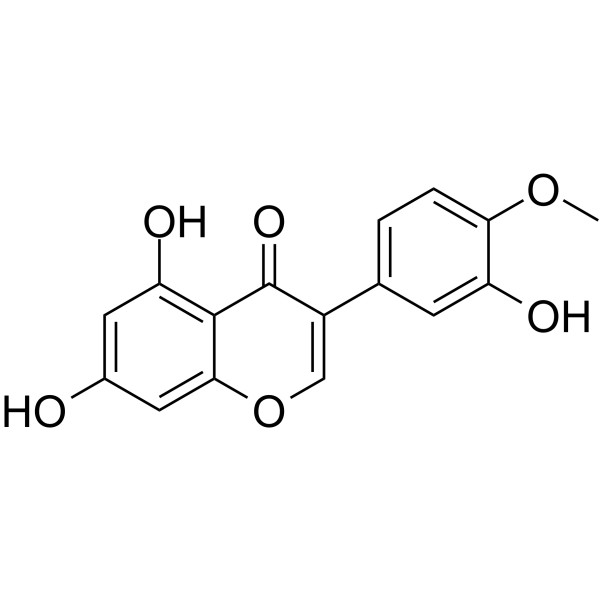
Pratensein, a flavonoid, ameliorates β-amyloid-induced cognitive impairment in rats via reducing oxidative damage and restoring synapse and BDNF levels .
loading...
    loading...
1
1 Cited Publications
Art. -Nr.: HY-10932
CAS. Nr.: 72432-10-1
Reinheit:  99.94%
Synonyms: Ro 13-5057
Target:  

nAChR iGluR

Forschungsgebiete:  

Neurological Disease

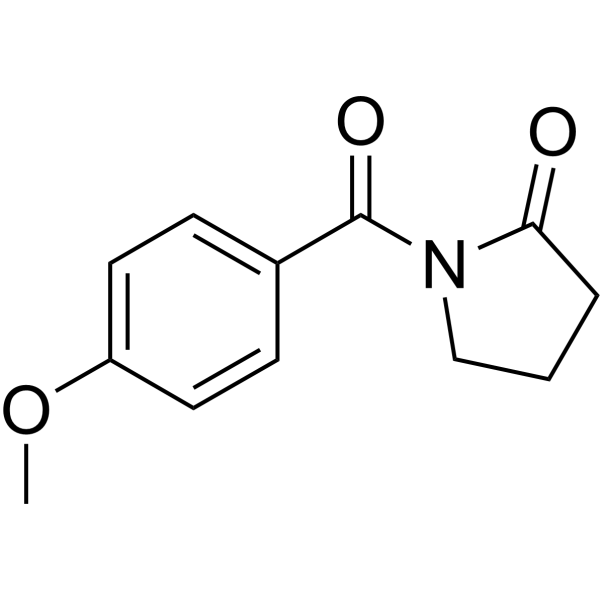
Aniracetam (Ro 13-5057) is an orally active neuroprotective agent, possessing nootropics effects. Aniracetam potentiates the ionotropic quisqualate (iQA) responses in the CA1 region of rat hippocampal slices. Aniracetam also potentiates the excitatory post synaptic potentials (EPSPs) in Schaffer collateral-commissural synapses. Aniracetam can prevents the CO2-induced impairment of acquisition in hypercapnia model rats. Aniracetam can be used to research cerebral dysfunctional disorders .
loading...
    loading...
Art. -Nr.: HY-P99601
CAS. Nr.: 2249888-53-5
Synonyms: BFCR 4350A; RG 6160; RO 7187797

Target:  

CD3

Forschungsgebiete:  

Neurological Disease Cancer

Cevostamab (BFCR4350A; RG6160; RO7187797) is a humanized IgG1-based BsAb that targets membrane-proximal extracellular domain of FcRH5 on multiple myeloma (MM) cells as well as CD3 on T cells. Moreover, Cevostamab facilitates efficient synapse formation, improves killing activity of T cells against MM tumor cells .
loading...
    loading...
Art. -Nr.: HY-P2860
CAS. Nr.: 9000-81-1
Synonyms: ACHE; EC 3.1.1.7
Target:  

Cholinesterase (ChE)

Forschungsgebiete:  

Neurological Disease

Acetylcholinesterase, Fly head (ACHE; EC 3.1.1.7) is a cholinergic enzyme mainly found in neuromuscular junctions and cholinergic type chemical synapses used in biochemical research. Acetylcholinesterase, Fly head catalyzes the breakdown or hydrolysis of acetylcholine and some other choline esters that act as neurotransmitters into acetate and choline. Acetylcholinesterase, Fly head's main role is to terminate neuronal transmission and signaling between synapses to prevent ACh spread and activation of nearby receptors .
loading...
    loading...
Art. -Nr.: HY-P2860A
CAS. Nr.: 9000-81-1
Target:  

Cholinesterase (ChE)

Forschungsgebiete:  

Neurological Disease

Acetylcholinesterase, Electric eel is a cholinergic enzyme that is mainly found in neuromuscular junctions and cholinergic chemical synapses and is often used in biochemical research. Acetylcholinesterase, Electric eel can catalyze the decomposition or hydrolysis of acetylcholine and some other choline esters that act as neurotransmitters into acetic acid and choline. The main function of Acetylcholinesterase, Electric eel is to terminate neuronal transmission and signal conduction between synapses to prevent ACh diffusion and activation of nearby receptors .
loading...
    loading...
Art. -Nr.: HY-107601
CAS. Nr.: 936095-50-0
Reinheit:  99.95%
Synonyms: ACET
Target:  

iGluR

Forschungsgebiete:  

Neurological Disease

UBP316 (ACET) is a highly potent and selective kainate receptor GluK1 (GluR5) antagonist, with a Kb value of 1.4 nM. UBP316 is effective at blocking the depression of both field excitatory postsynaptic potentials (fEPSPs) and monosynaptically-evoked GABAergic transmission induced by ATPA, a GluK1 selective agonist .
loading...
    loading...
Art. -Nr.: HY-P991155
CAS. Nr.: 2988886-91-3
Synonyms: JNJ-79635322; JNJ-5322

Target:  

CD3 TNF Receptor

Forschungsgebiete:  

Cancer

Ramantamig (JNJ-79635322) is a humanized monoclonal antibody targeting human CD3ε, GPRC5D, and TNFRSF17 (BCMA). Ramantamig binds to BCMA and GPRC5D on multiple myeloma cells, binds to CD3ε on T cells, forms immunological synapses, and enables T-cell-mediated cytotoxicity. Ramantamig activates T cells concomitantly with inducing myeloma cell cytotoxicity, with no nonspecific T-cell activation in the absence of target myeloma cells. Ramantamig carries mutations to reduce interaction with Fc receptors and disrupt protein A binding of monomeric and homodimerized chains. Ramantamig can be used for the research of multiple myeloma .
loading...
    loading...
Art. -Nr.: HY-131686
CAS. Nr.: 59247-13-1
Ganglioside GT1b (bovine) ammonium is a member of the ganglioside family. Ganglioside GT1b (bovine) ammonium acts as a protective signal against nerve injury-induced spinal synapse elimination. Ganglioside GT1b (bovine) ammonium induces HA synthesis and the phosphorylation of Akt/mTOR in orbital fibroblasts. Ganglioside GT1b (bovine) ammonium enhances porcine oocyte maturation and induce activation of EGFR and ERK1/2 signaling. Ganglioside GT1b (bovine) ammonium is a putative host cell receptor for the Merkel cell polyomavirus. Ganglioside GT1b (bovine) ammonium can be used for the researches of cancer, infection, immunology, endocrinology and neurological disease, such as Thyroid eye disease .
loading...
    loading...
Art. -Nr.: HY-P990925
CAS. Nr.: 2885203-43-8
Synonyms: BLYG8824A; RG6286

Target:  

CD3

Forschungsgebiete:  

Inflammation/Immunology

Linclatamig (BLYG8824A) is a humanized IgG1 T-cell engaging bispecific antibody (TCB) targeting LY6G6D and CD3. Linclatamig can bind to LY6G6D and CD3-positive T cells, forming an immunological synapse to promote T cell-mediated killing of LY6G6D-positive cells. Linclatamig can be used in colorectal cancer research .
loading...
    loading...
Art. -Nr.: HY-P99618
CAS. Nr.: 2377419-89-9
Synonyms: IBI-315; BH2950

Target:  

EGFR PD-1/PD-L1

Forschungsgebiete:  

Cancer

Fidasimtamab is a bispecific antibody targeting human epidermal growth factor receptor 2 (Her2) and programmed death protein 1 (PD-1), with a Ka of 3.55e-10 M for human Her2 and a Ka of 1.17e-9 M for human PD-1. Fidasimtamab cross-links Her2-positive tumor cells with PD-1-positive T cells to form immune synapses, blocks PD-1-ligand interactions, preserves antibody-dependent cellular cytotoxicity, induces gasdermin B (GSDMB)-mediated pyroptosis, and activates T cells. Fidasimtamab is applicable to relevant research on Her2-positive gastric cancer .
loading...
    loading...
Art. -Nr.: HY-P991490

Target:  

CD38 CD3 TNF Receptor

Forschungsgebiete:  

Cancer

ISB2001 is a trispecific antibody targeting CD38, CD3 and BCMA. ISB2001 effectively counteracts tumor immune escape mechanisms caused by antigen downregulation, antigen loss, soluble factor competition and other factors. ISB2001 is applicable to relevant research on multiple myeloma and relapsed/refractory multiple myeloma .
loading...
    loading...
Art. -Nr.: HY-167832
CAS. Nr.: 2059104-90-2
PT109 is an orally active, blood-brain barrier permeable multi-kinase inhibitor. By inhibiting PTBP1, PT109 promotes the switch of pyruvate kinase isoform from PKM2 to PKM1, thereby effectively inhibiting the proliferation and migration of glioblastoma multiforme and inducing its reprogramming into oligodendrocytes. PT109 also targets and regulates key signaling molecules such as JNK, SGK1, GSK3β to exert neuroprotective effects including promoting neurogenesis, inducing synapse formation and alleviating neuroinflammation. In Alzheimer's disease models, PT109 exhibits significant efficacy in improving spatial learning ability, along with excellent in vivo pharmacokinetic properties. PT109 can be used to investigate metabolic reprogramming of glioblastoma multiforme and neuroprotective mechanisms of Alzheimer's disease .
loading...
    loading...
Art. -Nr.: HY-P99757
CAS. Nr.: 2278244-14-5
Synonyms: Hu3F8-BsAb

Target:  

CD3

Forschungsgebiete:  

Cancer

Nivatrotamab (Hu3F8-BsAb) is a bispecific antibody targeting GD2 and CD3, with KD values of 5.8 nM and 194 nM, respectively. Nivatrotamab redirects T cells to tumor sites and activates immune synapses, thereby mediating antibody-dependent T cell-mediated cytotoxicity. Nivatrotamab induces specific tumor cytotoxicity, stimulates the release of Th1 cytokines and promotes immune cell infiltration into tumors. In addition, its Fc segment deglycosylation design effectively prevents complement activation and cytokine storm. Nivatrotamab can be widely used in research related to various solid tumors, including melanoma, neuroblastoma, osteosarcoma, small cell lung cancer, breast cancer, Ewing's sarcoma, colon cancer, ovarian cancer and rhabdomyosarcoma .
loading...
    loading...
Art. -Nr.: HY-139692
CAS. Nr.: 892415-28-0
Reinheit:  98.91%
Target:  

EAAT

Forschungsgebiete:  

Neurological Disease

EAAT2 activator 1 is the potent activator of excitatory amino acid transporter 2 (EAAT2). EAAT2 is the major glutamate transporter and functions to remove glutamate from synapses. EAAT2 activator 1 increases EAAT2 protein levels dose-dependently .
loading...
    loading...
Art. -Nr.: HY-173371
Target:  

Phospholipase

Forschungsgebiete:  

Neurological Disease

BRI-50460 is an inhibitor of cytosolic calcium-dependent phospholipase A2 (cPLA2) that has the ability to penetrate the blood-brain barrier, with an IC50 of 0.88 nM. BRI-50460 exerts the activities of regulating neuroinflammation and restoring lipid homeostasis by inhibiting cPLA2, regulating the downstream inflammatory lipid signaling pathway, and alleviating the effects of amyloid β42 oligomers on the activation of cPLA2, the hyperphosphorylation of tau protein, and the reduction of synapses and dendrites. BRI-50460 can be applied to the research in the fields of Alzheimer's disease and other neurodegenerative diseases .
loading...
    loading...
Art. -Nr.: HY-Y0364
CAS. Nr.: 609-15-4
Synonyms: A 21960
Target:  

Fungal

Forschungsgebiete:  

Infection

Ethyl 2-chloroacetoacetate (A 21960) is a Tn3 resolvase inhibitor, and inhibit synapse formation between resolvase and two directly repeated res sites. Ethyl 2-chloroacetoacetate is commonly used in in vitro enzymatic experiments. Ethyl 2-chloroacetoacetate inhibits the dehalogenation reaction by consuming intracellular GSH in yeast cells .
loading...
    loading...
Art. -Nr.: HY-100808S
CAS. Nr.: 1414348-52-9
Synonyms: (R)-Serine-d3
D-Serine-d3 ((R)-Serine-d3) is a deuterium labeled D-Serine (HY-100808). D-Serine ((R)-Serine), an endogenous amino acid involved in glia-synapse interactions that has unique neurotransmitter characteristics, is a potent co-agonist at the NMDA glutamate receptor. D-Serinee has a cardinal modulatory role in major NMDAR-dependent processes including NMDAR-mediated neurotransmission, neurotoxicity, synaptic plasticity, and cell migration .
loading...
    loading...
Art. -Nr.: HY-P990730
CAS. Nr.: 2755301-09-6
Synonyms: ARB202

Target:  

CD3 Cadherin

Forschungsgebiete:  

Cancer

Cabotamig is a humanized bispecific T-cell engager antibody targeting CDH17/CD3. Cabotamig is generated from anti-CDH17 monoclonal ARB102 by linking a CD3-binding scFv in the format of IgG4-scFv. Cabotamig can be used for the research of cancer, such as gastric cancer and colon cancers .
loading...
    loading...

