Search Result
Results for "
thiol labeling
" in MedChemExpress (MCE) Product Catalog:
10
Biochemical Assay Reagents
21
Isotope-Labeled Compounds
| Cat. No. |
Product Name |
Target |
Research Areas |
Chemical Structure |
-
- HY-136769
-
|
|
Biochemical Assay Reagents
|
Others
|
|
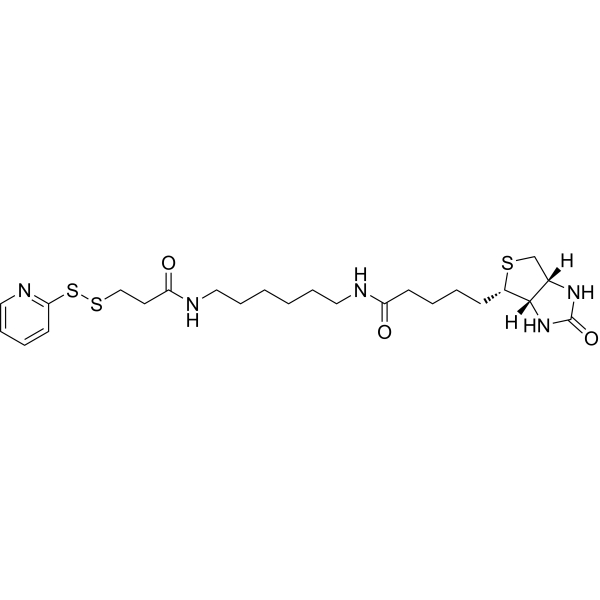
Biotin-HPDP is a biochemical reagent. Biotin-HPDP can couple with GMPS and label free protein thiols. Biotin-HPDP can be used as a biological material or organic compound for life science related research .
|
-
-
- HY-138200
-
|
Cyanine5 maleimide
|
DNA Stain
Fluorescent Dye
|
Others
|
|
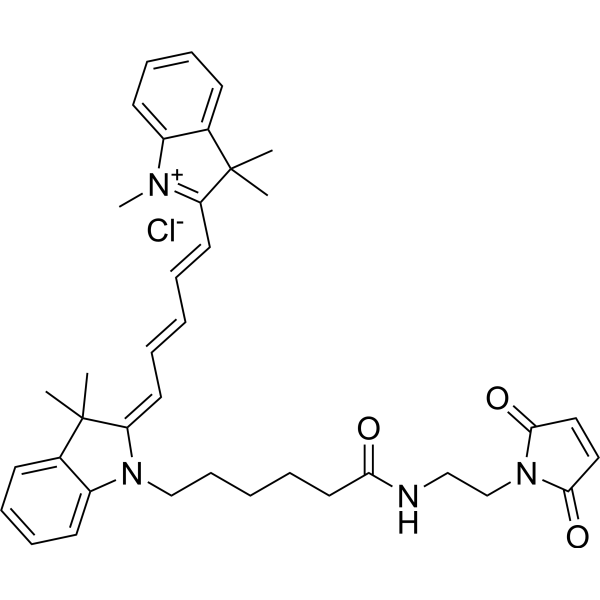
Cy5 maleimide (Cyanine5 maleimide) is a single-reactive dye containing a maleimide group and a CY5 fluorescent group, which can selectively couple with a thiol group. Cy5 maleimide can be used to label antibodies, peptides, or proteins (Ex/Em = 646/664 nm).
|
-
-
- HY-100041
-
Bromobimane
Maximum Cited Publications
8 Publications Verification
Monobromobimane
|
Fluorescent Dye
|
Others
|
|
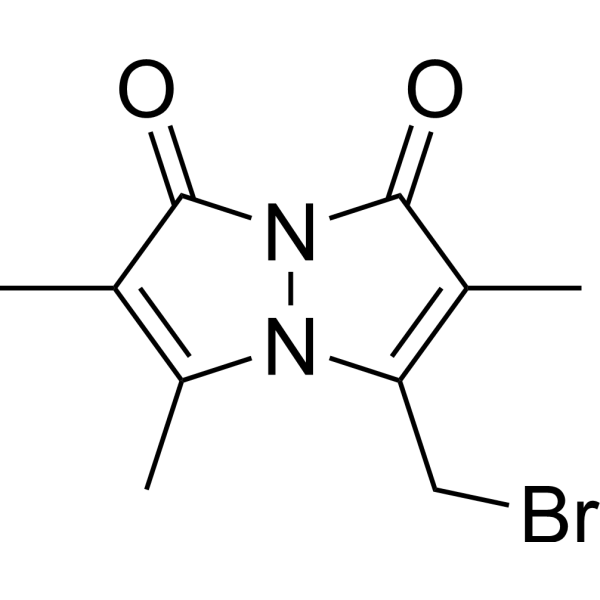
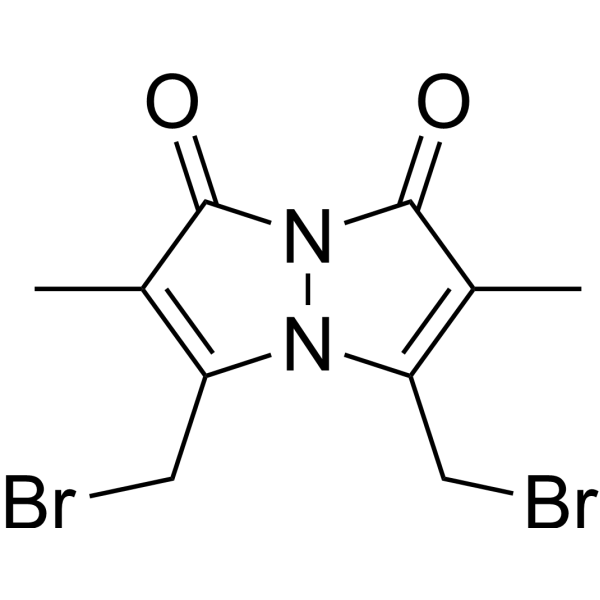
Bromobimane (Monobromobimane) is a nonfluorescent and converts into fluorescent products when reacts with thiols. Bromobimane has potential applications in labeling thiols .
|
-
-
- HY-D0098
-
|
N-(5-Fluoresceinyl)maleimide
|
Fluorescent Dye
|
Others
|
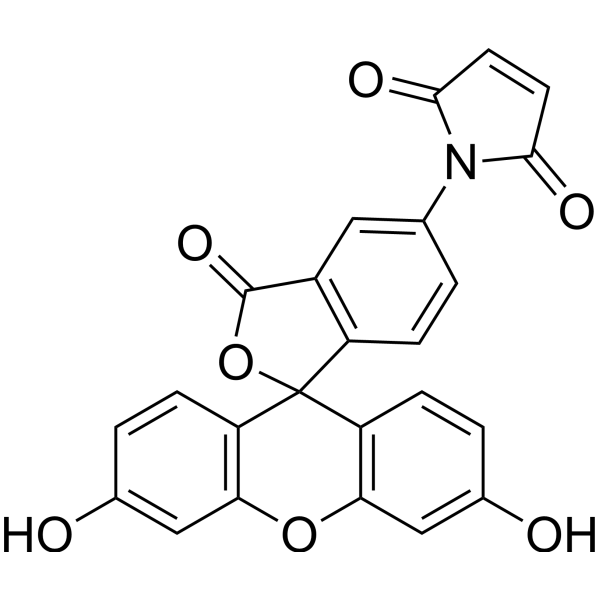
Fluorescein-5-maleimide (N-(5-Fluoresceinyl)maleimide) is a fluorescent dye. Fluorescein-5-maleimide can be used to detect the redox state of thiols in eukaryotic cells. Fluorescein-5-maleimide can label peptides and is used to detect negatively charged nanoparticles. Fluorescein-5-maleimide can also label actin to explore its interaction with cardiac myosin-binding protein C (cMyBP-C), which helps in developing small molecule modulators for heart failure. Fluorescein-5-maleimide can screen mutant proteins that contain cysteine residues. The excitation wavelength of Fluorescein-5-maleimide is 494 nm, and the emission wavelength is 519 nm .
|
-
-
- HY-15941
-
|
Fluorescein 5(6)-isothiocyanate; Fluorescein isothiocyanate 5- and 6- isomers
|
Fluorescent Dye
|
Others
|
|
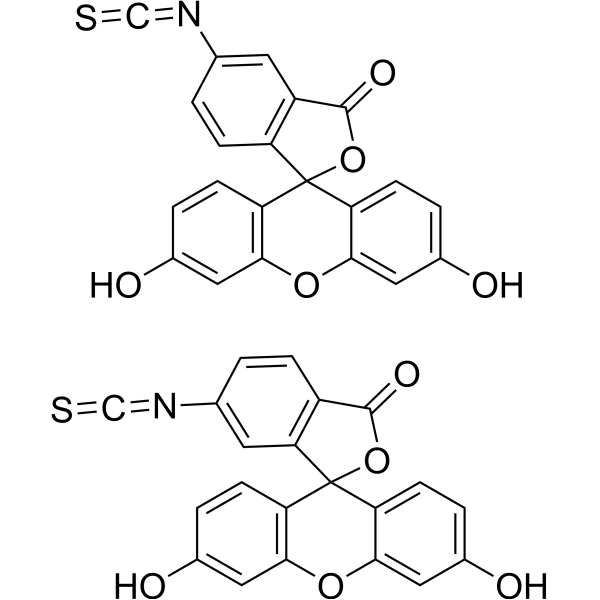
5(6)-FITC (Fluorescein 5(6)-isothiocyanate) is an amine-reactive derivative of a fluorescent dye, characterized by high absorbance and excellent fluorescence quantum yield. The isothiocyanate group of FITC can react with various functional groups on proteins, including amines, thiols, imidazoles, tyrosines and carbonyls, enabling the labeling of proteins such as antibodies and lectins. 5(6)-FITC has a wide range of applications, including flow cytometry, immunofluorescence, protease assays and conjugation. The maximum excitation/emission wavelengths are 492/518 nm .
|
-
-
- HY-D2906
-
|
|
Fluorescent Dye
|
Others
|
|
Alexa fluor 647 maleimide is a bright, far-red-emitting fluorescent dye for labeling of protein SH groups (Ex/Em = 656/670 nm). Alexa fluor 647 maleimide can be used to attach AF 647 fluorophore to proteins and peptides containing cysteine residues, as well as to other thiolated molecules (such as thiol-containing oligonucleotides). Alexa Fluor 647 maleimide is promising for research of cell biology, neuroscience, and disease diagnostics .
|
-
-
- HY-W011500S
-
|
|
Isotope-Labeled Compounds
|
Others
|
|
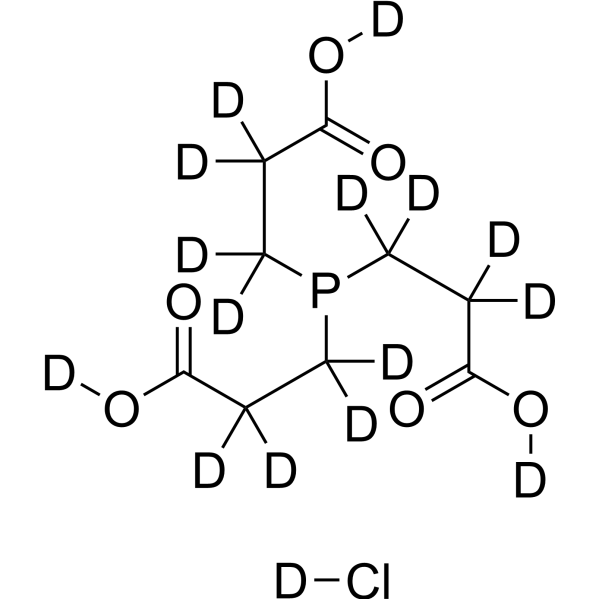
TCEP-d16 (hydrochloride) is the deuterium labeled TCEP hydrochloride . TCEP hydrochloride (Tris(2-carboxyethyl)phosphine hydrochloride) is a non-thiol reducing agent that is more stable and produces a faster S-S reductive reaction than other chemical reductants. TCEP hydrochloride is a trialkylphosphine, selectively reduces protein disuldes without altering the properties or interacting with thiol-directed agents in the reaction mixture. TCEP hydrochloride is also a commonly used reducing agent in the DNA/AuNP chemistry .
|
-
-
- HY-D0807
-
5-IAF
1 Publications Verification
5-Iodoacetamidofluorescein
|
Fluorescent Dye
|
Cancer
|
|
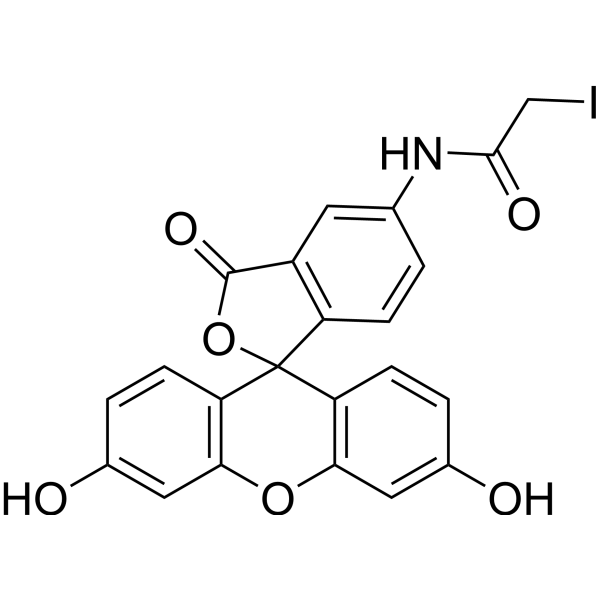
5-IAF (5-Iodoacetamidofluorescein) is an idoacetamide derivate of fluoresceine. 5-IAF can be used as fluorescent probe that labels proteins and other molecules having free thiols (cysteine side chains) .
|
-
-
- HY-123749
-
|
5-TMRIA
|
Fluorescent Dye
|
Others
|
|
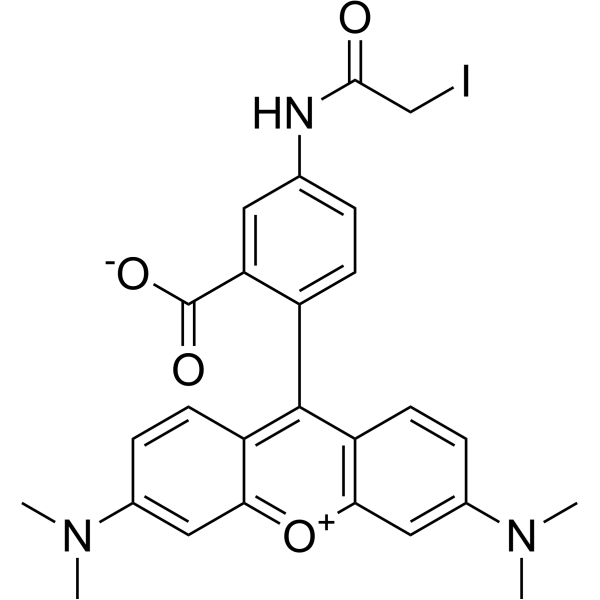
Tetramethylrhodamine-5-iodoacetamide (5-TMRIA) is a thiol-selective reactive dye that is used to non-specifically label proteins via the cysteine residues. Tetramethylrhodamine-5-iodoacetamide (5-TMRIA) can be used to covalently label DNA fragments .
|
-
-
- HY-D1605
-
|
|
Fluorescent Dye
|
Others
|
|
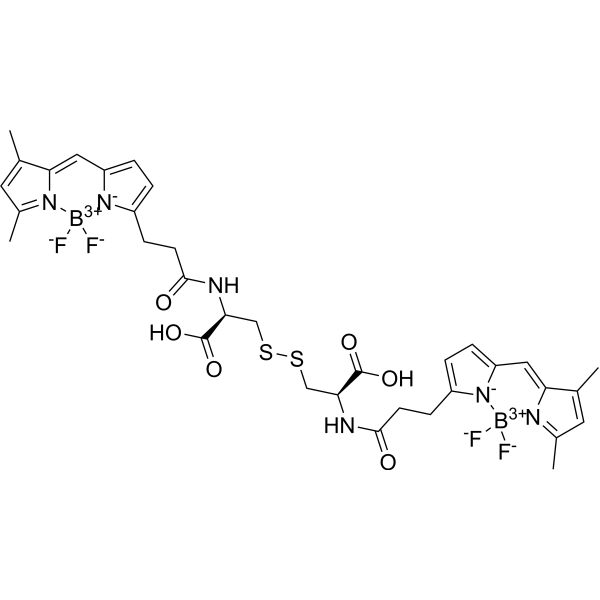
BODIPY FL L-Cystine is a thiol-reactive, green-fluorescent dye. BODIPY FL L-Cystine can be the labeling of membrane proteins, proteins with hydrophobic binding sites, or hydrophobic ligands. (λex=504 nm, λem=511 nm) .
|
-
-
- HY-W998680
-
|
5-FITC-Maleimide
|
Fluorescent Dye
|
Others
|
|
Fluorescein-maleimide (5-FITC-Maleimide) is a thiol-reactive fluorescent derivatization reagent and non-specific protein labeling reagent. Fluorescein-maleimide covalently binds to protein thiol groups for protein labeling. Fluorescein-maleimide covalently binds to protein amino and imidazole groups under neutral pH conditions. Fluorescein-maleimide is used for fluorescent labeling of proteins, nucleic acids or other molecules containing one or more thiol groups (Ex/Em = 494/519 nm) .
|
-
-
- HY-D1781
-
|
|
Fluorescent Dye
|
Others
|
|
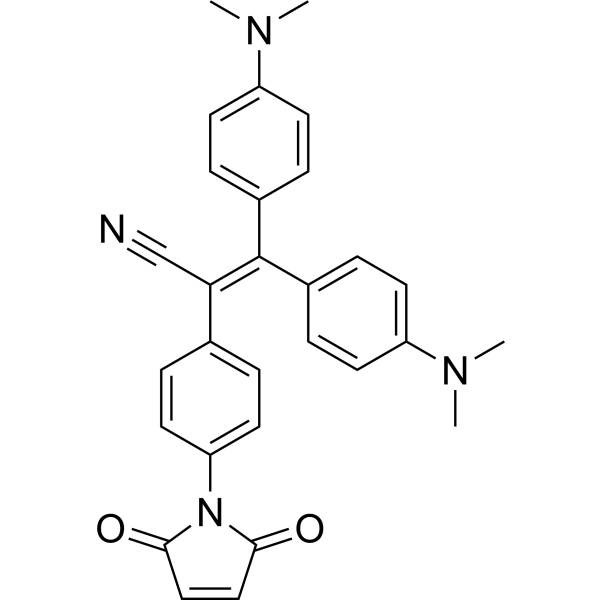
NTPAN-MI is a fluorescent probe (excitation wavelength: 405 nm). NTPAN-MI is selectively activated after labeling unfolded proteins with exposed thiols, thereby reporting the degree of protein homeostasis .
|
-
-
- HY-D2381
-
|
|
Fluorescent Dye
|
Others
|
|
AF 488 maleimide is a thiol-reactive dye used to label SH groups of proteins, which can attach the AF 488 fluorophore to cysteine residue-containing proteins and peptides as well as other thiolated molecules. AF 488 maleimide enables real-time visualization of dynamic pilus extension and retraction in live bacterial cells via epifluorescence microscopy (Ex/Em = 470/520 nm) .
|
-
-
- HY-D1390A
-
|
|
Fluorescent Dye
|
Others
|
|
Sulfo-Cy5-Mal is a fluorescent dye derivative composed of a CY5 dye and a maleimide functional group. Sulfo-Cy5-Mal specifically covalently binds to thiol-containing (-SH) biomolecules. Sulfo-Cy5-Mal can be used for protein labeling, antibody conjugation, molecular imaging, and drug delivery studies (Ex/Em = 633 nm/670 nm) .
|
-
-
- HY-130509
-
|
Otmpmms
|
Biochemical Assay Reagents
|
Others
|
|
MTSSL (Otmpmms) is highly reactive thiol-specific spin label, which is used to label protein thiol residues for protein structure and dynamics determination and protein-protein interaction studies .
|
-
-
- HY-N0394S1
-
-
-
- HY-D1261
-
|
thiol-green 1
|
Fluorescent Dye
|
Others
|
|
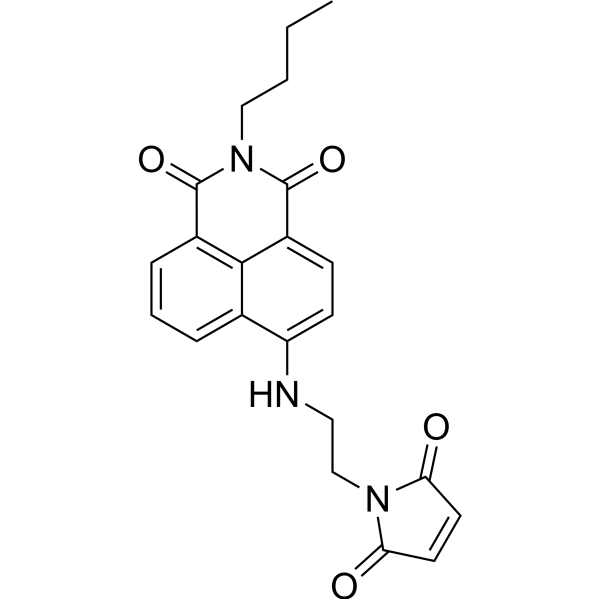
Naph-EA-mal (Thiol-green 1) is a rapid detect and ultrafast turn-on thiol fluorescence probe for protein labeling and bioimaging. Naph-EA-mal (Thiol-green 1) can be used to detect thiols in living cells, label the protein thiols, quantify the concentration of total thiols in cell lysate, and determine the reversible protein thiols oxidation in fixed cells . Ex: 488 nM; Em: 540 nM.
|
-
-
- HY-135235
-
|
|
Fluorescent Dye
|
Others
|
|
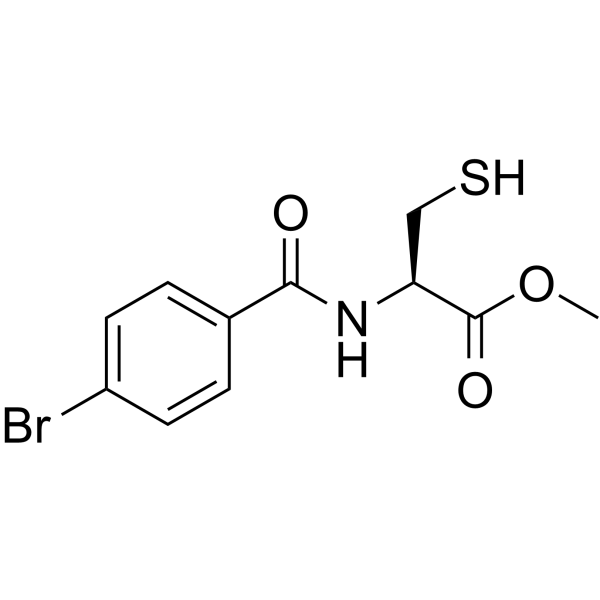
Cysteine Thiol Probe is a thiol-based probe designed to label electrophilic natural products. Cysteine Thiol Probe possesses each of the characteristics of an ideal pharmacophore probe, and has a chromophore. Cysteine Thiol Probe is capable of engaging enone-, β-lactam-, and β-lactone-based electrophilic metabolites .
|
-
-
- HY-N0394S4
-
|
|
Ferroptosis
Endogenous Metabolite
|
Others
|
|
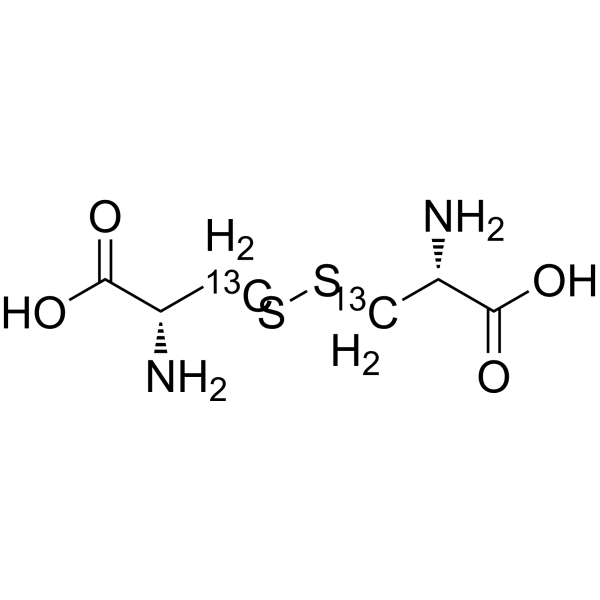
L-Cystine-3,3'- 13C2 is the 13C labeled L-Cystine . L-Cystine is an amino acid and intracellular thiol, which plays a critical role in the regulation of cellular processes .
|
-
-
- HY-119493
-
|
|
Fluorescent Dye
|
Others
|
|
MSBN is a highly selective fluorogenic probe for thiols. MSBN can be used to image thiols in live cells selectively and specifically label protein thiols with a signal to determine various reversible protein thiol modifications .
|
-
-
- HY-D2498
-
|
|
Fluorescent Dye
|
Others
|
|
Cy7 maleimide is a fluorescent dye containing a Maleimide (HY-W007324) functional group. Maleimide can be used to label thiol groups on antibodies, proteins and peptides .
|
-
-
- HY-N0394S2
-
|
|
Endogenous Metabolite
Ferroptosis
|
Others
|
|
L-Cystine- 15N2 is the 15N-labeled L-Cystine. L-Cystine is an amino acid and intracellular thiol, which plays a critical role in the regulation of cellular processes.
|
-
-
- HY-W012166
-
|
NHS-Bromoacetate
|
Biochemical Assay Reagents
|
Infection
|
|
N-Succinimidyl bromoacetate (NHS-Bromoacetate) is a heterobifunctional crosslinking reagent, mainly used to modify the ɛ-amino group of lysine side chains. By covalently linking its bromoacetyl moiety to the ɛ-amino group of lysine in peptidomimetics, N-Succinimidyl bromoacetate enables their conjugation with thiol-modified nanoparticles via thioether bonds. N-Succinimidyl bromoacetate also performs bromoacetylation modification on carrier proteins, which then forms stable thioether bonds with the thiol groups of cysteine in peptides, thus efficiently preparing soluble peptide-protein conjugates with high substitution ratios. N-Succinimidyl bromoacetate can be used to prepare activated Sepharose derivatives for affinity chromatography, protein affinity labeling reagents, and peptide-protein immunogen conjugates with non-immunogenic linkages. N-Succinimidyl bromoacetate is applicable to studies related to HIV-1 infection and glioblastoma multiforme .
|
-
-
- HY-D2448
-
|
|
Fluorescent Dye
|
Cancer
|
|
Cy3-PEG-Thiol (Cy3-PEG-SH) is a near infrared fluorescent labeling reagent that combines Cy3 fluorescent dye, polyethylene glycol (PEG) and sulfhydryl (SH) polyethylene glycol derivatives, and is suitable for molecular coupling. Cy3-PEG-Thiol is absorbed at 550nm and has high solubility and end-group substitution rate .
|
-
-
- HY-D1260
-
|
PSH-red
|
Fluorescent Dye
|
Neurological Disease
|
|
FM-red (PSH-red) is a red-emitting and environment-sensitive probe for selectively detecting and labeling protein thiols. FM-red can be used to image protein sulfhydryl groups in live cells and in vivo. FM-red also could be used to measure of the redox states of thioredoxin (Trx) .
|
-
-
- HY-W009299S
-
-
-
- HY-W010517S
-
-
-
- HY-W776833
-
|
Otmpmms-15N,d15
|
Isotope-Labeled Compounds
Biochemical Assay Reagents
|
Others
|
|
MTSSL- 15N,d15-1 (Otmpmms- 15N,d15) is the deuterium and 15N-labeled MTSSL (HY-130509). MTSSL (Otmpmms) is highly reactive thiol-specific spin label, which is used to label protein thiol residues for protein structure and dynamics determination and protein-protein interaction studies .
|
-
-
- HY-D2488
-
|
|
Fluorescent Dye
|
Others
|
|
Sulfo Cy5.5-maleimide is a fluorescent dye containing a Maleimide (HY-W007324) functional group. Maleimide can be used to label thiol groups on antibodies, proteins and peptides.
|
-
-
- HY-D0097
-
|
|
Fluorescent Dye
|
Others
|
|
7-Fluorobenzofurazan-4-sulfonic acid ammonium is a fluorescent label. 7-Fluorobenzofurazan-4-sulfonic acid ammonium can be used for detecting dissolved thiol-disulfide (e.g., Cys, GSH) .
|
-
-
- HY-W615327
-
|
|
Biochemical Assay Reagents
|
Others
|
|
Bis-sulfone NHS Ester is a bis-alkylating labeling reagent that is selective for the cysteine sulfur atoms from a native disulfide. These reagents undergo bis-alkylation to conjugate both thiols derived from the two cysteine residues of a reduced native disulfide bond such as the interchain disulfide bonds of an antibody. The reaction results in covalent rebridging of the disulfide bond via a three carbon bridge leaving the protein structurally intact.
|
-
-
- HY-W011814S
-
-
-
- HY-W176660S
-
-
-
- HY-W1048533H
-
|
Biotin-PEG1000-thiol
|
Biochemical Assay Reagents
|
Others
|
|
Biotin-PEG1000-SH (Biotin-PEG1000-Thiol) is a biotin PEG polymer containing a thiol (-SH). Biotin-labeled compounds can then be linked to avidin or streptavidin for further purification or detection .
|
-
-
- HY-118112
-
|
|
Biochemical Assay Reagents
|
Others
|
|
4-N-Maleimidobenzoicacid-NHS is a PEG linker that finds utility in bioconjugation endeavors and protein labeling ventures. Specifically designed for selective reaction with thiol groups, the maleimide group establishes covalent linkages, thereby facilitating the coupling of proteins, peptides, or diverse molecules to thiol-bearing biomolecules. The NHS ester is able to react specifically and efficiently with primary amines (e.g. the side chain of lysine residues or aminosilane-coated surfaces) at neutral or slightly basic conditions to form a covalent bond.
|
-
-
- HY-157920
-
|
N-Biotinyl-N'-[2-(N-maleimido)ethyl]piperazine
|
Biochemical Assay Reagents
|
Others
|
|
Biotin-PE-maleimide (N-Biotinyl-N'-[2-(N-maleimido)ethyl]piperazine) is a bulky, membrane-impermeable, sulfhydryl-containing reagent with a relatively large molecular size. Biotin-PE-maleimide can be used for biotin labeling (such as thiol groups) and detection of proteins or other biomolecules .
|
-
-
- HY-172291
-
|
|
ADC Linker
|
Cancer
|
|
Mal-amide-PEG8-Val-Cit-PAB-PNP is a cleavable ADC linker featuring a maleimide, a PEG spacer, a Val-Cit dipeptide, a PAB. and a PNP carbonate. Maleimide is a thiol-specific covalent linker which is used to label cysteine residues in proteins while the PNP group acts as a highly activated leaving group. Val-Cit linkers are cleaved by cytoplasmic peptidases.
|
-
-
- HY-D1390
-
|
|
Fluorescent Dye
|
Others
|
|
Sulfo-Cy5-Mal potassium is a fluorescent dye derivative composed of a CY5 dye and a maleimide functional group. Sulfo-Cy5-Mal potassium specifically covalently binds to thiol-containing (-SH) biomolecules. Sulfo-Cy5-Mal potassium can be used for protein labeling, antibody conjugation, molecular imaging, and drug delivery studies (Ex/Em = 633 nm/670 nm) .
|
-
-
- HY-D2510
-
|
|
Fluorescent Dye
|
Cancer
|
|
Cy3-PEG2000-SH (Cy3-PEG-Thiol) is a near infrared fluorescent labeling reagent that combines Cy3 fluorescent dye, polyethylene glycol (PEG) and sulfhydryl (SH) polyethylene glycol derivatives, and is suitable for molecular coupling. Cy3-PEG2000-SH is absorbed at 550nm and has high solubility and end-group substitution rate .
|
-
-
- HY-129846
-
|
|
Biochemical Assay Reagents
|
Others
|
|
IBTP iodide is a lipophilic cation and can be accumulated by mitochondria and yields stable thioether adducts in a thiol-specific
reaction. IBTP iodide can be used for specific labeling of mitochondrial protein thiols .
|
-
-
- HY-W010529S
-
-
-
- HY-W1048533C
-
|
Biotin-PEG5000-thiol
|
Biochemical Assay Reagents
|
Others
|
|
Biotin-PEG5000-SH (Biotin-PEG5000-Thiol) is a biotin PEG polymer containing a thiol (-SH). Biotin-labeled compounds can then be linked to avidin or streptavidin for further purification or detection .
|
-
-
- HY-W1048533A
-
|
Biotin-PEG2000-thiol,
|
Biochemical Assay Reagents
|
Others
|
|
Biotin-PEG2000-SH (Biotin-PEG2000-Thiol) is a biotin PEG polymer containing a thiol (-SH). Biotin-labeled compounds can then be linked to avidin or streptavidin for further purification or detection .
|
-
-
- HY-W192474S
-
-
-
- HY-W1048533E
-
|
Biotin-PEG20000-thiol
|
Biochemical Assay Reagents
|
Others
|
|
Biotin-PEG20000-SH (Biotin-PEG20000-Thiol) is a biotin PEG polymer containing a thiol (-SH). Biotin-labeled compounds can then be linked to avidin or streptavidin for further purification or detection .
|
-
-
- HY-130509S
-
|
Otmpmms-15N
|
Isotope-Labeled Compounds
Biochemical Assay Reagents
|
Others
|
|
MTSSL- 15N (Otmpmms- 15N) is the 15N-labeled MTSSL (HY-130509). MTSSL (Otmpmms) is highly reactive thiol-specific spin label, which is used to label protein thiol residues for protein structure and dynamics determination and protein-protein interaction studies .
|
-
-
- HY-156559
-
-
-
- HY-D0071
-
|
|
Fluorescent Dye
|
Others
|
|
N-4-(5,6-Dimethoxy-N-phthalimidinyl)phenylmaleimide is a fluorescence reagent for labeling thiol .
|
-
-
- HY-W777067
-
|
|
Isotope-Labeled Compounds
|
Others
|
|
3-Methyl-2-buten-1-yl Thiolacetate-d6 is the deuterium labeled 3-Methyl-2-buten-1-yl Thiolacetate(3-Methyl-2-buten-1-thiol precursor) (HY-W777066).
|
-
-
- HY-W699846
-
|
|
Isotope-Labeled Compounds
Biochemical Assay Reagents
|
Others
|
|
5-(Methoxy-d3)-1H-benzo[d]imidazole-2-thiol is the deuterium labeled 5-Methoxy-2-benzimidazolethiol (HY-W008378). 5-Methoxy-2-benzimidazolethiol is a benzimidazole. The iodimetric determination of 5-Methoxy-2-benzimidazolethiol in alkaline media is studied .
|
-
- HY-176085
-
|
|
Phospholipase
|
Others
|
|
Heptanoyl thio-PC is a sn-2 thiol-labeled Phospholipase A2 (HY-P3029) (PLA2) substrate that can be used to detect the activity of Phospholipase A2 .
|
-
- HY-157919
-
|
N-6-(Biotinylamino)hexanoyl-N'-[2-(N-maleimido)ethyl]piperazine, hydrochloride
|
Biochemical Assay Reagents
|
Others
|
|
Biotin-PEAC5-maleimide hydrochloride is a biochemical assay reagent, and can be used in biotin-PEAC5-maleimide (BPM)-labeling assay to assess modification of protein thiols by electrophiles .
|
-
- HY-W394551
-
|
|
Biochemical Assay Reagents
|
Others
|
|
Methyl 3,4-dibromo-2,5-dioxo-2,5-dihydro-1H-pyrrole-1-carboxylate is a small pyrrolidone molecule which features two bromine atoms and a methyl ester. The unsaturated dibromo motif is a covalent ligand for thiol groups, and may be used to label cysteine residues in proteins. The presence of two leaving groups on this molecule allows this linker to bind two thiols at a time. The methyl ester can be saponified to link this molecule to amines to form larger structures.
|
-
- HY-W700621
-
|
Tris(2-carboxyethyl)phosphine hydrochloride-d12
|
Isotope-Labeled Compounds
Others
|
Others
|
|
TCEP-d12 (hydrochloride) (Tris(2-?carboxyethyl)?phosphine hydrochloride-d12) is deuterium labeled TCEP (hydrochloride). TCEP hydrochloride (Tris(2-carboxyethyl)phosphine hydrochloride) is a non-thiol reducing agent that is more stable and produces a faster S-S reductive reaction than other chemical reductants. TCEP hydrochloride is a trialkylphosphine, selectively reduces protein disuldes without altering the properties or interacting with thiol-directed agents in the reaction mixture. TCEP hydrochloride is also a commonly used reducing agent in the DNA/AuNP chemistry .
|
-
- HY-B1217S
-
|
BNPD-d4; BNPK-d4
|
Isotope-Labeled Compounds
Bacterial
|
Infection
|
|
Bronopol-d4 is deuterium labeled Bronopol. Bronopol is an antibacterial agent with low toxicity (to mammals) and high activity (especially against Gram-negative bacteria). Bronopol oxidizes protein thiols, inhibits enzymatic activity, and exhibits antibacterial activity. Bronopol is also a formaldehyde releaser .
|
-
- HY-D2150
-
|
|
Fluorescent Dye
|
Others
|
|
AF 430 maleimide is a derivative of the yellow fluorescent dye AF 430. AF430 has an excitation wavelength of 425 nm and an emission wavelength of 542 nm. AF 430 maleimide contains maleimide groups that react with thiol groups to form covalent bonds. To achieve specific coupling of dye labels and biomolecules .
|
-
- HY-W800720
-
|
|
Biochemical Assay Reagents
|
Others
|
|
(S)-2-amino-4-(2-(pyridin-2-yl)disulfanyl)butanoic acid is a small molecule reagent with a 2-thiopyridine linked to a short amino acid. SPDP is a thiol-specific labeling reagent, commonly used in reversibly binding cysteine residues on proteins. The disulfide bond it forms with the cysteine is selectively cleaved in the reducing environment of the cell cytoplasm.
|
-
- HY-W020050S
-
|
|
Apoptosis
Caspase
Glutaminase
|
Cancer
|
|
Cystamine-d8 (dihydrochloride) is the deuterium labeled Cystamine (dihydrochloride) . Cystamine (dihydrochloride) is the disulfide form of the free thiol, cysteamine. Cystamine is an orally active transglutaminase (Tgase) inhibitor. Cystamine also has inhibition activity for caspase-3 with an IC50 value of 23.6 μM. Cystamine can be used for the research of severals diseases including Huntington's disease (HD) .
|
-
- HY-D2513
-
|
|
Fluorescent Dye
|
Cancer
|
|
Cy3-PEG10000-SH (Cy3-PEG-Thiol) is a near infrared fluorescent labeling reagent that combines Cy3 fluorescent dye, polyethylene glycol (PEG) and sulfhydryl (SH) polyethylene glycol derivatives, and is suitable for molecular coupling. Cy3-PEG10000-SH is absorbed at 550nm and has high solubility and end-group substitution rate .
|
-
- HY-D2511
-
|
|
Fluorescent Dye
|
Cancer
|
|
Cy3-PEG3400-SH (Cy3-PEG-Thiol) is a near infrared fluorescent labeling reagent that combines Cy3 fluorescent dye, polyethylene glycol (PEG) and sulfhydryl (SH) polyethylene glycol derivatives, and is suitable for molecular coupling. Cy3-PEG3400-SH is absorbed at 550nm and has high solubility and end-group substitution rate .
|
-
- HY-B0368S
-
|
SQ 14225-d3
|
Isotope-Labeled Compounds
Angiotensin-converting Enzyme (ACE)
|
Cardiovascular Disease
|
|
Captopril-d3 is deuterium labeled Captopril. Captopril (SQ 14225), antihypertensive agent, is a thiol-containing competitive, orally active angiotensin-converting enzyme (ACE) inhibitor (IC50=0.025 μM) and has been widely used for research of hypertension and congestive heart failure. Captopril is also a New Delhi metallo-β-lactamase-1 (NDM-1) inhibitor with an IC50 of 7.9 μM .
|
-
- HY-W190952
-
|
|
Biochemical Assay Reagents
|
Others
|
|
Bis-sulfone-PEG4-NHS Ester is a bis-alkylating labeling reagent that is selective for the cysteine sulfur atoms from a native disulfide. These reagents undergo bis-alkylation to conjugate both thiols derived from the two cysteine residues of a reduced native disulfide bond such as the interchain disulfide bonds of an antibody. The reaction results in covalent rebridging of the disulfide bond via a three carbon bridge leaving the protein structurally intact. The hydrophilic PEG spacer increases solubility in aqueous media.
|
-
- HY-B0368S1
-
|
SQ 14225-13C5,15N
|
Isotope-Labeled Compounds
Angiotensin-converting Enzyme (ACE)
|
Cardiovascular Disease
Cancer
|
|
Captopril- 13C5, 15N (SQ 14225- 13C5, 15N) is 13C and 15N labeled Captopril. Captopril (SQ 14225), antihypertensive agent, is a thiol-containing competitive, orally active angiotensin-converting enzyme (ACE) inhibitor (IC50=0.025 μM) and has been widely used for research of hypertension and congestive heart failure. Captopril is also a New Delhi metallo-β-lactamase-1 (NDM-1) inhibitor with an IC50 of 7.9 μM .
|
-
- HY-W1127976S
-
-
- HY-W1048533D
-
|
Biotin-PEG10000-thiol
|
Biochemical Assay Reagents
|
Others
|
|
Biotin-PEG10000-SH (Biotin-PEG10000-Thiol) is a biotin PEG polymer containing a thiol (-SH). Biotin-labeled compounds can then be linked to avidin or streptavidin for further purification or detection .
|
-
- HY-W1048533I
-
|
Biotin-PEG3400-thiol
|
Biochemical Assay Reagents
|
Others
|
|
Biotin-PEG3400-SH (Biotin-PEG3400-Thiol) is a biotin PEG polymer containing a thiol (-SH). Biotin-labeled compounds can then be linked to avidin or streptavidin for further purification or detection .
|
-
- HY-W1048533J
-
|
Biotin-PEG40000-thiol
|
Biochemical Assay Reagents
|
Others
|
|
Biotin-PEG40000-SH (Biotin-PEG40000-Thiol) is a biotin PEG polymer containing a thiol (-SH). Biotin-labeled compounds can then be linked to avidin or streptavidin for further purification or detection .
|
-
- HY-100041R
-
|
Monobromobimane (Standard)
|
Fluorescent Dye
Reference Standards
|
Others
|
|
Bromobimane (Standard) is the analytical standard of Bromobimane (HY-100041). This product is intended for research and analytical applications. Bromobimane (Monobromobimane) is a nonfluorescent and converts into fluorescent products when reacts with thiols. Bromobimane has potential applications in labeling thiols .
|
-
- HY-W615173
-
|
|
Biochemical Assay Reagents
|
Others
|
|
NHS ester-C2-NHCO-C2-NHS is a heterobifunctional PEG linker, featuring a terminal NHS ester that can be used to label amine compounds and maleimide group for reactions with thiol groups.
|
-
- HY-D3052
-
|
|
Fluorescent Dye
|
Others
|
|
5(6)-carbonylated rhodamine 110 maleimide is a maleimide-based fluorescent reagent based on 5(6)-carbonylated rhodamine 110. Maleimide can be labeled by forming a stable thioester structure through an affinity addition reaction with a thiol group (-SH) (Ex/Em = 502/527 nm).
|
-
- HY-D3056
-
|
|
Fluorescent Dye
|
Others
|
|
5(6)-Rhodamine 6G maleimide is a maleimide-based fluorescent reagent based on Rhodamine 6G (HY-D0309). Maleimide can be labeled by forming a stable thioester structure through an affinity addition reaction with a thiol group (-SH) (Ex/Em = 526/547 nm).
|
-
- HY-W578278
-
|
|
Biochemical Assay Reagents
|
Others
|
|
tert-Butyl (2-(pyridin-2-yldisulfanyl)ethyl)carbamate consists of a tert-butyl group, where the protected amine can be deprotected under mild acidic conditions, and the other part of the molecule may act as a thiol-specific labeling reagent, commonly used in reversibly binding cysteine residues on proteins.
|
-
- HY-W722107
-
|
1,3-Thiazolidine-4-carboxylic acid-d4
|
Isotope-Labeled Compounds
Amino Acid Derivatives
|
Cardiovascular Disease
Cancer
|
|
Timonacic-d4 (1,3-Thiazolidine-4-carboxylic acid-d4) is deuterium labeled Timonacic. Timonacic (1,3-Thiazolidine-4-carboxylic acid) is a thiol antioxidant. Timonacic has anti-aging and anti-hepatotoxic effects, and it can be used to study acute illnesses and liver diseases, by inducing reversal, it is also used in research on certain cancer cases .
|
-
- HY-W800627
-
|
|
Biochemical Assay Reagents
|
Others
|
|
Bis-sulfone-PEG8-NHS Ester is a bis-alkylating labeling reagent that is selective for the cysteine sulfur atoms from a native disulfide. These reagents undergo bis-alkylation to conjugate both thiols derived from the two cysteine residues of a reduced native disulfide bond such as the interchain disulfide bonds of an antibody. The reaction results in covalent rebridging of the disulfide bond via a three carbon bridge leaving the protein structurally intact. The hydrophilic PEG spacer increases solubility in aqueous media.
|
-
- HY-DY1088
-
|
N-(5-Fluoresceinyl)maleimide (solution)
|
Fluorescent Dye
|
Others
|
Fluorescein-5-maleimide (solution) (N-(5-Fluoresceinyl)maleimide (solution)) is a fluorescent dye. Fluorescein-5-maleimide can be used to detect the redox state of thiols in eukaryotic cells. Fluorescein-5-maleimide can label peptides and is used to detect negatively charged nanoparticles. Fluorescein-5-maleimide can also label actin to explore its interaction with cardiac myosin-binding protein C (cMyBP-C), which helps in developing small molecule modulators for heart failure. Fluorescein-5-maleimide can screen mutant proteins that contain cysteine residues. The excitation wavelength of Fluorescein-5-maleimide is 494 nm, and the emission wavelength is 519 nm .
Solvent and concentration: DMSO: 10 mM
|
-
| Cat. No. |
Product Name |
Type |
-
- HY-138200
-
|
Cyanine5 maleimide
|
Fluorescent Dye
|
|
Cy5 maleimide (Cyanine5 maleimide) is a single-reactive dye containing a maleimide group and a CY5 fluorescent group, which can selectively couple with a thiol group. Cy5 maleimide can be used to label antibodies, peptides, or proteins (Ex/Em = 646/664 nm).
|
-
- HY-100041
-
Bromobimane
Maximum Cited Publications
8 Publications Verification
Monobromobimane
|
Fluorescent Dye
|
|
Bromobimane (Monobromobimane) is a nonfluorescent and converts into fluorescent products when reacts with thiols. Bromobimane has potential applications in labeling thiols .
|
-
- HY-D0098
-
|
N-(5-Fluoresceinyl)maleimide
|
Fluorescent Dye
|
Fluorescein-5-maleimide (N-(5-Fluoresceinyl)maleimide) is a fluorescent dye. Fluorescein-5-maleimide can be used to detect the redox state of thiols in eukaryotic cells. Fluorescein-5-maleimide can label peptides and is used to detect negatively charged nanoparticles. Fluorescein-5-maleimide can also label actin to explore its interaction with cardiac myosin-binding protein C (cMyBP-C), which helps in developing small molecule modulators for heart failure. Fluorescein-5-maleimide can screen mutant proteins that contain cysteine residues. The excitation wavelength of Fluorescein-5-maleimide is 494 nm, and the emission wavelength is 519 nm .
|
-
- HY-15941
-
|
Fluorescein 5(6)-isothiocyanate; Fluorescein isothiocyanate 5- and 6- isomers
|
Fluorescent Dye
|
|
5(6)-FITC (Fluorescein 5(6)-isothiocyanate) is an amine-reactive derivative of a fluorescent dye, characterized by high absorbance and excellent fluorescence quantum yield. The isothiocyanate group of FITC can react with various functional groups on proteins, including amines, thiols, imidazoles, tyrosines and carbonyls, enabling the labeling of proteins such as antibodies and lectins. 5(6)-FITC has a wide range of applications, including flow cytometry, immunofluorescence, protease assays and conjugation. The maximum excitation/emission wavelengths are 492/518 nm .
|
-
- HY-D2906
-
|
|
Fluorescent Dye
|
|
Alexa fluor 647 maleimide is a bright, far-red-emitting fluorescent dye for labeling of protein SH groups (Ex/Em = 656/670 nm). Alexa fluor 647 maleimide can be used to attach AF 647 fluorophore to proteins and peptides containing cysteine residues, as well as to other thiolated molecules (such as thiol-containing oligonucleotides). Alexa Fluor 647 maleimide is promising for research of cell biology, neuroscience, and disease diagnostics .
|
-
- HY-D0807
-
5-IAF
1 Publications Verification
5-Iodoacetamidofluorescein
|
Fluorescent Dye
|
|
5-IAF (5-Iodoacetamidofluorescein) is an idoacetamide derivate of fluoresceine. 5-IAF can be used as fluorescent probe that labels proteins and other molecules having free thiols (cysteine side chains) .
|
-
- HY-123749
-
|
5-TMRIA
|
Fluorescent Dye
|
|
Tetramethylrhodamine-5-iodoacetamide (5-TMRIA) is a thiol-selective reactive dye that is used to non-specifically label proteins via the cysteine residues. Tetramethylrhodamine-5-iodoacetamide (5-TMRIA) can be used to covalently label DNA fragments .
|
-
- HY-D1605
-
|
|
Fluorescent Dye
|
|
BODIPY FL L-Cystine is a thiol-reactive, green-fluorescent dye. BODIPY FL L-Cystine can be the labeling of membrane proteins, proteins with hydrophobic binding sites, or hydrophobic ligands. (λex=504 nm, λem=511 nm) .
|
-
- HY-W998680
-
|
5-FITC-Maleimide
|
Fluorescent Dye
|
|
Fluorescein-maleimide (5-FITC-Maleimide) is a thiol-reactive fluorescent derivatization reagent and non-specific protein labeling reagent. Fluorescein-maleimide covalently binds to protein thiol groups for protein labeling. Fluorescein-maleimide covalently binds to protein amino and imidazole groups under neutral pH conditions. Fluorescein-maleimide is used for fluorescent labeling of proteins, nucleic acids or other molecules containing one or more thiol groups (Ex/Em = 494/519 nm) .
|
-
- HY-D1781
-
|
|
Fluorescent Dye
|
|
NTPAN-MI is a fluorescent probe (excitation wavelength: 405 nm). NTPAN-MI is selectively activated after labeling unfolded proteins with exposed thiols, thereby reporting the degree of protein homeostasis .
|
-
- HY-D2381
-
|
|
Fluorescent Dye
|
|
AF 488 maleimide is a thiol-reactive dye used to label SH groups of proteins, which can attach the AF 488 fluorophore to cysteine residue-containing proteins and peptides as well as other thiolated molecules. AF 488 maleimide enables real-time visualization of dynamic pilus extension and retraction in live bacterial cells via epifluorescence microscopy (Ex/Em = 470/520 nm) .
|
-
- HY-D1390A
-
|
|
Fluorescent Dye
|
|
Sulfo-Cy5-Mal is a fluorescent dye derivative composed of a CY5 dye and a maleimide functional group. Sulfo-Cy5-Mal specifically covalently binds to thiol-containing (-SH) biomolecules. Sulfo-Cy5-Mal can be used for protein labeling, antibody conjugation, molecular imaging, and drug delivery studies (Ex/Em = 633 nm/670 nm) .
|
-
- HY-D1261
-
|
thiol-green 1
|
Fluorescent Dye
|
|
Naph-EA-mal (Thiol-green 1) is a rapid detect and ultrafast turn-on thiol fluorescence probe for protein labeling and bioimaging. Naph-EA-mal (Thiol-green 1) can be used to detect thiols in living cells, label the protein thiols, quantify the concentration of total thiols in cell lysate, and determine the reversible protein thiols oxidation in fixed cells . Ex: 488 nM; Em: 540 nM.
|
-
- HY-D2498
-
|
|
Fluorescent Dye
|
|
Cy7 maleimide is a fluorescent dye containing a Maleimide (HY-W007324) functional group. Maleimide can be used to label thiol groups on antibodies, proteins and peptides .
|
-
- HY-D2448
-
|
|
Fluorescent Dye
|
|
Cy3-PEG-Thiol (Cy3-PEG-SH) is a near infrared fluorescent labeling reagent that combines Cy3 fluorescent dye, polyethylene glycol (PEG) and sulfhydryl (SH) polyethylene glycol derivatives, and is suitable for molecular coupling. Cy3-PEG-Thiol is absorbed at 550nm and has high solubility and end-group substitution rate .
|
-
- HY-D1260
-
|
PSH-red
|
Fluorescent Dye
|
|
FM-red (PSH-red) is a red-emitting and environment-sensitive probe for selectively detecting and labeling protein thiols. FM-red can be used to image protein sulfhydryl groups in live cells and in vivo. FM-red also could be used to measure of the redox states of thioredoxin (Trx) .
|
-
- HY-D2488
-
|
|
Fluorescent Dye
|
|
Sulfo Cy5.5-maleimide is a fluorescent dye containing a Maleimide (HY-W007324) functional group. Maleimide can be used to label thiol groups on antibodies, proteins and peptides.
|
-
- HY-D0097
-
|
|
Fluorescent Dye
|
|
7-Fluorobenzofurazan-4-sulfonic acid ammonium is a fluorescent label. 7-Fluorobenzofurazan-4-sulfonic acid ammonium can be used for detecting dissolved thiol-disulfide (e.g., Cys, GSH) .
|
-
- HY-D1390
-
|
|
Fluorescent Dye
|
|
Sulfo-Cy5-Mal potassium is a fluorescent dye derivative composed of a CY5 dye and a maleimide functional group. Sulfo-Cy5-Mal potassium specifically covalently binds to thiol-containing (-SH) biomolecules. Sulfo-Cy5-Mal potassium can be used for protein labeling, antibody conjugation, molecular imaging, and drug delivery studies (Ex/Em = 633 nm/670 nm) .
|
-
- HY-D2510
-
|
|
Fluorescent Dye
|
|
Cy3-PEG2000-SH (Cy3-PEG-Thiol) is a near infrared fluorescent labeling reagent that combines Cy3 fluorescent dye, polyethylene glycol (PEG) and sulfhydryl (SH) polyethylene glycol derivatives, and is suitable for molecular coupling. Cy3-PEG2000-SH is absorbed at 550nm and has high solubility and end-group substitution rate .
|
-
- HY-D0071
-
|
|
Fluorescent Dye
|
|
N-4-(5,6-Dimethoxy-N-phthalimidinyl)phenylmaleimide is a fluorescence reagent for labeling thiol .
|
-
- HY-D2150
-
|
|
Fluorescent Dye
|
|
AF 430 maleimide is a derivative of the yellow fluorescent dye AF 430. AF430 has an excitation wavelength of 425 nm and an emission wavelength of 542 nm. AF 430 maleimide contains maleimide groups that react with thiol groups to form covalent bonds. To achieve specific coupling of dye labels and biomolecules .
|
-
- HY-D2513
-
|
|
Fluorescent Dye
|
|
Cy3-PEG10000-SH (Cy3-PEG-Thiol) is a near infrared fluorescent labeling reagent that combines Cy3 fluorescent dye, polyethylene glycol (PEG) and sulfhydryl (SH) polyethylene glycol derivatives, and is suitable for molecular coupling. Cy3-PEG10000-SH is absorbed at 550nm and has high solubility and end-group substitution rate .
|
-
- HY-D2511
-
|
|
Fluorescent Dye
|
|
Cy3-PEG3400-SH (Cy3-PEG-Thiol) is a near infrared fluorescent labeling reagent that combines Cy3 fluorescent dye, polyethylene glycol (PEG) and sulfhydryl (SH) polyethylene glycol derivatives, and is suitable for molecular coupling. Cy3-PEG3400-SH is absorbed at 550nm and has high solubility and end-group substitution rate .
|
-
- HY-100041R
-
|
Monobromobimane (Standard)
|
Fluorescent Dye
|
|
Bromobimane (Standard) is the analytical standard of Bromobimane (HY-100041). This product is intended for research and analytical applications. Bromobimane (Monobromobimane) is a nonfluorescent and converts into fluorescent products when reacts with thiols. Bromobimane has potential applications in labeling thiols .
|
-
- HY-D3052
-
|
|
Fluorescent Dye
|
|
5(6)-carbonylated rhodamine 110 maleimide is a maleimide-based fluorescent reagent based on 5(6)-carbonylated rhodamine 110. Maleimide can be labeled by forming a stable thioester structure through an affinity addition reaction with a thiol group (-SH) (Ex/Em = 502/527 nm).
|
-
- HY-D3056
-
|
|
Fluorescent Dye
|
|
5(6)-Rhodamine 6G maleimide is a maleimide-based fluorescent reagent based on Rhodamine 6G (HY-D0309). Maleimide can be labeled by forming a stable thioester structure through an affinity addition reaction with a thiol group (-SH) (Ex/Em = 526/547 nm).
|
-
- HY-DY1088
-
|
N-(5-Fluoresceinyl)maleimide (solution)
|
Fluorescent Dye
|
Fluorescein-5-maleimide (solution) (N-(5-Fluoresceinyl)maleimide (solution)) is a fluorescent dye. Fluorescein-5-maleimide can be used to detect the redox state of thiols in eukaryotic cells. Fluorescein-5-maleimide can label peptides and is used to detect negatively charged nanoparticles. Fluorescein-5-maleimide can also label actin to explore its interaction with cardiac myosin-binding protein C (cMyBP-C), which helps in developing small molecule modulators for heart failure. Fluorescein-5-maleimide can screen mutant proteins that contain cysteine residues. The excitation wavelength of Fluorescein-5-maleimide is 494 nm, and the emission wavelength is 519 nm .
Solvent and concentration: DMSO: 10 mM
|
| Cat. No. |
Product Name |
Type |
-
- HY-136769
-
|
|
Biochemical Assay Reagents
|
|
Biotin-HPDP is a biochemical reagent. Biotin-HPDP can couple with GMPS and label free protein thiols. Biotin-HPDP can be used as a biological material or organic compound for life science related research .
|
-
- HY-W1048533H
-
|
Biotin-PEG1000-thiol
|
Biochemical Assay Reagents
|
|
Biotin-PEG1000-SH (Biotin-PEG1000-Thiol) is a biotin PEG polymer containing a thiol (-SH). Biotin-labeled compounds can then be linked to avidin or streptavidin for further purification or detection .
|
-
- HY-157920
-
|
N-Biotinyl-N'-[2-(N-maleimido)ethyl]piperazine
|
Biochemical Assay Reagents
|
|
Biotin-PE-maleimide (N-Biotinyl-N'-[2-(N-maleimido)ethyl]piperazine) is a bulky, membrane-impermeable, sulfhydryl-containing reagent with a relatively large molecular size. Biotin-PE-maleimide can be used for biotin labeling (such as thiol groups) and detection of proteins or other biomolecules .
|
-
- HY-W1048533C
-
|
Biotin-PEG5000-thiol
|
Biochemical Assay Reagents
|
|
Biotin-PEG5000-SH (Biotin-PEG5000-Thiol) is a biotin PEG polymer containing a thiol (-SH). Biotin-labeled compounds can then be linked to avidin or streptavidin for further purification or detection .
|
-
- HY-W1048533A
-
|
Biotin-PEG2000-thiol,
|
Biochemical Assay Reagents
|
|
Biotin-PEG2000-SH (Biotin-PEG2000-Thiol) is a biotin PEG polymer containing a thiol (-SH). Biotin-labeled compounds can then be linked to avidin or streptavidin for further purification or detection .
|
-
- HY-W1048533E
-
|
Biotin-PEG20000-thiol
|
Biochemical Assay Reagents
|
|
Biotin-PEG20000-SH (Biotin-PEG20000-Thiol) is a biotin PEG polymer containing a thiol (-SH). Biotin-labeled compounds can then be linked to avidin or streptavidin for further purification or detection .
|
-
- HY-157919
-
|
N-6-(Biotinylamino)hexanoyl-N'-[2-(N-maleimido)ethyl]piperazine, hydrochloride
|
Biochemical Assay Reagents
|
|
Biotin-PEAC5-maleimide hydrochloride is a biochemical assay reagent, and can be used in biotin-PEAC5-maleimide (BPM)-labeling assay to assess modification of protein thiols by electrophiles .
|
-
- HY-W1048533D
-
|
Biotin-PEG10000-thiol
|
Biochemical Assay Reagents
|
|
Biotin-PEG10000-SH (Biotin-PEG10000-Thiol) is a biotin PEG polymer containing a thiol (-SH). Biotin-labeled compounds can then be linked to avidin or streptavidin for further purification or detection .
|
-
- HY-W1048533I
-
|
Biotin-PEG3400-thiol
|
Biochemical Assay Reagents
|
|
Biotin-PEG3400-SH (Biotin-PEG3400-Thiol) is a biotin PEG polymer containing a thiol (-SH). Biotin-labeled compounds can then be linked to avidin or streptavidin for further purification or detection .
|
-
- HY-W1048533J
-
|
Biotin-PEG40000-thiol
|
Biochemical Assay Reagents
|
|
Biotin-PEG40000-SH (Biotin-PEG40000-Thiol) is a biotin PEG polymer containing a thiol (-SH). Biotin-labeled compounds can then be linked to avidin or streptavidin for further purification or detection .
|
| Cat. No. |
Product Name |
Chemical Structure |
-
- HY-W011500S
-
1 Publications Verification
|
|
TCEP-d16 (hydrochloride) is the deuterium labeled TCEP hydrochloride . TCEP hydrochloride (Tris(2-carboxyethyl)phosphine hydrochloride) is a non-thiol reducing agent that is more stable and produces a faster S-S reductive reaction than other chemical reductants. TCEP hydrochloride is a trialkylphosphine, selectively reduces protein disuldes without altering the properties or interacting with thiol-directed agents in the reaction mixture. TCEP hydrochloride is also a commonly used reducing agent in the DNA/AuNP chemistry .
|
-
-
- HY-N0394S1
-
1 Publications Verification
|
|
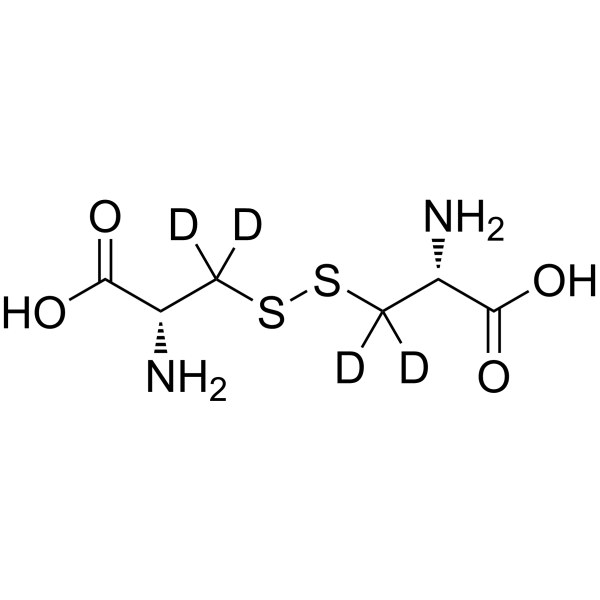
L-Cystine-d4 is the deuterium labeled L-Cystine. L-Cystine is an amino acid and intracellular thiol, which plays a critical role in the regulation of cellular processes.
|
-
-
- HY-N0394S4
-
1 Publications Verification
|
|
L-Cystine-3,3'- 13C2 is the 13C labeled L-Cystine . L-Cystine is an amino acid and intracellular thiol, which plays a critical role in the regulation of cellular processes .
|
-
-
- HY-N0394S2
-
|
|
|
L-Cystine- 15N2 is the 15N-labeled L-Cystine. L-Cystine is an amino acid and intracellular thiol, which plays a critical role in the regulation of cellular processes.
|
-
-
- HY-W009299S
-
|
|
|
Octadecane-1-thiol-d37 is the deuterium labeled Octadecane-1-thiol .
|
-
-
- HY-W010517S
-
|
|
|
1-Methyl-5-mercapto-1,2,3,4-tetrazole-d3 is the deuterium labeled 1-Methyl-1H-tetrazole-5-thiol .
|
-
-
- HY-W776833
-
|
|
|
MTSSL- 15N,d15-1 (Otmpmms- 15N,d15) is the deuterium and 15N-labeled MTSSL (HY-130509). MTSSL (Otmpmms) is highly reactive thiol-specific spin label, which is used to label protein thiol residues for protein structure and dynamics determination and protein-protein interaction studies .
|
-
-
- HY-W011814S
-
|
|
|
Hexadecane-1-thiol-d33 is the deuterium labeled Hexadecane-1-thiol .
|
-
-
- HY-W176660S
-
|
|
|
3-Methylbut-2-ene-1-thiol-d6 is deuterated labeled 3-Methylbut-2-ene-1-thiol.
|
-
-
- HY-W010529S
-
|
|
|
2-Methylfuran-3-thiol-d3 is deuterated labeled 2-Methylfuran-3-thiol.
|
-
-
- HY-W192474S
-
|
|
|
1-(Furan-2-yl)ethane-1-thiol-d3 is deuterated labeled 1-(Furan-2-yl)ethane-1-thiol.
|
-
-
- HY-130509S
-
|
|
|
MTSSL- 15N (Otmpmms- 15N) is the 15N-labeled MTSSL (HY-130509). MTSSL (Otmpmms) is highly reactive thiol-specific spin label, which is used to label protein thiol residues for protein structure and dynamics determination and protein-protein interaction studies .
|
-
-
- HY-W777067
-
|
|
|
3-Methyl-2-buten-1-yl Thiolacetate-d6 is the deuterium labeled 3-Methyl-2-buten-1-yl Thiolacetate(3-Methyl-2-buten-1-thiol precursor) (HY-W777066).
|
-
-
- HY-W699846
-
|
|
|
5-(Methoxy-d3)-1H-benzo[d]imidazole-2-thiol is the deuterium labeled 5-Methoxy-2-benzimidazolethiol (HY-W008378). 5-Methoxy-2-benzimidazolethiol is a benzimidazole. The iodimetric determination of 5-Methoxy-2-benzimidazolethiol in alkaline media is studied .
|
-
-
- HY-W700621
-
|
|
|
TCEP-d12 (hydrochloride) (Tris(2-?carboxyethyl)?phosphine hydrochloride-d12) is deuterium labeled TCEP (hydrochloride). TCEP hydrochloride (Tris(2-carboxyethyl)phosphine hydrochloride) is a non-thiol reducing agent that is more stable and produces a faster S-S reductive reaction than other chemical reductants. TCEP hydrochloride is a trialkylphosphine, selectively reduces protein disuldes without altering the properties or interacting with thiol-directed agents in the reaction mixture. TCEP hydrochloride is also a commonly used reducing agent in the DNA/AuNP chemistry .
|
-
-
- HY-B1217S
-
|
|
|
Bronopol-d4 is deuterium labeled Bronopol. Bronopol is an antibacterial agent with low toxicity (to mammals) and high activity (especially against Gram-negative bacteria). Bronopol oxidizes protein thiols, inhibits enzymatic activity, and exhibits antibacterial activity. Bronopol is also a formaldehyde releaser .
|
-
-
- HY-W020050S
-
|
|
|
Cystamine-d8 (dihydrochloride) is the deuterium labeled Cystamine (dihydrochloride) . Cystamine (dihydrochloride) is the disulfide form of the free thiol, cysteamine. Cystamine is an orally active transglutaminase (Tgase) inhibitor. Cystamine also has inhibition activity for caspase-3 with an IC50 value of 23.6 μM. Cystamine can be used for the research of severals diseases including Huntington's disease (HD) .
|
-
-
- HY-B0368S
-
|
|
|
Captopril-d3 is deuterium labeled Captopril. Captopril (SQ 14225), antihypertensive agent, is a thiol-containing competitive, orally active angiotensin-converting enzyme (ACE) inhibitor (IC50=0.025 μM) and has been widely used for research of hypertension and congestive heart failure. Captopril is also a New Delhi metallo-β-lactamase-1 (NDM-1) inhibitor with an IC50 of 7.9 μM .
|
-
-
- HY-B0368S1
-
|
|
|
Captopril- 13C5, 15N (SQ 14225- 13C5, 15N) is 13C and 15N labeled Captopril. Captopril (SQ 14225), antihypertensive agent, is a thiol-containing competitive, orally active angiotensin-converting enzyme (ACE) inhibitor (IC50=0.025 μM) and has been widely used for research of hypertension and congestive heart failure. Captopril is also a New Delhi metallo-β-lactamase-1 (NDM-1) inhibitor with an IC50 of 7.9 μM .
|
-
-
- HY-W1127976S
-
|
|
|
1,2-Dicarbadodecaborane(12)-1-thiol- 10B10 is a boron-10 labeled 1,2-Dicarbadodecaborane(12)-1-thiol.
|
-
-
- HY-W722107
-
|
|
|
Timonacic-d4 (1,3-Thiazolidine-4-carboxylic acid-d4) is deuterium labeled Timonacic. Timonacic (1,3-Thiazolidine-4-carboxylic acid) is a thiol antioxidant. Timonacic has anti-aging and anti-hepatotoxic effects, and it can be used to study acute illnesses and liver diseases, by inducing reversal, it is also used in research on certain cancer cases .
|
-
Your information is safe with us. * Required Fields.
Inquiry Information
- Product Name:
- Cat. No.:
- Quantity:
- MCE Japan Authorized Agent:

