36 Results for "

working

" in MedChemExpress (MCE) Product Catalog:
Products (36)

36 Results for "working" in MCE Product Catalog:

19
19 Publications Verification
Cat. No.: HY-B0564
CAS No.: 14402-89-2
Synonyms: Ro 21-2498
Target:  

Angiotensin Receptor

Research Areas:  

Cardiovascular Disease Cancer

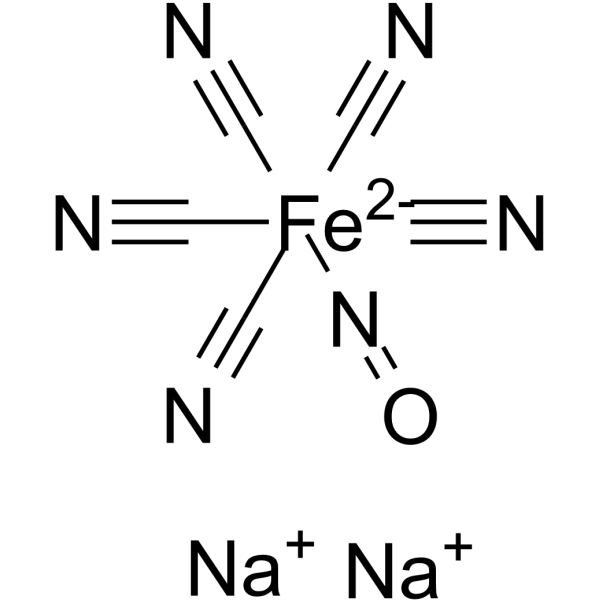
Sodium nitroprusside (Ro 21-2498) is a potent vasodilator working through releasing NO spontaneously in blood.
loading...
    loading...
1
1 Cited Publications
Cat. No.: HY-P1932
CAS No.: 186901-48-4
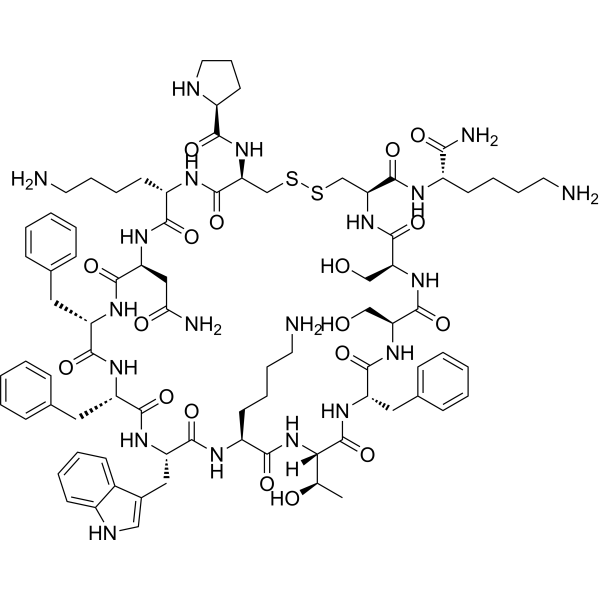
Cortistatin-14 is a neuropeptide that shares structural similarities with somatostatin, working by binding to somatostatin receptors (sst1-sst5). Cortistatin-14 (TFA) has anticonvulsant, neuroprotective effects, and significant anti-inflammatory properties .
loading...
    loading...
1
1 Cited Publications
Cat. No.: HY-160505
CAS No.: 2648837-04-9
Target:  

HCN Channel

Research Areas:  

Neurological Disease

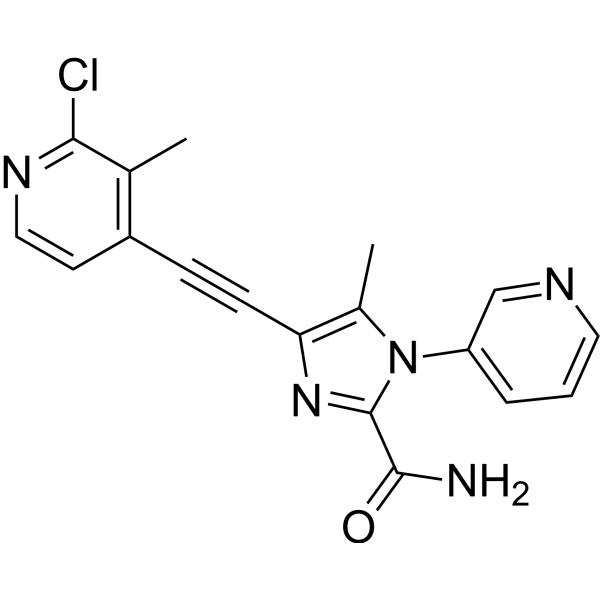
RO-275 (compound 29) is a potent, selective and orally active HCN1 inhibitor with IC50 values of 0.046, 14.3, 4.6, 13.9 µM for HCN1, HCN2, HCN3, HCN4, respectively. RO-275 rescues decremented working memory. RO-275 has the potential for the research of cognitive dysfunction in brain disorder .
loading...
    loading...
1
1 Cited Publications
Cat. No.: HY-139142B
CAS No.: 2480226-07-9
Purity:  99.85%
Synonyms: PTI-125 hydrochloride
Simufilam hydrochloride (PTI-125 hydrochloride) is an orally active FLNA modulator. Simufilam hydrochloride restores NMDAR signaling and Arc expression. Simufilam hydrochloride inhibits overactive mTOR signaling by restoring the normal conformation of FLNA, improves insulin sensitivity, reduces Aβ42-induced neuroinflammation and tau protein hyperphosphorylation. Simufilam hydrochloride can be used for research of Alzheimer's disease .
loading...
    loading...
1
1 Cited Publications
Cat. No.: HY-W089353
CAS No.: 194235-40-0
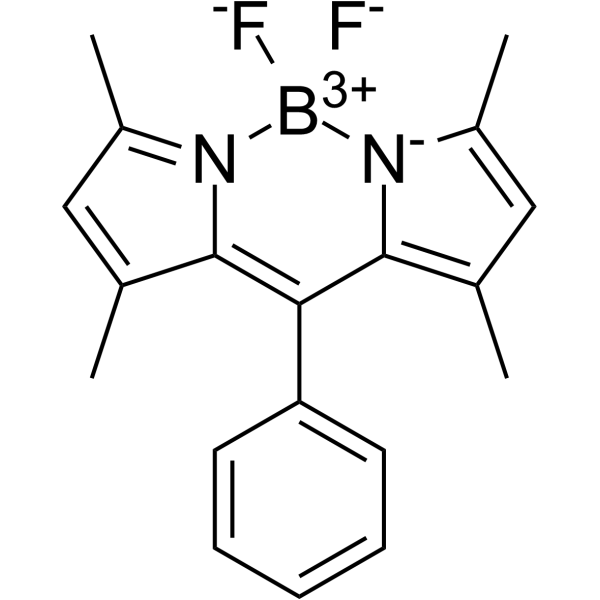
8-Phenyl-BODIPY 505/515 is a molecular rotor based on the BODIPY scaffold, specifically used as a microviscosity probe. The working principle of 8-Phenyl-BODIPY 505/515 is based on the restriction of molecular motion by viscosity: in a high-viscosity environment, the rotational freedom of its chemical bonds is inhibited, which leads to a significant extension of fluorescence lifetime. This property makes 8-Phenyl-BODIPY 505/515 an effective tool for monitoring changes in the viscosity of intracellular microenvironments via fluorescence lifetime imaging (FLIM) technology .
loading...
    loading...
Cat. No.: HY-B2167R
CAS No.: 6217-54-5
Synonyms: DHA (Standard); Cervonic acid (Standard)
Docosahexaenoic acid (Standard) is the analytical standard of Docosahexaenoic acid. This product is intended for research and analytical applications. Docosahexaenoic Acid (DHA) is an omega-3 fatty acid abundantly present brain and retina. It can be obtained directly from fish oil and maternal milk. In Vitro: Docosahexaenoic acid (DHA) is essential for the growth and functional development of the brain in infants. DHA is also required for maintenance of normal brain function in adults. The inclusion of plentiful DHA in the diet improves learning ability and memory . DHA is an essential requirement in every step of brain development like neural cell proliferation, migration, differentiation, synaptogenesis. The multiple double bonds and unique structure allow DHA to impart special membrane characteristics for effective cell signaling. Many development disorders like dyslexia, autism spectrum disorder, attention deficit hyperactivity disorder, schizophrenia etc. are causally related to decreased level of DHA . DHA is a potent RXR ligand inducing robust RXR activation already at low micro molar concentrations. The EC50 for RXRα activation by DHA is about 5-10 μM fatty acid . In Vivo: Docosahexaenoic acid administration over 10 weeks significantly reduces the number of reference memory errors, without affecting the number of working memory errors, and significantly increases the docosahexaenoic acid content and the docosahexaenoic acid/arachidonic acid ratio in both the hippocampus and the cerebral cortex . DHA treatment exerts neuroprotective actions on an experimental mouse model of PD. There is a decrease tendency in brain lipid oxidation of MPTP mice but it does not significantly .
loading...
    loading...
Cat. No.: HY-17549
CAS No.: 63547-13-7
Synonyms: CRL 40028
Target:  

Adrenergic Receptor

Research Areas:  

Neurological Disease

Adrafinil (CRL 40028) is an orally active vigilance promoting agent. Adrafinil enhances central noradrenergic transmission, improves spontaneous activity, exploratory behavior, discriminative learning ability and response motivation, but impairs visuospatial working memory. Adrafinil antagonizes Prazosin (HY-B0193)-induced hypoactivity and hypothermia, exerts anticonvulsant effects, and induces sustained enhancement of high-frequency electrocortical activity. Adrafinil can be used for research on decreased alertness and specific cognitive deficits .
loading...
    loading...
Cat. No.: HY-120657
CAS No.: 1481636-31-0
Purity:  99.88%
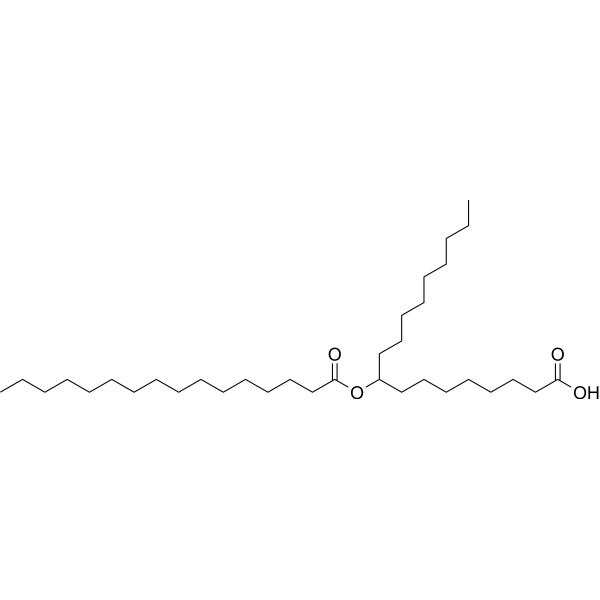
9-PAHSA is an orally active endogenous GPR120 agonist (EC50=18 μM). 9-PAHSA significantly inhibits LPS-induced inflammatory responses by blocking the NF-κB pathway. 9-PAHSA induces adipocyte browning, enhances glucose uptake and reduces lipid accumulation, while improving mitochondrial function and the survival rate of steatotic hepatocytes. In terms of neuroprotection, 9-PAHSA regulates the expression of REST and BDNF in the prefrontal cortex of diabetic mice, and effectively prevents spatial working memory deficits and abnormal social behaviors. 9-PAHSA does not directly regulate insulin secretion or improve systemic insulin sensitivity, and possesses specific anti-inflammatory, metabolic regulatory and neuroprotective properties. 9-PAHSA can be used in the research of diabetes-related cognitive impairment, obesity and non-alcoholic fatty liver disease .
loading...
    loading...
Cat. No.: HY-112781
CAS No.: 1258963-59-5
Purity:  99.85%
Synonyms: PF-04958242
Target:  

iGluR

Research Areas:  

Neurological Disease

Pesampator (PF-04958242) is a potent and highly selective positive allosteric modulator of AMPA receptor (an AMPA potentiator) with an EC50 of 310 nM and a Ki of 170 nM .
loading...
    loading...
Cat. No.: HY-D0876
CAS No.: 68189-43-5
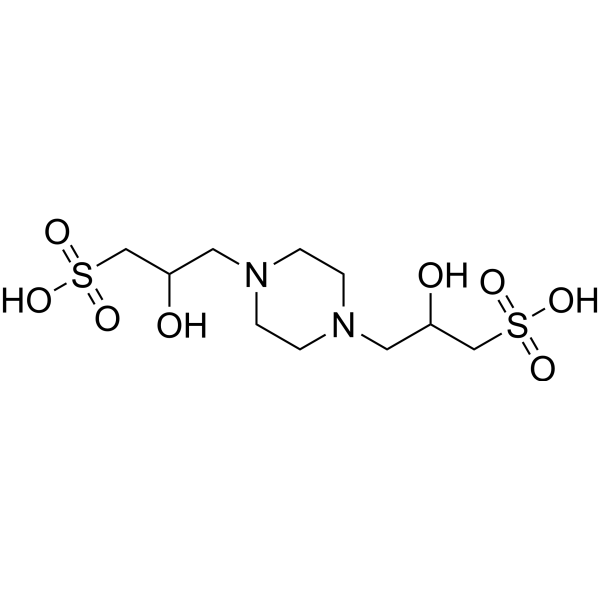
POPSO is a zwitterionic buffer, increases osmolality and shows marked inhibition of anion uniport. POPSO inhibits chloride uniport with an IC50 value of 24 mM. POPSO enhances copper uptake and toxicity in alga, impairs mitochondrial inner membrane. The working pH range of POPSO sesquisodium salt is 7.2-8.5 .
loading...
    loading...
Cat. No.: HY-D0866
CAS No.: 7365-82-4
Synonyms: N-(2-Acetamido)-2-aminoethanesulfonic acid
Research Areas:  

Others

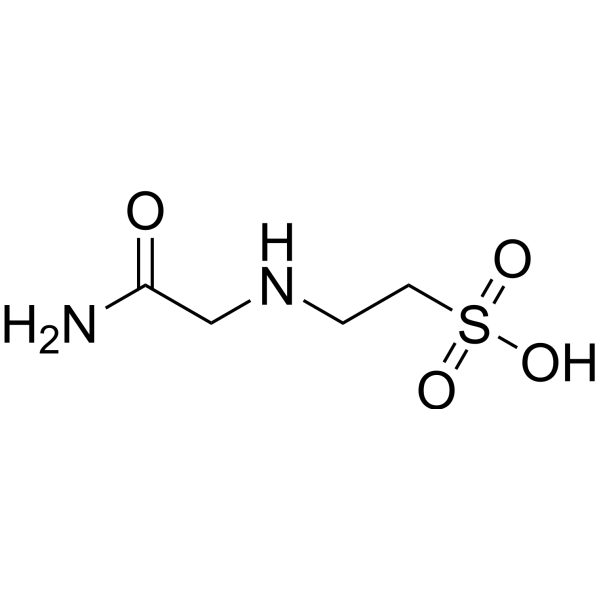
ACES (N-(2-Acetamido)-2-aminoethanesulfonic acid) is a zwitterionic buffer. The working pH range of ACES buffer is 6.8-7.2 .
loading...
    loading...
Cat. No.: HY-D2299
CAS No.: 2653341-17-2
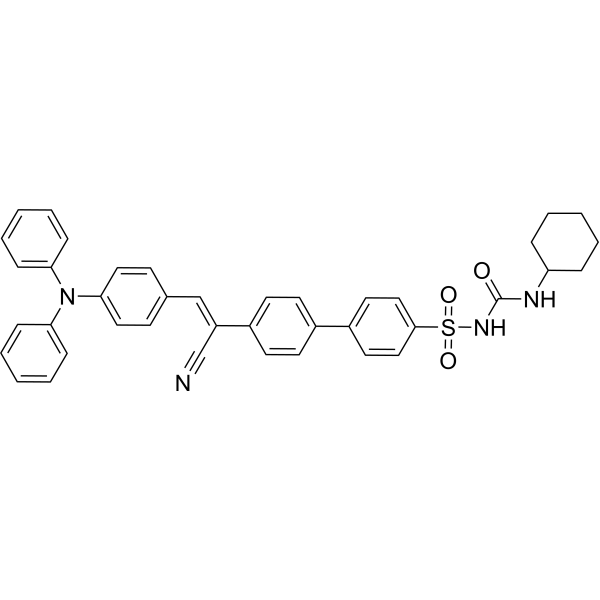
AIE-ER is a specific endoplasmic reticulum (ER) fluorescent probe (green channel: λex=405 nm, λem=450~650 nm) that exhibits remarkable photostability, high brightness, and low working concentration. AIE-ER may provide an avenue for studying diseases related to the endoplasmic reticulum .
loading...
    loading...
Cat. No.: HY-P990781
CAS No.: 2415439-63-1
Synonyms: SM03
Suciraslimab (SM03) is an anti-human CD22 monoclonal antibody. Suciraslimab inhibits NLRP3 and ASC signaling. Suciraslimab suppresses cytokine (IL-1β, IL-12, IL-23) secretion and α4 integrin expression. Suciraslimab improves working memory and neuroinflammation . Suciraslimab isotype control product: Human IgG1 kappa, Isotype Control (HY-P99001).
loading...
    loading...
Cat. No.: HY-128174
CAS No.: 69954-48-9
Synonyms: Beta-CCM; Ro 22-7497
Target:  

GABA Receptor

Research Areas:  

Neurological Disease

β-CCM is a benzodiazepine receptor inverse agonist with anxiogenic and proconvulsant effects. β-CCM enhances emotional reactivity and reduces vulnerability to interference in spatial working memory tasks. β-CCM can be used for research on anxiety-related disorders .
loading...
    loading...
Cat. No.: HY-139142A
CAS No.: 2480226-06-8
Synonyms: PTI-125 dihydrochloride
Research Areas:  

Neurological Disease

Simufilam dihydrochloride (PTI-125 dihydrochloride) is an orally active FLNA modulator. Simufilam dihydrochloride restores NMDAR signaling and Arc expression. Simufilam dihydrochloride inhibits overactive mTOR signaling by restoring the normal conformation of FLNA, improves insulin sensitivity, reduces Aβ42-induced neuroinflammation and tau protein hyperphosphorylation. Simufilam dihydrochloride can be used for research of Alzheimer's disease .
loading...
    loading...
Cat. No.: HY-W770410
CAS No.: 2748638-71-1
9-PAHSA- 13C4 is 13C-labeled 9-PAHSA. 9-PAHSAis an orally active endogenous GPR120 agonist (EC50=18 μM). 9-PAHSAsignificantly inhibits LPS-induced inflammatory responses by blocking the NF-κB pathway. 9-PAHSAinduces adipocyte browning, enhances glucose uptake and reduces lipid accumulation, while improving mitochondrial function and the survival rate of steatotic hepatocytes. In terms of neuroprotection, 9-PAHSAregulates the expression of REST and BDNF in the prefrontal cortex of diabetic mice, and effectively prevents spatial working memory deficits and abnormal social behaviors. 9-PAHSAdoes not directly regulate insulin secretion or improve systemic insulin sensitivity, and possesses specific anti-inflammatory, metabolic regulatory and neuroprotective properties. 9-PAHSAcan be used in the research of diabetes-related cognitive impairment, obesity and non-alcoholic fatty liver disease .
loading...
    loading...
Cat. No.: HY-14559
CAS No.: 903580-39-2
Purity:  98.97%
Target:  

5-HT Receptor

Research Areas:  

Neurological Disease

PRX-07034 hydrochloride is a highly selective and potent 5-HT6 receptor antagonist with a Ki= 4-8 nM and an IC50 of 19 nM. PRX-07034 can be used for the research of enhancing working memory and cognitive flexibility .
loading...
    loading...
Cat. No.: HY-59201A
CAS No.: 848591-90-2
A-582941 dihydrochloride is a selective, orally active, blood-brain barrier-permeable α7 nAChR agonist, with Ki values of 10.8 nM and 17 nM in rat brain and human frontal cortex, respectively. A-582941 dihydrochloride exhibits agonistic activity at 5-HT3 receptors, with a Ki of 150 nM. A-582941 dihydrochloride triggers phosphorylation of ERK1/2 and CREB, inhibits GSK-3β via Ser-9 phosphorylation, increases acetylcholine release, induces the expression of Arc and c-Fos, activates brain regions associated with working memory and attention, and reduces cell death caused by nerve growth factor (NGF) deprivation. A-582941 dihydrochloride is applicable for the research of Alzheimer's disease and schizophrenia .
loading...
    loading...
Cat. No.: HY-120657S
CAS No.: 2704278-85-1
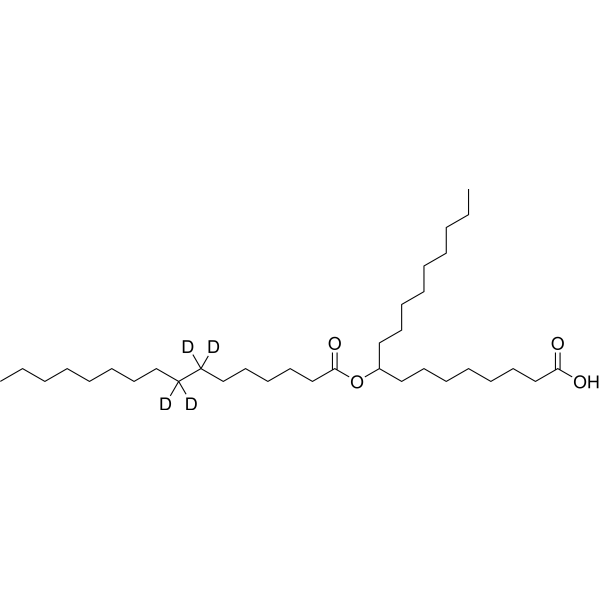
9-PAHSA-d4 is the deuterium labeled 9-PAHSA. 9-PAHSA is an orally active endogenous GPR120 agonist (EC50=18 μM). 9-PAHSA significantly inhibits LPS-induced inflammatory responses by blocking the NF-κB pathway. 9-PAHSA induces adipocyte browning, enhances glucose uptake and reduces lipid accumulation, while improving mitochondrial function and the survival rate of steatotic hepatocytes. In terms of neuroprotection, 9-PAHSA regulates the expression of REST and BDNF in the prefrontal cortex of diabetic mice, and effectively prevents spatial working memory deficits and abnormal social behaviors. 9-PAHSA does not directly regulate insulin secretion or improve systemic insulin sensitivity, and possesses specific anti-inflammatory, metabolic regulatory and neuroprotective properties. 9-PAHSA can be used in the research of diabetes-related cognitive impairment, obesity and non-alcoholic fatty liver disease .
loading...
    loading...
Cat. No.: HY-147877
CAS No.: 2304527-20-4
Target:  

Topoisomerase

Research Areas:  

Cancer

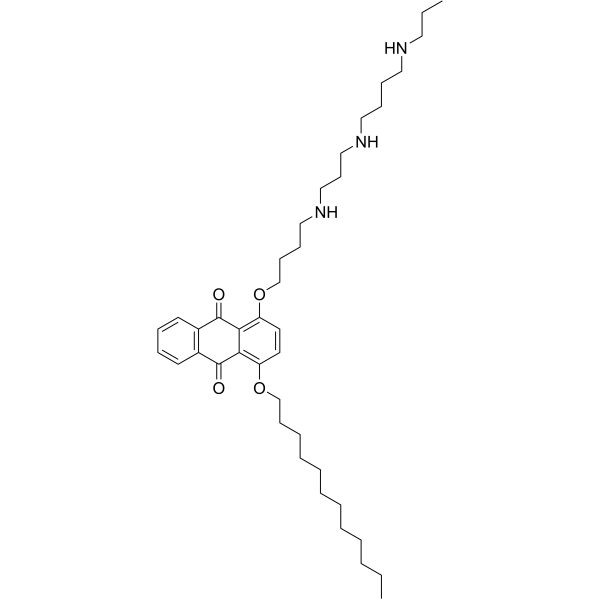
Topoisomerase II inhibitor 12 (Compound 8c) is a topoisomerase II (topo II) inhibitor, working as a DNA non-intercalator. Topoisomerase II inhibitor 12 shows antineoplastic activity .
loading...
    loading...

