



Suciraslimab

Based on 1 Customer Validation
Suciraslimab (SM03) is an anti-human CD22 monoclonal antibody. Suciraslimab inhibits NLRP3 and ASC signaling. Suciraslimab suppresses cytokine (IL-1β, IL-12, IL-23) secretion and α4 integrin expression. Suciraslimab improves working memory and neuroinflammation. Suciraslimab isotype control product: Human IgG1 kappa, Isotype Control (HY-P99001).
Nos produits utilisent uniquement pour la recherche. Nous ne vendons pas aux patients.
- Pureté : 97.42%
- CAS No.: 2415439-63-1
- Masse moléculaire:146.16 kDa
-
Stockage:
Please store the product under the recommended conditions in the Certificate of Analysis.


To place orders, for customer services and technical support, please contact: MedChemExpress USA
Tel: 609-228-6898 E-mail: [email protected] [email protected]


-
 Activité biologique
-
Chemical Information
- Protocole
- Pureté et documentation
- Références
-
 Help & FAQs




Activité biologique
Description
Isotype
Human IgG1 kappa
Recommend Isotype Controls
Species Reactivity
Human
IC50 & Target
[1]|
IL-23 |
IL-12 |
IL-1β |
In Vitro
Suciraslimab (0.1 μg/mL; overnight) inhibits the secretion of interleukin-1β (IL-1β) induced by Amyloid β (Aβ) in human monocyte-derived microglia-like cells (MDMi) and PBMC[1].
Suciraslimab (0.1 μg/mL; 4 h) enhances phagocytosis of FITC-Aβ by the human microglial cell line HMC-3 and the Phorbol 12-myristate 13-acetate (HY-18739)-differentiated human oligodendrocyte cell line MO3.13[1].
MedChemExpress (MCE) has not independently confirmed the accuracy of these methods. They are for reference only.
In Vivo
MedChemExpress (MCE) has not independently confirmed the accuracy of these methods. They are for reference only.
-
Animal Model:Human CD22 transgenic mice (C57BL/6JGpt-Cd22em1Cin(hCD22)/Gpt), male, 6-9 months old, with intracerebroventricular injection of oligomeric Aβ to induce neuroinflammation[1]
-
Dosage:15 mg/kg
-
Administration:Intravenous injection; once a week
-
Result:Restored spatial working memory.
Downregulated the expression of genes related to leukocyte migration and sialic acid binding in the brain.
Reduced the levels of chemokines such as CX3CL1, CCL24, and CCL4 in the cortex.
Essai clinique
| NCT Number | Sponsor | Condition | Start Date |
Phase

|
|---|---|---|---|---|
| NCT01329991 | 2011-05 | PHASE1 |
Gene ID
Accession
Conjugated
Unconjugated
Reconsititution
The product can be reconstituted/diluted with sterile PBS or saline.
Format
-
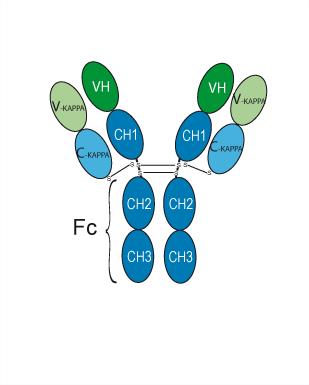
IgG1-kappa
Application
ELISA, FACS, Functional assay
Verified Bioactivity
-
 Flow Cytometry analysis of Raji cells labelling Siglec-2/CD22 (red) with Suciraslimab (anti-Siglec-2/CD22) (HY-P990781). Goat Anti-Human IgG (Alexa Fluor 488) (HY-P83776) at a dilution of 1/1000 was used as the secondary antibody. Blue-Human IgG1 kappa (HY-P99001). Black-Unlabelled control, cells without incubation with primary antibody.
 -
 Immobilized Siglec-2/CD22 Protein, Human can bind Suciraslimab. The EC50 for this effect is 4.412 ng/mL.


Chemical Information
-
CAS No. 2415439-63-1
-
Appearance Liquid
-
Masse moléculaire 146.16 kDa
-
Color Colorless to light yellow
-
SMILES
[Suciraslimab]
-
Synonyms
SM03
-
Livraison
Shipping with dry ice.
-
Formulation
Please refer to the lot-specific COA for specific buffer information.
-
Stockage
Please store the product under the recommended conditions in the Certificate of Analysis.


Pureté et documentation
-
Fiche technique (259 KB)
-
SDS (251 KB)
- English - EN (251 KB)
- Français - FR (251 KB)
- Deutsch - DE (251 KB)
- Norwegian - NO (251 KB)
- Español - ES (251 KB)
- Swedish - SV (251 KB)
- Italian - IT (251 KB)
- Korean - KR (251 KB)
- Portuguese - PT (251 KB)
-
Inhibitory Antibodies User Guide (603 KB)
Références

Calculators
Concentration (start) × Volume (start) = Concentration (final) × Volume (final)


Suciraslimab Related Classifications
HY-P990781 Related Classifications
 Powered by Bioz