


1. Search Result
Search Result
Results for "

yield

" in MedChemExpress (MCE) Product Catalog:

331

Inhibitors & Agonists

2

Screening Libraries

109

Fluorescent Dyes

9

Biochemical Assay Reagents

13

Peptides

2

MCE Kits

2

Inhibitory Antibodies

24

Natural
Products

5

Isotope-Labeled Compounds

78

Click Chemistry

4

Oligonucleotides

Cat. No. Product Name Target Research Areas Chemical Structure
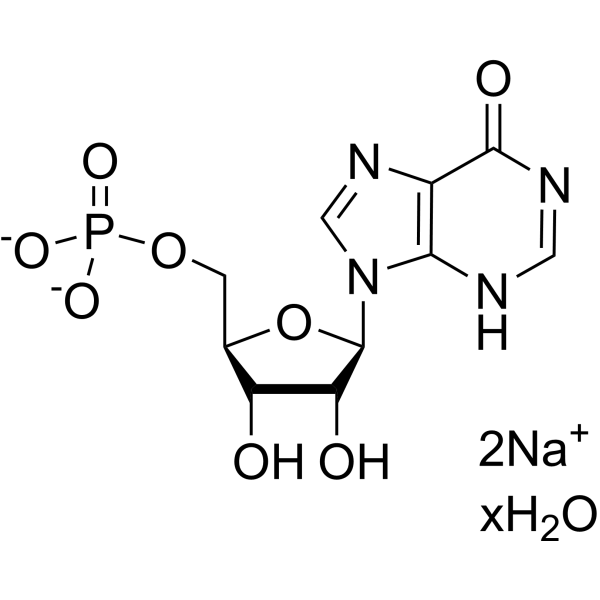
  • HY-108213
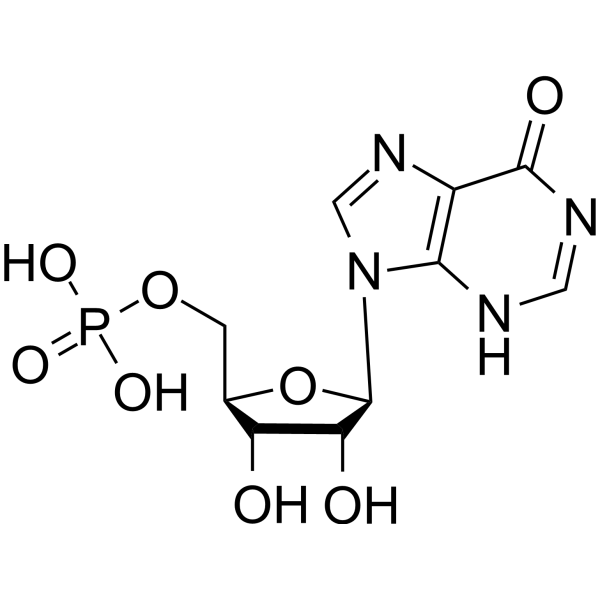
    Inosinic acid
    4 Publications Verification

    5'-IMP; IMP; Inosine 5'-dihydrogen phosphate

    Endogenous Metabolite Others
    Inosinic acid is an endogenous metabolite. Inosinic acid is used as umami tastant, or as the dietary supplement to improve the yield and meat quality of pigs .
    Inosinic acid
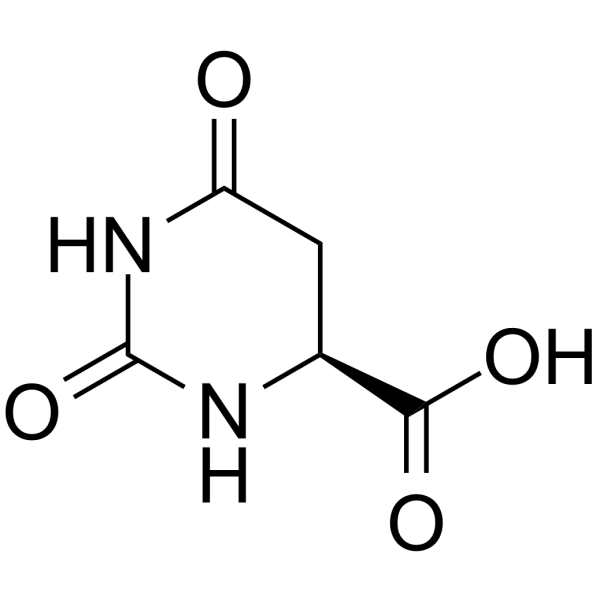
  • HY-W015495
    L-Dihydroorotic acid
    1 Publications Verification

    Endogenous Metabolite Dihydroorotate Dehydrogenase Others
    L-Dihydroorotic acid is an important intermediate in the metabolism of orotic acid and a substrate of dihydroorotate dehydrogenase (DHODH). L-Dihydroorotic acid can reversibly hydrolyze to yield the acyclic L-ureidosuccinic acid by dihydrowhey enzyme .
    L-Dihydroorotic acid
  • HY-111382
    Diphenylterazine
    10+ Cited Publications

    DTZ

    Fluorescent Dye Cancer
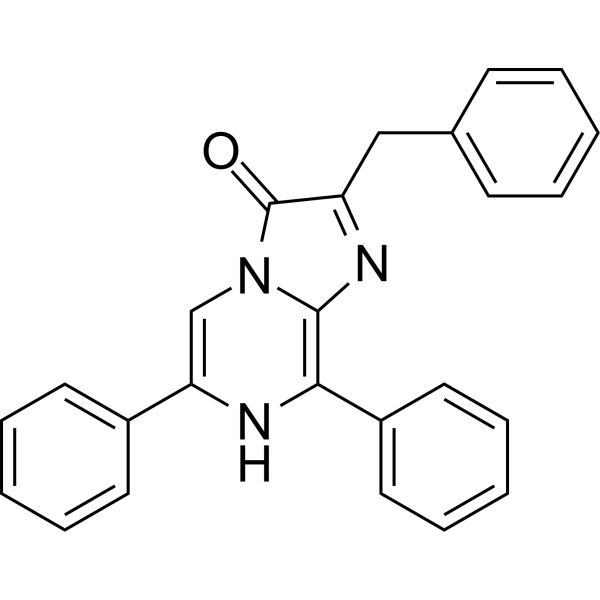
    Diphenylterazine (DTZ) is a bioluminescence agent. Diphenylterazine alone yielded very little background, leading to excellent signal-to-background ratios .
    Diphenylterazine
  • HY-B2193
    α-Amylase
    2 Publications Verification

    Environmental Pollutants Amylases Others
    α-Amylase is a hydrolase enzyme that catalyses the hydrolysis of internal α-1, 4-glycosidic linkages in starch to yield products like glucose and maltose.
    α-Amylase
  • HY-D2001

    Fluorescent Dye Others
    ATTO 488 NHS ester is a new fluorescent marker based on the Rhodamine structure. It has strong absorption, high fluorescence quantum yield, high thermal stability and photochemical stability, and is suitable for single molecule detection and high-resolution microscopy. ATTO 488 NHS ester is an NHS ester derivative of ATTO 488 that can be used to label proteins or antibodies.
    ATTO 488 NHS ester
  • HY-151863

    ADC Linker Others
    alpha-GalNAc-TEG-N3 is a click chemistry reagent. Click chemistry has great potential for use in binding between nucleic acids, lipids, proteins, and other molecules, and has been used in many research fields because of its beneficial characteristics, including high yield, high specificity, and simplicity . It contains an azide group and can undergo copper-catalyzed azide-alkyne cycloaddition (CuAAc) with molecules containing alkyne groups. It can also undergo ring strain-promoted alkyne-azide cycloaddition (SPAAC) with molecules containing DBCO or BCN groups.
    alpha-GalNAc-TEG-N3
  • HY-151847
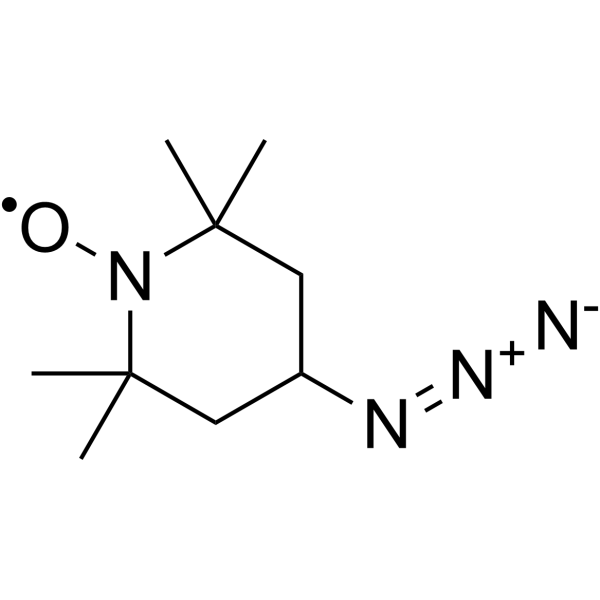
    N3-TEMPO
    2 Publications Verification

    ADC Linker Others
    N3-TEMPO is a click chemistry reagent containing an azide group. Click chemistry has great potential for use in binding between nucleic acids, lipids, proteins, and other molecules, and has been used in many research fields because of its beneficial characteristics, including high yield, high specificity, and simplicity . It contains an azide group and can undergo copper-catalyzed azide-alkyne cycloaddition (CuAAc) with molecules containing alkyne groups. It can also undergo ring strain-promoted alkyne-azide cycloaddition (SPAAC) with molecules containing DBCO or BCN groups.
    N3-TEMPO
  • HY-151852

    Endogenous Metabolite Cardiovascular Disease
    9AzNue5Ac, 9-azido-9-deoxy-N-acetylneuraminic acid, is a click chemistry reagent and a Neu5Ac analogue with the substitution of 9-hydroxyl group with an azide. 9AzNue5Ac could be metabolized and incorporated into sialoglycans in living cells and mice. Click chemistry has great potential for use in binding between nucleic acids, lipids, proteins, and other molecules, and has been used in many research fields because of its beneficial characteristics, including high yield, high specificity, and simplicity . It contains an azide group and can undergo copper-catalyzed azide-alkyne cycloaddition (CuAAc) with molecules containing alkyne groups. It can also undergo ring strain-promoted alkyne-azide cycloaddition (SPAAC) with molecules containing DBCO or BCN groups.
    9AzNue5Ac
  • HY-107199

    NBPT

    Environmental Pollutants Urease Others
    N-Butylthiophosphoric triamide (NBPT) is a potent urease inhibitor. Butylthiophosphoric triamide inhibits nitrification and reduces the conversion of urea to NH3 gas .
    N-Butylthiophosphoric triamide
  • HY-151782A

    ADC Linker Others
    H-(Gly)3-Lys(N3)-OH (hydrochloride) is a click chemistry reagent. Click chemistry has great potential for use in binding between nucleic acids, lipids, proteins, and other molecules, and has been used in many research fields because of its beneficial characteristics, including high yield, high specificity, and simplicity . It contains an azide group and can undergo copper-catalyzed azide-alkyne cycloaddition (CuAAc) with molecules containing alkyne groups. It can also undergo ring strain-promoted alkyne-azide cycloaddition (SPAAC) with molecules containing DBCO or BCN groups.
    H-(Gly)3-Lys(N3)-OH hydrochloride
  • HY-D2017

    Fluorescent Dye Others
    ATTO 550 is a new type of fluorescent dye with high fluorescence yield, which can be used for most labeling applications, maximum excitation/emission wavelength: 554/576 nm.
    ATTO 550
  • HY-D1604

    Fluorescent Dye Others
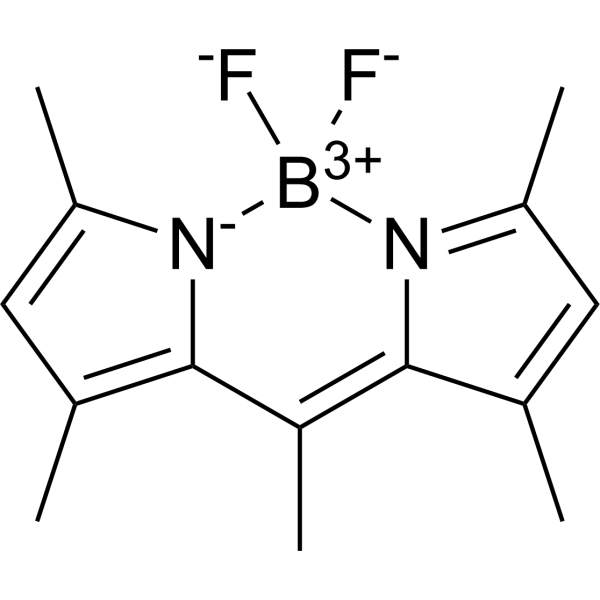
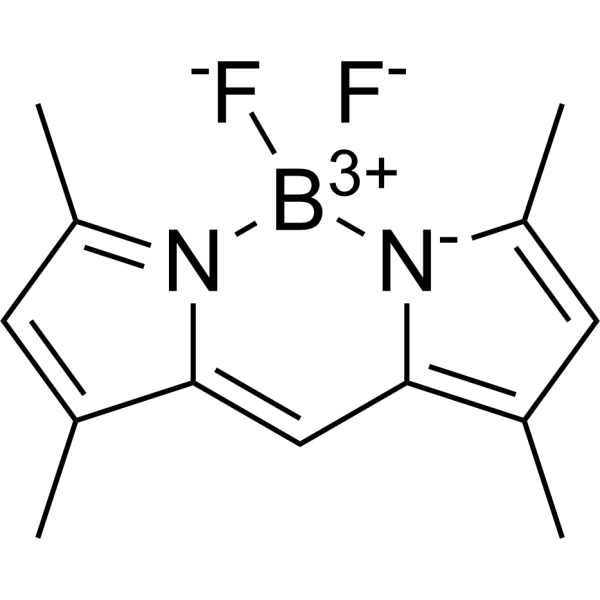
    BODIPY FL Ethylamine is a fluorescent dye that reversibly reacts with aldehyde/ketone to yield a Schiff base. BODIPY FL Ethylamine can be reduced to form a stable amine derviative using sodium borohydride or sodium cyanoborohydride .
    BODIPY FL Ethylamine
  • HY-D2001A

    Fluorescent Dye Others
    TTO 488 NHS ester TEA is a new fluorescent marker based on the Rhodamine structure. It has strong absorption, high fluorescence quantum yield, high thermal stability and photochemical stability, and is suitable for single molecule detection and high-resolution microscopy. TTO 488 NHS ester TEA is an NHS ester derivative of ATTO 488 that can be used to label proteins or antibodies.
    ATTO 488 NHS ester TEA
  • HY-P0281A

    TAT(47-57) TFA; HIV-1 TAT protein (47-57) TFA

    HIV Infection
    TAT TFA (YGRKKRRQRRR) is derived from the transactivator of transcription (TAT) of human immunodeficiency virus (HIV-1) and is a cell-penetrating peptide. TAT can increase the yields and the solubility of heterologous proteins .
    TAT TFA
  • HY-151793

    ADC Linker Others
    beta-Lac-EO-N3 is a click chemistry reagent. Click chemistry has great potential for use in binding between nucleic acids, lipids, proteins, and other molecules, and has been used in many research fields because of its beneficial characteristics, including high yield, high specificity, and simplicity . It contains an azide group and can undergo copper-catalyzed azide-alkyne cycloaddition (CuAAc) with molecules containing alkyne groups. It can also undergo ring strain-promoted alkyne-azide cycloaddition (SPAAC) with molecules containing DBCO or BCN groups.
    2-Azidoethyl β-D-lactoside
  • HY-151858

    Biochemical Assay Reagents Others
    Boc-L-Lys(N3)-OH is a click chemistry reagent containing an azide group. Click chemistry has great potential for use in binding between nucleic acids, lipids, proteins, and other molecules, and has been used in many research fields because of its beneficial characteristics, including high yield, high specificity, and simplicity . It contains an azide group and can undergo copper-catalyzed azide-alkyne cycloaddition (CuAAc) with molecules containing alkyne groups. It can also undergo ring strain-promoted alkyne-azide cycloaddition (SPAAC) with molecules containing DBCO or BCN groups.
    Boc-L-Lys(N3)-OH
  • HY-D1305

    Fluorescent Dye Others
    ATTO 488 carboxylic acid is a new fluorescent label based on the Rhodamine structure. It has strong absorption, high fluorescence quantum yield, high thermal stability and photochemical stability, and is suitable for single molecule detection and high-resolution microscopy. ATTO 488 carboxylic acid is a carboxylic acid derivative of ATTO 488, which can be used to label proteins or antibodies.
    ATTO 488 carboxylic acid
  • HY-121324
    Prometryn
    1 Publications Verification

    Environmental Pollutants Others
    Prometryn could improves the control of all weed species and increased lint yield compared with the systems .
    Prometryn
  • HY-151854

    ADC Linker Others
    4-(Azidomethyl)benzoic acid is a click chemistry reagent containing an azide group. Click chemistry has great potential for use in binding between nucleic acids, lipids, proteins, and other molecules, and has been used in many research fields because of its beneficial characteristics, including high yield, high specificity, and simplicity . It contains an azide group and can undergo copper-catalyzed azide-alkyne cycloaddition (CuAAc) with molecules containing alkyne groups. It can also undergo ring strain-promoted alkyne-azide cycloaddition (SPAAC) with molecules containing DBCO or BCN groups.
    4-(Azidomethyl)benzoic acid
  • HY-151861

    ADC Linker Others
    N3-Aca-Aca-OH is a click chemistry reagent containing an azide group. Click chemistry has great potential for use in binding between nucleic acids, lipids, proteins, and other molecules, and has been used in many research fields because of its beneficial characteristics, including high yield, high specificity, and simplicity . It contains an azide group and can undergo copper-catalyzed azide-alkyne cycloaddition (CuAAc) with molecules containing alkyne groups. It can also undergo ring strain-promoted alkyne-azide cycloaddition (SPAAC) with molecules containing DBCO or BCN groups.
    N3-Aca-Aca-OH
  • HY-D2002

    Fluorescent Dye Others
    ATTO 488 maleimide is a new fluorescent marker based on the Rhodamine structure. It has strong absorption, high fluorescence quantum yield, high thermal stability and photochemical stability, and is suitable for single molecule detection and high-resolution microscopy. ATTO 488 maleimide is a maleimide derivative of ATTO 488, which can be used to label proteins or antibodies.
    ATTO 488 maleimide
  • HY-D1959

    Fluorescent Dye Others
    ATTO 565 NHS ester is a new fluorescent marker based on the Rhodamine structure. It has strong absorption, high fluorescence quantum yield, high thermal stability and photochemical stability, and is suitable for single molecule detection and high-resolution microscopy. ATTO 565 NHS ester is an NHS ester derivative of ATTO 565 that can be used to label proteins or antibodies.
    ATTO 565 NHS ester
  • HY-D2056

    Fluorescent Dye Others
    ATTO 700 is a new type of fluorescent dye with high fluorescence yield, which can be used for most labeling applications, maximum excitation/emission wavelength: 700/716 nm.
    ATTO 700
  • HY-151864

    ADC Linker Others
    DecarboxyBiotin-Alkyne is a click chemistry reagent containing an azide group. Click chemistry has great potential for use in binding between nucleic acids, lipids, proteins, and other molecules, and has been used in many research fields because of its beneficial characteristics, including high yield, high specificity, and simplicity .
    DecarboxyBiotin-Alkyne
  • HY-151779

    ADC Linker Others
    N3-L-Dab(Fmoc)-OH is a click chemistry reagent containing an azide group. Click chemistry has great potential for use in binding between nucleic acids, lipids, proteins, and other molecules, and has been used in many research fields because of its beneficial characteristics, including high yield, high specificity, and simplicity . It contains an azide group and can undergo copper-catalyzed azide-alkyne cycloaddition (CuAAc) with molecules containing alkyne groups. It can also undergo ring strain-promoted alkyne-azide cycloaddition (SPAAC) with molecules containing DBCO or BCN groups.
    N3-L-Dab(Fmoc)-OH
  • HY-151849

    ADC Linker Others
    Z-L-Dap(N3)-OH is a click chemistry reagent containing an azide group. Click chemistry has great potential for use in binding between nucleic acids, lipids, proteins, and other molecules, and has been used in many research fields because of its beneficial characteristics, including high yield, high specificity, and simplicity . It contains an azide group and can undergo copper-catalyzed azide-alkyne cycloaddition (CuAAc) with molecules containing alkyne groups. It can also undergo ring strain-promoted alkyne-azide cycloaddition (SPAAC) with molecules containing DBCO or BCN groups.
    Z-L-Dap(N3)-OH
  • HY-151856

    ADC Linker Others
    N3-1,4-cis-CHC-OH is a click chemistry reagent containing an azide group. Click chemistry has great potential for use in binding between nucleic acids, lipids, proteins, and other molecules, and has been used in many research fields because of its beneficial characteristics, including high yield, high specificity, and simplicity . It contains an azide group and can undergo copper-catalyzed azide-alkyne cycloaddition (CuAAc) with molecules containing alkyne groups. It can also undergo ring strain-promoted alkyne-azide cycloaddition (SPAAC) with molecules containing DBCO or BCN groups.
    N3-1,4-cis-CHC-OH
  • HY-153524

    Fluorescent Dye Others
    ATTO 425 NHS ester is a new fluorescent marker based on the Rhodamine structure. It has strong absorption, high fluorescence quantum yield, high thermal stability and photochemical stability, and is suitable for single molecule detection and high-resolution microscopy. ATTO 425 NHS ester is an NHS ester derivative of ATTO 425 that can be used to label proteins or antibodies.
    ATTO 425 NHS ester
  • HY-W539799

    2,6-Dimethylpyridine N-oxide

    Biochemical Assay Reagents Others
    2,6-Lutidine N-oxide (2,6-Dimethylpyridine N-oxide) is a plant growth regulator that can improve the initial growth of plants and increase early yield and total yield. Lutidine is the dimethyl derivative of pyridine .
    2,6-Lutidine N-oxide
  • HY-D2292

    Fluorescent Dye Cancer
    BODIPY TMR acid is a fluorescent dye. BODIPY TMR acid is a high quantum yield fluorophore which can be coupled with Rebastinib .
    BODIPY TMR acid
  • HY-W013598

    Biochemical Assay Reagents Others
    Sodium benzenesulfinate is a reagent used in organic synthesis to create other compounds, such as sulfones. Sodium benzenesulfinate undergoes rhodium-catalyzed desulfinative coupling with aldehydes to yield ketones .
    Sodium benzenesulfinate
  • HY-D1958

    Fluorescent Dye Others
    ATTO 565 is a new type of fluorescent dye with high fluorescence yield, which can be used for most labeling applications, maximum excitation/emission wavelength: 564/590 nm.
    ATTO 565
  • HY-D2042

    Fluorescent Dye Others
    ATTO 610 is a new type of fluorescent dye with high fluorescence yield, which can be used for most labeling applications, maximum excitation/emission wavelength: 616/633 nm.
    ATTO 610
  • HY-151773

    ADC Linker Others
    Methyltetrazine-PEG12-acid is a click chemistry PEG reagent containing a tetrazine group. Click chemistry has great potential for use in binding between nucleic acids, lipids, proteins, and other molecules, and has been used in many research fields because of its beneficial characteristics, including high yield, high specificity, and simplicity .
    Methyltetrazine-PEG12-acid
  • HY-D1915

    Fluorescent Dye Others
    ATTO 390 is a new fluorescent marker based on the Rhodamine structure. It has strong absorption, high fluorescence quantum yield, high thermal stability and photochemical stability, and is suitable for single molecule detection and high-resolution microscopy.
    ATTO 390
  • HY-151845

    ADC Linker Others
    N3-PhAc-OH is a click chemistry reagent containing an azide group. Click chemistry has great potential for use in binding between nucleic acids, lipids, proteins, and other molecules, and has been used in many research fields because of its beneficial characteristics, including high yield, high specificity, and simplicity . It contains an azide group and can undergo copper-catalyzed azide-alkyne cycloaddition (CuAAc) with molecules containing alkyne groups. It can also undergo ring strain-promoted alkyne-azide cycloaddition (SPAAC) with molecules containing DBCO or BCN groups.
    N3-PhAc-OH
  • HY-151866

    ADC Linker Others
    (2S)-N3-HABA is a click chemistry reagent. Click chemistry has great potential for use in binding between nucleic acids, lipids, proteins, and other molecules, and has been used in many research fields because of its beneficial characteristics, including high yield, high specificity, and simplicity . It contains an azide group and can undergo copper-catalyzed azide-alkyne cycloaddition (CuAAc) with molecules containing alkyne groups. It can also undergo ring strain-promoted alkyne-azide cycloaddition (SPAAC) with molecules containing DBCO or BCN groups.
    (2S)-N3-HABA
  • HY-D2046

    Fluorescent Dye Others
    ATTO 532 NHS ester is a new fluorescent marker based on the Rhodamine structure. It has strong absorption, high fluorescence quantum yield, high thermal stability and photochemical stability, and is suitable for single molecule detection and high-resolution microscopy. ATTO 532 NHS ester is an NHS ester derivative of ATTO 532 that can be used to label proteins or antibodies.
    ATTO 532 NHS ester
  • HY-D1957

    Fluorescent Dye Others
    ATTO 633 NHS ester is a new fluorescent marker based on the Rhodamine structure. It has strong absorption, high fluorescence quantum yield, high thermal stability and photochemical stability, and is suitable for single molecule detection and high-resolution microscopy. ATTO 633 NHS ester is an NHS ester derivative of ATTO 633 that can be used to label proteins or antibodies.
    ATTO 633 NHS ester
  • HY-D2019

    Fluorescent Dye Others
    ATTO 550 NHS ester is a new fluorescent marker based on the Rhodamine structure. It has strong absorption, high fluorescence quantum yield, high thermal stability and photochemical stability, and is suitable for single molecule detection and high-resolution microscopy. ATTO 550 NHS ester is an NHS ester derivative of ATTO 550 that can be used to label proteins or antibodies.
    ATTO 550 NHS ester
  • HY-D2016

    Fluorescent Dye Others
    ATTO 565 cadaverine is a new fluorescent marker based on the Rhodamine structure. It has strong absorption, high fluorescence quantum yield, high thermal stability and photochemical stability, and is suitable for single molecule detection and high-resolution microscopy. ATTO 565 cadaverine is a cadaverine derivative of ATTO 565, which can be used to label proteins or antibodies.
    ATTO 565 cadaverine
  • HY-D2058

    Fluorescent Dye Others
    ATTO 700 NHS ester is a new fluorescent marker based on the Rhodamine structure. It has strong absorption, high fluorescence quantum yield, high thermal stability and photochemical stability, and is suitable for single molecule detection and high-resolution microscopy. ATTO 700 NHS ester is an NHS ester derivative of ATTO 700 that can be used to label proteins or antibodies.
    ATTO 700 NHS ester
  • HY-D2073

    Fluorescent Dye Others
    ATTO 680 NHS ester is a new fluorescent marker based on the Rhodamine structure. It has strong absorption, high fluorescence quantum yield, high thermal stability and photochemical stability, and is suitable for single molecule detection and high-resolution microscopy. ATTO 680 NHS ester is an NHS ester derivative of ATTO 680 that can be used to label proteins or antibodies.
    ATTO 680 NHS ester
  • HY-D2021

    Fluorescent Dye Others
    ATTO 550 maleimide is a new fluorescent marker based on the Rhodamine structure. It has strong absorption, high fluorescence quantum yield, high thermal stability and photochemical stability, and is suitable for single molecule detection and high-resolution microscopy. ATTO 550 maleimide is a maleimide derivative of ATTO 550, which can be used to label proteins or antibodies.
    ATTO 550 maleimide
  • HY-D1935

    Fluorescent Dye Others
    ATTO 465 NHS ester is a new fluorescent marker based on the Rhodamine structure. It has strong absorption, high fluorescence quantum yield, high thermal stability and photochemical stability, and is suitable for single molecule detection and high-resolution microscopy. ATTO 465 NHS ester is an NHS ester derivative of ATTO 465 that can be used to label proteins or antibodies.
    ATTO 465 NHS ester
  • HY-W001968

    3-TC

    Drug Intermediate Others
    3-Thiophenecarboxaldehyde is a thiophene derivative substrate for biocatalytic reduction to 3-thiophenemethanol, and can be processed by Pseudomonas putida S12 cells. 3-Thiophenecarboxaldehyde functions as an intermediate compound. 3-Thiophenecarboxaldehyde exhibits toxicity toward Pseudomonas putida S12 cells at elevated concentrations, reducing specific growth rate and final biomass yield .
    3-Thiophenecarboxaldehyde
  • HY-132289

    Liposome Inflammation/Immunology
    Lipid M (pKa: 6.75) can be used to deliver mRNA vaccine and yield a robust immune response with improved tolerability .
    Lipid M
  • HY-D1931

    Fluorescent Dye Others
    ATTO 590 is a new type of fluorescent dye with high fluorescence yield, which can be used for most labeling applications, maximum excitation/emission wavelength: 594/622 nm.
    ATTO 590
  • HY-137910R

    Reference Standards Herbicide HPPD Others
    Tembotrione (Standard) is the analytical standard of Tembotrione. This product is intended for research and analytical applications. Tembotrione is a drug that may reduce the productivity of carrots. Tembotrione has the activity of reducing carrot stem mass. Tembotrione can be used to study the total productivity of carrot . Tembotrione is a herbicide belonging to the HPPD (dioxygenase) inhibitor class with crop selectivity. Tembotrione effectively controls a variety of weeds including broadleaf and gramineous species by disrupting carotenoid synthesis, which leads to chlorophyll degradation and leaf whitening. Mixing Tembotrione with isoxaflutole or adding surfactants optimizes its efficacy and reduces phytotoxicity, with no residual impact on subsequent cruciferous crops, thus helping to increase maize grain yield. The activity of Tembotrione decreases under drought conditions, and under specific conditions (such as double-dose treatment), it may cause reversible yellowing and even yield reduction in crops such as poppy .
    Tembotrione (Standard)
  • HY-113623

    Others Others
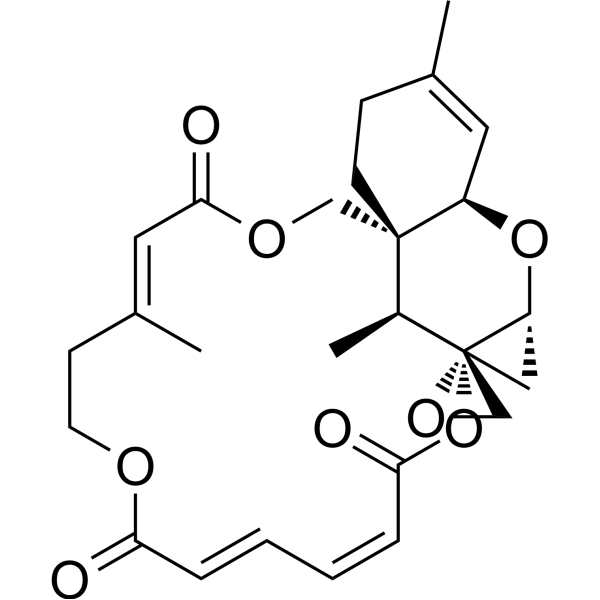
    Pyrenophorol is a C9H12O3 compound isolated in low yield from culture filtrates of the phytopathogenic fungus Stemphylium radicinum, C.M.I. 105654 .
    Pyrenophorol

Inquiry Online

Your information is safe with us. * Required Fields.

Salutation


Country or Region *

Applicant Name *


Organization Name *

Department *


Email Address *


Product Name *

Cat. No.


Requested quantity *

Phone Number *


Remarks

Inquiry Online

Inquiry Information

Product Name:
Cat. No.:
Quantity:
MCE Japan Authorized Agent:

