



Cefonicid sodium

Based on 1 Customer Validation
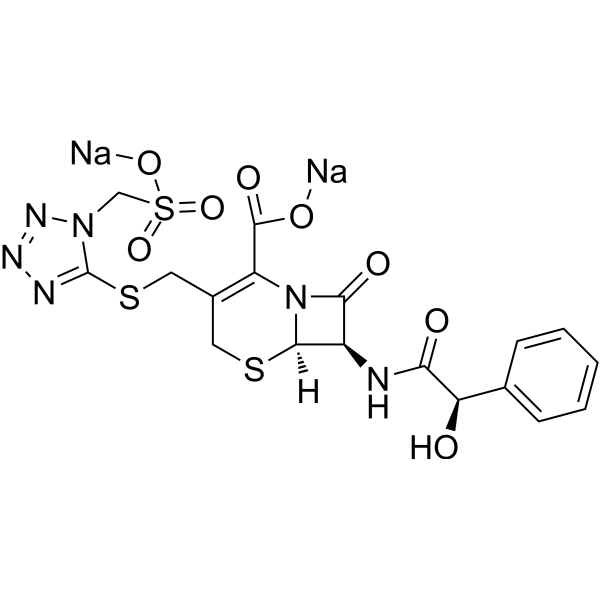
Cefonicid sodium is a long-acting cephalosporin antibiotic. Cefonicid sodium also acts as a noncompetitive class I β-lactamase inhibitor with a Ki value of 0.8 μM. Cefonicid sodium exhibits broad-spectrum antimicrobial activity and is effective against a variety of Gram-positive and Gram-negative bacteria. Cefonicid sodium can be used for research on infections.
For research use only. We do not sell to patients.
- Purity : 95.0%
- CAS No.: 61270-78-8
- Formula: C18H16N6Na2O8S3
- Molecular Weight:586.53
-
Storage:
4°C, sealed storage, away from moisture and light
* In solvent : -80°C, 6 months; -20°C, 1 month (sealed storage, away from moisture and light)

To place orders, for customer services and technical support, please contact: MedChemExpress USA
Tel: 609-228-6898 E-mail: [email protected] [email protected]


-
 Biological Activity
-
Chemical Information
-
Solvent & Solubility
- Protocols
- Purity & Documentation
- References
-
 Help & FAQs


-
HY-B1484
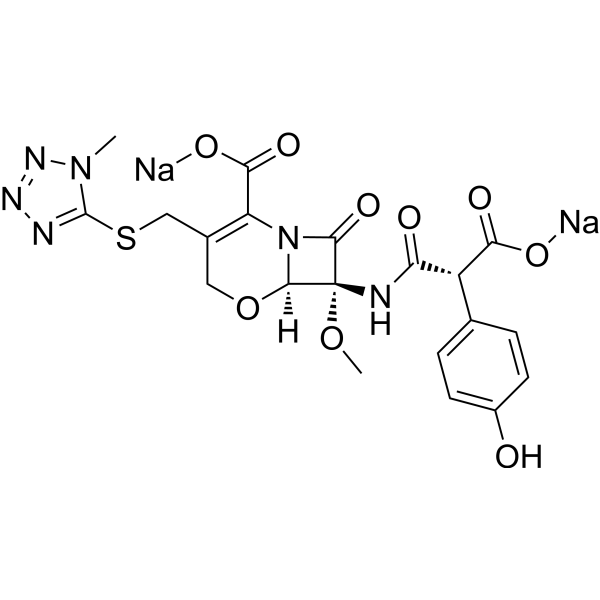
Moxalactam sodium saltAntibacterial Agent -
HY-B1128A
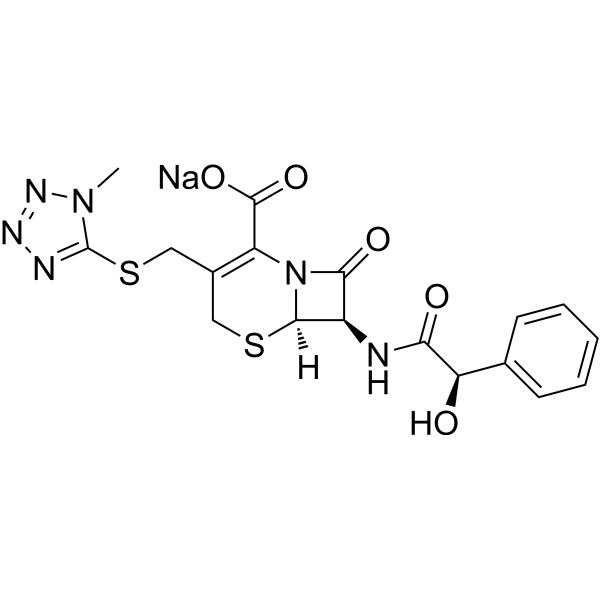
Cefamandole sodiumBeta-lactamase Inhibitor -
HY-A0090
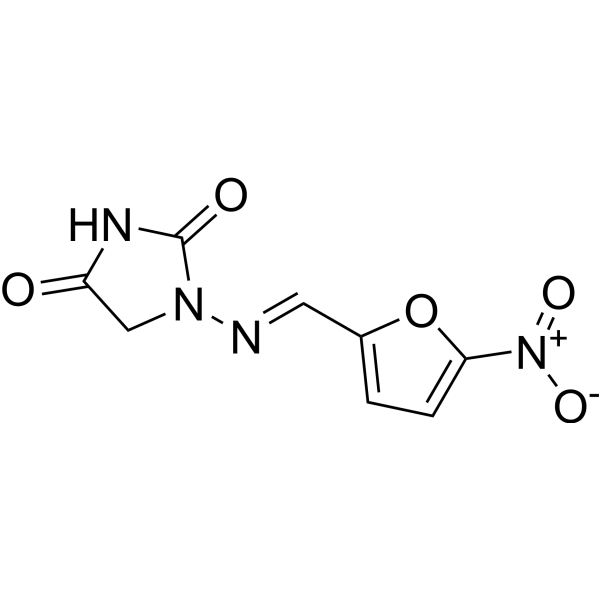
NitrofurantoinAntibiotic -

HY-A0090R
Nitrofurantoin (Standard)Antibiotic -

HY-B1300R
Cefonicid sodium (Standard)Standard -
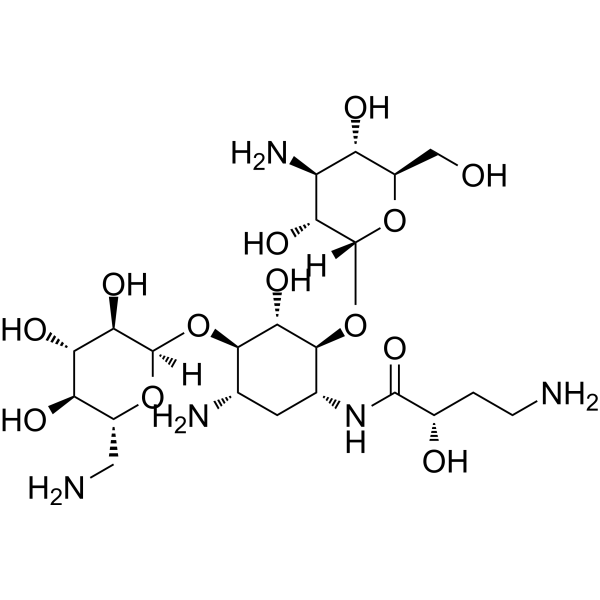
HY-B0509A
AmikacinAntibiotic -
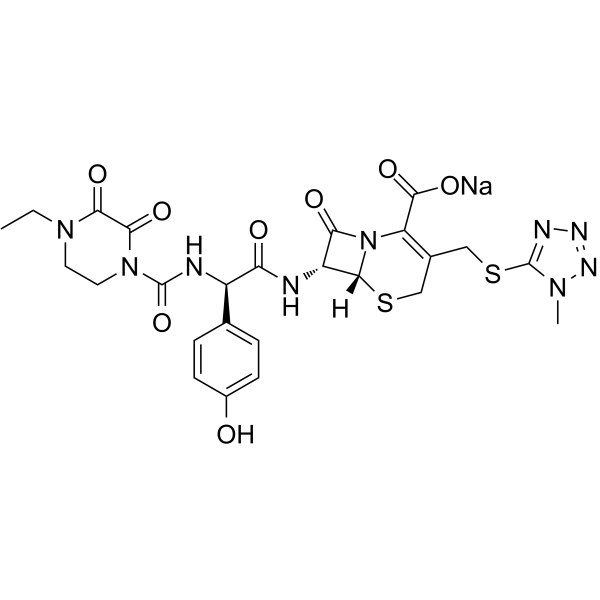
HY-B0210A
Cefoperazone sodium saltBacterial Inhibitor -
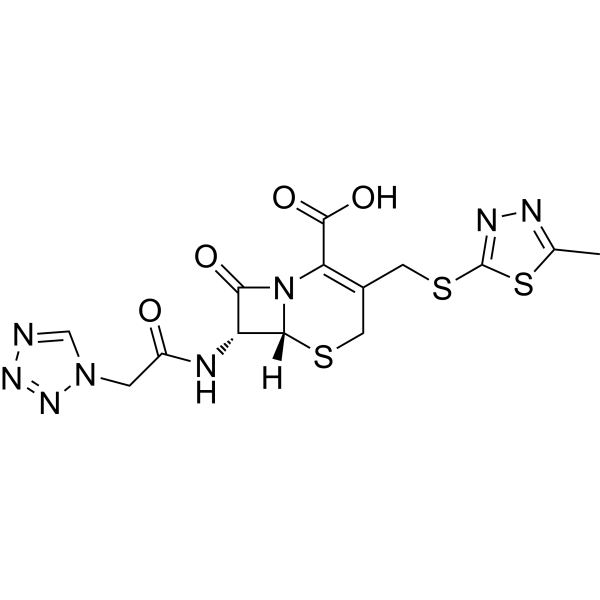
HY-B1892
CefazolinCephalosporin Antibiotic -

HY-B0509AR
Amikacin (Standard)Antibiotic -
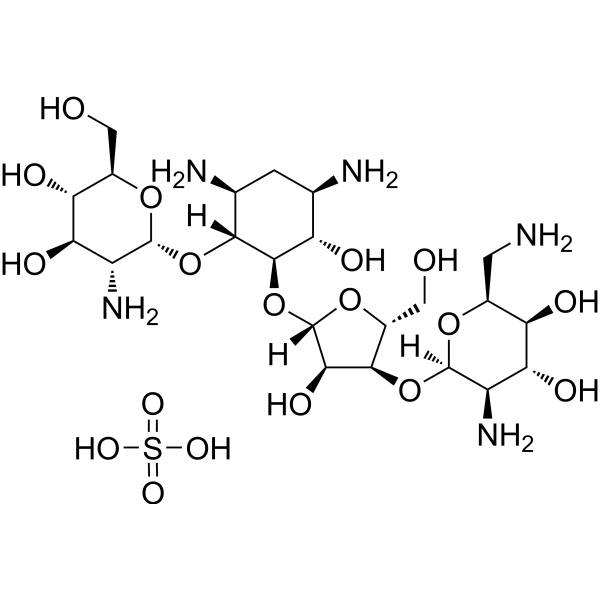
HY-B0956
Paromomycin sulfateAntibiotic -

HY-B0210AR
Cefoperazone sodium salt (Standard)Bacterial Inhibitor -
HY-B0467B
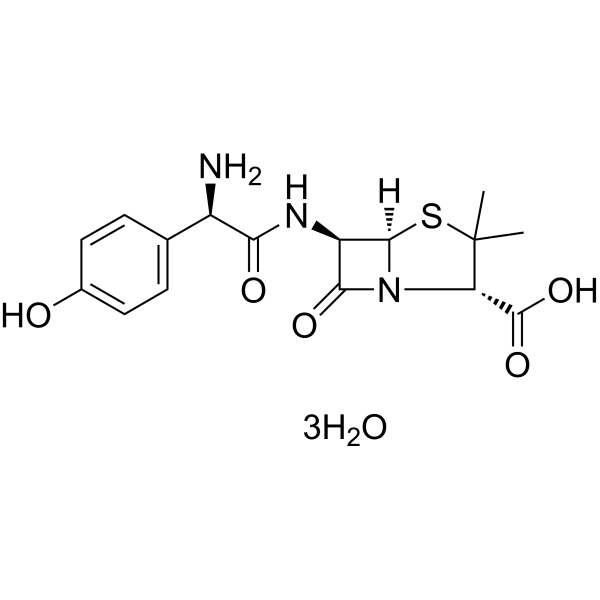
Amoxicillin trihydrateAntibiotic


Biological Activity
Description
In Vitro
Cefonicid sodium (25-200 mg/L; 3-6 days) dose-dependently inhibits the proliferation of human PBMCs stimulated by FLU, XENO, ALLO, and PHA (HY-N7038)[1].
Cefonicid sodium (0-200 mg/L; 7 days) dose-dependently inhibits IL-2 production by human PBMC stimulated with FLU, XENO and ALLO[1].
Cefonicid sodium (0-24 h) exhibits concentration-dependent bactericidal activity against Klebsiella pneumoniae strain 2603 in vitro, with an MIC of 0.25 mg/L[3].
MedChemExpress (MCE) has not independently confirmed the accuracy of these methods. They are for reference only. Further protocols information, click here.
In Vivo
Cefonicid sodium (40 mg/kg; single dose) exhibits excellent protective effects against S. aureus, E. coli, P. mirabilis, and K. pneumoniae infections in mice[4].
Cefonicid sodium exerts excellent preventive protective effects against surgical wound infections in mice, with an ED50 value of ≤2.1 mg/kg against Gram-negative bacilli and an ED50 value ranging from 3.7 to 8.7 mg/kg against S. aureus[4].
MedChemExpress (MCE) has not independently confirmed the accuracy of these methods. They are for reference only.
-
Animal Model:Hartley (female, 220-250 g)[3]
-
Dosage:15 mg/kg
-
Administration:i.p.; 2 doses (immediately and 24 hours post-challenge)
-
Result:Showed similar lung bacterial counts to infected untreated controls at 0 and 1 hour post-challenge.
Reduced lung bacterial counts significantly compared to infected untreated controls starting at 6 hours post-challenge, with significant reductions also seen at 24 and 48 hours post-challenge.


Chemical Information
-
CAS No. 61270-78-8
-
Appearance Solid
-
Molecular Weight 586.53
-
Formula C18H16N6Na2O8S3
-
Color White to off-white
-
SMILES
O=C(C(N12)=C(CSC3=NN=NN3CS(=O)(O[Na])=O)CS[C@]2([H])[C@H](NC([C@H](O)C4=CC=CC=C4)=O)C1=O)O[Na]
-
Shipping
Room temperature in continental US; may vary elsewhere.
-
Storage
4°C, sealed storage, away from moisture and light
* In solvent : -80°C, 6 months; -20°C, 1 month (sealed storage, away from moisture and light)


Solvent & Solubility
In Vitro:
DMSO : 116.67 mg/mL (198.92 mM; Need ultrasonic; Hygroscopic DMSO has a significant impact on the solubility of product, please use newly opened DMSO)
H2O : ≥ 100 mg/mL (170.49 mM)
* "≥" means soluble, but saturation unknown.
Please refer to the solubility information to select the appropriate solvent. Once prepared, please aliquot and store the solution to prevent product inactivation from repeated freeze-thaw cycles.
Storage method and period of stock solution: -80°C, 6 months; -20°C, 1 month (sealed storage, away from moisture and light). When stored at -80°C, please use it within 6 months. When stored at -20°C, please use it within 1 month.
* Note: If you choose water as the stock solution, please dilute it to the working solution, then filter and sterilize it with a 0.22 μm filter before use.
Please refer to the solubility information to select the appropriate solvent. Once prepared, please aliquot and store the solution to prevent product inactivation from repeated freeze-thaw cycles.
Storage method and period of stock solution: -80°C, 6 months; -20°C, 1 month (sealed storage, away from moisture and light). When stored at -80°C, please use it within 6 months. When stored at -20°C, please use it within 1 month.
* Note: If you choose water as the stock solution, please dilute it to the working solution, then filter and sterilize it with a 0.22 μm filter before use.
Concentration (start) × Volume (start) = Concentration (final) × Volume (final)

Protocols
-
Research Protocol for Infectious Diseases
Infectious-disease experiments test how pathogens interact with host barriers, innate immune receptors, inflammatory signaling, pathogen replication, and tissue injury; pattern-recognition receptors such as TLRs, RIG-I-like receptors, NOD-like receptors, and inflammasomes detect microbial molecules and activate NF-κB, interferon, and cytokine responses. The central hypothesis is that infection severity reflects the balance between pathogen burden and host response: protective inflammation restricts pathogen growth, whereas excessive or mislocalized inflammation contributes to tissue damage and disease phenotype. Unresolved questions include which host pathways are protective versus pathogenic, why some infection models fail to translate to human disease, and which combined readouts best predict clinically relevant infection outcomes.
-
Gram Staining of Tissue Sections
Gram staining of tissue sections is a histochemical technique used to differentiate Gram-positive and Gram-negative bacteria within histological specimens based on differences in bacterial cell wall structure and dye retention, adapted from classical bacteriological Gram staining into tissue-compatible “histological Gram stain” variants. In tissue applications, modifications of the Brown-Hopps and Brown-Brenn methods are commonly used to improve differentiation of microorganisms embedded within host connective tissue and to reduce overstaining or loss of Gram-negative signal, which are known limitations of earlier approaches. The principle relies on crystal violet-iodine complex retention in Gram-positive organisms and subsequent decolorization and counterstaining steps that allow contrast visualization of Gram-negative organisms against tissue background.


Purity & Documentation
-
Data Sheet (278 KB)
-
SDS (419 KB)
- English - EN (419 KB)
- Français - FR (419 KB)
- Deutsch - DE (419 KB)
- Norwegian - NO (419 KB)
- Español - ES (419 KB)
- Swedish - SV (419 KB)
- Italian - IT (419 KB)
- Korean - KR (419 KB)
- Portuguese - PT (419 KB)
-
Handling Instructions (2659 KB)
References
[1]. Villa ML, et al. Interference of cephalosporins with immune response: effects of cefonicid on human T-helper cells. Int J Immunopharmacol. 1991;13(8):1099-1107. [Content Brief]
[4]. Saltiel E, et al. Cefonicid. A review of its antibacterial activity, pharmacological properties and therapeutic use. Drugs. 1986;32(3):222-259. [Content Brief]


Complete Stock Solution Preparation Table
Please refer to the solubility information to select the appropriate solvent. Once prepared, please aliquot and store the solution to prevent product inactivation from repeated freeze-thaw cycles.
Storage method and period of stock solution: -80°C, 6 months; -20°C, 1 month (sealed storage, away from moisture and light). When stored at -80°C, please use it within 6 months. When stored at -20°C, please use it within 1 month.
| Optional Solvent | Concentration Solvent Mass | 1 mg | 5 mg | 10 mg | 25 mg |
|---|---|---|---|---|---|
| H2O / DMSO | 1 mM | 1.7049 mL | 8.5247 mL | 17.0494 mL | 42.6236 mL |
| 5 mM | 0.3410 mL | 1.7049 mL | 3.4099 mL | 8.5247 mL | |
| 10 mM | 0.1705 mL | 0.8525 mL | 1.7049 mL | 4.2624 mL | |
| 15 mM | 0.1137 mL | 0.5683 mL | 1.1366 mL | 2.8416 mL | |
| 20 mM | 0.0852 mL | 0.4262 mL | 0.8525 mL | 2.1312 mL | |
| 25 mM | 0.0682 mL | 0.3410 mL | 0.6820 mL | 1.7049 mL | |
| 30 mM | 0.0568 mL | 0.2842 mL | 0.5683 mL | 1.4208 mL | |
| 40 mM | 0.0426 mL | 0.2131 mL | 0.4262 mL | 1.0656 mL | |
| 50 mM | 0.0341 mL | 0.1705 mL | 0.3410 mL | 0.8525 mL | |
| 60 mM | 0.0284 mL | 0.1421 mL | 0.2842 mL | 0.7104 mL | |
| 80 mM | 0.0213 mL | 0.1066 mL | 0.2131 mL | 0.5328 mL | |
| 100 mM | 0.0170 mL | 0.0852 mL | 0.1705 mL | 0.4262 mL |
* Note: If you choose water as the stock solution, please dilute it to the working solution, then filter and sterilize it with a 0.22 μm filter before use.


Cefonicid sodium Related Classifications
HY-B1300 Related Classifications
 Powered by Bioz