



EML 425
Based on 2 publication(s) in Google Scholar
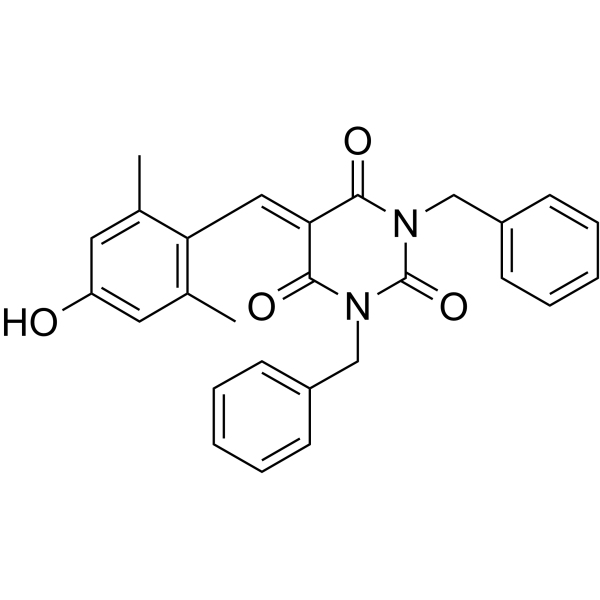
EML425 is a potent and selective CREB binding protein (CBP)/p300 inhibitor with IC50s of 2.9 and 1.1 μM, respectively.
For research use only. We do not sell to patients.
- Purity : 98.04%
- CAS No.: 1675821-32-5
- Formula: C27H24N2O4
- Molecular Weight:440.49
-
Storage:Powder -20°C, 3 years , 4°C, 2 years ; In solvent -80°C, 2 years , -20°C, 1 year

To place orders, for customer services and technical support, please contact: MedChemExpress USA
Tel: 609-228-6898 E-mail: [email protected] [email protected]


-
 Biological Activity
-
Chemical Information
-
Solvent & Solubility
- Purity & Documentation
- References
-
 Help & FAQs


-
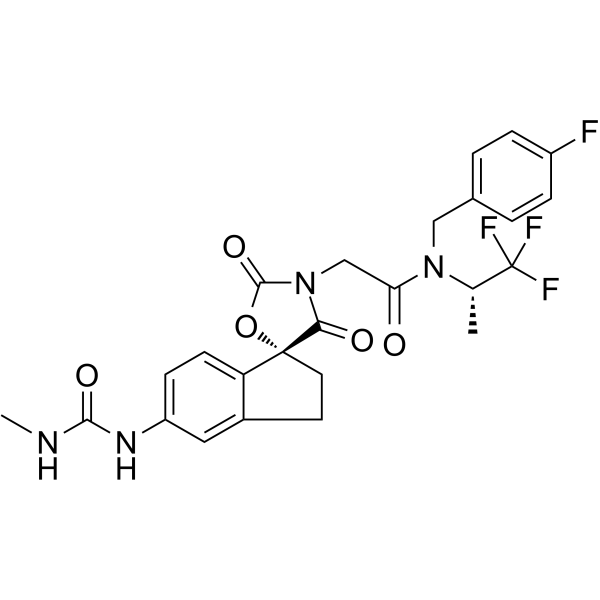
HY-107455
A-485p300/CBP Inhibitor -
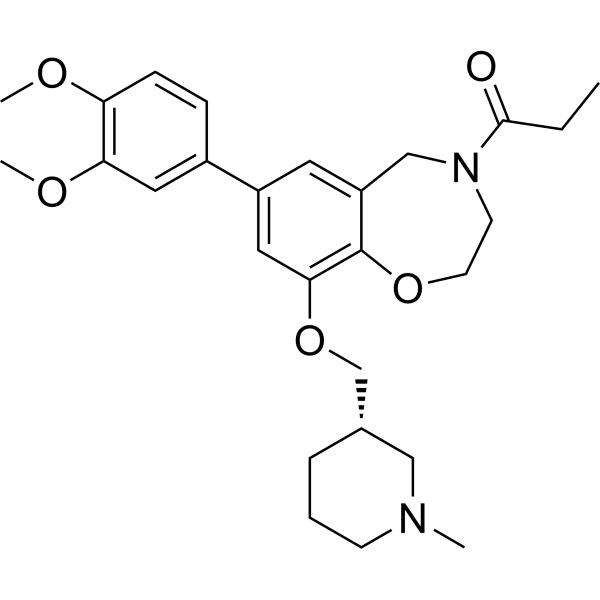
HY-19541
I-CBP112CBP/p300 Bromodomains Inhibitor -
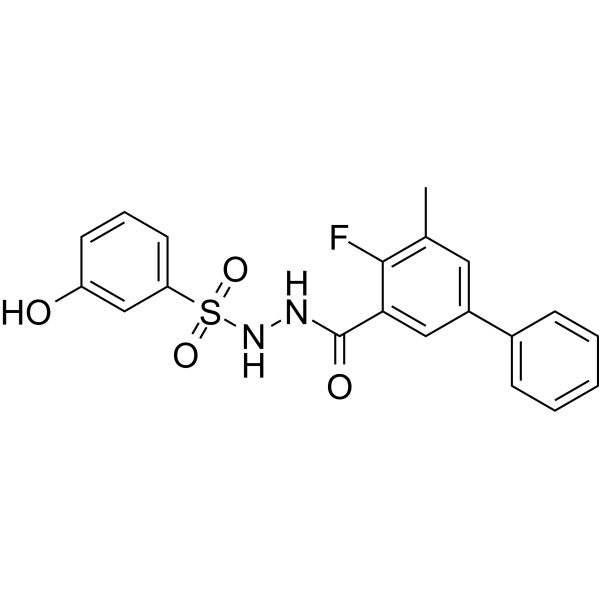
HY-134901
WM-3835HBO1 Inhibitor -

HY-112825
TSI-01LPCAT2 Inhibitor -
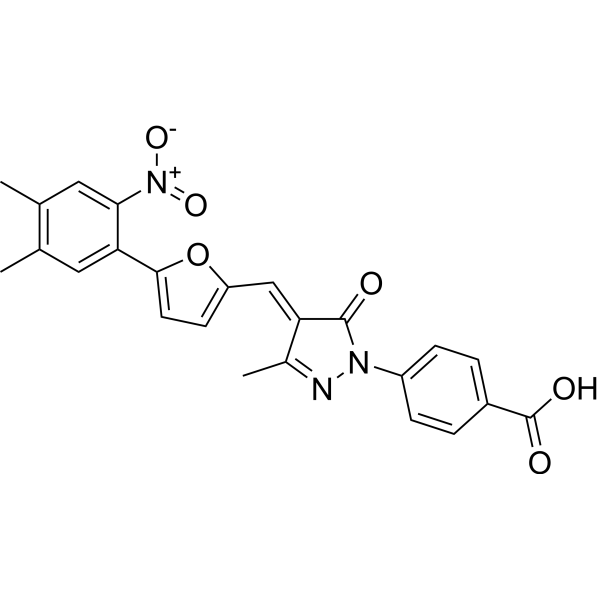
HY-13823
C646p300/CBP HAT Inhibitor -
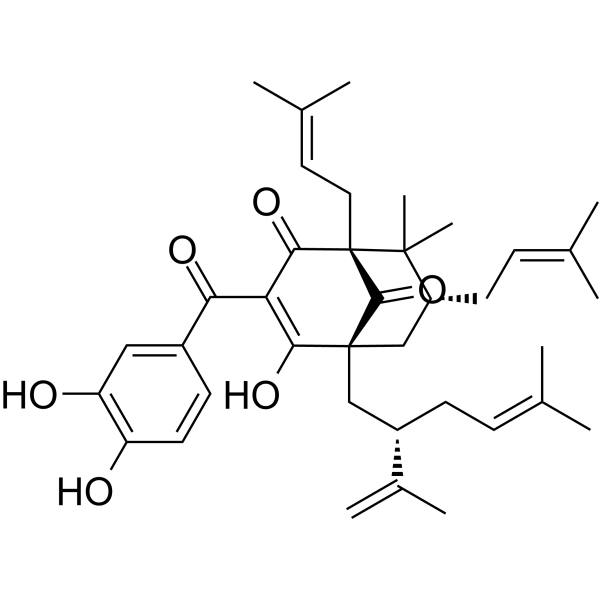
HY-107569
GarcinolAChE Inhibitor -
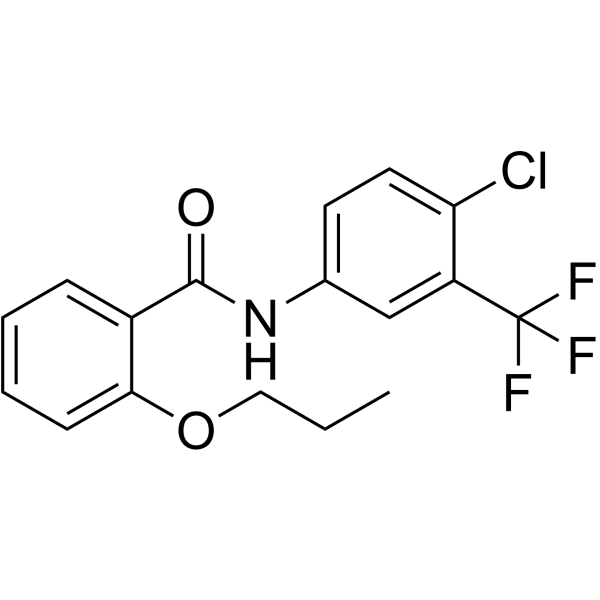
HY-116673
TTK21CBP/p300 Activator -
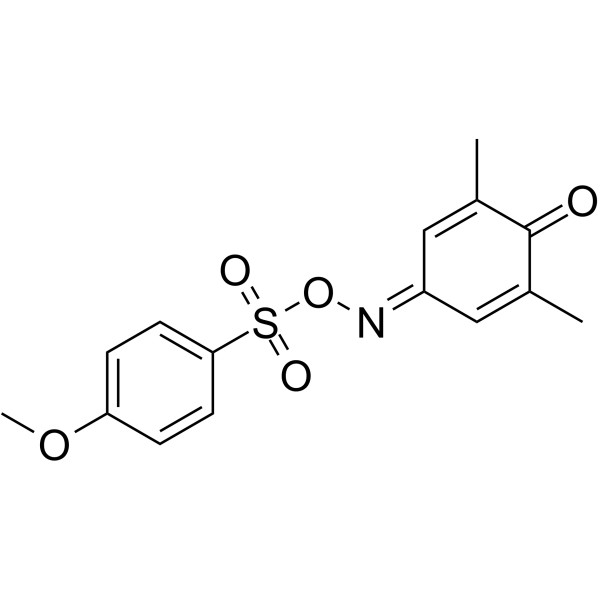
HY-100671
L002P300 FAT Inhibitor -
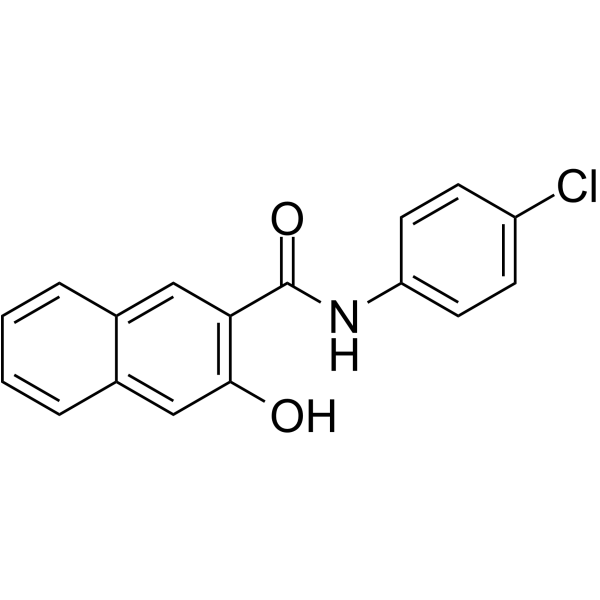
HY-104068
Naphthol AS-EKIX-KID Inhibitor -
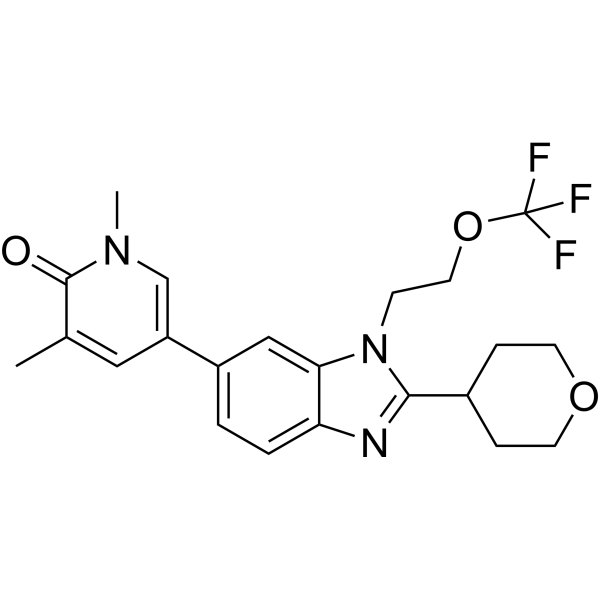
HY-136938
NEO2734p300(CBP)/BET Inhibitor -

HY-107569R
Garcinol (Standard)AChE Inhibitor -

HY-104068R
Naphthol AS-E (Standard)Reference Standard
Publications Citing Use of MedChemExpress (MCE) EML 425
More

Biological Activity
Description
IC50 & Target
IC50: 1.1 μM (p300), 2.9 μM (CBP)[1]
In Vitro
EML 425 (EML425, Compound 7h) is a potent and selective reversible inhibitor of CBP/p300, noncompetitive versus both acetyl-CoA and a histone H3 peptide, and endows with good cell permeability. EML 425 inhibits both p300 and CBP (IC50 values of 2.9 and 1.1 μM, respectively) while being practically inactive against the enzymes general control non derepressible-5 (GCN5) and p300/CBP-associated factor (PCAF). EML 425 induces a marked and time-dependent reduction in the acetylation of lysine H4K5 and H3K9 in U937 cells. EML 425 is shown to be a reversible inhibitor, noncompetitive versus both acetyl-CoA and a histone H3 peptide, and able to bind both the free enzyme and the enzyme-substrate complex, even with unequal affinity constants. The best scoring docking poses suggest that the binding site for EML 425 is an alternative pocket lying near the substrate lysine binding groove and close to the acetylation site[1].
MedChemExpress (MCE) has not independently confirmed the accuracy of these methods. They are for reference only.


Chemical Information
-
CAS No. 1675821-32-5
-
Appearance Solid
-
Molecular Weight 440.49
-
Formula C27H24N2O4
-
Color Light yellow to yellow
-
SMILES
O=C(N(C(N(CC1=CC=CC=C1)C/2=O)=O)CC3=CC=CC=C3)C2=C/C4=C(C=C(O)C=C4C)C
-
Shipping
Room temperature in continental US; may vary elsewhere.
-
Storage
Powder -20°C 3 years 4°C 2 years In solvent -80°C 2 years -20°C 1 year


Publications (2)
-
Journal Impact Factor
-
Most Recent
-
Osteoarthritis Cartilage
Advanced glycation end products promote intervertebral disc degeneration by transactivation of matrix metallopeptidase genes. [Abstract]2024 Feb;32(2):187-199. PMID: 37717904 -
Biol Direct
USP24-dependent stabilization of Runx2 recruits a p300/NCOA3 complex to transactivate ADAMTS genes and promote degeneration of intervertebral disc in chronic inflammation mice. [Abstract]2023 Jul 6;18(1):37. PMID: 37415159


Solvent & Solubility
In Vitro:
DMSO : ≥ 250 mg/mL (567.55 mM; Hygroscopic DMSO has a significant impact on the solubility of product, please use newly opened DMSO)
* "≥" means soluble, but saturation unknown.
Please refer to the solubility information to select the appropriate solvent. Once prepared, please aliquot and store the solution to prevent product inactivation from repeated freeze-thaw cycles.
Storage method and period of stock solution: -80°C, 2 years; -20°C, 1 year. When stored at -80°C, please use it within 2 years. When stored at -20°C, please use it within 1 year.
Please refer to the solubility information to select the appropriate solvent. Once prepared, please aliquot and store the solution to prevent product inactivation from repeated freeze-thaw cycles.
Storage method and period of stock solution: -80°C, 2 years; -20°C, 1 year. When stored at -80°C, please use it within 2 years. When stored at -20°C, please use it within 1 year.
Concentration (start) × Volume (start) = Concentration (final) × Volume (final)
In Vivo:
Select the appropriate dissolution method based on your experimental animal and administration route.
- For the following dissolution methods, please ensure to first prepare a clear stock solution using an In Vitro approach and then sequentially add co-solvents:
- To ensure reliable experimental results, the clarified stock solution can be appropriately stored based on storage conditions. As for the working solution for In Vivo experiments, it is recommended to prepare freshly and use it on the same day.
- The percentages shown for the solvents indicate their volumetric ratio in the final prepared solution. If precipitation or phase separation occurs during preparation, heat and/or sonication can be used to aid dissolution.
Add each solvent one by one: 10% DMSO 40% PEG300 5% Tween-80 45% Saline
Solubility: ≥ 2.08 mg/mL (4.72 mM); Clear solution
This protocol yields a clear solution of ≥ 2.08 mg/mL (saturation unknown).
Taking 1 mL working solution as an example, add 100 μL DMSO stock solution (20.8 mg/mL) to 400 μL PEG300, and mix evenly; then add 50 μL Tween-80 and mix evenly; then add 450 μL Saline to adjust the volume to 1 mL.
Preparation of Saline: Dissolve 0.9 g sodium chloride in ddH₂O and dilute to 100 mL to obtain a clear Saline solution.
In Vivo Dissolution Calculator
Please enter the basic information of animal experiments:
-
-
-
-
Recommended: Prepare an additional quantity of animals to account for potential losses during experiments.
Please enter your animal formula composition:
-
%DMSO +
Recommended: Keep the proportion of DMSO in working solution below 2% if your animal is weak.
-
%+
-
+%Tween-80 + +
-
%Saline +
The co-solvents required include: DMSO, . All of co-solvents are available by MedChemExpress (MCE). , Tween 80. All of co-solvents are available by MedChemExpress (MCE).
Working solution concentration: 0.22 mg/mL
Method for preparing stock solution: mg drug dissolved in μL DMSO. Stock solution concentration: mg/mL.
1. Take μL DMSO stock solution;
2. Add μL .
μL , mix evenly;
3. Then add μL Tween 80, mix evenly;
4. Then add μL
Please ensure that the stock solution in the first step is dissolved to a clear state, and add co-solvents in sequence. You can use ultrasonic heating (ultrasonic cleaner, recommended frequency 20-40 kHz), vortexing, etc. to assist dissolution.


Purity & Documentation
-
Data Sheet (277 KB)
-
SDS (251 KB)
- English - EN (251 KB)
- Français - FR (251 KB)
- Deutsch - DE (251 KB)
- Norwegian - NO (251 KB)
- Español - ES (251 KB)
- Swedish - SV (251 KB)
- Italian - IT (251 KB)
- Korean - KR (251 KB)
- Portuguese - PT (251 KB)
-
Handling Instructions (2659 KB)
References


Complete Stock Solution Preparation Table
Please refer to the solubility information to select the appropriate solvent. Once prepared, please aliquot and store the solution to prevent product inactivation from repeated freeze-thaw cycles.
Storage method and period of stock solution: -80°C, 2 years; -20°C, 1 year. When stored at -80°C, please use it within 2 years. When stored at -20°C, please use it within 1 year.
| Optional Solvent | Concentration Solvent Mass | 1 mg | 5 mg | 10 mg | 25 mg |
|---|---|---|---|---|---|
| DMSO | 1 mM | 2.2702 mL | 11.3510 mL | 22.7020 mL | 56.7550 mL |
| 5 mM | 0.4540 mL | 2.2702 mL | 4.5404 mL | 11.3510 mL | |
| 10 mM | 0.2270 mL | 1.1351 mL | 2.2702 mL | 5.6755 mL | |
| 15 mM | 0.1513 mL | 0.7567 mL | 1.5135 mL | 3.7837 mL | |
| 20 mM | 0.1135 mL | 0.5675 mL | 1.1351 mL | 2.8377 mL | |
| 25 mM | 0.0908 mL | 0.4540 mL | 0.9081 mL | 2.2702 mL | |
| 30 mM | 0.0757 mL | 0.3784 mL | 0.7567 mL | 1.8918 mL | |
| 40 mM | 0.0568 mL | 0.2838 mL | 0.5675 mL | 1.4189 mL | |
| 50 mM | 0.0454 mL | 0.2270 mL | 0.4540 mL | 1.1351 mL | |
| 60 mM | 0.0378 mL | 0.1892 mL | 0.3784 mL | 0.9459 mL | |
| 80 mM | 0.0284 mL | 0.1419 mL | 0.2838 mL | 0.7094 mL | |
| 100 mM | 0.0227 mL | 0.1135 mL | 0.2270 mL | 0.5675 mL |


EML 425 Related Classifications
HY-110263 Related Classifications
 Powered by Bioz