Cancer Targeted Therapy
Cancer targeted therapy is the foundation of precision medicine; it uses drugs or other substances to target specific genes and proteins that control cancer cells’ growth, division and spreading. Compared to traditional chemotherapy drugs, targeted-drugs can specifically act on cancer cells with high efficacy without damaging normal cells. Drugs used in cancer targeted therapy mainly includes small molecules and macromolecules (e.g., monoclonal antibodies), which can target cancer cells and constituents in the tumor microenvironment to activate the immune system. Anti-angiogenesis drugs, such as those targeting vascular endothelial growth factor (VEGF), epidermal growth factor receptor (EGFR), transforming growth factor (TGF)-α, TGF-β, Tumor necrosis factor (TNF)-α, and platelet-derived endothelial growth factor (PDGFR) inhibit the proliferation and metastasis of cancer cells. In recent years, the proportion of antibody drugs in cancer treatment has gradually become prominent. Antibody-drug conjugates (ADCs) are a new type of targeted drugs that are composed of monoclonal antibody, cytotoxic drug and linker. ADCs can deliver drugs to tumor cells and minimize the toxicity to normal tissues. Proteolysis-targeting chimera (PROTAC) is a useful technology for targeted protein degradation. PROTAC exploits the ubiquitin-proteasome system and forms a ternary complex with a hijacked E3 ubiquitin ligase and target protein, leading to polyubiquitination and degradation of the target protein.
Targeted therapy is a useful strategy in treatment of cancer either alone or in combination with standard chemotherapy. At present, targeted therapy has proved significant clinical success in the treatment of many types of cancer, including breast cancer, colorectal cancer, leukemia, ovarian cancer and lung cancer.
-
hsa-miR-5010-3p inhibitor
 0 ImagesCat. No.: HY-RI01506
hsa-miR-5010-3p inhibitors are chemically-modified oligonucleotides that hybridize with mature miRNAs. The miRNA inhibitors have full-length nucleotide 2'-methoxy modification. The miRNA inhibitors strongly compete with mature miRNAs to prevent the complementary pairing of miRNAs and their target genes, thereby inhibiting miRNAs from functioning.
-
hsa-miR-6781-3p antagomir
 0 ImagesCat. No.: HY-RI02126A
hsa-miR-6781-3p antagomirs are chemically-modified oligonucleotides that hybridize with mature miRNAs. The miRNA antagomirs have 2 phosphorothioates at the 5' end, 4 phosphorothioates at the 3' end, 1 cholesterol group at the 3' end, and full-length nucleotide 2'-methoxy modification. The miRNA antagomirs strongly compete with mature miRNAs to prevent the complementary pairing of miRNAs and their target genes, thereby inhibiting miRNAs from functioning. Stability of miRNA antagomirs appears to be significantly higher than miRNA inhibitors, they exhibits enhanced cellular uptake, stability and regulatory activity in vivo.
-
mmu-miR-1933-3p antagomir
 0 ImagesCat. No.: HY-RI02747A
mmu-miR-1933-3p antagomirs are chemically-modified oligonucleotides that hybridize with mature miRNAs. The miRNA antagomirs have 2 phosphorothioates at the 5' end, 4 phosphorothioates at the 3' end, 1 cholesterol group at the 3' end, and full-length nucleotide 2'-methoxy modification. The miRNA antagomirs strongly compete with mature miRNAs to prevent the complementary pairing of miRNAs and their target genes, thereby inhibiting miRNAs from functioning. Stability of miRNA antagomirs appears to be significantly higher than miRNA inhibitors, they exhibits enhanced cellular uptake, stability and regulatory activity in vivo.
-
mmu-miR-6363 inhibitor
 0 ImagesCat. No.: HY-RI03369
mmu-miR-6363 inhibitors are chemically-modified oligonucleotides that hybridize with mature miRNAs. The miRNA inhibitors have full-length nucleotide 2'-methoxy modification. The miRNA inhibitors strongly compete with mature miRNAs to prevent the complementary pairing of miRNAs and their target genes, thereby inhibiting miRNAs from functioning.
-
mmu-miR-7228-5p antagomir
 0 ImagesCat. No.: HY-RI03994A
mmu-miR-7228-5p antagomirs are chemically-modified oligonucleotides that hybridize with mature miRNAs. The miRNA antagomirs have 2 phosphorothioates at the 5' end, 4 phosphorothioates at the 3' end, 1 cholesterol group at the 3' end, and full-length nucleotide 2'-methoxy modification. The miRNA antagomirs strongly compete with mature miRNAs to prevent the complementary pairing of miRNAs and their target genes, thereby inhibiting miRNAs from functioning. Stability of miRNA antagomirs appears to be significantly higher than miRNA inhibitors, they exhibits enhanced cellular uptake, stability and regulatory activity in vivo.
-
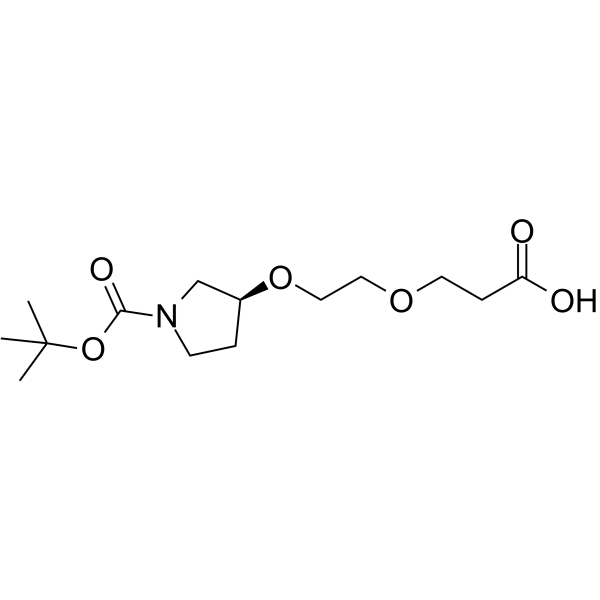
Boc-NH-PEG4-C3-acid
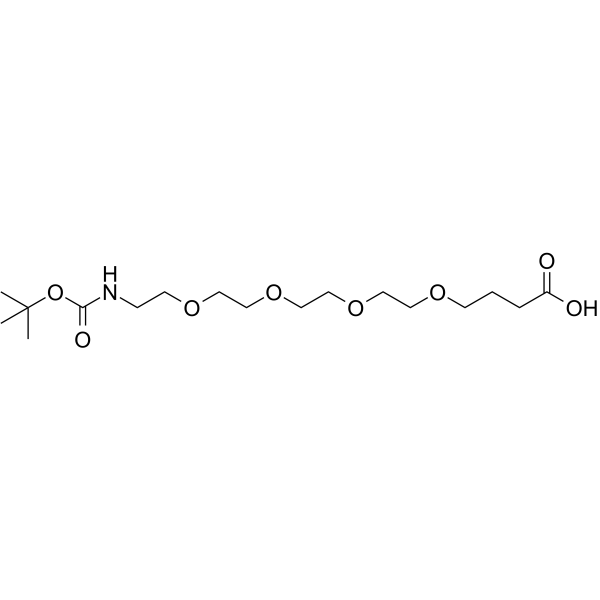 0 ImagesCat. No.: HY-140478CAS No.: 1416777-48-4
-
LAB687
 0 ImagesCat. No.: HY-177291CAS No.: 256397-11-2
LAB687 is a microsomal triglyceride transfer protein (MTP) inhibitor with an IC50 of 0.9 nM for apolipoprotein B (apoB) secretion in HepG2 cells. LAB687 also acts as a Smoothened (Smo) antagonist, with IC50 values of 2.48 μM and 3.42 μM against mouse and human Smo receptors, respectively. LAB687 reduces triglyceride and low-density lipoprotein cholesterol (LDL-C) levels, and inhibits the Hedgehog signaling pathway. LAB687 can be used in studies related to Hedgehog-dependent cancers.
-
hsa-miR-12130 inhibitor
 0 ImagesCat. No.: HY-RI00106
hsa-miR-12130 inhibitors are chemically-modified oligonucleotides that hybridize with mature miRNAs. The miRNA inhibitors have full-length nucleotide 2'-methoxy modification. The miRNA inhibitors strongly compete with mature miRNAs to prevent the complementary pairing of miRNAs and their target genes, thereby inhibiting miRNAs from functioning.
-
PeS-9
 0 ImagesCat. No.: HY-174377
PeS-9 is an Androgen Receptor (AR) degrader that induces androgen receptor degradation PeS-9 induces mitochondrial and ER stress by promoting cytotoxic ROS production, leading to the release of mitochondrial cytochrome C and AIF. PeS-9 subsequently activates caspases-9 and -3, causing DNA fragmentation and apoptotic cell death. PeS-9 has anticancer activity against prostate cancer and exerts in vivo antitumor and antimetastatic activity with minor side effects. PeS-9 can be used for the study of targeting monotherapy against GLUT-1-overexpressing tumors.
-
HDAC8-IN-14
 0 ImagesCat. No.: HY-178380
HDAC8-IN-14, a curcuminoid derivative, is a selective HDAC8 inhibitor with a Ki of 9 nM. HDAC8-IN-14 induces the production of reactive oxygen species (ROS), disrupts mitochondrial membrane potential, and promotes apoptosis. HDAC8-IN-14 can significantly promote the accumulation of cells in the sub-G0/G1 phase, consistent with apoptotic or necrotic cell death. HDAC8-IN-14 induces upregulation of cytochrome c, cleaved caspase-3, and the pro-apoptotic protein Bak while leaving the anti-apoptotic Bcl-2 levels unaltered. HDAC8-IN-14 can be used for the study of leukemia.
-
HDAC6-IN-79
 0 ImagesCat. No.: HY-182747
HDAC6-IN-79 is a HDAC6 inhibitor with an IC50 of 98.40 nM, and it also exhibits inhibitory activity against other HDAC subtypes (HDAC1: 639.0 nM, HDAC2: 798.9 nM, HDAC8: 865.7 nM, HDAC4: 1187 nM). HDAC6-IN-79 induces acetylation of α-tubulin and histone H3, reduces the viability of cancer cells, activates the autophagy pathway and induces apoptosis. HDAC6-IN-79 can be used for research related to urothelial carcinoma (bladder cancer).
-
DMG-PEG2000-A7R
 0 ImagesCat. No.: HY-187904ASynonyms: DMG-PEG2000-Mal-Cys-ATWLPPR
DMG-PEG2000-A7R (DMG-PEG2000-Mal-Cys-ATWLPPR) is a functionalized PEGylated phospholipid conjugate composed of three modular components: dimyristoylglycerol (DMG) as a lipid anchoring group, a polyethylene glycol (PEG) spacer arm with a molecular weight of 2000 Da, and an A7R (HY-P1663) peptide as a terminal targeting/functional ligand. DMG-PEG2000-A7R can be used in research such as tumor angiogenesis-targeted drug delivery.
-
Hydroxymycotrienin B
 0 ImagesCat. No.: HY-N15103CAS No.: 178550-62-4
Hydroxymycotrienin B is an ansamycin group antibiotic (triene-ansamycin) found in culture broths of Bacillus sp. BMJ958-62F4. Hydroxymycotrienin B inhibits HPV-positive cervical cancer cell growth 3~10 times more strongly than HPV-negative cervical cancer cells. Hydroxymycotrienin B can be used for the research of human cervical cancer.
-
CES
 0 ImagesCat. No.: HY-P11029
CES (CESPLLSEC) is a homing peptide targeting Synaptosomal associated protein 25 (SNAP25). CES specifically homes in intracranial U87MG and the WT-glioblastoma (GBM) model. CES can be used as a targeting peptide for drug delivery for cancers research.
-
SDX-7539
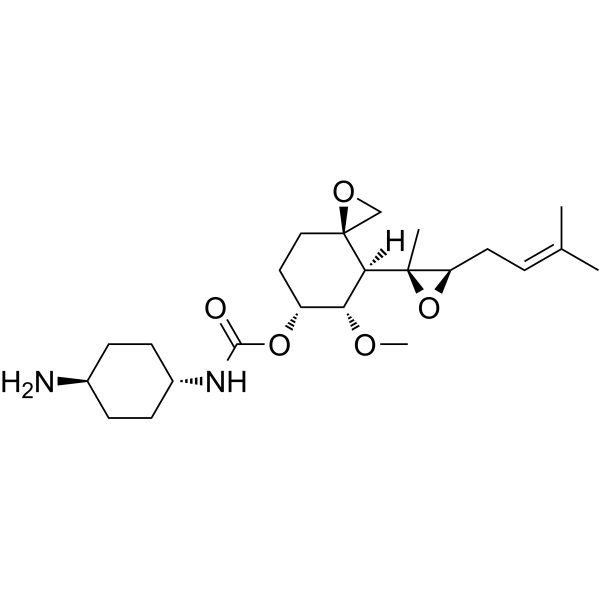 0 ImagesCat. No.: HY-158006CAS No.: 1631953-52-0
SDX-7539 is a selective inhibitor for Methionine aminopeptidase type 2 (MetAP2). SDX-7539 inhibits proliferarion of HUVECs with an IC50 of 120 μM. SDX-7539 exhibits antitumor activity in NSCLC xenograft athymic nude mice.
-
TX2-120-1
 0 ImagesCat. No.: HY-164988CAS No.: 1603845-45-9