



Cancer Targeted Therapy
Cancer targeted therapy is the foundation of precision medicine; it uses drugs or other substances to target specific genes and proteins that control cancer cells’ growth, division and spreading. Compared to traditional chemotherapy drugs, targeted-drugs can specifically act on cancer cells with high efficacy without damaging normal cells. Drugs used in cancer targeted therapy mainly includes small molecules and macromolecules (e.g., monoclonal antibodies), which can target cancer cells and constituents in the tumor microenvironment to activate the immune system. Anti-angiogenesis drugs, such as those targeting vascular endothelial growth factor (VEGF), epidermal growth factor receptor (EGFR), transforming growth factor (TGF)-α, TGF-β, Tumor necrosis factor (TNF)-α, and platelet-derived endothelial growth factor (PDGFR) inhibit the proliferation and metastasis of cancer cells. In recent years, the proportion of antibody drugs in cancer treatment has gradually become prominent. Antibody-drug conjugates (ADCs) are a new type of targeted drugs that are composed of monoclonal antibody, cytotoxic drug and linker. ADCs can deliver drugs to tumor cells and minimize the toxicity to normal tissues. Proteolysis-targeting chimera (PROTAC) is a useful technology for targeted protein degradation. PROTAC exploits the ubiquitin-proteasome system and forms a ternary complex with a hijacked E3 ubiquitin ligase and target protein, leading to polyubiquitination and degradation of the target protein.
Targeted therapy is a useful strategy in treatment of cancer either alone or in combination with standard chemotherapy. At present, targeted therapy has proved significant clinical success in the treatment of many types of cancer, including breast cancer, colorectal cancer, leukemia, ovarian cancer and lung cancer.
-
hsa-miR-1290 inhibitor
 0 ImagesCat. No.: HY-RI00212
hsa-miR-1290 inhibitors are chemically-modified oligonucleotides that hybridize with mature miRNAs. The miRNA inhibitors have full-length nucleotide 2'-methoxy modification. The miRNA inhibitors strongly compete with mature miRNAs to prevent the complementary pairing of miRNAs and their target genes, thereby inhibiting miRNAs from functioning.
-
ADC Control Human IgG1-tirumotecan
 0 ImagesCat. No.: HY-150362Purity: 99.01%
ADC Control Human IgG1-tirumotecan is an antibody-drug conjugate (ADC). The antibody portion is Human IgG1 kappa, Isotype Control (HY-P99001), and the drug-linker conjugate for ADC is TL033 TFA (HY-147340A). ADC Control Human IgG1-tirumotecan can be as a control of Sacituzumab tirumotecan (HY-164789).
-
hsa-miR-1301-3p inhibitor
 0 ImagesCat. No.: HY-RI00230
hsa-miR-1301-3p inhibitors are chemically-modified oligonucleotides that hybridize with mature miRNAs. The miRNA inhibitors have full-length nucleotide 2'-methoxy modification. The miRNA inhibitors strongly compete with mature miRNAs to prevent the complementary pairing of miRNAs and their target genes, thereby inhibiting miRNAs from functioning.
-
NH2-UAMC1110
 0 Images
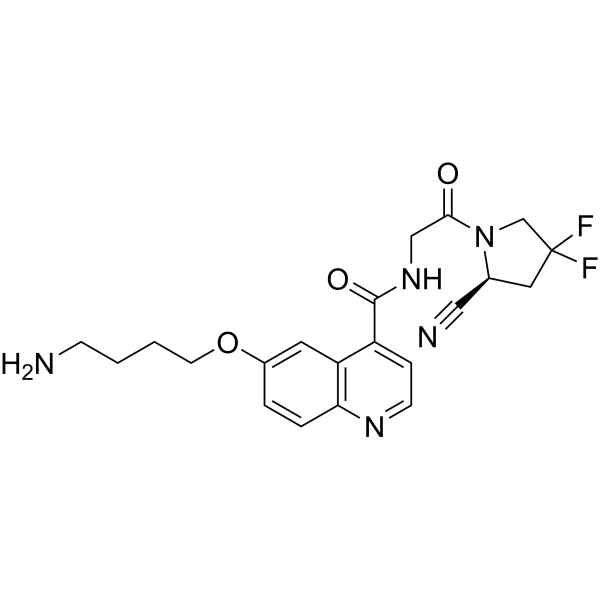
NH2-UAMC1110 is an aminobutoxy derivative of the fibroblast activation protein (FAP) inhibitor UAMC1110 (HY-100684), and is a precursor compound for the synthesis of FAP inhibitor probes, not directly used in bioactivity experiments. For example, NH2-UAMC1110 is involved in the synthesis of the radiotracer FAPI-QS, which exhibits high tumor selectivity and high dose-response, and has been used for tumor diagnosis. NH2-UAMC1110 introduces an active amino group into its structure, enabling it to form covalent bonds with various molecules (such as DOTA, DATA5m, radionuclide chelators, etc.), thereby synthesizing molecular imaging probes or targeted compounds with the ability to target FAP. NH2-UAMC1110 specifically binds to the FAP active site, inhibiting its proline-selective serine protease activity (including dipeptidyl peptidase and endopeptidase activity), blocking FAP-mediated tissue remodeling processes. Its key activity is high targeting and high affinity, and its core function is to be coupled with bifunctional chelators (such as DOTA, DATA5m) as a targeting module. NH2-UAMC1110 can be applied to diagnostic imaging studies of tumors expressing FAP (such as colorectal cancer, pancreatic cancer, etc.), and also provides molecular tools for targeted research of FAP-related diseases with high FAP expression, such as fibrosis and arthritis.
-
HDAC/JAK/BRD4-IN-1
 0 ImagesCat. No.: HY-156273CAS No.: 2755325-84-7
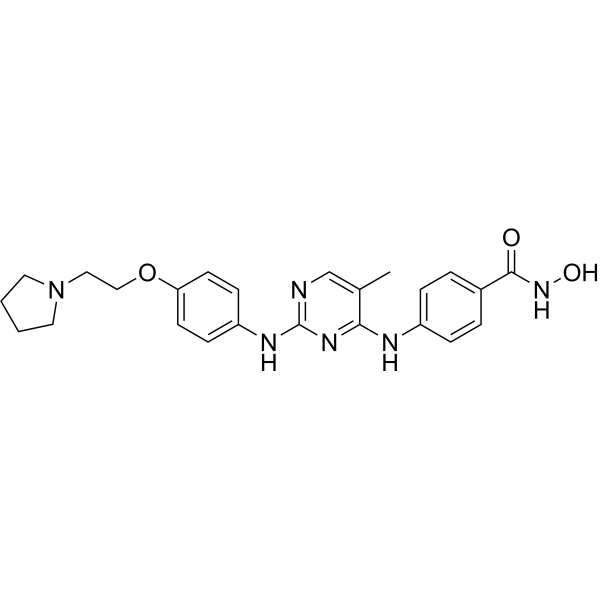
HDAC/JAK/BRD4-IN-1(compound 25ap) is a potent HDAC/JAK/BRD4 triple inhibitor. HDAC/JAK/BRD4-IN-1 inhibit cell growth and induces apoptosis in MDA-MB-231 cells, and shows anticancer activity in vivo.
-
BMS-1166-N-piperidine-CO-N-piperazine dihydrochloride
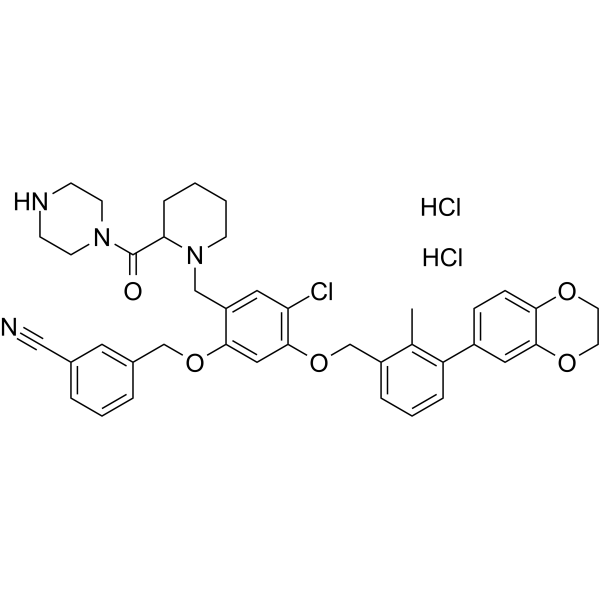 0 ImagesCat. No.: HY-131386ACAS No.: 2691796-83-3
BMS-1166-N-piperidine-CO-N-piperazine dihydrochloride incorporates a ligand for PD-1/PD-L1 immune checkpoint, and a PROTAC linker. BMS-1166-N-piperidine-CO-N-piperazine dihydrochloride can be used in the synthesis of PROTAC PD-1/PD-L1 degrader-1?(HY-131183). PROTAC PD-1/PD-L1 degrader-1 inhibits PD-1/PD-L1 interaction with an IC50 of 39.2 nM.

-
m-PEG3-0-benzaldehyde
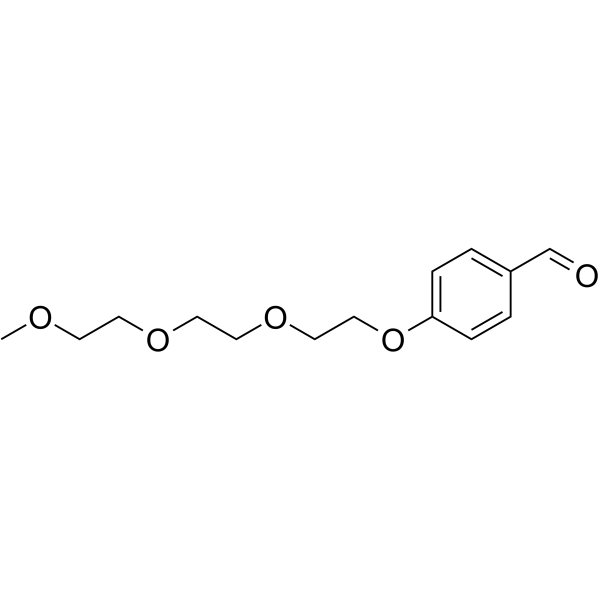 0 ImagesCat. No.: HY-140621CAS No.: 153364-63-7
-
STAT3-IN-31
 0 ImagesCat. No.: HY-159580Purity: 99.70%
STAT3-IN-31 (compound K2071) is a STATtic-derived STAT3 and mitotic inhibitor. STAT3-IN-31 blocks mitotic progression and affects the formation of mitotic spindles. STAT3-IN-31 also affects glioblastoma cell migration and inhibits cell proliferation in tumor spheroids. STAT3-IN-31 is also able to induce glioblastoma senescence, inhibit the growth of Temozolomide (HY-17364)-resistant cells and the secretion of the pro-inflammatory cytokine monocyte chemoattractant protein MCP-1.
-
HPK1-IN-19
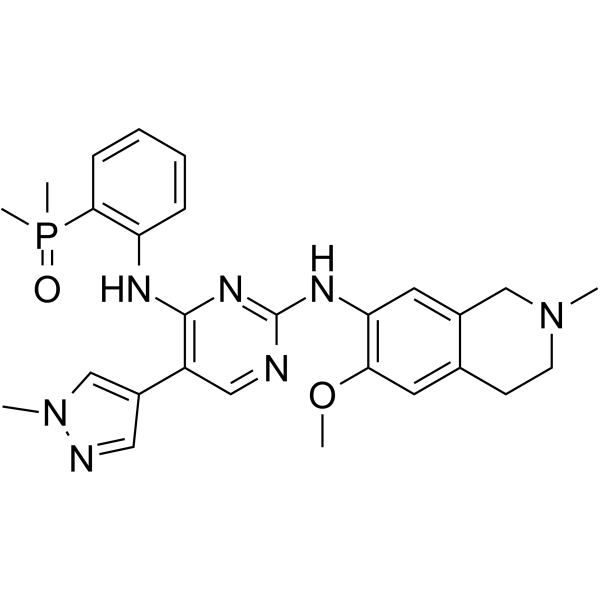 0 Images
HPK1-IN-19 (Compound I-47) is a hematopoietic progenitor kinase 1 (HPK1) inhibitor.
-
E16-uPA24
 0 ImagesCat. No.: HY-P11023
E16-uPA24 is a chimeric peptide targeting urokinase-type plasminogen activator receptor (uPAR). E16-uPA24 modifies senescent cells surface with polyglutamic acid, promoting immune cell-mediated responses through glutamate recognition. E16-uPA24 induces immune clearance of senescent cells and restores tissue homeostasis by enhancing immune cells recruitment and directly coupling senescent cells and immune cells. E16-uPA24 can be used for tissue degeneration, chronic inflammatory disease and age-related tumorigenesis research.
-
CH2COOH-PEG6-CH2COOH
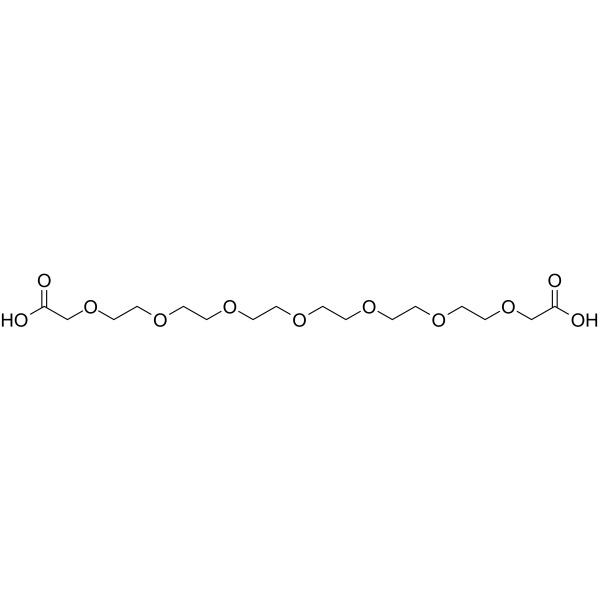 0 ImagesCat. No.: HY-W096106CAS No.: 83824-29-7
-
DJ4
 0 Images
DJ4 is a ATP-competitive inhibitor of ROCK1/2 (IC50 values:5 and 50 nM) and MRCKα/β (IC50 values:10 and 100 nM). DJ4 blocks stress fiber formation and inhibits migration and invasion of cancer cells. DJ4 can be used for study of lung cancer, breast cancer, and pancreatic (PANC-1) cancer.
-
Cucurbitacin B (Standard)
 0 Images
Cucurbitacin B (Standard) is the analytical standard of Cucurbitacin B. This product is intended for research and analytical applications. Cucurbitacin B belongs to a class of highly oxidized tetracyclic triterpenoids and is oral active. Cucurbitacin B inhibits tumor cell growth, migration and invasion and cycle arrest, but induces cell apoptosis. Cucurbitacin B has potent anti-inflammatory, antioxidant, antiviral, hypoglycemic, hepatoprotective, neuroprotective activity.
-
LARLLT TFA
 0 ImagesCat. No.: HY-P11078APurity: 99.89%
LARLLT TFA is an EGFR-binding peptide. LARLLT has the potential for research of EGFR overexpressing cancers, such as lung, ovarian and colorectal cancer.
-
Cobomarsen
 0 ImagesSynonyms: MRG-106
Cobomarsen (MRG-106) is an oligonucleotide inhibitor of miR-155. Cobomarsen inhibits multiple gene pathways associated with cell survival (including JAK/STAT, MAPK/ERK and PI3K/AKT). Cobomarsen can be used for the research of B-cell lymphoma.




