



Cholinesterase (ChE)
Cholinesterase (ChE) is a family of enzymes present in the central nervous system, particularly in nervous tissue, muscle and red cells, which catalyze the hydrolysis of the neurotransmitter acetylcholine into choline and acetic acid, a reaction necessary to allow a cholinergic neuron to return to its resting state after activation. It is one of many important enzymes needed for the proper functioning of the nervous systems of humans.
There are two types: acetylcholinesterase (AChE, acetylcholine hydrolase) and butyrylcholinesterase (BChE, acylcholine acylhydrolase), also known as nonspecific cholinesterase or pseudocholinesterase. AChE is primarily found in the blood on red blood cell membranes, in neuromuscular junctions, and in neural synapses, while BChE is produced in the liver and found primarily in plasma. The difference between the two types of cholinesterase is their relative preferences for substrates: AChE hydrolyzes acetylcholine faster while BChE hydrolyzes butyrylcholine faster.
Cholinesterase (ChE) Isoform Specific Products
All Product Categories
-
Cholinesterase (ChE) Inhibitors
(947)
View all products
-
Cholinesterase (ChE) Agonists
(5)
View all products
-
Cholinesterase (ChE) Antagonists
(10)
View all products
-
Cholinesterase (ChE) Activators
(34)
View all products
-
Cholinesterase (ChE) Modulators
(11)
View all products
-
Cholinesterase (ChE) Chemical
(1)
View all products
-
Cholinesterase (ChE) Inducer
(1)
View all products
-
Cholinesterase (ChE) Controls
(6)
View all products
-
Cholinesterase (ChE) Substrates
(3)
View all products
-
Cholinesterase (ChE) Related Products (1096)
Related Products (1096)

-
Antibodies (2)
-
Cholinesterase (ChE) Isoform Comparison
-
Phenthoate-d6
 0 ImagesCat. No.: HY-118165S
-
AChE-IN-95
 0 ImagesCat. No.: HY-175856AChE-IN-95 (Compound 7) is a highly selective competitive acetylcholinesterase (AChE) inhibitor (IC50=17.87 μM, Ki=19.48 μM). AChE-IN-95 exhibits strong cytotoxicity against SH-SY5Y neuroblastoma cells. AChE-IN-95 is promising for research of Alzheimer’s disease and neurodegenerative disorders.
-
Itopride-d4
 0 ImagesCat. No.: HY-B0732AS1Synonyms: HSR803-d4 free baseItopride-d4 (HSR803-d4 free base) is the deuterium labeled Itopride (HY-B0732A). Itopride (HSR803 free base) is a potent and orally active dopamine-2 antagonist and an acetylcholine esterase (AChE) inhibitor. Itopride enhances gastric motility through both antidopaminergic and anti-acetylcholinesterasic actions, can be used as a gastrointestinal prokinetic agent. Itopride can be used for researching gastro-esophageal reflux disease (GERD)
-
Isograndifoliol
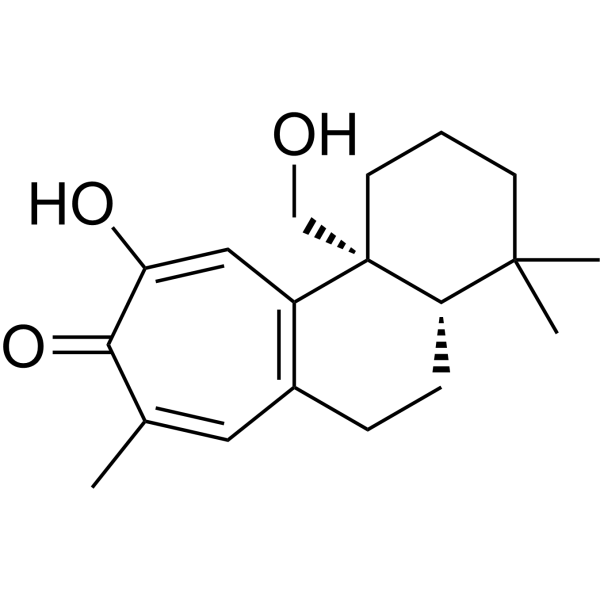 0 ImagesCat. No.: HY-N10781CAS No.: 1445475-53-5Isograndifoliol is a selective inhibitor of butyrylcholinesterase (BChE) with an IC50 value of 0.9 μM. And Isograndifoliol moderately inhibits acetylcholinesterase (AChE) with an IC50 value of 342.9 μM. Isograndifoliol also has vasorelaxant effect and anti-tumor effect. Isograndifoliol can be used for research against dementia caused by neurodegenerative diseases.
-
(-)-Cyclopenin
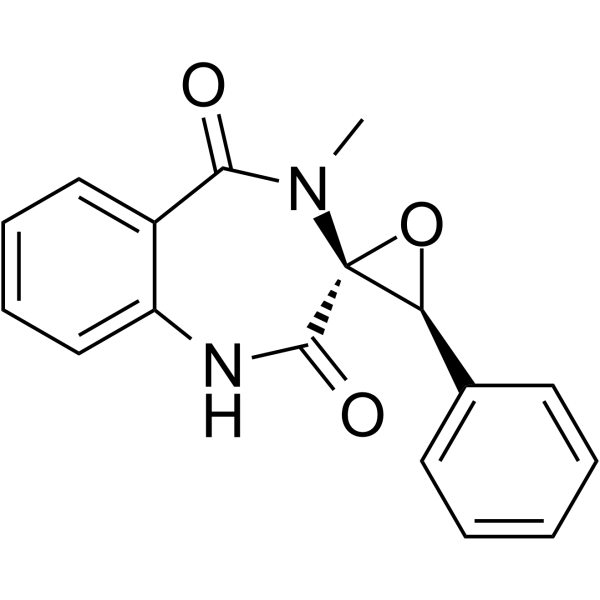 0 ImagesCat. No.: HY-113626CAS No.: 20007-87-8Synonyms: (-)-Cyclopenine(-)-Cyclopenin ((-)-Cyclopenine) is the enantiomer of Cyclopenin. Cyclopenin is a selective acetylcholinesterase (AChE) inhibitor with the IC50 of 2.04 μM.
-
Aβ1–42 aggregation inhibitor 3
 0 ImagesCat. No.: HY-173621CAS No.: 32527-84-7Aβ1–42 aggregation inhibitor 3 (Compound 3b) is an acetylcholinesterase (AChE) and butyrylcholinesterase (BuChE) inhibitor (IC50 values are 1.634 and 0.0285 μM, respectively). Aβ1–42 aggregation inhibitor 3 can inhibit the aggregation of Aβ1-42. Aβ1–42 aggregation inhibitor can be used in Alzheimer's disease (AD) research.
-
Circumdatin C
 0 ImagesCat. No.: HY-N16739CAS No.: 223130-61-8Circumdatin C is an alkaloid. Circumdatin C shows inhibitory effects against LPS-stimulated NO production. Circumdatin C inhibits AChE activity with an IC50 value of 13.9 μM. Circumdatin C can be used in the research of Alzheimer's disease.
-
Amprolium-d7 bromide hydrobromide
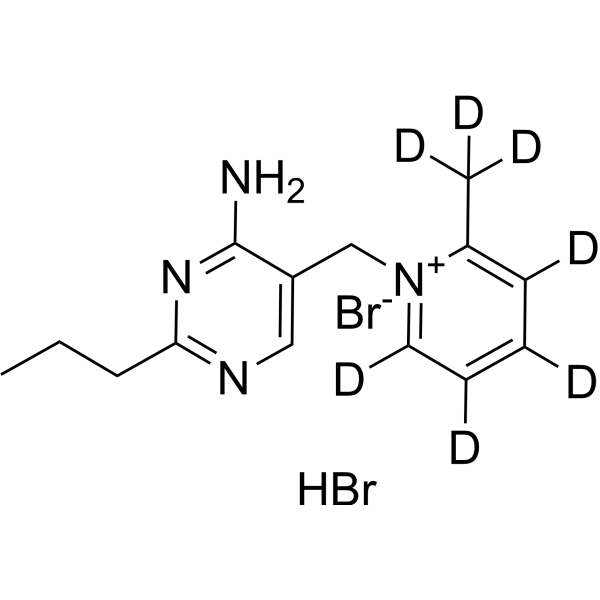 0 ImagesCat. No.: HY-B0937SAmprolium-d7 (bromide hydrobromide) is the deuterated-labeled Amprolium (HY-B0937). Amprolium is a thiamine transporter inhibitor and antiparasitic agent with oral activity and blood-brain barrier penetration. Amprolium blocks thiamine transport at the blood-brain barrier and intestine, and competitively inhibits thiamine pyrophosphokinase, inducing thiamine pyrophosphate deficiency and impairing carbohydrate synthesis. Amprolium induces oxidative stress, alters antioxidant enzyme activity, and inhibits acetylcholinesterase (AchE) activity. Amprolium disrupts reproductive organs and gametogenesis, and causes histopathological and ultrastructural damage to multiple organs. Amprolium induces thiamine deficiency, reduces body weight gain in mice, and causes psychomotor behavioral changes and nephropathy. Amprolium exhibits molluscicidal activity against the terrestrial snail Eobania vermiculata, and reduces the shedding of Eimeria meleagrimitis oocysts in feces and litter. Amprolium can be used for research on thiamine deficiency and coccidiosis.
-
hBChE-IN-1
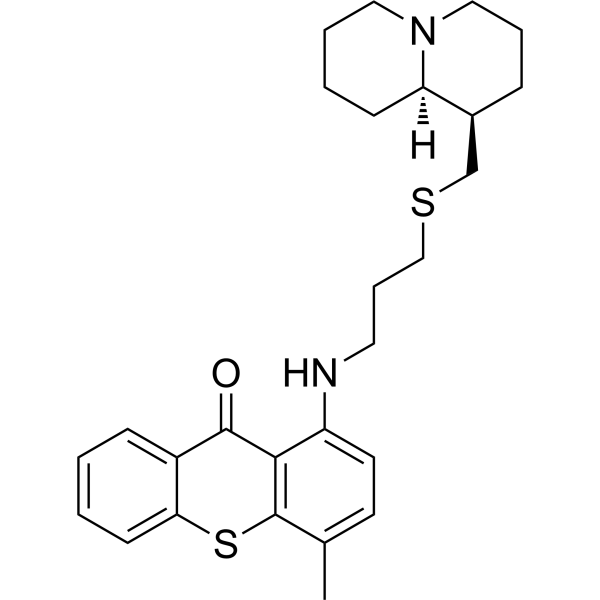 0 ImagesCat. No.: HY-149273CAS No.: 1776948-12-9hBChE-IN-1 (compound 4), a quinolizidinyl derivative, is a potent hBChE inhibitor (IC50=7 nM) and highly selective over hAChE. hBChE-IN-1 shows inhibitory activity against tau and Aβ40 protein aggregation, with IC50 values of 20 and 4.3 μM, respectively. hBChE-IN-1 can be used for Alzheimer's disease research.
-
AChE-IN-47
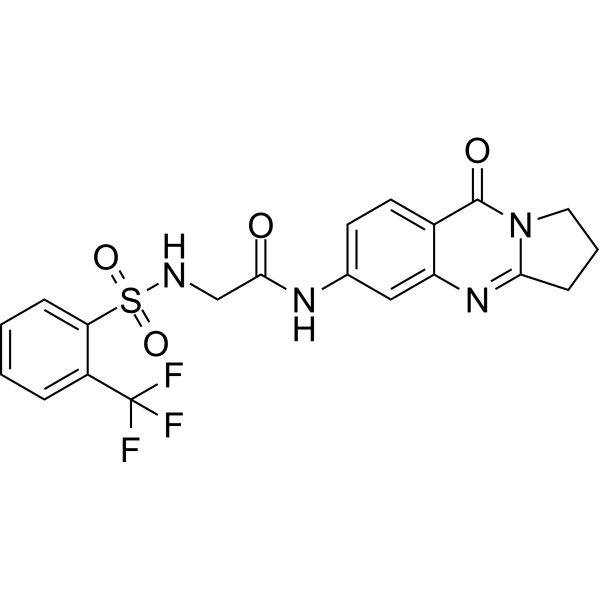 0 ImagesCat. No.: HY-157296CAS No.: 3033056-55-9AChE-IN-47 (compound g17) is a AChE inhibitor with the IC50 of 0.24 μM. AChE-IN-47 inhibits amyloid β peptides self-aggregation. AChE-IN-47 displays neuroprotective effects and effectively suppresses the intracellular accumulation of reactive oxygen species.
-
AChE-IN-11
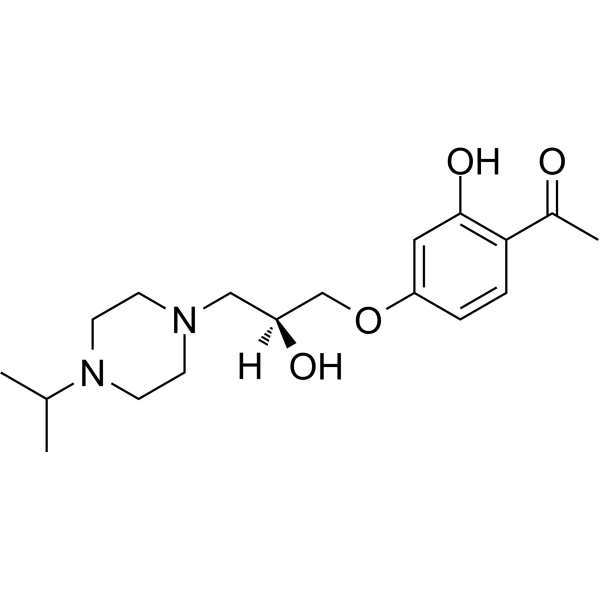 0 ImagesCat. No.: HY-115973AChE-IN-11 (compound 5C) is a triple inhibitor targeting AChE/MAO-B/BACE1 (IC50=7.9 μM, 9.9 μM, 8.3 μM, respectively) and a selective metal ion chelators. AChE-IN-11 exhibits mixed AChE inhibitory effects, binding to both CAS and PAS of AChE. AChE-IN-11 also exhibits good antioxidant activity (ORAC=2.5 eq) and potential neuroprotective effects in Alzheimer's disease.
-
Azamethiphos-d6
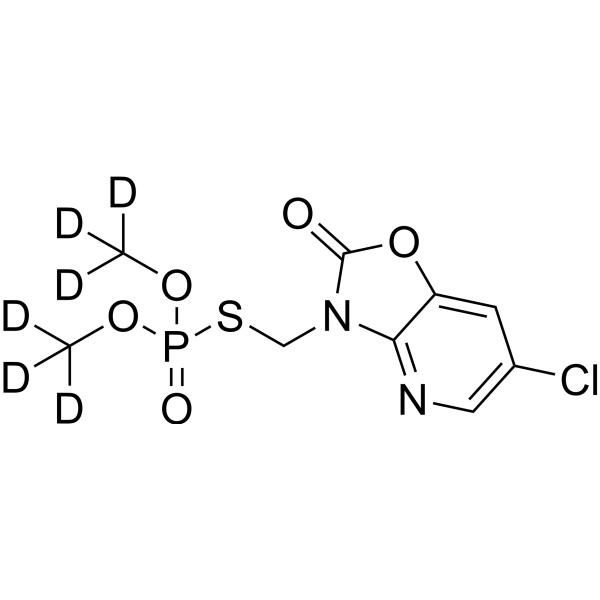 0 ImagesAzamethiphos-d6 is deuterated labeled Azamethiphos (HY-114899). Azamethiphos is an acetylcholinesterase inhibitor and insecticide. Azamethiphos covalently binds to acetylcholinesterase via phosphorylation, inhibits its activity, causes acetylcholine to accumulate in cholinergic synapses, triggers uncontrolled excitation of cholinergic sites, induces paralysis and leads to death. Azamethiphos can be used as a bath insecticide in salmonid aquaculture to control sea lice infestations, and it exerts acute toxicity to European lobster larvae, including mortality and movement disorders.
-
sEH/AChE-IN-1
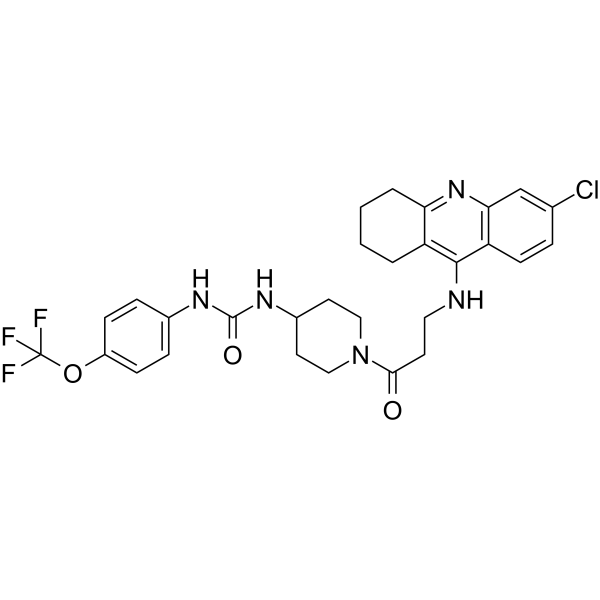 0 ImagesCat. No.: HY-145831CAS No.: 2490589-08-5sEH/AChE-IN-1 (Compound 12a) is a dual inhibitor of the enzymes soluble epoxide hydrolase (sEH) and acetylcholinesterase (AChE). sEH/AChE-IN-1 provides cumulative effects against neuroinflammation and memory impairment. sEH/AChE-IN-1 has the potential for the research of Alzheimer's disease (AD).
-
Itopride-d6 hydrochloride
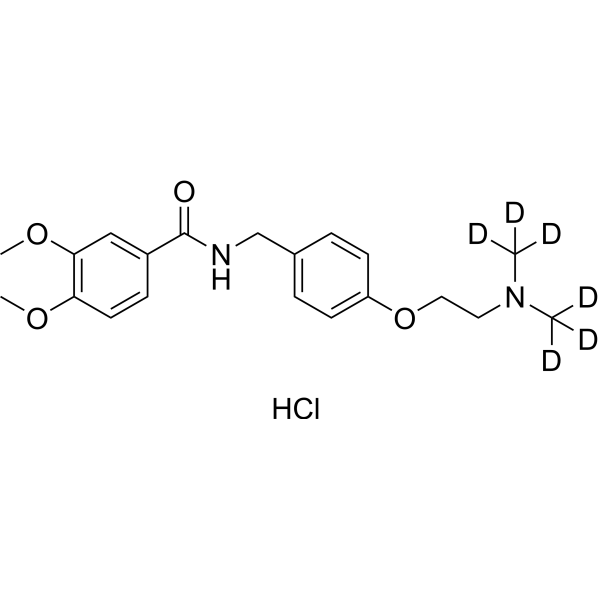 0 ImagesCat. No.: HY-B0732SCAS No.: 1346601-02-2Synonyms: HSR803-d6 hydrochloride
-
AChE-IN-90
 0 ImagesCat. No.: HY-174462AChE-IN-90 (Compound 5b) is an orally active, brain-penetrant and potent acetylcholinesterase (AChE) inhibitor with an IC50 value of 0.023 μM against human AChE and lower selectivity for butyrylcholinesterase (BuChE) (IC50 1.8 μM). AChE-IN-90 increases acetylcholine levels in the synaptic cleft. AChE-IN-90 is promising for research of neurodegenerative diseases such as Alzheimer's disease.
-
(±)Phenserine
 0 ImagesCat. No.: HY-103374BCAS No.: 159652-53-6Synonyms: (±)-Eseroline phenylcarbamate(±)Phenserine ((±)-Eseroline phenylcarbamate) is the racemic form of Phenserine (HY-103374). Phenserine is a derivative of Physostigmine (HY-N6608) and is an effective, non-competitive, long-acting and selective AChE inhibitor. Phenserine can reduce the formation of β-amyloid precursor protein (APP) and β-amyloid peptide (Aβ). Phenserine can improve cognitive ability and slow down the progression of Alzheimer's disease.
-
AChE-IN-101
 0 ImagesCat. No.: HY-180225AChE-IN-101 (Compound 7a) is an AChE inhibitor (IC50s = 0.21 μM (EeAChE); 13 nM (HsAChE)). AChE-IN-101 ameliorates Scopolamine (HY-N0296)-induced cognitive impairment. AChE-IN-101 can be used in the research of Alzheimer's disease.
-
AChE-IN-10
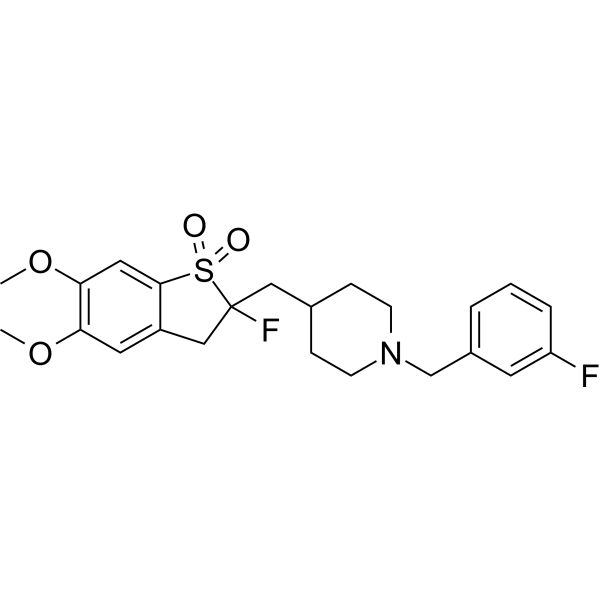 0 ImagesCat. No.: HY-144775CAS No.: 2770832-90-9AChE-IN-10 (Compound 24r) is a potent inhibitor of AChE (IC50 = 2.4 nM). AChE-IN-10 potently inhibits AChE, reduces tau phosphorylation at S396 residue, provides neuroprotection by rescuing neuronal morphology and increasing cell viability. AChE-IN-10 is also found to reduce amyloid aggregation in the presence of AChE.




