



Akt
PKB; Protein kinase B
Akt/PKB (Protein kinase B), a serine/threonine protein kinase with antiapoptotic activity, is one of the major downstream targets of PtdIns(3,4,5)P3 signaling pathway. It contains a pleckstrin homology domain (PH domain) that specifically binds PtdIns(3,4,5)P3 on the plasma membrane. Akt phosphorylation and activation are directly determined by the level of PtdIns(3,4,5)P3 on the plasma membrane, which is regulated by PI3K.
Akt consists of three isoforms: PKBα/Akt1, PKBβ/Akt2 and PKBγ/Akt3. Akt isoforms have an N-terminal PH (pleckstrin homology) domain and a kinase domain, which are separated by a 39-amino-acid hinge region. Catalytically active Akt regulates the function of numerous substrates involved in cell survival, growth, proliferation, metabolism and protein synthesis.
Akt is a crucial mediator of cell survival and its deactivation is implicated in various stress-induced pathological cell death and degenerative diseases.
Akt Isoform Specific Products
All Product Categories
-
Akt Inhibitors
(983)
View all products
-
Akt Agonists
(7)
View all products
-
Akt Activators
(296)
View all products
-
Akt Modulators
(25)
View all products
-
Akt Chemical
(1)
View all products
-
Akt Inducers
(9)
View all products
-
Akt Degraders
(11)
View all products
-
Akt Control
(1)
View all products
-
Akt Substrate
(1)
View all products
-
Akt Ligands
(6)
View all products
-
AKT Serine/Threonine Kinase 2 (AKT2) Proteins
(5)
View all products
-
AKT Serine/Threonine Kinase 3 (AKT3) Proteins
(6)
View all products
-
Akt Related Products (1449)
Related Products (1449)

-
Recombinant Proteins (11)
-
Antibodies (11)
-
Akt Isoform Comparison
-
Lemairamin
 0 ImagesSynonyms: Wgx-50Lemairamin (Wgx-50) is a hydroxylamine compound. Lemairamin can be isolated from the pericarps of the Zanthoxylum plants. Lemairamin activates α7nAChR, stimulates the expression of IL-10 and POMC. Lemairamin shows a decrease in Akt. Lemairamin attenuates DSS-induced intestinal inflammation. Lemairamin alleviates pain hypersensitivity.
-
SHP2-IN-35
 0 ImagesCat. No.: HY-170877SHP2-IN-35 (Compound 3f) is the inhibitor for SHP2. SHP2-IN-35 exhibits antiproliferative activity in cancer cells RKO, SW480 and CT26 with IC50 of 5.72 μM, 3.71 μM and 1.42 μM, respectively. SHP2-IN-35 inhibits the PI3K-Akt signaling pathway, regulates the cell cycle associated gene expressions, and induces mitochondrial-related autophagy. SHP2-IN-35 inhibits the expression of certain cytokines and chemokines in the tumor microenvironment (TME), thereby regulating the tumor progression.
-
CK2-TN03
 0 ImagesCK2-TN03 is an ATP-competitive casein kinase 2 (CK2) inhibitor, with an IC50 of 165 nM and a Ki of 20 nM. CK2-TN03 inhibits CK2-mediated survivin activation and reduces CK2-dependent phosphorylation levels of BRD4/MYCN and AKT1. CK2-TN03 exerts anti-neuroblastoma effects by inhibiting survivin, leading to mitotic catastrophe and apoptosis of cancer cells. CK2-TN03 can be used in studies related to neuroblastoma.
-
Ciprofloxacin monohydrochloride (Standard)
 0 ImagesSynonyms: Bay-09867 monohydrochloride (Standard)Ciprofloxacin monohydrochloride (Standard) is the analytical standard of Ciprofloxacin (monohydrochloride). This product is intended for research and analytical applications. Ciprofloxacin (Bay-09867) monohydrochloride is an orally active, blood-brain barrier permeable fluoroquinolone antibacterial agent. Ciprofloxacin monohydrochloride exerts bactericidal effects primarily by inhibiting topoisomerase II and IV. Ciprofloxacin monohydrochloride inhibits the proliferation of human dental pulp stem cells and chondrocytes from young rats, and also activates the Akt signaling pathway and upregulates markers such as β-catenin and Nanog to maintain the morphological characteristics of stem cells. Ciprofloxacin monohydrochloride induces significant neurotoxicity and tissue damage, including reducing serotonin and glutathione levels in the brain, inducing oxidative stress and depression-like behaviors, and causing articular cartilage damage. Ciprofloxacin monohydrochloride can be applied to research related to infections of necrotic young permanent teeth and neurotoxicity.
-
MM129
 0 ImagesCat. No.: HY-189206MM129 is an anticancer agent. MM129 inhibits key oncogenic signaling molecules such as AKT, mTOR, and CDK2, and downregulates the expression of PD-L1. MM129 induces cell cycle arrest. MM129 induces Apoptosis. MM129 induces DNA damage. MM129 induces oxidative stress. MM129 exhibits chemosensitizing properties. MM129 restores the expression of E-cadherin. MM129 can be used in the research of colorectal cancer.
-
L-Valine-13C5,15N,d2
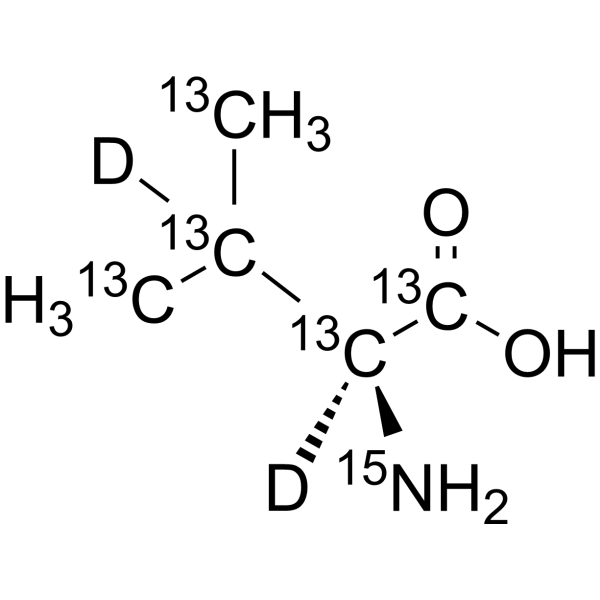 0 ImagesCat. No.: HY-N0717S3CAS No.: 201417-09-6Synonyms: (S)-Valine-13C5,15N,d2L-Valine-13C5,15N,d2 ((S)-Valine-13C5,15N,d2) is the deuterium, 13C-, and 15N-labeled L-Valine (HY-N0717). L-Valine ((S)-Valine) is a nonlinear semiorganic material. L-Valine causes lipid peroxidation and accumulation of malondialdehyde (MDA), exhibits inhibitory activity against cyanobacteria. L-Valine inhibits multidrug-resistant bacteria through activation of PI3K/Akt signaling pathway and inhibition of arginase.
-
Sophocarpine (Standard)
 0 ImagesSophocarpine (Standard) is the analytical standard of Sophocarpine (HY-N0103). This product is intended for research and analytical applications. Sophocarpine is a PTEN activator and an inhibitor of PI3K/Akt, MEK/ERK, and NF-κB signaling pathways. Sophocarpine upregulates PTEN expression and inhibits PI3K/Akt phosphorylation, arrests tumor cell cycle and induces apoptosis. Sophocarpine inhibits MEK/ERK phosphorylation and VEGF secretion, reducing tumor cell migration. Sophocarpine can also inhibit NF-κB activation and p38 and JNK phosphorylation, reduce the expression of inflammatory factors such as iNOS and COX-2, and activate the Nrf2/HO-1 pathway to reduce oxidative stress. Sophocarpine has anti-tumor, anti-inflammatory, antioxidant and anti-apoptotic effects, and can be used in the research of cancers such as glioblastoma and colorectal cancer, inflammation-related diseases, and Doxorubicin (HY-15142A)-induced cardiac damage.
-
Umckalin
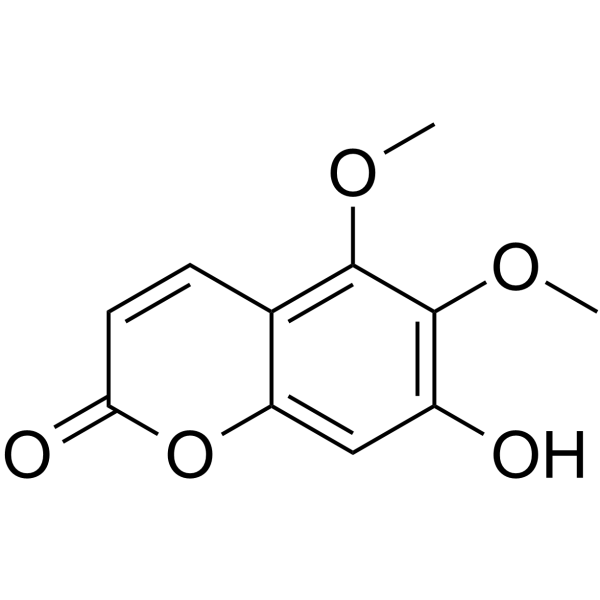 0 ImagesCat. No.: HY-N8712CAS No.: 43053-62-9
-
EpskA21
 0 ImagesCat. No.: HY-161858EpskA21 is an inhibitor for PI3K/AKT signaling pathway, and inhibits the proliferation of cancer cells MCF-7, A549, MIA-PaCa-2, Panc-1 and HepG2, with IC50 of 1.3-7.24 μM. EpskA21 inhibits the cell migration, arrests the cell cycle at G2/M (MCF-7) and S (MIA-PaCa-2) phase, and induces apoptosis in MCF-7 and MIA-PaCa-2. EpskA21 causes the mitochondrial dysfunction.
-
D-Allose (Standard)
 0 ImagesCat. No.: HY-128741RCAS No.: 2595-97-3D-Allose (Standard) is the analytical standard of D-Allose (HY-128741). This product is intended for research and analytical applications. D-Allose exhibits antitumor activity against various cancer cells. D-Allose scavenges reactive oxygen species (ROS) and reduces oxidative stress damage. D-Allose exhibits anti-inflammatory and neuroprotective through inhibition of TLR4/PI3K/AKT signaling pathway. D-Allose exhibits antihypertensive, cryoprotective, and anti-osteoporotic activities.
-
Archexin
 0 ImagesCat. No.: HY-177616CAS No.: 944440-48-6Synonyms: RX-0201Archexin is an antisense oligonucleotide (ASO) against Akt1. It is used for the study of metastatic renal cancer.
-
SHP2 inhibitor LY6
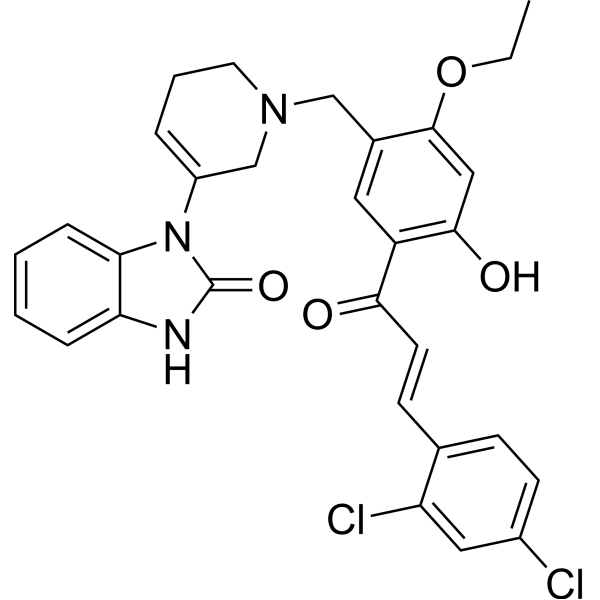 0 ImagesCat. No.: HY-125257CAS No.: 2296718-09-5Synonyms: LY6SHP2 inhibitor LY6 (LY6) is a selective SHP2 inhibitor with an IC50 of 9.8 μM, showing 7-fold selectivity over SHP1. SHP2 inhibitor LY6 inhibits SHP2-mediated cell signaling pathways and suppresses cell proliferation. SHP2 inhibitor LY6 elicits induces apoptosis and G2/M cell cycle arrest in lung cancer cells. SHP2 inhibitor LY6 can be used for the research of B cell acute lymphoblastic leukemia, acute myeloid leukemia, and lung cancer.
-
Biotin-AKT3 Recombinant Human Active Protein Kinase
 0 ImagesCat. No.: HY-E70792AKT is the oncogenic protein kinase that regulates essential cellular functions such as migration, proliferation, differentiation, apoptosis, and metabolism. Mammalian cells are characterized by the expression of three different Akt isoforms, Akt1, Akt2, and Akt3. Biotin-AKT3 Recombinant Human Active Protein Kinase is obtained by expressing AKT3 proteins and is biotinylated.
-
PH-064 (tetra(hydrochloride))
 0 ImagesCat. No.: HY-10499ACAS No.: 2489449-03-6Synonyms: BIM-46187 tetrahydrochloridePH-064 tetrahydrochloride (BIM-46187 tetrahydrochloride) is an orally active inhibitor of the heterotrimeric G-protein complex. PH-064 tetrahydrochloride inhibits SERT activity and attenuates shear stress-induced Akt phosphorylation. PH-064 tetrahydrochloride has potent anti-hyperalgesia activity. PH-064 tetrahydrochloride inhibits G protein-coupled receptor-dependent tumorigenesis. PH-064 tetrahydrochloride can be used in the study of pain (e.g., inflammatory pain, neuropathic pain), GPCR-dependent tumors, and inflammatory lung injury.
-
N-Oleoyl glycine (Standard)
 0 ImagesCat. No.: HY-113204RCAS No.: 2601-90-3Diludine (Standard) is the analytical standard of Diludine. This product is intended for research and analytical applications. Diludine has antioxidant properties, targeting oxidative stress-related pathways. By improving antioxidative status and reducing β-hydroxybutyrate levels, Diludine alleviates oxidative stress during the parturition period in dairy cows. It is primarily used during the transition period in dairy cows to increase milk yield and milk fat content, as well as to improve health during parturition.
-
Vernodalin
 0 ImagesCat. No.: HY-N19029CAS No.: 21871-10-3Vernodalin is an orally active, cytotoxic sesquiterpene lactone with a Kd value of 9.55 μM for p38 MAPK. Vernodalin downregulates the expression of phosphorylated ERK, JNK, AKT, PI3K, mTOR, p38MAPK, FAK, MMP-2, MMP-9, and uPA, while upregulates the expression of TIMP-1 and TIMP-2. Vernodalin increases ROS production, upregulates the expression of Bax and caspase 3, downregulates the expression of Bcl-2, and induces apoptosis (apoptosis), oxidative stress response and cell cycle arrest. Vernodalin inhibits the proliferation, adhesion and metastasis of cancer cells. Vernodalin enhances the activity of VEGF-B, AMPK and eNOS signaling pathways. Vernodalin alleviates myocardial injury and restores hemodynamic parameters. Vernodalin inhibits the growth of Trypanosoma brucei rhodesiense. Vernodalin can be used in research related to various cancers including gastric cancer, colorectal cancer and lung cancer, as well as African human trypanosomiasis and myocardial infarction.
-
HYS-072
 0 ImagesCat. No.: HY-172175HYS-072 is an orally active derivative of chrysin (HY-14589) with antitumor activity. HYS-072 induces apoptosis and autophagy by inhibiting the PI3K/AKT/mTOR signaling pathway and suppresses tumor growth in vivo in xenograft models by modulating autophagy-related pathways. HYS-072 can be used in the research of triple-negative breast cancer.
-
Atractylenolide II (Standard)
 0 ImagesCat. No.: HY-N0202RCAS No.: 73069-14-4Synonyms: Asterolide (Standard)Atractylenolide II (Standard) is the analytical standard of Atractylenolide II. This product is intended for research and analytical applications. Atractylenolide II (Asterolide) is a sesquiterpenoid compound. Atractylenolide II can induce G1 phase cell cycle arrest and apoptosis in B16 melanoma cells. Atractylenolide II is an orally effective anticancer agent that can exert anti-melanoma effects by inhibiting the STAT3 signaling pathway. In addition, Atractylenolide II has been shown to ameliorate myocardial fibrosis, oxidative stress, and neuroprotective activity.
-
Ipatasertib tosylate
 0 ImagesCat. No.: HY-15186CCAS No.: 1491138-24-9Synonyms: GDC-0068 tosylate; RG7440 tosylateIpatasertib (GDC-0068) tosylate is an orally active, highly selective and ATP-competitive pan-Akt inhibitor with IC50 values of 5, 18, 8 nM for Akt1/2/3, respectively. Ipatasertib tosylate synchronously activates FoxO3a and NF-κB through inhibition of Akt leading to p53-independent activation of PUMA. Ipatasertib tosylate also induces apoptosis in cancer cells and inhibits tumor growth in xenograft mouse models.
-
PROTAC FAK degrader 2
 0 ImagesCat. No.: HY-163709PROTAC FAK degrader 2 is an orally active PROTAC FAK degrader with a DC50 of 60.10 nM. PROTAC FAK degrader 2 forms a ternary complex with FAK and CRBN E3 ubiquitin ligase, driving proteasome-mediated degradation of total and phosphorylated FAK. PROTAC FAK degrader 2 inhibits phosphorylation of AKT and ERK, suppressing their downstream signaling pathways. PROTAC FAK degrader 2 reduces cancer cell viability, adhesion, migration, and invasion. PROTAC FAK degrader 2 exerts anti-tumor activity in HCT8/T tumor xenografts in mice. PROTAC FAK degrader 2 can be used for the research of breast cancer, colorectal cancer, lung cancer.




