



Akt
PKB; Protein kinase B
Akt/PKB (Protein kinase B), a serine/threonine protein kinase with antiapoptotic activity, is one of the major downstream targets of PtdIns(3,4,5)P3 signaling pathway. It contains a pleckstrin homology domain (PH domain) that specifically binds PtdIns(3,4,5)P3 on the plasma membrane. Akt phosphorylation and activation are directly determined by the level of PtdIns(3,4,5)P3 on the plasma membrane, which is regulated by PI3K.
Akt consists of three isoforms: PKBα/Akt1, PKBβ/Akt2 and PKBγ/Akt3. Akt isoforms have an N-terminal PH (pleckstrin homology) domain and a kinase domain, which are separated by a 39-amino-acid hinge region. Catalytically active Akt regulates the function of numerous substrates involved in cell survival, growth, proliferation, metabolism and protein synthesis.
Akt is a crucial mediator of cell survival and its deactivation is implicated in various stress-induced pathological cell death and degenerative diseases.
Akt Isoform Specific Products
All Product Categories
-
Akt Inhibitors
(981)
View all products
-
Akt Agonists
(7)
View all products
-
Akt Activators
(296)
View all products
-
Akt Modulators
(25)
View all products
-
Akt Chemical
(1)
View all products
-
Akt Inducers
(9)
View all products
-
Akt Degraders
(11)
View all products
-
Akt Control
(1)
View all products
-
Akt Substrate
(1)
View all products
-
Akt Ligands
(6)
View all products
-
AKT Serine/Threonine Kinase 2 (AKT2) Proteins
(5)
View all products
-
AKT Serine/Threonine Kinase 3 (AKT3) Proteins
(6)
View all products
-
Akt Related Products (1447)
Related Products (1447)

-
Recombinant Proteins (11)
-
Antibodies (11)
-
Akt Isoform Comparison

-
α-D-Manp(3→1)-α-D-Manp(2→1)-α-D-Glu
 0 ImagesCat. No.: HY-181015α-D-Manp(3→1)-α-D-Manp(2→1)-α-D-Glu (Compound C) is an oligosaccharide. α-D-Manp(3→1)-α-D-Manp(2→1)-α-D-Glu activates the PI3K/AKT signaling pathway. α-D-Manp(3→1)-α-D-Manp(2→1)-α-D-Glu significantly inhibits Apoptosis by regulating the Bcl-2/BAX ratio. α-D-Manp(3→1)-α-D-Manp(2→1)-α-D-Glu shows cytoprotective activity by reducing ROS and LDH levels, decreasing MDA activity, and increasing CAT, SOD, and GSH activities. α-D-Manp(3→1)-α-D-Manp(2→1)-α-D-Glu shows neuroprotective effects and antioxidant capacity.
-
6'-BPANeuGc
 0 ImagesCat. No.: HY-185659CAS No.: 1596134-78-96'-BPANeuGc is a CD22-targeting ligand. 6'-BPANeuGc suppresses BCR activation, recruits CD22 to B cell immunological synapses, initiates inhibitory signals, induces B cell apoptosis. 6'-BPANeuGc inhibits calcium flux, and inhibits Akt and Erk activation. 6'-BPANeuGc can be used for research on immune system diseases.
-
Arteanoflavone
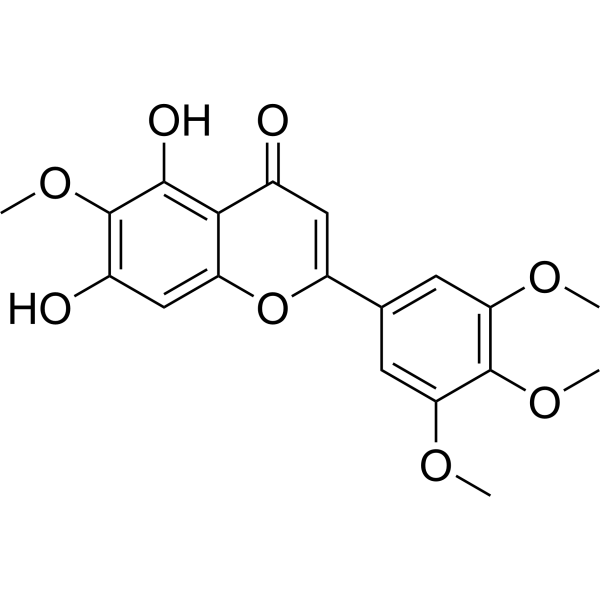 0 ImagesCat. No.: HY-133804CAS No.: 68710-17-8Arteanoflavone, a natural compound that can be isolated from A. iwayomogi, possess inhibitory activities on AGEs formation.
-
PI3Kα-IN-30
 0 ImagesCat. No.: HY-182368PI3Kα-IN-30 is an orally active, selective PI3Kα inhibitor with an IC50 of 2.8 nM. PI3Kα-IN-30 inhibits cancer cell proliferation, as well as the phosphorylation of Akt (S473) and pS6 (S240/244). PI3Kα-IN-30 shows low growth inhibitory activity against normal somatic cell lines at a concentration of 30 μM. PI3Kα-IN-30 induces cancer cell apoptosis and exerts anti-tumor efficacy in xenograft models. PI3Kα-IN-30 can be used for the research of breast cancer.
-
MARY1
 0 ImagesCat. No.: HY-174306Purity: 99.46%MARY1 is a selective 5-HT2BR antagonist with an IC50 of 380 nM and a Ki of 764 nM (human 5-HT2BR). MARY1 induces renal mitochondrial biogenesis (MB) and enhances renal mitochondrial function by increasing mitochondrial respiratory capacity, mitochondrial protein levels, and mitochondrial number in renal proximal tubular cells (RPTCs). MARY1 induces MB through 5-HT2BR and dual PI3K/AKT and RAS/MEK/ERK cell signaling pathways in RPTCs. MARY1 can be used to study renal diseases associated with metabolic and mitochondrial dysfunction.
-
Biotin-AKT2 Recombinant Human Active Protein Kinase
 0 ImagesCat. No.: HY-E70791AKT is the oncogenic protein kinase that regulates essential cellular functions such as migration, proliferation, differentiation, apoptosis, and metabolism. Mammalian cells are characterized by the expression of three different Akt isoforms, Akt1, Akt2, and Akt3. Biotin-AKT2 Recombinant Human Active Protein Kinase is obtained by expressing AKT2 proteins and is biotinylated.
-
PAV-174
 0 ImagesCat. No.: HY-180881PAV-174 is a potent antiviral agent that targets a host protein. PAV-174 prevents Herpes simplex virus (HSV-1) infection in cells (IC50 of 0.02 μM in Vero cells) and human brain organoids. PAV-174 inhibits oxidized macrophage migration inhibitory factor (oxMIF)-induced tau phosphorylation in vitro and in vivo independent of infection. PAV-174 reduces HSV-1-induced tau phosphorylation via the Akt/GSK3β signaling pathway. PAV-174 can be used for Alzheimer’s disease research.
-
Phellodendrine chloride (Standard)
 0 ImagesCat. No.: HY-N0735RCAS No.: 104112-82-5Phellodendrine chloride (Standard) is the analytical standard of Phellodendrine chloride (HY-N0735). Phellodendrine chloride is an orally active plant alkaloid. Phellodendrine chloride inhibits the proliferation of KRAS-mutated pancreatic cancer cells by suppressing macropinocytosis and glutamine metabolism, inducing ROS accumulation and mitochondrial apoptosis. Phellodendrine chloride promotes autophagy by activating the AMPK/mTOR pathway, alleviating intestinal damage in ulcerative colitis. Phellodendrine chloride can alleviate gouty arthritis by inhibiting the IL-6/STAT3 signaling pathway. Phellodendrine chloride suppresses allergic reactions by altering the conformation of MRGPRB3/MRGPRX2 protein, thereby inhibiting the activation of PKC and subsequent downstream MAPK and NF-κB signaling. Phellodendrine chloride inhibits the AKT/NF-κB pathway and down-regulates the expression of COX-2, thereby protecting zebrafish embryos from oxidative stress. Phellodendrine chloride has an anti-major depressive disorder (MDD) effect by down-regulating CHRM1, HTR1A, and the PI3K/Akt signaling pathway.
-
LCI40
 0 ImagesCat. No.: HY-183770LCI40 is an orally active dual PI3K/BRD4 inhibitor (PI3Kα IC50 = 0.071 μM, PI3Kβ IC50 = 0.17 μM, PI3Kγ IC50 = 0.66 μM, PI3Kδ IC50 = 0.072 μM, BRD4 BD1 IC50 = 0.19 μM, and BRD4 BD2 IC50 = 1.88 μM. LCI40 inhibits phosphorylation of pAKT (S473) and suppresses c-MYC levels in mantle cell lymphoma cells. LCI40 displays immunomodulatory capacity with minimal toxicity to normal mouse immune cells. LCI40 can be used for the research of mantle cell lymphoma.
-
Bacopaside I (Standard)
 0 ImagesCat. No.: HY-N4246RCAS No.: 382148-47-2Bacopaside I (Standard) is the analytical standard of Bacopaside I. This product is intended for research and analytical applications. Bacopaside I is an orally active aquaporin AQP1 inhibitor and PKC modulator with neuroprotective and anticancer activities. Bacopaside I specifically blocks the water channel and cGMP-gated ion channel activities of AQP1 without affecting AQP4, thereby inhibiting the migration of colon cancer cells expressing AQP1. Bacopaside I activates the Akt pathway by interacting with PI3K, specifically inhibits MAO-A, effectively alleviates neuron necrosis and apoptosis induced by oxygen-glucose deprivation, reduces oxidative stress, and regulates the surface expression of neuroreceptors. When combined with Bacopaside II (HY-N6016), Bacopaside I significantly reduces the viability, proliferation and invasion ability of breast cancer cells, and binds to the pregnane X receptor (PXR). Bacopaside I is applicable to the research of colon cancer, breast cancer, vascular dementia, cerebral ischemia and other related diseases.
-
Akt1-IN-5
 0 ImagesCat. No.: HY-163577CAS No.: 3034252-53-1Akt1-IN-5 (Compound 115) is an Akt1 inhibitor (IC50: <15 nM)
-
FGFR-IN-23
 0 ImagesCat. No.: HY-178059FGFR-IN-23 (Compound 9p) is a covalent pan FGFR inhibitor with IC50s of 14, 4.2, 5 and 220 nM for FGFR1, FGFR2, FGFR3 and FGFR4, respectively. FGFR-IN-23 also has potent inhibitory activity against gatekeeper mutants, such as FGFR1V561M and FGFR3V555M. FGFR-IN-23 suppresses the activation of FGFR-mediated signaling and induces apoptosis. FGFR-IN-23 shows significant antitumor efficacy in RT112 xenograft mouse models. FGFR-IN-23 can be used for cancers and its drug resistance research.
-
AS1938909
 0 ImagesCat. No.: HY-18284CAS No.: 1243155-40-9AS1938909 is a compound that inhibits SHIP2 activity. It can selectively inhibit SHIP2, increase Akt phosphorylation, and regulate glucose metabolism. Its effect is related to upregulating GLUT1 gene expression.
-
EGFR-IN-175
 0 ImagesCat. No.: HY-178009EGFR-IN-175 is an orally active and selective EGFRL858R/T790M/C797S inhibitor with an IC50 of 18.94 nM. EGFR-IN-175 can induce cell apoptosis and cause G1 phase arrest. EGFR-IN-175 can downregulate p-EGFR, p-AKT, and p-ERK expression. EGFR-IN-175 can be used for the research of cancer, such as lung cancer.

-
Oxaprozin-d10
 0 ImagesCat. No.: HY-W709448Synonyms: Oxaprozinum-d10; Wy21743-d10Oxaprozin-d10 (Oxaprozinum-d10; Wy21743-d10) is the deuterium labeled Oxaprozin (HY-B0808). Oxaprozin is an orally active and potent COX inhibitor, with IC50 values of 2.2 μM for human platelet COX-1 and and 36 μM for IL-1-stimulated human synovial cell COX-2, respectively. Oxaprozin also inhibits the activation of NF-κB. Oxaprozin induces cell apoptosis. Oxaprozin shows anti-inflammatory activity. Oxaprozin-mediated inhibition of the Akt/IKK/NF-κB pathway contributes to its anti-inflammatory properties.
-
Akt/mTOR-IN-1
 0 ImagesCat. No.: HY-161857Akt/mTOR-IN-1 (Compound 8r) is an AKT/mTOR signaling pathway inhibitor exhibiting an IC50 value of 0.8 µM with anticancer activity. Akt/mTOR-IN-1 can decrease the expression of Caspase 3 and increase the expression of the autophagic protein Cyclin B1, thereby inducing cell autophagy and apoptosis. Akt/mTOR-IN-1 can be used in research related to non-small cell lung cancer (NSCLC).
-
Phoenixin-14 TFA
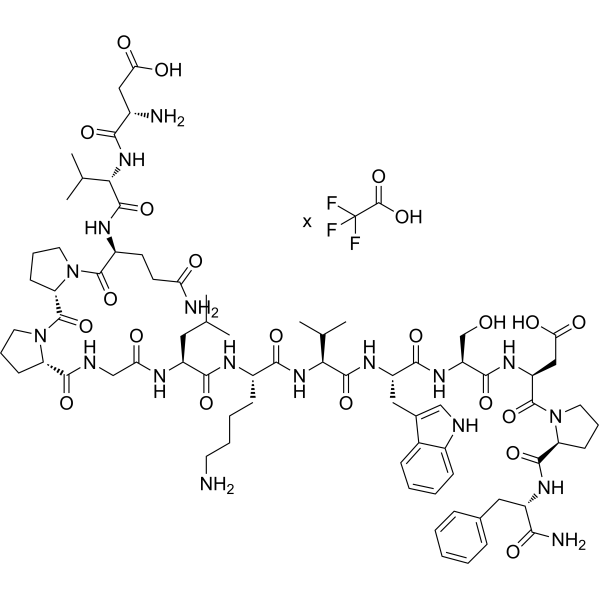 0 ImagesCat. No.: HY-P5762ASynonyms: PNX-14 TFAPhoenixin-14 (PNX-14) TFA is an endogenous neuropeptide with multiple biological activities, and serves as the endogenous ligand of GPR173. Phoenixin-14 TFA reduces ROS production by inhibiting the HMGB1/TLR4/MyD88/NF-κB signaling axis, thereby exerting antioxidant and mitochondrial protective effects. Phoenixin-14 TFA inhibits FOXO3 phosphorylation by upregulating SIRT3 expression, suppresses apoptosis, and improves myocardial systolic/diastolic function. Phoenixin-14 TFA resists ferroptosis by activating the ATF4/SLC7A11/GPX4 axis; it activates ERK1/2 phosphorylation via GPR173. Phoenixin-14 TFA can be used in researches on neuroprotection, diabetes, cardiomyopathy, reproductive protection and so on.
-
Lemairamin
 0 ImagesSynonyms: Wgx-50Lemairamin (Wgx-50) is a hydroxylamine compound. Lemairamin can be isolated from the pericarps of the Zanthoxylum plants. Lemairamin activates α7nAChR, stimulates the expression of IL-10 and POMC. Lemairamin shows a decrease in Akt. Lemairamin attenuates DSS-induced intestinal inflammation. Lemairamin alleviates pain hypersensitivity.




