



Apoptosis
Apoptosis
Apoptosis is a distinctive form of cell death exhibiting specific morphological and biochemical characteristics, including cell membrane blebbing, chromatin condensation, genomic DNA fragmentation, and exposure of specific phagocytosis signaling molecules on the cell surface. Cells undergoing apoptosis differ from those dying through necrosis. Necrotic cells are usually recognized by the immune system as a danger signal and, thus, resulting in inflammation; in contrast, apoptotic death is quiet and orderly.
There are two major pathways of apoptotic cell death induction: The intrinsic pathway, also called the Bcl-2-regulated or mitochondrial pathway, is activated by various developmental cues or cytotoxic insults, such as viral infection, DNA damage and growth-factor deprivation, and is strictly controlled by the BCL-2 family of proteins. The extrinsic or death-receptor pathway is triggered by ligation of death receptors (members of the tumor necrosis factor (TNF) receptor family, such as Fas or TNF receptor-1 (TNFR1)) that contain an intracellular death domain, which can recruit and activate caspase-8 through the adaptor protein Fas-associated death domain (FADD; also known as MORT1) at the cell surface. This recruitment causes subsequent activation of downstream (effector) caspases, such as caspase-3, -6 or -7, without any involvement of the BCL-2 family.
Studies suggest that alterations in cell survival contribute to the pathogenesis of a number of human diseases, including cancer, viral infections, autoimmune diseases, neurodegenerative disorders, and AIDS (acquired immunodeficiency syndrome). Treatments designed to specifically alter the apoptotic threshold may have the potential to change the natural progression of some of these diseases.
All Product Categories
-
Apoptosis Inhibitors
(901)
View all products
-
Apoptosis Agonists
(7)
View all products
-
Apoptosis Antagonists
(9)
View all products
-
Apoptosis Activators
(362)
View all products
-
Apoptosis Modulators
(60)
View all products
-
Apoptosis Inducers
(7887)
View all products
-
Apoptosis Degrader
(1)
View all products
-
Apoptosis Controls
(33)
View all products
-
Apoptosis Related Products (9821)
Related Products (9821)

-
Antibodies (120)
-
Anticancer agent 220
 0 ImagesCat. No.: HY-158407Anticancer agent 220 is a chromanone derivative with anticancer effects. Anticancer agent 220 shows highly potent activity in the colon cancer cell lines. Anticancer agent 220 induces apoptosis and cell cycle arrest in cells.
-
Trijuganone C
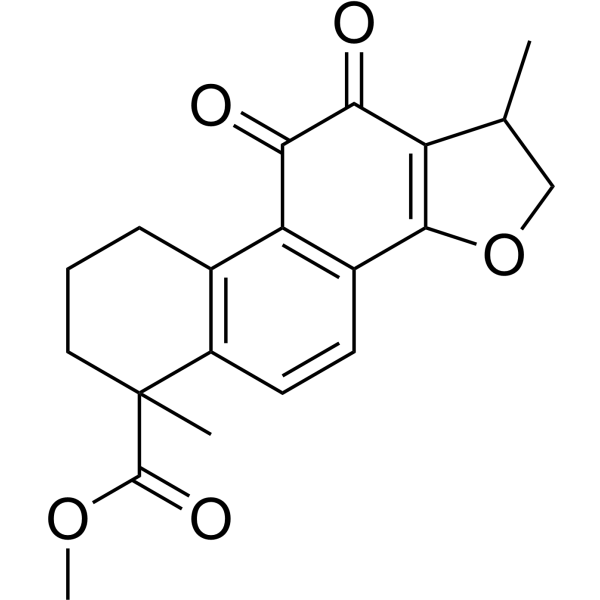 0 ImagesCat. No.: HY-N8617CAS No.: 135247-94-8Trijuganone C is a tanshinone-type diterpenoid compound. Trijuganone C can be isolated from the roots of Salvia miltiorrhiza Bunge. Trijuganone C induces chromatin condensation, DNA fragmentation, activation of Caspase-3, -8 and -9, as well as cleavage of PARP. Trijuganone C activates Bid and Bax, leading to loss of mitochondrial membrane potential and inducing the release of cytochrome c from mitochondria into the cytosol. Trijuganone C exerts antiproliferative effects through Apoptosis induction mediated by Mitochondrial dysfunction and Caspase activation. Trijuganone C exhibits significant antiproliferative activity against leukemia cells and colon cancer cells.
-
FTO-IN-16
 0 ImagesCat. No.: HY-179267FTO-IN-16 (Compound 8a-1), a FTO-IN-15 (HY-179266) prodrug, is a potent FTO inhibitor. FTO-IN-16 suppresses acute myeloid leukemia (AML) cell viability, increases m6A levels, downregulates c-Myc and CEBPA, and upregulates ASB2 and RARA. FTO-IN-16 induces apoptosis. FTO-IN-16 demonstrates strong in vivo efficacy in AML mouse xenografts. FTO-IN-16 can be used for the research of AML.

-
BRD4-BD1-IN-4
 0 ImagesCat. No.: HY-187207BRD4-BD1-IN-4 is a selective BRD4 BD1 inhibitor with an IC50 of 0.82 μM and a Kd of 0.98 μM. BRD4-BD1-IN-4 downregulates the expression of c-myc and anti-apoptotic proteins, elevates ROS levels, reduces mitochondrial membrane potential, induces DNA damage and triggers apoptosis. BRD4-BD1-IN-4 inhibits the migration and proliferation of cancer cells. BRD4-BD1-IN-4 can be used in the research of lung cancer, breast cancer and colon cancer.
-
Apiole (Standard)
 0 ImagesCat. No.: HY-135217RCAS No.: 523-80-8Apiole (Standard) is the analytical standard of Apiole. This product is intended for research and analytical applications. Apiole is an anti-tumor agent that induces apoptosis and inhibits human colon cancer cells by inducing G0/G1 cell cycle arrest. Apiole also significantly inhibited colon tumor development in an in vivo mouse xenograft model.
-
Baceridin
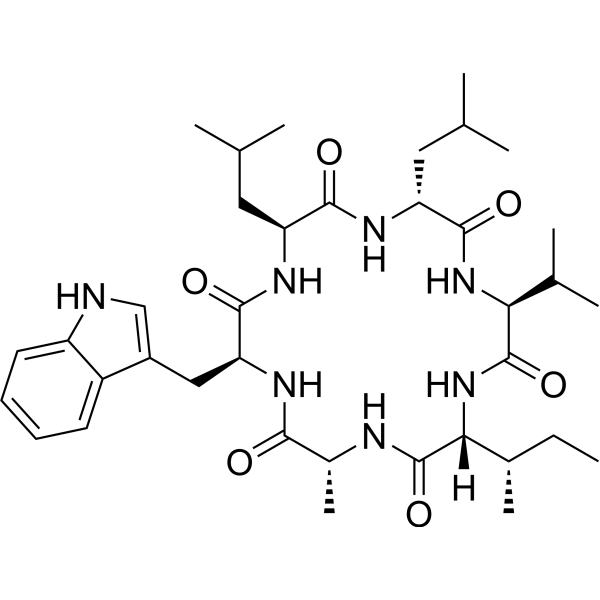 0 ImagesCat. No.: HY-P4910CAS No.: 1622872-91-6Baceridin is a proteasome inhibitor and a cyclic hexapeptide. Baceridin can be isolated from the culture medium of Epiphytic Bacillus. Baceridin can inhibit cell cycle progression and induce tumor cell apoptosis through a p53-independent pathway. Baceridin can be used in cancer research.
-
PI3K/Akt/mTOR-IN-5
 0 ImagesCat. No.: HY-159517PI3K/Akt/mTOR-IN-5 (compound D3) is a derivative of Pseudolaric Acid B (HY-N6939) with anti-tumor activity. PI3K/Akt/mTOR-IN-5 inhibits excessive proliferation of tumor cells through the PI3K/AKT/mTOR and STAT3/GPX4 pathways. PI3K/Akt/mTOR-IN-5 effectively inhibits EDU positivity, reduces colony formation, places HCT-116 cells in the S phase and G2/M phase, and induces apoptosis.
-
(Rac)-Angophorol
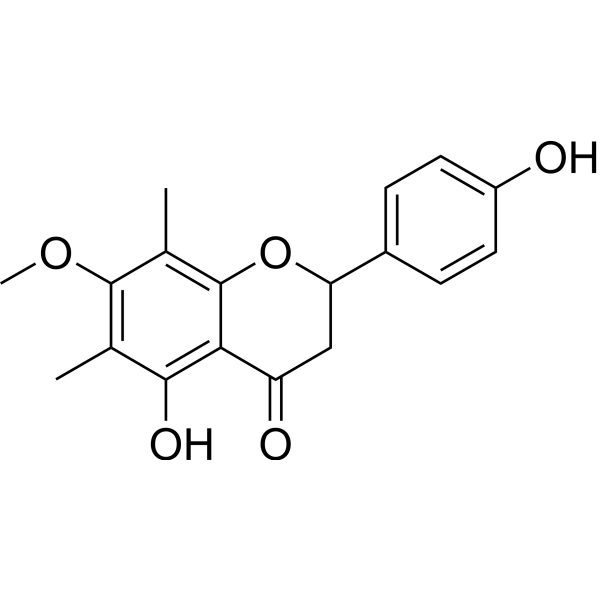 0 ImagesCat. No.: HY-N2871CAS No.: 133442-54-3(Rac)-Angophorol is a flavonone compound. (Rac)-Angophorol exerts potential anticancer activity through growth inhibition and apoptosis in K562 cells.
-
c-Met-IN-24
 0 ImagesCat. No.: HY-162803c-Met-IN-24 (compound 3g) is a dual-target inhibitor of STAT-3 (=4.7 μM) and c-MET (=12.67 μM) with anticancer activity. c-Met-IN-24 arrests the G2/M cell cycle and induces apoptosis in SNB-75 cells. c-Met-IN-24 can be used in the study of central nervous system cancers.
-
SHP2 ATTEC degrader-1
 0 ImagesCat. No.: HY-173560SHP2 ATTEC degrader-1 is a SHP2 ATTEC degrader. SHP2 ATTEC degrader-1 has degradation rate of 83.31 at 1.0 μM for 24 h in the PANC-1 cell line. SHP2 ATTEC degrader-1 inhibits cell growth in vivo and in vitro. SHP2 ATTEC degrader-1 induces apoptosis and increases the expression of the epithelial marker ( E-cadherin), and reduces the expression of interstitial markers (such as N-cadherin, Vimentin) (Pink: LC3 ligand (HY-174085); Black :linker HY-140468; Blue: SHP2 ligand (HY-174084).
-
1,6-Dimethoxyhexane
 0 ImagesCat. No.: HY-W275882CAS No.: 13179-98-11,6-Dimethoxyhexane is an aliphatic ether that serves as a PROTAC linker and fuel additive. 1,6-Dimethoxyhexane is an orally active testicular toxicant. It has no direct toxicity on its own, but exerts toxicity after oxidative metabolism by liver/testicular microsomes to produce 2-Methoxyacetic Acid (MAA). 1,6-Dimethoxyhexane induces apoptosis/necrosis of pachytene spermatocytes, downregulates the expression of HSP70.2, HSP60 and ERp60/PDI A3, and causes spermatogenic tubule degeneration, testicular/thymic atrophy, a sharp decline in epididymal sperm density, and other effects. 1,6-Dimethoxyhexane can be used in studies related to testicular toxicity.
-
(+)-Plakevulin A
 0 ImagesCat. No.: HY-N13095CAS No.: 518035-27-3(+)-Plakevulin A (Plakevulin A) is an oxylipin and can be isolated from an Okinawan sponge Plakortis sp. (+)-Plakevulin A inhibits the enzymatic activity of DNA polymerases α and δ. (+)-Plakevulin A induces apoptosis and shows anticancer activity.
-
Anticancer agent 184
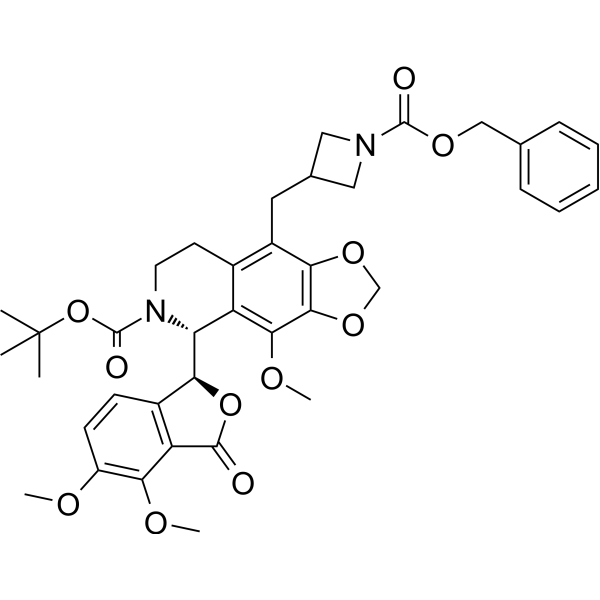 0 ImagesCat. No.: HY-163153Anticancer agent 184 (Compound 6o) is a novel, effective and low toxic anticancer drug. Anticancer agent 184 induces apoptosis by blocking the S phase.
-
Geiparvarin
 0 ImagesCat. No.: HY-N15657CAS No.: 36413-91-9Geiparvarin is an anticancer agent and an inhibitor of MAO-B (pIC50 = 6.84 μM). Geiparvarin exerts anti-tumor effects by downregulating COX2 expression and inhibiting angiogenesis. Geiparvarin blocks the cell cycle at the G1 phase and induces apoptosis of cancer cells. Geiparvarin has anti-microtubule activity and destroys the cytoskeleton to exert anti-proliferative effects. Geiparvarin has research significance for lung cancer, leukemia, and breast cancer.
-
Scoulerine hydrochloride
 0 ImagesCat. No.: HY-N1255ACAS No.: 51486-68-1Synonyms: (-)-Scoulerine hydrochloride; Discretamine hydrochlorideScoulerine ((-)-Scoulerine; Discretamine) hydrochloride is a multi-target inhibitor with anti-tumor and antioxidant activities. Scoulerine hydrochloride mainly targets the PI3K/Akt/mTOR signaling axis and α1D-adrenergic receptor, disrupts microtubule structure, and induces cell cycle arrest and apoptosis. Scoulerine hydrochloride effectively inhibits mitochondrial dehydrogenase activity, targets GABA receptors and BACE1, and suppresses the proliferation, migration, invasion, epithelial-mesenchymal transition and stem cell properties of cancer cells. Scoulerine hydrochloride also exhibits multiple pharmacological activities including anti-Plasmodium falciparum, antibacterial, antiemetic and antitussive effects, and regulates endoplasmic reticulum stress and mitochondrial function (modulates Bax, Bcl-2 and cytochrome c). Scoulerine hydrochloride is applicable to research related to leukemia, ovarian cancer, and colorectal cancer.
-
PROTAC BCL6/IKZF1/3 Degrader-1
 0 ImagesCat. No.: HY-179075PROTAC BCL6/IKZF1/3 Degrader-1 is an orally active bifunctional PROTAC‑IMiD protein degrader that targets and degrades BCL6, IKZF1 and IKZF3. PROTAC BCL6/IKZF1/3 Degrader-1 induces ubiquitination and proteasome-mediated degradation of target proteins by recruiting E3 ubiquitin ligase, and triggers cell cycle arrest and apoptosis. PROTAC BCL6/IKZF1/3 Degrader-1 exhibits favorable anti-tumor activity in diffuse large B-cell lymphoma xenograft models. PROTAC BCL6/IKZF1/3 Degrader-1 can be used for the research of diffuse large B-cell lymphoma.
-
Diethyl phthalate (Standard)
 0 ImagesDiethyl phthalate (Standard) is the analytical standard of Diethyl phthalate (HY-Y0284). This product is intended for research and analytical applications. Diethyl phthalate is an orally active plasticizer and detergent base. Diethyl phthalate increases the activities of ACP, ALP, SDH, and ALT in liver, muscle, or both tissues. Diethyl phthalate induces dose-dependent mortality and sluggish behavior in freshwater fish. Diethyl phthalate may induce male reproductive toxicity. Diethyl phthalate is added to plastic polymers to help maintain their flexibility.
-
c-MYC/BCL2 ligand 1 iodide
 0 ImagesCat. No.: HY-174403c-MYC/BCL2 ligand 1 iodide is a dual-targeting c-MYC/Bcl-2 G4 ligand with Kd values of 0.90 μM (c-MYC G4) and 0.56 μM (Bcl-2 G4). c-MYC/BCL2 ligand 1 iodide inhibits c-MYC and Bcl-2 gene transcription by binding to G4-forming sequences and downregulates their protein expression. c-MYC/BCL2 ligand 1 iodide inhibits suppresses migration, induces caspase-dependent apoptosis, and triggers cell cycle G1 arrest in MCF-7 cells. c-MYC/BCL2 ligand 1 iodide significantly suppresses tumor growth in a 4T1 syngeneic model with no observable toxicity. c-MYC/BCL2 ligand 1 iodide can be used for the research of breast cancer.
-
SKLB188
 0 ImagesCat. No.: HY-120412CAS No.: 1350545-09-3SKLB188 is an orally active and potent epidermal growth factor receptor (EGFR) inhibitor (IC50=5 nM). SKLB188 suppresses MEK/Erk and Akt/mTOR signaling pathways to inhibit head and neck squamous cell carcinoma (HNSCC) proliferation and induce caspase-dependent apoptosis. SKLB188 is promising for research of EGFR-overexpressing solid tumors.




