



Bacterial
Anything that destroys bacteria or suppresses their growth or their ability to reproduce. Heat, chemicals such as chlorine, and antibiotic drugs all have antibacterial properties. Many antibacterial products for cleaning and handwashing are sold today. Such products do not reduce the risk for symptoms of viral infectious diseases in otherwise healthy persons. This does not preclude the potential contribution of antibacterial products to reducing symptoms of bacterial diseases in the home.
All Product Categories
-
Bacterial Inhibitors
(7553)
View all products
-
Bacterial Agonists
(3)
View all products
-
Bacterial Antagonists
(9)
View all products
-
Bacterial Activators
(25)
View all products
-
Bacterial Modulators
(27)
View all products
-
Bacterial Chemicals
(2)
View all products
-
Bacterial Inducers
(6)
View all products
-
Bacterial Controls
(14)
View all products
-
Bacterial Substrates
(2)
View all products
-
Bacterial Ligand
(1)
View all products
-
Bacterial Related Products (8893)
Related Products (8893)

-
Antibodies (14)
-
Related Compound Screening Libraries (1)
-
LtaS-IN-2
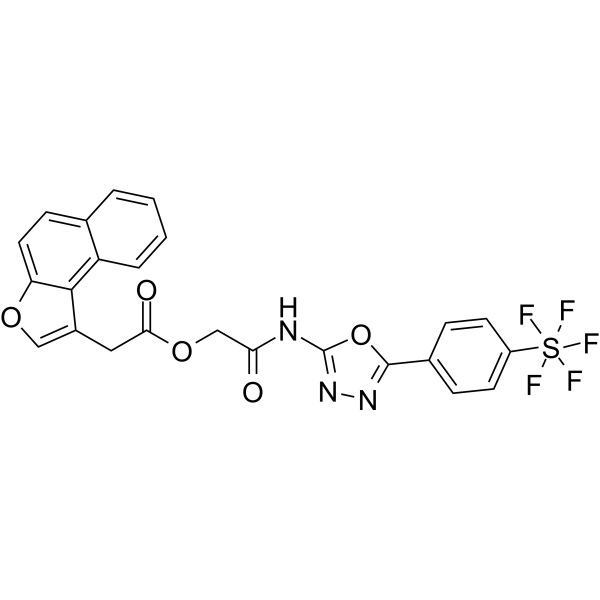 0 ImagesCat. No.: HY-156416LtaS-IN-2 (compound 13) is a inhibitor of LTA synthesis, and shows antibacterial activity against S. aureus and S. epidermidis, with the MIC90 of 0.5 μg/mL and 1 μg/mL, respectively. LtaS-IN-2 is a derivative of LtaS-IN-1 (HY-135813).
-
Polymyxin S1
 0 ImagesCat. No.: HY-N15119CAS No.: 63700-38-9Polymyxin S1 is found in Bacillus Polymyxa RS-6 and is resistant to Gram-positive bacteria.
-
Pacidamycin 5
 0 ImagesCat. No.: HY-N14607CAS No.: 122855-43-0Pacidamycin 5 has inhibitory effect on Pseudomonas aeruginosa. Pacidamycin 5 also has effect on a few strains of bacteria such as Suppurative staphylococcus and Escherichia coli.
-
DprE1-IN-10
 0 ImagesCat. No.: HY-158700CAS No.: 1254782-81-4DprE1-IN-10 (hit 2) is a Decaprenylphosphoryl-β-D-ribose-2′-epimerase (DprE1) inhibitor. DprE1-IN-10 can be used for tuberculosis research.
-
Cephamycin A
 0 ImagesCat. No.: HY-N14005CAS No.: 34279-78-2Cephalomycin A shows weak activity against Gram-positive and negative bacteria.
-
4-Methylaeruginoic acid
 0 ImagesCat. No.: HY-N14293CAS No.: 189820-27-74-Methylaeruginoic acid is an antibiotic and is cytotoxic to several human tumor cell lines.
-
Tioxacin
 0 ImagesCat. No.: HY-167669CAS No.: 34976-39-1Tioxacin is an orally active bactericide agent. Tioxacin combined with aliphatic amines has activities against G(+) and G (-) bacteria, including Escherichia coli resistant to Nalidixic acid (HY-B0398) and Pseudomonas aeruginosa.
-
Neothramycin A
 0 ImagesCat. No.: HY-129331CAS No.: 59593-16-7Neothramycin A is an antibiotic, which can be isolated from Streptomyces. Neothramycin A exhibits board spectrum antimicrobial activity, inhibits Staphylococcus aureus, Klebsiella pneumoniae, Escherichia coli W677, and Saccharomyces cerevisia with MIC of 25-50 μg/mL. Neothramycin A exhibits antitumor efficacy against leukemia in mouse models.
-
Fluoropolyoxin M
 0 ImagesCat. No.: HY-N14392CAS No.: 50355-68-5Fluoropolyoxin M has the inhibitory activity of Escherichia coli and Streptococcus faecalis.
-
Topoisomerase inhibitor 6
 0 ImagesCat. No.: HY-174227CAS No.: 2987726-03-2Topoisomerase inhibitor 6 (Compound REDX05931) is a dual irreversible inhibitor of DNA gyrase and topoisomerase IV (MIC=0.06 μg/mL against fluoroquinolone-resistant S. aureus). Topoisomerase inhibitor 6 blocks DNA strand break-reunion, inducing lethal DNA damage. Topoisomerase inhibitor 6 is promising for research of Gram-positive bacterial infections (e.g., S. aureus, S. pneumoniae).
-
Chartreusin sodium
 0 ImagesCat. No.: HY-121136ACAS No.: 1393-72-2Chartreusin sodium is an antibiotic that is active against certain Gram-positive organisms and mycobacteria. Chartreusin is also active against the Micrococcus fiyogenes v. aureus phage.
-
Epelmycin C
 0 ImagesCat. No.: HY-N14157CAS No.: 107807-23-8Epelmycin C has anti-Gram positive, negative bacteria and candida albicans activity, and has anti-leukemic L1210 activity, which is stronger than Aclacinomycin.
-
Helvecardin A
 0 ImagesCat. No.: HY-N14673CAS No.: 119979-33-8Helvecardin A is a glycopeptidtic antibiotic. Helvecardin A has strong activity of anti-aerobic and anaerobic Gram-positive bacteria, including methicillin-resistant Staphylococcus aureus.
-
Sulfamethoxazole 1000 µg/mL in methanol
 0 ImagesSulfamethoxazole (Ro 4-2130) 1000 μg/mL in methanol is a sulfonamide antibiotic with a widespread antibacterial activity. Sulfamethoxazole 1000 μg/mL in methanol inhibits bacterial folate metabolism by competing with 4-Aminobenzoic acid (HY-B1008) (PABA) to act on dihydropteroate synthetase and dihydropteroate reductase. Sulfamethoxazole 1000 μg/mL in methanol can be used for the study of urinary tract infections (UTIs), prostatitis, and bronchitis.
-
Aurantiogliocladin
 0 ImagesCat. No.: HY-W399439CAS No.: 483-54-5Aurantiogliocladin is a weak antibiotic which was active against Staphylococcus epidermidis but not S. aureus. Aurantiogliocladin could inhibit biofilm formation.
-
1,4-Naphthoquinone (Standard)
 0 Images1,4-Naphthoquinone is an inhibitor with broad-spectrum inhibitory activity targeting DNA polymerase, NF-κB and monoamine oxidase (MAO-A/B), with antibacterial and anti-biofilm efficacy. 1,4-Naphthoquinone is a competitive inhibitor of MAO-B (Ki=1.4 μM) and a non-competitive inhibitor of MAO-A (Ki=7.7 μM). 1,4-Naphthoquinone inhibits DNA polymerase pol α, β, γ, δ, ε, λ with IC50 ranging from 5.57-128 μM. 1,4-Naphthoquinone inhibits tumor cell proliferation, induces apoptosis and necrosis, and has anti-angiogenic and anti-inflammatory activities by inducing oxidative stress, depleting glutathione (GSH), inhibiting DNA polymerase-mediated DNA synthesis and blocking NF-κB nuclear translocation. 1,4-Naphthoquinone can be used in anti-bacterial , anti-tumor and anti-inflammatory studies, including inhibition of melanoma and colon cancer cell growth and endothelial cell function, as well as LPS-induced inflammation models.

-
Polymyxin B1-D-Leu-d7 TFA
 0 ImagesCat. No.: HY-A0248AS1Polymyxin B1-D-Leu-d7 TFA is the deuterium labeled Polymyxin B1 (HY-A0248A). Polymyxin B1 is a potent antimicrobial lipopeptide first derived from Bacilus polymyxa. Polymyxin B1 is the major component in Polymyxin B (HY-A0248). Polymyxin B1 can induce lysis of bacterial cells through interaction with their membranes. Polymyxin B1 has the potential for multidrug-resistant Gram-negative bacterial infections treatment.
-
Naphthoquinomycin A
 0 ImagesCat. No.: HY-N14829CAS No.: 101190-62-9Naphthoquinomycin A is an Ansa antibiotic with anti-Gram-positive bacteria and fungi activity, and can inhibit the synthesis of E. coli fatty acids.
-
Tropone (Standard)
 0 ImagesCat. No.: HY-W035904RCAS No.: 539-80-0Synonyms: Cycloheptatrienone (Standard)Tropone (Standard) (Cycloheptatrienone (Standard)) is the analytical standard of Tropone (HY-W035904). This product is intended for research and analytical applications. Tropone (Cycloheptatrienone) is a non-benzenoid aromatic natural product that acts as a membrane reverse transporter and metal chelator. Tropone disrupts the proton motive force by affecting the transmembrane proton gradient and functions as a quorum sensing signal through LuxR-type transcriptional regulators. Tropone exhibits broad-spectrum antibiotic, anticancer, algicidal, and probiotic activities. As a virulence factor toxic to rice seedlings, Tropone promotes biofilm formation in Burkholderia plantarii and induces neurotoxicity involving mitochondrial and cytoskeletal damage, increased Ca2+ influx, and oxidative stress. Tropone is used in the study of bacterial infections.




