



CDK5
CDK5 is a proline-directed serine/threonine kinase that controls neuronal development, postsynaptic signal integration, neurotransmitter release, and neurite outgrowth[1][2]. Mechanistically, CDK5 activity depends on neural activators such as p35, and p35-deficient mice show cortical lamination defects, seizures, and adult lethality[3][4]. In disease models, calpain-mediated conversion of p35 to p25 deregulates CDK5 activity and promotes neurodegeneration, linking the CDK5-p25 axis to tau phosphorylation research[5]. Compared with proliferative CDKs, CDK5 differs because p35 or p39 binding activates it, whereas Tyr-15 phosphorylation does not activate the CDK5-p35 complex[6]. For experimental applications, roscovitine inhibits cdc2, CDK2, and CDK5, while p35-derived peptides specifically inhibit deregulated CDK5 activity[7][8].
References:
- [1]. Kim SH, et al. CDK5 serves as a major control point in neurotransmitter release. Neuron. 2010 Sep 9;67(5):797-809. [Content Brief]
- [2]. Nikolic M, et al. The cdk5/p35 kinase is essential for neurite outgrowth during neuronal differentiation. Genes Dev. 1996 Apr 1;10(7):816-25. [Content Brief]
- [3]. Tsai LH, et al. p35 is a neural-specific regulatory subunit of cyclin-dependent kinase 5. Nature. 1994 Sep 29;371(6496):419-23. [Content Brief]
- [4]. Chae T, et al. Mice lacking p35, a neuronal specific activator of Cdk5, display cortical lamination defects, seizures, and adult lethality. Neuron. 1997 Jan;18(1):29-42. [Content Brief]
- [5]. Patrick GN, et al. Conversion of p35 to p25 deregulates Cdk5 activity and promotes neurodegeneration. Nature. 1999 Dec 9;402(6762):615-22. [Content Brief]
- [6]. Kobayashi H, et al. Phosphorylation of cyclin-dependent kinase 5 (Cdk5) at Tyr-15 is inhibited by Cdk5 activators and does not contribute to the activation of Cdk5. J Biol Chem. 2014 Jul 11;289(28):19627-36. [Content Brief]
- [7]. Meijer L, et al. Biochemical and cellular effects of roscovitine, a potent and selective inhibitor of the cyclin-dependent kinases cdc2, cdk2 and cdk5. Eur J Biochem. 1997 Jan 15;243(1-2):527-36. [Content Brief]
- [8]. Kesavapany S, et al. Peptides derived from Cdk5 activator p35, specifically inhibit deregulated activity of Cdk5. Biotechnol J. 2007 Aug;2(8):978-87. [Content Brief]
-
CDK5 Related Products (97)
Related Products (97)

-
Recombinant Proteins (5)
-
Antibodies (3)
-
Tambiciclib dimaleate
 0 ImagesSynonyms: GFH009 dimaleate; JSH-009 dimaleate; SLS009 dimaleateTambiciclib (GFH009, JSH-009) dimaleate is an orally active, highly potent and selective CDK9 inhibitor (IC50 = 1 nM), demonstrating >200-fold selectivity over other CDKs, >100-fold selectivity over DYRK1A/B, and excellent selectivity over 468 kinases/mutants. Tambiciclib dimaleate demonstrates potent in vitro and in vivo antileukemic efficacy in acute myeloid leukemia (AML) mouse models by inhibiting RNA Pol II phosphorylation, downregulating MCL1 and MYC, and inducing apoptosis. Tambiciclib dimaleate can be used for AML research.
-
BS-181
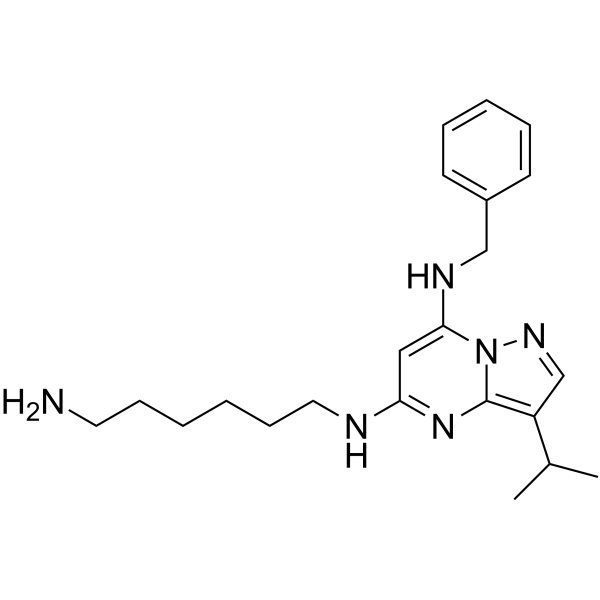 0 ImagesCat. No.: HY-13266CAS No.: 1092443-52-1BS-181 is a potent and selective CDK7 inhibitor (IC50=21 nM) than Seliciclib (HY-30237). BS-181 is also against CDK2, CDK5 and CDK9 with IC50 values of 880, 3000 and 4200 nM, respectively (fails to block CDK1, 4 and 6). BS-181 inhibits a panel of cancer cells growth (IC50=11.5 μM-37.3 μM) and induces cell apoptosis. BS-181 has the potential for the research of cancer therapy.
-
(E/Z)-BIO-acetoxime
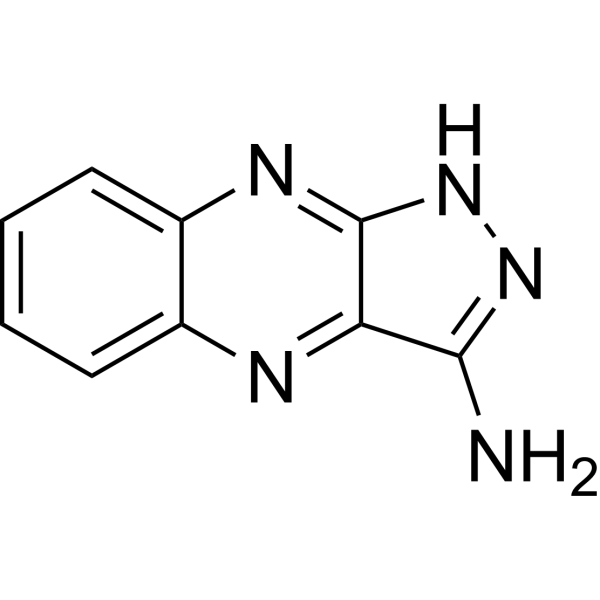
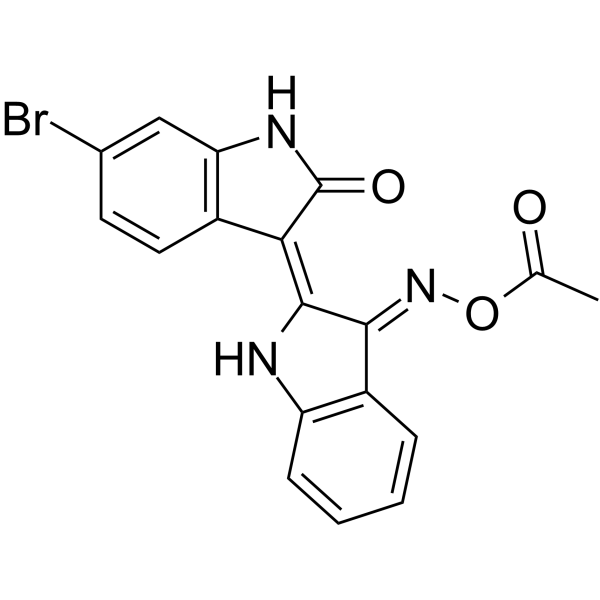 0 ImagesSynonyms: GSK-3 Inhibitor X(E/Z)-BIO-acetoxime (GSK-3 Inhibitor X) is a potent and selective GSK-3α/β inhibitor, with an IC50 of 10 nM. (E/Z)-BIO-acetoxime shows more than 200-flod selectivity over CDK5/p25, CDK2/cyclin A and CDK1/cyclin B (IC50=2.4, 4.3, 63 μM).
-
GSK-3 inhibitor 4
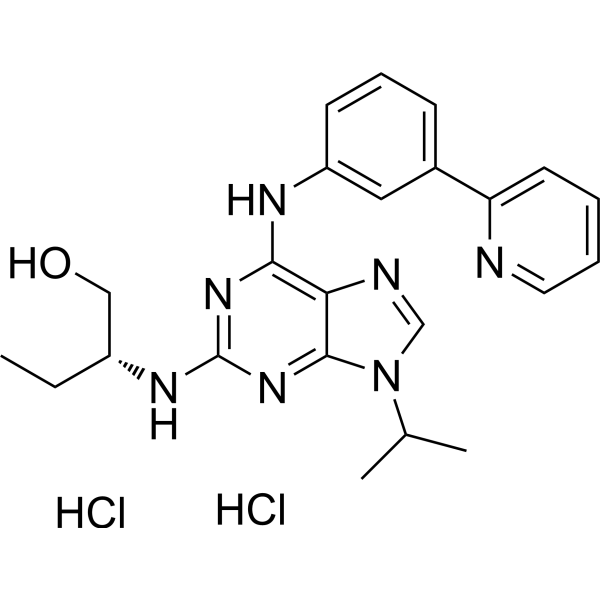
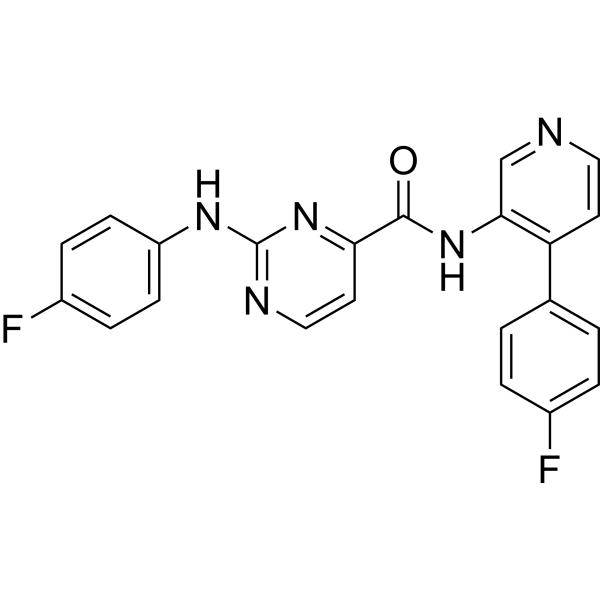 0 ImagesGSK-3 inhibitor 4 is an orally active and brain-penetrant inhibitor of GSK-3, CDK2, and CDK5, with IC50 values of 0.56 nM (GSK-3β), 0.45 nM (GSK-3α), 0.47 μM, and 0.68 μM, respectively. GSK-3 inhibitor 4 effectively reduces the phosphorylation level of Tau protein. GSK-3 inhibitor 4 can be used in Alzheimer's disease (AD) studies.
-
CDK6/PIM1-IN-1
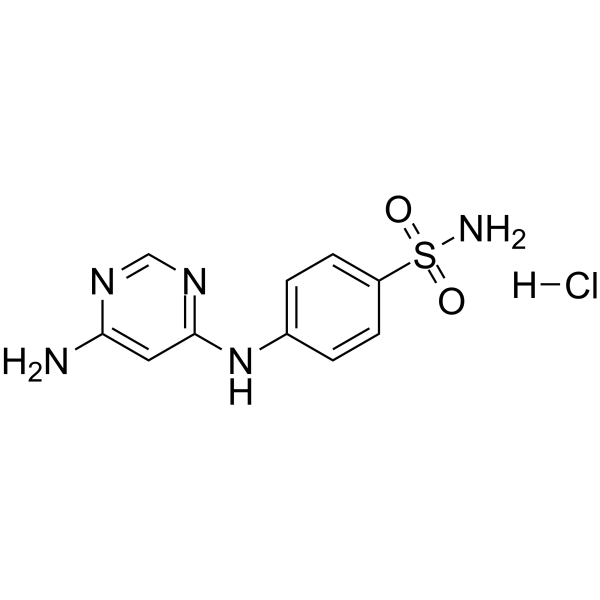
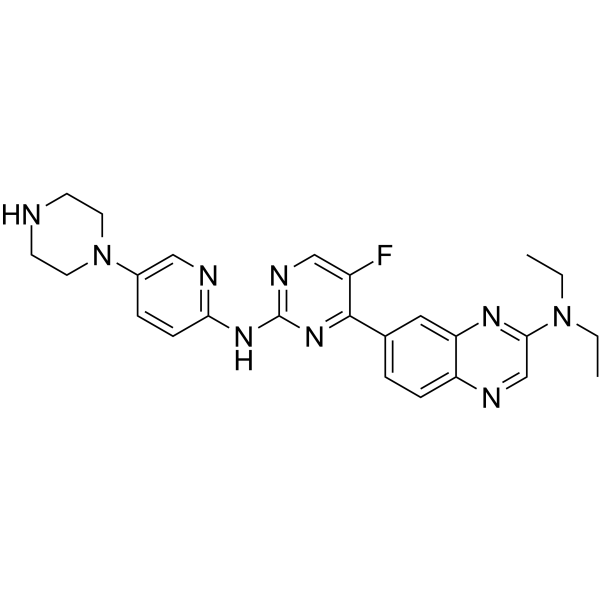 0 ImagesCat. No.: HY-142696CAS No.: 2677026-14-9CDK6/PIM1-IN-1 is a potent and balanced dual CDK6/PIM1 inhibitor with IC50 values of 39 and 88 nM, respectively. CDK6/PIM1-IN-1 inhibits CDK4 (IC50=3.6 nM). CDK6/PIM1-IN-1 significantly inhibits acute myeloid leukemia (AML) cell proliferation, arrest cell cycle at the G1 phase, and promote cell apoptosis. CDK6/PIM1-IN-1 exhibits potent anti-AML activity.
-
Manzamine A
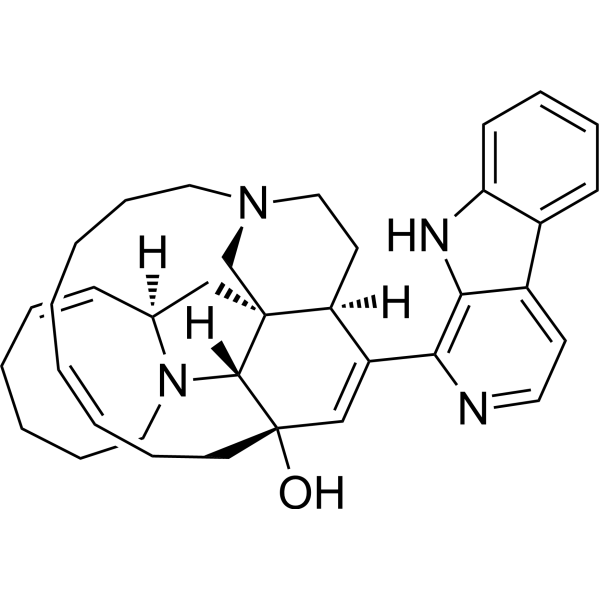 0 ImagesSynonyms: Keramamine AManzamine A, an orally active beta-carboline alkaloid, inhibits specifically GSK-3β and CDK-5 with IC50s of 10.2 μM and 1.5 μM, respectively. Manzamine A targets vacuolar ATPases and inhibits autophagy in pancreatic cancer cells. Manzamine A has antimalarial and anticancer activities. Manzamine A also shows potent activity against HSV-1.
-
TMX-2138
 0 ImagesTMX-2138 is a CDK PROTAC degrader, with IC50 values against different targets as follows: CDK1 (IC50 = 8.7 nM), CDK2 (IC50 = 10.9 nM), CDK5 (IC50 = 7.0 nM), CDK4 (IC50 = 901.0 nM), CDK6 (IC50 = 465.0 nM), CDK7 (IC50 = 286.0 nM), and CDK9 (IC50 = 25.7 nM). TMX-2138 promotes the ubiquitination of CDK and induces its degradation via the proteasomal pathway. TMX-2138 can be used in ovarian cancer research.
-
(R)-(+)-O-Demethylbuchenavianine
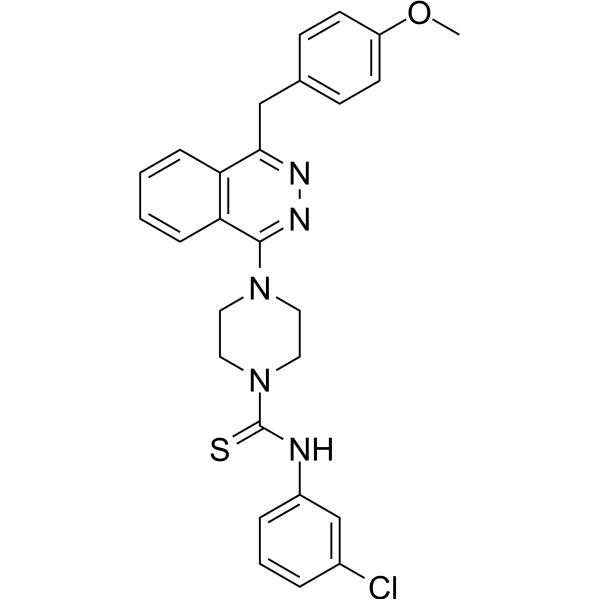
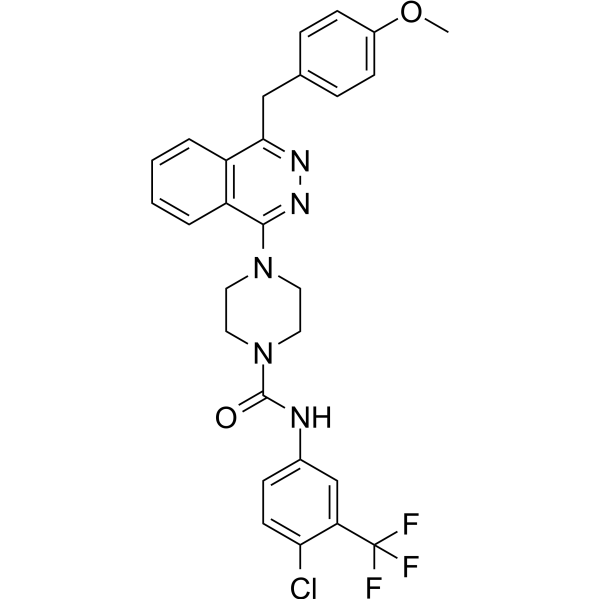
 0 Images(R)-(+)-O-Demethylbuchenavianine is an inhibitor for Cyclin-dependent kinases (CDK). (R)-(+)-O-Demethylbuchenavianine inhibits CDK1, CDK5, glycogen synthase kinase-3 (GSK3), cdc2-like kinase (CLK1) and dual specificity tyrosine-phosphorylation-regulated kinase 1A (DYRK1A), with IC50s of 1.1, 0.95, >10, >10 and >10 μM, respectively.
-
BS-181 dihydrochloride
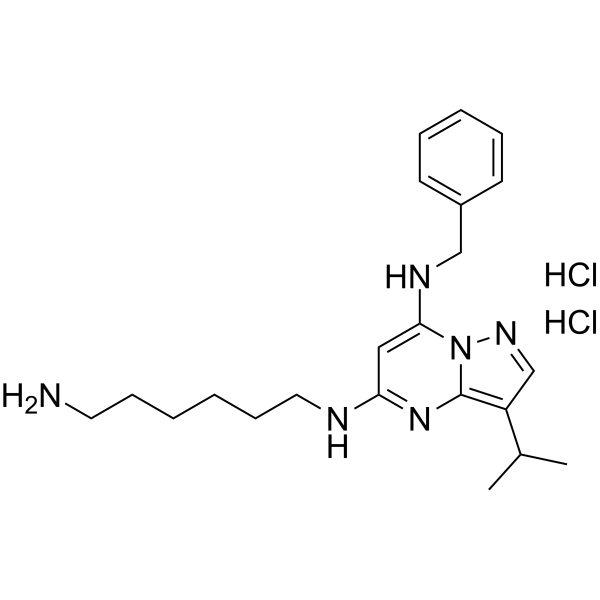 0 ImagesCat. No.: HY-110368CAS No.: 1883548-83-1BS-181 dihydrochloride is a potent and selective CDK7 inhibitor (IC50=21 nM) than Seliciclib (HY-30237). BS-181 is also against CDK2, CDK5 and CDK9 with IC50 values of 880 nM, 3000 nM and 4200 nM, respectively (fails to block CDK1, 4 and 6). BS-181 dihydrochloride inhibits a panel of cancer cells growth (IC50=11.5 μM-37.3 μM) and induces cell apoptosis. BS-181 dihydrochloride has the potential for the research of cancer therapy.


-
Aloisine A
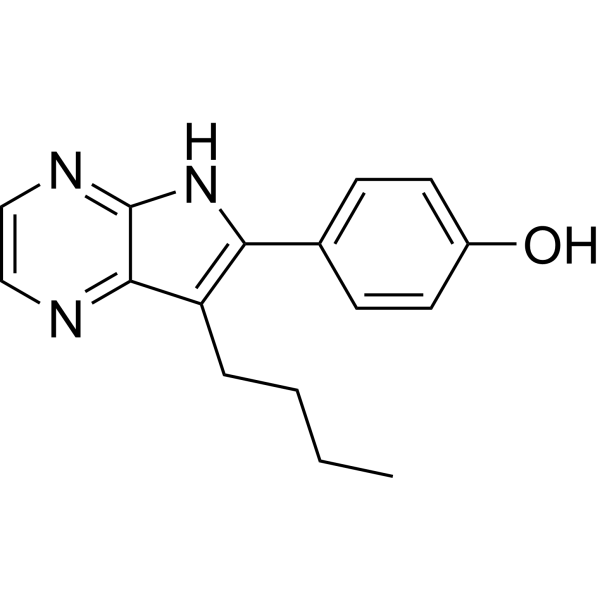 0 ImagesCat. No.: HY-112363CAS No.: 496864-16-5Synonyms: RP107Aloisine A (RP107) is a a potent cyclin-dependent kinase (CDK) inhibitor with IC50s of 0.15 μM, 0.12 μM, 0.4 μM, 0.16 μM for CDK1/cyclin B, CDK2/cyclin A, CDK2/cyclin E, CDK5/p35, respectively. Aloisine A ininhibits GSK-3α (IC50=0.5 μM) and GSK-3β (IC50=1.5 μM). Aloisine A stimulates wild-type CFTR and mutated CFTR, with submicromolar affinity by a cAMP-independent mechanism. Aloisine A has the potential for CFTR-related diseases, including cystic fibrosis research.
-
17β-HSD10/CDK5-IN-1
 0 ImagesCat. No.: HY-18328017β-HSD10/CDK5-IN-1 is a poent dual 17β-HSD10 and CDK5 inhibitor with IC50s of 2.44 and 0.26 μM for 17β-HSD10 and CDK5, respectively. 17β-HSD10/CDK5-IN-1 reduces ROS accumulation, attenuates pathological Tau phosphorylation, reduces Aβ plaque deposition, and ameliorates cognitive deficits in Alzheimer's mice. 17β-HSD10/CDK5-IN-1 can be used for the research of Alzheimer's disease.
-
17β-HSD10-IN-4
 0 ImagesCat. No.: HY-18202817β-HSD10-IN-4 is a selective brain-penetrant 17β-HSD10 inhibitor with an IC50 of 6.33 μM. 17β-HSD10-IN-4 forms key interactions with the 17β-HSD10 catalytic triad to functionally inhibit the enzyme, without altering its protein levels. 17β-HSD10-IN-4 restores mitochondrial function, reduces ROS levels, increases ATP production, and suppresses cytochrome c release. 17β-HSD10-IN-4 attenuates CDK5/p25 activation, reduces Tau hyperphosphorylation, Aβ plaque load and restores brain-derived neurotrophic factor levels. 17β-HSD10-IN-4 improves cognitive function.17β-HSD10-IN-4 can be used for the research of Alzheimer's disease.
-
CDK5-IN-4
 0 ImagesCat. No.: HY-161595CAS No.: 1212711-91-5




