



Caspase
Caspase is a family of cysteine proteases that play essential roles in apoptosis (programmed cell death), necrosis, and inflammation. There are two types of apoptotic caspases: initiator (apical) caspases and effector (executioner) caspases. Initiator caspases (e.g., CASP2, CASP8, CASP9, and CASP10) cleave inactive pro-forms of effector caspases, thereby activating them. Effector caspases (e.g., CASP3, CASP6, CASP7) in turn cleave other protein substrates within the cell, to trigger the apoptotic process. The initiation of this cascade reaction is regulated by caspase inhibitors. CASP4 and CASP5, which are overexpressed in some cases of vitiligo and associated autoimmune diseases caused by NALP1 variants, are not currently classified as initiator or effector in MeSH, because they are inflammatory enzymes that, in concert with CASP1, are involved in T-cell maturation.
Caspase Isoform Specific Products
-
Caspase 1
(75)
View all products
-
Caspase 2
(11)
View all products
-
Caspase 3
(513)
View all products
-
Caspase 4
(11)
View all products
-
Caspase 5
(5)
View all products
-
Caspase 6
(12)
View all products
-
Caspase 7
(100)
View all products
-
Caspase 8
(103)
View all products
-
Caspase 9
(185)
View all products
-
Caspase 10
(6)
View all products
-
Caspase 12
(3)
View all products
-
Caspase
(587)
View all products
-
Caspase 11
(2)
View all products
-
Caspase-13
(1)
View all products
All Product Categories
-
Caspase Inhibitors
(430)
View all products
-
Caspase Agonists
(40)
View all products
-
Caspase Activators
(601)
View all products
-
Caspase Modulators
(42)
View all products
-
Caspase Chemicals
(4)
View all products
-
Caspase MDM2 Inhibitor
(1)
View all products
-
Caspase Inducers
(47)
View all products
-
Caspase Degrader
(1)
View all products
-
Caspase Control
(1)
View all products
-
Caspase Substrates
(3)
View all products
-
Caspase Proteins
(10)
View all products
-
Caspase-1 Proteins
(3)
View all products
-
Caspase-3 Proteins
(3)
View all products
-
Caspase 7 Proteins
(1)
View all products
-
Caspase-8 Proteins
(1)
View all products
-
Caspase-10 Proteins
(1)
View all products
-
Caspase Related Products (1349)
Related Products (1349)

-
Recombinant Proteins (10)
-
Antibodies (35)
-
Caspase Signaling Pathway
-
Caspase Isoform Comparison
-
Penicillic acid (Standard)
 0 ImagesTetracaine (hydrochloride) (Standard) is the analytical standard of Tetracaine (hydrochloride). This product is intended for research and analytical applications. Tetracaine hydrochloride (Amethocaine hydrochloride) is a calcium channel protein inhibitor and blocks voltage-sensitive release of Ca2+ from sarcoplasmic reticulum. Tetracaine hydrochloride is mainly used topically in ophthalmology and as an antipruritic.
-
NLRP3-IN-81
 0 ImagesCat. No.: HY-174312CAS No.: 2922814-85-3NLRP3-IN-81 (N102) is a BBB-penetrable inhibitor against NLRP3 inflammasome-dependent pyroptosis with an EC50 of 0.029 μM against cell pyroptosis induced by Nigericin (HY-127019). NLRP3-IN-81 potently inhibits NLRP3-dependent activation of caspase-1 and the release of IL-1β. NLRP3-IN-81 disturbs the interaction of NLRP3 with the adaptor protein ASC and inhibits ASC oligomerization. NLRP3-IN-81 can be used for pyroptosis-related diseases research, such as inflammatory bowel diseases and type 2 diabetes.
-
NLRP3-IN-87
 0 ImagesCat. No.: HY-181488CAS No.: 3097745-69-9NLRP3-IN-87 is a selective and orally active NLRP3 inhibitor with a Kd of 0.23 μM. NLRP3-IN-87 binds directly to the NLRP3 NACHT domain, disrupts NLRP3-NEK7 and NLRP3-ASC interactions, inhibits ASC oligomerization, and blocks inflammasome assembly. NLRP3-IN-87 suppresses caspase-1 activation and IL-1β secretion. NLRP3-IN-87 exhibits anti-inflammatory and analgesic activity, reducing joint swelling, inflammation, and pain in an MSU (HY-B2130A)-induced acute gout mouse model. NLRP3-IN-87 can be used for the research of gout.
-
Z-VAD-FMK (GMP)
 0 ImagesCat. No.: HY-16658BGCAS No.: 161401-82-7Z-VAD-FMK is a pan-caspase inhibitor and also an ICE-like protease inhibitor, which inhibits apoptosis by preventing the processing of CPP32 to its active form. Z-VAD-FMK sensitivity varies primarily due to differential expression of receptor-interacting protein 1 (RIP1). Z-VAD-FMK limits the cryopreservation-induced apoptosis by reducing caspase-3 activity of in vitro produced bovine embryos. Z-VAD-FMK is immunosuppressive in vitro and inhibits T cell proliferation without blocking the processing of caspase-8 and caspase-3. Z-VAD-FMK leads to a decrease in intracellular glutathione (GSH) with a concomitant increase in reactive oxygen species (ROS) levels in activated T cells. Z-VAD-FMK is due to oxidative stress via the depletion of GSH. Z-VAD-FMK can be used for the study of acute pancreatitis.
-
TZ3O
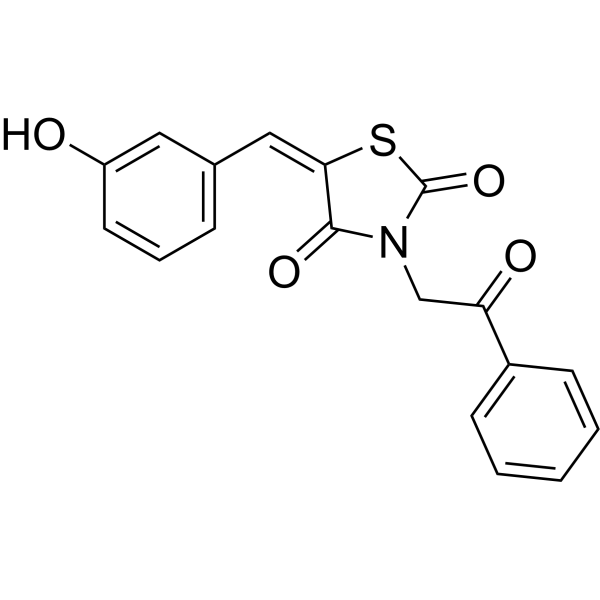 0 ImagesCat. No.: HY-155822Purity: 98.17%TZ3O is an anticholinergic agent with neuroprotective effects. TZ3O inhibits acetylcholinesterase (AChE) activity in human plasma with an IC50 of 304.5 μM. TZ3O can improve memory impairment and cognitive decline in rats in the Scopolamine (HY-N0296)-induced Alzheimer-type model. TZ3O could be used in Alzheimer’s research.
-
Casp9 Rat Pre-designed siRNA Set A
 0 ImagesCat. No.: HY-RS01971
Casp9 Rat Pre-designed siRNA Set A contains three designed siRNAs for Casp9 gene (Rat), as well as a negative control, a positive control, and a FAM-labeled negative control.
-
Z-VAD-CHO
 0 ImagesCat. No.: HY-17678CAS No.: 875152-90-2Z-VAD-CHO is a potent inhibitor of human caspase-1 with a Ki value of 0.008 μM.
-
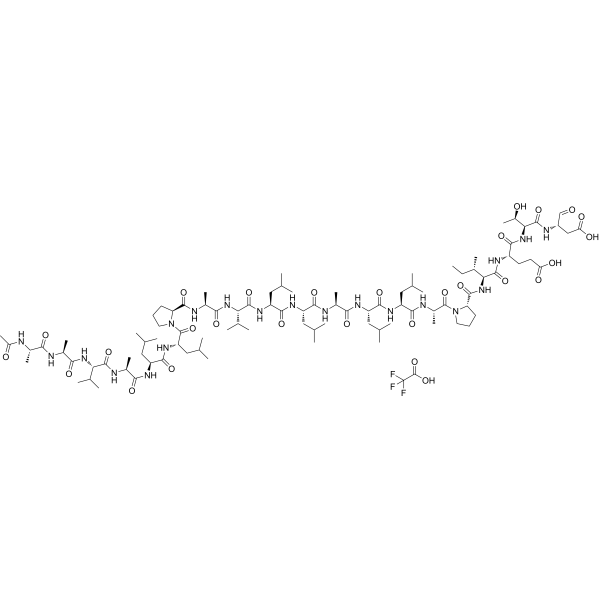
Ac-ATS010-KE
 0 ImagesCat. No.: HY-P11865CAS No.: 2379342-67-1Ac-ATS010-KE is a selective polypeptide inhibitor of caspase-3. Ac-ATS010-KE protects cells from FasL-induced apoptosis. The unmethylated form of Ac-ATS010-KE exhibits better cell viability than the fully methylated form. Ac-ATS010-KE can be used in research on cancers such as colorectal cancer and the development of caspase-3-targeted molecular probes.
-
GPR
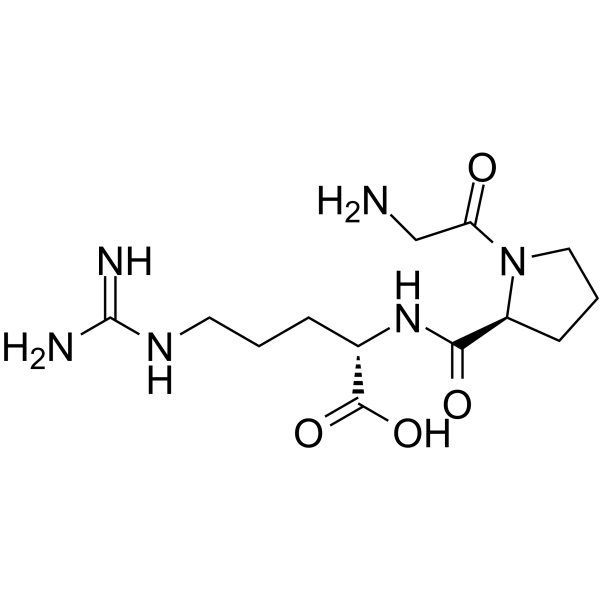 0 ImagesCat. No.: HY-P3528CAS No.: 47295-77-2GPR is a three amino acid peptide. GPR can rescue cultured rat hippocampal neurons from Aβ-induced neuronal death by inhibiting caspase-3/p53 dependent apoptosis. GPR can be used for the research of Alzheimer's disease (AD).
-
Z-YVAD-CMK
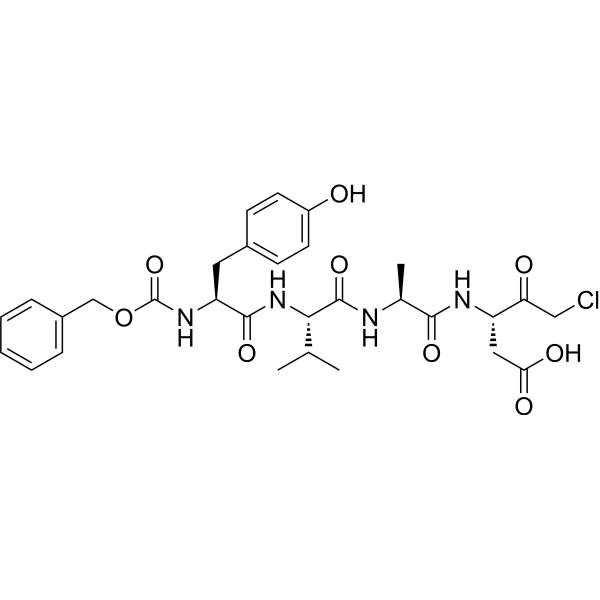 0 ImagesCat. No.: HY-W792412CAS No.: 402474-85-5
-
Cytochalasin H
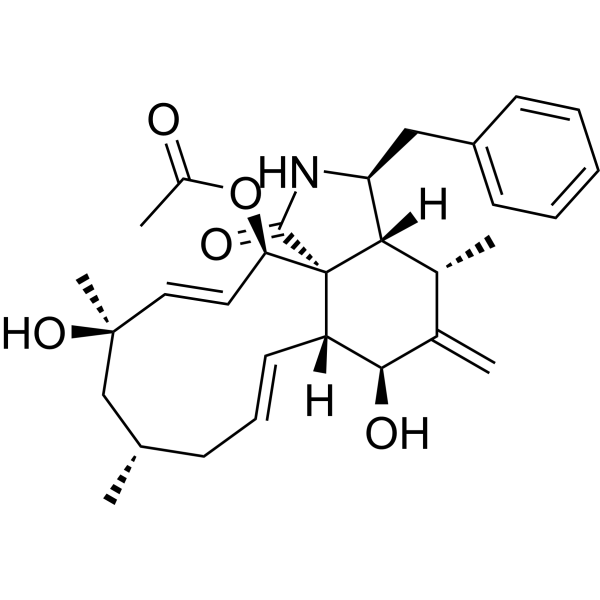 0 ImagesCytochalasin H is a nature product that could be isolated from fungus Phomopsis sp. Cytochalasin H inhibits cell growth and induces apoptosis. Cytochalasin H has anti-angiogenic activity. Cytochalasin H is an antibiotic and has antibacterial activity.
-
Berkeleyamide B
 0 ImagesCat. No.: HY-N16408CAS No.: 1019854-22-8
-
Caspase-3-IN-3
 0 ImagesCat. No.: HY-172786CAS No.: 1984421-81-9
-
Fluorescein-6-carbonyl-Asp(OMe)-Glu(OMe)-Val-DL-Asp(OMe)-fluoromethylketone
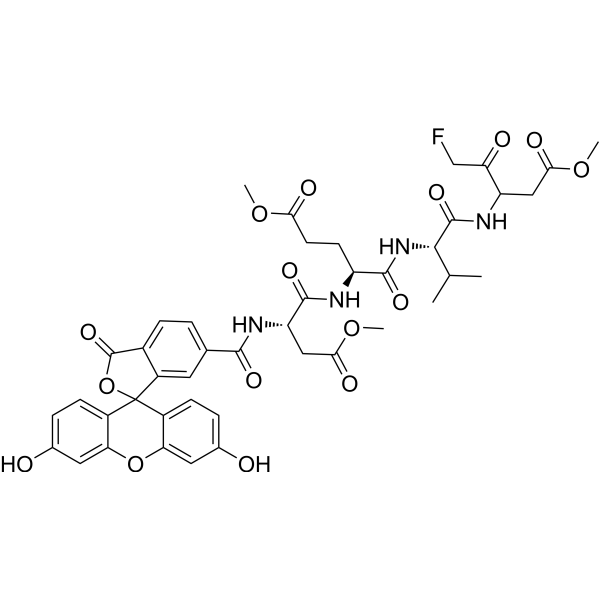 0 ImagesCat. No.: HY-P4900CAS No.: 1926163-65-6Fluorescein-6-carbonyl-Asp(OMe)-Glu(OMe)-Val-DL-Asp(OMe)-fluoromethylketone is a cell-permeable, non-toxic inhibitor that binds irreversibly to activated caspase-3 in apoptotic cells. The fluorescence intensity can be measured by flow cytometry, microwell plate reader, or fluorescence microscopy.
-
MAPK-IN-6
 0 ImagesCat. No.: HY-180807MAPK-IN-6 is a blood-brain barrier-permeable MAPK inhibitor. MAPK-IN-6 inhibits oxidative stress-induced activation of the MAPK signaling cascade, including the phosphorylation of ERK1/2, p38 and JNK. MAPK-IN-6 eliminates intracellular reactive oxygen species (ROS) accumulation, stabilizes mitochondrial membrane potential and inhibits cell apoptosis. MAPK-IN-6 can be used for the research of ischemic stroke.
-
VX-166
 0 ImagesCat. No.: HY-16521CAS No.: 800408-39-3VX-166, a pan caspase inhibitor, can be used for the research of Non- Alcoholic Fatty Liver Disease (NAFLD), nonalcoholic steatohepatitis (NASH), alcoholic steatohepatitis (ASH), and other diseases involving fibrosis, steatosis, or inflammation of the liver.
-
Topoisomerase I-IN-23
 0 ImagesCat. No.: HY-187459Topoisomerase I-IN-23 is a topoisomerase I inhibitor with anticancer activity. Topoisomerase I-IN-23 competitively binds to the hydrophobic pocket at the Topo I-DNA interface, stabilizes the covalent DNA-Topo I complex, downregulates Topo I protein expression in a concentration-dependent manner, induces S-phase cell cycle arrest in tumor cells, regulates the expression of apoptosis-related proteins Bax, Bcl-2 and cleaved caspase-3 to trigger apoptosis, and inhibits the migration and invasion of tumor cells. Topoisomerase I-IN-23 exhibits in vivo antitumor efficacy in xenograft models. Topoisomerase I-IN-23 can be used in research related to colorectal cancer, lung cancer and hepatocellular carcinoma.
-
MAPK-IN-5
 0 ImagesCat. No.: HY-175175CAS No.: 2579683-39-7MAPK-IN-5 is a potent MAPK inhibitor with an IC50 of 1.35 μM against HeLa cells. MAPK-IN-5 inhibits HeLa cell proliferation by inducing ROS-mediated DNA damage and mitochondrial apoptosis via the MAPK pathway. MAPK-IN-5 significantly inhibits colony formation, reduces the number of live cells, suppresses cell migration, and causes cell cycle arrest in the G2/M phase in HeLa cells. MAPK-IN-5 can be used for the study of cervical cancer.
-
PI3K/Akt/mTOR-IN-7
 0 ImagesCat. No.: HY-183272CAS No.: 2925588-01-6PI3K/Akt/mTOR-IN-7 is an AKT/mTOR and JAK2/STAT3 inhibitor. PI3K/Akt/mTOR-IN-7 restores p-Akt, p-mTOR, and p-STAT3 expression, reduces pro-apoptotic Caspase-3 mRNA expression. PI3K/Akt/mTOR-IN-7 reduces intracellular ROS accumulation and inhibits NO production. PI3K/Akt/mTOR-IN-7 can be used for research on stroke, Alzheimer's disease and Parkinson's disease.




