



Caspase
Caspase Isoform Specific Products
-
Caspase 1
(76)
View all products
-
Caspase 2
(11)
View all products
-
Caspase 3
(533)
View all products
-
Caspase 4
(11)
View all products
-
Caspase 5
(5)
View all products
-
Caspase 6
(12)
View all products
-
Caspase 7
(105)
View all products
-
Caspase 8
(106)
View all products
-
Caspase 9
(191)
View all products
-
Caspase 10
(6)
View all products
-
Caspase 12
(3)
View all products
-
Caspase
(588)
View all products
-
Caspase 11
(2)
View all products
-
Caspase-13
(1)
View all products
All Product Categories
-
Caspase Inhibitors
(434)
View all products
-
Caspase Agonists
(40)
View all products
-
Caspase Activators
(617)
View all products
-
Caspase Modulators
(46)
View all products
-
Caspase Chemicals
(4)
View all products
-
Caspase MDM2 Inhibitor
(1)
View all products
-
Caspase Inducers
(49)
View all products
-
Caspase Degrader
(1)
View all products
-
Caspase Control
(1)
View all products
-
Caspase Substrates
(3)
View all products
-
Caspase Proteins
(10)
View all products
-
Caspase-1 Proteins
(3)
View all products
-
Caspase-3 Proteins
(3)
View all products
-
Caspase 7 Proteins
(1)
View all products
-
Caspase-8 Proteins
(1)
View all products
-
Caspase-10 Proteins
(1)
View all products
-
Caspase Related Products (1376)
Related Products (1376)

-
Recombinant Proteins (10)
-
Antibodies (35)
-
Caspase Signaling Pathway
-
Caspase Isoform Comparison
-
Z-ATAD-FMK
 0 ImagesCat. No.: HY-P10326CAS No.: 1416658-51-9Z-ATAD-FMK is an inhibitor of caspase-12. Z-ATAD-FMK is an inhibitor of caspase-12. Z-ATAD-FMK prevents endoplasmic reticulum stress-mediated apoptosis by inhibiting the activity of caspase-12 and reducing the activity of caspase-9.
-
DY-9760e
 0 ImagesCat. No.: HY-19230CAS No.: 179185-73-0DY-9760e is a calmodulin (CaM) inhibitor. DY-9760e selectively inhibits the activity of various calmodulin-dependent enzymes by antagonizing the Ca²⁺/CaM complex, exhibiting the strongest inhibitory activity against nNOS, CaM kinase II, and calcineurin (Ki: 0.9, 1.4, and 2.0 μM, respectively). DY-9760e inhibits excessive nitric oxide production and protein tyrosine nitration, as well as the activation of calpain and caspase-3. DY-9760e reduces infarct size, improves cardiac function, and inhibits oxidative stress and cell death. DY-9760e can be used in research on the treatment of myocardial infarction, cerebral ischemia, and other diseases.
-
CASP6 Human Pre-designed siRNA Set A
 0 ImagesCat. No.: HY-RS01959
CASP6 Human Pre-designed siRNA Set A contains three designed siRNAs for CASP6 gene (Human), as well as a negative control, a positive control, and a FAM-labeled negative control.
-
Boc-Asp(OBzl)-CMK
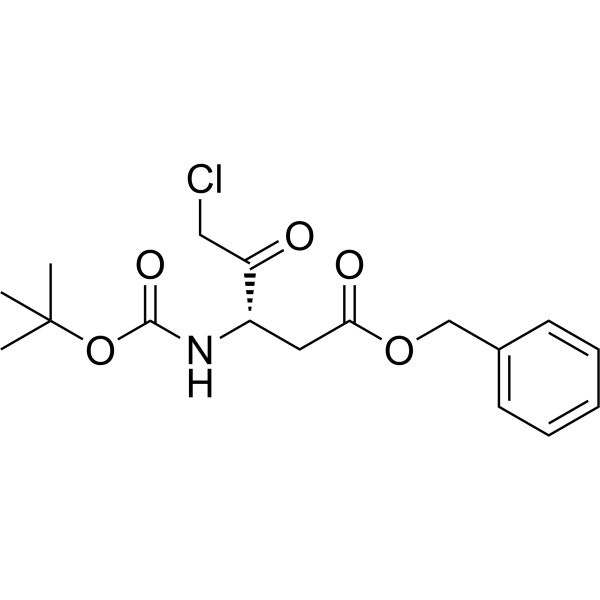 0 ImagesCat. No.: HY-W650842CAS No.: 172702-58-8Boc-Asp(OBzl)-CMK is an inhibitor for IL-1 converting enzyme (ICE, caspase1). Boc-Asp(OBzl)-CMK prevents death of CHP100 neuroblastoma cell, and IL-1β release elicited by the viral coat protein.
-
Ac-DEVD-CHO TFA
 0 ImagesCat. No.: HY-P1001AAc-DEVD-CHO TFA is a peptide inhibitor of caspase-3 (Ki=230 pM) and caspase-7. Ac-DEVD-CHO TFA reduces caspase-3 activity and apoptosis induced by Prostaglandin E2 (HY-101952) in rat cortical neurons. Ac-DEVD-CHO TFA is promising for research of neurodegenerative diseases and cancers.
-
Casp12 Rat Pre-designed siRNA Set A
 0 ImagesCat. No.: HY-RS01947
Casp12 Rat Pre-designed siRNA Set A contains three designed siRNAs for Casp12 gene (Rat), as well as a negative control, a positive control, and a FAM-labeled negative control.
-
IDN-1965
 0 ImagesCat. No.: HY-120257CAS No.: 204919-14-2IDN-1965 is an irreversible, broad-spectrum caspase inhibitor. IDN-1965 prevents downstream apoptotic events (such as DNase activation) and significantly delays cytochrome c release by inhibiting caspase activity. IDN-1965 significantly delayed death in mice with cardiomyocyte apoptosis. IDN-1965 completely prevents left ventricular dilation, systolic dysfunction, and fibrosis in mice with dilated cardiomyopathy. IDN-1965 can be used to study apoptosis-related diseases such as heart failure and the mechanisms of apoptosis initiation.
-
14-Deoxyandrographolide (Standard)
 0 Images14-Deoxyandrographolide (Standard) is the analytical standard of 14-Deoxyandrographolide. 14-Deoxyandrographolide is a diterpene with calcium channel blocking activity and acts as a uterine smooth muscle relaxant. 14-Deoxyandrographolide stimulates the release of nitric oxide (NO) in endothelial cells. 14-Deoxyandrographolide gradually desensitizes liver cells to TNF-α mediated apoptosis by inducing the release of TNFRSF1A.
-
Moroxydine (hydrochloride)-d8
 0 ImagesCat. No.: HY-W713297CAS No.: 2469734-82-3Synonyms: ABOB hydrochloride-d8Moroxydine hydrochloride-d8 (ABOB hydrochloride-d8) is the deuterium labeled Moroxydine (ABOB) hydrochloride (HY-B0420A). Moroxydine hydrochloride is a broad-spectrum agent with multi-antiviral activities against DNA and RNA viruses, including influenza virus, herpes simplex, varicella zoster, measles, mumps disease, hepatitis C virus, etc. Moroxydine hydrochloride exhibits excellent antiviral activity and shows low cytotoxicity to cells infected by dsRNA viruses (grass carp reovirus, GCRV) and large DNA viruses (giant salamander iridovirus, GSIV). Moroxydine hydrochloride blocks the GCRV-induced cytopathic effects and eliminates nucleocapsids in ctenopharyngodon idella kidney (CIK) cells to keep the normal morphological structure. Moroxydine hydrochloride significantly inhibits the apoptosis, the caspase 3 activity, Bax expression and down-regulates Bcl-2 levels[1][2][3].
-
HMGB1-IN-2
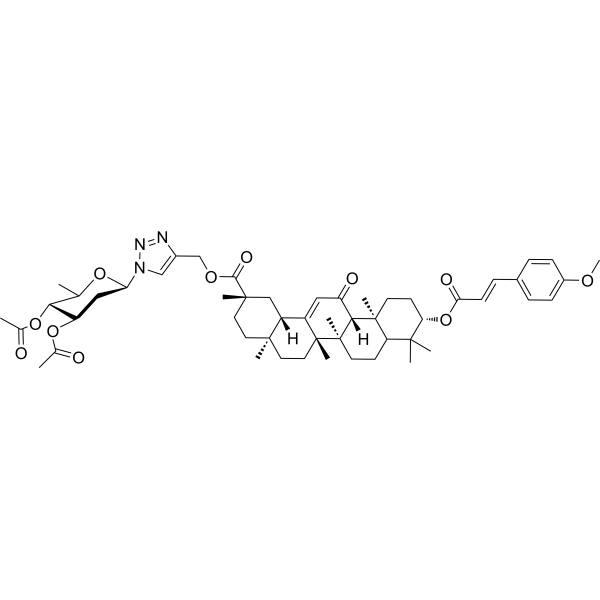 0 ImagesCat. No.: HY-155759HMGB1-IN-2 (compound 15) is an inhibitor of highly conserved nuclear protein (HMGB1), showing NO inhibitory effect with IC50 value of 20.2 μM in RAW264.7 cells. HMGB1-IN-2 (30 μM) decreases the level of IL-1 β, TNF-α, caspase-1 p20, inhibits the phosphorylation of NF-κB p65, exhibits anti-apoptotic activity. HMGB1-IN-2 (15 mg/kg; ip) relives kidney injury in septic acute kidney injury mouse. HMGB1-IN-2 inhibits Huh7 cells and A549 cells with IC50s of 77.0 μM, and 82.0 μM, respectively.
-
Ac-DNLD-CHO
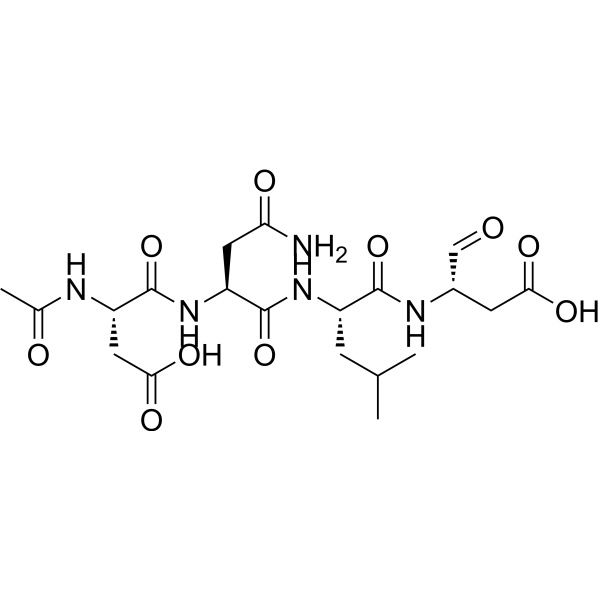 0 ImagesCat. No.: HY-136733CAS No.: 775289-20-8Synonyms: Ac-Asp-Asn-Leu-Asp-CHO
-
URAT1-IN-16
 0 ImagesCat. No.: HY-184199CAS No.: 2864442-74-8URAT1-IN-16 is an orally active URAT1 inhibitor with an IC50 value of 0.19 μM. URAT1-IN-16 also functions as an NLRP3 inflammasome pathway inhibitor by effectively suppressing mature IL-1β secretion (IC50 = 2.52 μM). URAT1-IN-16 exhibits remarkable serum uric acid-lowering and anti-inflammatory activities in vivo, and can be used for hyperuricemia and gout research.
-
MNP2
 0 ImagesCat. No.: HY-P11581MNP2 is a NLRP3-ASC interaction inhibitor. MNP2 selectively binds to the PYD domain of ASC (Ka=149 nM) and blocks ASC-PYM binding (Ka=58 nM), thereby inhibiting the interaction between ASC and NLRP3 and suppressing the formation of the NLRP3 inflammasome. MNP2 inhibits IL-1β release and caspase-1 maturation, and reduces the efflux of potassium and chloride ions. MNP2 prevents mitochondrial damage and reactive oxygen species production, and significantly decreases NLRP3 inflammasome formation in neurodegenerative pathologies induced by β-amyloid, Tau protein and α-synuclein. MNP2 is applicable for the research of neurodegenerative diseases.
-
M867
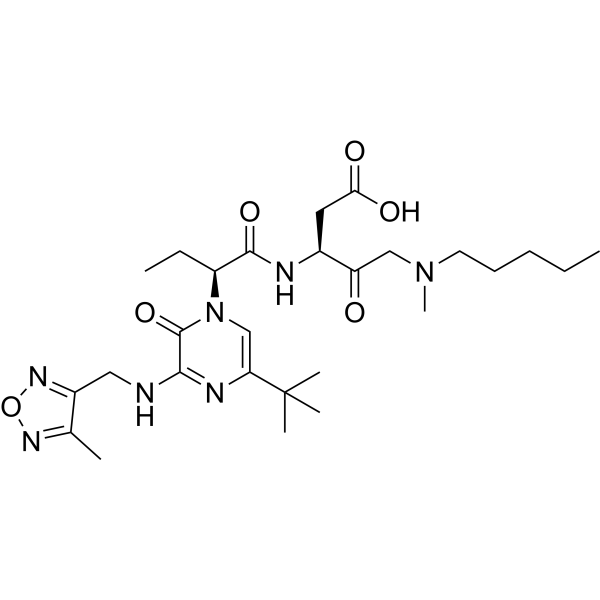 0 ImagesCat. No.: HY-155613CAS No.: 680999-39-7M867 is a selective and reversible inhibitor of caspase-3 with an IC50 of 1.4 nM and Ki of 0.7 nM. M867 has anti apoptotic activity.
-
Ac-YVAD-AOM
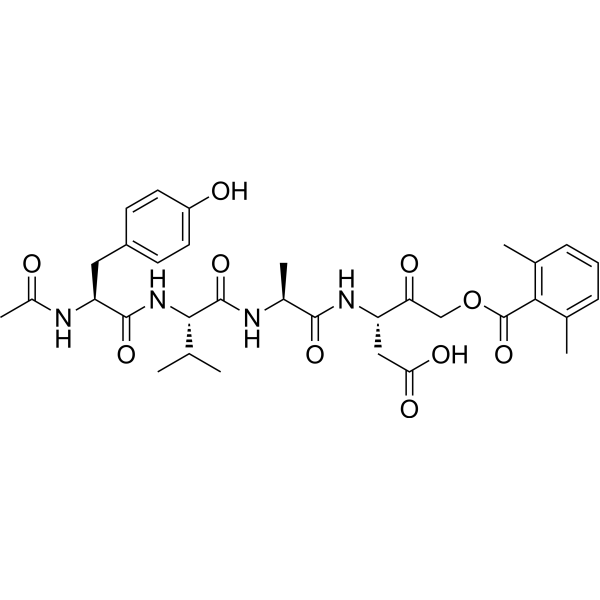 0 ImagesCat. No.: HY-136728CAS No.: 154674-81-4Ac-YVAD-AOM is the inhibitor of caspase-1 that shows antitumor activity.

-
GDC-2394 sodium
 0 ImagesCat. No.: HY-148258ACAS No.: 2238822-08-5GDC-2394 (Compound 20) sodium is an orally active and selective NLRP3 inhibitor, and also inhibits IL-1β with IC50s of 0.4 μM (human IL-1β) and 0.1 μM (mouse IL-1β). GDC-2394 sodium inhibits NLRP3-induced caspase-1 activity without inhibiting NLRC4-dependent inflammasome activation. GDC-2394 sodium could be used to study gouty arthritis.
-
CDK1/2/4-IN-1
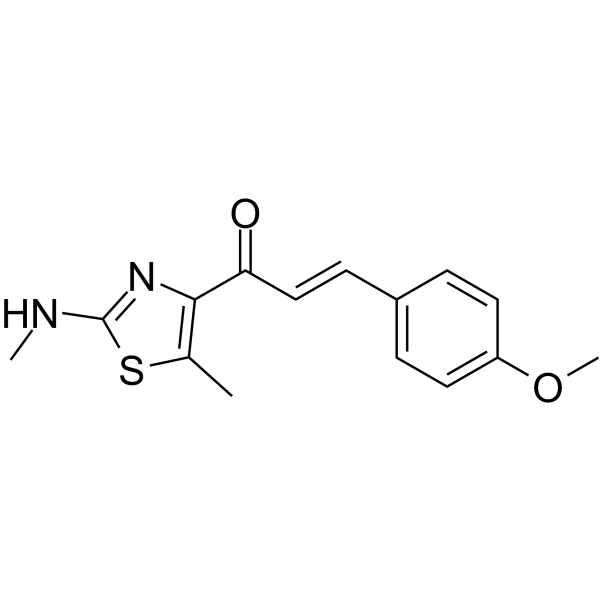 0 ImagesCat. No.: HY-146253CAS No.: 2414633-49-9CDK1/2/4-IN-1 (compound 3a) is a potent CDK inhibitor with IC50 values of 1.47, 0.78 and 0.87 μM for CDK1, CDK2 and CDK4, respectively. CDK1/2/4-IN-1 arrests cell cycle at G2/M phase and induces apoptosis. CDK1/2/4-IN-1 elevates Bax, caspase-3, P53 levels and decreases Bcl-2 level. CDK1/2/4-IN-1 can be used for cancer research.
-
NLRP3-IN-84
 0 ImagesCat. No.: HY-178953NLRP3-IN-84 (Compound 32) is a NLRP3 inflammasome inhibitor. NLRP3-IN-84 can interfere with the oligomerization process of NLRP3 by inhibiting the activity of NLRP3 ATPase (IC50 = 158.4 nM). NLRP3-IN-84 inhibits Caspase-1 (IC50 = 27.7 nM), IL-1β release (PBMC: IC50 = 19.5 nM; mPBMC: IC50 = 24.2 nM), and ASC plaque formation (IC50 = 131 nM). NLRP3-IN-84 has no inhibitory activity on NLRC4 and AIM2 inflammasomes. NLRP3-IN-84 exhibits significant in vivo anti-inflammatory effects in a mouse acute peritonitis model. NLRP3-IN-84 can be used for the study of NLRP3-related inflammatory diseases.
-
Berberine hemisulfate (Standard)
 0 ImagesCat. No.: HY-N0716ARCAS No.: 316-41-6Synonyms: Natural Yellow 18 hemisulfate (Standard)Berberine (hemisulfate) (Standard) is the analytical standard of Berberine (hemisulfate). This product is intended for research and analytical applications. Berberine hemisulfate is the hemisulfate form of Berberine (HY-N0716). Berberine hemisulfate is an alkaloid isolated from the Chinese herbal medicine Huanglian. Berberine hemisulfate exhibits anti-inflammatory, antibiobic, antitumor, cardiovascular protective and neuroprotective activity.




