



Caspase
Caspase is a family of cysteine proteases that play essential roles in apoptosis (programmed cell death), necrosis, and inflammation. There are two types of apoptotic caspases: initiator (apical) caspases and effector (executioner) caspases. Initiator caspases (e.g., CASP2, CASP8, CASP9, and CASP10) cleave inactive pro-forms of effector caspases, thereby activating them. Effector caspases (e.g., CASP3, CASP6, CASP7) in turn cleave other protein substrates within the cell, to trigger the apoptotic process. The initiation of this cascade reaction is regulated by caspase inhibitors. CASP4 and CASP5, which are overexpressed in some cases of vitiligo and associated autoimmune diseases caused by NALP1 variants, are not currently classified as initiator or effector in MeSH, because they are inflammatory enzymes that, in concert with CASP1, are involved in T-cell maturation.
Caspase Isoform Specific Products
-
Caspase 1
(75)
View all products
-
Caspase 2
(11)
View all products
-
Caspase 3
(513)
View all products
-
Caspase 4
(11)
View all products
-
Caspase 5
(5)
View all products
-
Caspase 6
(12)
View all products
-
Caspase 7
(100)
View all products
-
Caspase 8
(103)
View all products
-
Caspase 9
(185)
View all products
-
Caspase 10
(6)
View all products
-
Caspase 12
(3)
View all products
-
Caspase
(589)
View all products
-
Caspase 11
(2)
View all products
-
Caspase-13
(1)
View all products
All Product Categories
-
Caspase Inhibitors
(430)
View all products
-
Caspase Agonists
(40)
View all products
-
Caspase Activators
(601)
View all products
-
Caspase Modulators
(42)
View all products
-
Caspase Chemicals
(4)
View all products
-
Caspase MDM2 Inhibitor
(1)
View all products
-
Caspase Inducers
(47)
View all products
-
Caspase Degrader
(1)
View all products
-
Caspase Control
(1)
View all products
-
Caspase Substrates
(3)
View all products
-
Caspase Proteins
(10)
View all products
-
Caspase-1 Proteins
(3)
View all products
-
Caspase-3 Proteins
(3)
View all products
-
Caspase 7 Proteins
(1)
View all products
-
Caspase-8 Proteins
(1)
View all products
-
Caspase-10 Proteins
(1)
View all products
-
Caspase Related Products (1349)
Related Products (1349)

-
Recombinant Proteins (10)
-
Antibodies (35)
-
Caspase Signaling Pathway
-
Caspase Isoform Comparison
-
Inclisiran sodium
 0 ImagesCat. No.: HY-132591APurity: 99.08%Synonyms: ALN-PCSsc sodiumInclisiran sodium is a double-stranded small interfering RNA (siRNA) molecule. Inclisiran sodium inhibits the transcription of PCSK9. Inclisiran sodium inhibits Pyroptosis, activates PPARγ, and reduces NLRP3, cleaved caspase-1, IL-1β, and IL-18. Inclisiran sodium has anti-inflammatory, lipid-regulating and anti-atherosclerotic activities. Inclisiran sodium can be used in researches of hyperlipidemia and cardiovascular disease (CVD).
-
Denosumab
 0 ImagesSynonyms: AMG-162Denosumab is a human monoclonal antibody that targets the protein RANKL. Denosumab binds to the receptor activator of nuclear factor kappa-B ligand (RANKL) and prevents its binding to the RANK receptor (KD of 0.003 nM for human RANKL). Denosumab promotes proliferation and spermatogenesis. Denosumab prevents bone resorption through inhibition of the NF-κB pathway. Denosumab can be used in bone-related studies.
-
Inclisiran
 0 ImagesSynonyms: ALN-PCSscInclisiran is a double-stranded small interfering RNA (siRNA) molecule. Inclisiran inhibits the transcription of PCSK9. Inclisiran inhibits Pyroptosis, activates PPARγ, and reduces NLRP3, cleaved caspase-1, IL-1β, and IL-18. Inclisiran has anti-inflammatory, lipid-regulating and anti-atherosclerotic activities. Inclisiran can be used in researches of hyperlipidemia and cardiovascular disease (CVD).
-
Citicoline
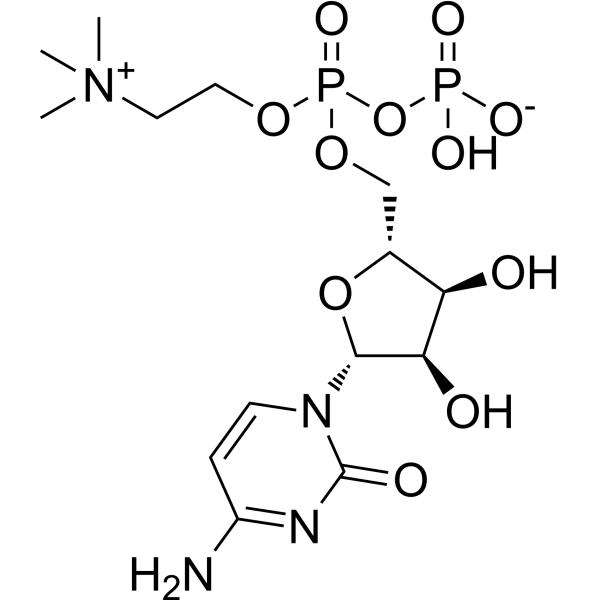 0 ImagesSynonyms: Cytidine diphosphate-choline; CDP-Choline; Cytidine 5'-diphosphocholineCiticoline is an endogenous intermediate in the synthesis of phosphatidylcholine which is a component of cell membranes. Citicoline inhibits reactive oxygen species (ROS) and apoptosis. Citicoline can be used for neurological disease and hearing loss study.
-
IRF1-IN-1
 0 ImagesIRF1-IN-1 (Compound I-2) is an IRF1 inhibitor. IRF1-IN-1 decreases the recruitment of IRF1 to the promoter of CASP1. IRF1-IN-1 inhibits cell death signaling pathway (i.e., cleavage of Caspase 1, GSDMD, IL-1 and PARP1). IRF1-IN-1 has a protective effect on ionizing radiation-induced inflammatory skin injury.
-
Wedelolactone
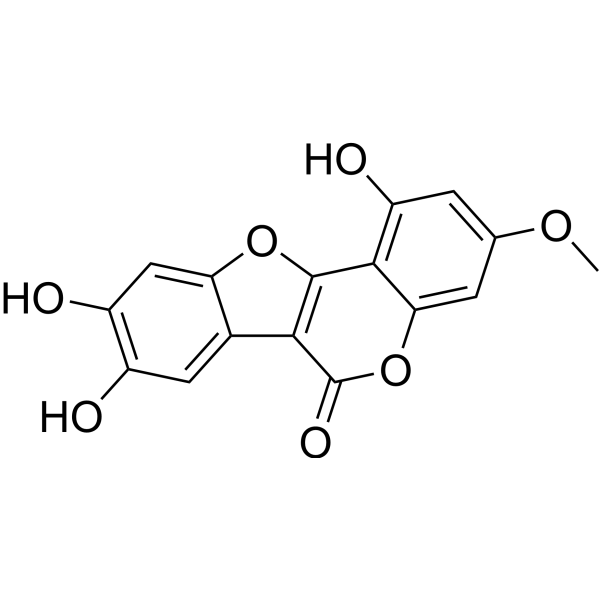 0 ImagesWedelolactone suppresses LPS-induced caspase-11 expression by directly inhibits the IKK Complex. Wedelolactone also inhibits 5-lipoxygenase (5-Lox) with an IC50 of 2.5 μM. Wedelolactone induces caspase-dependent apoptosis in prostate cancer cells via downregulation of PKCε without inhibiting Akt. Wedelolactone can extract from Eclipta alba, and it can be used for the research of cancer.
-
Madecassoside
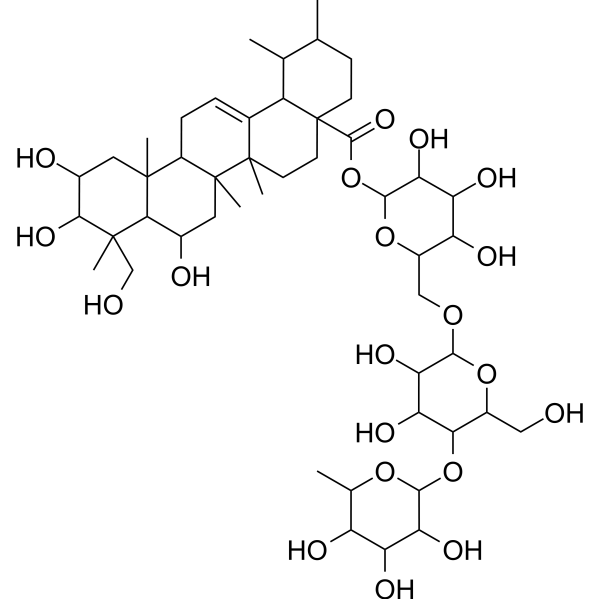 0 ImagesSynonyms: Asiaticoside AMadecassoside is a pentacyclic triterpene isolated from Centella asiatica and has anti-inflammatory properties. Antioxidant and anti-aging effects. Madecassoside is a pentacyclic triterpene isolated from Centella asiatica. Madecassoside is orally active and has inhibitory properties against inflammation, oxidation, apoptosis and autophagy. Madecassosid inhibits activities of p38 MAPK and NF-kB, exhibits an anti-apopototic property, activates Nrf2 expression to reduce the neurotoxicity. Madecassoside can be used in endocrine diseases, cardiovascular diseases, skin diseases and other diseases.
-
Cystamine
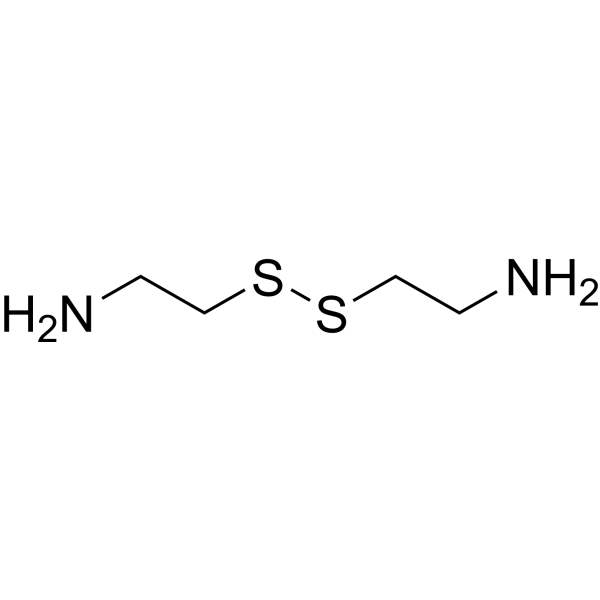 0 ImagesCystamine is the disulfide form of the free thiol, cysteamine. Cystamine is an orally active transglutaminase (Tgase) inhibitor. Cystamine also has inhibition activity for caspase-3 with an IC50 value of 23.6 μM. Cystamine can be used for the research of severals diseases including Huntington's disease (HD) .
-
Golimumab
 0 ImagesSynonyms: CNTO-148Golimumab (CNTO-148) is a potent human IgG1 TNFα antagonist monoclonal antibody. Golimumab has anti-inflammation activitity and inhibits IL-6 and IL-1β production. Golimumab acts via targeting and neutralizing TNF to prevent inflammation and destruction of cartilage and bone. Golimumab has the anticancer activity and induces cell apoptosis. Golimumab can be used for rheumatoid arthritis, Crohn's disease and cancer research.
-
Acetyl-L-carnitine
 0 ImagesAcetyl-L-carnitine (O-Acetyl-L-carnitine; ALCAR) is an orally active mitochondrial energy metabolism regulator and neuroprotectant that can penetrate the blood-brain barrier. Acetyl-L-carnitine selectively enters cells and the brain through the organic cation transporter OCTN2. Acetyl-L-carnitine can participate in fatty acid β-oxidation, promote acetylcholine synthesis, regulate mitochondrial function and inhibit oxidative stress as an acetyl donor. Acetyl-L-carnitine exerts its activity by enhancing energy metabolism, protecting neurons and improving synaptic plasticity. Acetyl-L-carnitine is mainly used in the study of neurodegenerative diseases and metabolic disorder-related diseases such as neonatal hypoxic-ischemic brain damage, Alzheimer's disease, and depression.
-
Z-Ala-Ala-Asp-CMK
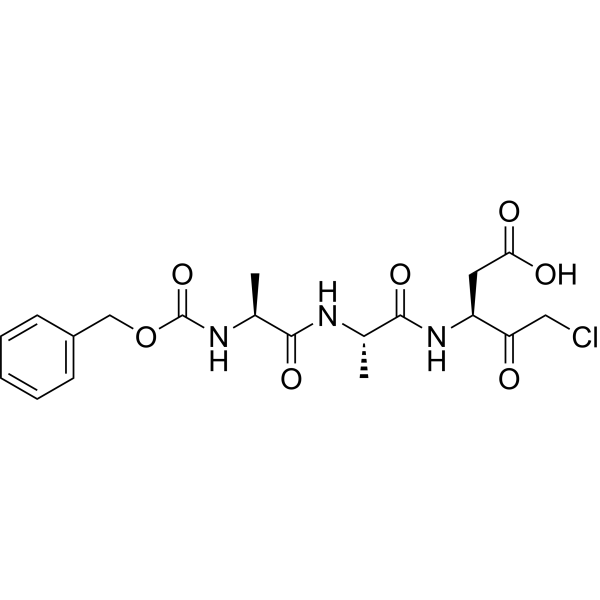 0 ImagesSynonyms: Z-AAD-CMKZ-Ala-Ala-Asp-CMK (Z-AAD-CMK) is a selective granzyme B inhibitor. By binding to the active site of granzyme B, Z-Ala-Ala-Asp-CMK blocks its proteolytic function. Z-Ala-Ala-Asp-CMK has anti-inflammatory activity and can be used in the research of inflammatory diseases and cancer.
-
Carboxymethyl chitosan
 0 ImagesCat. No.: HY-W250111CAS No.: 83512-85-0Carboxymethyl chitosan is a derivative of chitosan. Carboxymethyl chitosan inhibits Apoptosis and ROS. Carboxymethyl chitosan increases the expression of Bcl-2 and reduces the expression of Bax, cytochrome c and caspase-3. Carboxymethyl chitosan inhibits the migration of various cells. Carboxymethyl chitosan exerts antitumor effects on Lewis tumors and hepatocarcinoma.
-
Dihydrocapsaicin
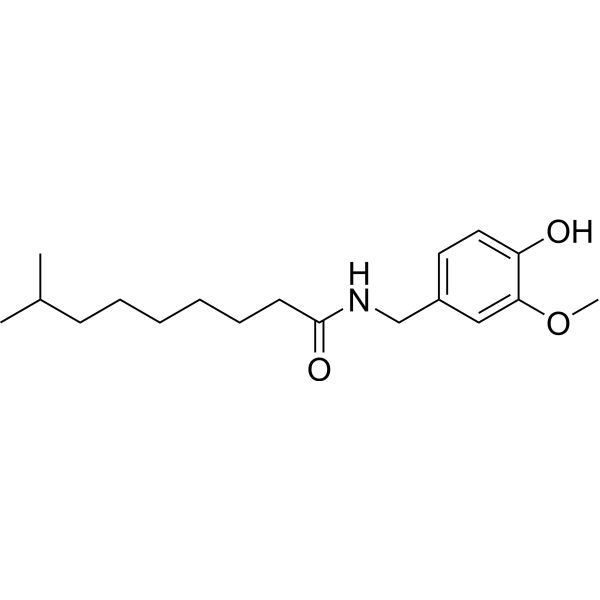 0 ImagesDihydrocapsaicin, a capsaicin, is a potent and selective TRPV1 (transient receptor potential vanilloid channel 1) agonist. Dihydrocapsaicin reduces AIF, Bax, and Caspase-3 expressions, and increased Bcl-2, Bcl-xL and p-Akt levels. Dihydrocapsaicin enhances the hypothermia-induced neuroprotection following ischemic stroke via PI3K/Akt regulation in rat.
-
Glycochenodeoxycholic acid sodium salt
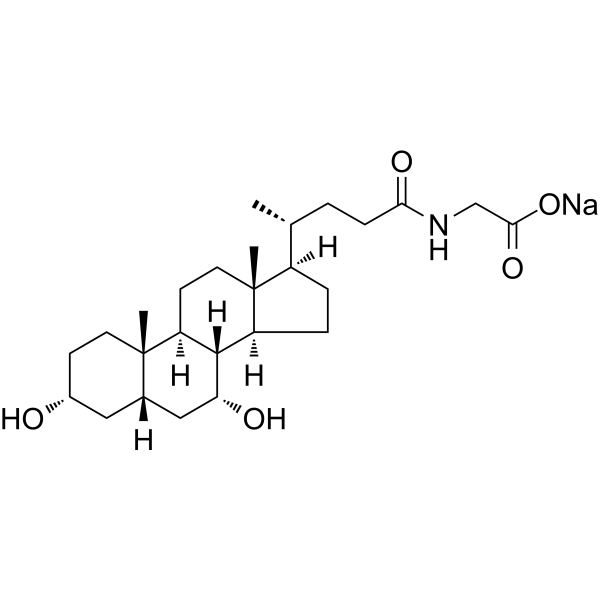 0 ImagesSynonyms: Chenodeoxycholylglycine sodium salt; Sodium glycochenodeoxycholateGlycochenodeoxycholic acid sodium salt (Sodium glycochenodeoxycholate) is a relatively toxic bile salt generated in the liver from chenodeoxycholic acid and glycine. Glycochenodeoxycholic acid sodium salt inhibits Autophagosome formation and impairs lysosomal function by inhibiting lysosomal proteolysis and increasing lysosomal pH in human normal liver cells, leading to the Apoptosis of human hepatocyte cells. Glycochenodeoxycholic acid sodium salt induces stemness and chemoresistance via activating STAT3 signaling pathway in hepatocellular carcinoma cells (HCC). Glycochenodeoxycholic acid sodium salt is promising for research in the field of cholestasis desease, hepatocellular carcinoma and primary sclerosing cholangitis (PSC).
-
Kp7-6
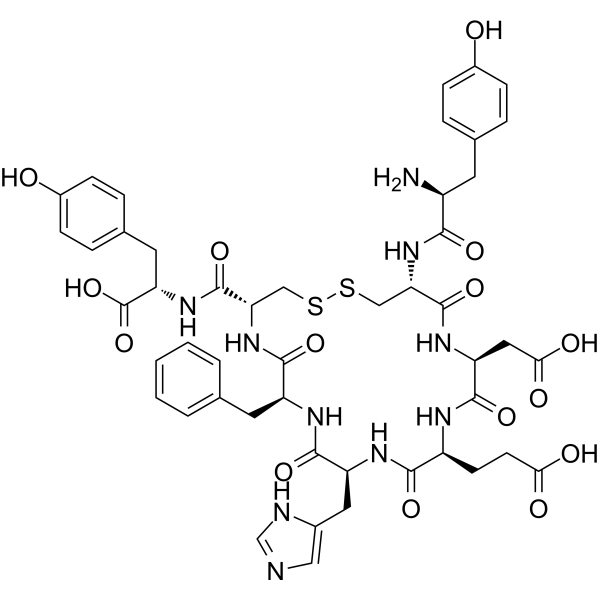 0 ImagesKp7-6 is a Fas mimetic peptide and also a Fas/FasL antagonist. Kp7-6 specifically binds to Fas and FasL, disrupts receptor complexes, and blocks downstream apoptosis signaling pathways. Kp7-6 inhibits the phosphorylation of ERK1-2, induces the phosphorylation of IκBα, and activates NF-κB. Kp7-6 inhibits the activation of caspase-8, caspase-3 and JNK, and suppresses human amylin-induced β-cell apoptosis. Kp7-6 inhibits FasL-induced lymphoid cytotoxicity and apoptosis. Kp7-6 reduces local tumor FasL expression, increases CD8+Fas+ T cell infiltration, and decreases tumor volume in pancreatic neuroendocrine tumor models. Kp7-6 prevents concanavalin A-induced liver injury in mice. Kp7-6 is applicable to research related to type 2 diabetes, concanavalin A-induced hepatitis and pancreatic neuroendocrine tumors.
-
Z-VDVAD-FMK
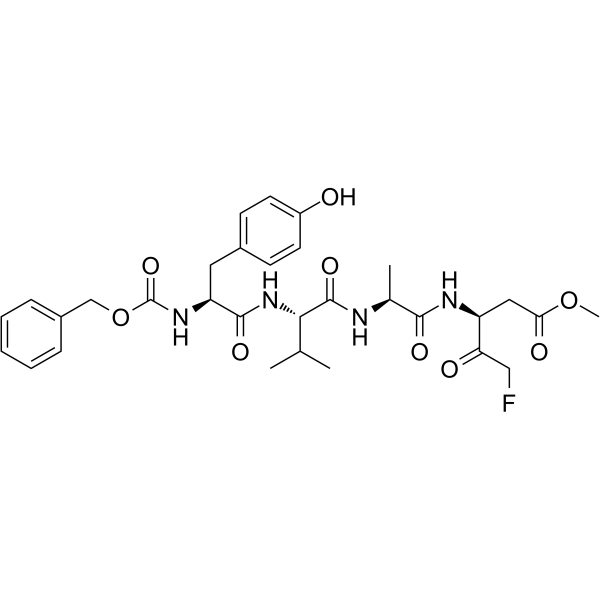
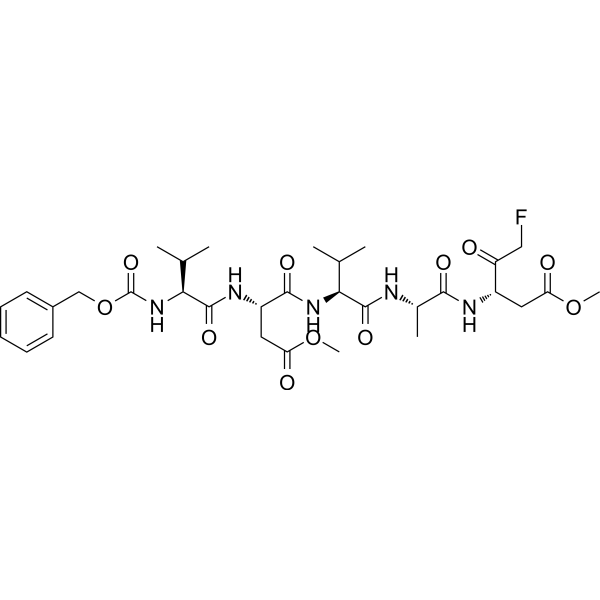 0 ImagesCat. No.: HY-P1008CAS No.: 210344-92-6Synonyms: Z-VD(OMe)VAD(OMe)-FMKZ-VDVAD-FMK is a special inhibitor of caspase-2. Z-VDVAD-FMK produces a reduction in Lovastatin-induced apoptosis.

-
Tralokinumab
 0 ImagesSynonyms: CAT354




