



Caspase 7
Caspase 7 is an executioner cysteine protease that cleaves after aspartate residues and participates in programmed cell death and inflammation[1][2]. Mechanistically, death receptor and DNA-damage pathways activate caspase 7 through caspase 8 and caspase 9, placing it within apoptosis signaling cascades[1]. In Fas-stimulated Jurkat cells, caspase 8 activates caspase 3 and caspase 7, supporting a branched protease cascade during apoptotic execution[3]. In inflammatory models, caspase 1 inflammasomes activate caspase 7, and caspase 7 can mediate caspase 1-induced apoptosis upstream of caspase 3[1][4]. Disease and model evidence links caspase 7 to endotoxemia resistance in deficient mice, Salmonella-infected macrophages, neuropathic rat spinal cord apoptosis, and CHO-cell viability studies[1][4][5][6]. Compared with caspase 3, caspase 7 shares substrate recognition and some endogenous substrates, but specific substrates, caspase 1-dependent activation, and endotoxemia phenotypes distinguish the isoforms[1]. For experimental applications, isatin sulfonamides inhibit caspases 3 and 7 and serve as PET or SPECT apoptosis-imaging recognition units after radiolabeling[7].
References:
- [1]. Lamkanfi M, et al. Caspase-7: a protease involved in apoptosis and inflammation. Int J Biochem Cell Biol. 2010 Jan;42(1):21-4. [Content Brief]
- [2]. Denault JB, et al. Caspases. Curr Protoc Protein Sci. 2002 Feb;Chapter 21:21.8.1-21.8.16. [Content Brief]
- [3]. Hirata H, et al. Caspases are activated in a branched protease cascade and control distinct downstream processes in Fas-induced apoptosis. J Exp Med. 1998 Feb 16;187(4):587-600. [Content Brief]
- [4]. Mahib MR, et al. Caspase-7 mediates caspase-1-induced apoptosis independently of Bid. Microbiol Immunol. 2020 Feb;64(2):143-152. [Content Brief]
- [5]. Siniscalco D, et al. Involvement of subtype 1 metabotropic glutamate receptors in apoptosis and caspase-7 over-expression in spinal cord of neuropathic rats. Pharmacol Res. 2008 Mar;57(3):223-33. [Content Brief]
- [6]. Safari F, et al. Caspase-7 deficiency in Chinese hamster ovary cells reduces cell proliferation and viability. Biol Res. 2020 Nov 13;53(1):52. [Content Brief]
- [7]. Limpachayaporn P, et al. Isatin sulfonamides: potent caspases-3 and -7 inhibitors, and promising PET and SPECT radiotracers for apoptosis imaging. Future Med Chem. 2015;7(9):1173-96. [Content Brief]
All Product Categories
-
Caspase 7 Related Products (108)
Related Products (108)

-
Recombinant Proteins (1)
-
Antibodies (1)
-
MS1129
 0 ImagesCat. No.: HY-181955Purity: 99.46%MS1129 is a DNMT degrader that induces proteasomal degradation of DNMT1, DNMT3A and DNMT3B proteins. MS1129 upregulates TRAIL, DR4 and DR5 proteins, downregulates the decoy receptor DcR2, and activates TRAIL-dependent apoptosis via the HIF-1/2 and Caspase-10 pathways. MS1129 is applicable to the research of VHL-deficient clear cell renal cell carcinoma.
-
N-alpha-Tosyl-Lys chloromethyl ketone hydrochloride
 0 ImagesN-alpha-Tosyl-Lys chloromethyl ketone hydrochloride (TLCK hydrochloride) is a Serine protease inhibitor with an IC50 of 12.0 μM against Caspase-3, 54.5 μM against Caspase-6, and 19.3 μM against Caspase-7. It inhibits thrombin-induced nuclear translocation of FOXO1. N-alpha-Tosyl-Lys chloromethyl ketone hydrochloride can be used in research related to leukemia and cardiovascular diseases.
-
CU-3
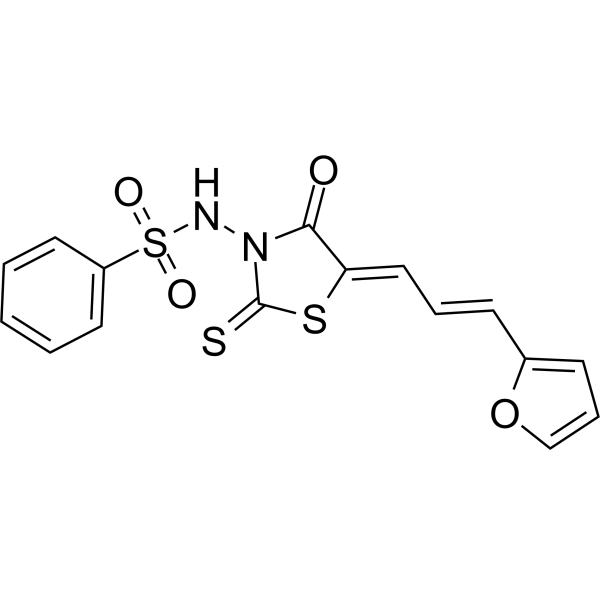 0 ImagesCat. No.: HY-121638CAS No.: 2983265-35-4CU-3 is a DGKα inhibitor with an IC50 of 0.6 μM. CU-3 competitively reduces DGKα’s affinity for ATP via binding to the enzyme’s catalytic region. CU-3 induces apoptosis in cancer cells. CU-3 promotes T-cell activation and enhances IL-2 production. CU-3 can be used for the research of hepatocellular carcinoma and cervical cancer.
-
RMC-4745
 0 ImagesCat. No.: HY-150108CAS No.: 2250059-80-2RMC-4745 is a selective dual-site inhibitor of mTORC1, with a selectivity of 35 times for mTORC1 and mTORC2. RMC-4745 inhibits the proliferation of MCF-7 cells and upregulates Caspase-3/7 activity to induce cell apoptosis. RMC-4745 does not cause the upregulation of HER3 due to the inhibition of mTORC2. RMC-4745 can be used for the study of breast cancer.
-
LD5097
 0 ImagesCat. No.: HY-179234LD5097 is a highly effective and selective PROTAC degrader targeting RIPK1. LD5097 can rapidly and efficiently downregulate RIPK1 and significantly enhance TNFα-mediated apoptosis in Jurkat cells. LD5097 significantly increases the levels of cleaved caspase-3/7 and PARP. LD5097 can be used for the study of acute T-lymphoblastic leukemia.
-
AC-45594
 0 ImagesSynonyms: 4-(Hexyloxy)phenolAC-45594 (4-(Hexyloxy)phenol) is a UPR activator. AC-45594 induces endoplasmic reticulum stress, activates the unfolded protein response (UPR), and drives the transition from adaptive stress signaling to terminal stress signaling, ultimately leading to cell Apoptosis. AC-45594 activates Caspase-3, induces PARP cleavage, and increases the protein level of DR5. AC-45594 selectively inhibits the growth of Ewing sarcoma cells.
-
DHODH-IN-32
 0 ImagesCat. No.: HY-178941DHODH-IN-32 (Compound A1) is a DHODH inhibitor. DHODH-IN-32 shows significant cytotoxicity against NCI-60 cell lines, especially being sensitive to breast cancer, prostate cancer and leukemia cell lines. DHODH-IN-32 can induce cell apoptosis by activating the Caspase pathway. DHODH-IN-32 causes G0/G1 phase cell cycle arrest and inhibits cellular metabolism by ROS. DHODH-IN-32 exhibits significant anti-tumor properties in mouse breast cancer models. DHODH-IN-32 can be used for the study of breast cancer.
-
MAPK-IN-3
 0 ImagesCat. No.: HY-169412CAS No.: 2848599-79-9MAPK-IN-3 (Compound 4a) is an anti-proliferative agent that shows particularly strong inhibitory effects on KYSE 30, HCT 116, and HGC 27, with IC50 values of 0.57 μM, 3.27 μM, and 2.28 μM, respectively. MAPK-IN-3 blocks the cell cycle via a p53-dependent mechanism and induces cell apoptosis through a p53-independent mechanism. MAPK-IN-3 downregulates the expression of cell cycle-related proteins like Cyclin D1 and cyclin B1, upregulates pro-apoptotic proteins such as cleaved PARP, cleaved caspase-7, and cleaved caspase-9, and reduces the expression of anti-apoptotic proteins like Bcl-2. Additionally, MAPK-IN-3 increases the intracellular level of ROS in KYSE 30 cells and upregulates the expression of members of the MAPK signaling pathway associated with ROS, such as p-ERK, p-p38 and p-JNK.
-
EGFR-IN-217
 0 ImagesCat. No.: HY-189142EGFR-IN-217 is an ATP-competitive EGFR kinase inhibitor, with an IC50 of 60.7 nM against EGFR. EGFR-IN-217 exhibits kinase inhibitory activity against PI3K-α and mTOR. EGFR-IN-217 upregulates pro-apoptotic factors including P53, Bax, PUMA, and caspase-7, -8 and -9, and downregulates the anti-apoptotic protein BCL-2, thereby inducing cell apoptosis and cycle arrest. EGFR-IN-217 shows tumor growth inhibitory effects in the solid Ehrlich ascites carcinoma xenograft mouse model. EGFR-IN-217 can be applied in the research of solid Ehrlich ascites carcinoma, hepatocellular carcinoma, and breast cancer.
-
Mcl-1-IN-16
 0 ImagesCat. No.: HY-178008Mcl-1-IN-16 is an effective macrocyclic myeloid cell leukemia 1 (Mcl-1) inhibitor with a Ki of below 0.08 nM. Mcl-1-IN-16 maintains high selectivity (>50,000-fold) for Mcl-1 over other antiapoptotic Bcl-2 family members Bcl-2 and Bcl-xL. Mcl-1-IN-16 leads to the activation of caspase-3/7, thereby initiating cell apoptosis. Mcl-1-IN-16 achieves tumor regression in a lung cancer-derived tumor xenograft mice model. Mcl-1-IN-16 can be used in the research of solid tumor such as nonsmall cell lung cancer (NSCLC).
-
Neuroprotective agent 15
 0 ImagesCat. No.: HY-178943CAS No.: 2476614-40-9Neuroprotective agent 15 (Compound 3e) is a neuroprotective agent. Neuroprotective agent 15 is a selective butyrylcholinesterase (BChE) inhibitor, with IC50 values of 2.6 and 114.3 μM for BChE and AChE respectively. Neuroprotective agent 15 has cannabinoid CB2 receptor (CB2 receptor) agonistic activity. Neuroprotective agent 15 can reduce cell death, LDH release and Caspase-3/7 activity, and inhibit apoptosis. Neuroprotective agent 15 can reduce the formation of superoxide free radicals, maintain cell morphology, and significantly lower oxidative stress levels. Neuroprotective agent 15 can be used in the research of neurodegenerative diseases, such as Alzheimer's disease and Parkinson's disease.
-
IDN-7314
 0 ImagesCat. No.: HY-111096CAS No.: 254750-11-3IDN-7314 is a pan-Caspase inhibitor with an IC50 of 0.2-7 nM against all tested Caspases. IDN-7314 abrogates Jo2-induced caspase-3/7 activity. IDN-7314 reduces the procoagulant activity of tissue factor in hepatocytes. IDN-7314 is applicable to research related to chemically induced hepatitis, fulminant liver failure and apoptotic liver injury.
-
Anticancer agent 324
 0 ImagesCat. No.: HY-P11828Anticancer agent 324 is a Survivin inhibitor. Anticancer agent 324 competitively binds to Survivin’s linker region and triggers proteasomal IAP degradation. Anticancer agent 324 blocks Borealin binding and chromosomal passenger complex formation, and inhibits Survivin-CRM1 nuclear-cytoplasmic transport. Anticancer agent 324 activates extrinsic (caspase-8) and intrinsic (caspase-9) apoptotic pathways, activates executioner caspases-3 and caspases-7, and arrests cell cycle. Anticancer agent 324 can be used for the research of breast cancer.
-
YVPGP
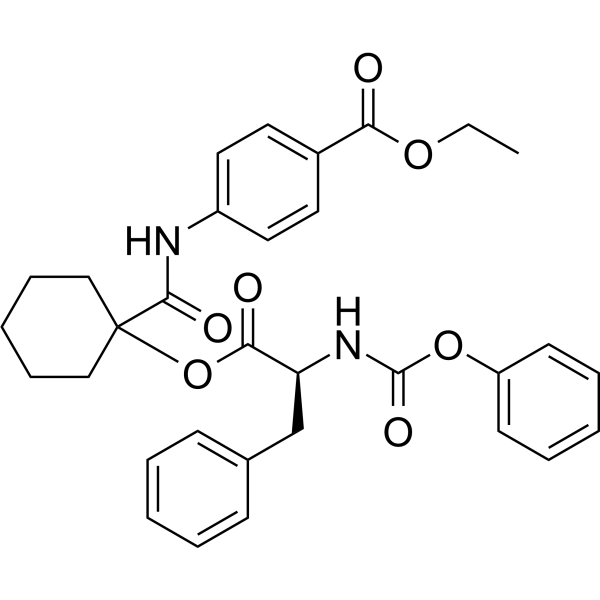
 0 ImagesCat. No.: HY-P10992CAS No.: 2095286-57-8YVPGP is an oligopeptide exacted from Anthopleura anjunae. YVPGP has a significant antitumor activity by mediating PI3K/AKT/mTOR signaling pathway. YVPGP arrests DU-145 cells in the S phase and induces apoptosis via mitochondrial and death receptor pathways (caspase3, 7, 8, 9). YVPGP effectively inhibits tumor growth in DU-145 xenografts mice model, promising for prostate cancer research.
-
BTK-IN-47
 0 ImagesCat. No.: HY-181996BTK-IN-47 (Compound 9e) is a covalent, selective BTK inhibitor with an IC50 of 5.15 nM against BTK. BTK-IN-47 inhibits the BTK signaling pathway, induces cell cycle arrest, and activates the canonical Caspase-dependent Apoptotic pathway (promoting the cleavage of Caspase-3, Caspase-7 and PARP), without inducing necroptosis, pyroptosis or ferroptosis. BTK-IN-47 exerts dose-dependent antiproliferative activity against hematologic tumor cell lines. BTK-IN-47 exhibits dose-dependent in vivo antitumor activity in a Ramos cell xenograft model in BALB/c nude mice. BTK-IN-47 can be used for the research of hematologic malignancies.
-
BCS12
 0 ImagesBCS12 is a CAIX inhibitor. BCS12 inhibits the viability of cancer cells under hypoxic conditions. BCS12 elevates ROS levels and suppresses the expression of HIF-1α and CA9. BCS12 downregulates Bcl-2, activates caspase-9, caspase-3, caspase-7 and Bax, and induces PARP cleavage and apoptosis. BCS12 reduces tumor burden, increases the number of apoptotic nuclei and restores tissue structure in rats bearing breast tumors. BCS12 can be used in research related to triple-negative breast cancer.
-
PKM2-IN-13
 0 ImagesCat. No.: HY-180523PKM2-IN-13 is a selective PKM2 inhibitor inhibiting PKM2 with an IC50 value of 55.13 μM. PKM2-IN-13 exhibits broad-spectrum anticancer activity with low toxicity to normal cells. PKM2-IN-13 induces apoptosis by elevated ROS levels and activation of caspases 3/7, and interacts with and inhibits the glycolytic activity of Pyruvate Kinase M2 in virto. PKM2-IN-13 demonstrates a favorable safety profile with no significant adverse effects in vivo. PKM2-IN-13 can be used for oral squamous cell carcinoma (OSCC), colon carcinoma, breast cancer and melanoma research.
-
XL413 hydrochloride
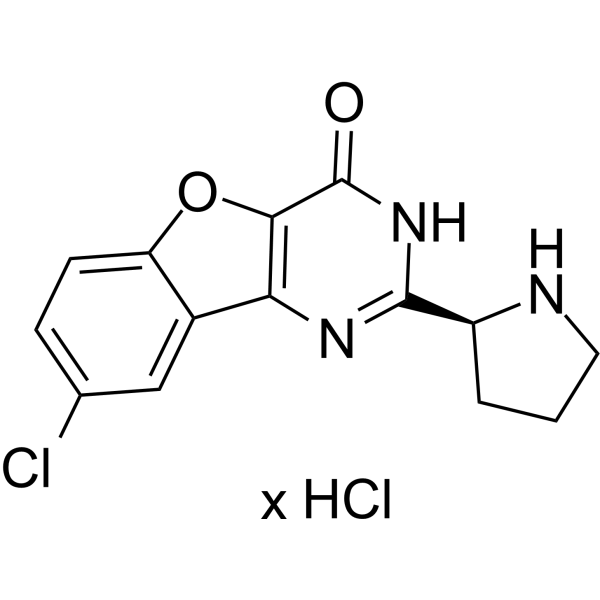 0 ImagesCat. No.: HY-15260CCAS No.: 1169562-71-3Synonyms: BMS-863233 hydrochlorideXL413 hydrochloride (BMS-863233 hydrochloride) is an orally active, ATP-competitive, selective CDC7 kinase inhibitor. XL413 hydrochloride reduces MCM2 phosphorylation levels, decreases DNA replication origin activation, and inhibits CD69 upregulation in stimulated lymphocytes. XL-413 possesses cell-dependent antiproliferative and pro-apoptotic activities. XL413 hydrochloride attenuates ATR inhibitor-induced excessive origin activation, altered replication fork speed, and antiproliferative effects in sensitive cancer cells. XL413 hydrochloride inhibits SARS-CoV-2 infection. XL413 hydrochloride can be used for research related to cancer and SARS-CoV-2 infection.
-
FS102
 0 ImagesCat. No.: HY-P991235Synonyms: BMS-986186FS102 is a selective Fc fragment with antigen binding (Fcab) that targets HER2 with a KD value of 0.8 nM. FS102 induces the degradation of HER2, activates Caspase 3/7 and disrupts the integrity of the cell membrane, triggering apoptosis of tumor cells. FS102 is promising for research of cancers such as breast cancer, gastric cancer, and colorectal cancer.




