



ERK Activator
-
Polygalasaponin XXXII
 0 ImagesCat. No.: HY-N20637CAS No.: 176182-04-0
Polygalasaponin XXXII is an orally active cognitive enhancer. Polygalasaponin XXXII promotes the phosphorylation of ERK, CREB, Synapsin I and TrkB. Polygalasaponin XXXII enhances basal synaptic transmission. Polygalasaponin XXXII attenuates Scopolamine (HY-N0296)-induced cognitive impairment and improves hippocampus-dependent learning and memory abilities. Polygalasaponin XXXII can be used in research related to cognitive dysfunction.
-
Brelgometon
 0 ImagesCat. No.: HY-187892CAS No.: 3060541-19-4Synonyms: ATH-1105
Brelgometon (ATH-1105) is an orally active HGF/MET positive modulator. Brelgometon activates downstream ERK and AKT cascades. Brelgometon reduces pro-inflammatory cytokine levels and extranuclear TDP-43 aggregation; it also upregulates EAAT2 expression and improves mitochondrial function. Brelgometon protects neurons from excitotoxicity, inflammation, oxidative stress and mitochondrial dysfunction; it also maintains neurite length, neuromuscular junction integrity and sciatic nerve function. Brelgometon alleviates motor function deterioration, maintains body weight and prolongs survival in ALS transgenic mice. Brelgometon is applicable to research related to amyotrophic lateral sclerosis.
-
DOR agonist 2
 0 ImagesCat. No.: HY-162850CAS No.: 1212540-02-7
DOR agonist 2 (Compound 3) is a Delta Opioid Receptor agonist. DOR agonist 2 can inhibit the expression of TNF-α, prevent NF-κB transport to the nucleus, and activate the G protein-mediated ERK1/2 pathway. DOR agonist 2 can be used in the study of neurodegenerative diseases.
-
Famotidine (GMP)
 0 ImagesCat. No.: HY-B0377GCAS No.: 76824-35-6Synonyms: MK-208 (GMP)
Famotidine GMP (MK-208 GMP) is Famotidine (HY-B0377) produced in GMP guideline. Famotidine is an orally active and highly selective histamine H2 receptor antagonist. It inhibits gastric acid secretion by blocking the Gs signaling pathway, and regulates intracellular cAMP and ERK pathways. Famotidine inhibits TLR3-mediated inflammatory pathways, and reduces the expression of various inflammatory mediators and interferon-related genes. Famotidine scavenges DPPH and nitric oxide free radicals, alleviates oxidative stress damage in gastric tissue, inhibits proMMP-9, improves vascular endothelial permeability, and restores the normal physiological functions of neutrophils and eosinophils. Famotidine crosses intestinal epithelial cells via facilitated diffusion and passive diffusion, blocks paracellular cation transport, and increases intestinal transepithelial electrical resistance. Famotidine reduces serum levels of transaminases and alkaline phosphatase, exerts analgesic effects and gastric protective effects simultaneously. Famotidine can be used in studies related to COVID-19, liver injury and acute gastric ulcer.
-
Calactin
 0 ImagesCat. No.: HY-167237CAS No.: 20304-47-6
Calactin is a glycoside that can be isolated from Asclepias curassavica L.. Calactin activates caspase-3, caspase-8, caspase-9, and phosphorylates ERK. Calactin induces DNA damage, apoptosis, PARP cleavage, G2/M phase cell cycle arrest, shifts Bax/Bcl-2 expression, and shows anti-proliferation effects in leukemia cells. Calactin can be used for the research of leukemia.
-
Zoniporide dihydrochloride
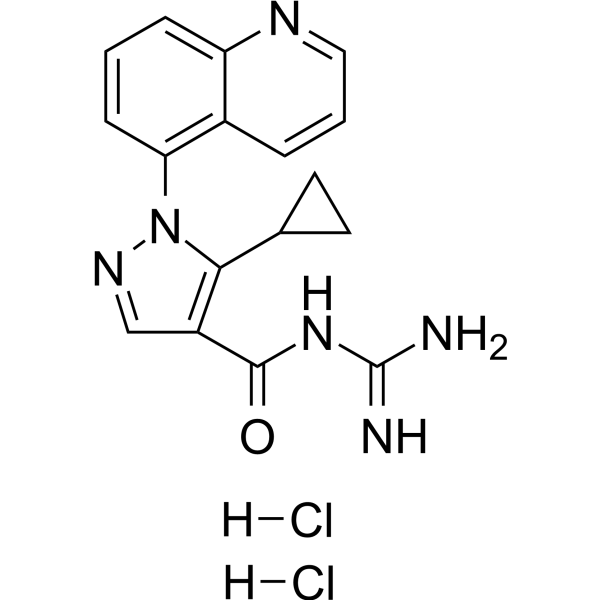 0 ImagesCat. No.: HY-105064CCAS No.: 241799-10-0Synonyms: CP-597396 dihydrochloride
Zoniporide dihydrochloride (CP-597396 dihydrochloride) is a selective Na+/H+ exchanger subtype 1 (NHE1) inhibitor with cardioprotective activity, with IC50 values of 67 nM and 73 nM against rat NHE1. Zoniporide dihydrochloride reduces intracellular Na+ and Ca2+ overload, preserves mitochondrial integrity, activates pro-survival ERK1/2 and STAT3 signaling pathways, reduces necrosis and apoptosis, and decreases neutrophil aggregation. Zoniporide dihydrochloride is applicable to research related to myocardial ischemia-reperfusion injury and heart graft ischemia-reperfusion injury.
-
MA191
 0 ImagesCat. No.: HY-175273
MA191 is a FLT3 PROTAC degrader. MA191 targets and degrades mutant FLT3-ITD protein by recruiting the VHL E3 ligase in a manner dependent on ubiquitination and BIM, thereby blocking aberrant downstream MAPK/STAT5 signaling pathways and inducing apoptosis. MA191 can be used in research related to acute myeloid leukemia.
-
Famotidine-13C3
 0 ImagesCat. No.: HY-W777002CAS No.: 1185241-48-8Synonyms: MK-208-13C3
Famotidine-13C3 (MK-208-13C3) is the 13C3-labeled Famotidine (HY-B0377). Famotidine (MK-208) is an orally active and highly selective histamine H2 receptor antagonist. It inhibits gastric acid secretion by blocking the Gs signaling pathway, and regulates intracellular cAMP and ERK pathways. Famotidine inhibits TLR3-mediated inflammatory pathways, and reduces the expression of various inflammatory mediators and interferon-related genes. Famotidine scavenges DPPH and nitric oxide free radicals, alleviates oxidative stress damage in gastric tissue, inhibits proMMP-9, improves vascular endothelial permeability, and restores the normal physiological functions of neutrophils and eosinophils. Famotidine crosses intestinal epithelial cells via facilitated diffusion and passive diffusion, blocks paracellular cation transport, and increases intestinal transepithelial electrical resistance. Famotidine reduces serum levels of transaminases and alkaline phosphatase, exerts analgesic effects and gastric protective effects simultaneously. Famotidine can be used in studies related to COVID-19, liver injury and acute gastric ulcer.
-
Cuspin-1
 0 ImagesCat. No.: HY-119460CAS No.: 337932-29-3
Cuspin-1 is a upregulator of Survival of Motor Neuron protein (SMN). Cuspin-1 upregulates SMN expression post-transcriptionally, and increases the phosphorylation of Erk. Cuspin-1 can be used for research of neurodegenerative disease, such as spinal muscular atrophy (SMA).
-
LQEQ-19 (mouse, rat)
 0 ImagesCat. No.: HY-P11130CAS No.: 322644-72-4
LQEQ-19 (mouse, rat) is a VGF derived peptide that exerts neuroprotective effects. LQEQ-19 (mouse, rat) activates the PI3K/Akt and MEK/ERK signaling pathways by promoting phosphorylation of Akt and ERK1/2. LQEQ-19 (mouse, rat) is commonly used in the study of neurological conditions.
-
Aminoguanidine-13C,15N2 hemisulfate
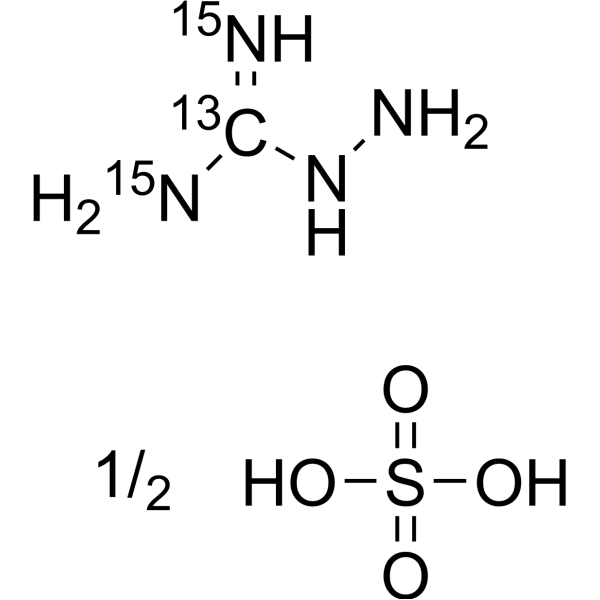 0 ImagesCat. No.: HY-W020772ASSynonyms: Pimagedine-13C,15N2 hemisulfate; GER-11-13C,15N2 hemisulfate; Aminoguanidinium-13C,15N2 hemisulfate
Aminoguanidine-13C,15N2 (Pimagedine-13C,15N2) hemisulfate is the 13C,15N2-labeled Aminoguanidine hemisulfate (HY-W020772). Aminoguanidine hemisulfate is an inhibitor of diamine oxidase (DAO) and nitric oxide synthase (NOS). Aminoguanidine hemisulfate can reduce the formation of advanced glycation end products (AGEs). Aminoguanidine hemisulfate has a dose-dependent inhibitory effect on Doxorubicin (HY-15142)-induced cell apoptosis. Aminoguanidine hemisulfate has antioxidant properties. Aminoguanidine hemisulfate can be used in the research of diabetic nephropathy.
-
Famotidine-d4
 0 ImagesCat. No.: HY-W707517CAS No.: 2707433-64-3Synonyms: MK-208-d4
Famotidine-d4 (MK-208-d4) is the deuterated-labeled Famotidine (HY-B0377). Famotidine (MK-208) is an orally active and highly selective histamine H2 receptor antagonist. It inhibits gastric acid secretion by blocking the Gs signaling pathway, and regulates intracellular cAMP and ERK pathways. Famotidine inhibits TLR3-mediated inflammatory pathways, and reduces the expression of various inflammatory mediators and interferon-related genes. Famotidine scavenges DPPH and nitric oxide free radicals, alleviates oxidative stress damage in gastric tissue, inhibits proMMP-9, improves vascular endothelial permeability, and restores the normal physiological functions of neutrophils and eosinophils. Famotidine crosses intestinal epithelial cells via facilitated diffusion and passive diffusion, blocks paracellular cation transport, and increases intestinal transepithelial electrical resistance. Famotidine reduces serum levels of transaminases and alkaline phosphatase, exerts analgesic effects and gastric protective effects simultaneously. Famotidine can be used in studies related to COVID-19, liver injury and acute gastric ulcer.
-
Cyclazosin
 0 ImagesCat. No.: HY-184086CAS No.: 139953-73-4
Cyclazosin is an α1D-adrenergic receptor antagonist and a partial agonist of CXCR4/ACKR3. The pKi values of Cyclazosin for cloned human α1D, α1B and α1A adrenergic receptors are 9.28, 9.23 and 8.18, respectively. Cyclazosin induces β-arrestin recruitment in CXCR4 and ACKR3 with EC50 values of 16 μM and 10 μM, respectively, stimulates ERK1/2 phosphorylation, and induces receptor internalization. Cyclazosin potently inhibits CXCL12-induced chemotaxis of primary human aortic vascular smooth muscle cells. Cyclazosin alters MDMA-induced thermoregulatory responses in mice, converting monophasic hyperthermia to a biphasic pattern without affecting resting core body temperature. Cyclazosin can be used for diseases related to tumor metastasis, MDMA-induced hyperthermia and vasoconstriction.
-
Tubulozole
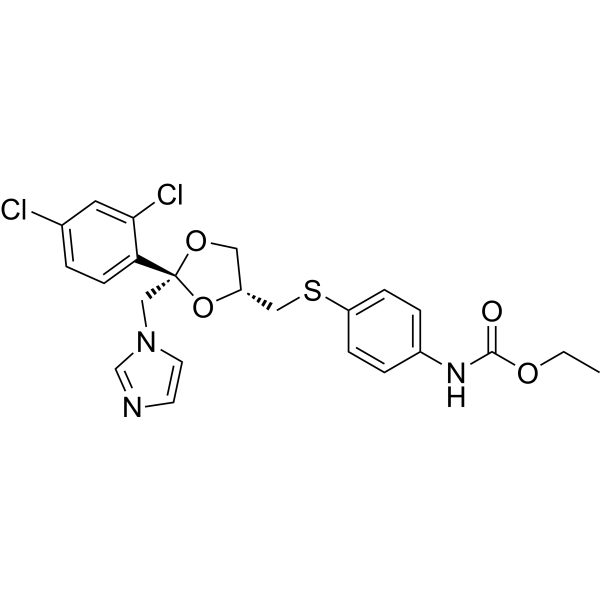 0 ImagesCat. No.: HY-119169CAS No.: 84697-22-3Synonyms: R 46846
Tubulozole (R 46846) is an orally active inhibitor of tubulin polymerization with an ID50 of 0.34 μM. Tubulozole induces activation of the Chk1 kinase and phosphorylation of ERK1/2, which is required for microtubule formation. Tubulozole arrests Mitosis at the metaphase stage. Tubulozole causes cells to accumulate in the radiosensitive mitotic phase of the cell cycle. Tubulozole exerts anticancer activity against colon cancer. Tubulozole produces a radiosensitizing effect in mouse tumor models and enhances the tumor growth delay effect when combined with γ-ray irradiation. Tubulozole is used in studies related to colon cancer, fascioliasis, MO4 fibrosarcoma, and Lewis lung carcinoma.
-
α,δ-NAG
 0 ImagesCat. No.: HY-178978CAS No.: 3051899-13-6
α,δ-NAG is an orally active glutaminase-resistant less-hydrolyzable L-Glutamine derivative. α,δ-NAG is a G protein-coupled receptor (GPCR) allosteric modulator. α,δ-NAG suppresses neutrophilic airway inflammation by activating the GPCR/ERK/MKP-1 pathway. α,δ-NAG can be used for the researches of inflammation and immunology, such as asthma.
-
Phoenixin-14 TFA
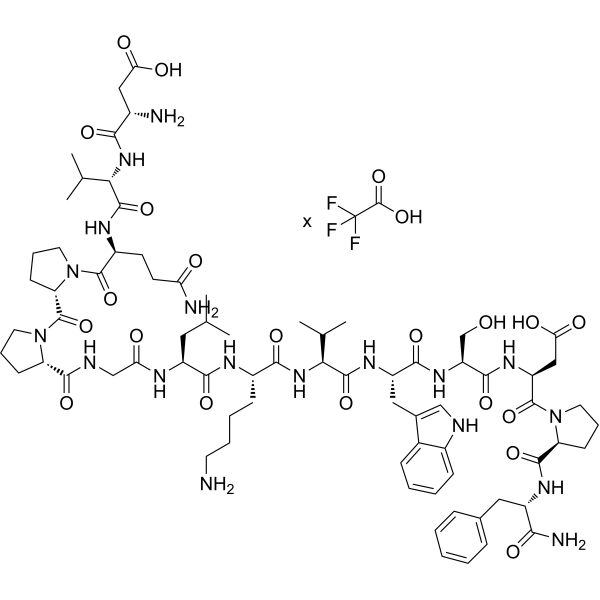 0 ImagesCat. No.: HY-P5762ASynonyms: PNX-14 TFA
Phoenixin-14 (PNX-14) TFA is an endogenous neuropeptide with multiple biological activities, and serves as the endogenous ligand of GPR173. Phoenixin-14 TFA reduces ROS production by inhibiting the HMGB1/TLR4/MyD88/NF-κB signaling axis, thereby exerting antioxidant and mitochondrial protective effects. Phoenixin-14 TFA inhibits FOXO3 phosphorylation by upregulating SIRT3 expression, suppresses apoptosis, and improves myocardial systolic/diastolic function. Phoenixin-14 TFA resists ferroptosis by activating the ATF4/SLC7A11/GPX4 axis; it activates ERK1/2 phosphorylation via GPR173. Phoenixin-14 TFA can be used in researches on neuroprotection, diabetes, cardiomyopathy, reproductive protection and so on.
-
INH2BP
 0 ImagesCat. No.: HY-136778CAS No.: 137881-27-7
INH2BP is a poly(ADP-ribose) polymerase (PARP) inhibitor with antioxidant and anti-apoptotic activities. INH2BP reduces the production of intracellular reactive oxygen species (ROS), modulates the expression of apoptosis-related proteins such as Bax, Bcl-2 and cleaved caspase-3 and enhances cell survival through the activation of the ERK1/2 and p38 MAPK signaling pathways. INH2BP is promising for research of cardiovascular diseases.
-
Salbutamol adipate
 0 ImagesCat. No.: HY-B1037BCAS No.: 149234-08-2Synonyms: Albuterol adipate; AH-3365 adipate
Salbutamol (Albuterol) adipate is an orally active short-acting β2-adrenergic receptor agonist. Salbutamol adipate promotes tumorigenesis in gastric cancer cells through the β2-AR/ERK/EMT pathway. Salbutamol adipate can relax bronchial smooth muscle and is used to study bronchospasm induced by asthma and chronic obstructive pulmonary disease.
-
TriDAP
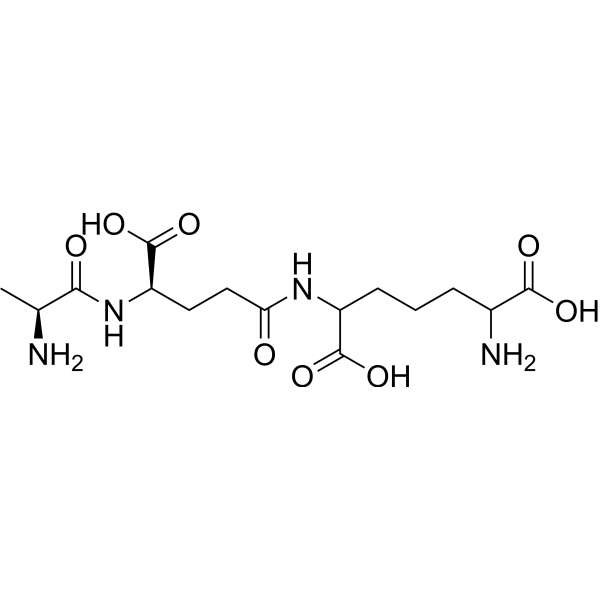 0 ImagesCat. No.: HY-P5522CAS No.: 877462-71-0Synonyms: L-Ala-γ-D-Glu-meso-diaminopimelic acid
TriDAP (L-Ala-γ-D-Glu-meso-diaminopimelic acid) is a NOD1 agonist with a Kd value of 34.5 μM. TriDAP enhances the binding of NOD1-RICK, promotes RICK phosphorylation, and activates the NF-κB, TAK1, MEK/ERK, p38 and interferon response pathways. TriDAP downregulates Runx2 via increasing ubiquitination and reduces trabecular bone parameters. TriDAP decreases IκBα levels and increases p65 levels. TriDAP induces the secretion of proinflammatory mediators IL-8 and prostaglandins, triggers tissue inflammation and innate immune activation, and inhibits SARS-CoV-2 replication in lung epithelial cells. TriDAP increases the RANKL/OPG ratio in mice, reduces bone mass and enhances osteoclast activity, and inhibits new bone formation by decreasing the mineralization deposition rate in mice. TriDAP can be used in research related to pulpitis, chronic ulcerative colitis, Crohn's disease and SARS-CoV-2 infection.
-
Acifran (Standard)
 0 ImagesCat. No.: HY-107579RCAS No.: 72420-38-3Synonyms: AY 25712 (Standard)
Acifran (Standard) (AY 25712 (Standard)) is the analytical standard of Acifran (HY-107579). This product is intended for research and analytical applications. Acifran (AY 25712) is an orally active, full GPR109A and GPR109B agonist and hypolipidemic agent. Acifran reduces Forskolin (HY-15371)-induced cAMP elevation, triggers ERK1/ERK2 phosphorylation, and inhibits lipolysis in adipose tissue through Gi-coupled GPCR activation. Acifran is used for research on atherosclerosis, hyperlipidemia, and type 2 diabetes.



