



ERK
ERK1/2 are related protein-serine/threonine kinases in the Ras-Raf-MEK-ERK cascade, which regulates cell adhesion, cell-cycle progression, migration, survival, differentiation, metabolism, proliferation, and transcription[1]. Mechanistically, MEK1/2 phosphorylates ERK1/2, enabling ERK-dependent signaling outputs that connect extracellular stimulation to nuclear and cytoplasmic responses[1]. In cell-cycle research, sustained ERK1/2 activation supports G1-to-S-phase progression and regulates positive and antiproliferative cell-cycle factors[2]. In disease-relevant models, deregulated ERK1/2 activity associates with developmental syndromes and several human diseases, making pathway output a practical readout for phosphoproteomics and signaling-network studies[3]. Compared with related isoforms, ERK1 and ERK2 show strong functional redundancy during development, and mouse genetic data indicate that total ERK1/2 activity, rather than strict isoform identity, determines developmental output[4]. Evolutionary analysis also supports interchangeable ERK1/2 action in tetrapods and highlights total ERK quantity as a relevant experimental variable[5]. For experimental applications, selective ERK1/2 inhibitors such as SCH772984 exploit a unique ERK1/2 binding site and provide tools for probing kinase activity and pathway dependence[6]. Clinically oriented studies use ulixertinib as an ERK1/2 inhibitor with preclinical activity in BRAF- and RAS-mutant cancer models[7].
References:
- [1]. Roskoski R Jr. ERK1/2 MAP kinases: structure, et al. ERK1/2 MAP kinases: structure, function, and regulation. Pharmacol Res. 2012 Aug;66(2):105-43. [Content Brief]
- [2]. Meloche S, et al. The ERK1/2 mitogen-activated protein kinase pathway as a master regulator of the G1- to S-phase transition. Oncogene. 2007 May 14;26(22):3227-39. [Content Brief]
- [3]. Courcelles M, et al. Phosphoproteome dynamics reveal novel ERK1/2 MAP kinase substrates with broad spectrum of functions. Mol Syst Biol. 2013 May 28;9:669. [Content Brief]
- [4]. Frémin C, et al. Functional Redundancy of ERK1 and ERK2 MAP Kinases during Development. Cell Rep. 2015 Aug 11;12(6):913-21. [Content Brief]
- [5]. Buscà R, et al. ERK1 and ERK2 present functional redundancy in tetrapods despite higher evolution rate of ERK1. BMC Evol Biol. 2015 Sep 3;15:179. [Content Brief]
- [6]. Chaikuad A, et al. A unique inhibitor binding site in ERK1/2 is associated with slow binding kinetics. Nat Chem Biol. 2014 Oct;10(10):853-60. [Content Brief]
- [7]. Sullivan RJ, et al. First-in-Class ERK1/2 Inhibitor Ulixertinib (BVD-523) in Patients with MAPK Mutant Advanced Solid Tumors: Results of a Phase I Dose-Escalation and Expansion Study. Cancer Discov. 2018 Feb;8(2):184-195. [Content Brief]
-
ERK Related Products (615)
Related Products (615)

-
Rapastinel acetate
 0 ImagesCat. No.: HY-16728ACAS No.: 491872-39-0Synonyms: GLYX-13 acetateRapastinel (GLYX-13) acetate is a potent NMDAR modulator capable of crossing the blood-brain barrier, and it exhibits extremely high affinity for human NMDAR (EC50=0.0017-9.9 nM). Rapastinel acetate enhances ERK signaling and activates the mTOR pathway, thereby upregulating the expression of BDNF and VGF, and inducing significant neuroplastic changes such as enhanced LTP and increased mature dendritic spine density in the hippocampus. Rapastinel acetate moderately elevates the efflux of dopamine, norepinephrine and 5-HT in the prefrontal cortex, and uniquely avoids side effects of traditional antidepressants such as dissociation, addiction or sedation. Rapastinel acetate is applicable to the research of major depressive disorder and hepatocellular carcinoma.
-
(S,R,S)-BBO-11818
 0 ImagesCat. No.: HY-181420CAS No.: 3029184-80-0(S,R,S)-BBO-11818 is an orally active, highly selective (relative to NRAS and HRAS), non-covalent pan-KRAS inhibitor (IC50=28-120 nM). (S,R,S)-BBO-11818 specifically binds to the Switch-II/Helix 3 pocket, disrupts the KRAS:RAF1 interaction by inducing conformational changes, and blocks the MAPK signaling pathway. (S,R,S)-BBO-11818 exhibits significant anti-tumor activity, which not only inhibits cell proliferation and induces apoptosis, but also drives tumor regression in xenograft models. (S,R,S)-BBO-11818 produces synergistic effects when combined with Cetuximab (HY-P9905), anti-PD-1 antibody or PI3Kα inhibitor. (S,R,S)-BBO-11818 is used in the research of KRAS mutation-related malignancies such as pancreatic cancer, non-small cell lung cancer and colorectal cancer.
-
SDUY127
 0 ImagesCat. No.: HY-183936SDUY127 is a bivalent SHP2 inhibitor with an IC50 value of 16 nM. SDUY127 binds simultaneously to the tunnel allosteric site and latch allosteric site of SHP2 at a 1:1 stoichiometric ratio, stabilizes the protein in an inactive conformation, and induces sustained inhibition of the MAPK signaling pathway. SDUY127 can be used in research related to leukemia and hepatocellular carcinoma.
-
MO-2097
 0 ImagesCat. No.: HY-N13009CAS No.: 2744300-63-6MO-2097 is a RAF-1/HIF-1α inhibitor. MO-2097 induces RAF-1 destabilization, leading to a reduction in EMT-associated transcription factors and mesenchymal markers. MO-2097 inhibits HIF-1a protein expression mediated by hnRNPA2B1 under hypoxic and mimetic hypoxia. MO-2097 induces mitochondrial ROS, which leads to apoptosis in cells. MO-2097 effectively suppresses colorectal cancer metastasis by inhibiting the RAF/MEK/ERK signaling pathway. MO-2097 attenuates tumor growth in a xenograft HCT116 cell mouse model. MO-2097 can be used for the study of colorectal cancer.
-
BRL-44408
 0 ImagesCat. No.: HY-12716CAS No.: 118343-19-4BRL-44408 is a selective, blood-brain barrier-permeable α2A-adrenergic receptor antagonist with a Ki value of 8.56 nM against human targets. BRL-44408 exhibits activities such as antidepressant, analgesic effects and attenuation of sepsis-induced acute lung injury by regulating the release of neurotransmitters such as norepinephrine and dopamine, or inhibiting signaling pathways including ERK1/2, p38MAPK and p65. BRL-44408 can be used in studies related to acute respiratory distress syndrome, depression and visceral pain.
-
Asperulosidic Acid (Standard)
 0 ImagesCat. No.: HY-N6246RCAS No.: 25368-11-0Asperulosidic Acid (Standard) is the analytical standard of Asperulosidic Acid. This product is intended for research and analytical applications. Asperulosidic Acid (ASPA), a bioactive iridoid glycoside, is extracted from the herbs of Hedyotis diffusa Willd. Asperulosidic Acid (ASPA) has anti-tumor, anti-oxidant, and anti-inflammatory activities. ASPA is related to the inhibition of inflammatory cytokines (TNF-α, IL-6) and mediators via suppression of the NF-κB and mitogen-activated protein kinase (MAPK) signaling pathways.
-
Citronellol-d3
 0 ImagesCat. No.: HY-W010201S1Synonyms: (±)-Citronelloll-d3; (±)-β-Citronelloll-d3Citronellol-d3 ( (±)-Citronelloll-d3) is the deuterium labeled Citronellol (HY-W010201). Citronellol ((±)-Citronellol) is an orally active inducer of apoptosis. Citronellol can prevent oxidative stress, mitochondrial dysfunction, and apoptosis in the SH-SY5Y cell Parkinson's disease model induced by 6-OHDA by regulating the ROS-NO, MAPK/ERK, and PI3K/Akt signaling pathways. Citronellol can induce necroptosis in human lung cancer cells through the TNF-α pathway and accumulation of ROS. Citronellol can reduce the levels of LC-3 and p62 to regulate the autophagy pathway, inhibit oxidative stress and neuroinflammation, and thus have neuroprotective effects on Parkinson's rats. Citronellol exhibits anti-fungal activity against Trichophyton rubrum by inhibiting ergosterol synthesis.
-
ITZ-1
 0 ImagesCat. No.: HY-120505CAS No.: 1180532-17-5ITZ-1 is an orally active and selective extracellular signal-regulated kinase (ERK)-mitogen-activated protein kinase (MAPK) pathway inhibitor with an IC50 of 0.51 μM for inhibiting interleukin-1β (IL-1β)-induced matrix metalloproteinase-13 (MMP-13) production. ITZ-1 reduces MMP-13 expression and suppresses nitric oxide (NO)-induced chondrocyte apoptosi. ITZ-1 is promising for research of osteoarticular diseases.
-
Pyridoxal 5'-phosphate monohydrate (Standard)
 0 ImagesCat. No.: HY-W011727ARCAS No.: 41468-25-1Synonyms: Pyridoxal phosphate monohydrate (Standard)Pyridoxal 5'-phosphate (monohydrate) (Standard) is the analytical standard of Pyridoxal 5'-phosphate (monohydrate). This product is intended for research and analytical applications. Pyridoxal 5'-phosphate monohydrate, the active form of vitamin B6, is an essential cofactor for multiple enzymes, including aromatic l-amino acid decarboxylase that catalyzes the final stage in the production of the neurotransmitters dopamine and serotonin. Pyridoxal 5'-phosphate monohydrate is the most important coenzyme variant in the process of vitamin B6 intracellular phosphorylation and is interconvertible with other variants, including pyridoxine 5′‐phosphate (PNP) and pyridoxamine 5′-phosphate (PMP).
-
AKT-IN-11
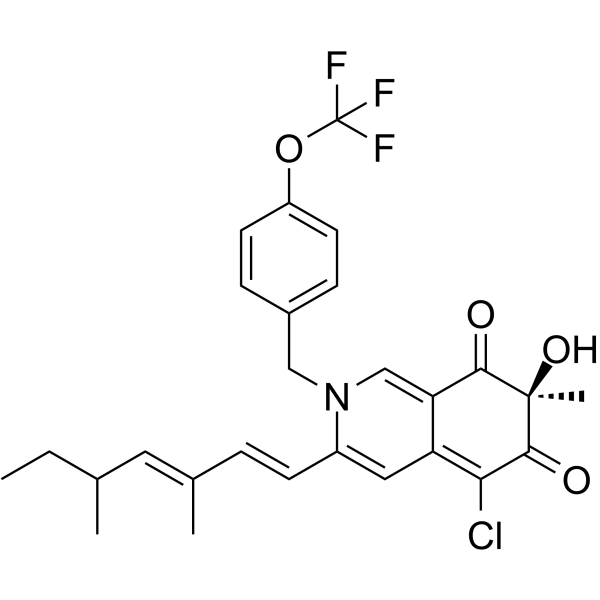 0 ImagesCat. No.: HY-144253AKT-IN-11 is one of the most effective antibacterial agents against human hepatoma BEL-7402 cell line with an IC50 value of 1.15μM.
-
Daporinad hydrochloride
 0 ImagesCat. No.: HY-50876ACAS No.: 2727965-45-7Synonyms: FK866 hydrochloride; APO866 hydrochlorideDaporinad (FK866) hydrochloride is a non-competitive inhibitor of nicotinamide phosphoribosyltransferase (Nampt), with a Ki value of 0.3 nM. Daporinad hydrochloride depletes NAD+ and ATP levels, inhibits mTORC1 and MAPK/ERK pathways, and activates TFEB to induce autophagy. Daporinad hydrochloride causes the depletion of the endoplasmic reticulum Ca²⁺ pool, ultimately weakening the mitogen-induced Ca²⁺ signal and the activation and function of T cells. Daporinad hydrochloride induces cell cycle arrest and apoptosis, and inhibits cell proliferation. Daporinad hydrochloride can be used for the study of myeloma, liver cancer, and immunosuppression.
-
Enniatin B1-13C34
 0 ImagesCat. No.: HY-N3807SEnniatin B1-13C34 is the 13C-labeled Enniatin B1 (HY-N3807). Enniatin B1 is a Fusarium mycotoxin. Enniatin B1 inhibits acyl-CoA: cholesterol acyltransferase (ACAT) activity with an IC50 of 73 μM in an enzyme assay using rat liver microsomes. Enniatin B1 crosss the blood-brain barrier. Enniatin B1 decreases the activation of ERK (p44/p42). Enniatin B1 inhibits moderately TNF-α-induced NF-κB activation.

-
SHP2-IN-47
 0 ImagesCat. No.: HY-181800SHP2-IN-47 is a selective and potent SHP2 inhibitor with an IC50 of 0.80 μM. SHP2-IN-47 exhibits potent inhibitory activity against SHP2E76K (IC50 = 0.37 μM). SHP2-IN-47 functionally inhibits protein tyrosine phosphatase domains and downregulates SHP2-mediated phosphorylation of AKT and ERK. SHP2-IN-47 induces apoptosis and suppresses proliferation of cancer cells. SHP2-IN-47 can be used for the research of cancer, such as acute myelocytic leukemia.
-
UFP-512
 0 ImagesCat. No.: HY-130176CAS No.: 480446-44-4UFP-512 is a selective and potent σ-opioid receptor (DOP receptor) peptidic agonist with antidepressant- and anxiolytic-like effects. UFP-512 exhibits as a potent agonist on adenylyl cyclase inhibition and Erk1/2 activation. UFP-512 induces phosphorylation of DOP receptors on Ser363 with a low desensitization of the cAMP pathway. UFP-512 is promising for research of mood disorders.
-
Creosol-d4
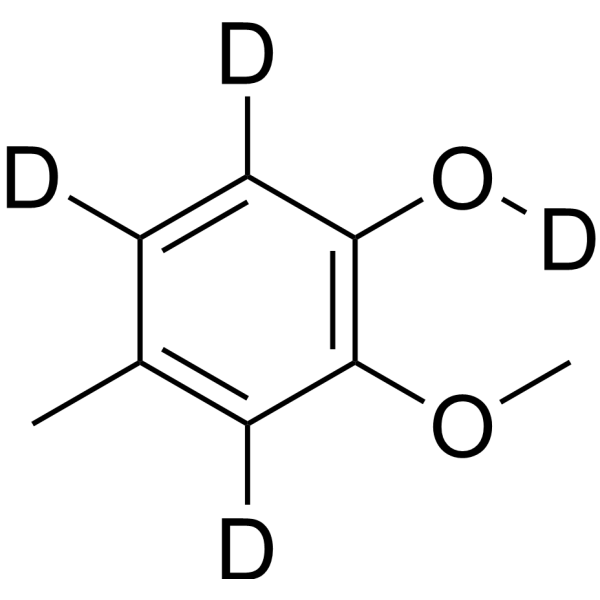 0 ImagesCat. No.: HY-W040971SCAS No.: 20189-08-6Synonyms: 2-Methoxy-4-methylphenol-d4Creosol-d4 (2-Methoxy-4-methylphenol-d4) is the deuterium labeled Creosol (HY-W040971). Creosol (2-Methoxy-4-methylphenol) is an endogenous metabolite that acts as an important chemical intermediate and potential biofuel mainly derived from lignocellulosic biomass. Creosol is blood brain barrier penetrable.
-
Acesulfame potassium (Standard)
 0 ImagesAcesulfame potassium (Standard) is the analytical standard of Acesulfame potassium (HY-D0195). This product is intended for research and analytical applications. Acesulfame potassium is a synthetic sweetener. Long-term use of Acesulfame potassium can affect cognitive function, possibly by altering the neurometabolic functions in mice. Acesulfame potassium can suppress autophagic degradation of PD-L1 in RIL-175 and SK-Hep1 cells through the ERK1/2-mTORC1-ULK1 pathway, which may be related to immune evasion in cancer cells. Acesulfame potassium can be used in research on neurological diseases, metabolic disorders, cancer, and immune evasion.
-
ERKtide
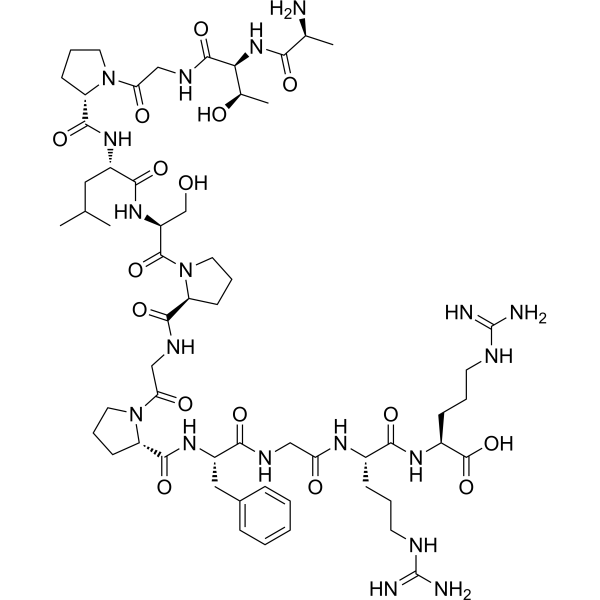 0 ImagesCat. No.: HY-P5440CAS No.: 287721-17-9
-
ERK1/2 inhibitor 12
 0 ImagesCat. No.: HY-W838814CAS No.: 350509-85-2ERK1/2 inhibitor 12 (compound 76.3) is a ERK1/2 inhibitor which inhibits ERK-mediated phosphorylation of caspase-9 and the p90Rsk-1 kinase. ERK1/2 inhibitor 12 exhibits anti-cancer activity and can be utilized in cancer research.
-
Dodoviscin I
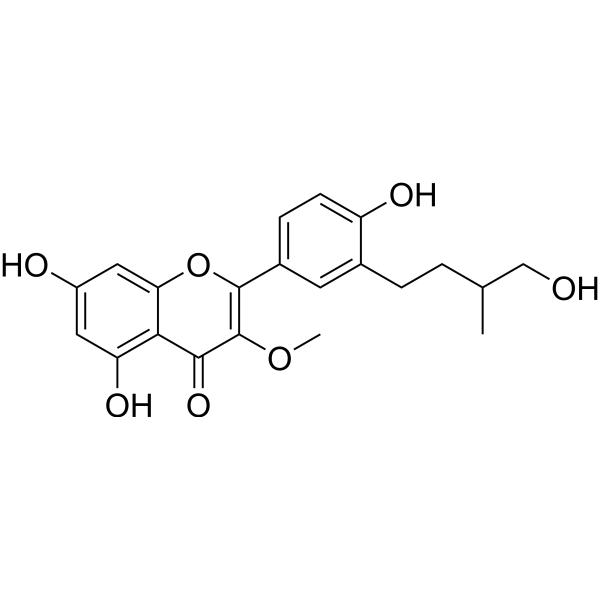 0 ImagesCat. No.: HY-N3775CAS No.: 1372527-40-6Dodoviscin I (Dodoviscin A) is an adipogenic agent that increases triglyceride content in 3T3L1 mouse fibroblasts. Dodoviscin I inhibits ERK2 with an IC50 of 10.79 μM.



