



Epigenetic Reader Domain
Epigenetic regulators of gene expression and chromatin state include so-called writers, erasers, and readers of chromatin modifications.Well-characterized examples of reader domains include bromodomains typically binding acetyllysine and chromatin organization modifier (chromo), malignant brain tumor (MBT), plant homeodomain (PHD), and Tudor domains generally associating with methyllysine. Research on epigenetic readers has been tremendously influenced by the discovery of selective inhibitors targeting the bromodomain and extraterminal motif (BET) family of acetyl-lysine readers. The human genome encodes 46 proteins containing 61 bromodomains clustered into eight families. Distinct experimental approaches are used to identify the first BET inhibitors, GSK 525762A and (+)-JQ-1.
The Polycomb group (PcG) protein, enhancer of zeste homologue 2 (EZH2), has an essential role in promoting histone H3 lysine 27 trimethylation (H3K27me3) and epigenetic gene silencing. This function of EZH2 is important for cell proliferation and inhibition of cell differentiation, and is implicated in cancer progression. Cyclin-dependent kinases regulate epigenetic gene silencing through phosphorylation of EZH2. In many types of cancers including lymphomas and leukemia, EZH2 is postulated to exert its oncogenic effects via aberrant histone and DNA methylation, causing silencing of tumor suppressor genes.
p300/CBP is not only a transcriptional adaptor but also a histone acetyltransferase.
Epigenetic Reader Domain Isoform Specific Products
-
Epigenetic Reader Domain
(445)
View all products
-
Brd
(3)
View all products
-
BRPF1
(9)
View all products
-
BRPF2
(5)
View all products
-
BRPF3
(2)
View all products
-
BRD2
(66)
View all products
-
BRD3
(62)
View all products
-
BRD4
(299)
View all products
-
BRDT
(26)
View all products
-
CECR2
(4)
View all products
-
BD1
(9)
View all products
-
BD2
(9)
View all products
-
BRD7
(9)
View all products
-
BRD9
(55)
View all products
-
BET
(22)
View all products
-
BAZ
(1)
View all products
All Product Categories
-
Epigenetic Reader Domain Inhibitors
(589)
View all products
-
Epigenetic Reader Domain Agonists
(3)
View all products
-
Epigenetic Reader Domain Antagonists
(2)
View all products
-
Epigenetic Reader Domain Activators
(11)
View all products
-
Epigenetic Reader Domain Modulators
(3)
View all products
-
Epigenetic Reader Domain Chemicals
(2)
View all products
-
Epigenetic Reader Domain Inducer
(1)
View all products
-
Epigenetic Reader Domain Degraders
(170)
View all products
-
Epigenetic Reader Domain Controls
(13)
View all products
-
Epigenetic Reader Domain Substrate
(1)
View all products
-
Epigenetic Reader Domain Ligands
(28)
View all products
-
Epigenetic Reader Domain Related Products (900)
Related Products (900)

-
Antibodies (109)
-
Epigenetic Reader Domain Isoform Comparison
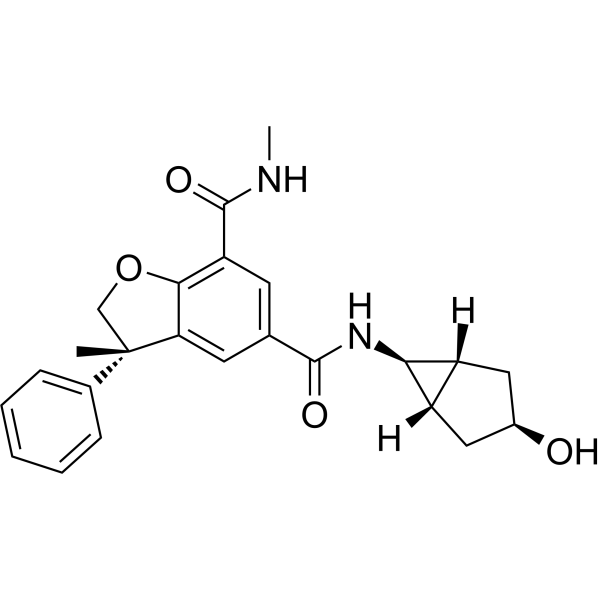
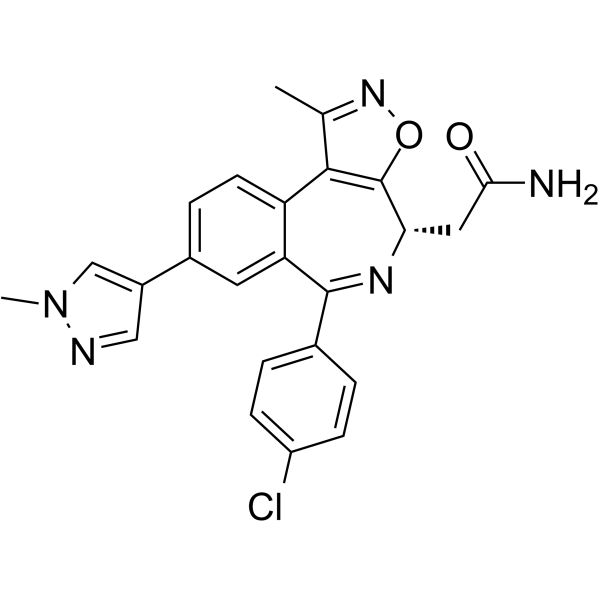
-
CD161
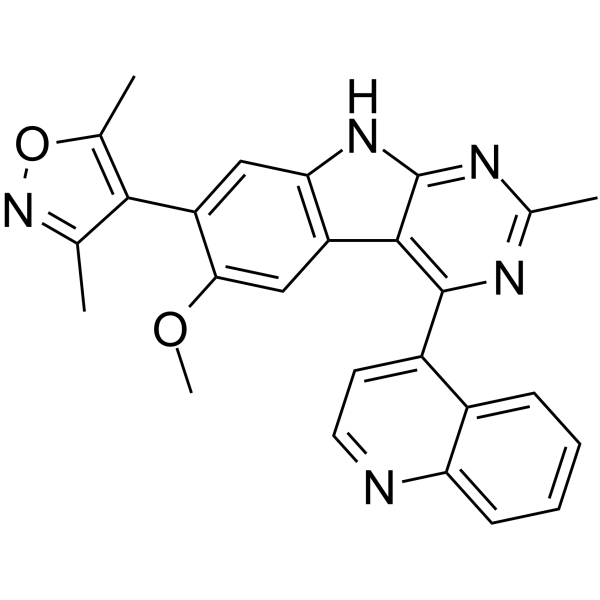 0 ImagesCD161 is a potent, selective and orally bioavailable bromodomain and extra-terminal (BET) bromodomain inhibitor with an IC50s of 28.2 nM and 7.2 nM for BRD4 BD1 and BRD4 BD2, respectively. CD161 has good anticancer activity.
-
DW71177
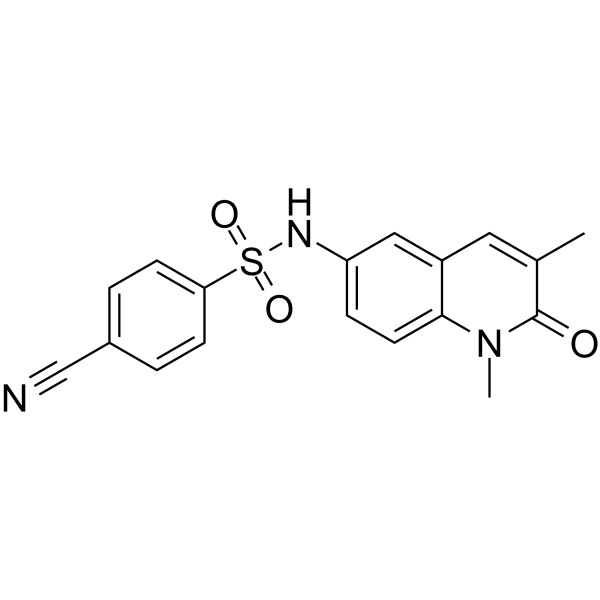
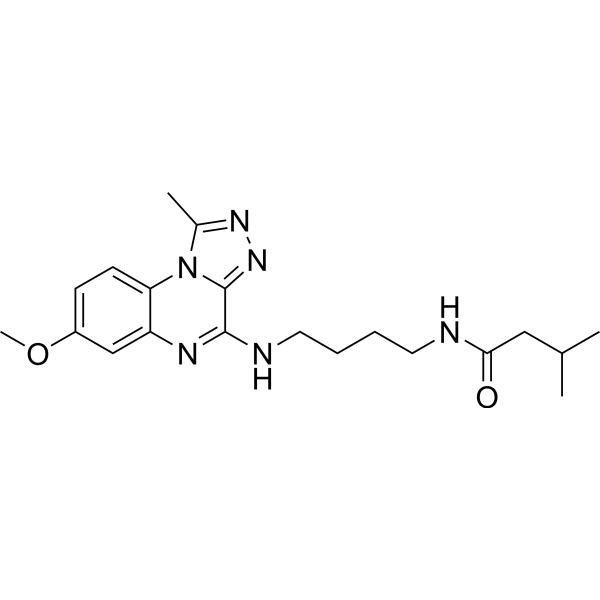 0 ImagesCat. No.: HY-162088CAS No.: 2241311-72-6DW71177 is a novel [1,2,4]triazolo[4,3-a] quinoxaline-based potent and BD1-Selective BET inhibitor, and can be used for study of acute myeloid leukemia.
-
Desmethyl-QCA276
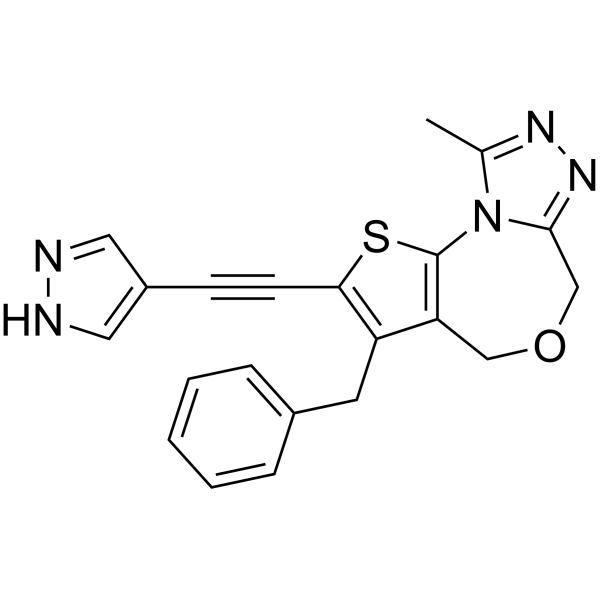 0 ImagesSynonyms: PROTAC BRD4-binding moiety 4Desmethyl-QCA276 (PROTAC BRD4-binding moiety 4), the QCA276-based moiety, binds to cereblon ligand via a linker to form PROTAC to degrade BET. QCA276 is a BET inhibitor with an IC50 of 10 nM, and with a Ki of 2.3 nM. Desmethyl-QCA276 is a click chemistry reagent, it contains an Alkyne group and can undergo copper-catalyzed azide-alkyne cycloaddition (CuAAc) with molecules containing Azide groups.
-
EML 425
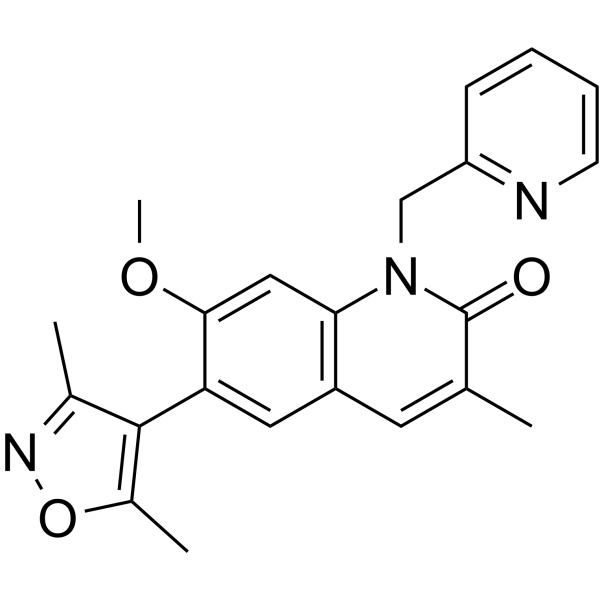
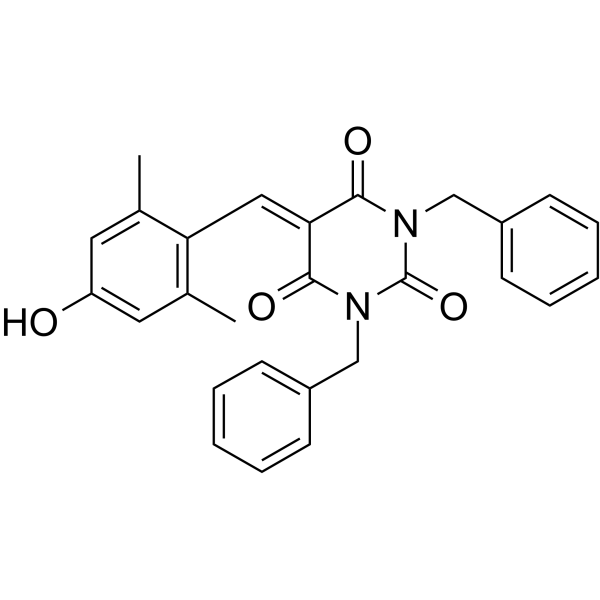 0 ImagesEML425 is a potent and selective CREB binding protein (CBP)/p300 inhibitor with IC50s of 2.9 and 1.1 μM, respectively.
-
Snail IN-1
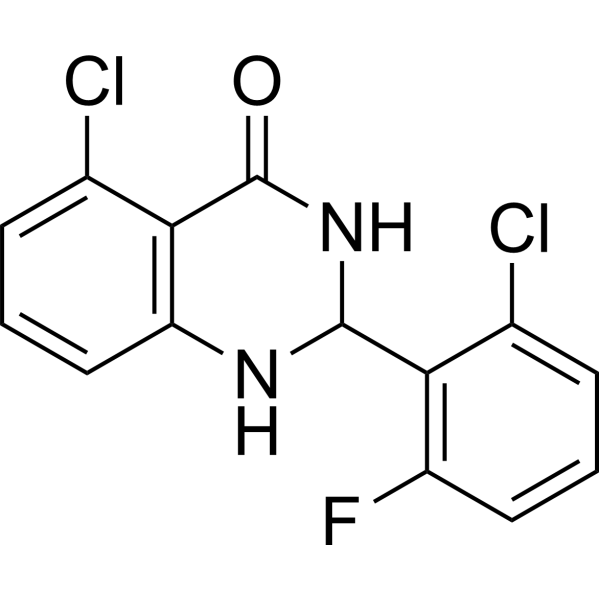
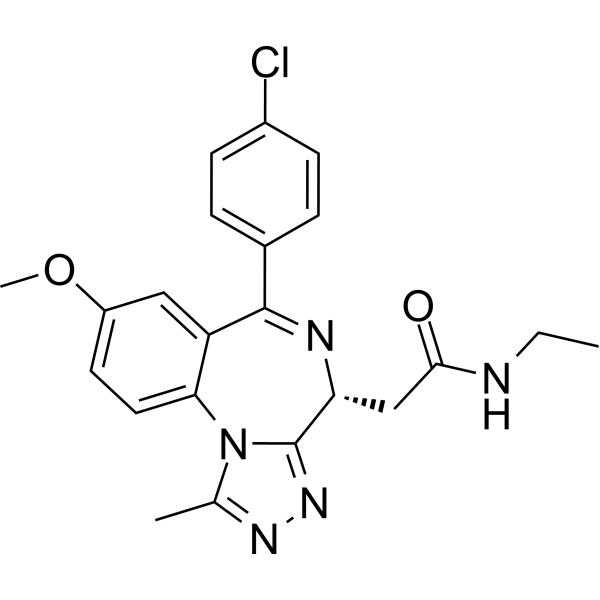
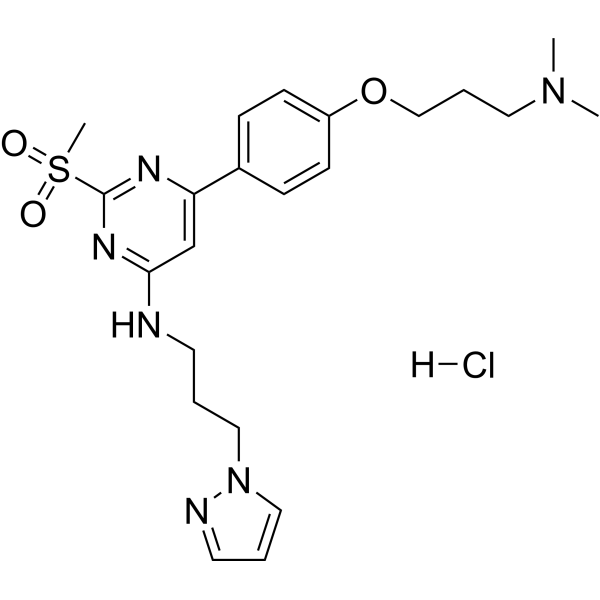
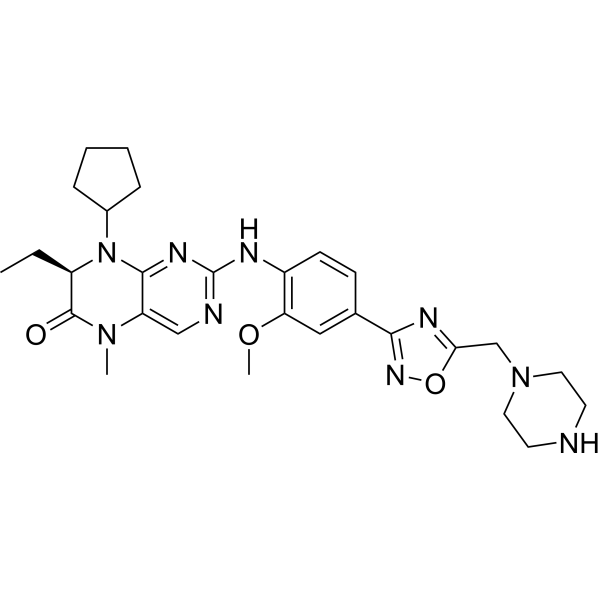
 0 ImagesSnail IN-1 is an orally active Snail inhibitor with a Ka of 0.36 μM.Snail IN-1 disrupts Snail-CBP interaction, accelerates Snail protein degradation, reduces Snail acetylation, increases Snail polyubiquitination, and selectively downregulates Snail protein without altering other EMT transcription factors.Snail IN-1 reduces atherosclerotic plaque burden, modulates inflammation and plaque stability factors, downregulates CCL5, CXCL10, MMP2, and MMP9, and upregulates α-smooth muscle actin.Snail IN-1 exerts anti-inflammatory and plaque-stabilizing properties.Snail IN-1 can be used for the research of atherosclerosis.
-
(R)-I-BET762 carboxylic acid
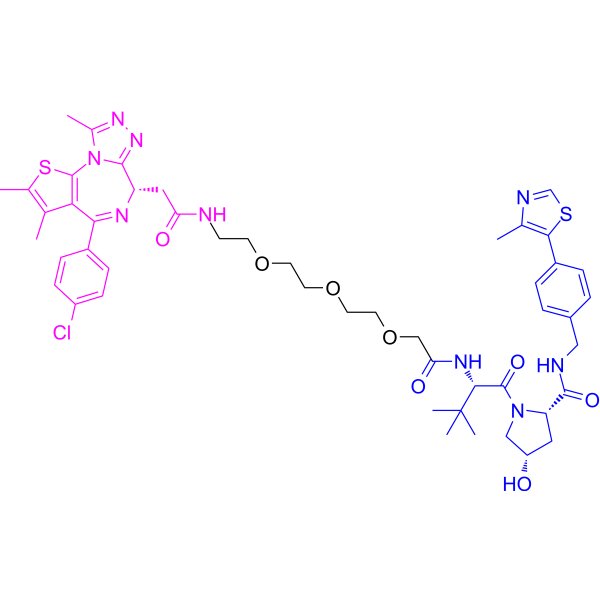
 0 ImagesSynonyms: (R)-Molibresib carboxylic acid; (R)-GSK525762A carboxylic acid; (R)-PROTAC BRD4-binding moiety 2(R)-I-BET762 carboxylic acid, the R-enantiomer of I-BET762 carboxylic acid (HY-107443). I-BET762 carboxylic acid is an I-BET762-based warhead ligand for conjugation reactions of PROTAC targeting on BET. I-BET762 carboxylic acid is a BRD4 inhibitor with a pIC50 value of 5.1.
-
HDAC/JAK/BRD4-IN-1
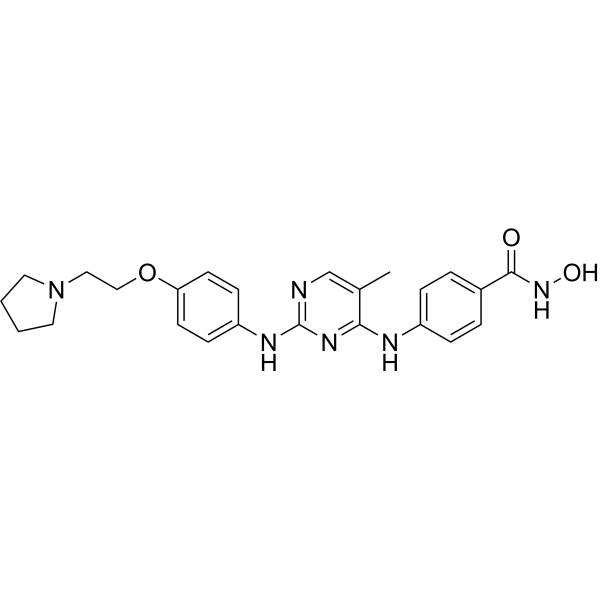 0 ImagesCat. No.: HY-156273CAS No.: 2755325-84-7HDAC/JAK/BRD4-IN-1(compound 25ap) is a potent HDAC/JAK/BRD4 triple inhibitor. HDAC/JAK/BRD4-IN-1 inhibit cell growth and induces apoptosis in MDA-MB-231 cells, and shows anticancer activity in vivo.
-
TAT-PiET-PROTAC
 0 ImagesTAT-PiET-PROTAC is a proteolysis-targeting chimera (PROTAC)-modified TAT-PiET (HY-P10445), which is a cell-penetrating peptide targeting the extra-terminal (ET) domain of BRD4. TAT-PiET-PROTAC can reduce BRD4 and JMJD6 levels and inhibit cell proliferation. TAT-PiET-PROTAC also resists the endocrine resistance of ERα-positive breast cancer cells. TAT-PiET-PROTAC can be used for the research of cancer, such as breast cancer.
-
TEC 4
 0 ImagesCat. No.: HY-176071Purity: 99.57%TEC 4 is a ByeTAC (Bypassing E-Ligase-Targeting Chimera) BRD4 degrader, with 33% BRD4 remaining at 500 nM in Ramos B-cells. TEC 4 shows toxicity for Ramos B-cells, with an IC50 of 30.5 nM. ByeTACs directly recruits a protein to the proteasome via interactions with Rpn-13 for degradation. Pink: BRD4 lignad (HY-78695); Blue: Rpn-13 ligand (HY-159808); Black: linker (HY-W008352).




