



JAK
Janus kinase
Janus kinase (JAK) is a family of intracellular, nonreceptor tyrosine kinases that transduce cytokine-mediated signals via the JAK-STAT pathway. Since members of the type I and type II cytokine receptor families possess no catalytic kinase activity, they rely on the JAK family of tyrosine kinases to phosphorylate and activate downstream proteins involved in their signal transduction pathways. The receptors exist as paired polypeptides, thus exhibiting two intracellular signal-transducing domains. JAKs associate with a proline-rich region in each intracellular domain, which is adjacent to the cell membrane and called a box1/box2 region. After the receptor associates with its respective cytokine/ligand, it goes through a conformational change, bringing the two JAKs close enough to phosphorylate each other. The JAK autophosphorylation induces a conformational change within itself, enabling it to transduce the intracellular signal by further phosphorylating and activating transcription factors called STATs. The activated STATs dissociate from the receptor and form dimers before translocating to the cell nucleus, where they regulate transcription of selected genes.
JAK Isoform Specific Products
All Product Categories
-
JAK Inhibitors
(563)
View all products
-
JAK Agonists
(2)
View all products
-
JAK Antagonists
(4)
View all products
-
JAK Activators
(26)
View all products
-
JAK Modulators
(8)
View all products
-
JAK Degraders
(14)
View all products
-
JAK Control
(1)
View all products
-
JAK Substrate
(1)
View all products
-
JAK Ligands
(5)
View all products
-
Janus Kinase 1 (JAK1) Proteins
(4)
View all products
-
JAK Related Products (658)
Related Products (658)

-
Recombinant Proteins (4)
-
Antibodies (7)
-
JAK Isoform Comparison
-
JAK1/2-IN-3
 0 ImagesCat. No.: HY-180274JAK1/2-IN-3 is a JAK1 and JAK2 inhibitor with IC50 values of 14.73 nM and 10.03 nM, respectively. JAK1/2-IN-3 induces G2/M cell cycle arrest, and induces intrinsic apoptosis via increased Bax and caspase 3/7 levels and reduced Bcl2 expression. JAK1/2-IN-3 can be used for the study of leukemia cancer, breast cancer and colon cancer.
-
Tyk2-IN-18-d5
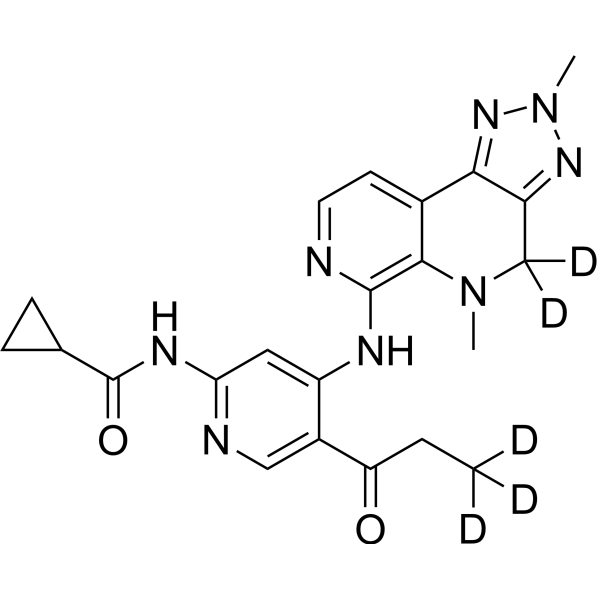 0 ImagesCat. No.: HY-163312SCAS No.: 3018160-63-6Tyk2-IN-18-d5 (Compound 13) is the deuterated TYK2 inhibitor, targeting to JH2 domain. Tyk2-IN-18-d5 can be used for the research of inflammatory and autoimmune diseases.
-
JAK2-IN-18
 0 ImagesCat. No.: HY-179687CAS No.: 3108318-77-7JAK2-IN-18 (Compound example1) is a selective JAK2 inhibitor. JAK2-IN-18 can inhibit JAK-STAT signaling and shows an IC50 of <100 nM for pSTAT5 in HEL9217 cells. JAK2-IN-18 can inhibit the proliferation of abnormally proliferating myeloid cells and can be used for the research of myeloproliferative disorders, such as essential thrombocythemia.
-
JAK-STAT-IN-1
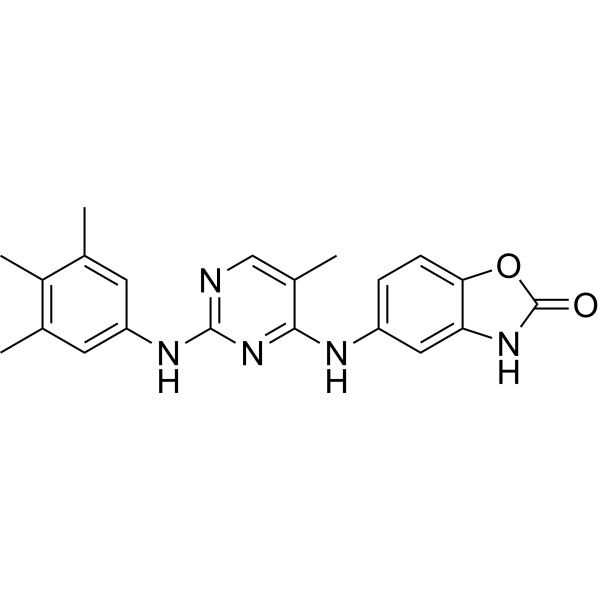 0 ImagesCat. No.: HY-128450CAS No.: 1236666-76-4JAK-STAT-IN-1 (compound 1) is a selective JAK-STAT inhibitor. JAK-STAT-IN-1 can be used for the research of autoimmune disorder.
-
TYK2 activator-2
 0 ImagesCat. No.: HY-187211TYK2 activator-2 (Compound 6g) is a selective TYK2 activator and JAK3 inhibitor, with an EC50 of 0.21 μM against TYK2 and an IC50 of 1.2 μM against JAK3. TYK2 activator-2 destabilizes the JH2-JH1 autoinhibitory complex of TYK2, enhances the catalytic activity of TYK2, and inhibits the JH1 kinase domain activity of JAK3. TYK2 activator-2 can be used in cancer-related research.
-
JAK3-IN-9
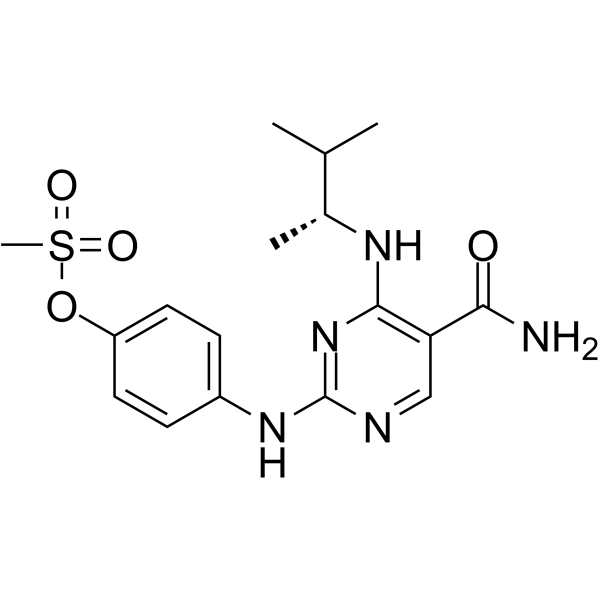 0 ImagesCat. No.: HY-133747CAS No.: 1430095-30-9JAK3-IN-9 is an orally active JAK3 inhibitor with IC50 value of 1.7 nM. JAK3-IN-9 is highly selective to the JAK3 signal path. JAK3-IN-9 is lowly toxic with high oral bioavailability, shows good anti-arthritis activity. JAK3-IN-9 can be used in autoimmune disease research.
-
Tyk2-IN-10
 0 ImagesCat. No.: HY-138317CAS No.: 2368945-72-4Tyk2-IN-10 (compound 17.5) is a tyrosine kinase 2-mediated signaling inhibitor involved in inflammation regulation.
-
Delgocitinib ethanolate
 0 ImagesCat. No.: HY-109053ACAS No.: 2064338-33-4Synonyms: JTE-052 ethanolate; LEO124249 ethanolate
-
JAK3/BTK-IN-2
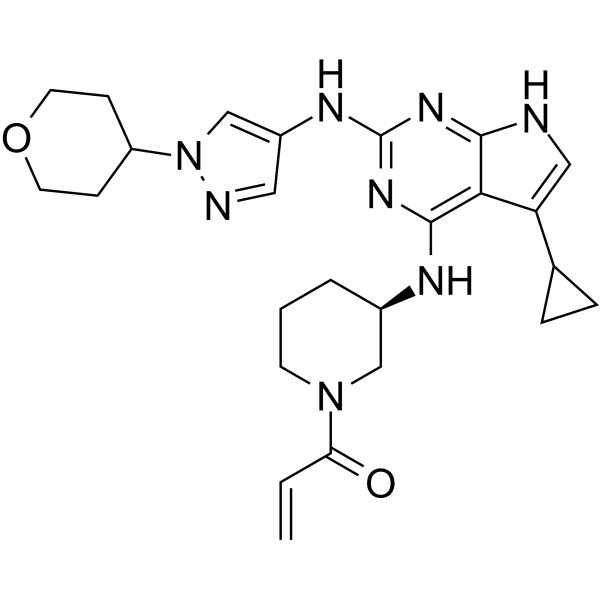 0 ImagesCat. No.: HY-143717CAS No.: 2674036-93-0JAK3/BTK-IN-2 is a potent inhibitor of JAK3/BTK. BTK and JAK3 are two important targets for autoimmune diseases. Simultaneous inhibition of the BTK/JAK3 signalling pathway exhibits synergistic effects. JAK3/BTK-IN-2 has the potential for the research of JAK3 kinase and/or BTK-related diseases (extracted from patent WO2021147952A1, compound 004)
-
JAK2-IN-13
 0 ImagesCat. No.: HY-174988JAK2-IN-13 is a potent and orally active JAK2 inhibitor with an IC50 of 54.7 nM. JAK2-IN-13 downregulates the expressions of p-STAT3 and p-STAT5. JAK2-IN-13 exhibits good bioavailability and potent inhibition of rhEPO-induced extramedullary erythropoiesis and polycythemia vera. JAK2-IN-13 can be used for the study of myeloproliferative neoplasms.
-
Tyk2(JH1/JH2) Recombinant Human Active Protein Kinase
 0 ImagesCat. No.: HY-E70873TYK2 is a member of the JAK family of non-receptor tyrosine kinases that act together with signal transducer and activator of transcription (STAT) factors in mediating intracellular signal transduction. JAKs are characterized by dual kinase domain: a tyrosine kinase domain (JH1) that is preceded by a pseudokinase domain (JH2). Tyk2(JH1/JH2) Recombinant Human Active Protein Kinase is a recombinant Tyk2(JH1/JH2) protein that can be used to study Tyk2(JH1/JH2)-related functions.
-
STAT3-IN-46
 0 ImagesCat. No.: HY-175771STAT3-IN-46 is a selective and orally active inhibitor of signal transducer and activator of transcription 3 (STAT3) (KD = 323.3 nM). STAT3-IN-46 directly binds to the SH2 domain of the STAT3 and inhibits IL-6/JAK/STAT3 signaling pathway (IC50 = 0.87 μM) and downregulates c-Myc and Bcl-2 levels. STAT3-IN-46 can be used for the research of cancer, such as triple-negative breast cancer.
-
PROTAC JAK2 degrader-1
 0 ImagesCat. No.: HY-174428PROTAC JAK2 degrader-1 is a JAK2 PROTAC degrader, with a DC50 of 27.35 nM. PROTAC JAK2 degrader-1 induces JAK2 degradation via the ubiquitin-proteasome pathway. PROTAC JAK2 degrader-1 inhibits the JAK2-STAT signaling pathway. PROTAC JAK2 degrader-1 induces G2/M phase arrest and apoptosis in cancer cells. PROTAC JAK2 degrader-1 exhibits antiproliferative activity against cancer cells. PROTAC JAK2 degrader-1 inhibits recombinant human erythropoietin (rhEPO)-mediated polycythemia and splenomegaly in mice. PROTAC JAK2 degrader-1 can be used for research on myeloproliferative neoplasms, including polycythemia vera.
-
HAT-SIL-TG-1&AT
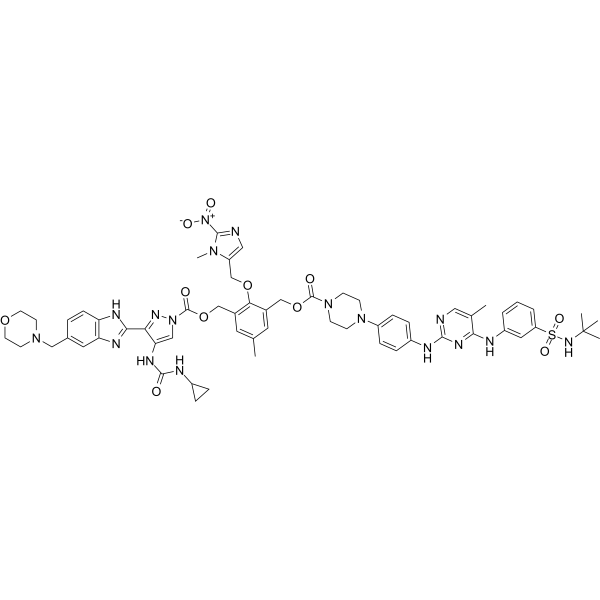 0 ImagesCat. No.: HY-149257CAS No.: 2973282-50-5HAT-SIL-TG-1&AT is a Janus tyrosine kinase (JAK) inhibitor with antitumor effects. HAT-SIL-TG-1&AT is the hypoxia-activated prodrug, witch inhibits JAK-STAT signaling in tumor tissue. And HAT-SIL-TG-1&AT inhibits HEL cells proliferation and downregulated phosphorylated STAT3/5 under hypoxic conditions.
-
LRRK2/NUAK1/TYK2-IN-1
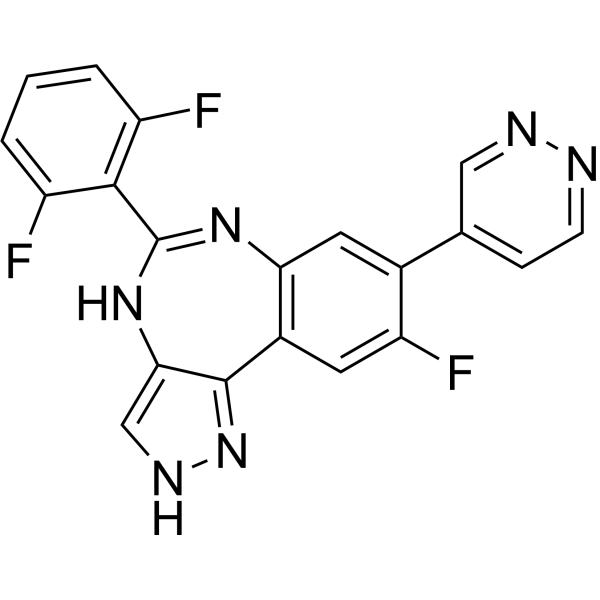 0 ImagesCat. No.: HY-153103CAS No.: 2629192-96-5LRRK2/NUAK1/TYK2-IN-1 (conpound 226) shows inhibitory activity toward LRRK2 (Wt), LRRK2 (G2019), TYK2 and NUAK1, with IC50 values lower than 10 nM. LRRK2/NUAK1/TYK2-IN-1 can be used for autoimmune disease research.
-
MLS-2384 free base
 0 ImagesCat. No.: HY-125718CAS No.: 1067884-45-0MLS-2384 free base is a dual JAK/Src kinase inhibitor. MLS-2384 free base downregulates STAT3 downstream proteins c-Myc and Mcl-1. MLS-2384 free base induces Apoptosis. MLS-2384 free base exhibits anticancer activity against prostate cancer, breast cancer, skin cancer, ovarian cancer, lung cancer, and liver cancer.
-
JAK1 S729C Recombinant Human Active Protein Kinase
 0 ImagesCat. No.: HY-E70733JAK1 belongs to Janus family kinases (JAK) family. JAK mediates the Stat activation by cytokines. Jak1 is involved in IL-6-stimulated Stat3 activity. JAK1S729C mutations is proved to be activating mutations in vitro. JAK1 S729C Recombinant Human Active Protein Kinase is a recombinant JAK1 S729C protein that can be used to study JAK1 S729C-related functions.
-
JAK2-IN-1
 0 ImagesCat. No.: HY-117810CAS No.: 1361415-84-0JAK2-IN-1 (eExample 2) is a JAK2 inhibitor, and can be used for research of proliferative disease, inflammatory disease, or renal disease.
-
Debio 0617B
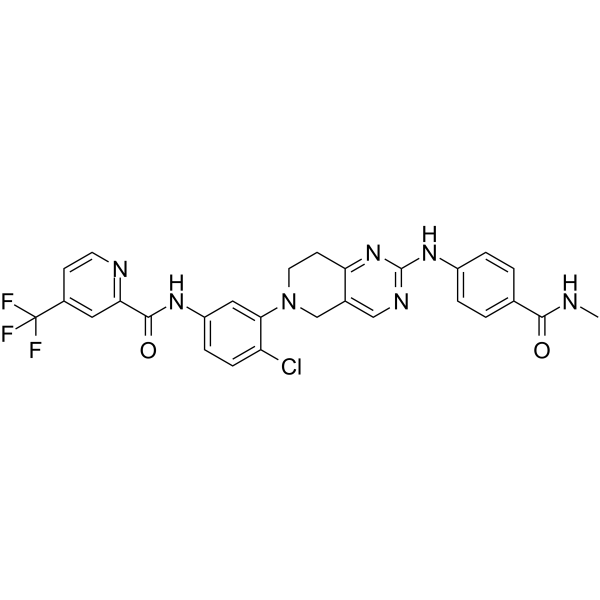 0 ImagesCat. No.: HY-108417CAS No.: 1332329-27-7Debio 0617B, a multi-kinase inhibitor, reduces maintenance and self-renewal of primary human AML CD34+ stem/progenitor cells. Debio 0617B has a unique profile targeting key kinases upstream of STAT3/STAT5 signaling such as JAK, SRC, ABL, and class III/V receptor tyrosine kinases (TKs). Debio 0617B has documented efficacy in STAT3-driven solid tumors.




