



JAK
Janus kinase
Janus kinase (JAK) is a family of intracellular, nonreceptor tyrosine kinases that transduce cytokine-mediated signals via the JAK-STAT pathway. Since members of the type I and type II cytokine receptor families possess no catalytic kinase activity, they rely on the JAK family of tyrosine kinases to phosphorylate and activate downstream proteins involved in their signal transduction pathways. The receptors exist as paired polypeptides, thus exhibiting two intracellular signal-transducing domains. JAKs associate with a proline-rich region in each intracellular domain, which is adjacent to the cell membrane and called a box1/box2 region. After the receptor associates with its respective cytokine/ligand, it goes through a conformational change, bringing the two JAKs close enough to phosphorylate each other. The JAK autophosphorylation induces a conformational change within itself, enabling it to transduce the intracellular signal by further phosphorylating and activating transcription factors called STATs. The activated STATs dissociate from the receptor and form dimers before translocating to the cell nucleus, where they regulate transcription of selected genes.
JAK Isoform Specific Products
All Product Categories
-
JAK Inhibitors
(555)
View all products
-
JAK Agonists
(2)
View all products
-
JAK Antagonists
(4)
View all products
-
JAK Activators
(26)
View all products
-
JAK Modulators
(8)
View all products
-
JAK Degraders
(14)
View all products
-
JAK Control
(1)
View all products
-
JAK Substrate
(1)
View all products
-
JAK Ligands
(5)
View all products
-
Janus Kinase 1 (JAK1) Proteins
(4)
View all products
-
JAK Related Products (650)
Related Products (650)

-
Recombinant Proteins (4)
-
Antibodies (7)
-
JAK Isoform Comparison
-
JAK3/BTK-IN-6
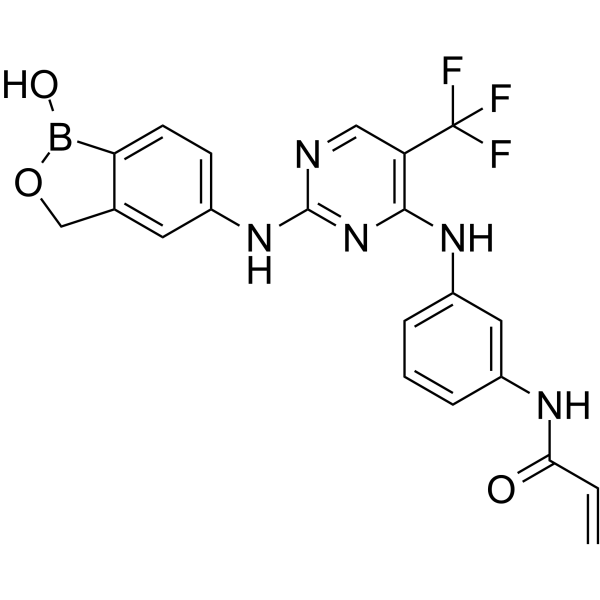 0 ImagesCat. No.: HY-147754CAS No.: 2243136-03-8
-
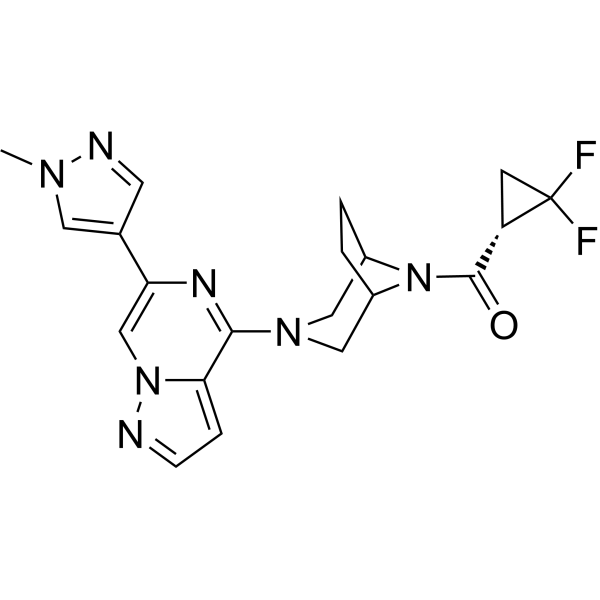
PI3K/Akt/mTOR-IN-7
 0 ImagesCat. No.: HY-183272CAS No.: 2925588-01-6PI3K/Akt/mTOR-IN-7 is an AKT/mTOR and JAK2/STAT3 inhibitor. PI3K/Akt/mTOR-IN-7 restores p-Akt, p-mTOR, and p-STAT3 expression, reduces pro-apoptotic Caspase-3 mRNA expression. PI3K/Akt/mTOR-IN-7 reduces intracellular ROS accumulation and inhibits NO production. PI3K/Akt/mTOR-IN-7 can be used for research on stroke, Alzheimer's disease and Parkinson's disease.
-
JAK2-IN-23
 0 ImagesCat. No.: HY-188002CAS No.: 3057053-16-1
-
TK4g
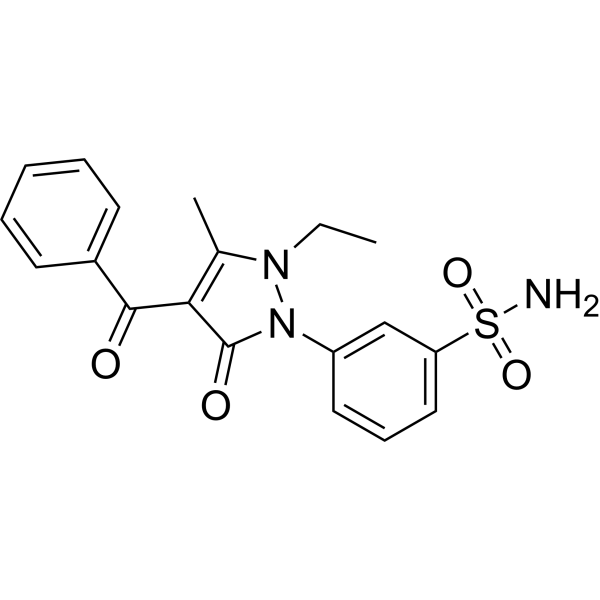 0 ImagesCat. No.: HY-151258CAS No.: 2232890-86-5TK4g is a Janus kinase (JAK) inhibitor with the IC50 values of 12.61 nM and 15.80 nM for JAK2 and JAK3, respectively. TK4g can be used in lymphoid-derived diseases and leukemia cancer research.
-
Radotinib-d6
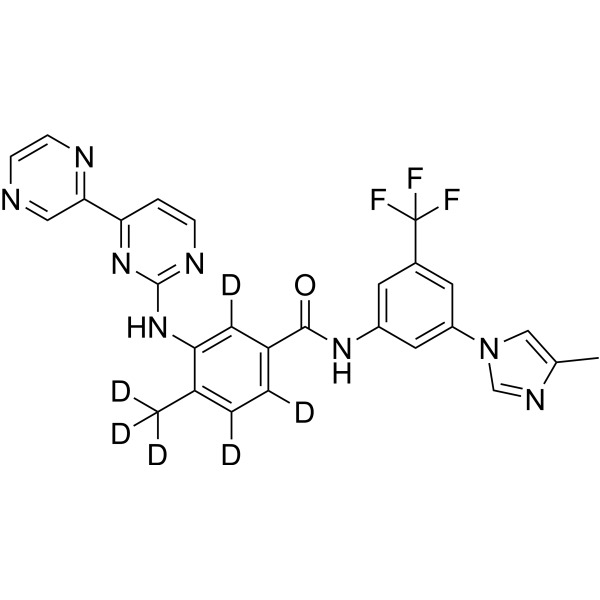 0 ImagesCat. No.: HY-15728SCAS No.: 2754051-83-5Synonyms: IY-5511-d6Radotinib-d6 is deuterium labeled Radotinib (HY-15728). Radotinib (IY-5511) is an orally active and BBB-permeable selective tyrosine kinase Bcr-Abl1 inhibitor with an IC50 of 34 nM. Radotinib has anti-prion and anti-tumor activities. Radotinib can inhibit the proliferation, induce cell cycle arrest and apoptosis of tumor cells . Radotinib can be used in the research of cancer such as chronic myeloid leukemia and multiple myeloma, as well as neurodegenerative diseases such as prion diseases.
-
TYK2-IN-11
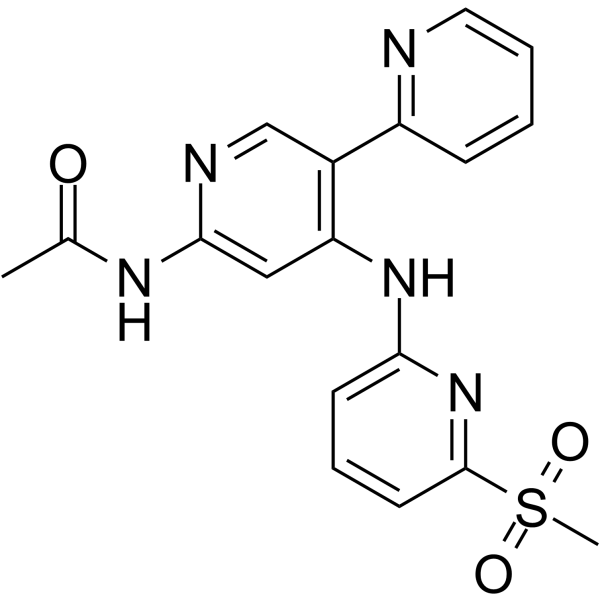 0 ImagesCat. No.: HY-144087CAS No.: 2757009-40-6TYK2-IN-11 (Compound 5B) is a selective Tyk-2 inhibitor with IC50s of 0.016 and 0.31 nM for TYK2-JH2 and JAK1-JH2, respectively. TYK2-IN-11 can be used for the research of inflammatory or autoimmune disease.
-
STAT3-IN-18
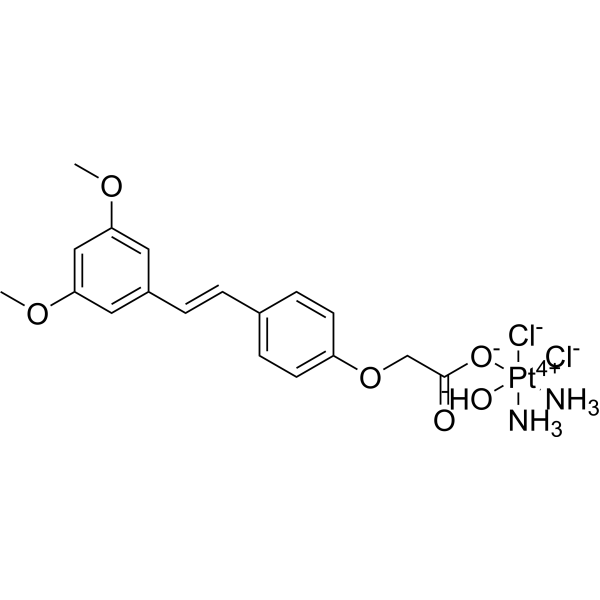 0 ImagesCat. No.: HY-155808CAS No.: 2668267-41-0STAT3-IN-18 (compound SPP) is a platinum (IV) complex with an axial ligand derived from sandalwood. STAT3-IN-18 inhibits the JAK2-STAT3 pathway in breast cancer (BC) cells, with anti-proliferative activity. STAT3-IN-18 activates caspase-3 and increases cleaved polyADP-ribose polymerase to induce apoptosis. STAT3-IN-18 promotes maturation and antigen presentation of dendritic cells and demonstrates safety in vivo.
-
Fedratinib-d9
 0 ImagesCat. No.: HY-10409SSynonyms: TG-101348-d9; SAR 302503-d9Fedratinib-d9 (TG-101348-d9) is deuterium labeled Fedratinib. Fedratinib (TG-101348) is a potent, selective, ATP-competitive and orally active JAK2 inhibitor with IC50s of 3 nM for both JAK2 and JAK2V617F kinase. Fedratinib shows 35- and 334-fold selectivity over JAK1 and JAK3, respectively. Fedratinib induces cancer cell apoptosis and has the potential for myeloproliferative disorders research.

-
GDC-9918
 0 ImagesCat. No.: HY-169184CAS No.: 2570375-06-1GDC-9918 (compund GDC-9918) is a Janus kinase inhibitor.
-
JAK3/BTK-IN-4
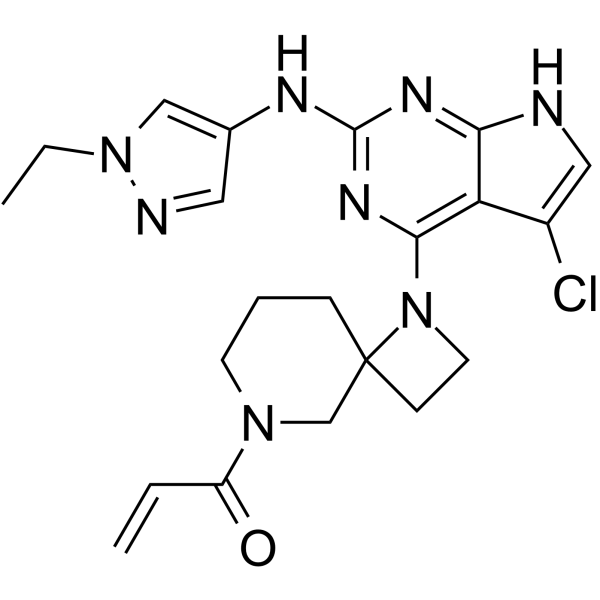 0 ImagesCat. No.: HY-143719CAS No.: 2673196-38-6JAK3/BTK-IN-4 is a potent inhibitor of JAK3/BTK. BTK and JAK3 are two important targets for autoimmune diseases. Simultaneous inhibition of the BTK/JAK3 signalling pathway exhibits synergistic effects. JAK3/BTK-IN-4 has the potential for the research of JAK3 kinase and/or BTK-related diseases (extracted from patent WO2021147953A1, compound 003)
-
JAK-IN-29
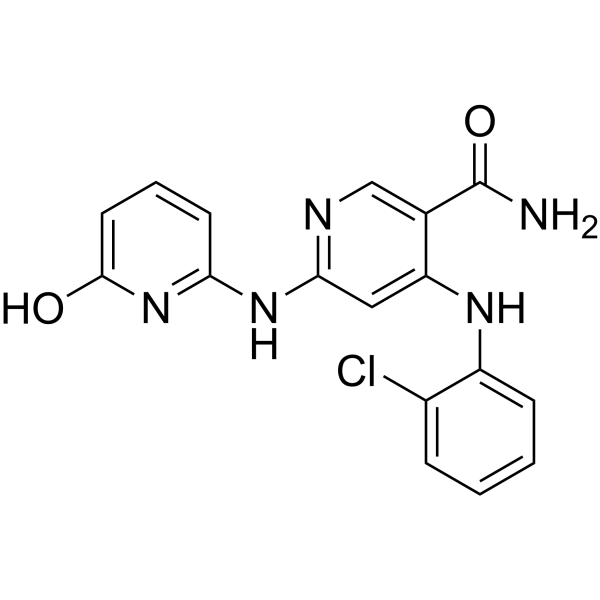 0 ImagesCat. No.: HY-154969CAS No.: 3056025-10-3JAK-IN-29 (compound 3) is a potent JAK inhibitor.
-
Mollugin (Standard)
 0 ImagesMollugin (Standard) is the analytical standard of Mollugin. This product is intended for research and analytical applications. Mollugin is an orally active and potent NF-κB inhibitor. Mollugin induces S-phase arrest of HepG2 cells, and increased intracellular reactive oxygen species (ROS) levels. Mollugin induces DNA damage in HepG2 cells, as well as an increase in the expression of p-H2AX. Mollugin shows anti-cancer effect by inhibiting TNF-α-induced NF-κB activation. Mollugin enhances the osteogenic action of BMP-2 (bone morphogenetic protein 2) via the p38-Smad signaling pathway.
-
JAK1-IN-10
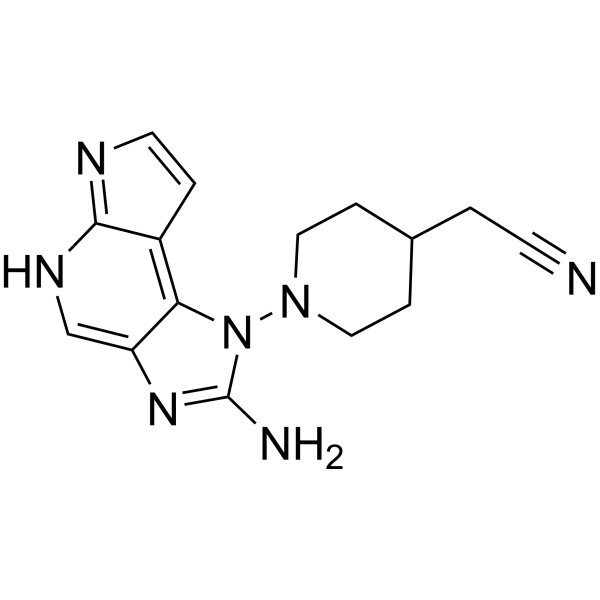 0 ImagesCat. No.: HY-153566CAS No.: 2416858-88-1JAK1-IN-10 (compound 9), a cyano-substituted cyclic hydrazine derivative, is a potent and selective JAK1 inhibitor.
-
AUH-6-96
 0 ImagesCat. No.: HY-115438CAS No.: 1005144-85-3AUH-6-96 is a JAK/STAT signaling inhibitor. AUH-6-96 reduces Unpaired-induced transcriptional activity in Drosophila cells and blocks tyrosine phosphorylation of STAT92E. AUH-6-96 blocks both constitutive and IL-6-induced phosphorylation of STAT3. AUH-6-96 decreases the level of tyrosine-phosphorylated JAK3. AUH-6-96 induces cancer cell Apoptosis by downregulating the expression of anti-apoptotic genes downstream of STAT3. AUH-6-96 selectively reduces the viability of cancer cells with abnormal JAK/STAT signaling pathway. AUH-6-96 is applicable to related research on Hodgkin's lymphoma, breast cancer, and prostate cancer.

-
JAK2/STAT3-IN-2
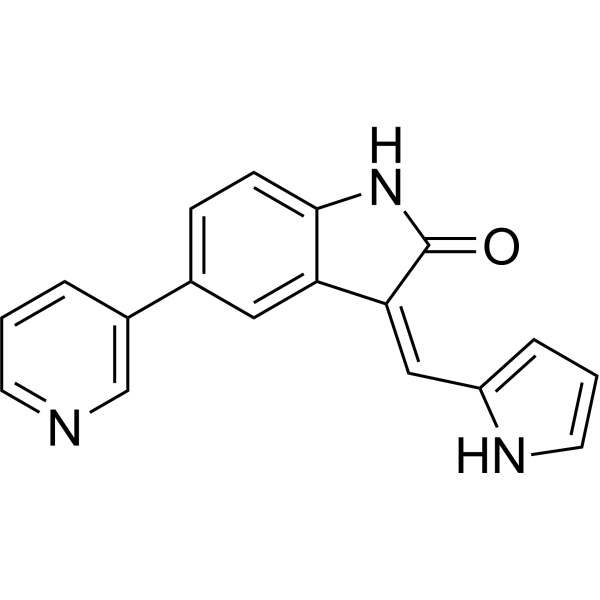
 0 ImagesCat. No.: HY-183370JAK2/STAT3-IN-2 is an orally active JAK2/STAT3 inhibitor. JAK2/STAT3-IN-2 inhibits the phosphorylation of tyrosine residues in JAK2 and STAT3, blocks downstream signal transduction, disrupts the dimerization and nuclear translocation of STAT3, and suppresses pro-inflammatory transcriptional activity. JAK2/STAT3-IN-2 inhibits the expression of IL-17A and IL-17F, reduces immune cell infiltration, and inhibits the production of NO simultaneously. JAK2/STAT3-IN-2 exerts a protective effect in a mouse model of ulcerative colitis induced by DSS (HY-116282C). JAK2/STAT3-IN-2 can be used for the research of ulcerative colitis.
-
JAK2(JH1/JH2) Recombinant Human Active Protein Kinase
 0 ImagesCat. No.: HY-E70835Janus kinase 2 (JAK2) initiates signaling from several cytokine receptors and is required for biological responses such as erythropoiesis. JAK2 contains the kinase (JH1) and pseudokinase domains (JH2). JAK2(JH1/JH2) Recombinant Human Active Protein Kinase is a recombinant JAK2(JH1/JH2) protein that can be used to study JAK2(JH1/JH2)-related functions.




