



NO Synthase
Nitric oxide synthases; NOS
Nitric oxide synthases (NOSs) are a family of enzymes catalyzing the production of nitric oxide (NO) from L-arginine. NO synthases catalyze the oxidation of L-arginine to NO and L-citrulline. Mammals contain three NOS isoforms: neuronal NOS (nNOS), inducible NOS (iNOS), and endothelial NOS (eNOS). NO produced from these different NOS isoforms is involved in a wide range of physiologic functions in the nervous, immune, and cardiovascular systems. Unregulated NO production can lead to pathologic conditions such as stroke, inflammation, and hypertension. Therefore, the control of NOS activity by isoform selective NOS inhibitors has great potential for therapeutic treatments of NO-related diseases.
NO Synthase Isoform Specific Products
All Product Categories
-
NO Synthase Inhibitors
(750)
View all products
-
NO Synthase Agonists
(5)
View all products
-
NO Synthase Antagonists
(4)
View all products
-
NO Synthase Activators
(113)
View all products
-
NO Synthase Modulators
(13)
View all products
-
NO Synthase MDM2 Inhibitor
(1)
View all products
-
NO Synthase Inducers
(7)
View all products
-
NO Synthase Controls
(6)
View all products
-
NO Synthase Substrates
(2)
View all products
-
NO Synthase Ligand
(1)
View all products
-
NO Synthase Related Products (1000)
Related Products (1000)

-
Antibodies (6)
-
NO Synthase Isoform Comparison
-
Paroxetine acetate
 0 ImagesCat. No.: HY-122272ACAS No.: 72471-80-8Synonyms: BRL29060 acetateParoxetine (BRL29060) acetate is an orally active and selective serotonin reuptake inhibitor (SSRI) and apoptosis inducer with blood-brain barrier permeability. Paroxetine acetate inhibits nitric oxide synthase and CYP2D6, induces desensitization of 5-HT1A/1B/1D autoreceptors, downregulates 5-HT2 receptors, and promotes the production of inflammatory cytokines. Paroxetine acetate is a weak norepinephrine (NE) uptake inhibitor and possesses antitumor activity. Paroxetine acetate is widely used in research concerning depression, obsessive-compulsive disorder, panic disorder, social phobia, generalized anxiety disorder, post-traumatic stress disorder, premenstrual dysphoric disorder, hot flashes, and related conditions.
-
Licocoumarone
 0 ImagesCat. No.: HY-N20713CAS No.: 118524-14-4Licocoumarone is an active component derived from licorice. Licocoumarone has an IC50 of 12.56 μM and a Kd of 14.90 μM against human DYRK1A. Licocoumarone inhibits NF-κB activation by blocking IκBα degradation and p65 phosphorylation, interferes with MAPK activation via inhibiting phosphorylation, and downregulates the expression of iNOS. Licocoumarone inhibits LPS-induced expression of IL-1β, IL-6 and IL-10; it induces apoptosis of pancreatic cancer cells apoptosis and acts as a neuraminidase inhibitor (IC50 = 27.8 μM). Licocoumarone exhibits anti-inflammatory and antimicrobial activities, with antibacterial activity against Listeria and antifungal activity against Candida parapsilosis. Licocoumarone can be used in studies related to immune and inflammatory diseases, pancreatic cancer, and specific bacterial and fungal infections.
-
Dehydrodiisoeugenol (Standard)
 0 ImagesDehydrodiisoeugenol (Standard) is the analytical standard of Dehydrodiisoeugenol (HY-N0589). This product is intended for research and analytical applications. Dehydrodiisoeugenol is an orally active anti-inflammatory and anti-tumor agent. Dehydrodiisoeugenol inhibits the proliferation of colorectal cancer cells, and induces apoptosis, autophagy, endoplasmic reticulum stress and cell cycle arrest. Dehydrodiisoeugenol also exerts anti-inflammatory effects by inhibiting the activation of NF-κB and the expression of COX-2. Dehydrodiisoeugenol can be used in the research related to colorectal cancer, inflammatory diseases and ulcerative colitis.
-
2-Aminoquinoline (Standard)
 0 ImagesSynonyms: 2-Quinolinamine (Standard)2-Aminoquinoline (2-Quinolinamine) is a promising compound as bioavailable nNOS inhibitor but suffers from low human nNOS inhibition, low selectivity versus human eNOS, and significant binding to other CNS targets. 2-Aminoquinoline exhibits antiviral activity against the vaccinia virus. 2-Aminoquinoline has the potential for the research of antineurodegenerative agents.
-
Magnesium sulfate heptahydrate, United States Pharmacopeia (USP) Reference Standard
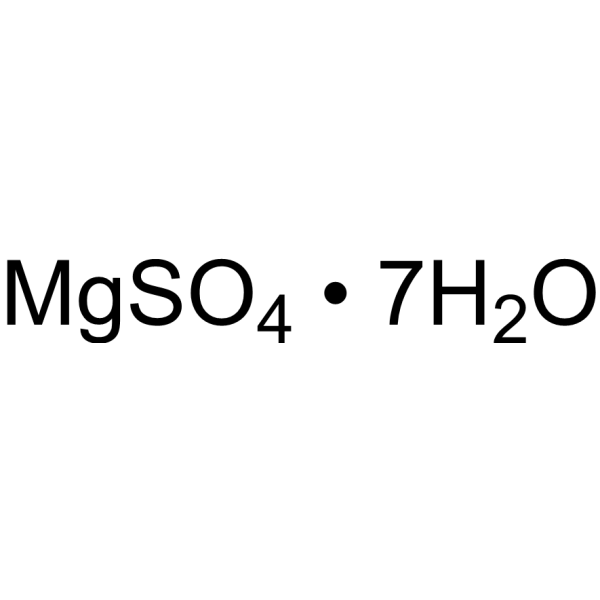 0 ImagesCat. No.: HY-W094475ECAS No.: 10034-99-8Synonyms: Epsom salts (Pharmaceutical primary standard, USP)Magnesium sulfate heptahydrate, United States Pharmacopeia (USP) Reference Standard (Epsom salts (Pharmaceutical primary standard, USP)) is a reference standard for Magnesium sulfate (HY-Y1267). Magnesium sulfate is a calcium antagonist and a potent L-type calcium channel inhibitor, as well as a tocolytic. Magnesium sulfate has anti-inflammatory, anticonvulsant, vasodilatory, and neuroprotective effects. Magnesium sulfate can be used in the research of diseases such as preeclampsia/eclampsia.
-
Sinomenine N-oxide
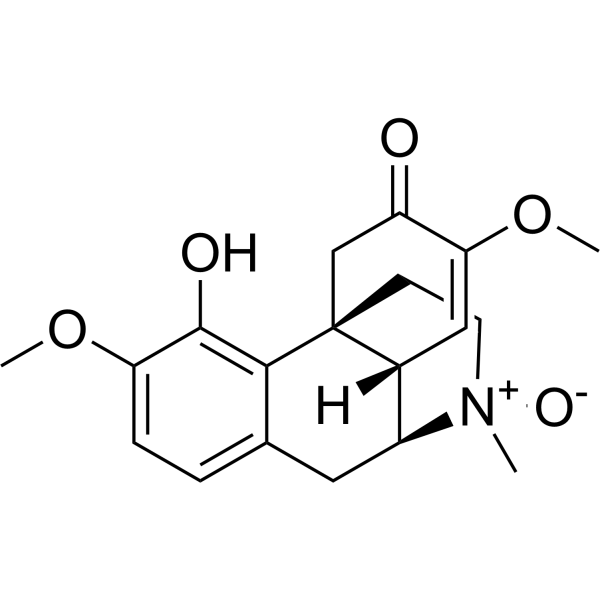 0 ImagesSynonyms: (+)-Sinomenine N-oxideSinomenine N-oxide has anti-angiogenic, anti-inflammatory and anti-rheumatic effects. Sinomenine N-oxide is also a NO production inhibitor, with an IC50 value of 23.04 μM.
-
SE 175
 0 ImagesCat. No.: HY-120221CAS No.: 258278-64-7SE 175 is an organic nitrate compound that acts as an NO donor in vivo following reductive transformation of the nitrate group to nitric oxide. SE 175 stimulates endothelial soluble guanylate cyclase and induces aortic vasorelaxation with an EC50 of 0.20 µM.
-
Diplacol
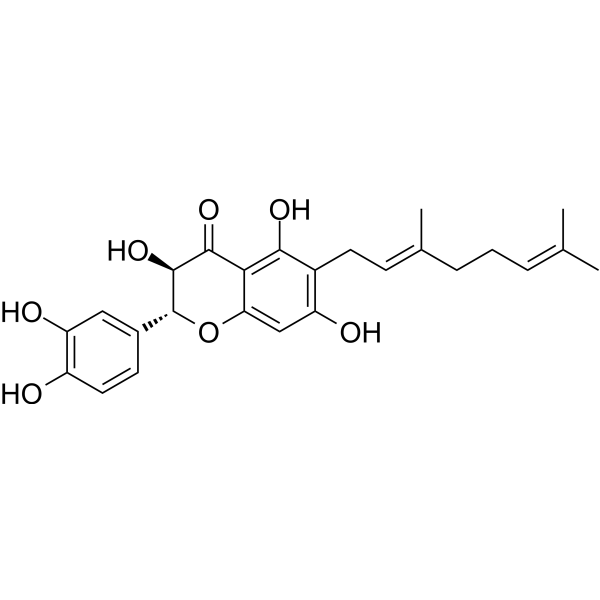 0 ImagesCat. No.: HY-N12494CAS No.: 76556-05-3Diplacol is a geranylated flavanone that can be isolated from paulownia trees (Paulownia coreana UYEKI). Diplacol has anti-inflammatory activity. Diplacol inhibits NO production in LPS-stimulated Raw264.7 cells with an IC50 value of 4.53 μM.
-
Centrolobol
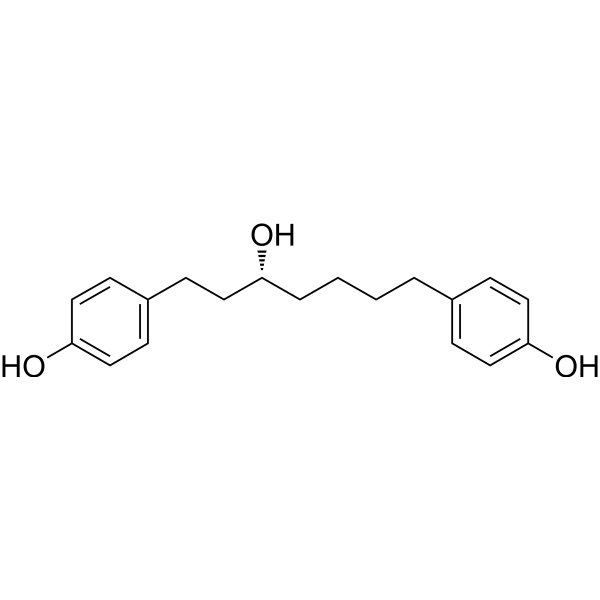 0 ImagesCat. No.: HY-N3564CAS No.: 30359-01-4Centrolobol is a diarylheptane compound with antioxidant and anti-inflammatory properties, which exists in the fermented stems of Alnus sibirica. Centrolobol scavenges DPPH free radicals and inhibits the production of NO in LPS-stimulated immune cells. Centrolobol can be used in studies related to anti-inflammation and antioxidation.
-
GYY4137 (GMP)
 0 ImagesCat. No.: HY-107632GCAS No.: 106740-09-4GYY4137 (GMP) is the GMP-grade version of GYY4137 (HY-107632). Small molecules of GMP grade can be used as adjuvant reagents in cell therapy. GYY4137 (GMP) is a sustained-release H2S donor possessing vasodilatory, antihypertensive, and anti-inflammatory activities. GYY4137 (GMP) can inhibit cell growth, induce apoptosis, and cause cell cycle arrest by blocking the STAT3 pathway, demonstrating potent anticancer activity.
-
Vulgarin
 0 ImagesVulgarin is an orally active, naturally occurring eudesmane sesquiterpene with multiple biological activities including anti-inflammatory and antioxidant properties. Vulgarin targets and inhibits HMGB1, NF-κB and iNOS, while regulating key genes involved in hepatic gluconeogenesis; it also blocks inflammatory signaling pathways and inhibits the production and release of pro-inflammatory cytokines such as TNF-α and IL-1β. Vulgarin effectively alleviates pancreatic oxidative stress by reducing lipid peroxidation levels and restoring antioxidant enzyme activity. Vulgarin reverses abnormally elevated serum pancreatic enzyme levels, preserves the integrity of pancreatic acinar cells, and reduces pancreatic edema, hemorrhage and inflammatory infiltration. Vulgarin remodels the function of pancreatic endocrine cells, restores insulin content in β cells, and downregulates glucagon levels in α cells and somatostatin levels in δ cells. Vulgarin can be used in studies related to pancreatic injury and diabetes.
-
Paroxetine-d4
 0 ImagesCat. No.: HY-122272SCAS No.: 923932-45-0Synonyms: BRL29060-d4Paroxetine-d4 (BRL29060-d4) is the deuterated-labeled Paroxetine (HY-122272). Paroxetine (BRL29060) is an orally active and selective serotonin reuptake inhibitor (SSRI) and apoptosis inducer with blood-brain barrier permeability. Paroxetine inhibits nitric oxide synthase and CYP2D6, induces desensitization of 5-HT1A/1B/1D autoreceptors, downregulates 5-HT2 receptors, and promotes the production of inflammatory cytokines. Paroxetine is a weak norepinephrine (NE) uptake inhibitor and possesses antitumor activity. Paroxetine is widely used in research concerning depression, obsessive-compulsive disorder, panic disorder, social phobia, generalized anxiety disorder, post-traumatic stress disorder, premenstrual dysphoric disorder, hot flashes, and related conditions.

-
L-NAPNA
 0 ImagesCat. No.: HY-115889CAS No.: 85697-89-8L-NAPNA is a nitric oxide synthase (NOS) inhibitor with an IC50 of 1.4 μM. L-NAPNA exhibits analgesic effects by inhibiting formalin-induced paw licking behavior in mice (ED50 of 57.2 mg/kg) and suppressing acetic acid-induced abdominal writhing in mice (ED50 of 25 mg/kg). L-NAPNA can be used in research related to central nervous system diseases.
-
O-Methylnotoptol
 0 ImagesCat. No.: HY-187049CAS No.: 88206-50-2O‑Methylnotoptol is a Coumarin (HY-N0709) isolated from the roots and rhizomes of Notopterygium incisum. O‑Methylnotoptol inhibits LPS‑induced nitric oxide production in RAW 264.7 murine macrophages with an IC50 value of 23.9 μM.
-
Nω-Propyl-L-arginine (Standard)
 0 ImagesSynonyms: N-omega-Propyl-L-arginine (Standard)Nω-Propyl-L-arginine (Standard) is the analytical standard of Nω-Propyl-L-arginine (HY-102062). This product is intended for research and analytical applications. Nω-Propyl-L-arginine (N-omega-Propyl-L-arginine) is a potent, competitive, and highly selective inhibitor of neuronal nitric oxide synthase (nNOS), with a Ki of 57 nM. Nω-Propyl-L-arginine displays a 149-fold selectivity for nNOS over endothelial NOS (eNOS).
-
Cinnamyl Alcohol-d5
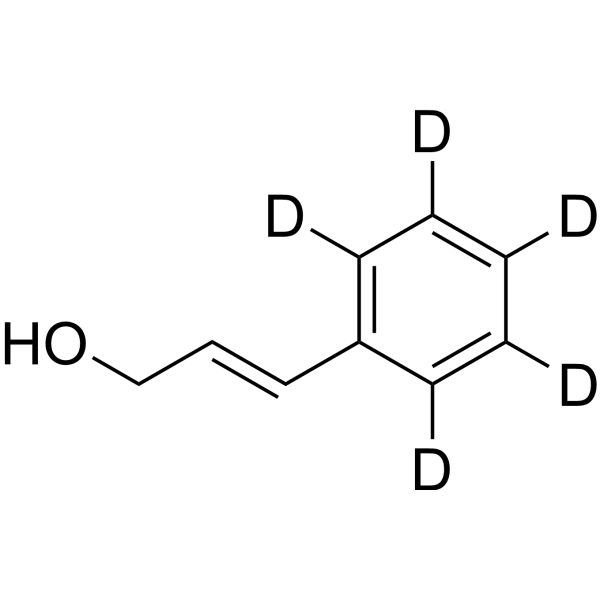 0 ImagesCat. No.: HY-Y0078SCAS No.: 1044940-87-5
-
VR11 aptamer
 0 ImagesCat. No.: HY-177406VR11 aptamer is a DNA-based TNF-α inhibitor with a KD of 7.0 nM. VR11 aptamer prevents TNFα-induced apoptosis and NO production. VR11 aptamer has non-immunogenicity and does not raise immune responses when injected intraperitoneally into C57BL/6 mice model. VR11 aptamer can be used for inflammatory diseases research.
-
α-Guanidinoglutaric acid
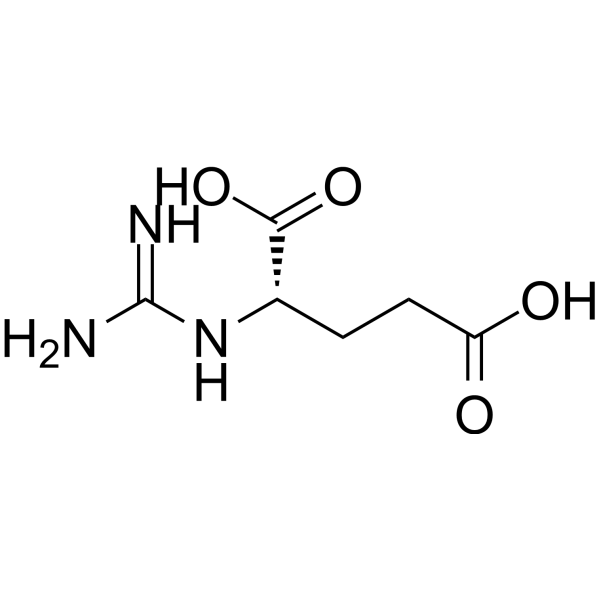 0 Imagesα-Guanidinoglutaric acid is a guanidino compound first found in cobaltinduced epileptogenic focus tissue in the cerebral cortex of cats. α-Guanidinoglutaric acid induces epileptic seizures in rats after intraventricular administration.
-
Agnuside (Standard)
 0 ImagesSynonyms: Agnoside (Standard)Agnuside (Standard) is the analytical standard of Agnuside. This product is intended for research and analytical applications. Agnuside is used in the study of asthma, inflammation, and angiogenic diseases. Agnuside is an orally active compound that can be extracted from Vitex negundo.




