



NO Synthase
Nitric oxide synthases; NOS
Nitric oxide synthases (NOSs) are a family of enzymes catalyzing the production of nitric oxide (NO) from L-arginine. NO synthases catalyze the oxidation of L-arginine to NO and L-citrulline. Mammals contain three NOS isoforms: neuronal NOS (nNOS), inducible NOS (iNOS), and endothelial NOS (eNOS). NO produced from these different NOS isoforms is involved in a wide range of physiologic functions in the nervous, immune, and cardiovascular systems. Unregulated NO production can lead to pathologic conditions such as stroke, inflammation, and hypertension. Therefore, the control of NOS activity by isoform selective NOS inhibitors has great potential for therapeutic treatments of NO-related diseases.
NO Synthase Isoform Specific Products
All Product Categories
-
NO Synthase Inhibitors
(750)
View all products
-
NO Synthase Agonists
(5)
View all products
-
NO Synthase Antagonists
(4)
View all products
-
NO Synthase Activators
(113)
View all products
-
NO Synthase Modulators
(13)
View all products
-
NO Synthase MDM2 Inhibitor
(1)
View all products
-
NO Synthase Inducers
(7)
View all products
-
NO Synthase Controls
(6)
View all products
-
NO Synthase Substrates
(2)
View all products
-
NO Synthase Ligand
(1)
View all products
-
NO Synthase Related Products (994)
Related Products (994)

-
Antibodies (6)
-
NO Synthase Isoform Comparison
-
3β,7β,15α-Trihydroxy-4-(hydroxymethyl)-11,23-dioxo-lanost-8-en-26-oic acid
 0 ImagesCat. No.: HY-N13701CAS No.: 1961358-03-13β,7β,15α-Trihydroxy-4-(hydroxymethyl)-11,23-dioxo-lanost-8-en-26-oic acid is a triterpene compound that can be found in Ganoderma lucidum, and it inhibits nitric oxide (NO) production in BV-2 microglial cells induced by lipopolysaccharide (LPS, HY-D1056), with an IC50 of 4.15 μM.
-
Ethylnotopterol
 0 ImagesCat. No.: HY-N20742CAS No.: 158269-48-8Ethylnotopterol is a coumarin found in the roots and rhizomes of Notopterygium incisum and an inhibitor with an IC50 value of 18.1 μM for LPS-induced nitric oxide production. Ethylnotopterol blocks LPS-induced nitric oxide production in macrophage cells.
-
Cornuside (Standard)
 0 ImagesCat. No.: HY-N0631RCAS No.: 131189-57-6Cornuside (Standard) is the analytical standard of Cornuside (HY-N0631). This product is intended for research and analytical applications. Cornuside is an iridoid glycoside with anti-allergic, anti-inflammatory, and neuroprotective activities. Cornuside exerts anti-allergic activity by downregulating the p38 MAPK, JNK, and NF-κB signaling pathways, and inhibits IgE-mediated histamine release from mast cells. Cornuside improves cognitive impairment in mice by inhibiting BACE1 activity (IC50 = 55.84 μg/mL) and enhancing ChAT activity. Cornuside inhibits LPS (HY-D1056)-induced inflammatory mediators, including iNOS, COX-2, PGE2, TNF-α, IL-6, and IL-1β, by suppressing NF-κB activation.
-
Triflusal (Standard)
 0 ImagesTriflusal (Standard) is the analytical standard of Triflusal (HY-B0531). This product is intended for research and analytical applications. Triflusal is an orally bioavailable, blood-brain barrier-permeable dual Cyclooxygenase-1 (COX-1)/cAMP phosphodiesterase inhibitor. Triflusal inhibits platelet aggregation, NF-κB activation, iNOS activity, and prostaglandin synthesis in ischaemic tissue. Triflusal stimulates neutrophil nitric oxide production, eNOS protein expression, and cNOS activity. Triflusal alleviates cerebral ischemic injury in rats and ameliorates pathological lesions and related gene expression in transgenic Alzheimer’s disease models. Triflusal can be used for the research of thromboembolic/ischemic cardiovascular and cerebrovascular diseases, and Alzheimer’s disease.
-
L-Canavanine sulfate (Standard)
 0 ImagesL-Canavanine (sulfate) (Standard) is the analytical standard of L-Canavanine (sulfate). This product is intended for research and analytical applications. L-Canavanine sulfate is a selective inhibitor of inducible NO synthase.
-
Licoflavanone
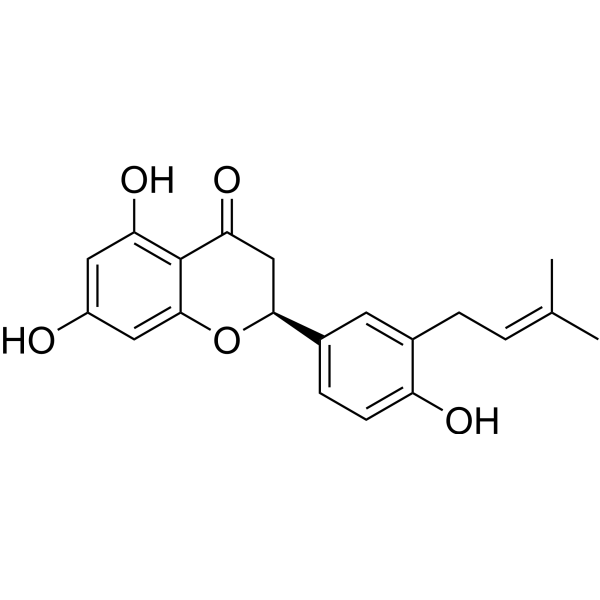 0 ImagesCat. No.: HY-N10133CAS No.: 119240-82-3Synonyms: 3′-PrenylnaringeninLicoflavanone (3′-Prenylnaringenin) is a flavanone with antioxidant, anti-inflammatory and anticancer activities. Licoflavanone can be isolated from the leaf extract of Glycyrrhiza glabra. Licoflavanone downregulates the mTOR/PI3K/AKT signaling pathway to inhibit the proliferation, migration and invasion of cancer cells, while activates Bax, Bad and multiple caspase enzymes to induce apoptosis. Its anti-inflammatory effect is manifested by reducing the nuclear translocation of NF-κB, decreasing the phosphorylation levels of p38, JNK and ERK1/2, thereby inhibiting the expression of nitric oxide, proinflammatory cytokines, COX-2 and iNOS. Licoflavanone is used in studies on nasopharyngeal carcinoma and related mechanisms.
-
Paeonidanin
 0 ImagesCat. No.: HY-187062CAS No.: 209969-75-5Paeonidanin is a monoterpenoid glycoside with an IC50 > 100 μM for nitric oxide production inhibition in lipopolysaccharide-activated microglia and macrophages. Paeonidanin suppresses lipopolysaccharide-induced production of nitric oxide, interleukin-6, and tumor necrosis factor alpha in macrophages and microglia.Paeonidanin can be used for the research of inflammation.
-
Corydaldine
 0 ImagesCorydaldine is a alkaloid. Corydaldine inhibits the production of NO in the BV2 cell line when stimulated by LPS.[1]
-
AR-C102222
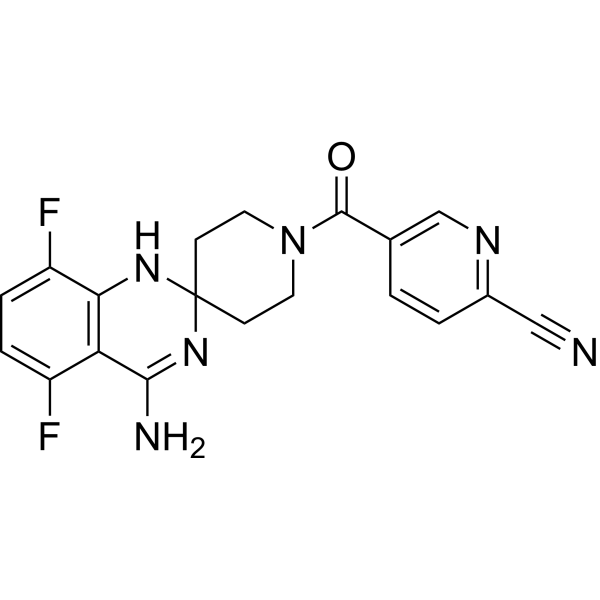 0 ImagesCat. No.: HY-12122CAS No.: 253771-21-0AR-C102222 is a spirocyclic fluoropiperidine quinazoline selective iNOS inhibitor. AR-C102222 can be used for the research of neuropathic pain.
-
Anti-inflammatory agent 65
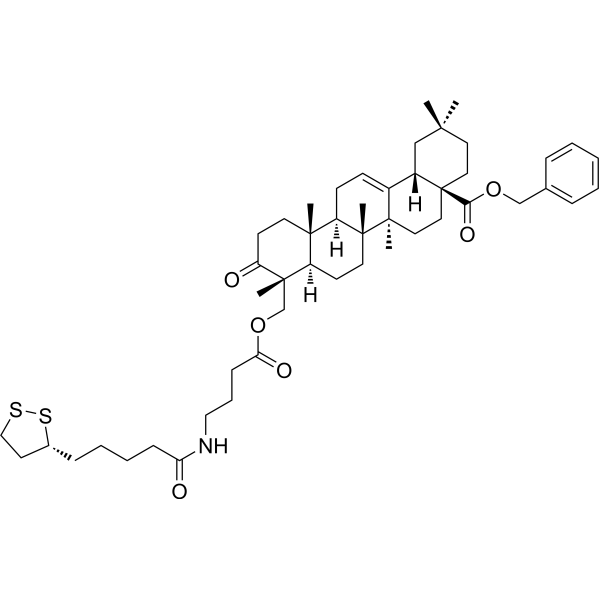 0 ImagesCat. No.: HY-149724CAS No.: 3035442-58-8Anti-inflammatory agent 65 (compound 29) is a Hederagonic acid derivative with potent anti-inflammatory activity. Anti-inflammatory agent 65 inhibits nitric oxide (NO) release. Anti-inflammatory agent 65 inhibits the nuclear translocation of IRF3 and p65, and disrupts the STING/IRF3/NF-κB signaling pathway, thereby attenuating the inflammatory response.
-
N-(p-Coumaroyl) Serotonin (Standard)
 0 ImagesCat. No.: HY-129440RCAS No.: 68573-24-0N-(p-Coumaroyl) Serotonin (Standard) is the analytical standard of N-(p-Coumaroyl) Serotonin (HY-129440). This product is intended for research and analytical applications. N-(p-Coumaroyl) Serotonin is an orally active polyphenol found in safflower seeds with potent anti-inflammatory, antioxidant, and antitumor activities. N-(p-Coumaroyl) Serotonin suppresses NF‑κB, TLR4/MyD88 and MAPK signaling, activates NQO1/HO‑1 pathways, and inhibits pro‑inflammatory cytokines, iNOS and COX‑2 and ROS production. N-(p-Coumaroyl) Serotonin induces S‑phase arrest and apoptosis in glioblastoma cells, reduces atherosclerotic lesions, and alleviates renal and vascular injuries. N-(p-Coumaroyl) Serotonin acts as a vasodilator, regulates calcium dynamics. N-(p-Coumaroyl) Serotonin can be used for the research of neurodegenerative diseases, atherosclerosis, glioblastoma, and acute renal failure.
-
Lubiprostone (Standard)
 0 ImagesCat. No.: HY-B0679RCAS No.: 136790-76-6Synonyms: RU-0211 (Standard); SPI-0211 (Standard)Lubiprostone (Standard) is the analytical standard of Lubiprostone. This product is intended for research and analytical applications. Lubiprostone (SPI-0211) increases intestinal fluid secretion through generation of CIC-2/CFTR and activation of cAMP signaling pathway. Lubiprostone inhibits myeloperoxidase (MPO) activity, downregulates Indomethacin (HY-14397)-induced iNOS and TNFα expression. Lubiprostone can be used for chronic constipation research.
-
FR260330
 0 ImagesCat. No.: HY-122063CAS No.: 442198-67-6FR260330 is a selective, orally active inhibitor for inducible nitric oxide synthase (iNOS) through suppression of iNOS dimerization. FR260330 inhibits the NO accumulation in rat splenocytes and human DLD-110 cells, with IC50 of 27 and 10 nM. FR260330 ameliorates the Lipopolysaccharides (HY-D1056)-induced inflammatory diseases in rats model.
-
Pulegone (Standard)
 0 ImagesPulegone (Standard) is the analytical standard of Pulegone (HY-N1500). This product is intended for research and analytical applications. Pulegone is a monoterpene ketone compound widely present in the essential oils of many plants. Pulegone can also be used as a bird repellent. Pulegone has multiple activities such as anti-inflammatory, antibacterial, antifungal, and anti-hyperalgesic effects. Pulegone is particularly effective against bacteria of the Salmonella species.
-
meso-Zeaxanthin
 0 ImagesCat. No.: HY-167632CAS No.: 31272-50-1Synonyms: (3R,3′S)-Zeaxanthinmeso-Zeaxanthin ((3R,3′S)-Zeaxanthin) is an orally active xanthophyll carotenoid. meso-Zeaxanthin inhibits CYP1A1, CYP1A2, CYP2B1/2, COX-2, TNF-α and iNOS, and enhances the activities of Uridine diphosphate glucuronosyltransferase and Glutathione-S-transferase. meso-Zeaxanthin quenches oxygen free radicals. meso-Zeaxanthin filters short-wavelength blue light, alleviates oxidative damage and visual abnormalities. meso-Zeaxanthin reduces tumor incidence, prolongs tumor latency and survival rate of tumor-bearing mice, and inhibits paw edema. meso-Zeaxanthin can be used in research related to sarcoma and age-related macular degeneration.
-
4-Methoxybenzyl alcohol (Standard)
 0 ImagesSynonyms: P-Methoxy-benzyl alcoho (Standard); (4-Methoxyphenyl)methanol (Standard)4-Methoxybenzyl alcohol (Standard) (P-Methoxy-benzyl alcoho (Standard); (4-Methoxyphenyl)methanol (Standard)) is the analytical standard of 4-Methoxybenzyl alcohol (HY-W015777). This product is intended for research and analytical applications. 4-Methoxybenzyl alcohol (P-Methoxy-benzyl alcoho; (4-Methoxyphenyl) methanol) is a naturally derived volatile aromatic compound. 4-Methoxybenzyl alcohol upregulates the phosphorylation level of PI3K/Akt pathway proteins, downregulates the expression of pro-inflammatory factors, increases the content of tight junction proteins occludin and claudin-5, and alleviates structural damage to the blood-brain barrier. 4-Methoxybenzyl alcohol improves the decrease in viability and NO level of cerebral microvascular endothelial cells induced by oxygen-glucose deprivation/reperfusion, and reduces the release of lactate dehydrogenase. 4-Methoxybenzyl alcohol serves as a substrate in the two-phase persulfate-mediated electro-oxidation system, where it is directionally oxidized to p-anisaldehyde. 4-Methoxybenzyl alcohol acts as a substrate for wild-type fungal aryl alcohol oxidase. 4-Methoxybenzyl alcohol can be used in studies related to ischemic stroke, as well as in research across various fields such as chemical synthesis, including the synthesis of fragrances and flavorings.
-
8-Hydroxygenistein
 0 ImagesCat. No.: HY-W753779CAS No.: 13539-27-0Synonyms: 8-OHG8-Hydroxygenistein (8-OHG) is an antioxidant that can effectively scavenge nitric oxide (NO) and superoxide anion (O₂⁻). 8-Hydroxygenistein belongs to ortho-dihydroxy isoflavones (ODI) and is abundantly present in dark soy sauce and light soy sauce. Its antioxidant activity is stronger than that of its parent compound genistein (HY-14596). The content of 8-Hydroxygenistein is positively correlated with the antioxidant capacity of soy sauce (r = 0.959), and it remains highly stable even after being heated in boiling water for 60 minutes. During the brewing and storage of soy sauce, 8-Hydroxygenistein effectively prevents oxidative damage, making it promising for use in food antioxidant research.
-
Ovalichromene B
 0 ImagesCat. No.: HY-N20723CAS No.: 62868-06-8Ovalichromene B is a flavonone and phytochemical with an IC50 of 78.83 ± 1.04 μM, found in the dry stem of Pongamia pinnata (L.) Pierre.Ovalichromene B inhibits lipopolysaccharide-induced nitric oxide production.Ovalichromene B exhibits high intestinal absorption, non-mutagenicity, non-hepatotoxicity, and no predicted hERG I or II channel inhibition.Ovalichromene B can be used for the research of neurodegenerative diseases.Ovalichromene B can be used for the research of carbapenem-resistant enterobacterales infections.
-
Prim-O-glucosylcimifugin (Standard)
 0 ImagesCat. No.: HY-N0635RCAS No.: 80681-45-4Prim-O-glucosylcimifugin (Standard) is the analytical standard of Prim-O-glucosylcimifugin. This product is intended for research and analytical applications. Prim-O-glucosylcimifugin exerts anti-inflammatory effects through the inhibition of iNOS and COX-2 expression by through regulating JAK2/STAT3 signaling.
-
Sodium propionate-13C-1
 0 ImagesCat. No.: HY-B1773AS1CAS No.: 83587-76-2Sodium propionate-13C-1 is the 13C-labeled Propionate sodium (HY-B1773A). Sodium propionate is an orally active short-chain fatty acid. Sodium propionate can be produced by intestinal bacteria from the metabolism of dietary fiber. Sodium propionate increases PPAR-γ, inhibits NF-κB activation, and reduces COX-2 expression and NO production. Sodium propionate also induces Apoptosis and Autophagy. Sodium propionate reduces HSV-1-induced keratitis. Sodium propionate has anticancer effects against glioblastoma. Sodium propionate exhibits neuroprotective, antioxidant, and anti-inflammatory activities. Sodium propionate can be used in the research of spinal cord injury and Alzheimer's disease.




