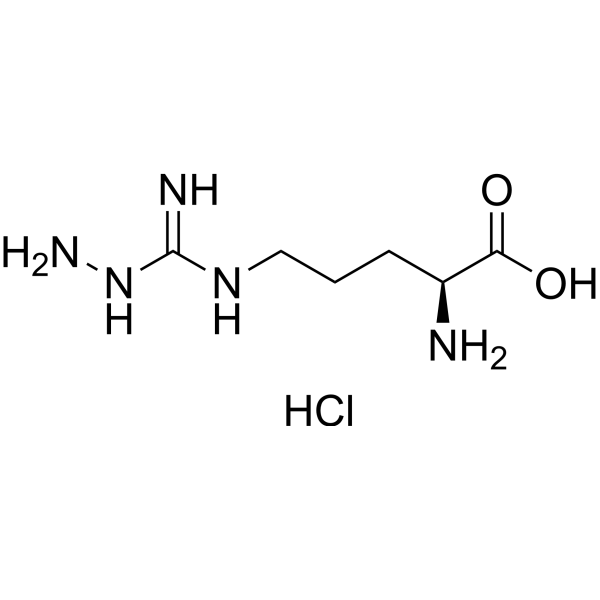
NO Synthase
Nitric oxide synthases; NOS
Nitric oxide synthases (NOSs) are a family of enzymes catalyzing the production of nitric oxide (NO) from L-arginine. NO synthases catalyze the oxidation of L-arginine to NO and L-citrulline. Mammals contain three NOS isoforms: neuronal NOS (nNOS), inducible NOS (iNOS), and endothelial NOS (eNOS). NO produced from these different NOS isoforms is involved in a wide range of physiologic functions in the nervous, immune, and cardiovascular systems. Unregulated NO production can lead to pathologic conditions such as stroke, inflammation, and hypertension. Therefore, the control of NOS activity by isoform selective NOS inhibitors has great potential for therapeutic treatments of NO-related diseases.
NO Synthase Isoform Specific Products
All Product Categories
-
NO Synthase Inhibitors
(755)
View all products
-
NO Synthase Agonists
(5)
View all products
-
NO Synthase Antagonists
(4)
View all products
-
NO Synthase Activators
(111)
View all products
-
NO Synthase Modulators
(14)
View all products
-
NO Synthase MDM2 Inhibitor
(1)
View all products
-
NO Synthase Inducers
(7)
View all products
-
NO Synthase Controls
(6)
View all products
-
NO Synthase Substrates
(2)
View all products
-
NO Synthase Ligand
(1)
View all products
-
NO Synthase Related Products (1009)
Related Products (1009)

-
Antibodies (6)
-
NO Synthase Isoform Comparison
-
Roburic acid (Standard)
 0 ImagesRoburic acid (Standard) is the analytical standard of Roburic acid. This product is intended for research and analytical applications. Roburic acid acts as an anti-inflammatory, anti-tumor and osteoclastogenesis inhibitor, with a Ki of 7.066 μM against human TNF, an IC50 of 9 μM against human COX-2, and an IC50 of 5 μM against ovine COX-1. Roburic acid reduces the production of inflammatory mediators such as NO and IL-6 in macrophages by inhibiting the NF-κB and MAPK (p38/JNK) pathways. By competitively inhibiting the TNF-TNF-R1 interaction, Roburic acid blocks the downstream NF-κB signaling pathway, thereby inducing cell cycle arrest and apoptosis in cancer cells. Roburic acid specifically inhibits osteoclastogenesis and bone resorption by suppressing the RANKL/TRAF6/NF-κB/NFATc1 axis. Roburic acid can be used in research related to osteolytic diseases such as osteoporosis, colorectal cancer and inflammatory diseases.
-
CI-1018
 0 ImagesCat. No.: HY-19299CAS No.: 245329-99-1CI-1018 is an orally active selective PDE-4 inhibitor, with IC50 values of 1.1 μM, 35.8 μM, and 73.4 μM against hPDE-4, canine PDE-4, and guinea pig PDE-4, respectively. CI-1018 induces iNOS expression and Apoptosis. CI-1018 induces vascular injury, medial necrosis, hemorrhage, edema, thymic atrophy, ketonuria, and weight loss. CI-1018 can be used in research related to asthma, vasculitis, and mesenteric vasculitis/arteriopathy.
-
Haloperidol decanoate (Standard)
 0 ImagesCat. No.: HY-107969RCAS No.: 74050-97-8Haloperidol decanoate (Standard) is the analytical standard of Haloperidol decanoate. This product is intended for research and analytical applications. Haloperidol decanoate is a depot preparation of haloperidol, a commonly used butyrophenone derivative with antipsychotic activity. Haloperidol decanoate can increase the striatal D2 receptor in rat. Haloperidol decanoate can improve conditions of psychoses (mainly schizophrenia). Haloperidol decanoate can lead to increased accumulation of the dopamine metabolites homo-vanillic acid. Haloperidol decanoate can reduce intestinal transport, increase gastric emptying and reduce acid output in rat model.
-
Gluconate Calcium (Standard)
 0 ImagesSynonyms: Calcium D-gluconate (Standard); Gluconic acid hemicalcium salt (Standard)Gluconate Calcium (Standard) (Calcium D-gluconate (Standard)) is the analytical standard of Gluconate Calcium (HY-B1092). This product is intended for research and analytical applications. Gluconate (D-Gluconic acid) Calcium is an orally active glucose derivative. Gluconate Calcium reduces nitric oxide and inflammatory cytokines (IL-1β and IL-6). Gluconate Calcium inhibits ERK phosphorylation. Gluconate Calcium has antioxidant and antiplatelet activation activities. Gluconate Calcium has antitumor activity against colorectal cancer. Gluconate Calcium improves osteoarthritis, intestinal damage and acute lung injury.
-
Irisflorentin (Standard)
 0 ImagesCat. No.: HY-N0268RCAS No.: 41743-73-1Irisflorentin (Standard) is the analytical standard of Irisflorentin. This product is intended for research and analytical applications. Irisflorentin, a naturally occurring isoflavone, is an abundant active constituent in Belamcanda chinensis. Irisflorentin markedly reduces the transcriptional and translational levels of inducible nitric oxide synthase (iNOS) as well as the production of NO. Anti-inflammatory activity.
-
(E)-Methyl isoferulate
 0 ImagesCat. No.: HY-N7423ACAS No.: 97966-29-5Synonyms: (E)-Isoferulic acid methyl ester(E)-Methyl isoferulate ((E)-Isoferulic acid methyl ester) is a derivative of Cinnamic acid (HY-N0610A) and NO inhibitor, with an IC50 > 100 μM against nitric oxide production. (E)-Methyl isoferulate is isolable from the solid cultures of the edible mushroom Neolentinus lepideus. (E)-Methyl isoferulate exerts mild anticancer effects against liver cancer and leukemia.
-
Sinapaldehyde (Standard)
 0 ImagesSinapaldehyde is a methoxyphenol and a selective COX-2 inhibitor (IC50: 47.8 µM) that can be extracted from various plants. Sinapaldehyde has antibacterial, anti-inflammatory, and antioxidant activities. Sinapaldehyde can scavenge DPPH free radicals (IC50: 172 μM). Sinapaldehyde is active against both Gram-negative and Gram-positive bacteria.
-
Berkeleyacetal C
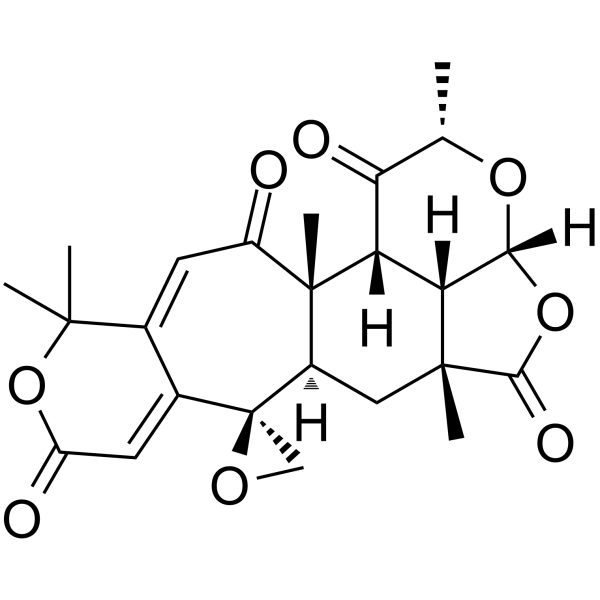 0 ImagesCat. No.: HY-N10175CAS No.: 959772-67-9keleyacetal C, a meroterpenoid compound with anti-inflammatory effects via inhibiting NF-κB, ERK1/2 and IRF3 signaling pathways. Berkeleyacetal C significantly inhibits the expression of iNOS and the following NO production by macrophages. Berkeleyacetal C inhibits expression and secretion of key pro-inflammatory factors and chemokines (TNF-α, IL-6, IL-1β, MIP-1α, and MCP-1). Berkeleyacetal C also inhibits activation of neutrophils and reactive oxygen species (ROS) production. Berkeleyacetal C can be used for the study of inflammatory disorders.
-
Cinnamyl Alcohol (Standard)
 0 ImagesCinnamyl Alcohol (Standard) is the analytical standard of Cinnamyl Alcohole (HY-Y0078). This product is intended for research and analytical applications. Cinnamyl Alcohol is an active component from chestnut flower, inhibits increased PPARγ expression, exhibits anti-obesity, antioxidant and anti-inflammatory activities.
-
PTIO (Standard)
 0 ImagesPTIO (Standard) is the analytical standard of PTIO. This product is intended for research and analytical applications. PTIO is a specific scavenger of NO and redox mediator. PTIO reacts with •NO to form the corresponding imino nitroxides and •NO2. PTIO enhances organic contaminants oxidation by permanganate.
-
Sudachitin
 0 ImagesSudachitin is an orally active compound that potently inhibits mouse PDE1C and human PDE4B, with IC50 values of 5.0 μM and 15.0 μM, respectively. Sudachitin upregulates Sirt1 and PGC‑1α expression in skeletal muscle to regulate energy metabolism and promote mitochondrial biogenesis. Sudachitin improves lipid metabolism, glucose tolerance, insulin sensitivity, energy expenditure, and fatty acid β‑oxidation. Sudachitin activates p38MAPK signaling, induces HSP27 phosphorylation and caspase‑dependent apoptosis, and blocks EGF‑driven keratinocyte migration and proliferation. Sudachitin suppresses LPS‑induced TNF‑α, NO, and iNOS expression in macrophages and shows potent anti‑inflammatory activity. Sudachitin can be used for the research of metabolic syndrome, type 2 diabetes, and psoriasis..
-
1400W Dihydrochloride (Standard)
 0 Images1400W (Dihydrochloride) (Standard) is the analytical standard of 1400W (Dihydrochloride). This product is intended for research and analytical applications. 1400W dihydrochloride is the dihydrochloride form of 1400W (HY-18730). 1400W is a slow, tight binding, and highly selective inducible nitric-oxide synthase (iNOS) inhibitor, with a Kd value ≤ 7 nM. 1400W inhibits iNOS induction in microglial cells, and reduces generation of NO, thereby mitigating oxidative stress and neuronal cell apoptosis in the rat cerebral cortex, and improving the spatial memory dysfunction caused by acute hypobaric hypoxia-reoxygenation.
-
N-Benzylacetamidine hydrobromide
 0 ImagesCat. No.: HY-W408607CAS No.: 186545-76-6N-Benzylacetamidine (hydrobromide) is a acetamidine compound. N-Benzylacetamidine (hydrobromide) is a selective inducible nitric oxide synthase (iNOS) inhibitor with an IC50 of 0.20 μM.
-
Talaromyketide B
 0 ImagesCat. No.: HY-N15347Talaromyketide B is a polyketide compound with anti-inflammatory activity, discovered in the soil bacterium Talaromyces sp. KYS-41. Talaromyketide B inhibits the activation of the NF-κB and MAPK signaling pathways and dose-dependently suppresses pro-inflammatory cytokines, such as IL-1β, IL-6, IL-10, and TNF-α, as well as the transcriptional activity of inflammatory mediators, including iNOS and COX-2. Talaromyketide B holds potential for research in the fields of immunity and inflammatory diseases.
-
Dihydroparadol
 0 ImagesCat. No.: HY-184337CAS No.: 143111-84-6Dihydroparadol is a iNOS inhibitor with an IC50 of 7.24 μM, and it is found in ginger. Dihydroparadol partially inhibits the catalytic activity of iNOS, blocks the nuclear translocation of NF-κB p65, reduces NF-κB activity, and attenuates lipopolysaccharide-induced degradation of IκB-α, thereby inhibiting NF-κB-mediated iNOS gene expression and protein production. Dihydroparadol inhibits lipopolysaccharide-induced nitric oxide production in macrophages and exhibits anti-inflammatory activity. Dihydroparadol increases ABCA1 protein abundance by elevating mRNA levels and reducing proteasomal degradation, and also increases ABCG1 protein abundance by enhancing protein stability. Dihydroparadol promotes cholesterol efflux from cholesterol-loaded macrophages via apolipoprotein A1-mediated and plasma-mediated pathways. Dihydroparadol inhibits PDGF-induced vascular smooth muscle cell proliferation, shows no cytotoxicity to vascular smooth muscle cells within the tested concentration range, and does not interfere with endothelial cell proliferation. Dihydroparadol can be used in the research of inflammatory diseases, atherosclerosis and cardiovascular diseases.
-
Pelubiprofen (Standard)
 0 ImagesCat. No.: HY-12383RCAS No.: 69956-77-0Pelubiprofen (Standard) is the analytical standard of Pelubiprofen. This product is intended for research and analytical applications. Pelubiprofen is an orally active anti-inflammatory agent that inhibits COX enzyme activity (with IC50 values of 10.66 and 2.88 μM for COX-1 and COX-2, respectively). Pelubiprofen has significant anti-inflammatory and analgesic effects.
-
(2R)-6-Methoxynaringenin
 0 ImagesCat. No.: HY-N2715ACAS No.: 1212075-61-0(2R)-6-Methoxynaringenin is the R isomer of 6-Methoxynaringenin (HY-N2715). 6-Methoxynaringenin is a flavonoid, that inhibits NO production with an IC50 of 25.8 μM.
-
Rosuvastatin lactone-d6
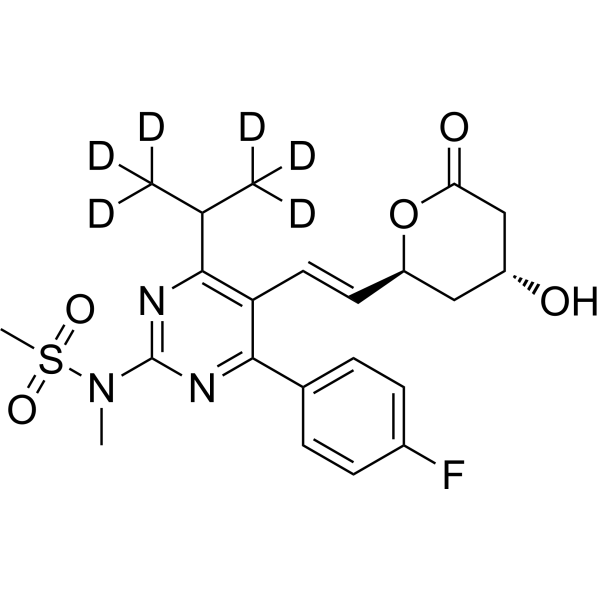 0 ImagesCat. No.: HY-138166SRosuvastatin lactone-d6 is the deuterium labeled Rosuvastatin lactone. Rosuvastatin lactone is a metabolite of Rosuvastatin (HY-17504A), a statin lipid-lowering agent and HMG-CoA inhibitor. Rosuvastatin lactone exhibits endothelium-independent and HMG-CoA reductase-independent vasorelaxant activity in rat aortic rings, and its vasorelaxant effect is jointly mediated by NO produced by inducible nitric oxide synthase (iNOS) located in vascular smooth muscle and activation of potassium channels. Rosuvastatin lactone itself has no lipid-lowering effect.
-
Alaternin
 0 ImagesCat. No.: HY-121174CAS No.: 39723-40-5Synonyms: CatharticinAlaternin (Catharticin) is an anthraquinone compound with antioxidant and hepatoprotective activities. Alaternin has an inhibitory activity against hydroxyl radicals generated in a cell-free chemical system (FeSO4/H2O2) with an IC50 value of 3.05 μM. Alaternin exhibits hepatoprotective activity against Tacrine (HY-111338)-induced toxicity in human hepatic HepG2 cells with an EC50 value of 4.02 μM.