



Schistosome
Schistosoma mansoni thioredoxin glutathione reductase (SmTGR) maintains parasite redox balance by reducing both oxidized thioredoxin and glutathione with electrons from NADPH[1]. Mechanistically, SmTGR forms an unusual thiol redox system because it combines thioredoxin reductase, glutathione reductase, and glutaredoxin activities in one enzyme[2]. This organization supports adult worm survival, and RNA interference silencing of TGR killed in vitro parasites within 4 days[3]. Compared with related isoforms, S. mansoni lacks specialized thioredoxin reductase and glutathione reductase enzymes, using one multifunctional TGR instead[3]. Structurally, SmTGR is a unique fusion of a glutaredoxin domain with a thioredoxin reductase domain containing a penultimate selenocysteine[4]. For experimental applications, X-ray crystallography and inhibitor screening identified SmTGR binding sites, selective inhibitors, and non-covalent compounds with schistosomicidal activity in parasite culture or mouse infection models[5][6][7].
References:
- [1]. Smith MM, et al. Descriptive Analysis of Transient-State Observations for Thioredoxin/Glutathione Reductase (Sec597Cys) from Schistosoma mansoni. Biochemistry. 2023 May 2;62(9):1497-1508. [Content Brief]
- [2]. Alger HM, et al. The disulfide redox system of Schistosoma mansoni and the importance of a multifunctional enzyme, thioredoxin glutathione reductase. Mol Biochem Parasitol. 2002 Apr 30;121(1):129-39. [Content Brief]
- [3]. Kuntz AN, et al. Thioredoxin glutathione reductase from Schistosoma mansoni: an essential parasite enzyme and a key drug target. PLoS Med. 2007 Jun;4(6):e206. [Content Brief]
- [4]. Lee MJ, et al. Time to HIV rebound after infusion of long-acting broadly neutralising antibodies 3BNC117-LS and 10-1074-LS and analytical treatment interruption (the RIO trial): a double-blind, randomised, placebo-controlled trial. Lancet HIV. 2026 May 27:S2352-3018(26)00059-7. [Content Brief]
- [5]. Petukhova VZ, et al. Non-covalent inhibitors of thioredoxin glutathione reductase with schistosomicidal activity in vivo. Nat Commun. 2023 Jun 22;14(1):3737. [Content Brief]
- [6]. Alhussein H, et al. AI-based shape optimization of galloping micro-power generators: exploring the benefits of curved surfaces. Sci Rep. 2024 Jan 18;14(1):1552. [Content Brief]
- [7]. Silvestri, et al. Thioredoxin glutathione reductase from Schistosoma mansoni in complex with 1,4-Bis(2-hydroxyethyl)piperazine.2 February 2018
All Product Categories
-
Schistosome Related Products (40)
Related Products (40)

- 1
- 2
-
(R)-Praziquantel-d11
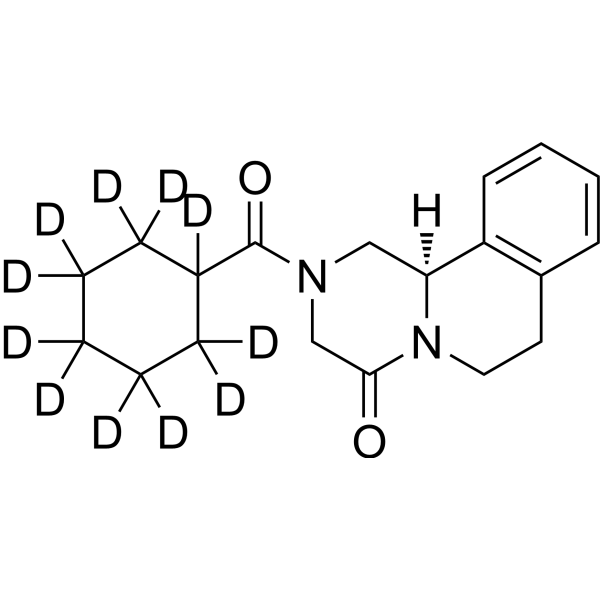 0 Images(R)-Praziquantel-d11 is the deuterium labeled (R)-Praziquantel. (R)-Praziquantel, the active enantiomer of Praziquantel, is a partial agonist of the human 5-HT2B receptor. (R)-Praziquantel acts as an antischistosomal eutomer.
-
Oxamniquine
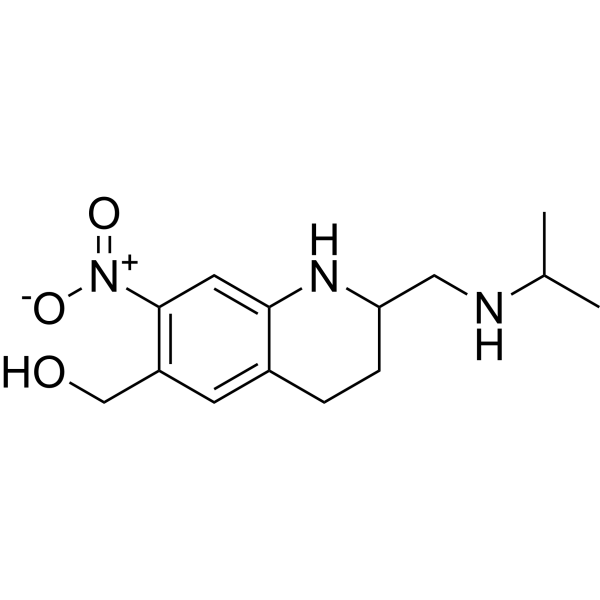 0 ImagesOxamniquine is a potent agent for the treatment of schistosomiasis.
-
Anemonin
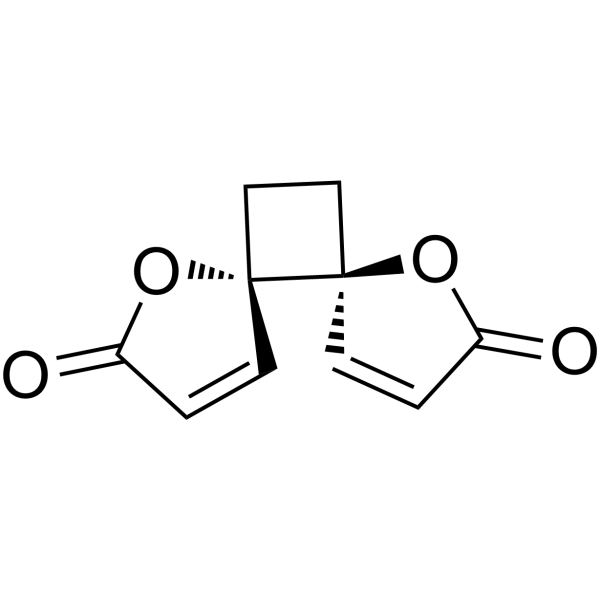 0 ImagesSynonyms: Pulsatilla camphor; Anemonine; trans-AnemoninAnemonin (Pulsatilla camphor; Anemonine; trans-Anemonin) is a naturally occurring bislactone small molecule derived from Ranunculaceae with blood-brain barrier permeability, possessing a variety of activities including anti-inflammatory, antioxidant, neuroprotective, melanogenesis-inhibiting, and antiparasitic effects. Anemonin inhibits iNOS to reduce NO release; it inhibits PKC-θ protein expression and downregulates the pro-inflammatory factors TNF-α, IL-1β, and IL-6; it enhances the activities of the antioxidant enzymes SOD, CAT, and GSH-Px, and reduces MDA and ROS levels. Anemonin modulates the Bcl-2 / Bax / caspase-3 pathway to inhibit apoptosis; it downregulates melanogenesis-related molecules including MITF, TYR, TRP1, and TRP2, thereby inhibiting melanin synthesis in human melanocytes. Anemonin inhibits Leishmania and Schistosoma mansoni. Anemonin is used in research related to diseases such as hyperpigmentation, cerebral ischemia/reperfusion injury, inflammation, sepsis-induced acute lung injury, acute ulcerative colitis, leishmaniasis, and schistosomiasis.
-
Z-Pro-Pro-CHO
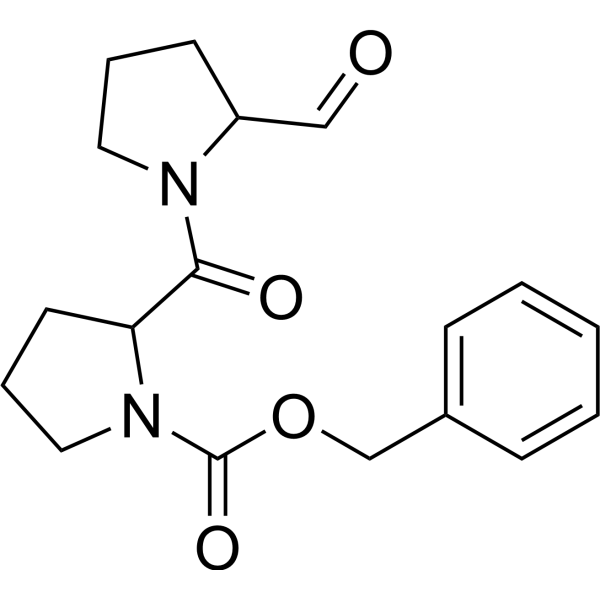 0 ImagesZ-Pro-Pro-CHO is a potent inhibitor of prolyl oligopeptidase (POP), with extremely high affinity for human prolyl oligopeptidase (HsPOP) (IC50=0.012 μM), and it also effectively inhibits the activity of Schistosoma mansoni prolyl oligopeptidase (SmPOP) (IC50=0.16 μM). Z-Pro-Pro-CHO does not block the phosphorylation of ERK or the production of TNF-α or IFN-γ in immune cells from presensitized mice, nor does it induce harmful phenotypes in cultured Schistosoma mansoni schistosomula. Z-Pro-Pro-CHO only partially inhibits epithelial cell wound healing at extremely high concentrations. Z-Pro-Pro-CHO finds wide application in studies related to schistosomiasis.
-
Amoscanate
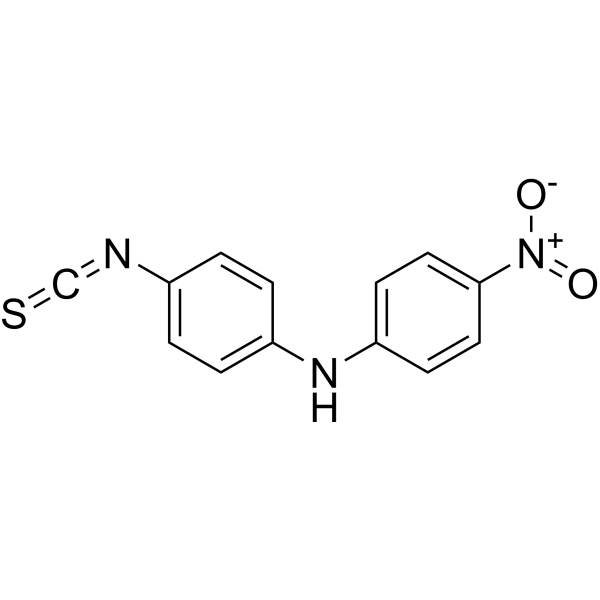 0 ImagesSynonyms: CGP4540Amoscanate (cgp4540) is phenyl isothiocyanate in which the hydrogen at the para-position has been replaced by a 4-nitroanilinyl group. Amoscanate is an anti-schistosomal agent. Amoscanate, as an isothiocyanate compound and uncoupler of oxidative phosphorylation, potently injures rodent ependyma.
-
Dihydroartemisinin-d5
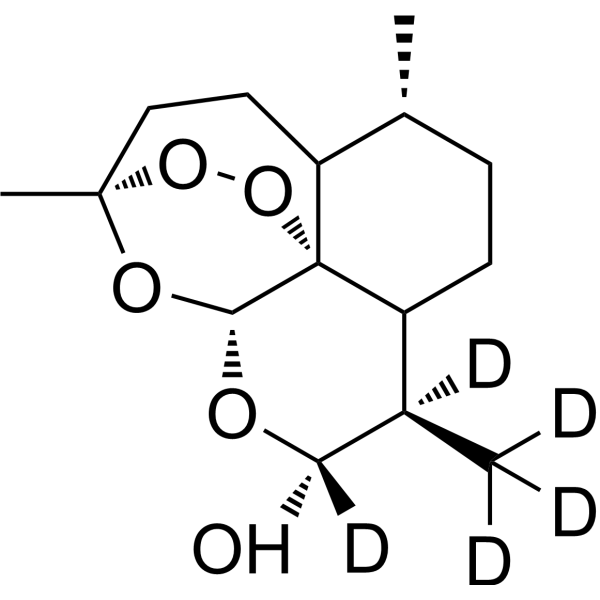 0 ImagesCat. No.: HY-N0176S3Synonyms: Dihydroqinghaosu-d5; β-Dihydroartemisinin-d5; Artenimol-d5Dihydroartemisinin-d5 (Dihydroqinghaosu-d5) is the d5-labeled Dihydroartemisinin (HY-N0176). Dihydroartemisinin is an orally active metabolite of rtemisinin (HY-B0094) and antimalarial agent. Dihydroartemisinin induces Autophagy by inhibiting NF-κB activation. Dihydroartemisinin promotes ROS accumulation. Dihydroartemisinin exhibits anticancer activity in esophageal cancer cells. Dihydroartemisinin shows schistosomicidal activity against juvenile and adult worms of Schistosoma japonicum, reduces worm burden, and displays antiparasitic activity. Dihydroartemisinin can be used in research related to multiple myeloma, promyelocytic leukemia, esophageal cancer, and Schistosoma japonicum infection.
-
Dihydroartemisinin-d3
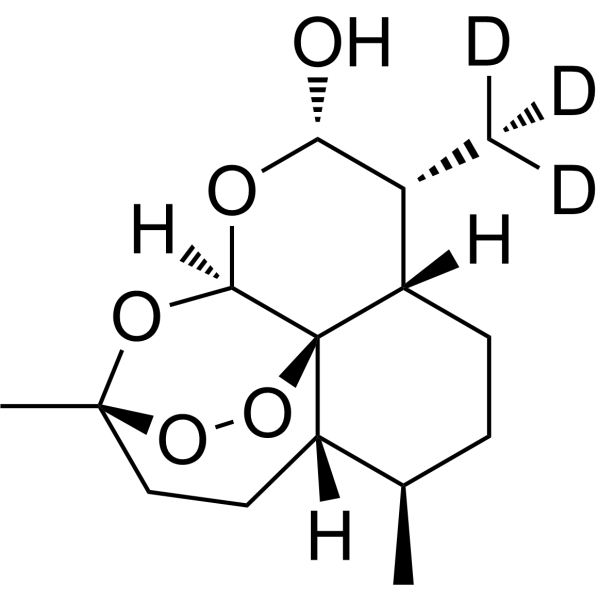 0 ImagesCat. No.: HY-N0176SCAS No.: 176774-98-4Synonyms: Dihydroqinghaosu-d3; β-Dihydroartemisinin-d3; Artenimol-d3Dihydroartemisinin-d3 (Dihydroqinghaosu-d3) is the d3-labeled Dihydroartemisinin (HY-N0176). Dihydroartemisinin is an orally active metabolite of rtemisinin (HY-B0094) and antimalarial agent. Dihydroartemisinin induces Autophagy by inhibiting NF-κB activation. Dihydroartemisinin promotes ROS accumulation. Dihydroartemisinin exhibits anticancer activity in esophageal cancer cells. Dihydroartemisinin shows schistosomicidal activity against juvenile and adult worms of Schistosoma japonicum, reduces worm burden, and displays antiparasitic activity. Dihydroartemisinin can be used in research related to multiple myeloma, promyelocytic leukemia, esophageal cancer, and Schistosoma japonicum infection.
-
Ro 13-3978
 0 ImagesCat. No.: HY-W054427CAS No.: 70842-04-5Ro 13-3978 is an orally active antischistosomal agent. Ro 13-3978 exhibits excellent in vivo antischistosomal activity against juvenile and adult Schistosoma mansoni infections. Ro 13-3978 shows no in vivo activity against E. caproni and F. hepatica. Ro 13-3978 blocks dihydrotestosterone-induced proliferation of androgen-dependent cells. Ro 13-3978 can be used in research related to schistosomiasis.
-
HDAC8-IN-2
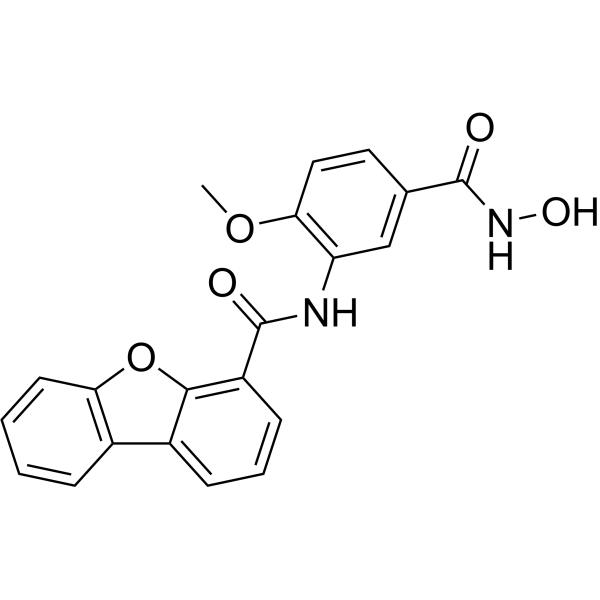 0 ImagesCat. No.: HY-144098CAS No.: 2824131-20-4HDAC8-IN-2 (compound 5o) is a potent HDAC8 inhibitor, with IC50 values of 0.27 and 0.32 μM for smHDAC8 (Schistosoma mansoni histone deacetylase 8) and hHDAC8, respectively. HDAC8-IN-2 shows significant killing of the schistosome larvae. HDAC8-IN-2 markedly impairs egg laying of adult worm pairs.
-
Cardol diene
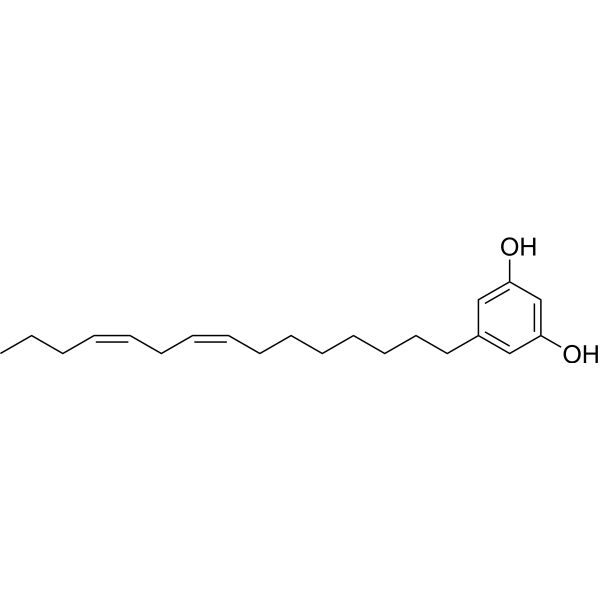 0 ImagesCat. No.: HY-118495CAS No.: 79473-25-9Cardol diene is a potent antiparasitic agent. Cardol diene shows schistosomicidal activity and inhibits cell viability.
-
(R)-Meclonazepam
 0 ImagesCat. No.: HY-101725ACAS No.: 86630-81-1Synonyms: Ro 11-3624; Ro 11-3624/001(R)-Meclonazepam (Ro 11-3624) is an inactive enantiomer of Meclonazepam. Meclonazepam is a benzodiazepine derivative with anti-schistosomiasis activities.
-
Antiparasitic agent-10
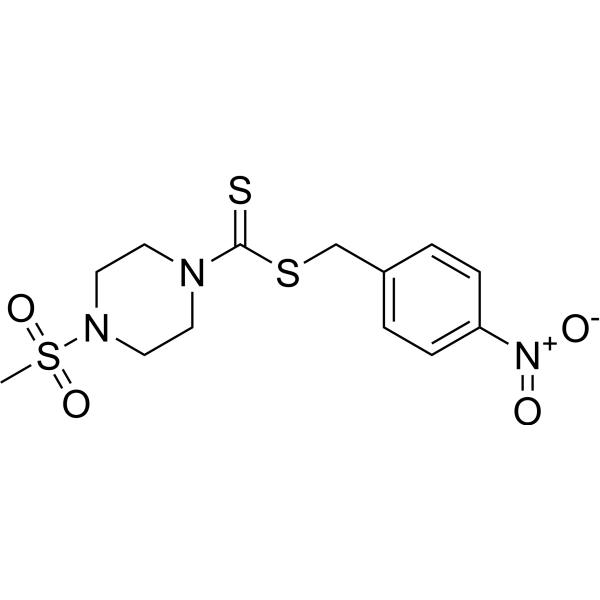 0 ImagesCat. No.: HY-151433CAS No.: 2138480-87-0Antiparasitic agent-10 (Compound 94) is an anti-parasitic agent, shows anti-schistosomal activity. Antiparasitic agent-10 shows activity against adults of Schistosoma mansoni, and can be used in Schistosomiasis research.
-
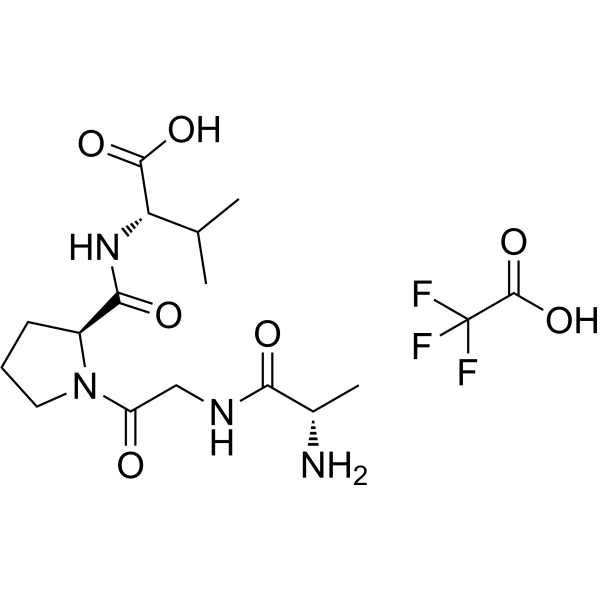
AGPV
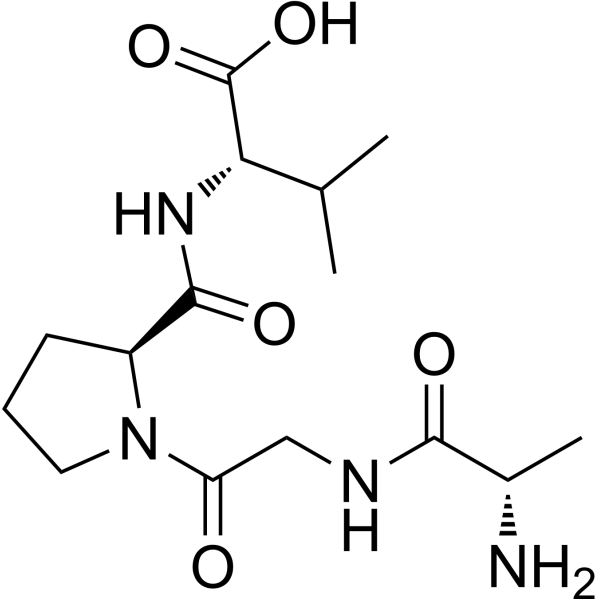 0 ImagesCat. No.: HY-P3425CAS No.: 154485-78-6AGPV, a tetrapeptide, has the potential for prevention of schistosome parasite infection research.

-
MB4253
 0 ImagesCat. No.: HY-182621CAS No.: 101264-04-4MB4253 is an orally active aliphatic amide and schistosomicidal agent. MB4253 acts against Schistosoma mansoni. MB4253 can be used for the research of schistosomiasis.
-
Teroxalene
 0 ImagesCat. No.: HY-183178CAS No.: 14728-33-7Teroxalene is a piperazine-based Schistosomicide. Teroxalene is used for the research of schistosomiasis.

-
Antiparasitic agent-38
 0 ImagesCat. No.: HY-180337CAS No.: 15382-63-5Antiparasitic agent-38 is an orally active antischistosomal agent that effectively clears Schistosoma mansoni infections in mice (single oral LD50=0.8 g/kg) and significantly inhibits S. mansoni infection. Antiparasitic agent-38 can be used for research on schistosomiasis, particularly S. mansoni infection .
-
4-((5-(4-Ethoxyphenoxy)pentyl)oxy)aniline
 0 ImagesCat. No.: HY-W035412CAS No.: 102321-36-84-((5-(4-Ethoxyphenoxy) pentyl) oxy) aniline is an orally active, non-retinotoxic monoamine-based schistosomicide. 4-((5-(4-Ethoxyphenoxy) pentyl) oxy) aniline causes no retinotoxicity or other ocular adverse reactions when administered in cats. 4-((5-(4-Ethoxyphenoxy) pentyl) oxy) aniline can be used in schistosomiasis research.
- 1
- 2



