



Trypanosoma Inhibitor
-
Dehydrobruceine A
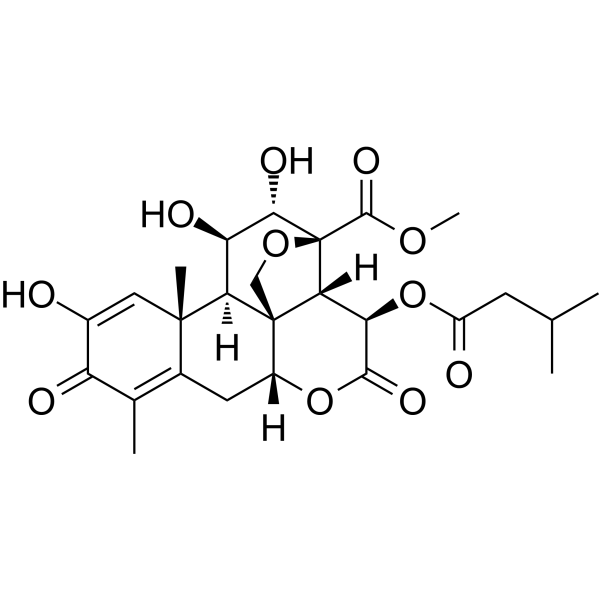 0 ImagesCat. No.: HY-N8257CAS No.: 73435-47-9
Dehydrobruceine A is a low potent antitrypanosomal agent, with an IC50 of 88.5 nM for Plasmodium falciparum.
-
Alazopeptin
 0 Images
Alazopeptin is a non-ribosomal tripeptide azoamino acid antibiotic isolated from various Streptomyces species, with significant anti-tumor, antibacterial and trypanocidal activities. Alazopeptin exhibits cytotoxicity against mouse leukemia cells and S-180 tumor cells, inhibits the growth of Bacillus subtilis, and shows activity against Trypanosoma brucei. Alazopeptin can be widely used in studies related to mouse leukemia, S-180 tumor, human African trypanosomiasis and nagana.
-
Antiparasitic agent-2
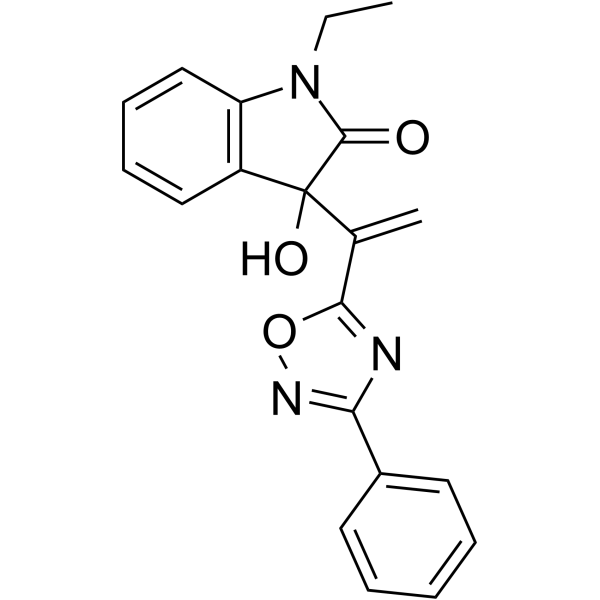 0 ImagesCat. No.: HY-146041CAS No.: 2494277-80-2
Antiparasitic agent-2 (compound 8a) has highly antiparasitic activity against Leishmania infantum (L. infantum) and Trypanosoma cruzi (T. cruzi) with IC50s of 7.28 μM and 2.30 μM, respectively. Antiparasitic agent-2 also has certain cytotoxicity against HepG2 (CC50 = 26.79 μM).
-
MDL 73811
 0 ImagesCat. No.: HY-112252CAS No.: 123642-27-3
MDL 73811 is a potent AdoMetDC inhibitor and anti-trypanosomal compound. MDL 73811 has curative efficacy in a hemolymphatic model of HAT.
-
Antitrypanosomal agent 6
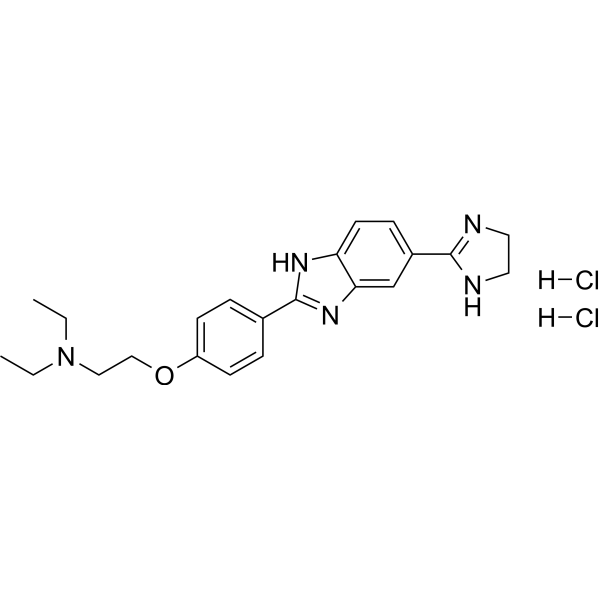 0 ImagesCat. No.: HY-147549CAS No.: 2492436-35-6
Antitrypanosomal agent 6 (compound 18a) is a potent and antitrypanosomal agent with favorable ADME properties. Antitrypanosomal agent 6 is > 2-fold more potent against Trypanosoma brucei (T. brucei) than Nifurtimox, with an IC50 value of 0.47 μM. Antitrypanosomal agent 6 has strong interaction to DNA and can bind with high selectivity to AT-rich DNA.
-
Antiparasitic agent-16
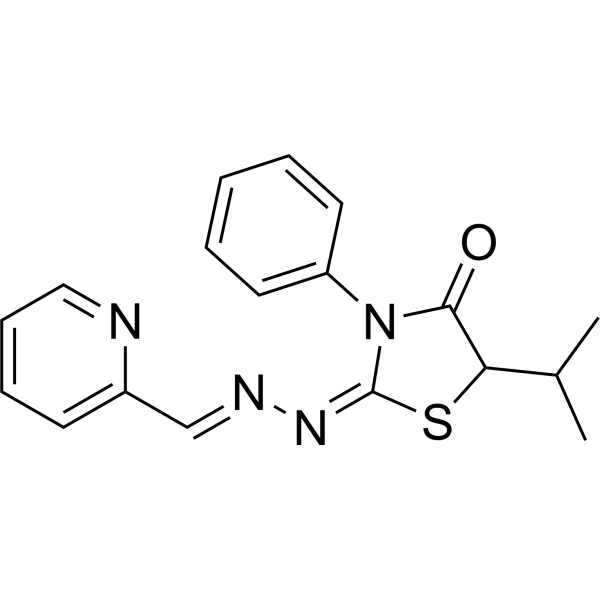 0 ImagesCat. No.: HY-149080CAS No.: 3046451-89-9
Antiparasitic agent-16, a pyridine-thiazolidinone, has anti-Trypanosoma cruzi and leishmanicidal activities. Antiparasitic agent-16 has IC50s of 1.0 μM and 0.6 μM against trypomastigote and amastigote forms of T. cruzi. Antiparasitic agent-16 has IC50s of 150.2 μM and 16.75 μM against trypomastigote and amastigote forms of L. amazonensis. Antiparasitic agent-16 induces parasite cell death through necrosis induction. Antiparasitic agent-16 induces morphological changes such as shortening, retraction and curvature of the parasite body and leakage of internal content with T. cruzi trypomastigotes.
-
Anti-Trypanosoma cruzi agent-8
 0 ImagesCat. No.: HY-181516
Anti-Trypanosoma cruzi agent-8 is an anti-Trypanosoma agent and also a Trypanosoma cruzi trypanothione reductase (TcTR) inhibitor, with an IC50 of 3.9 μM against TcTR. Anti-Trypanosoma cruzi agent-8 functionally inhibits the enzymatic activity of TcTR. Anti-Trypanosoma cruzi agent-8 exhibits trypanocidal activity against intracellular Trypanosoma cruzi amastigotes.
-
Pentamidine dihydrochloride
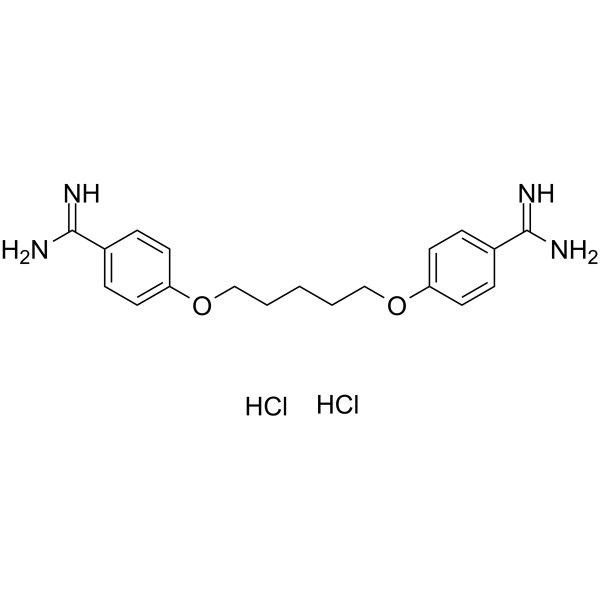 0 ImagesCat. No.: HY-B0537ACAS No.: 50357-45-4Synonyms: MP-601205 dihydrochloride
Pentamidine dihydrochloride (MP-601205 dihydrochloride) is an antimicrobial agent and interferes with DNA biosynthetics. Pentamidine dihydrochloride inhibits parasite Leishmania infantum with an IC50 of 2.5 μM. Pentamidine dihydrochloride is a potent and selective protein tyrosine phosphatases (PTPases) and phosphatase of regenerating liver (PRL) inhibitor. Pentamidine dihydrochloride has the potential for Gambian trypanosomiasis, antimony-resistant leishmaniasis, and Pneumocystis carinii pneumonia treatment. Antitumor and antibacterial activities.
-
FTI-2628
 0 ImagesCat. No.: HY-183458CAS No.: 655234-81-4
FTI-2628 is an antimalarial agent and a farnesyl transferase inhibitor, with an IC50 of 41.7 nM against TbPET. FTI-2628 attenuates glucose-stimulated insulin secretion. FTI-2628 exhibits antimalarial activity against Trypanosoma brucei.
-
Antitrypanosomal agent 31
 0 ImagesCat. No.: HY-183529CAS No.: 551919-54-1
Antitrypanosomal agent 31 is an antitrypanosoma agent with a pEC50 of 6.4. Antitrypanosomal agent 31 inhibits GSK-3β, CDK-2, and CDK-4 with pIC50s of 5.8, 6.9, and 7.1, respectively. Antitrypanosomal agent 31 can be used for the research of human african trypanosomiasis.
-
NEU-4438
 0 ImagesCat. No.: HY-125188CAS No.: 2306305-57-5
NEU-4438 is an antimalarial agent. NEU-4438 inhibits DNA synthesis, reduces AMPK-γ, and increases Clathrin heavy chain. NEU-4438 exhibits antiparasitic activity against Trypanosoma brucei. NEU-4438 reduces trypanosome tissue burden in a chronic HAT mouse model.
-
E5700
 0 ImagesCat. No.: HY-123746CAS No.: 332132-39-5
E5700 is an orally active squalene synthase inhibitor, antimalarial agent and antifungal agent with an IC50 of 0.49 nM (without PPi) against squalene synthase from T. cruzi epimastigotes. E5700 shows antiparasitic activities against Trypanosoma cruzi. E5700 inhibits the growth and alters the lipid prolife and the ultrastructure of a multiple agent-resistant C. tropicalis strain. E5700 is a potent and selective inhibitor of the growth of Leishmania amazonensis.
-
Antiparasitic agent-39
 0 ImagesCat. No.: HY-180943CAS No.: 2568585-37-3
Antiparasitic agent-39 (Compound 14) is a selective antiparasitic agent and Deferasirox (HY-17359) derivative. Antiparasitic agent-39 reduces the mitochondrial membrane potential. Antiparasitic agent-39 shows antiparasitic activity against T. brucei, T. gambiense, L. Mexicana, T. gondii, B. divergens, P. falciparum with EC50s of 4.2 nM, 10.4 nM, 52.0 nM, 17.0 nM, 41.2 nM, 54.8 nM, respectively.
-
Ambigol C
 0 ImagesCat. No.: HY-N18878CAS No.: 850655-31-1
Ambigol C is an ambigol, Antibacterial agent and Antimalarial agent. Ambigol C is isolated from Fischerella ambigua 108b. Ambigol C exhibits selective antibacterial activity against Gram-positive Staphylococcus aureus strains (including MRSA) with MIC values of 0.98-3.91 μg/mL. Ambigol C also shows potent antibacterial activity against B. megaterium, and possesses weak antimalarial and trypanocidal effects. Ambigol C can be used in the research of bacterial infections, plasmodial infections and trypanosomal infections.
-
Erioflorin
 0 ImagesCat. No.: HY-187654CAS No.: 27542-17-2
Erioflorin is a sesquiterpene lactone compound originally isolated from plants of the Asteraceae family (such as Eriophyllum confertiflorum and species of the Podanthus genus). Erioflorin acts as a selective β-TrCP1 modulator. Erioflorin induces cell apoptosis by increasing intracellular reactive oxygen species (ROS) production and decreasing mitochondrial membrane potential, inhibits the NF-κB signaling pathway by blocking the phosphorylation of IκBα, and prevents the ubiquitination and degradation of the tumor suppressor Pdcd4 by inhibiting the interaction between Pdcd4 and the E3 ubiquitin ligase β-TrCP1. Erioflorin can be used in research related to breast cancer, colon cancer, advanced prostate cancer, and Chagas disease.



