



VD/VDR
Vitamin D; Vitamin D receptor
Vitamin D is a secosteroidalprohormone, it can be synthesized at sufficient levels in skin, given adequate skin exposure to UV B radiation from sunlight. Vitamin D modulates its biological effects by directly regulating target gene expression through the Vitamin D receptor (VDR), a ligand-regulated transcription factor and a member of the nuclear receptor superfamily. Whether synthesized in the skin or ingested, vitamin D requires two hydroxylation steps to become the biologically active hormone, 1,25-dyhydroxyvitamin D3 [1,25(OH)2D3], a form that signals through the VDR. The hormone-bound VDR modulates target gene transcription in response to vitamin D. VDR acts as a master transcriptional regulator of autophagy. Activation of the VDR by vitamin D induces autophagy and an autophagic transcriptional signature in breast cancer (BC) cells.
There are 2 forms of vitamin D. Vitamin D2 (ergocalciferol) comes from irradiation of the yeast and plant sterol ergosterol, and vitamin D3 (cholecalciferol) is found in oily fish and cod liver oil and is made in the skin. Vitamin D represents vitamin D2 and vitamin D3.
Topical agents containing active vitamin D3 (calcitriol, 1α, 25- dihydroxyvitaminD3, VD3) analogues such as Tacalcitol, Calcipotriol and Maxacalcitol are widely used for psoriasis therapy.
All Product Categories
-
VD/VDR Inhibitors
(5)
View all products
-
VD/VDR Agonists
(23)
View all products
-
VD/VDR Antagonists
(15)
View all products
-
VD/VDR Activators
(59)
View all products
-
VD/VDR Modulators
(8)
View all products
-
VD/VDR Chemicals
(3)
View all products
-
VD/VDR Controls
(2)
View all products
-
VD/VDR Ligands
(7)
View all products
-
VD/VDR Related Products (165)
Related Products (165)

-
Antibodies (3)
-
CB1151
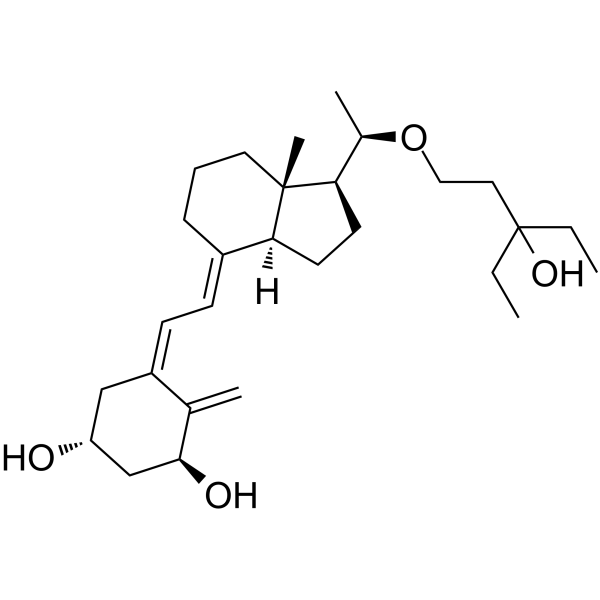 0 ImagesCat. No.: HY-100219CAS No.: 182369-28-4CB1151 is a 20-epi analogue of 1,25 dihydroxyvitamin D3 (VD) with potent anti-tumor effects. CB1151 inhibits MCF-7 cell growth with an IC50 value of 0.82 nM.
-
Atocalcitol
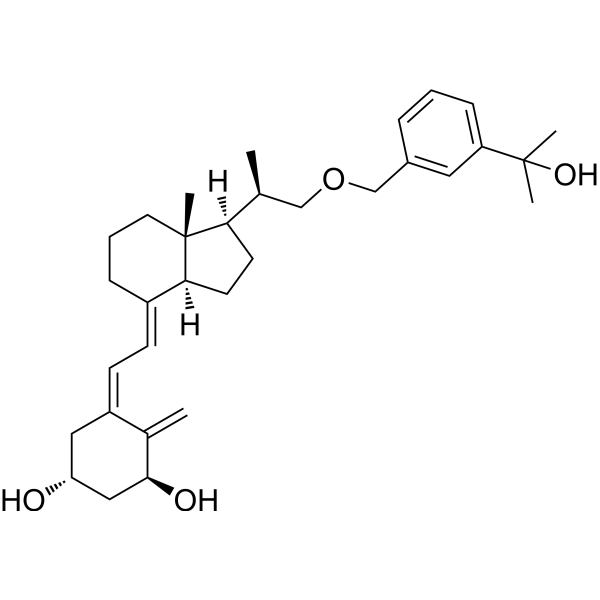 0 ImagesCat. No.: HY-32346CAS No.: 302904-82-1Atocalcitol, a vitamin D3 analogue, is used in the study for psoriasis.
-
Ercalcitriol (Standard)
 0 ImagesCat. No.: HY-32350RCAS No.: 60133-18-8Synonyms: 1α,25-Dihydroxy Vitamin D2 (Standard)Ercalcitriol (Standard) is the analytical standard of Ercalcitriol. This product is intended for research and analytical applications. Ercalcitriol (1α,25-Dihydroxy Vitamin D2) is an active metabolite of vitamin D2.
-
Calcitriol Impurities D
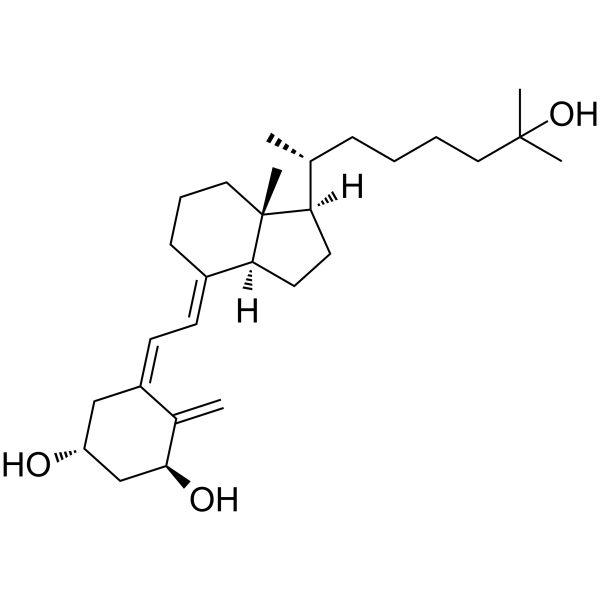 0 ImagesCat. No.: HY-77274CAS No.: 103656-40-2Calcitriol Impurities D is the impurity of Calcitriol, Calcitriol is the hormonally active form of vitamin D, Calcitriol is the active metabolite of vitamin D3 that activates the vitamin D receptor (VDR).
-
Impurity B of Calcitriol
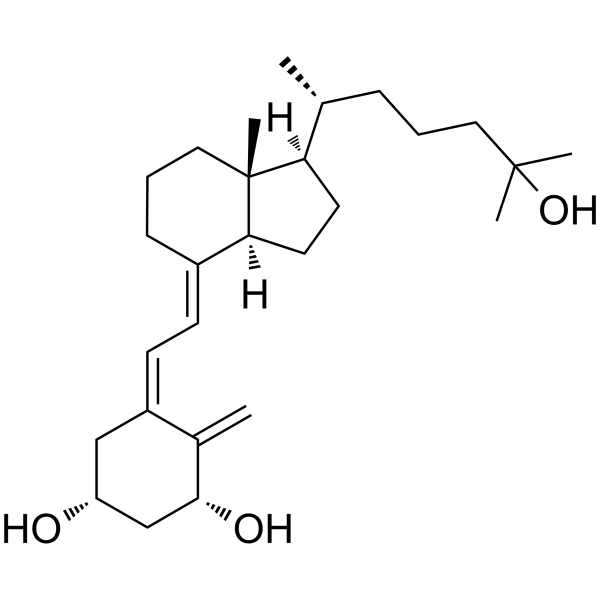 0 ImagesSynonyms: 1β,25-Dihydroxyvitamin-D3; 1-EpicalcitriolImpurity B of Calcitriol is a diastereomer of 1α,25-dihydroxyvitamin D3 that interferes with accurate Calcitriol quantification.
-
20-Hydroxyvitamin D3
 0 ImagesCat. No.: HY-154825CAS No.: 651734-12-2Synonyms: 20(OH)D3; 20S-Hydroxyvitamin D320-Hydroxyvitamin D3 (20(OH)D3), a product of vitamin D3 hydroxylation, is a noncalcemic immunomodulator. 20-Hydroxyvitamin D3 binds to vitamin D receptor (VDR), activates VDR and aryl hydrocarbon receptor (AhR) signaling, stimulates CYP24A1 expression, and drives VDR nuclear translocation. 20-Hydroxyvitamin D3 inhibits NF-κB activity via IκBα upregulation. 20-Hydroxyvitamin D3 acts as a substrate for CYP27B1 and rat CYP24A1, undergoing hydroxylation to form dihydroxy-derivatives. 20-Hydroxyvitamin D3 inhibits cell proliferation, colony formation, migration, and tumor growth, and induces cell differentiation in cancer cells. 20-Hydroxyvitamin D3 can be used for the research of inflammatory and autoimmune diseases, melanoma, breast carcinomas, and hepatocarcinoma.
-
Vitamin D2-d6
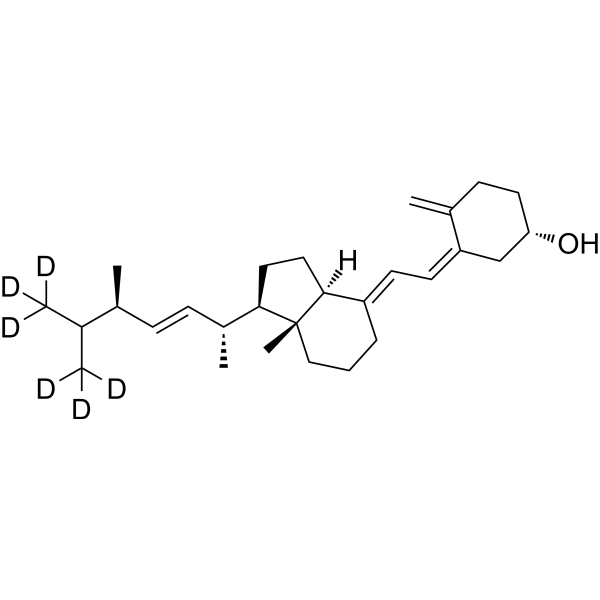 0 ImagesCat. No.: HY-76542SCAS No.: 1311259-89-8Synonyms: Ergocalciferol-d6; Calciferol-d6; Ercalciol-d6Vitamin D2-d6 is the deuterium labeled Vitamin D2. Vitamin D2 (Ergocalciferol), drived from plant sources or dietary supplements, could be used as supplement of Vitamin D.
-
Vitamin D3-13C5
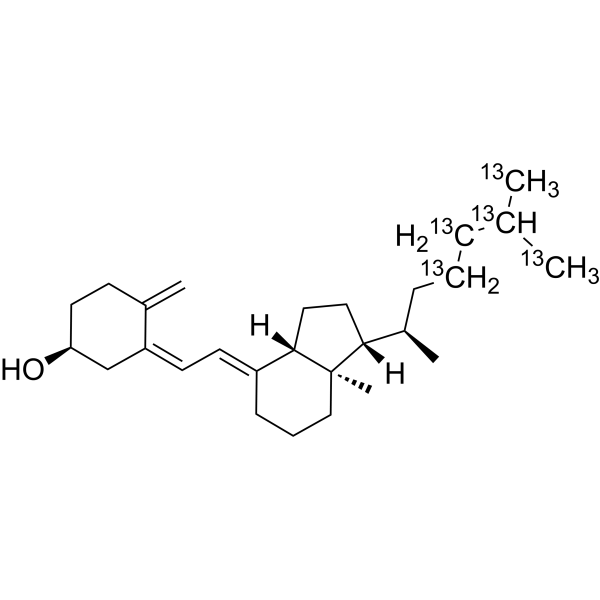 0 ImagesCat. No.: HY-15398S4CAS No.: 2483734-99-0Synonyms: Cholecalciferol-13C5; Colecalciferol-13C5Vitamin D3-13C5 is the 13C-labeled Vitamin D3 (HY-15398). Vitamin D3 (Cholecalciferol) is a naturally occuring form of vitamin D. Vitamin D3 induces cell differentiation and prevents proliferation of cancer cells.
-
VDR agonist 1
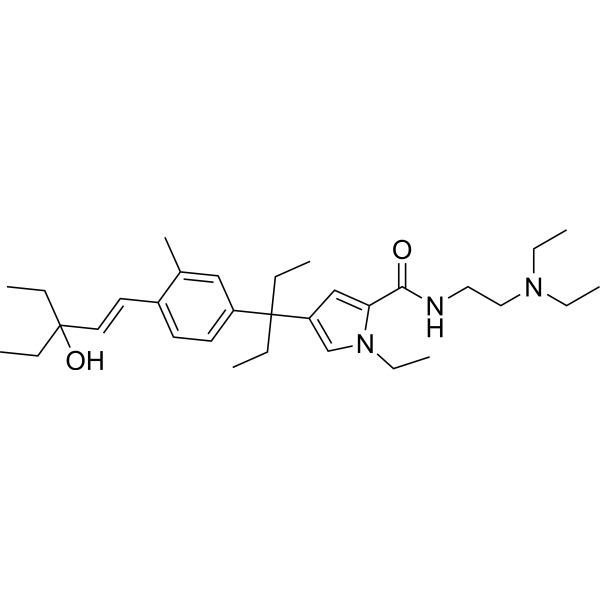 0 ImagesCat. No.: HY-114310CAS No.: 2269494-43-9
-
(1R,5Z)-Calcitriol
 0 ImagesCat. No.: HY-10002BCAS No.: 32511-63-0Synonyms: (1R,5Z)-1,25-Dihydroxyvitamin D3(1R,5Z)-Calcitriol ((1R,5Z)-1,25-Dihydroxyvitamin D3) is a Calcitriol (HY-10002) isomer. Calcitriol is the most active metabolite of vitamin D and also a vitamin D receptor (VDR) agonist.
-
Paricalcitol solution
 0 ImagesCat. No.: HY-FL50919CAS No.: 131918-61-1Paricalcitol solution is mainly composed of Paricalcitol (HY-50919). Paricalcitol, a vitamin D analogue, is a vitamin D receptor agonist, used for the prevention and treatment of secondary hyperparathyroidism (excessive secretion of parathyroid hormone) associated with chronic renal failure.
-
Calcitroic acid-13C
 0 ImagesCat. No.: HY-N10508SCAS No.: 1637678-42-2Calcitroic acid-13C is the 13C-labeled Calcitroic acid (HY-N10508). Calcitroic acid is a water-soluble terminal vitamin D metabolite and also a ligand for vitamin D receptor (VDR). Calcitroic acid binds to the ligand-binding domain of VDR, forms a retinoic X receptor complex, recruits the coactivator peptide MED1, mediates partial VDR-dependent transcription, inhibits Calcitriol (HY-10002)-induced VDR activation, and reduces the transcription level of CYP24A1 in the presence of 1α,25-dihydroxyvitamin D3. Calcitroic acid exerts selective activating effects on VDR, upregulates the expression of CYP24A1 and CYP3A4, decreases the transcription levels of iNOS and IL-1β, reduces the secretion of nitric oxide and IL-1β, and possesses metabolic stability due to its resistance to phase I oxidation and hepatic glucuronidation. Calcitroic acid can be used in research related to colon cancer, inflammatory bowel disease and rickets.
-
Acenocoumarol-d4
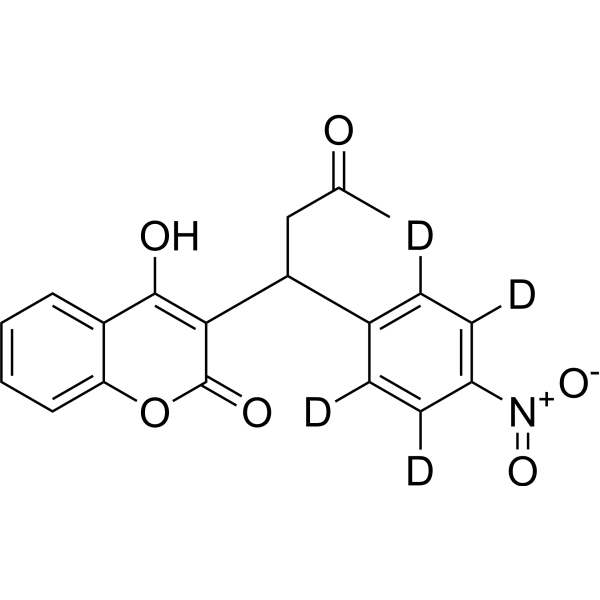 0 ImagesCat. No.: HY-B1014S1CAS No.: 2937878-24-3Acenocoumarol-d4 is deuterium labeled Acenocoumarol (HY-B1014). Acenocoumarol is an anticoagulant that functions as a Vitamin K antagonist. Acenocoumarol inhibits MAPK/ERK/JNK signaling pathway, reduces the nuclear translocation of NF-κB p65, activates Akt/GSK3β signaling pathway. Acenocoumarol induces apoptosis in cell A549, arrests cell cycle at S phase.
-
VDR agonist 4
 0 ImagesCat. No.: HY-178328CAS No.: 3136765-61-9VDR agonist 4 is an orally active potent VDR agonist. VDR agonist 4 exerts VDR-dependent antifibrotic activity by regulating multiple fibrosis-related genes to suppress α-SMA and collagen I production, thereby inhibiting hepatic stellate cell (HSC) activation. VDR agonist 4 improves CCl4 (HY-RS16594)-induced hepatic fibrosis in mice. VDR agonist 4 can be used for liver fibrosis research.
-
Dihydrotachysterol (Standard)
 0 Images1-Palmitoyl-2-oleoyl-sn-glycero-3-PC (Standard) is the analytical standard of 1-Palmitoyl-2-oleoyl-sn-glycero-3-PC. This product is intended for research and analytical applications. 1-Palmitoyl-2-oleoyl-sn-glycero-3-PC (POPC), a phospholipid, is a major component of biological membranes. 1-Palmitoyl-2-oleoyl-sn-glycero-3-PC is used for the preparation of liposomes and studying the properties of lipid bilayers.
-
Paricalcitol (Standard)
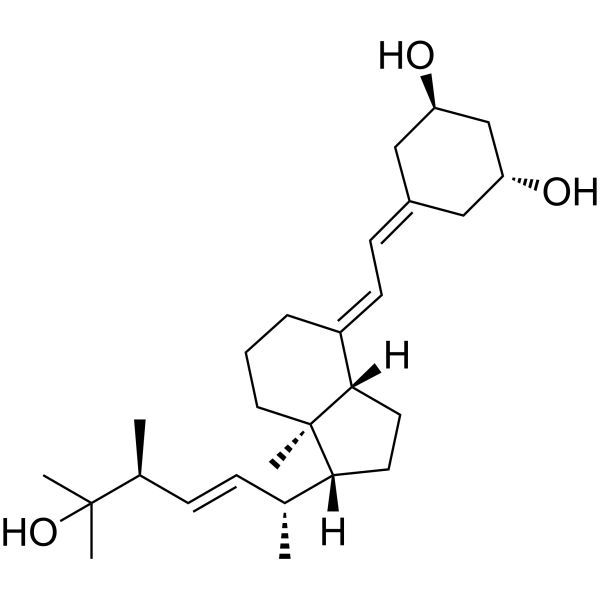 0 ImagesCat. No.: HY-50919RCAS No.: 131918-61-1Paricalcitol (Standard) is the analytical standard of Paricalcitol. This product is intended for research and analytical applications. Paricalcitol, a vitamin D analogue, is a vitamin D receptor agonist, used for the prevention and treatment of secondary hyperparathyroidism (excessive secretion of parathyroid hormone) associated with chronic renal failure.
-
VDR agonist 5
 0 ImagesCat. No.: HY-181486VDR agonist 5 is an oral active VDR agonist. VDR agonist 5 activates VDR-mediated signaling to reduce liver fibrosis progression. VDR agonist 5 does not induce hypercalcemia. VDR agonist 5 can be used for the research of hepatic fibrosis.
-
VDR agonist 2
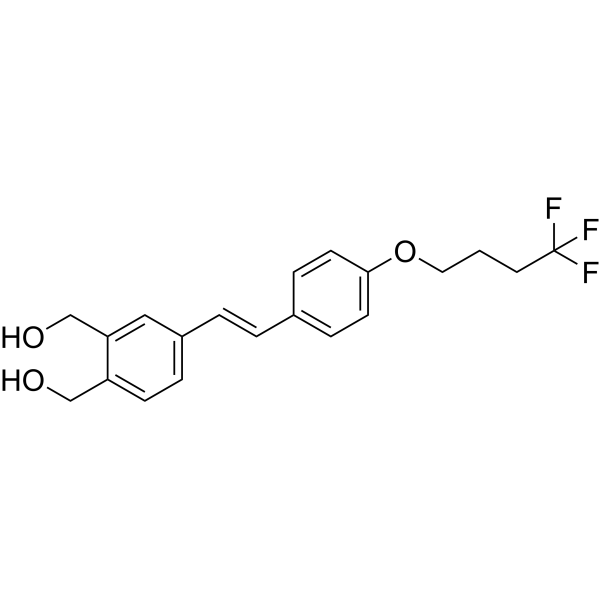 0 ImagesCat. No.: HY-149899CAS No.: 3052323-55-1VDR agonist 2 (compound 16i) is a VDR (vitamin D receptor) agonist that can effectively inhibit TGF-β1-induced activation of hepatic stellate cells (HSC). VDR agonist 2 has significant anti-hepatic fibrosis effects both in vitro and in vivo.
-
Calcifediol-13C5 monohydrate
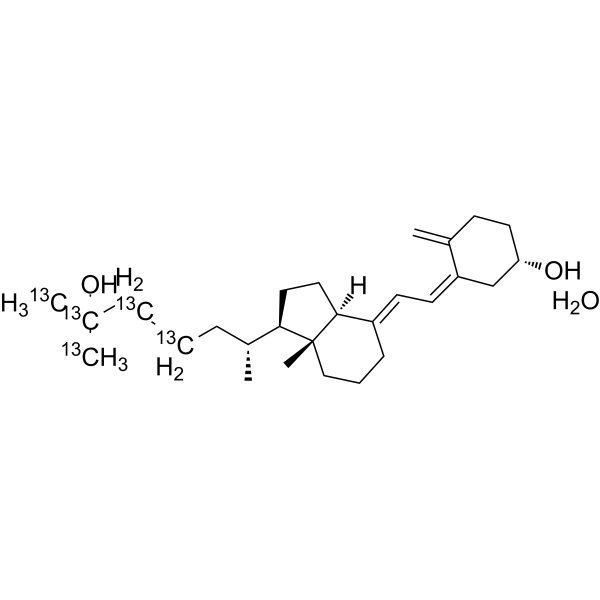 0 ImagesCat. No.: HY-32351AS1Synonyms: 25-Hydroxy Vitamin D3-13C5 monohydrateCalcifediol-13C5 monohydrate is the 13C-labeled Calcifediol monohydrate. Calcifediol monohydrate (25-hydroxy Vitamin D3 monohydrate), is an effective VDR ligand and VD supplement. Calcifediol is a prohormone of the vitamin D endocrine system (VDES) and is hydroxylated in the liver to produce the active form, calcitriol. Calcifediol can rapidly increase serum VD levels.




