



VEGFR
Vascular endothelial growth factor receptor
VEGFRs consist of three subtypes, the fms-like tyrosine kinase Flt-1 (VEGFR1/Flt-1), the kinase domain region, also referred to as fetal liver kinase (VEGFR2/KDR/Flk-1), and Flt-4 (VEGFR3). Each receptor has seven immunoglobulinlike domains in the extracellular domain, a single transmembrane region, and a consensus tyrosine kinase sequence interrupted by a kinase insert domain. VEGFR1 and 2 are expressed on vascular endothelial cells, whereas VEGFR3 is expressed on lymphatic endothelial. The VEGF family members VEGF-A, -B, -C, -D, -E, and PlGF, and the human immunodeficiency (HIV) Tat protein bind in specific patterns to three related receptor protein tyrosine kinases, VEGFR1, 2, and 3, and induce the formation of homo- and heteromeric receptor complexes. Binding of VEGF to VEGFR causes dimerization and autophosphorylation of the receptor. Intracellular proteins such as VEGFR-associated protein (VRAP), PLC, and Sck that associate with specific tyrosine residues of VEGFR are phosphorylated upon receptor activation. Several signal transduction pathways are activated by the binding of VEGF to its receptor, leading to increased proliferation, survival, permeability, and migration of cells.
VEGFR Isoform Specific Products
All Product Categories
-
VEGFR Inhibitors
(722)
View all products
-
VEGFR Agonists
(7)
View all products
-
VEGFR Antagonists
(6)
View all products
-
VEGFR Activators
(17)
View all products
-
VEGFR Modulators
(6)
View all products
-
VEGFR Chemical
(1)
View all products
-
VEGFR Inducer
(1)
View all products
-
VEGFR Degraders
(6)
View all products
-
VEGFR Ligands
(5)
View all products
-
VEGFR Proteins
(36)
View all products
-
VEGFR-1 Proteins
(10)
View all products
-
VEGFR-3 Proteins
(7)
View all products
-
Productos relacionados con VEGFR (819)
Productos relacionados con (819)

-
Recombinant Proteins (36)
-
Antibodies (9)
-
VEGFR Isoform Comparison
-
SU11657
 0 ImagesReferencia número: HY-138032No. CAS: 326914-17-4Synonyms: N,N-Dimethyl sunitinibSU11657 (N,N-Dimethyl sunitinib) is an orally active multi-targeted tyrosine kinase inhibitor with IC50 values of 0.04 μM (c-Kit), 0.005 μM (PDGFR), 0.013 μM (VEGFR1), 0.017 μM (VEGFR2) and 50 nM (FLT3), respectively. SU11657 exhibits anti-angiogenic activity. SU11657 delays leukemia progression, synergizes with ATRA (HY-14649) to reduce leukemia burden, and inhibits symptoms and tissue damage associated with rheumatoid arthritis. SU11657 can be used in research related to FLT3-mutated acute promyelocytic leukemia, rheumatoid arthritis, neuroblastoma, and benign/atypical meningioma.
-
Vatalanib succinate
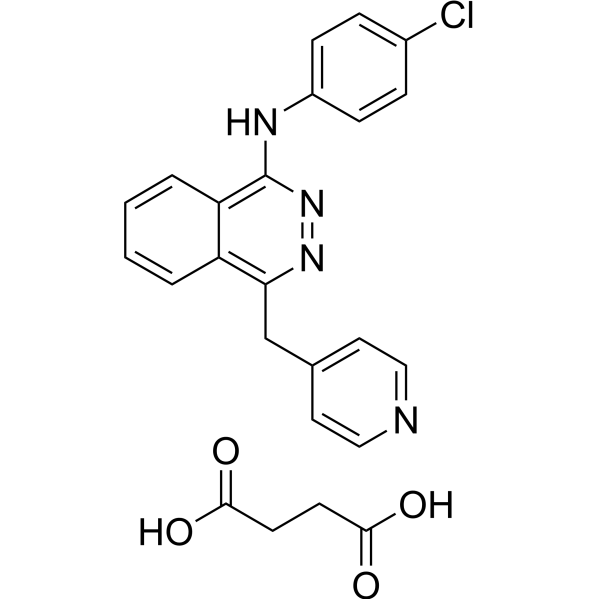 0 ImagesReferencia número: HY-110272No. CAS: 212142-18-2Synonyms: PTK787 succinate; ZK-222584 succinate; CGP-79787 succinate
-
Taligantinib
 0 ImagesReferencia número: HY-177134No. CAS: 2243235-80-3Taligantinib (Compound Example 70) is an orally active and selective dual inhibitor targeting vascular endothelial growth factor receptor 2 (VEGFR-2) and hepatocyte growth factor receptor (c-Met). Taligantinib suppresses tumor angiogenesis and cell proliferation. Taligantinib is promising for research of solid tumors such as non-small cell lung cancer and hepatocellular carcinoma.
-
L-783277
 0 ImagesReferencia número: HY-123586No. CAS: 791807-02-8L-783277 (Compound 4) is a MEK inhibitor (IC50 = 4 nM). L-783277 has potent inhibitory activity against a variety of kinases, including VEGFR2/3, FLT1/3/4, MEK1/2, KDR, and PDGFRα, but has low selectivity for the kinase community. L-783277 inhibits viability (IC50 = 22 mM) and cell proliferation (IC50 = 21 mM) of H295R cells. L-783277 could be used in research on cancers such as adrenocortical carcinoma.
-
Anti-DCBLD2/ESDN Antibody (FA19-1)
 0 ImagesReferencia número: HY-P990397Synonyms: FA19-1The Anti-DCBLD2/ESDN Antibody (FA19-1) is a humanized antibody expressed in CHO cells that targets DCBLD2/ESDN. The Anti-DCBLD2/ESDN Antibody (FA19-1) contains a huIgG1 heavy chain and a huκ light chain, with a predicted molecular weight (MW) of 150 kDa. The isotype control for the Anti-DCBLD2/ESDN Antibody (FA19-1) can be referenced as Human IgG1 kappa, Isotype Control (HY-P99001).
-
Rabbit Thrombin
 0 ImagesReferencia número: HY-114164ENo. CAS: 9002-04-4Rabbit Thrombin is a serine protease. Rabbit Thrombin forms a covalent complex with antithrombin III and reversibly binds endothelial cell surface high-affinity sites. Rabbit Thrombin regulates VEGF and Ang-2, potentiates VEGF mitogenic activity and protects endothelial cells from apoptosis. Rabbit Thrombin can be used for the research of hindlimb ischemia.
-
FGFRs-IN-1
 0 ImagesReferencia número: HY-170846FGFRs-IN-1 (Compound A16) is the orally active inhibitor for FGFR, that inhibits FGFR1/2/3/4 with IC50s of 2.3, 7, 11, and 163 nM, respectively. FGFRs-IN-1 also inhibits VEGFR1/2/3, Abl, and Flt3 with IC50s of 61, 176, 112, 26, and 353 nM, respectively. FGFRs-IN-1 exhibits weak inhibitory efficacy against CYP enzymes. FGFRs-IN-1 reduces the expression of α-SMA and collagen I, and inhibits epithelial-mesenchymal transition (EMT) in TGF-β1 stimulated A549 cell. FGFRs-IN-1 exhibits anti-inflammatory activity in Bleomycin (HY-17565)-induced mouse pulmonary fibrosis model and CCl4 (HY-Y0298)-induced mouse liver fibrosis model.
-
UB-925
 0 ImagesReferencia número: HY-P991420UB-925 is a human monoclonal antibody (mAb) targeting VEGFR2/KDR/CD309. UB-925 can be used in Gastric cancer research.
-
VEGFR-2/AURKA-IN-1
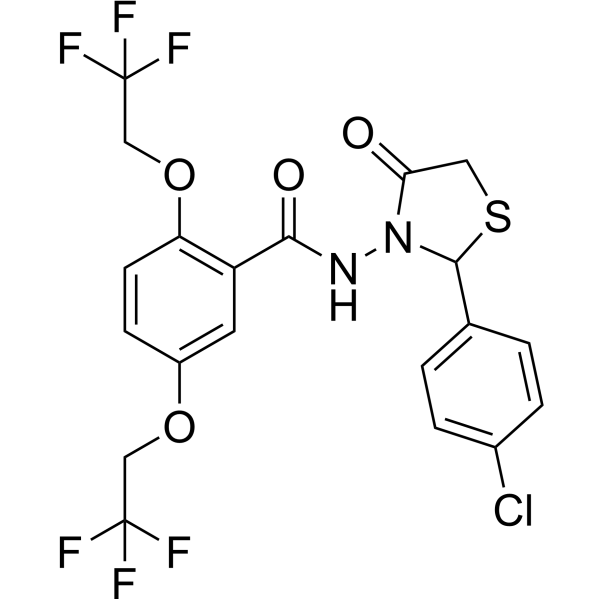 0 ImagesReferencia número: HY-155464VEGFR-2/AURKA-IN-1 (compound 5e) is a thiazolidin-4-one derivative with antiglioma activity (IC50: 6.43 μM, LN229). VEGFR-2/AURKA-IN-1 has affinity for AURKA and VEGFR-2 and is a potential ligand. VEGFR-2/AURKA-IN-1 causes DNA strand breaks and exhibits cytotoxic and anticancer potential.
-
VEGFR-2-IN-66
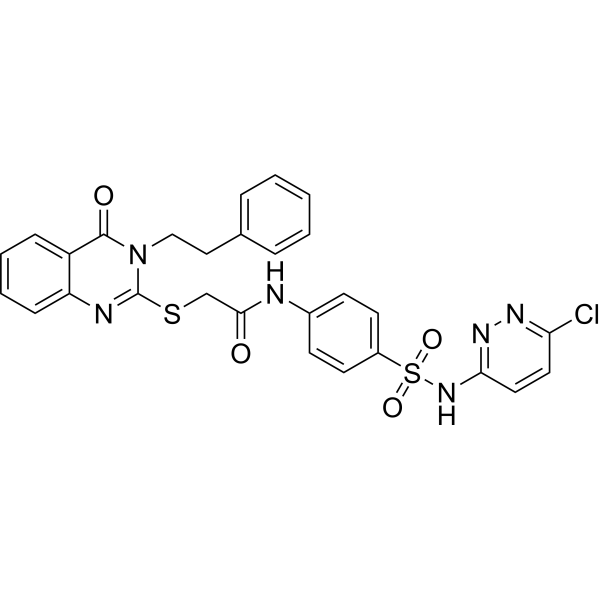
 0 ImagesReferencia número: HY-173232VEGFR-2-IN-66 (Compound 6) is an orally active VEGFR-2 inhibitor with an IC50 value of 0.509 µM and an IC50 value of 7.48 μM for inhibiting the proliferation of MCF-7 cells. VEGFR-2-IN-66 exerts its anti-cancer activity by arresting the cell cycle, inducing apoptosis, and regulating gene expression, and can be used in the research of the breast cancer field.
-
FGFR3-IN-2
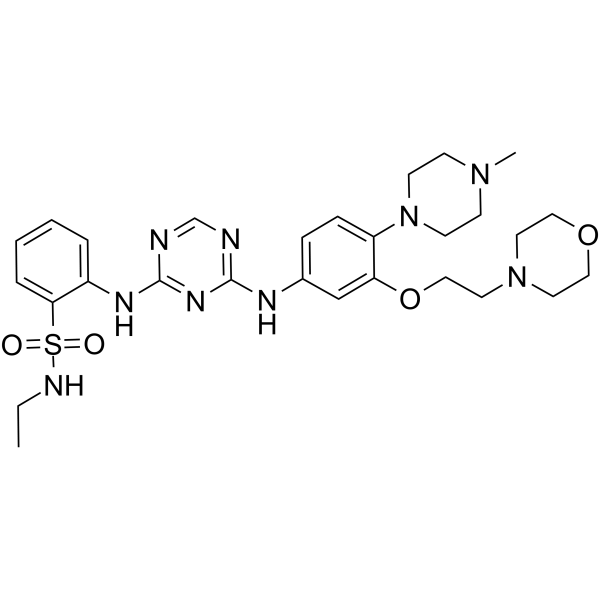 0 ImagesReferencia número: HY-147714No. CAS: 2428742-58-7FGFR3-IN-2 (compound 18b) is a potent and selective FGFR3 inhibitor, with IC50s of 4.1 nM and 570 nM for FGFR3 and VEGFR2, respectively. FGFR3-IN-2 can be used for the research of bladder cancer.
-
VGX200
 0 ImagesReferencia número: HY-P991626VGX200 is a monoclonal antibody against vascular endothelial growth factor D (VEGFD).
-
VEGFR-2 ligand-2
 0 ImagesReferencia número: HY-182306VEGFR-2 ligand-1, Sorafenib (HY-10201) derivative, is a vascular endothelial growth factor receptor 2 (VEGFR2) ligand. VEGFR-2 ligand-1 binds to the ATP-binding pocket of VEGFR2, forms hydrophobic contacts and hydrogen bonds with key binding-site residues. VEGFR-2 ligand-1 can be used for the research angiogenesis-related pathologies.
-
Pazopanib-13C,d3
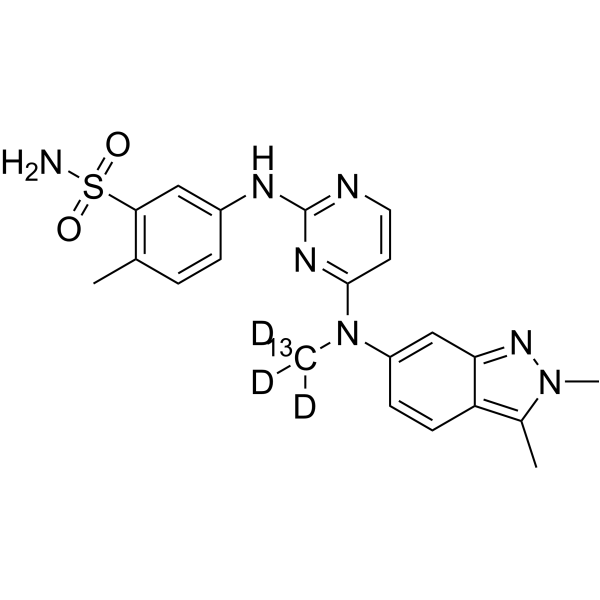 0 ImagesReferencia número: HY-10208S1No. CAS: 1261734-88-6Synonyms: GW786034-13C,d3
-
EGFR/VEGFR2-IN-11
 0 ImagesReferencia número: HY-181766EGFR/VEGFR2-IN-11 is an EGFR/VEGFR2 inhibitor with IC50 values of 0.62 μM (human EGFR), 2.26 μM (human VEGFR-2), 17.38 μM (human COX-2), and 19.31 μM (human tubulin). EGFR/VEGFR2-IN-11 inhibits COX-2 activity and tubulin polymerization. EGFR/VEGFR2-IN-11 induces cell cycle arrest and apoptosis. EGFR/VEGFR2-IN-11 exerts selective and antiproliferative activity against human cancer cells. EGFR/VEGFR2-IN-11 can be used for the research of colon carcinoma, breast carcinoma, leukemia, lymphoma, glioblastoma.
-
VEGFR-2-IN-43
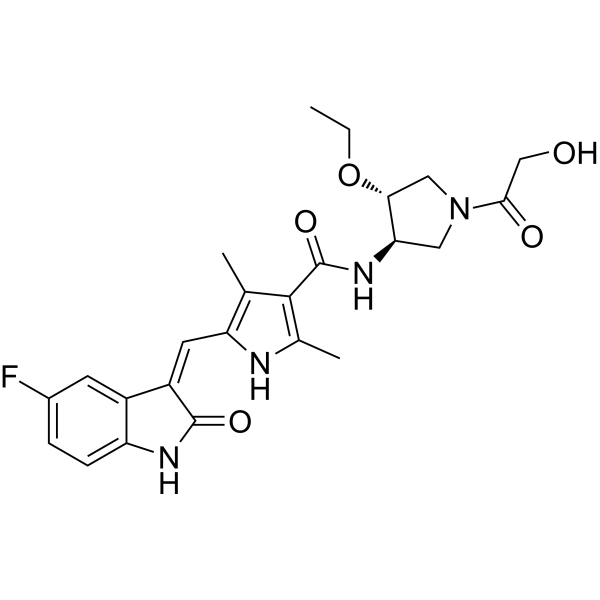 0 ImagesReferencia número: HY-163403VEGFR-2-IN-43 (compound 16) is an orally active inhibitor of VEGFR2, with an IC50 of 39.91 μM. VEGFR-2-IN-43 can be used for wet age-related macular degeneration (w-AMD) disease research.
-
Sorafenib-d3 tosylate
 0 ImagesReferencia número: HY-10201S4No. CAS: 1333386-17-6Synonyms: Donafenib tosylate; Bay 43-9006-d3 tosylateSorafenib-d3 (Donafenib) tosylate is the deuterated-labeled Sorafenib tosylate (HY-10201A). Sorafenib (Bay 43-9006) tosylate is a potent oral active multikinase inhibitor. Sorafenib blocks autophosphorylation and activity of receptor tyrosine kinases (VEGFR-2, VEGFR-3) and RAF family kinases, thereby suppressing the RAF/MEK/ERK and PI3K/Akt pathways, inhibiting STAT3 phosphorylation, and selectively inhibiting the MAPK pathway in cancer cells. Sorafenib tosylate induces cell cycle arrest, autophagy, apoptosis, and PARP cleavage, reduces Bcl-2, Bcl-XL, cyclin D1 levels, and activates Bak and Bax. Sorafenib tosylate inhibits tumor growth and metastasis in mouse and rat models. Sorafenib tosylate can be used for cancer research, such as colon, breast, non-small-cell lung cancer (NSCLC), ovarian, pancreatic, melanoma, colorectal and hepatocellular carcinoma.
-
VEGFR-2-IN-83
 0 ImagesReferencia número: HY-182032VEGFR-2-IN-83 is a VEGFR-2 kinase inhibitor with an IC50 of 0.037 μM. VEGFR-2-IN-83 induces G0/G1 cell cycle arrest and apoptosis in breast cancer cells, and increases the production of reactive oxygen species (ROS). VEGFR-2-IN-83 is applicable to relevant research on breast cancer.
-
EYE1090
 0 ImagesReferencia número: HY-184141No. CAS: 3037217-70-9EYE1090 is an orally active VEGFR2 inhibitor with an IC50 of 3 nM. EYE1090 inhibits angiogenesis, endothelial migration, VEGFR2-induced retinal leakage, and reduces choroidal neovascularization lesion size in mice. EYE1090 can be used for the research of age-related macular degeneration, diabetic retinopathy, choroidal neovascularization.




