



-
Calmodulin Related Products (51)
Related Products (51)

-
W-7 hydrochloride
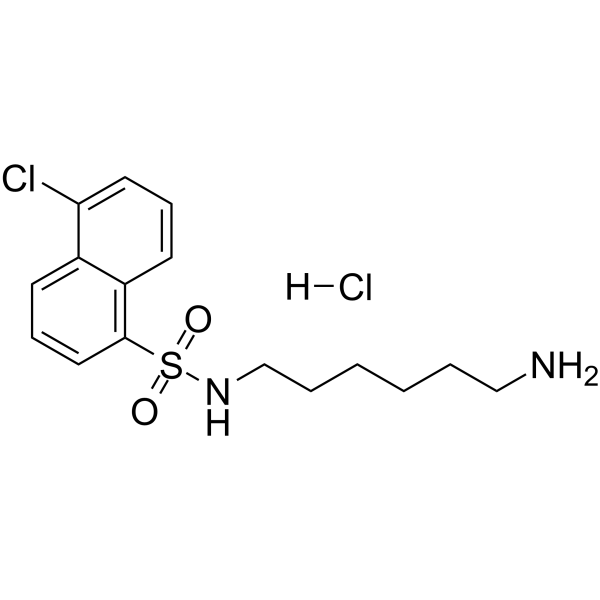 0 ImagesW-7 hydrochloride is a selective calmodulin antagonist. W-7 hydrochloride inhibits the Ca2+-calmodulin-dependent phosphodiesterase and myosin light chain kinase with IC50 values of 28 μM and 51 μM, respectively. W-7 hydrochloride induces apoptosis and has antitumor and vascular relaxing activity. W-7 hydrochloride is a blocker of Kv4.3 and can be used for research of arrhythmias.
-
Calmidazolium chloride
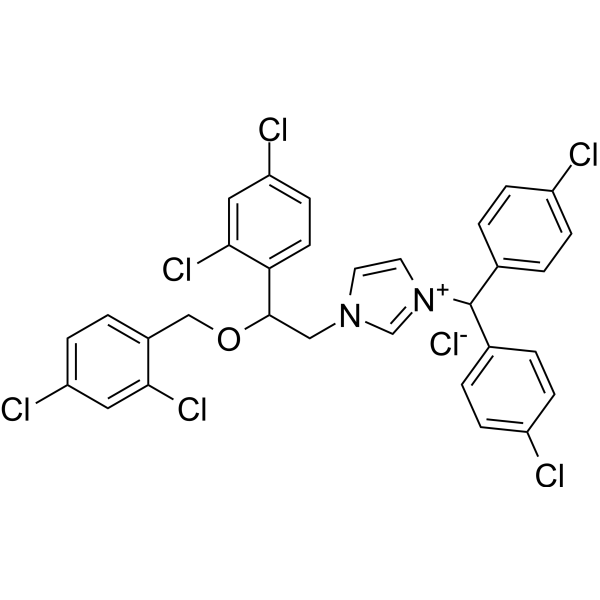 0 ImagesSynonyms: R 24571Calmidazolium chloride (R 24571) is a calmodulin antagonist, antagonizing CaM-dependent phosphodiesterase and calmodulin-induced activation of erythrocyte Ca2+-transporting ATPase with IC50s of 0.15 and 0.35 μM, respectively. Also in anti-cancer research. Calmidazolium binds to calmodulin with a Kd of 3 nM.
-
Stains-All
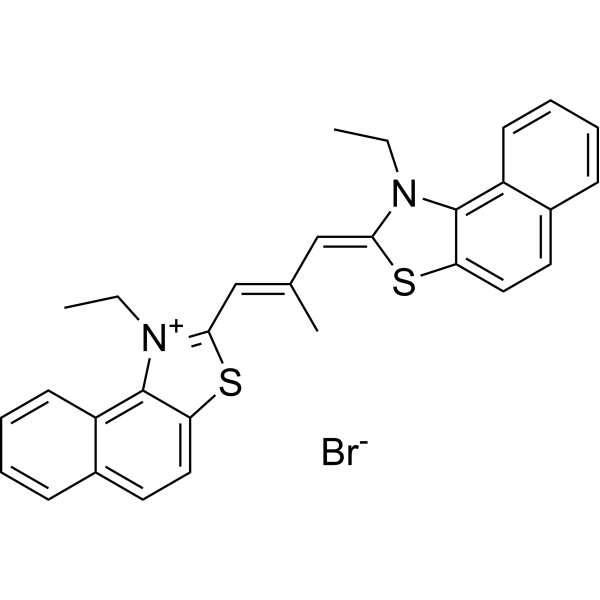 0 ImagesStains-All, a cationic carbocyanine dye, is a convenient probe to study the structural features of the individual calcium-binding sites of calmodulin (CaM) and related calcium-binding proteins (CaBP).
-
CALP1 TFA
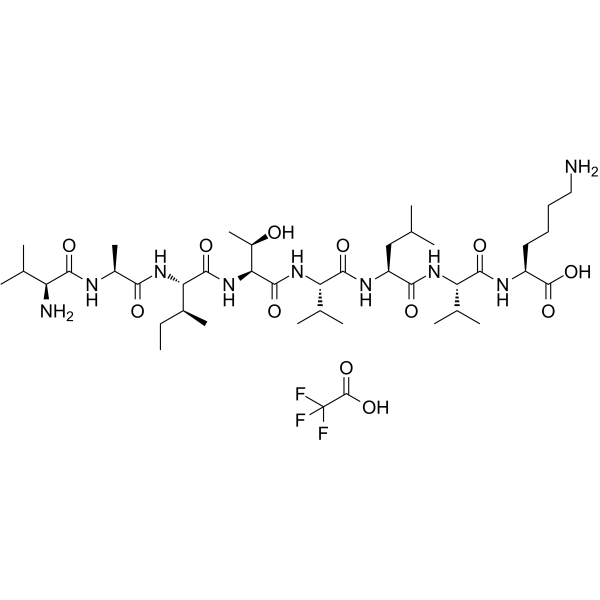 0 ImagesCat. No.: HY-P1077APurity: 98.15%CALP1 TFA is a calmodulin (CaM) agonist (Kd of 88 µM) with binding to the CaM EF-hand/Ca2+-binding site. CALP1 TFA blocks calcium influx and apoptosis (IC50 of 44.78 µM) through inhibition of calcium channel opening. CALP1 TFA blocks glutamate receptor channels and blocks a store-operated nonselective cation channel. CALP1 TFA activates CaM-dependent phosphodiesterase activity.
-
Cetiedil
 0 ImagesCat. No.: HY-W751362CAS No.: 14176-10-4Cetiedil is a vasodilator and potassium channel blocker with anti-sickle cell and analgesic activities. Cetiedil increases cyclic adenosine monophosphate levels, relaxes vascular smooth muscle, and blocks the action of Bradykinin (HY-P0206). Cetiedil inhibits platelet aggregation, reduces plasma fibrinogen concentration and blood viscosity, suppresses sickling of sickle red blood cells and improves their filterability, and decreases irreversible sickle cells. Cetiedil binds to calmodulin, inhibits Ca2+-dependent potassium permeability of erythrocyte membranes, increases sodium permeability of erythrocytes, and regulates polymorphonuclear leukocyte function. Cetiedil can be used in research related to intermittent claudication, arteriosclerosis obliterans, diabetic arteriosclerosis, Raynaud's disease, angina pectoris, and sickle cell anemia.
-
CALP2
 0 ImagesCALP2 is a calmodulin (CaM) antagonist ( (Kd of 7.9 µM)) with high affinity for binding to the CaM EF-hand/Ca2+-binding site. CALP2 inhibits CaM-dependent phosphodiesterase activity and increases intracellular Ca2+ concentrations. CALP2 potently inhibits of adhesion and degranulation. CALP2 is also a strong activator of alveolar macrophages.
-
4-Hydroxy-3,3',5-trimethoxybibenzyl
 0 ImagesCat. No.: HY-N21792CAS No.: 213842-42-34-Hydroxy-3,3',5-trimethoxybibenzyl is a synthetic bibenzyl analog with spasmolytic activity. It inhibits spontaneous contractions of isolated guinea pig ileum. In the presence of Ca2+, 4-Hydroxy-3,3',5-trimethoxybibenzyl also alters the electrophoretic mobility of bovine brain calmodulin (calmodulin), supporting its interaction with CaM. It can be used in studies of smooth muscle contraction and calmodulin-related processes.
-
W-5 hydrochloride
 0 ImagesW-5 hydrochloride is a calmodulin antagonist. W-5 hydrochloride inhibits phosphodiesterase activation with an IC50 value of 240 µM. W-5 hydrochloride can be used as a negative control for W-7 (HY-100912).
-
CALP2 TFA
 0 ImagesCat. No.: HY-P1076APurity: 98.31%CALP2 TFA is a calmodulin (CaM) antagonist (Kd of 7.9 µM) with high affinity for binding to the CaM EF-hand/Ca2+-binding site. CALP2 TFA inhibits CaM-dependent phosphodiesterase activity and increases intracellular Ca2+ concentrations. CALP2 TFA potently inhibits of adhesion and degranulation. CALP2 TFA is also a strong activator of alveolar macrophages.
-
Fluphenazine-N-2-chloroethane hydrochloride
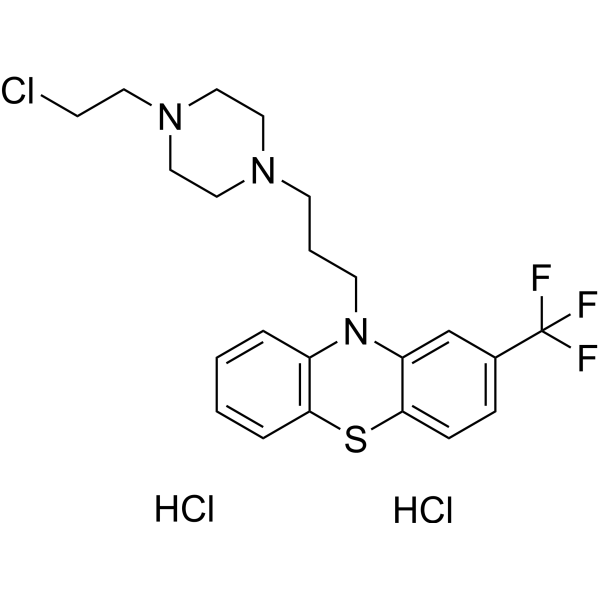 0 ImagesFluphenazine-N-2-chloroethane (SKF-7171A) hydrochloride is a potent irreversible calmodulin antagonist.

-
W-7
 0 ImagesW-7 is a selective calmodulin antagonist. W-7 inhibits the Ca2+-calmodulin-dependent phosphodiesterase and myosin light chain kinase with IC50 values of 28 μM and 51 μM, respectively. W-7 induces apoptosis and has antitumor and vascular relaxing activity. W-7 is a blocker of Kv4.3 and can be used for research of arrhythmias.
-
Aprindine hydrochloride
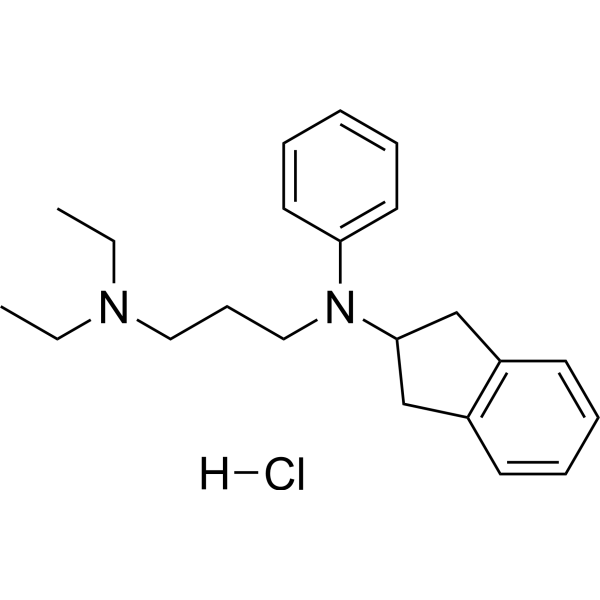 0 ImagesAprindine hydrochloride is an Ib-class anti-arrhythmic agent. Aprindine hydrochloride mainly exerts its effect by blocking sodium channels (INa), thereby reducing the excitability and conduction velocity of cardiac muscle cells. Aprindine hydrochloride significantly inhibits delayed potassium currents, which helps to prolong the atrial effective refractory period (AERP) and inhibit the occurrence of atrial fibrillation. Aprindine hydrochloride can also regulate intracellular calcium ion concentration by inhibiting Na+/Ca2+ exchange current (INCX), thereby further stabilizing cardiac electrical activity. Aprindine hydrochloride can be used for the study of atrial fibrillation (AF) and ventricular arrhythmias.
-
W-7 isomer hydrochloride
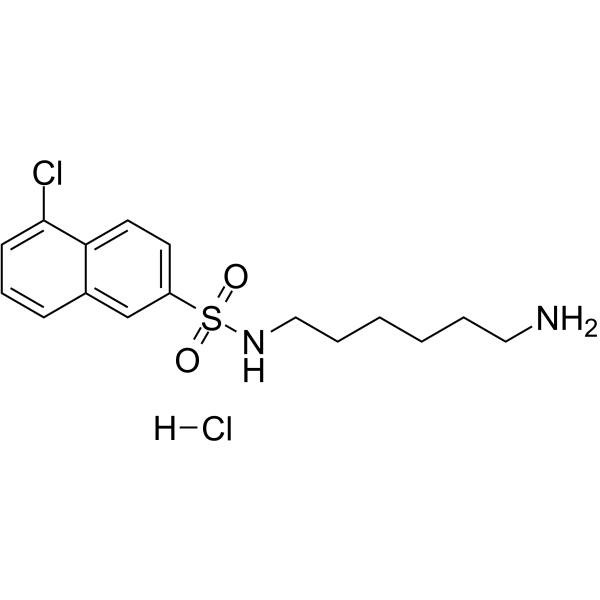 0 ImagesW-7 isomer hydrochloride is an isomer of W-7 hydrochloride (HY-100912). W-7 hydrochloride is a selective calmodulin antagonist.
-
IGS-1.76
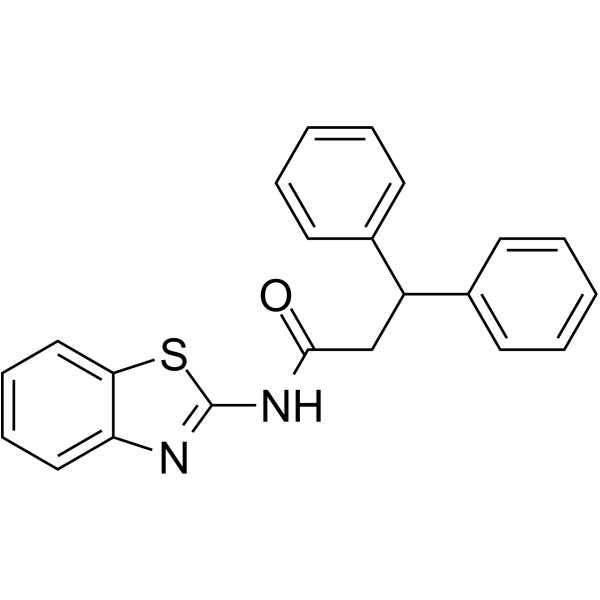 0 ImagesIGS-1.76 efficiently inhibits the human NCS-1/Ric8a complex. IGS-1.76 shows a significantly increased affinity for hNCS-1 and is able to modulate the hNCS-1/Ric8a interaction efficiently.
-
Calmodulin Binding Peptide 1
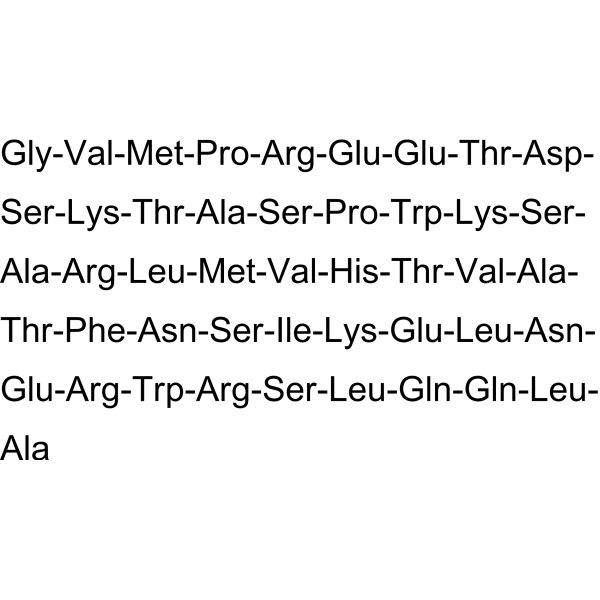 0 ImagesCalmodulin Binding Peptide 1 is a high-affinity (pM) CaM-binding peptide derived from smooth muscle myosin light chain kinase (MLCK peptide). The interface of the complex formed by Calmodulin Binding Peptide 1 and Ca2+-CaM can be specifically bound by small-molecule inhibitors, serving as a key target for selective regulation of smooth muscle contraction and development of anti-CaM drugs.
-
Aprindine
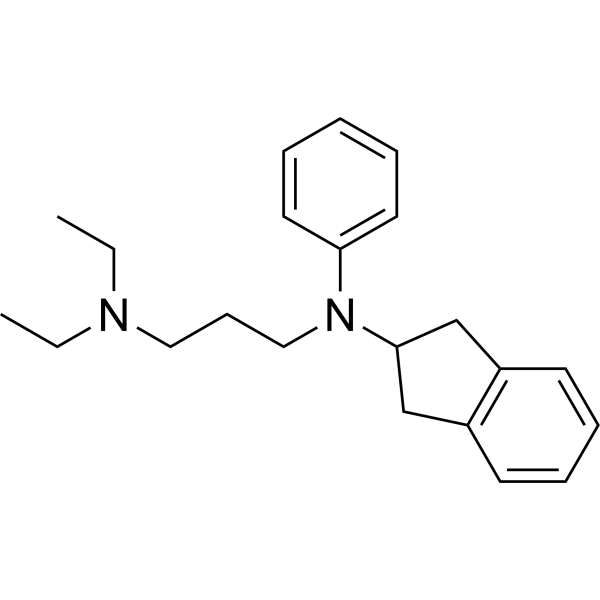 0 ImagesAprindine is an Ib-class anti-arrhythmic agent. Aprindine mainly exerts its effect by blocking sodium channels (INa), thereby reducing the excitability and conduction velocity of cardiac muscle cells. Aprindine significantly inhibits delayed potassium currents, which helps to prolong the atrial effective refractory period (AERP) and inhibit the occurrence of atrial fibrillation. Aprindine can also regulate intracellular calcium ion concentration by inhibiting Na+/Ca2+ exchange current (INCX), thereby further stabilizing cardiac electrical activity. Aprindine can be used for the study of atrial fibrillation (AF) and ventricular arrhythmias.
-
Heptamidine dimethanesulfonate
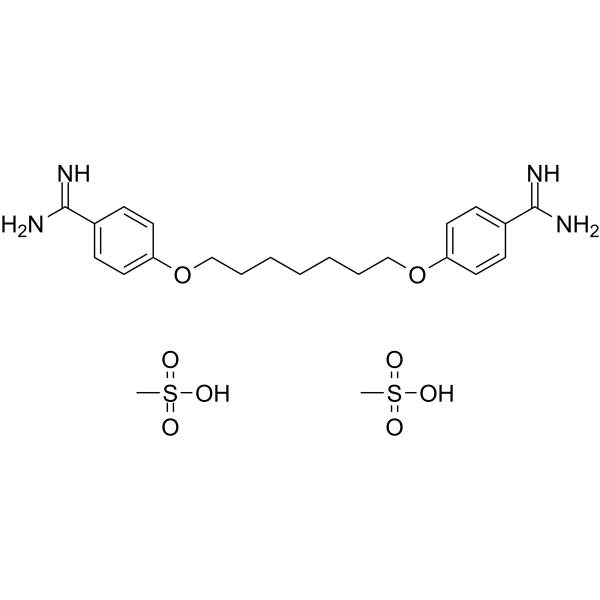 0 ImagesSynonyms: SBi4211 dimethanesulfonateHeptamidine dimethanesulfonate (SBi4211 dimethanesulfonate) is a potent Pentamidine-related inhibitor of the calcium-binding protein S100B (Kd=6.9 μM), selectively kills melanoma cells with S100B over those without S100B. Heptamidine is a useful tool for the investigation of Myotonic dystrophy (DM).
-
Probimane
 0 ImagesSynonyms: AT-2153Probimane (AT-2153) is a potent anticancer agent. Probimane is effective against mouse tumors S37, S180, Lewis lung carcinoma, L1210 and human pulmonary adenocarcinoma heterotransplanted into nude mice.



