



FOXO
Forkhead box O
Forkhead Box O (FOXO) is a subfamily within the forkhead box transcription factor family, characterized by having a highly conserved DNA-binding domain (FOX). FOXO family in mammals mainly consists of four members, namely FOXO1, FOXO3, FOXO4, and FOXO6. FOXO is involved in regulating key cellular processes such as apoptosis, cell cycle progression, and resistance to oxidative stress, and it is primarily regulated by Akt-mediated phosphorylation. FOXO family is closely related to diseases. It often acts as a tumor suppressor in tumors, can trigger insulin resistance and pancreatic islet β-cell dysfunction in diabetes, and is also involved in the occurrence and development of some neurodegenerative diseases. In addition, it also has the activities of resisting stress and extending lifespan[1].
FOXO Isoform Specific Products
All Product Categories
-
FOXO Related Products (37)
Related Products (37)

-
FOXO Isoform Comparison
- 1
- 2
-
Anticancer agent 7
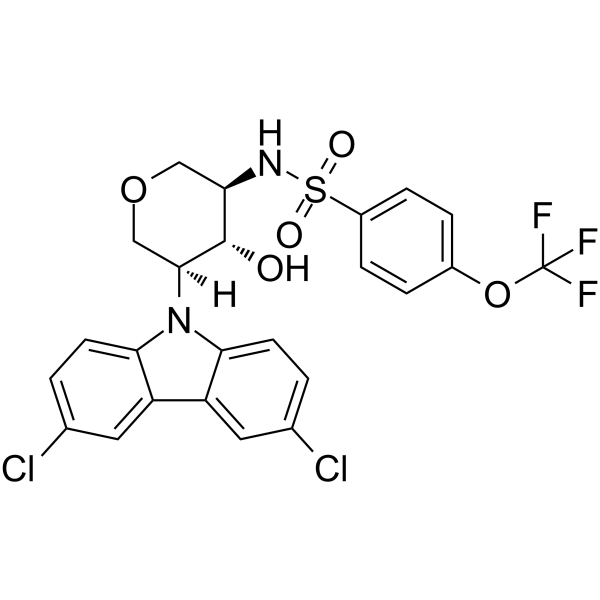 0 ImagesCat. No.: HY-W072940CAS No.: 2088956-21-0Anticancer agent 7 (Example 5) modulates PP2A, and induces FOXOl transcription factor translocation to the nucleus. Anticancer agent 7 inhibits the proliferation of H1650 lung cancer cell with an IC50 of 5 μM.
-
N-alpha-Tosyl-Lys chloromethyl ketone hydrochloride
 0 ImagesN-alpha-Tosyl-Lys chloromethyl ketone hydrochloride (TLCK hydrochloride) is a Serine protease inhibitor with an IC50 of 12.0 μM against Caspase-3, 54.5 μM against Caspase-6, and 19.3 μM against Caspase-7. It inhibits thrombin-induced nuclear translocation of FOXO1. N-alpha-Tosyl-Lys chloromethyl ketone hydrochloride can be used in research related to leukemia and cardiovascular diseases.
-
OSU-53
 0 ImagesCat. No.: HY-125535CAS No.: 1290069-19-0OSU-53 is an orally active AMPK activator and mTOR inhibitor, with an IC50 of 0.3 μM for AMPK, an EC50 of 2-5 μM for AMPK, and an IC50 of 8.23 μM for mTOR. OSU-53 inhibits the Akt signaling pathway, directly activates AMPK by binding to its autoinhibitory domain, reduces IKKβ-mediated phosphorylation of Foxo3a, blocks Akt-mediated phosphorylation of MDM2, and promotes the nuclear localization and stabilization of Foxo3a, while directly inhibiting mTOR. OSU-53 inhibits epithelial-mesenchymal transition (EMT), induces epithelial phenotype, suppresses invasion and metastasis, induces autophagy, inhibits the activation of ERK and Akt, reduces the secretion of nitric oxide and proinflammatory cytokines, and inhibits the migration of MDSC; at high doses, it induces MDSC apoptosis, attenuates the immunosuppressive effect of MDSC, reduces MDSC levels, and blocks incision-induced mechanical hyperalgesia. OSU-53 can be used in studies related to breast cancer, prostate cancer, thyroid cancer, melanoma and postoperative pain.
-
Xanthosine dihydrate
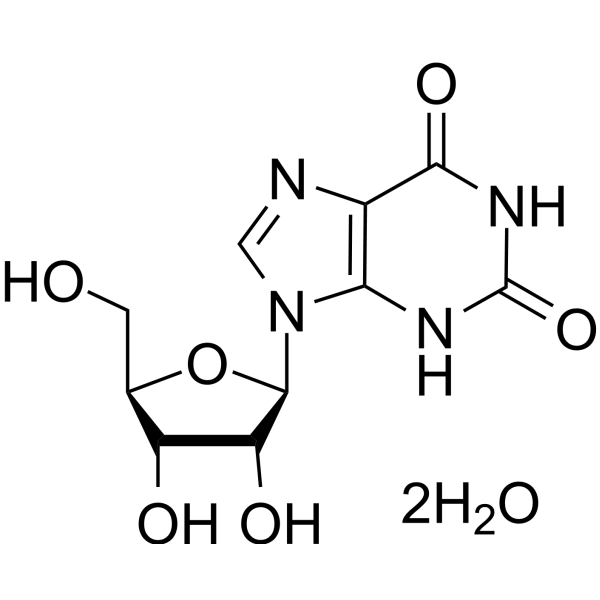 0 ImagesCat. No.: HY-W013803CAS No.: 5968-90-1Xanthosine dihydrate is a nucleoside derived from xanthine and ribose. Xanthosine dihydrate activates the AMPK/FoxO1/AKT/GSK3β signaling cascade. Xanthosine dihydrate promotes cell proliferation and regulates blood glucose metabolism. Xanthosine dihydrate increases milk production in cows and goats. Xanthosine dihydrate is used in mammary stem cell and type 2 diabetes research.

-
Syk/HDAC6-IN-1
 0 ImagesCat. No.: HY-184415Syk/HDAC6-IN-1 is a dual SYK/HDAC6 selective inhibitor with IC50 values of 0.19 nM (SYK) and 0.66 nM (HDAC6). Syk/HDAC6-IN-1 downregulates p-SYK to block downstream AKT/FOXO1 signaling, elevates acetylated histone H3 and α-tubulin via HDAC suppression, represses SREBF1 -mediated lipid biosynthetic pathways, triggers G0/G1 cell cycle arrest and robust mitochondrial-dependent caspase-3-mediated apoptosis in leukemia cells. Syk/HDAC6-IN-1 can be used for the research of FLT3-mutant acute myeloid leukemia.
-
JPS004
 0 ImagesCat. No.: HY-176904CAS No.: 2559747-12-3JPS004 is a PROTAC degrader targeting HDAC1, HDAC2 and HDAC3. JPS004 induces extensive transcriptomic changes in human colon cancer cell line HCT116, including downregulation of HDAC complex components and cell cycle regulatory machinery, modulation of the AKT/mTOR signaling pathway, and upregulation of FOXO-mediated apoptosis and autophagy related genes. JPS004 can be used in colon cancer-related research.
-
Phoenixin-14 TFA
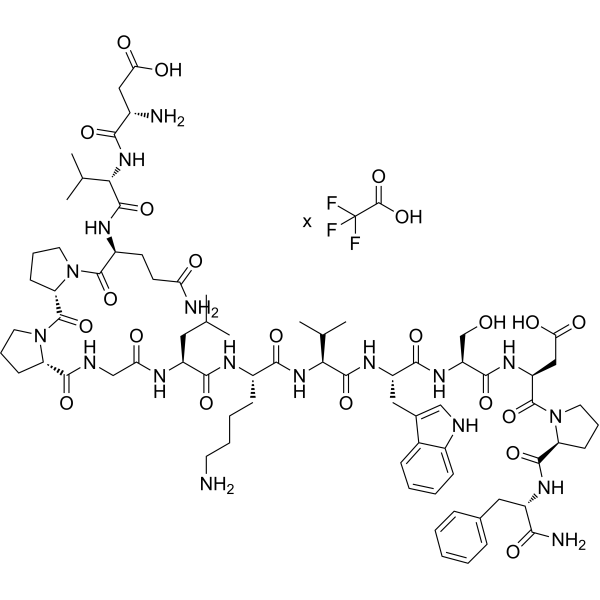 0 ImagesCat. No.: HY-P5762ASynonyms: PNX-14 TFAPhoenixin-14 (PNX-14) TFA is an endogenous neuropeptide with multiple biological activities, and serves as the endogenous ligand of GPR173. Phoenixin-14 TFA reduces ROS production by inhibiting the HMGB1/TLR4/MyD88/NF-κB signaling axis, thereby exerting antioxidant and mitochondrial protective effects. Phoenixin-14 TFA inhibits FOXO3 phosphorylation by upregulating SIRT3 expression, suppresses apoptosis, and improves myocardial systolic/diastolic function. Phoenixin-14 TFA resists ferroptosis by activating the ATF4/SLC7A11/GPX4 axis; it activates ERK1/2 phosphorylation via GPR173. Phoenixin-14 TFA can be used in researches on neuroprotection, diabetes, cardiomyopathy, reproductive protection and so on.
-
ROCK2-IN-13
 0 ImagesCat. No.: HY-179498ROCK2-IN-13 is a selective ROCK2 inhibitor. ROCK2-IN-13 reduces nuclear expression by disrupting the interaction of ROCK2 with transcriptional co activators p300> and PGC 1α, repressing oncogenic transcription. ROCK2-IN-13 activates FOXO1 driven PTEN expression, leading to suppression of the PI3K/Akt pathway, induction of G2/M cell cycle arrest, and promotion of apoptosis. ROCK2-IN-13 ablates the nuclear transcriptional function of ROCK2 that sustains oncogenic signaling and restores the tumor suppressive PTEN/FOXO1 axis. ROCK2-IN-13 can be used for prostate cancer reseach.
-
Solenopsin
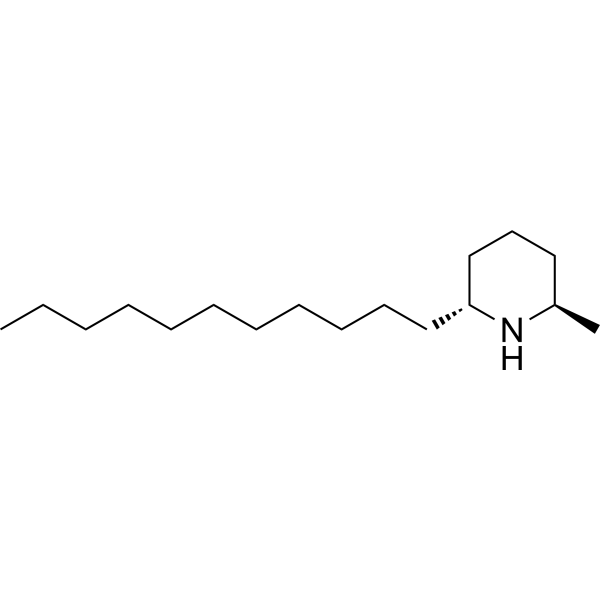 0 ImagesCat. No.: HY-16461CAS No.: 137038-57-4Synonyms: (-)-Solenopsin ASolenopsin ((-)-Solenopsin A) is an ATP-competitive and selective Akt-1 inhibitor with an IC50 of 5-10 μM, and also acts as an RSK1 inhibitor. Solenopsin inhibits the activities of PDK1 in lipid rafts, downregulates PI3K, blocks PI3K-dependent generation of 3-phosphoinositides, and suppresses the phosphorylation of FOXO1a. Solenopsin induces Mitophagy and ROS production, reduces mitochondrial oxygen consumption, and exhibits antiproliferative and antiangiogenic activities. Solenopsin can be used in research related to hyperproliferative skin diseases and malignant diseases.
-
Dipropyl phthalate (Standard)
 0 ImagesDipropyl phthalate (Standard) is the analytical standard of Dipropyl phthalate (HY-B1944). This product is intended for research and analytical applications. Dipropyl phthalate is an immunomodulator. Dipropyl phthalate alters the activities of acid phosphatase, phenoloxidase and superoxide dismutase, increases the activity of β-glucuronidase in a dose-dependent manner, and elevates the mRNA level of hemocyanin in shrimp. Dipropyl phthalate activates the FoxO signaling pathway, interferes with cell proliferation and apoptosis, downregulates chondrocyte-related genes, and induces craniofacial cartilage developmental malformations in zebrafish embryos. Dipropyl phthalate can be used in studies related to Aeromonas veronii infection and micrognathia syndrome.
-
D-chiro-Inositol (Standard)
 0 ImagesD-chiro-Inositol is a stereoisomer of inositol that exhibits activities such as improving glucose metabolism, anti-tumor effects, anti-inflammatory properties, and antioxidant activity. D-chiro-Inositol effectively alleviates cholestasis by enhancing bile acid secretion and reducing oxidative stress. D-chiro-Inositol improves insulin resistance, lowers hyperglycemia and circulating insulin levels, reduces serum androgen levels, and ameliorates some metabolic abnormalities associated with X syndrome by mimicking the action of insulin. Additionally, D-chiro-Inositol can induce a reduction in pro-inflammatory factors (such as Nf-κB) and cytokines (such as TNF-α), thereby exerting anti-inflammatory effects. D-chiro-Inositol may be used in the study of liver cirrhosis, breast cancer, type 2 diabetes, and polycystic ovary syndrome.
-
LOM612 (Standard)
 0 ImagesCat. No.: HY-101035RCAS No.: 2173232-79-4
-
SB-699551 (Standard)
 0 ImagesCat. No.: HY-103100RCAS No.: 864741-95-7SB-699551 (Standard) is the analytical standard of SB-699551 (HY-103100). This product is intended for research and analytical applications. SB-699551 is a potent and selective 5-HT5A antagonist with a Ki value of 5.1 μM. SB-699551 increases the phosphorylation levels of CREB and ATF1, and decreases the phosphorylation levels of AKT, PRAS40, P70S6K, FOXO1, and S6RP. SB-699551 improves drug-induced cognitive deficits. SB-699551 improves social withdrawal and forgetfulness. SB-699551 inhibits breast cancer.
-
Conessine dihydrobromide
 0 ImagesCat. No.: HY-107566ACAS No.: 5913-82-6Conessine dihydrobromide is an orally active and BBB-penetrable selective histamine H3 receptor antagonist. The pKi values of Conessine dihydrobromide for rat and human H3 receptors are 7.61 and 8.27, respectively. Conessine dihydrobromide is an inhibitor of the multidrug efflux pump system in Pseudomonas aeruginosa and can enhance the activity of antibiotics. Conessine dihydrobromide has antimalarial activity. Conessine dihydrobromide can also be used in the research of muscle atrophy.
-
FLLL12
 0 ImagesCat. No.: HY-183402CAS No.: 917813-60-6Synonyms: GO-Y026FLLL12 (GO-Y026) is a curcumin analog anticancer agent. FLLL12 inhibits the phosphorylation of AKT, Bcl-2, Bid, EGFR, mTOR, FOXO1a, FOXO3a, STAT3, HER2/neu, as well as pancreatic AKT/STAT3; upregulates the expression of Bim and DR5; and activates PTPs. FLLL12 regulates downstream pathways, induces mitochondria-mediated and DR5-dependent extrinsic apoptosis, inhibits cancer cell viability, proliferation, anchorage-independent growth and migration, and exerts a synergistic effect with Doxorubicin (HY-15142A). FLLL12 can be used in research related to head and neck squamous cell carcinoma, breast cancer, prostate cancer, pancreatic cancer, lung cancer, colon cancer and colorectal cancer.
-
DC-120
 0 ImagesCat. No.: HY-119884CAS No.: 1261080-40-3DC-120 is an ATP-competitive AKT inhibitor, with particular activity against AKT1 (an IC50 of 0.153 μM). DC-120 functionally blocks AKT kinase activity and reduces the phosphorylation levels of FOXO3a and GSK-3β. DC-120 induces cancer cell apoptosis (apoptosis) and inhibits cancer cell proliferation. DC-120 activates the mTORC1 pathway via the Ca2+/calmodulin (calmodulin)/hVps34 signaling pathway. DC-120 abrogates AKT-mediated inhibition of CRAF, thereby activating the MEK/ERK MAPK pathway. DC-120 exerts anti-tumor activity in a nude mouse hepatocellular carcinoma xenograft model. DC-120 can be used for hepatocellular carcinoma-related research.
- 1
- 2



