



GLUT4 Inhibitor
-
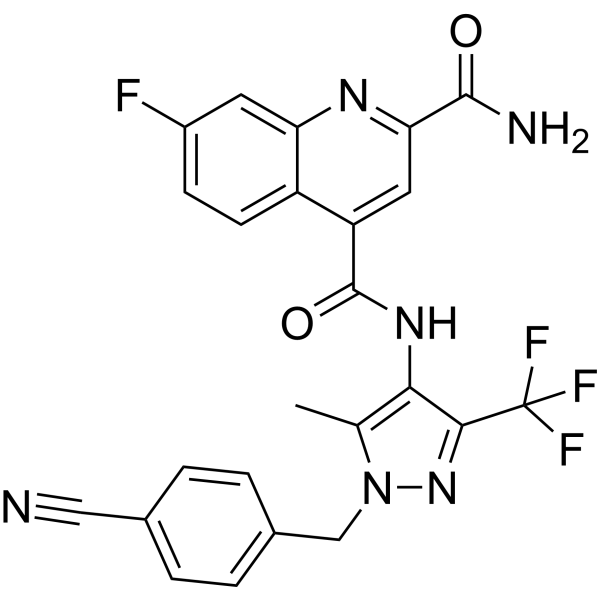
BAY-876
 0 Images
BAY-876, a chemical probe, is an orally active and selective glucose transporter 1 (GLUT1) inhibitor with an IC50 of 2 nM. BAY-876 is >130-fold more selective for GLUT1 than GLUT2, GLUT3, and GLUT4. BAY-876 is also a potent blocker of glycolytic metabolism and ovarian cancer growth. In addition, BAY-876 can induce the formation of disulfide bonds in actin cytoskeletal proteins, leading to the occurrence of cellular disulfidptosis.
-
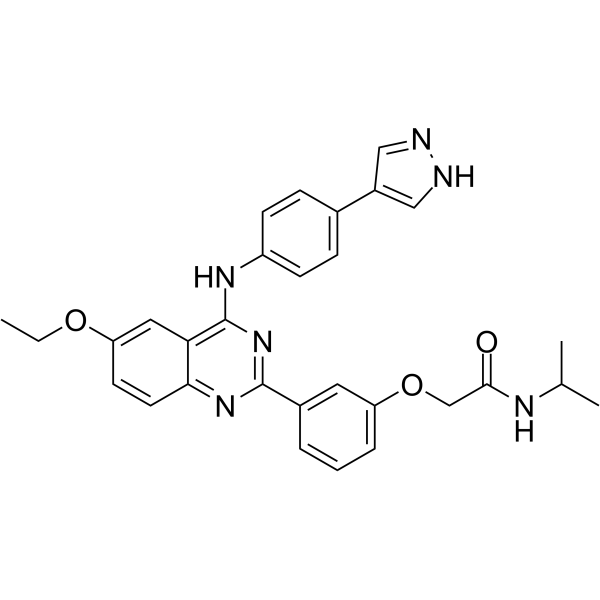
KL-11743
 0 Images
KL-11743 is a potent, orally active, and glucose-competitive inhibitor of the class I glucose transporters, with IC50s of 115, 137, 90, and 68 nM for GLUT1, GLUT2, GLUT3, and GLUT4, respectively. KL-11743 specifically blocks glucose metabolism. KL-11743 can synergize with electron transport inhibitors to induce cell death. In addition, KL-11743 can induce the formation of disulfide bonds in actin cytoskeletal proteins, leading to the occurrence of cellular disulfidptosis.
-
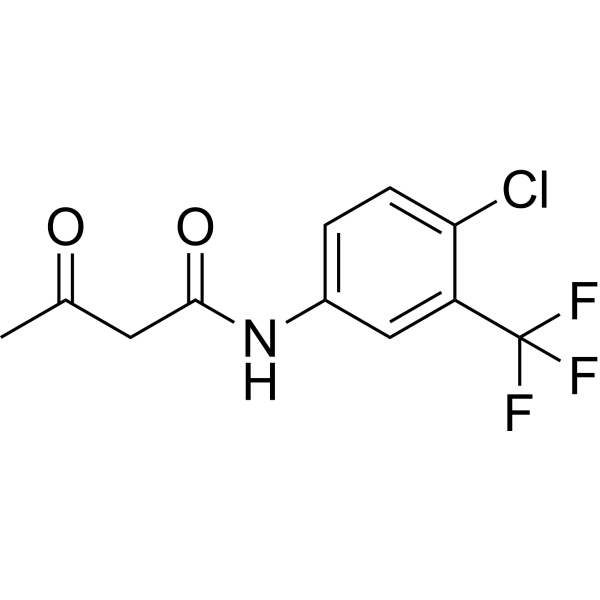
Fasentin
 0 Images
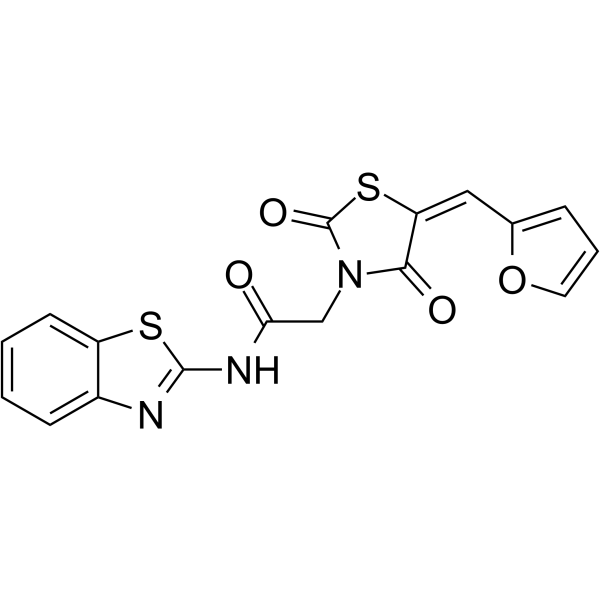
Fasentin, a potent glucose uptake inhibitor, inhibits GLUT-1/GLUT-4 transporters. Fasentin preferentially inhibits GLUT4 (IC50=68 μM) over GLUT1. Fasentin is a death receptor stimuli (FAS) sensitizer and sensitizes cells to FAS-induced cell death. Fasentin is also a tumor necrosis factor (TNF) apoptosis-inducing ligand sensitizer. Fasentin blocks glucose uptake in cancer cell lines and has anti-angiogenic activity.
-
HK2-IN-3
 0 ImagesCat. No.: HY-180805CAS No.: 2679261-30-2
HK2-IN-3 is a selective HK2 inhibitor with a human IC50 of 0.0564 μM (56.4 nM). HK2-IN-3 induces mitophagy in oral squamous cell carcinoma cells. HK2-IN-3 exerts anti-cancer activity in oral squamous cell carcinoma cells. HK2-IN-3 can be used for the research of oral squamous cell carcinoma.
-
Hydrangeic acid
 0 Images
Hydrangeic acid is an orally effective stilbene-type glycolipid metabolism regulator that lowers blood glucose and lipids. It can be isolated from processed leaves of Hydrangea macrophylla var. thunbergii. Hydrangeic acid is associated with glycolipid metabolism and insulin sensitivity regulation. Hydrangeic acid does not directly activate PPARγ or PPARα, but instead upregulates the mRNA expression of adiponectin, PPARγ2, GLUT4, and fatty acid-binding protein aP2, and downregulates TNF-α mRNA expression, promoting adipogenesis, glucose uptake, and GLUT4 translocation in 3T3-L1 cells. Simultaneously, Hydrangeic acid inhibits inflammatory factor-induced NO production, exerting activity in improving insulin resistance. Hydrangeic acid can be used in research related to type 2 diabetes and does not cause liver weight gain as a side effect.
-
NV-5440
 0 ImagesCat. No.: HY-138976CAS No.: 2226614-88-4
NV-5440 (Compound I-120) is an mTORC1 inhibitor and glucose transporter inhibitor. NV-5440 targets GLUT-1, -2, -3, and -4, and shows no activity against GLUT-5. NV-5440 inhibits glucose uptake.
-
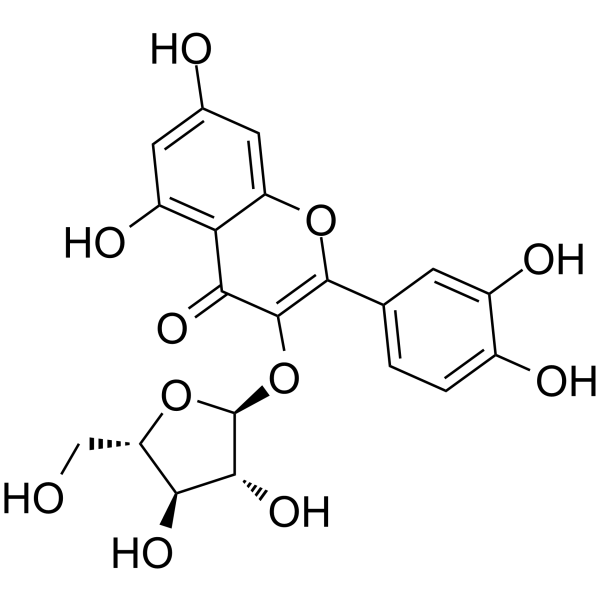
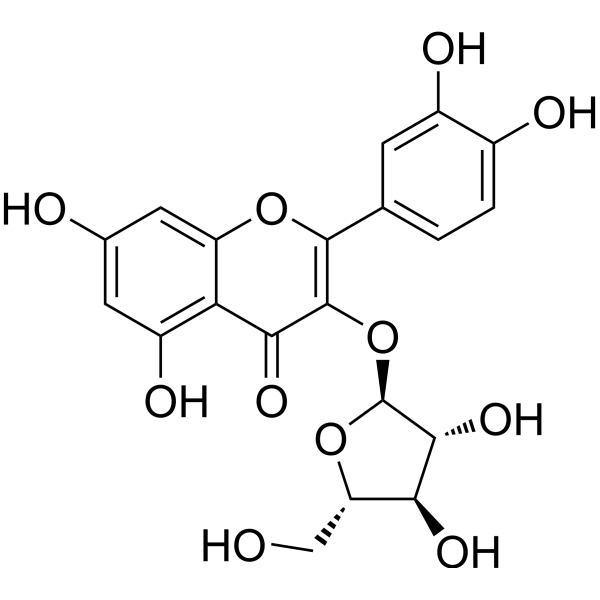
Avicularin (Standard)
 0 Images
Avicularin (Standard) is the analytical standard of Avicularin. This product is intended for research and analytical applications. Avicularin is an orally active flavonoid. Avicularin inhibits NF-κB (p65), COX-2 and PPAR-γ activities. Avicularin has anti-inflammatory, anti-infectious anti-allergic, anti-oxidant, hepatoprotective, and anti-tumor activities.



