



p38 MAPK
The p38 MAPK family consists of highly conserved proline-directed serine-threonine protein kinases that are activated in response to a number many growth factors, cytokines, and chemotactic substances, such as vascular endothelial growth factor (VEGF), fibroblast growth factor (FGF), PDGF, TNF, interleukins, lipopolysaccharide (LPS) and formyl-methionyl-leucyl-phenylalanine (fMLP). It is well known that p38 is involved in inflammation, apoptosis, cardiomyocyte hypertrophy and cell differentiation.
The p38 MAPK family is composed of four proteins: p38α (encoded by the gene Mapk14), p38β (Mapk11), p38γ (Mapk12), and p38δ (Mapk13). Their coding genes have a distinct tissue distribution and they appear differentially expressed, being Mapk14 the most highly expressed. p38 MAPKs are substrates for three MAP2K (MKK6, MKK3, and MKK4). The contribution of each of these MAP2K to p38 MAPKs activation depends on the stimulus and the cell type. The MAP3Ks that lead to p38 MAPKs activation are ASK1, DLK1, TAK1, TAO1, TAO2, TPL2, MLK3, MEKK3, MEKK4, and ZAK1.
p38 MAPK Isoform Specific Products
All Product Categories
-
p38 MAPK Inhibitors
(821)
View all products
-
p38 MAPK Agonists
(6)
View all products
-
p38 MAPK Antagonists
(2)
View all products
-
p38 MAPK Activators
(216)
View all products
-
p38 MAPK Modulators
(20)
View all products
-
p38 MAPK p53 Inhibitors
(2)
View all products
-
p38 MAPK Inducers
(11)
View all products
-
p38 MAPK Degraders
(3)
View all products
-
p38 MAPK Control
(1)
View all products
-
p38 MAPK Ligands
(2)
View all products
-
AKT Serine/Threonine Kinase 1 (AKT1) Proteins
(3)
View all products
-
p38 MAPK Related Products (1175)
Related Products (1175)

-
Recombinant Proteins (3)
-
Antibodies (20)
-
p38 MAPK Isoform Comparison
-
Curcumenol (Standard)
 0 ImagesCat. No.: HY-N2259RCAS No.: 19431-84-6Synonyms: (+)-Curcumenol (Standard)Curcumenol (Standard) ((+)-Curcumenol (Standard)) is the analytical standard of Curcumenol (HY-N2259). This product is intended for research and analytical applications. Curcumenol ((+)-Curcumenol) is a natural compound with oral efficacy, exhibiting an IC50 of 12.6 μM and a Ki of 10.8 μM against human CYP3A4. Curcumenol inhibits TNFα-induced phosphorylation/degradation of IκBα, phosphorylation/nuclear translocation of NF-κB p65, as well as the upregulation of MMP3, MMP9, MMP13, TRAF3, IL1RL1, TNFα and IL-1β. Curcumenol suppresses LPS-induced phosphorylation of Akt and p38 MAPK, as well as the production of pro-inflammatory mediators/proteins, and downregulates the SLC7A11/NF-κB/TGF-β pathway. Curcumenol binds to and inhibits the activation of Fyn and Lyn, blocks the function of downstream FcεRI signaling components, and reduces the release of allergic mediators/cytokines. Curcumenol upregulates the expression of KDM6B, and promotes chondrocyte proliferation and cartilage repair. Curcumenol induces ferroptosis and apoptosis, regulates the EMT process, and inhibits tumor growth and metastasis of triple-negative breast cancer. Curcumenol possesses anti-inflammatory, neuroprotective, antioxidant, antitumor, antiviral and hepatoprotective activities. Curcumenol can be used in research related to intervertebral disc degeneration, cancer, inflammation, central nervous system neurodegenerative diseases, allergic reactions and knee osteoarthritis.
-
RPR203494
 0 ImagesCat. No.: HY-125068CAS No.: 218160-26-0RPR203494 is a potent inhibitor against CYP isozymes. RPR203494 shows inhibition against p38 kinase with an IC50 value of 9 nM and an EC50 value of 60 nM. RPR203494 demonstrates an inhibition of hepatic Cytochrome P450. RPR203494 is promising for research of rheumatoid arthritis (RA).
-
Keracyanin chloride (Standard)
 0 ImagesCat. No.: HY-105935RCAS No.: 18719-76-1Synonyms: Cyanidin 3-rutinoside chloride (Standard); Cyanidin 3-O-rutinoside chloride (Standard); Sambucin chloride (Standard)Keracyanin (chloride) (Standard) is the analytical standard of Keracyanin (chloride). This product is intended for research and analytical applications. Keracyanin chloride inhibits NF-κB/FAK/MAPK signaling pathway. Keracyanin chloride exhibits antioxidant, anti-inflammatory and hypoglycemic effects, and is orally active.
-
Tamarixetin (Standard)
 0 ImagesTamarixetin (Standard) is the analytical standard of Tamarixetin. This product is intended for research and analytical applications. Tamarixetin (4'-O-Methyl Quercetin) is an orally active natural flavonoid derivative of quercetin and caseinolytic protease p (ClpP) inhibitor with anti-inflammatory, antioxidant and antitumor effects. Tamarixetin inhibits the hydrolytic activity of ClpP to the fluorescent substrate Suc-LY-AMC with an IC50 of 49.73 μM, which can be used for the study of Staphylococcus aureus infection. Tamarixetin inhibits tumor cell growth, induces apoptosis, and cell cycle arrest. Tamarixetin prevents cardiac hypertrophy by inhibiting the NFAT and AKT pathways.
-
Saponarin (Standard)
 0 ImagesCat. No.: HY-N5083RCAS No.: 20310-89-8Saponarin (Standard) is the analytical standard of Saponarin (HY-N5083). This product is intended for research and analytical applications. Saponarin is an orally active flavonoid compound. Saponarin can be isolated from Gypsophila trichotoma. Saponarin inhibits ERK/p38, NF-κB and MAPK phosphorylation and activates AMPK. Saponarin reduces IL-1β and COX-2. Saponarin has antioxidant, anti-inflammatory, hepatoprotective, hypoglycemic and hypotensive effects. Saponarin improves sleep disorders.
-
TA-02 (Standard)
 0 ImagesTA-02 (Standard) is the analytical standard of TA-02 (HY-100115). This product is intended for research and analytical applications. TA-02, an analog of SB 203580 (HY-10256), is a p38 MAPK inhibitor with an IC50 of 20 nM. TA-02 especially inhibits TGFBR-2. TA-02 exhibits similar cardiogenic properties as SB 203580 and SB 202190 (HY-10295).
-
MptpB-IN-3
 0 ImagesCat. No.: HY-183688CAS No.: 3104354-58-4MptpB-IN-3 is a selective inhibitor of Mycobacterium tuberculosis protein tyrosine phosphatase B (MptpB) with an IC50 of 0.19 μM. MptpB-IN-3 blocks MptpB-mediated inhibition of the macrophage MAPK pathway and restores the phosphorylation levels of Erk1/2 and p38. MptpB-IN-3 exhibits direct anti-tuberculosis activity against Mycobacterium tuberculosis and reduces the Mycobacterium tuberculosis load in mouse macrophages. MptpB-IN-3 can be used for tuberculosis research.
-
A1-Phytoprostane-I
 0 ImagesCat. No.: HY-23201CAS No.: 1035557-09-5Synonyms: Phytoprostane A1; PPA1A1-Phytoprostane-I (Phytoprostane A1) is a cyclopentenone-type phytoprostane that forms via free radical-catalyzed non-enzymatic oxidation of α-linolenic acid. A1-Phytoprostane-I exhibits multiple biological activities, including inducing the accumulation of phytoalexins (e.g., Scopoletin (HY-N0342)) in tobacco cells, activating mitogen-activated protein kinases (MAPK) in tomato cells, and inducing the expression of glutathione-S-transferase 1 (Glutathione-S-transferase 1) in Arabidopsis thaliana.
-
7,4'-Dimethoxy-3-hydroxyflavone
 0 ImagesCat. No.: HY-174829CAS No.: 13198-99-77,4'-Dimethoxy-3-hydroxyflavone is an orally active PAR4 antagonist. 7,4'-Dimethoxy-3-hydroxyflavone inhibits PAR4-mediated human platelet aggregation with an IC50 of 1.4 μM. 7,4'-Dimethoxy-3-hydroxyflavone inhibits PAR4-mediated human platelet aggregation and PAR4 signaling pathways, including NF-κB, Ca2+/protein kinase C, Akt, ERK and p38. 7,4'-Dimethoxy-3-hydroxyflavone prevents vascular PAR4 expression, endothelial dysfunction and ameliorates oxidative stress in Streptozotocin (STZ) (HY-13753)-induced diabetic mice. 7,4'-Dimethoxy-3-hydroxyflavone prevents thrombosis in mice without affecting bleeding time[1][2].
-
SD 0006 (Standard)
 0 ImagesCat. No.: HY-11087RCAS No.: 271576-80-8Synonyms: SD-06 (Standard)
-
Olprinone (Standard)
 0 ImagesCat. No.: HY-14254ARCAS No.: 106730-54-5Synonyms: Loprinone (Standard)Olprinone (Loprinone) Standard is the analytical standard of Olprinone (HY-14254A). This product is intended for research and analytical applications. Olprinone (Loprinone) is a potent and selective phosphodiesterase 3 (PDE3) inhibitor, with IC50 values of 150, 100, 0.35, and 14 μM against PDE1, PDE2, PDE3, and PDE4, respectively. Olprinone exerts comprehensive protective effects including anti-inflammatory, antioxidant, and anti-apoptotic activities by elevating intracellular cAMP levels and inhibiting the NF-κB and MAPK signaling pathways. Olprinone can be used in studies related to lung injury, spinal cord injury, heart failure, myocardial ischemia-reperfusion injury, and cerebral ischemic injury.
-
Sudachitin
 0 ImagesSudachitin is an orally active compound that potently inhibits mouse PDE1C and human PDE4B, with IC50 values of 5.0 μM and 15.0 μM, respectively. Sudachitin upregulates Sirt1 and PGC‑1α expression in skeletal muscle to regulate energy metabolism and promote mitochondrial biogenesis. Sudachitin improves lipid metabolism, glucose tolerance, insulin sensitivity, energy expenditure, and fatty acid β‑oxidation. Sudachitin activates p38MAPK signaling, induces HSP27 phosphorylation and caspase‑dependent apoptosis, and blocks EGF‑driven keratinocyte migration and proliferation. Sudachitin suppresses LPS‑induced TNF‑α, NO, and iNOS expression in macrophages and shows potent anti‑inflammatory activity. Sudachitin can be used for the research of metabolic syndrome, type 2 diabetes, and psoriasis..
-
Silybin B-d3
 0 ImagesCat. No.: HY-N7046SSynonyms: Silibinin B-d3Silybin B-d3 (Silibinin B-d3) is a deuterated Silybin B (HY-N7046). Silybin B (Silibinin B) is an orally active amyloid-β aggregation inhibitor and ATR pathway activator, that can cross the blood-brain barrier. Silybin B inhibits Aβ fibril formation and promotes amorphous aggregate formation, while activating the ATR-mediated DNA damage repair pathway and inhibiting JNK/p38 MAPK signaling. Silybin B can reduce Cisplatin (HY-17394)-induced neuronal DNA damage and apoptosis. Silybin B has anti-oxidative stress, cell cycle regulation and neuroprotective activities. Silybin B is mainly used in the study of Alzheimer's disease and Cisplatin chemotherapy-related neurotoxicity.
-
Losmapimod (Standard)
 0 ImagesSynonyms: GSK-AHAB (Standard); GW856553X (Standard); SB856553 (Standard)Losmapimod (GSK-AHAB; GW856553X) (Standard) is the analytical standard of Losmapimod (HY-10402). This product is intended for research and analytical applications. Losmapimod (GSK-AHAB; GW856553X) is an orally active p38α/β MAPK inhibitor, with pKi values of 8.1 and 7.6 for p38α and p38β, respectively. Losmapimod reduces DUX4 expression, thus exerting efficacy in facioscapulohumeral muscular dystrophy. By inhibiting MAPK/NF-κB, Losmapimod reduces apoptosis of epileptiform hippocampal neurons, and exhibits anti-allodynia and anti-hyperalgesic activities. Losmapimod blocks the entry and fusion of Lassa fever virus (LASV). Losmapimod overcomes tyrosine kinase inhibitor resistance in non-small cell lung cancer (NSCLC). Losmapimod inhibits myocardial senescence and inflammation, and possesses cardioprotective activity against cardiotoxicity.
-
Talaromyketide B
 0 ImagesCat. No.: HY-N15347Talaromyketide B is a polyketide compound with anti-inflammatory activity, discovered in the soil bacterium Talaromyces sp. KYS-41. Talaromyketide B inhibits the activation of the NF-κB and MAPK signaling pathways and dose-dependently suppresses pro-inflammatory cytokines, such as IL-1β, IL-6, IL-10, and TNF-α, as well as the transcriptional activity of inflammatory mediators, including iNOS and COX-2. Talaromyketide B holds potential for research in the fields of immunity and inflammatory diseases.
-
Mianserin-d3 (hydrochloride)
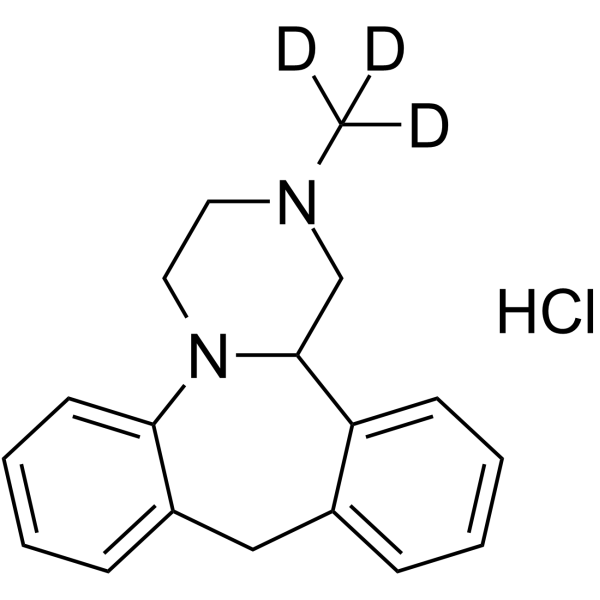 0 ImagesCat. No.: HY-B0188ASCAS No.: 1219804-97-3Synonyms: Org GB 94-d3Mianserin-d3 hydrochloride is the deuterium labeled Mianserin. Mianserin (Mianserine) is an orally active H1 receptor antagonist. Mianserin can activate κ-opioid receptor and octopamine receptor. Mianserin increases ERK1/2 and CREB phosphorylation, and antagonizes full κ-opioid agonist and Dynorphin A (HY-P1333)-induced MAPK phosphorylation. Mianserin modulates social and exploratory behaviour, raises electroconvulsive thresholds. Mianserin can be used for the research of neurological disease, such as depression and epilepsy.
-
L-Ornithine-1,2-13C2 hydrochloride
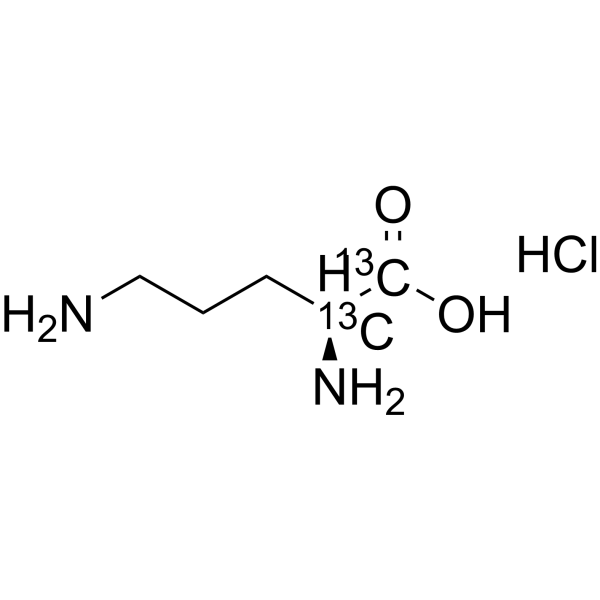 0 ImagesCat. No.: HY-W017018S1CAS No.: 224054-19-7L-Ornithine-1,2-13C2 hydrochloride is the 13C-labeled L-Ornithine hydrochloride (HY-W017018). L-Ornithine hydrochloride is an orally active CaSR and p38 activator. L-Ornithine hydrochloride inhibits ROS and supports urea cycle function. L-Ornithine hydrochloride can be used to study kidney diseases involving proximal tubular cell damage caused by oxidative stress or crystallopathy, as well as research related to anxiety disorders.
-
(Z)-Tetradec-7-en-1-ol
 0 ImagesCat. No.: HY-N12898CAS No.: 40642-43-1(Z)-Tetradec-7-en-1-ol is an activator for mitogen-activated protein kinase (MAP kinase).
-
Cavidine
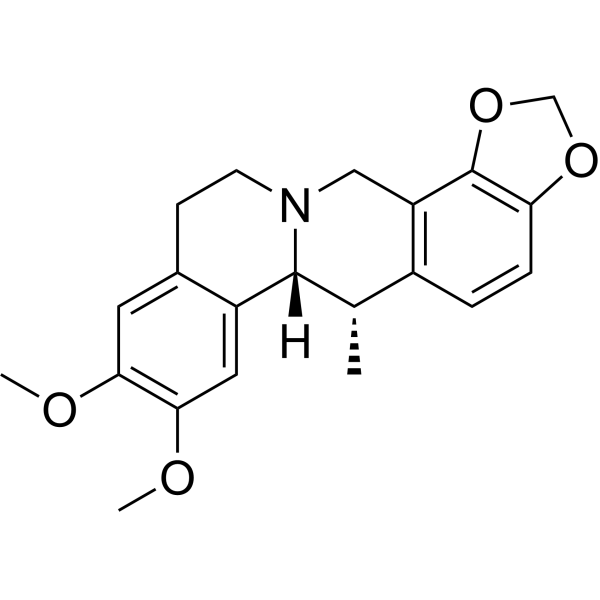 0 ImagesCat. No.: HY-101546ACAS No.: 32728-75-9Synonyms: (+)-CavidineCavidine ((+)-Cavidine) is an analgesic and anti-inflammatory agent. Cavidine can be isolated from Corydalis ternata f. yanhusuo (Y.H.Chou & Chun C.Hsu) Y.C.Zhu. Cavidine reduces the expression of inflammatory factors IL-1β, IL-6 and TNF-α, and inhibits calcium ion influx. Cavidine inhibits the phosphorylation of p38 and ERK1/2. Cavidine increases mechanical and thermal pain thresholds in chronic pain models. Cavidine can be used for the research of chronic pain.
-
2"-O-Galloylhyperin (Standard)
 0 ImagesCat. No.: HY-N0526RCAS No.: 53209-27-12"-O-Galloylhyperin (Standard) is the analytical standard of 2"-O-Galloylhyperin (HY-N0526). This product is intended for research and analytical applications. 2''-O-Galloylhyperin is an active natural compound with anti‑inflammatory, antioxidant, anti‑adipogenic, antifibrotic, and cytostatic activities. 2''-O-Galloylhyperin upregulates SIRT1/Nrf2 signaling, inhibits NF-κB and MAPK (ERK1/2, p38, JNK) phosphorylation, suppresses TSHR activation, reduces ROS accumulation, and enhances SOD and GSH-Px activities. 2''-O-Galloylhyperin protects against LPS-induced tissue injury, enhances survival, and inhibits adipogenesis and fibrosis. 2"-O-Galloylhyperin can be used for the research of sepsis, acute lung injury, and thyroid eye disease.




